
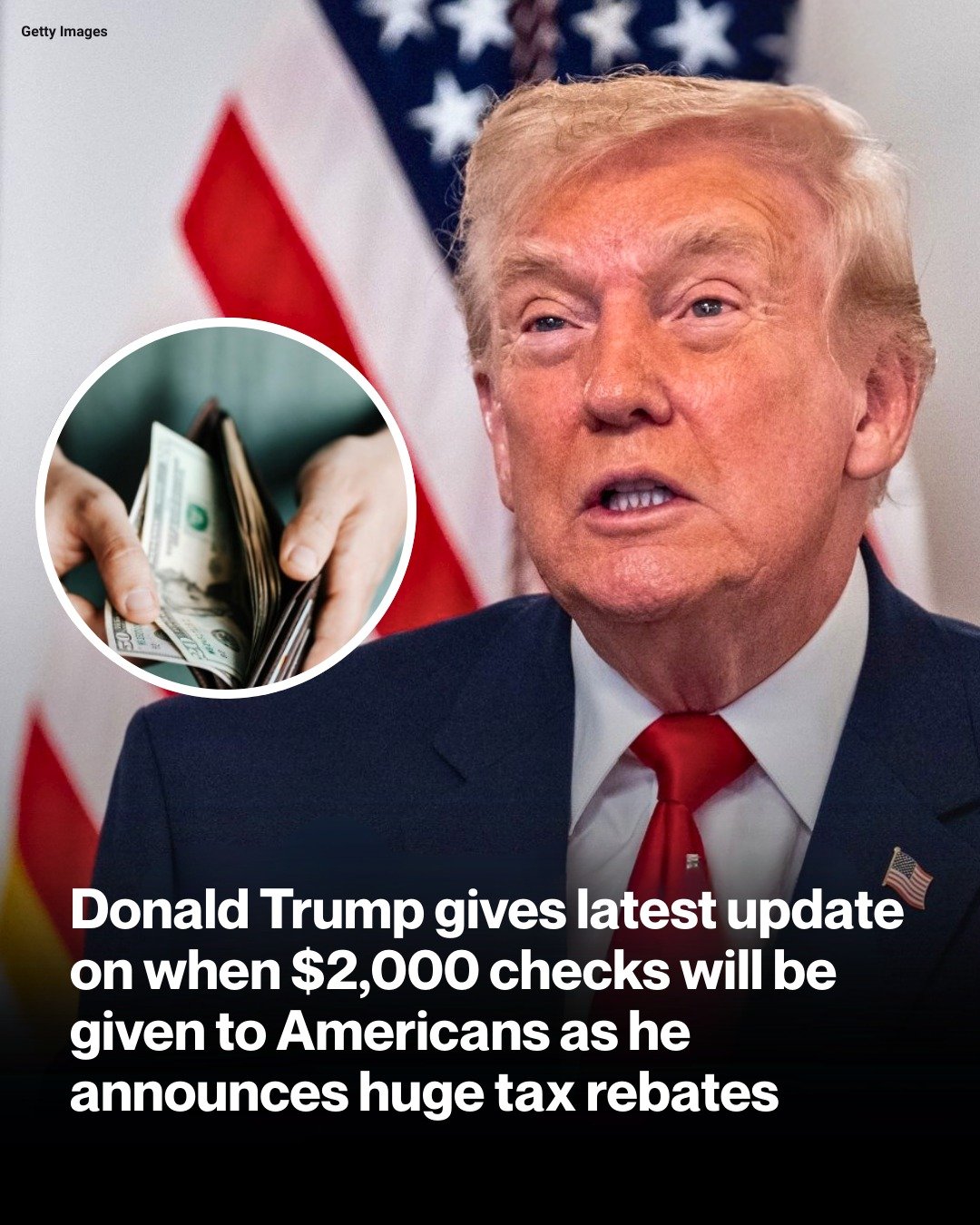
President Donald Trump says Americans could receive record-setting tax refunds in the coming filing season, attributing his prediction to the recent passage of the One Big Beautiful Bill Act (OBBBA). He argues that this new legislation will drive what he believes will be an unprecedented payout.

During a Cabinet meeting this week, Trump said the legislation—which both extends tax cuts originally passed during his first term and incorporates new reforms and spending—will lead to larger refunds for millions of taxpayers.
“Next year’s projected to be the largest tax refund season ever,” Trump said.
Treasury Secretary Highlights Retroactive Benefits
Treasury Secretary Scott Bessent echoed the president’s optimism, suggesting that several provisions in the OBBBA, retroactive to 2025, will deliver meaningful financial relief to Americans.
“The best is yet to come,” Bessent said, noting that “in 2026 we are going to see very substantial tax refunds in the first quarter.”
He highlighted several measures, including tax breaks for Social Security recipients, workers who rely on tips and overtime, and deductions for auto loans used to purchase U.S.-manufactured vehicles. According to Bessent, these changes are designed to help ease cost-of-living pressures.

Trump Pushes Forward With Tariff Dividend Plan
Trump again promoted his proposal to distribute “tariff dividends” to Americans, explaining that revenue collected from tariffs would eventually be returned to taxpayers and used to reduce the national debt.
“We’re going to be giving back refunds out of the tariffs because we’ve taken in literally trillions of dollars,” Trump said. He added that, in the future, tariff revenues could even make income taxes optional or at least significantly reduced.
The president has previously floated issuing $2,000 annual tariff dividends to low- and middle-income Americans. Such a plan would require congressional approval, and the administration has discussed a potential rollout in mid-2026.
Budget Analysts Warn of Long-Term Debt Impact
Despite the administration’s assurances that the plan will put more money back into Americans’ pockets, independent budget experts remain skeptical. The Committee for a Responsible Federal Budget (CRFB) estimates that a $2,000 annual tariff dividend—structured similarly to the pandemic-era stimulus checks—would cost roughly $600 billion per year.
By contrast, the Trump administration’s tariffs are projected to raise about $300 billion annually, including tariffs currently under Supreme Court review. Net tariff revenue unaffected by the legal challenge totals under $100 billion per year.
According to CRFB analysis, distributing $2,000 dividends annually for a decade would add roughly $6 trillion to the national debt—twice the amount tariffs are expected to generate over the same period.

Tariffs Remain Small Share of Federal Revenue
Although the administration has leaned heavily on tariff revenue to justify the dividend plan, customs duties account for only a small percentage of federal income.
In fiscal year 2025, individual income taxes brought in more than $2.6 trillion, payroll taxes added $1.7 trillion, and corporate income taxes contributed $452 billion. Customs duties, including tariffs, generated just $195 billion—about 3.7 percent of total tax receipts, according to FOX Business.
The administration maintains that the OBBBA will stimulate wage growth, strengthen the economy, and ultimately improve affordability for American families. Whether the projected record refunds materialize will become clear when the 2026 filing season begins.