
I did not open my home because I believed I possessed a miraculous cure; I did it because my own life had become a cavern of echoes after years of grief and a marriage that crumbled like shifting sand. I recognized silence in all its shades, but nine-year-old Jonah’s silence was different—it was a guarded, architectural fortress built to survive a world that had repeatedly failed him. While other prospective families walked away, craving the verbal validation he couldn’t provide, I welcomed him into my quiet rooms, knowing that a lack of sound doesn’t equate to a lack of presence. He arrived with a single backpack and a hawk-like gaze, memorizing every exit of my house as if he were already bracing for the next inevitable departure.
The years that followed were a masterclass in patient partnership, as I made a conscious choice never to weaponize language against a child who wasn’t ready to use it. I read aloud to him every night, allowing the cadence of my voice to serve as a bridge he wasn’t yet ready to cross, and tucked handwritten notes into his lunchboxes that often returned crumpled and unread. Slowly, the fortress began to soften; he started waiting for me at the door and eventually left a scrap of paper by my bed during a bout of flu, a small, fierce tremor of connection. We developed a rhythm where his silence was no longer a wall, but a comfortable blanket, proving to a skeptical town that Jonah didn’t need to speak to be heard—he just needed to stay.
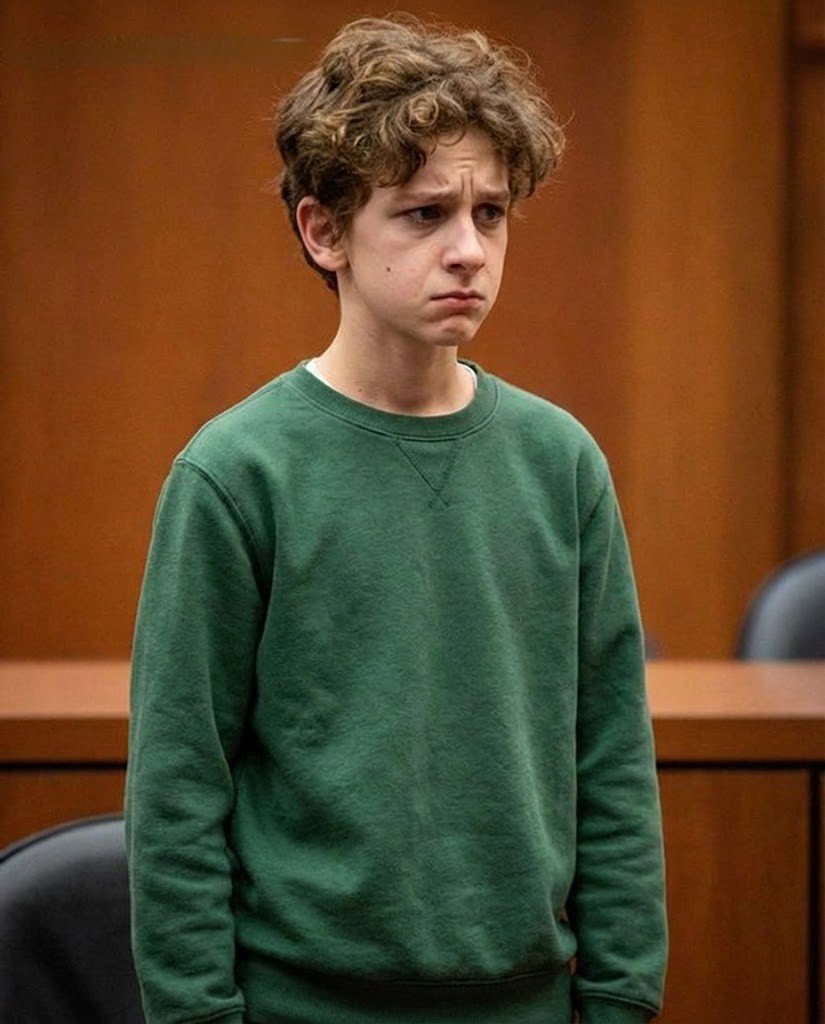
When Jonah turned fourteen, I presented him with adoption papers, and with a single, solemn inclination of his head, we found ourselves in a courtroom brittle with the tension of a final reckoning. Judge Holloway asked the pivotal question, offering Jonah the chance to simply nod or write his response, but the silence that followed was broken by a rough, unused sound that seemed to grate against the stillness of the room. To my utter shock, Jonah cleared his throat and spoke for the first time in years, recounting the searing memory of being abandoned at a grocery store at age seven. He revealed that he had stayed quiet out of a paralyzing fear that making a sound would somehow “mess up” the only safety he had ever known, admitting that in his heart, I had been his mother long before the law ever intervened.
The judge’s decree was a mere formality compared to the music of Jonah’s voice finally reclaiming its space in the world. That night, the echoes that once haunted the corners of my house were replaced by the rise and fall of my son reading a bedtime story aloud, his voice serving as the soil in which a profound, unshakable trust had finally bloomed. I realized then that our years of silence were never empty; they were the necessary incubation for a bond that had found its strength in the quiet before it ever needed a sound. My home is no longer a cavern of grief, but a sanctuary where every word carries the weight of a promise kept and a future finally spoken into existence.