
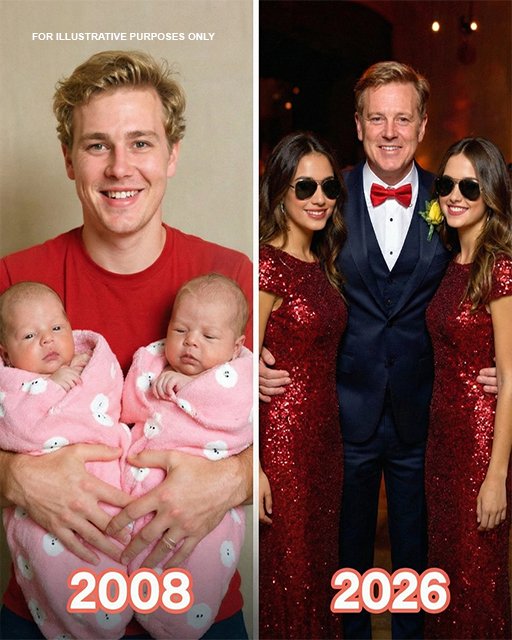
18 years ago, my wife walked out of our apartment and out of our lives, leaving me alone with two newborn babies who could not see the world they had just entered. She left behind no plan, no address, and no intention of coming back. I was 24 years old, terrified and exhausted, holding two tiny girls whose future felt impossibly fragile in my shaking hands.
Last Thursday, she returned.
She arrived dressed in luxury, carrying designer gowns, cash, and a single condition so cruel it made my hands tremble with rage. In that moment, I realized that some people do not come back seeking forgiveness. They come back looking to rewrite history, even if it means destroying the people they once abandoned.
My name is Jonah, and I am 42 years old. Last Thursday reshaped everything I thought I knew about family, loyalty, and what it truly means to succeed.
18 years ago, my life fractured quietly.
I remember waking up to an empty bed and a silence that felt wrong. The twins had finally fallen asleep after a night of crying, and the early morning light crept through the thin curtains of our small apartment. I reached for my wife, Vanessa, expecting to feel her warmth beside me.
The bed was cold.
At first, I thought she had gone to the kitchen or stepped outside for air. Then I noticed the stillness, the unnatural quiet that follows something ending.
On the kitchen counter sat a single sheet of paper.
“I can’t do this. I have dreams. I’m sorry.”
That was all.
No explanation. No phone number. No goodbye to the babies she had carried for nine months.
Just absence.
Three weeks earlier, the doctors had delivered news no parent is ever prepared to hear. Our daughters, Iris and Lena, were born blind. The specialists spoke gently, choosing words carefully as they explained possibilities, therapies, and long-term outcomes. They reassured us that blindness did not mean a life without joy or independence.
I listened.
Vanessa did not.
I watched her expression close in on itself, as if the room had grown smaller. Where I saw two fragile lives needing protection, she saw a future she had not planned for, a future that did not align with her ambitions.
She never said it out loud, but her silence told me everything.
When she left, she did not just abandon me. She abandoned two helpless infants who would never know her face, her smile, or the sound of her voice in the way children should know their mother.
Suddenly, it was just the three of us.
Those first years blurred together in a haze of sleepless nights, hospital appointments, and constant fear that I was not enough.
I learned quickly that survival and living are not the same thing.
I fed two babies with one pair of hands. I memorized the sound of their cries, the subtle difference between hunger, discomfort, and fear. I learned how to move through our apartment without turning on lights, because light meant nothing to them.
I read every book I could find about raising children with visual impairments. I learned Braille before they could even speak. I labeled everything in raised lettering and rearranged furniture until the apartment became a safe map they could memorize with their hands and feet.
I made mistakes, plenty of them.
There were nights when I cried quietly on the bathroom floor, convinced I was failing them. There were days when I felt invisible to the world, a young father pushing a double stroller no one expected to see.
But every morning, Iris and Lena reached for me with absolute trust.
That trust kept me standing.
When the girls were five, I taught them how to sew.
It began as therapy, recommended by a specialist to improve fine motor skills and spatial awareness. I borrowed an old sewing machine from a neighbor and brought home scraps of fabric from a local tailor who pitied me enough to donate leftovers.
At first, it was clumsy and chaotic. Thread tangled. Needles dropped. Fingers were pricked.
Then something remarkable happened.
Iris could identify fabric by touch alone: silk, cotton, denim. Her fingers read texture the way others read words. Lena, quieter and more methodical, could picture shapes in her mind and translate them into clean seams and precise folds.
They were not just learning a skill.
They were discovering confidence.
Our tiny living room became a workshop. Fabric draped over chairs. Spools of thread lined the windowsill like tiny, colorful soldiers. The sewing machine hummed late into the night as laughter filled the space Vanessa had once dismissed as too small for her dreams.
We built a world where blindness was not a limitation. It was simply part of who they were.
Not once did they ask about their mother.
I made sure they never felt her absence as rejection. I framed it as a choice, her choice, so they would never internalize her leaving as a reflection of their worth.
They grew into strong, fiercely independent young women.
They navigated school with white canes and unapologetic determination. They formed friendships with people who saw beyond disability. They dreamed boldly and worked tirelessly, never once asking for pity.
One evening, Iris called out from the sewing table, “Dad, can you help me with this hemline?”
I guided her hands, showing her where the fabric bunched. She smiled when she fixed it herself.
“Dad,” Lena asked softly, “do you think we’re good enough to sell these?”
I looked at the dresses they had created, beautiful, intricate pieces crafted with care and intention.
“You’re more than good enough,” I told them. “You’re extraordinary.”
Last Thursday started like any other.
The girls were working on new designs while I brewed coffee, the familiar scent filling the apartment. When the doorbell rang, I frowned. We were not expecting anyone.
I opened the door.
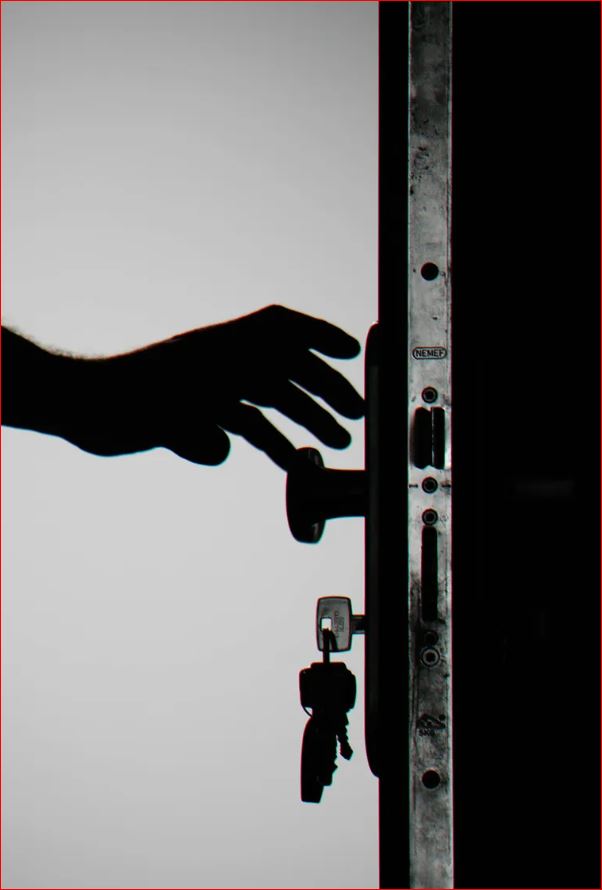
Vanessa stood there like a ghost pulled from a grave I had sealed eighteen years ago.
She looked polished, expensive, and distant, like someone who had spent years constructing an image and perfecting it. Her clothes probably cost more than our monthly rent. Sunglasses hid her eyes despite the gray sky.
She lowered them slowly.
“Jonah,” she said, her voice sharp with judgment.
Before I could respond, she stepped past me into our home, heels clicking against the worn floor. Her gaze swept over the sewing table, the fabric, and the life we had built.
Her nose wrinkled.
“You’re still living like this?” she sneered. “Eighteen years, and you’ve amounted to nothing.”
I blocked the doorway to the living room instinctively.
“Dad?” Lena called. “Who’s there?”
I took a breath. “It’s your mother.”
The silence that followed was heavy.
Vanessa brightened her tone artificially. “Girls. Look at you. All grown up.”
Iris tilted her head. “We can’t see. And yes, we’re blind. Isn’t that why you left?”
For the first time, Vanessa hesitated.
“I’ve thought about you every day,” she said, recovering quickly.
Lena’s voice was calm and devastating. “We haven’t thought about you at all.”
Vanessa stiffened, then forced a smile. “I didn’t come empty-handed.”
She placed two garment bags on the couch, followed by a thick envelope that landed with a heavy thud.
“These are designer gowns,” she said. “And there’s cash. Enough to change your lives.”
I crossed my arms. “Why now?”
She folded her hands, satisfied. “Because I want my daughters back.”
Then she added, “But there’s a condition.”
The room felt smaller.
“You have to choose me over your father,” she said smoothly. “Publicly. You’ll say he failed you, and that I was working all these years to give you a better future.”
My blood boiled.
I read the contract aloud, words that demanded my daughters erase me in exchange for money.
Lena whispered, “That’s disgusting.”
Iris picked up the envelope, weighing it in her hands.
“Yes,” she said thoughtfully. “This is a lot of money.”
My heart cracked.
“But,” Iris continued, her voice steady, “we’ve never needed it.”
Lena stepped forward. “We had a father who stayed. Who taught us to see the world without eyes? Who loved us without conditions.”
Iris tore the envelope open, scattering the bills across the floor.
“We’re not for sale,” she said.
Vanessa screamed. She accused. She raged.
Then she was gone.
The video went viral within hours.
A journalist came the next morning. My daughters told their story with grace and honesty. Vanessa’s image collapsed under the weight of truth.
Meanwhile, Iris and Lena were offered scholarships to a costume design program, not because of pity, but because of talent.
Yesterday, I stood on set watching them work with quiet confidence.
The director told me, “Your daughters are exceptional.”
“I know,” I replied. “I’m the lucky one.”
That night, we ate takeout in our small apartment and laughed until it hurt.
That was wealth.
That was a success.
Vanessa chose fame and found emptiness.
We chose each other and found everything.
Sometimes, the people who abandon you teach you the most important lesson of all, the difference between what has a price and what is truly priceless.