
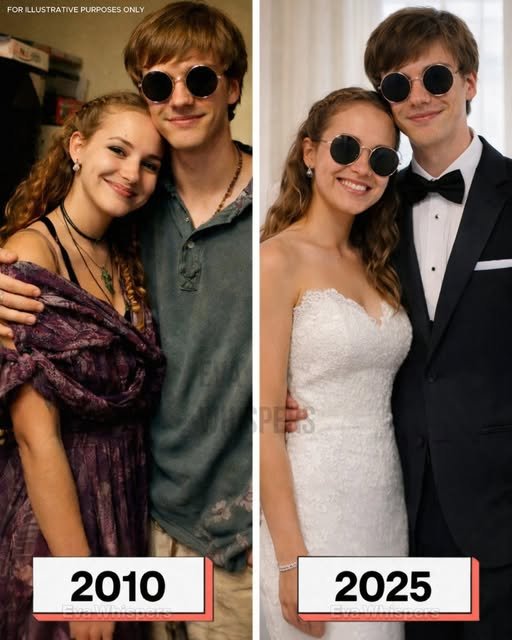
I spent years defending my blind fiancé from people who thought he was a burden. I believed love meant loyalty, no matter the cost. The morning of our wedding, I walked into his hotel room and discovered I’d been protecting a lie.
I met my fiancé during my first year of university.
The lecture hall was always loud before class started—chairs scraping against linoleum, people shouting to friends three rows back like they were at a concert instead of Statistics 101.

Chris was never part of that noise. He sat three seats away from everyone else and wore sunglasses indoors.
People naturally avoided the space around him, like there was an invisible barrier no one wanted to cross. That was what made me notice him. He was never the center of attention, and somehow, that stood out.
It sparked my curiosity. That curiosity became my downfall.
People talked around him, never to him, and he seemed perfectly fine with that. He never looked around the class to see what anyone else was doing.
Every day, he took the same seat, facing forward, head tilted slightly—as if he were listening harder than everyone else in the room.
After class one afternoon, I saw him walking slowly down the corridor. His back was straight, his steps measured.
“Hey,” I said.
He stopped immediately and turned toward me. “Hi?”
“I’m sorry,” I said quickly. “I didn’t mean to startle you.”
“You didn’t,” he replied easily. Warmly. “I heard you coming.”
“Heard me coming?”
He smiled. “I’m blind.”
“Oh. Oh my God. That’s why you always wear sunglasses. I’m so sorry—”
“Nothing to be sorry about,” he said. “I was born this way. If I suddenly woke up able to see tomorrow, I’d probably panic.”
I laughed, then immediately felt bad for laughing and apologized again. Not a great introduction—but it turned out, it didn’t matter to him.
We walked out together that day. And every day after that.
We got to know each other over coffee at the little shop near campus and lunches in the cafeteria. Never, in all that time, did I suspect Chris was lying through his teeth.
“What are your plans for spring break?” I asked one day. “Are you going home?”
He smiled like I’d asked something amusing.
“What?”
“I don’t have a home to go to.”

At first, I thought he was joking. He wasn’t.
“My parents didn’t stick around once they found out I was blind,” he said, as casually as someone might mention missing a bus.
I got the uneasy feeling he’d told this story hundreds of times—and figured out exactly how to make it hurt less.
“I went into the system. Bounced from one foster home to another.”
“That sounds…”
“Awful?” He smiled sadly. “Sometimes it was. But you learn early not to get attached to places or people that might be gone tomorrow.”
He was never adopted. He just aged out of the system.
That night, I went back to my dorm thinking I’d met the bravest person I knew.
We started studying together. Then laughing together until my sides hurt and I had to beg him to stop being so funny. His humor was dry and perfectly timed, catching me off guard every single time.
By my last semester, I realized I was in trouble.
My heart beat faster whenever I was near him. I couldn’t stop smiling.
I was head over heels for Chris.
Six months later, I brought him home for dinner.
My mother was polite in that tight-lipped way she used when she was judging silently. My father was so awkward it was painful to watch.
“So,” Dad said, clearing his throat. “What do you plan to do after graduation?”
“I already work part-time in IT,” Chris answered. “And I have an offer lined up.”
“Oh,” my mother said thinly. “It’s nice to know there are industries you can work in.”
I felt my face burn.
The worst part came afterward, while I was helping Dad load the dishwasher.
“You could do better,” he said.
“Better how?” I snapped. “Chris is kind. He’s funny—”
“Someone healthy and successful,” Dad said carefully. “Someone with fewer… limitations.”
Mom sighed. “Honey, he’s nice. But he’s a burden.”
We left soon after. I never told Chris what they said. What good would it have done? Their ignorance wasn’t his problem.
He lived completely independently. He studied harder than anyone I knew. He worked weekends. He navigated the world fearlessly.
He was not a burden.

When he proposed, it was simple. We were sitting on the couch when he took my hands.
“I don’t have much,” he said. “But I love you. Will you marry me?”
“Yes,” I said, kissing him. “A thousand times, yes.”
I imagined our life together—kids, a dog, Sunday mornings with coffee in bed, growing old side by side.
The night before the wedding, we stayed apart, just as tradition dictates. My mother insisted on this, even though she hadn’t approved of the marriage in the first place.
I woke up glowing with excitement, nerves coursing through me as I thought about how I would survive the hours before I said, “I do.”
Then, someone knocked on my door. It was my maid of honor. She looked pale, shaking, and was crying so hard she could barely stand upright.
“I don’t know how to say this, but he’s been lying to you. All these years.”
“What? Who’s been lying to me?”
“Your fiancé, Chris!”
Her voice broke. “He’s not blind. I… I saw something. You need to see it too. Right now.”
She grabbed my hand and towed me down the hallway. I followed, too confused to ask questions.
As we approached his hotel room, she slowed down. The door was slightly ajar.
I looked inside.
My knees almost gave out. Chris was sitting at the small desk by the window, with several cue cards spread out in front of him—our wedding vows, I’m sure. Regular paper covered in handwriting, not Braille.
I swear I forgot how to breathe as I watched him lean forward, his lips moving, and then pick up a pen to cross out a line.
“See?” my maid of honor whispered. “He’s reading and writing.”
Chris pushed his chair back and walked to the mirror. I watched in disbelief as he lifted his chin and straightened his tie, adjusting it until it sat perfectly centered.
What I did next wasn’t something I’m proud of. It was impulsive, and I never would have risked it if I’d been thinking clearly, but I wasn’t. I stepped into the room.
Chris was turning away from the mirror when I lifted one foot and removed my slipper.
I didn’t think; I didn’t hesitate. I tossed it toward the desk, just across the space in front of his chest.

Chris flinched. His shoulders tightened, and he spun toward the door. The slipper landed on the desk with a soft thud as Chris made direct eye contact with me for the first time.
“Charlotte, you—” His eyes widened. “Oh. This… I can explain.”
My maid of honor found her voice first. “Oh my God.”
“How long have you been lying to me?”
Chris swallowed. His hands dropped to his sides. “I was going to tell you.”
“When?” My maid of honor snapped. “After the ceremony?”
He didn’t answer her. Instead, he looked at me—looked at me, not past me, the desperation clear in his eyes, with no sunglasses between us.
“I was afraid.”
I laughed bitterly. “Afraid of what?”
“Of losing you.” The words tumbled over each other. “Of you seeing me differently. Everyone does once they know I’m not completely blind. They leave.”
I shook my head. “You let me fight my parents for you.”
“I didn’t ask you to—”
“You let me.” My voice rose. “You had so many opportunities to tell me the truth, but instead, you acted like you couldn’t see anything and let me build a life on a lie.”
“Honey, please—”
Tears streamed down his face.
“It just got too big! I never meant to lie, but you made assumptions, and it was just easier to go along with them. Every year, I thought, after this. After graduation. After the proposal. After the wedding.”
“You stop right there.”
I raised a hand. “I made assumptions… and you never corrected me. You were open enough about everything else, Chris. Don’t make it sound like I’m the bad guy here.”
He flinched again. “Please, Charlotte. I’m sorry I lied, but I love you, and you love me. We can move past this…”
“No, we can’t. You lied to me because you thought I’d see you differently… that’s not love.”
Silence pressed in around us. Finally, I reached for the ring on my finger. I slid it off and set it gently on the corner of the bed.
“You don’t get to stand at an altar and promise honesty when you’ve been practicing deception.”
I turned away before he could say anything else.
In the hallway, my maid of honor slipped her arm through mine.
“I’m so sorry,” she whispered. “But you needed to know.”
I nodded. My legs were shaking, but I was upright. Still moving. Still breathing.
Behind us, a door closed.
And for the first time all morning, I could breathe.