
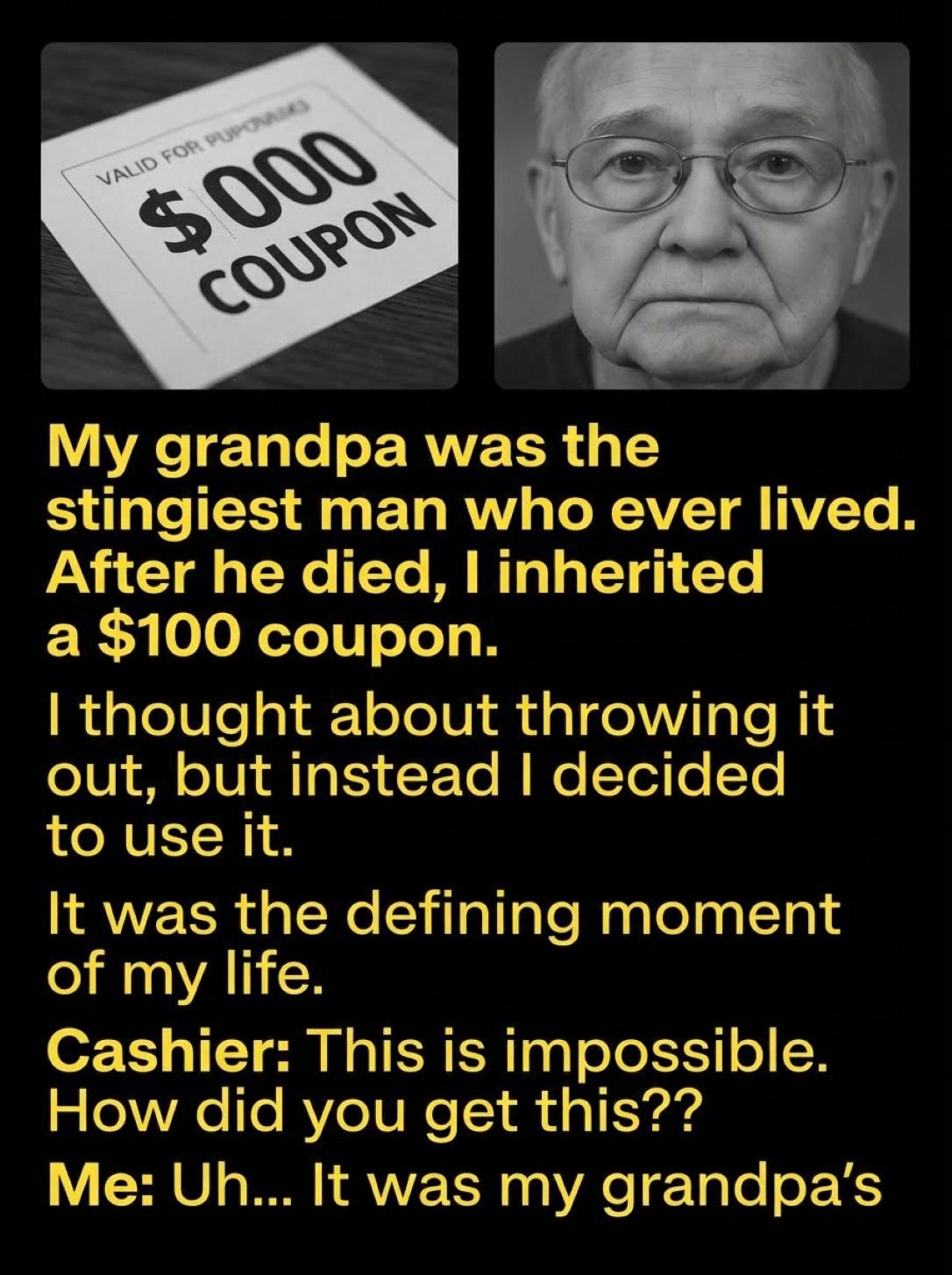
My grandfather was famous in our family for his habits, and not in a flattering way. He reused envelopes until they were nearly transparent, saved rubber bands in jars, and switched off lights as if electricity were coming straight out of his own pocket. As kids, we laughed about it. As adults, we rolled our eyes. He seemed obsessed with saving things long past their usefulness, clinging to scraps while the rest of the world moved on. So when he passed away and I learned that my inheritance consisted of a single, wrinkled one-hundred-dollar coupon tucked inside an old book, my reaction wasn’t shock. It was disappointment. The book was filled with handwritten notes about grocery prices from decades ago, and the coupon looked ancient, creased from years of careful folding. I assumed it was expired, meaningless, and symbolic of everything we joked about when it came to him.
I almost threw it away. Standing in my kitchen, holding that brittle piece of paper, I told myself it wasn’t worth the effort. But something stopped me. Maybe it was guilt, or curiosity, or the quiet thought that my grandfather had never kept anything without a reason. On a whim, I decided to try using it. I drove to the store listed on the coupon, half-expecting the place not to exist anymore. It did. Modernized, brighter, different—but still there. When I handed the coupon to the cashier, she froze. She turned it over, then called for a manager. They whispered back and forth, both staring at the paper like it was a relic. Finally, the cashier looked up and said, “We stopped issuing these decades ago. How did you get this?”
When I told them it had belonged to my grandfather, their expressions changed. The manager explained that the coupon came from an old customer loyalty program that had never officially expired, only quietly discontinued. Technically, it was still valid. Without hesitation, they honored it. As the discount appeared on the screen, I felt something unexpected tighten in my chest. It wasn’t excitement over the money. It was the realization that my grandfather hadn’t been hoarding useless things out of fear or stubbornness. He had believed in patience. In longevity. In the idea that value doesn’t vanish just because time passes or because others stop paying attention.
That single moment rewrote my understanding of him. His habits no longer looked like stinginess. They looked like intention. He noticed details others ignored. He trusted that small, careful choices mattered, even if the payoff came years later or after he was gone. I began seeing my own behavior differently too—how often I dismissed small efforts, rushed past quiet discipline, or assumed something old had no relevance. My grandfather didn’t leave me wealth in the traditional sense. He left me perspective. That coupon didn’t make me richer, but it made me wiser. It taught me that patience has value, that respect for resources matters, and that what you preserve—whether money, effort, or care—can one day return with meaning you never expected.