
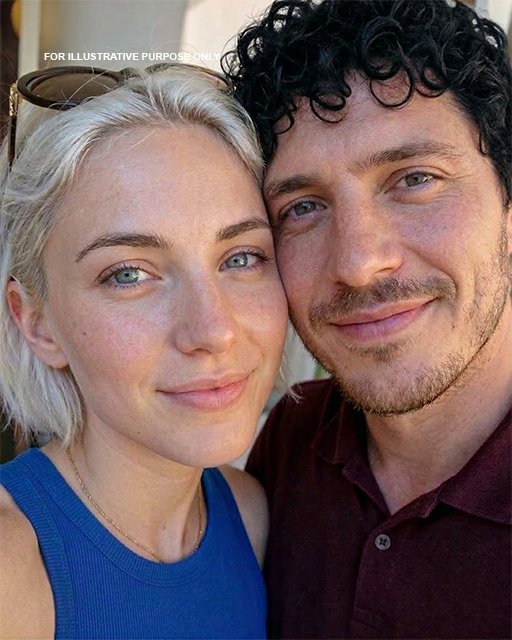
My name is Lena, and until recently, I believed I knew my husband better than anyone else in the world.
We had been married for nine years. Nine steady, familiar, comfortable years. I knew how he liked his coffee, the way he folded his shirts, and the small habits that quietly shaped our daily life.
That is why the moment I realized something was wrong with him felt so strangely insignificant.
There was no dramatic scene. No lipstick on a collar. No suspicious phone calls that ended the moment I walked into the room.
It was a Monday morning.
And my husband put sugar in his coffee.
That might sound ridiculous, but Noah had been drinking his coffee black long before I met him. He used to joke that people who added sugar were trying to hide bad coffee and weak character.
So when I saw him standing at the kitchen counter calmly stirring two spoonfuls of sugar into his mug, something deep inside me tightened.
I stood near the refrigerator holding a carton of orange juice and stared at him.
“Since when do you take sugar?” I asked.
He shrugged.
“Just felt like something sweet.”
The answer was simple. Completely normal.
Still, something about that careless shrug stayed with me long after he left for work.
I tried to ignore it. People change. Tastes change.
But by Wednesday, things had gotten stranger.
Noah was sitting on the couch watching American football.
Now, that alone might not seem odd to most people, but Noah had always been obsessed with baseball. He could quote batting averages like trivia facts and would happily sit through three hours of rain at a stadium just to watch a game finish.
Yet there he was, planted firmly in front of the television with a bowl of chips, shouting at the screen like he had followed football his entire life.
I stood quietly in the doorway and watched him for almost a full minute.
He did not even glance up.
A few mornings later, I walked into the kitchen and saw him writing something on a notepad.
What stopped me cold was the hand he was using.
His left hand.
Noah was right-handed. Always had been.
“I thought you wrote with your right hand,” I said slowly.
He didn’t look up.
“I’m trying to train my left hand again,” he replied casually. “I used it when I was a kid. Figured I’d practice.”
His tone was so relaxed that it should have reassured me.
Instead, it unsettled me even more.
After that, I started watching him more closely.
Some days, he seemed completely normal. He made the same terrible jokes, teased me about the shows I watched, and finished my sentences at dinner the way he always had.
But other times, something felt wrong.
He stopped kissing my forehead before leaving for work.
It sounds like such a tiny detail, but when you have lived with someone for almost a decade, those small gestures matter more than people realize.
I noticed other things too.
He paused before answering simple questions.
He hummed songs I had never heard him sing before.
He started sleeping with socks on.
Noah hated sleeping with socks.
I kept telling myself I was imagining it. Maybe I was stressed. Maybe we were both just tired.
But every time I was almost convinced that everything was fine, something else happened that pulled me right back into doubt.
Then, about a week after the coffee incident, everything fell apart.
We had gone to bed around ten that night. I was drifting toward sleep when I noticed something strange.
A dark stain was spreading across the back of Noah’s pajama shirt.
It looked grayish black, almost like wet ink soaking into fabric.
Without thinking, I reached out and touched it.
“What is that?”
He froze instantly.
In one quick motion, he grabbed his side of the blanket and tried to pull it away.
“Lena, stay in bed. I’ll handle it,” he said too quickly.
But I was already sitting up.
The stain was not just on the blanket. It ran up the back of his shirt toward the collar.
Before he could get up, I grabbed the fabric and pulled it aside.
And then I saw it.
Or rather, I saw what was not there.
Noah had a tattoo on his back. It was a large compass design stretching from his shoulder blade toward his spine. He had gotten it when he was twenty-three. I had traced that tattoo with my fingers countless times.
But the man sitting in front of me did not have it.
Instead, there was the smeared outline of a temporary tattoo, the cheap press-on kind kids use.
It had rubbed off during the night, leaving gray streaks across the fabric.
Underneath it, his skin was completely bare.
My lungs stopped working.
“What is our dog’s name?” I asked quietly.
He stared at me.
He said nothing.
That silence told me everything.
My phone was already in my hand before I even realized I had grabbed it.

I dialed 911.
“Who are you?” I shouted. “Where is my husband?”
Before the call could connect, he spun around and snatched the phone from my hand.
He ended the call instantly.
Then he slowly handed the phone back to me, both hands raised as if surrendering.
“Please,” he said. “If you care about Noah, just listen first.”
I did not want to listen.
I wanted to scream until the police showed up.
But the way he said Noah’s name stopped me.
My heart was pounding so loudly it felt like it filled the entire room.
He stood about three feet away from me, pale and shaking.
And he looked exactly like my husband.
Not similar.
Identical.
The same jawline. The same crooked nose. The same faint scar above his eyebrow.
While he tried to steady his breathing, I quickly sent a text to my brother Max without breaking eye contact.
Sharing my location. If I go silent for twenty minutes, come here.
I hit send and slipped the phone back into my pocket.
“Talk,” I said coldly. “Now.”
He slowly sat on the edge of the bed.
“This is not really my secret to tell,” he muttered. “But I warned him you would figure it out.”
“Start explaining.”
He ran a hand through his hair.
“My name is Leo,” he said quietly. “And Noah is my twin brother.”
The words felt unreal.
According to Leo, he and Noah had been separated as infants when their parents divorced. Each parent had taken one child and moved to a different state.
They grew up without ever knowing the other existed.
For 41 years, they lived completely separate lives.
Six months ago, Leo was diagnosed with a serious heart condition. His doctors recommended genetic testing and suggested he look for biological relatives.
So he ordered a DNA ancestry test.
Noah’s name came back as his closest match.
Two strangers suddenly discovered they were identical twins.
Leo told me they met for the first time only three months earlier.
That was when everything changed.
Leo’s 14-year-old daughter, Mia, had been suffering from liver failure for more than a year. She was on the transplant waiting list, but the chances of finding a donor in time were slim.
When Noah learned about her condition, he volunteered to be tested.
He turned out to be a perfect match.
But he never told me.
“He was afraid you would try to stop him,” Leo said quietly.
That sentence hurt more than anything else I had heard all night.
“Where is my husband?” I asked.
Leo looked toward the door.
“In recovery,” he said. “At the hospital.”
The drive there was almost silent.
I watched every movement Leo made.
The way he held the steering wheel differently.
The way he flinched whenever I said Noah’s name.
When the hospital finally appeared ahead of us, glowing in the darkness, my entire body felt numb.
Leo led me through the building and down a quiet hallway until we stopped outside a room.
Through the window, I saw a teenage girl sleeping in a hospital bed.
Dark hair spread across the pillow. Machines blinked beside her.
“That is Mia,” Leo said softly. “My daughter.”
She looked so small.
So fragile.
After a moment, I turned and walked into the next room.
Noah was lying in the bed, pale and exhausted, a thick bandage wrapped around his side.
When he saw me, the color drained from his face.
“Lena…”
“You made me think I was losing my mind,” I said.
“For a week I thought something was wrong with me. I questioned everything I saw in my own house.”
“I did not know how to tell you,” he whispered.
“You put a stranger in our bed,” I said. “You let me spiral while you hid the truth.”
“I was scared you would say no.”
“That was not your decision to make.”
The room fell silent except for the quiet beeping of a monitor.
“I know,” he said.
His voice broke.
“But she had no one, Lena. A fourteen-year-old kid with no one left to save her life.”
I looked at him.
And suddenly I felt everything at once.
Anger.
Pain.
Confusion.
And somewhere beneath it all, pride.
“I am proud of you,” I said quietly.
He looked surprised.
“But that does not erase what you did to me.”
Then I turned and walked out.
Two days later, I returned to the hospital to bring him home.
Noah walked slowly through the sliding doors with one hand pressed against his side.
He got into the passenger seat and stared straight ahead.
For a while, neither of us spoke.
Finally he said, “I’m sorry, Lena.”
I nodded.
“I know that is not enough.”
“No,” I said. “It isn’t.”
When we pulled into the driveway, he gently placed his hand over mine.
I did not pull away.
But that night I moved my pillow into the guest room.
Not because I was done with him.
But trust is not something you can turn back on like a light switch.
Noah gave his niece a second chance at life.
He did something brave. Something most people would never even consider.
But he also made me feel invisible in my own marriage.
Livers grow back.
Trust does not.
Now we are rebuilding things slowly, one honest conversation at a time.
Mia is recovering well. The doctors say she will live a full life.
And every time I see her smile, I understand why Noah made the choice he did.
I am just still learning how to forgive the way he chose to make it.