
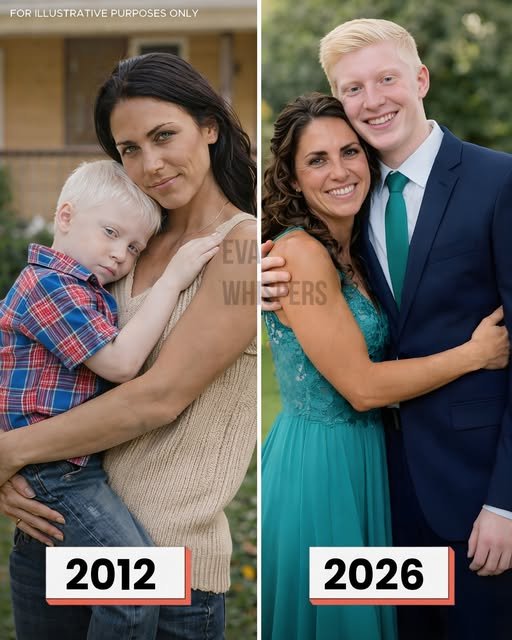
I was sixteen when I first met a pregnant homeless woman at a community outreach center. After she passed away, I ended up raising her son as my own. I believed I understood everything about him—until years later, my husband discovered something that completely changed how I saw things.
I began volunteering at the outreach center when I was sixteen. You know how it is with college applications—everyone wants proof that you care about something bigger than yourself.
The center was a converted brick building near the riverwalk. It provided free prenatal checkups, donated clothes, and hot meals twice a week. That was where I met the woman who would change my life.
My responsibilities there were simple: folding clothes, wiping tables, handing out intake forms, and offering a friendly smile to people who looked like they needed one.
That’s when I met Marisol.
She rarely came during meal hours. Instead, she would quietly slip inside when the building was mostly empty. She was thin, visibly pregnant, and always kept her hair tightly pulled back.
Her eyes were alert but exhausted, the kind of tiredness that made you wonder when she had last truly rested.

Every time we offered shelter referrals, she politely refused. She never gave an address either. Once she said she slept “near the water,” which was vague enough to reveal nothing and everything at the same time.
Her voice was gentle and polite, almost as if she felt guilty for existing.
I noticed that Marisol never asked questions, never complained, and never stayed longer than necessary. She would take what she needed, thank us sincerely, and quietly disappear again.
Sometimes while folding donated sweaters or wiping plastic chairs, I would find myself wondering about her. Where did she go afterward? Who had she been before her life led her to sleeping near the river?
When her son was born, she named him Noah.
I remember the first time I held him.
Marisol had stepped away to meet with the nurse, and I happened to be sitting nearby. Noah was about three months old, wrapped tightly like a tiny burrito.
When I looked at him, his eyes were serious—almost thoughtful, as if he was already observing everything around him.
“Are you watching us all?” I said softly. “What do you think of it, little man?”
He gripped my finger firmly but stayed silent.
When Marisol returned, I handed him back and said, “He doesn’t cry much.”
“He listens,” she replied gently as she rocked him.
Then she added quietly, “People think I’m stupid. I just loved the wrong person.”
That was the only thing she ever said about her past.
Everyone at the center worried about Marisol and Noah. The staff repeatedly talked to her about shelters, safety, and available resources. She always thanked them—and left anyway.
I often watched her push that stroller with the broken wheel that constantly veered to the left as she disappeared down the riverwalk.
For four years, I watched her come and go with Noah. It always felt like something fragile was hanging in the balance.
Eventually, something did happen.
One afternoon, the center doors burst open.
A woman I vaguely recognized—another volunteer—ran inside carrying Noah. Her face was red and streaked with tears.
“Eliza! There’s been an accident… Marisol. Oh, God. She… the car came out of nowhere. Didn’t even stop. I need to get back. She’s still — please, take him.”
I took Noah into my arms.
He clutched a red toy truck so tightly his knuckles had turned white. His face was blank, as if someone had switched off the lights inside him, and that terrified me.
I set him down and knelt in front of him.
“Hey, Noah. You know me, right? It’s Eliza.”
He nodded once.
“When’s Mama coming?”
I couldn’t answer.
Marisol never came back. She died before the ambulance arrived.
Child services showed up within hours.
We all tried to remember if Marisol had ever mentioned family or friends. But there was no one.
Just a quiet little boy with serious eyes and a broken toy truck.
He would have to enter foster care.

When the social workers tried explaining the situation to him, Noah wrapped himself tightly around my leg.
“Please don’t make me sleep with strangers,” he whispered.
Something inside me broke open at that moment.
“Don’t worry, bud, it will be okay. I’ll do everything I can to take care of you.”
I had no right to promise him that.
At the time, I was working full-time, volunteering at the center, and putting myself through college while barely managing rent. I was twenty years old and barely capable of taking care of myself.
Still, I fought for Noah.
There was paperwork, home inspections, and background checks. Most weeks I lived off instant ramen. I cried almost every night in the shower, terrified that I was ruining both our lives.
But eventually, when Noah turned five, I officially adopted him.
Noah grew up without asking for much. He never complained about hand-me-down clothes and always helped with chores.
When he was ten, I once found him repairing his sneakers with duct tape because the sole was coming loose.
“Why didn’t you tell me they were falling apart?” I asked.
He looked confused. “They still work.”
I laughed at the time, thinking it was sweet. I didn’t realize what it actually meant.
When Noah was twelve, I married Caleb.
Caleb approached parenting carefully. He was logical, observant, and methodical.
For several years everything seemed fine—until Caleb began noticing something in Noah’s behavior that I had missed. Or maybe I simply didn’t want to see it.
One morning at breakfast, Caleb finally brought it up.
I stood at the stove frying eggs.
“Noah, do you want one or two?”
“One’s fine,” Noah answered from the table, focused on his homework.
Caleb looked at him over the rim of his coffee mug. “Big math test today, right?”
Noah nodded. “Mr. Henson said it’s mostly review.”
I placed the plate in front of him—egg, toast, and apple slices.
“I can make you a sandwich for later,” I offered.
“I’m okay,” Noah replied quickly.
“You never stay after school for any clubs,” Caleb said. “Is there anything you’re interested in that the school doesn’t offer?”
Noah hesitated briefly. “I’m good.”
After finishing his breakfast, he rinsed his plate, wiped the counter, and slung his backpack over his shoulder.
“Bye,” he said.
“Have a good day,” I replied.
“Text me if you need a ride,” Caleb added.
“I’ll walk,” Noah said.
The door closed behind him.
I smiled as I poured another cup of coffee.
“He’s doing so well. I can’t believe how easy the last few years have been.”
“Yeah,” Caleb said slowly. “He’s very low-maintenance.”
I shrugged. “That’s Noah.”
Caleb didn’t mention it again until last night.
When I got home from work, he asked me to sit down at the kitchen table.
“Eliza, here’s what your son, Noah, has been hiding from you for years.”
I stared in shock as he slid a folder toward me.
I opened it and began flipping through the pages.
“What on earth is this?”

Inside were emails from teachers recommending Noah for advanced pre-college programs I had never heard about.
There were notes from the school counselor offering support, and even a permission slip for a school trip to Washington, D.C.—unsigned.
In the margins, Noah had written short notes.
Too expensive.
Not necessary.
They have enough to worry about.
My chest tightened.
Then I opened a notebook inside the folder.
It wasn’t a diary. There were no emotions or complaints. Just lists.
Noah had carefully documented monthly expenses like a budget.
Halfway down one page, squeezed between rent estimates and grocery numbers, was a small sentence:
If they’re happier without me, I’ll understand.
Tears filled my eyes.
The next page was titled “If They Need My Room.”
It listed bus routes, local job postings, and addresses of youth shelters.
He had been preparing to leave in case we no longer wanted him.
But the most painful page was the final one.
It was labeled “Rules.”
The writing was childish and the paper worn, as if he had written it years ago and studied it often.
Don’t be loud.
Don’t need too much.
Don’t make people choose.
Be ready.
I closed the folder and sat there crying.
Somewhere along the way, I had failed him. Somehow, he had come to believe that he wasn’t permanent—that he wasn’t safe.
I needed to fix that.
Caleb spoke softly.
“I found it while cleaning his room. I wasn’t looking for anything. It was hidden behind his binders.”
I pushed my chair back and stood.
“I need to talk to him.”
Noah was sitting cross-legged on his bedroom floor, repairing something with tape.
When he saw me, he looked up calmly.
“Hey,” he said. “Did I do something wrong?”
I sat down across from him on the floor.
“No, you didn’t. But I did.”
I placed the folder between us.
“I found this.”
Noah stiffened.
“It’s nothing. Just… plans. I was just being prepared. It’s not a big deal.”
I opened the notebook to the “Rules” page.
“Who taught you this?”
He shrugged.
“Nobody. I just figured it out. So I wouldn’t be a burden.”

The word broke my heart.
I pointed at one line.
“’Don’t make people choose.’ What does that mean?”
Noah hesitated.
“It means if I don’t need much, it’s easier.”
“Easier than what?”
“For people to love me. If they don’t have to choose between me and the stuff they want, or me and other people, I can stay with them longer.”
He looked at me quietly.
“I can stay with you.”
That was when I lost control.
I grabbed the page and tore it in half. Then again.
Noah flinched.
“Those rules don’t exist anymore, okay? You’re not in trouble, baby. I’m sorry, I didn’t mean to frighten you.”
I gently rested my hand on his shoulder.
“But you’re done living like this. You’re my son, and this is your home. Forever and always. You’re not replaceable.”
Then I pulled out something I had grabbed at the last minute.
A brand-new manila folder.
On the tab, I wrote in thick marker: PLANS.
I slid it toward him.
“This is what we’re doing now.”
Noah stared at it cautiously.
I pulled out the printed pages recommending him for programs and the counselor’s letter.
“You’re going to do whichever one of these you want to do. Okay? You’re going to take the opportunities presented to you with both hands, unapologetically, because you deserve them.”
He looked down.
“I want to… I will. Even if it costs money.”
My heart broke and healed at the same time.
“Good.”
I pulled him into my arms.
For the first time in years, he allowed himself to be small. He buried his face against my shoulder, and his whole body trembled as he released the weight he had been carrying for far too long.