
For years, my classmates loved reminding me that I was “just the pastor’s daughter,” as if that were something to laugh at. I ignored it, carrying their words quietly. But on graduation day, when they tried it one last time, I set aside my prepared speech and finally said what I should have said long ago.
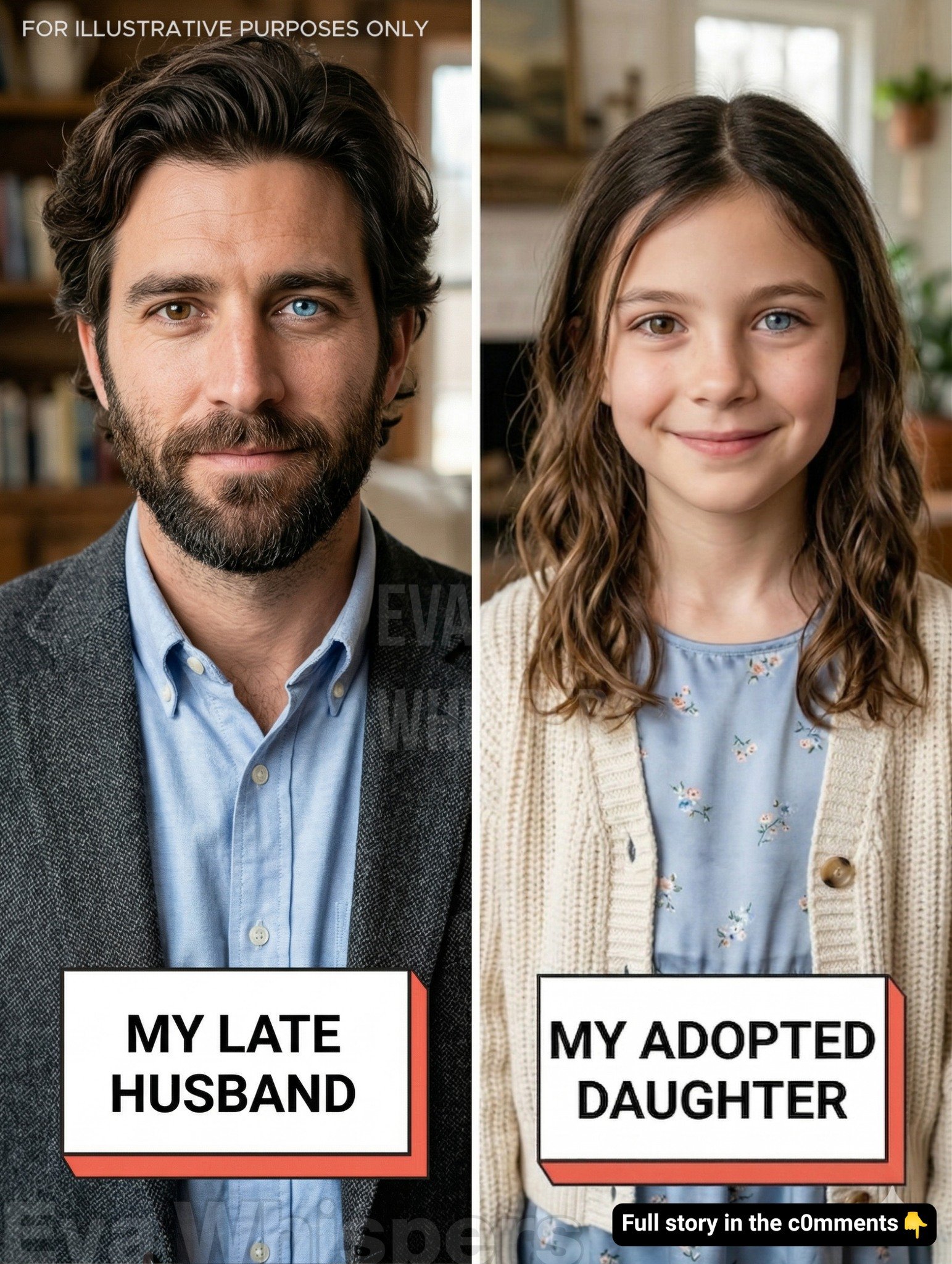
I was left on the front steps of the church as a baby, wrapped in a yellow blanket with one corner dragging in the wind. My dad, Pastor Josh, always told me that part of my story gently, never like a wound.
“You were placed where love would find you first,” he’d say. And he made it feel true every single day after.
Dad was the pastor of that little church then, and he still is now. He became my father in every way that mattered long before the paperwork caught up. He packed my lunches, signed my report cards, learned how to part my hair down the middle, and sat in folding chairs through every choir concert as though I were headlining something major.

By eighth grade, the kids already had names for me: “Miss Perfect.” “Goody Claire.” “The church girl.”
They’d ask if I ever had fun or if I just went home for entertainment. I would smile, shrug, and keep walking—because that was what Dad taught me to do.
“People talk from what they’ve known,” he always said. “You answer from what you’ve been given.”
It sounded beautiful at home. But in a crowded school hallway, it was harder to live by. Some afternoons, I’d come home carrying those comments like pebbles in my pockets—small, but heavy enough to notice. Dad would be in the kitchen chopping onions for soup or ironing his collar for Wednesday’s service, and he’d take one look at my face and know.
“Rough day, sweetheart?” he’d ask.
I’d nod, and he’d pull out a chair. “Tell me the whole thing, Claire.”
He never rushed my hurt. He listened with his elbows on the table and his hands folded, then said, “Don’t let people turn your heart hard just because theirs is still learning.”
One night, I asked him, “What if one day I get tired of being the bigger person, Dad?”
He leaned back, watching me carefully. “Then that just means your heart’s been working hard, baby girl. And that’s nothing to be ashamed of.”
I swallowed. “But what if I don’t always want to be that strong?”
Dad smiled, and his answer followed me all the way to that stage years later: “Don’t let people turn your heart hard just because theirs is still learning.”
Three weeks before graduation, the principal asked me to give the student speech. I said yes before my nerves caught up, then spent the walk home wondering why I’d agreed.
Dad met me at the door. “Good news or panic?”
“Both. I have to give the graduation speech.”
He grinned so wide the lines around his eyes deepened. “Claire, that’s wonderful.”
“It is not wonderful, Dad. It is terrifying.”
He opened his arms. “Same thing sometimes.”
For the next two weeks, I wrote and rewrote that speech until the pages looked worn at the corners. Dad listened to me practice from the couch, the doorway, and the hall while pretending to tend to a plant he’d somehow kept alive for six years.
When I finished one run-through without checking the page, he clapped as though I’d won a trophy. Dad made ordinary milestones feel significant, and maybe that’s why I wanted so badly not to let him down.
A few days before graduation, he took me to a dress shop in town. We couldn’t afford anything extravagant, and I knew it. I picked a soft blue dress with a fitted waist and a skirt that moved when I turned.
When I stepped out of the dressing room, Dad pressed a hand over his mouth. “Oh, baby girl,” he said, eyes glistening. “You are the most beautiful girl in the world.”
I smiled. “You always say that, Dad.”
He held my gaze. “Because it’s always true, sweetheart.”
I twirled once, and the skirt flared out around my knees. Dad wiped his face with the back of his hand.
“Stop doing that,” I said. “You’re making me emotional in a retail setting.”
Dad laughed, but the look on his face made me want graduation to be perfect—for him, more than for me.

Graduation morning began with a special Saturday service at church, because in our house, even a day like that started with faith. Afterward, Dad pulled out a gift bag he’d hidden all week. Inside was a silver bracelet with a tiny engraved heart on the inside, visible only if you looked closely.
I turned it over and read the words: “Still chosen.”
I tried to speak, but my voice wouldn’t cooperate. Dad touched my shoulder. “This is for you… in case the day gets loud.”
I threw my arms around him. “You really need to stop trying to make me cry before public events, Dad.”
He hugged me back, and that steadied me.
We barely made it on time. My dress slid on easily. Dad adjusted a stray piece of hair, straightened it with careful fingers, then leaned back. “I was learning to braid your hair for kindergarten,” he said softly. “Now look at you.”
“Dad, please don’t start again!”
“I am not starting anything, Claire.” But his eyes betrayed him. “All right,” he finally said. “Let’s go make them listen.”
At the time, I thought he meant my speech. I didn’t know he was naming the whole night.
The graduation hall was crowded when we arrived. Dad had come straight from church, still in his pastor’s robe with a cream stole draped over his shoulders. He looked exactly like himself, and I was proud to walk beside him.
From the back row, some classmates called out:
“Oh, look, Miss Perfect finally made it!”
“Claire, please don’t make the speech BORING!”
Laughter rippled in ugly bursts. My face went hot. Dad glanced at me, then at them, then back at me. He didn’t say anything—he knew I was trying to hold it together.
“I’m okay, Dad,” I whispered.
He squeezed my hand once. “I know you are, champ.”
But I wasn’t. Not really.
When my row stood to approach the stage, I followed with my pages in hand. Just before I reached the steps, a voice behind me said, low but meant to be heard: “Watch, she’s gonna read every word like a sermon!”
The laughter stayed a second too long. That was all it took.
I stopped on the stage stairs. The principal smiled, waiting. Then I looked down at the front row and saw Dad, smiling at me with such open pride that the pain in my chest turned into something sharper and stronger.
The principal handed me the microphone. “Whenever you’re ready, Claire.”
I looked at my notes one last time, set them on the podium, and stepped up.
“It’s interesting,” I began, “how people decide who you are without ever asking.”
The room went still.
“‘Miss Perfect.’ ‘Goody Claire.’ ‘The girl who doesn’t have a real life,’” I went on. I found the faces that had followed me for years. “You were right about one thing. I did go home every day. I went home to the one person who never made me feel like I needed to be anything else.”
That was the moment the air in the room changed.
“I went home to the man who chose me when I had no one else,” I continued. “To the man who found me on the church steps and never once made me feel left behind. He packed my lunches, sat through every concert, and learned how to braid my hair from library books because there wasn’t anybody else to teach him…”
A few people in the audience looked down.
“He had already said goodbye to the love of his life,” I said, voice shaking, “and he still opened his heart to me.”
Dad shook his head slightly from the front row, mouthing, “Claire, no…”
I loved him for that—for wanting no praise even then. But I was done letting them define me.
“You saw someone quiet and decided it meant I had less,” I said. “You saw a pastor’s daughter and turned that into a joke. But while you were deciding who I was, I was going home to a father who never once missed showing up for me.” My fingers curled around the podium. “And the truth is, I was never the one with less.”
The hall fell into a stillness that let the words sink all the way through.

“If being ‘Miss Perfect’ means I was raised by a man like Pastor Josh,” I said, looking directly at Dad, “then I wouldn’t change a single thing.”
He covered his mouth, shoulders folding in, eyes shining.
The principal whispered, “Finish strong, Claire.”
I nodded. “Thank you. That’s all I wanted to say.”
I walked off the stage. No one laughed. No one looked me in the eye. A boy who had once asked if I wore church clothes to birthday parties stared hard at the floor. One of the girls who loved calling me “Goody Claire” wiped under her eyes and kept her face turned away.
Dad waited near the side exit where the crowd thinned out. His robe was slightly crooked, and his eyes were red.
I walked up to him and said, “I’m sorry if I embarrassed you.”
He looked at me like I’d lost my mind. “Embarrassed me? Claire, you honored me more than I know how to bear.”
I started crying too.
Dad held the back of my head and said, “I just never wanted you hurt enough to have to say it that way.”
“I know, Dad.”
“But I’m glad you said it, honey,” he added.
I leaned back to look at him. “You are?”
Dad smiled through wet eyes. “I would’ve preferred a slightly less dramatic blood pressure experience, but yes.”
I laughed so hard through my tears that people nearby turned to look, and for once I didn’t care at all.
When we finally headed toward the parking lot, one of the girls from my class hurried over, mascara smudged at the corners.
“Claire,” she said. “I didn’t realize…”
I looked at her for a long second. Not mean. Not gentle either. Just honest.
“That’s kind of the point,” I said.
She nodded like that line had found its mark. Dad glanced at me once we reached the car.
“Was that your version of grace?” he asked.
I slid into the passenger seat. “It was my graduated version.”
Dad laughed, started the car, and squeezed my hand.
On the drive home, the bracelet on my wrist caught the light from the street. I turned it over with my thumb and looked at Dad’s hands on the steering wheel—the same hands that packed lunches, braided hair, and clapped the loudest at every concert, no matter how off-key the choir was.
My classmates had spent years acting like I should be embarrassed of where I came from. They were wrong.
When we pulled into the church lot, Dad shut off the engine and said, “Ready to go home, sweetheart?”
I smiled and answered, “Always, Dad… always.”
Some people spend their whole lives looking for where they belong. I was lucky. Mine found me first.