
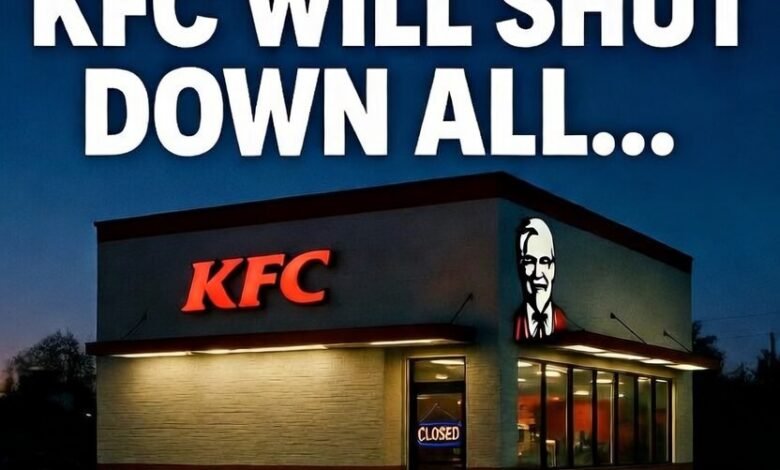
In an era where every brand is screaming for attention through flashing digital billboards and aggressive pop-up ads, KFC has decided to do the unthinkable: they are speaking by saying nothing at all. Specifically, they are speaking by removing their restaurant doors. What sounds like a construction mishap or a security nightmare is actually the centerpiece of “Out-Door,” a revolutionary marketing campaign that redefines the concept of being “always open” by literally removing the physical barriers between the kitchen and the customer.
The strategy is a masterclass in environmental marketing. By stripping away the doors, KFC has transformed the very architecture of its buildings into a bold advertising statement. In a crowded landscape where audiences are fatigued by traditional slogans, the absence of a door is instantly jarring and impossible to ignore. It is a visual shorthand for 24/7 availability that requires no translation and no explanation. The message is visceral: if there is no door to lock, the restaurant never closes.
However, the genius of the “Out-Door” campaign extends beyond the empty doorframes. Rather than discarding the removed doors, KFC has repurposed them into creative mobile displays placed strategically throughout urban centers. These repurposed doors serve as playful communication tools, featuring confident messaging that directs late-night crowds toward the nearest open location. By placing QR codes on these physical artifacts, the brand seamlessly blends real-world experience with digital convenience. A hungry commuter at 2:00 A.M. can scan a door standing in a plaza and be instantly navigated to the nearest bucket of fried chicken.
This approach succeeds through the power of subtraction. While most competitors are looking for ways to add more screens, more neon, and more noise to their storefronts, KFC has found that doing less communicates significantly more. By removing something as essential as a door, the brand creates a “pattern interrupt”—a psychological trigger that forces the brain to stop and process the anomaly. It doesn’t look like traditional advertising, which is exactly why it works. It respects the intelligence of the consumer, opting for a quiet, confident show-of-force rather than a loud, desperate shout.
The campaign also reflects a deep understanding of our modern “always-on” culture. We live in a world where streaming services never pause, digital marketplaces never sleep, and delivery runs through the dead of night. Our digital lives have become a permanent fixture of our reality. A doorless restaurant mirrors this cultural shift, visually reinforcing the idea that the brand is a constant in an ever-moving world. Whether it is a post-concert snack at midnight or an early morning meal before a shift, the building itself stands as physical proof of availability.
Ultimately, KFC’s “Out-Door” initiative offers a vital lesson in modern brand communication. It demonstrates that true innovation doesn’t always require massive budgets or cutting-edge technology; sometimes, it only requires a fresh perspective on the familiar. By removing a literal barrier, the brand has created a metaphorical connection with its audience that is stronger than any television commercial. It is a reminder that in the world of branding, removing the right obstacle can open more opportunities than any traditional entrance ever could. Through this blend of architectural storytelling and functional design, KFC isn’t just selling chicken; they are selling the peace of mind that comes with knowing the lights are always on and the “doors” are always open.