
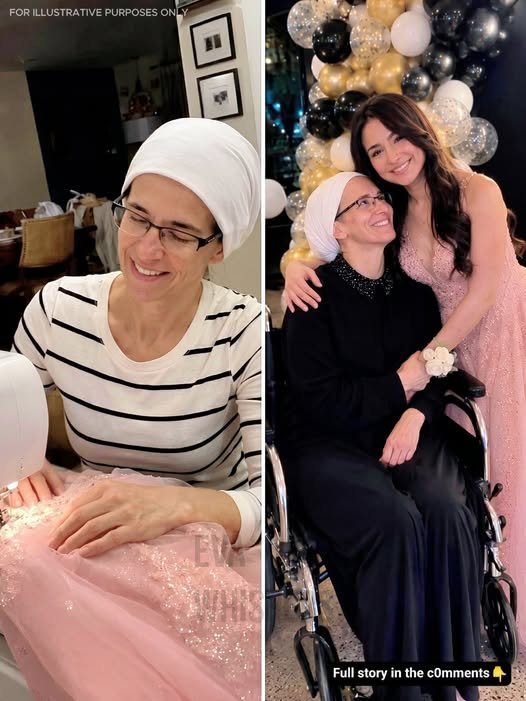
My mother spent the last weeks of her life hand-stitching my prom gown while stage four cancer slowly stole what little strength she had left. At the time, I believed she was simply trying to give me one beautiful memory before she was gone. I didn’t realize she was preparing me for something much bigger. On prom night, after she tied the final sash around my waist, she told me the truth.
My Mother’s Final Gift
My mother was dying.
Cancer had hollowed out her body, and the aggressive treatments had drained every penny our family had managed to save over the years.
I was eighteen years old, finishing my senior year of high school. By then, I had learned to dread the sound of envelopes sliding through our mail slot.
The white envelopes were bills.
The blue ones were hospital notices.
The thick packets were insurance letters that made my mother close her eyes before opening them.
Before cancer entered our lives, Mom had been a seamstress.
Her name was Sarah, but everyone in our apartment building called her Miss Sarah because she treated every repair, alteration, and stitch with care.
She hemmed pants, fixed broken zippers, altered bridesmaid dresses, and once stayed awake until two in the morning repairing a neighbor’s daughter’s quinceañera dress after the girl had cried on our couch.
“Good work hides in the details,” Mom always said.
She had taught me that when I was little.
I used to sit beneath her sewing table with a box of crayons while she worked overhead. The steady hum of the sewing machine filled our apartment.
Back then, that sound meant security.
It meant the rent was paid.
It meant dinner was cooking.
It meant Mom was nearby.
After cancer, that comforting sound became rare.
The disease took almost everything from her.
It took her hair.
It took her appetite.
It took her strength.
Eventually, it took her ability to walk from the bedroom to the kitchen without stopping to rest.
And then it took our money.
My father had left when I was nine years old. For a few years he sent birthday cards, then those stopped too.
It had always been just me and Mom.
She never made me feel like that was something sad.
But cancer made our little family feel painfully small.
By spring, every dollar we had saved was gone.
Mom’s retirement account disappeared.
The emergency fund she had built through years of sacrifice disappeared too.
So when prom season arrived, I pretended it didn’t exist.
My friends filled the group chat with photos of dresses featuring glittering bodices and lace backs. Most of them cost more than our monthly grocery budget.
I muted the chat.
One afternoon, my best friend Jenna cornered me at my locker.
“Lily, have you bought your ticket yet?”
“No.”
“Prom is in three weeks.”
“I know.”
She frowned.
“You’ve wanted to go since freshman year.”
“I changed my mind.”
“No, you didn’t.”
I shut my locker.
“Jenna, we can’t afford it.”
Her expression softened.
“I could help.”
“No,” I said quickly. “Please don’t.”
I couldn’t handle charity.
Not because I thought I was above it.
Because I was already carrying so much helplessness that one more act of kindness felt like it might break me.
That same week, I received my acceptance email from Ashford University.
It was my dream school.
I read the email while sitting on the bathroom floor so Mom wouldn’t hear me crying.
I had earned a partial scholarship.
But partial wasn’t enough.
Not with hospital bills covering our kitchen table.
Not with prescriptions that cost more than our monthly electric bill.
I printed the acceptance letter, folded it twice, and hid it at the back of my dresser drawer.
That night, Mom caught me staring at the prom flyer hanging on the refrigerator.
“Are you going?” she asked.
I pulled the flyer down.
“No.”
Her eyes sharpened.
“Why not?”
I shrugged.
“It’s just prom.”
“Lily.”
I hated when she said my name that way.
Like she could see every lie before it even reached my lips.
“We can’t afford it,” I admitted. “The ticket, the shoes, the dress. We can barely afford groceries.”
Mom sat very still.
Then she whispered:
“You are going. And you will wear the gown of your dreams.”
The statement sounded impossible.
I almost laughed.
“Mom, please. I don’t need prom.”
“Yes, you do.”
“No, I need you to rest.”
Her jaw tightened.
“Do not make yourself smaller because life has been cruel to us.”
I had no response.

The Secret Project
The next morning, Mom wheeled herself into her sewing room.
I heard drawers opening.
Boxes scraping.
Hangers sliding along the closet rod.
When I walked inside, she was sitting in her wheelchair with a sketchpad on her lap.
“What are you doing?” I asked.
“Designing,” she said.
“Mom, please.”
Ignoring me completely, she held up the sketch.
The gown was beautiful.
It had a fitted bodice, delicate sleeves, a flowing skirt, and a silk sash around the waist.
“It needs movement,” she said. “You walk too fast when you’re nervous.”
I stared at her.
“You are not making me a prom dress.”
“I already am.”
“We don’t have fabric.”
She smiled.
“I’ll handle that.”
I should have argued more.
I should have asked questions.
But in that moment, she looked alive.
Two days later, emerald silk appeared on her sewing table.
It was the most beautiful fabric I had ever seen.
Deep green.
Soft as water.
Almost glowing under the light.
“Where did you get this?” I asked.
“A lucky find.”
“Mom…”
She looked away.
“Let me have my secrets.”
I didn’t know then that she had sold her mother’s emerald necklace.
It was the last thing Grandma had left her.
Mom only wore it on special occasions.
When I was little, she used to let me hold it carefully.
“One day,” she once told me, “this will be yours.”
I thought she had simply stored it somewhere safe.
I was wrong.
Stitch by Stitch
For the next three weeks, my mother worked until sunrise.
Pain.
Nausea.
Exhaustion.
None of it stopped her.
Her hands were bruised from IV lines.
They shook constantly.
Yet she hand-stitched every bead and every layer of emerald silk.
Even now, I can hear the sound of her sewing machine at three o’clock in the morning.
Click.
Pause.
Click.
Pause.
Sometimes the pauses frightened me more than the clicking itself.
One night I woke up thirsty and found her hunched over the machine with one hand pressed against her ribs.
“Mom?”
She jumped.
“You should be asleep.”
“So should you.”
“I’m almost done with this seam.”
“You said that yesterday.”
A tiny smile appeared.
“It’s a very long seam.”
As I stepped closer, I noticed small drops of blood on the scraps of fabric beside her.
My stomach twisted.
“Mom! You pricked yourself.”
“C’mon, darling. It happens.”
“But your fingers are shaking…”
“It’s okay. At least they still work.”
Tears filled my eyes immediately.
I begged her to stop.
To rest.
To sleep.
But she only smiled.
She told me she needed to leave me something perfect.
At the time, I thought she meant the dress.
Now I understand she meant the memory.

The Acceptance Letter
A few days later, Mom found my Ashford acceptance letter.
When I came home from school, it was sitting on the kitchen table.
She sat beside it.
Pale.
Quiet.
“Why was this hidden in your dresser?”
My backpack slipped from my shoulder.
“I was going to tell you.”
“When?”
“I don’t know.”
“Lily—”
“I’m not going.”
Her face changed immediately.
“Yes, you are.”
“No, Mom. We can’t afford it.”
“You got a scholarship.”
“A partial one. There’s still housing, books, food, and everything else.”
“We’ll figure it out.”
“No.”
My voice cracked.
“There is no ‘we.’”
The moment the words left my mouth, I regretted them.
Mom looked down.
“I didn’t mean—”
“Yes,” she whispered. “You did.”
I sat across from her, crying.
“I can’t leave you.”
She reached for my hand.
Her fingers felt cold.
“Sweetheart, you are supposed to leave me.”
“No.”
“Yes. That’s what children do. They grow up. They build lives. They go places their mothers dreamed of seeing.”
“I don’t want a life that starts with losing you.”
Tears filled her eyes.
But she didn’t look away.
“You already started losing me, Lily. Don’t lose yourself, too.”
After that conversation, she became even more determined.
The dress slowly came together.
First the lining.
Then the bodice.
Then the skirt.
Then the beads.
Some evenings, when her pain became unbearable, she asked me to help.
“Sit,” she said one night.
“I don’t know what I’m doing.”
“I’ll teach you.”
Her foot slipped from the sewing pedal twice.
Finally she nodded toward it.
“You press. Slowly.”
I sat down nervously.
“What if I ruin it?”
“You won’t, sweetheart.”
“What if I do?”
“Then we fix it.”
Her hand covered mine.
“Don’t fight the cloth,” she said. “Listen to it.”
“That sounds like something from a fortune cookie.”
She laughed.
Then winced.
I immediately stopped.
“Mom?”
“I’m okay. Keep going.”
So I did.
For ten minutes I operated the pedal while she guided the fabric.
The machine hummed.
For the first time in months, I felt like the little girl sitting beneath her sewing table again.
When we finished, she smiled proudly.
“There. Now part of it is yours too.”
At the time, I didn’t understand why that mattered.
The Decision She Hid
As prom approached, her condition worsened.
She slept through alarms.
Stopped drinking coffee.
Barely ate.
I noticed there were no new appointment cards on the refrigerator anymore.
No insurance calls.
No reminders from the clinic.
Then one evening I overheard her on the phone.
“No,” she said quietly. “I won’t be continuing.”
I froze.
There was a pause.
“I understand the risks.”
Another pause.
“I’ve made my decision.”
When she noticed me standing there, she ended the call.
“Who was that?”
“No one important.”
“Was it the hospital?”
She looked exhausted.
“Lily, not tonight.”
I wanted answers.
Instead, she started coughing violently, and I ran to get her water.
The conversation never happened.
The dress was finished on prom night.
It was breathtaking.
Emerald silk.
Tiny beads.
Soft sleeves.
A shining sash.
It looked like something from a dream.
I carefully slipped it on, terrified of damaging something my mother had sacrificed so much to create.
It fit perfectly.
Of course it did.
Mom always understood how fabric should fall on a body.
As I stood in front of the mirror crying, my mother slowly rose from her wheelchair.
She could barely stand.
Yet she insisted on tying the final sash herself.
“Mom, sit down.”
“In a minute.”
“You can barely stand.”
“I said in a minute.”
Her hands shook as she tied the sash.
Then she leaned forward.
Resting her chin lightly on my shoulder.
We looked at each other through the mirror.
And then she told me the truth.
“I stopped treatment,” she whispered.
For a moment, I couldn’t process the words.
Then I understood.
I spun around.
“What?”
“A few weeks ago.”
“No.”
“Lily—”
“No, Mom. No.”
She reached toward me.
I stepped back.
“You told me it was the cancer getting worse!”
“It was.”
“But treatment could’ve helped.”
“It could’ve bought a little time. Nothing else.”
“Then why would you stop?”
“Because the time was too expensive.”
I covered my mouth.
“You don’t get to decide that.”
“I had to.”
“No, you didn’t!”
Her eyes drifted toward the dress.
“The silk came from your grandmother’s necklace.”
I froze.
“What?”
“I sold it.”
“Mom…”
She touched the edge of the skirt.
“It was the most valuable thing I owned. And it was sitting in a jewelry box while you were giving up pieces of your future.”
Tears streamed down my face.
“That necklace was yours.”
“And now part of it is yours again.”

The Folder
Then she pointed toward her desk.
“Open the top drawer.”
I couldn’t move.
“Please.”
Inside was a folder from Ashford University.
My name was printed on it.
There were tuition deposit receipts.
Housing forms.
Savings bonds I had never seen before.
A letter from her old credit union.
Everything carefully organized in plastic sleeves.
My knees nearly gave out.
“What… what is this?”
“Your beginning.”
I stared at her.
“The money from the treatment?”
“The money that was left after the hospital stopped taking everything.”
“You saved it for me?”
“I protected it for you.”
“You should’ve used it, Mom!”
“For what? A few more weeks in a chair, too sick to hold your hand?”
“Those weeks were mine too!”
She flinched.
I instantly hated myself.
Then she nodded.
“I know.”
The anger disappeared.
Only grief remained.
I knelt before her.
“Why didn’t you tell me?”
“Because you would have spent the rest of my life trying to save me instead of living yours.”
“I’m supposed to save you. You’re my Mom. I’m definitely supposed to save you.”
“No, baby.” She touched my cheek. “You’re supposed to survive me.”
That was the moment I completely broke.
She pulled me close with the little strength she had left.
I cried into her lap like a child.
After a long while, she lifted my chin.
“Go tonight.”
“I can’t.”
“Yes, you can.”
“How am I supposed to dance after this?”
“You don’t have to dance. You just have to show up.”
“Why?”
“Because every stitch in that dress says you were loved. I want the world to see that.”
I couldn’t refuse.
So I went.
The Night She Gave Me
When Jenna saw me, she immediately started crying.
“Lily,” she whispered. “You look like a princess.”
I almost told her everything.
Instead, I smiled and said:
“My mom made it.”
All evening people complimented the dress.
I smiled.
Took photos.
Danced once with Jenna.
Danced once with a boy from chemistry class who said the gown looked like moonlight on leaves.
But all night, my hands kept touching the sash.
The beads.
The seams.
Every stitch reminded me that my mother had poured the last of her strength into something beautiful.
I left early.
When I got home, Mom was waiting by the window in her wheelchair.
The sewing machine sat beside her.
Silent.
“You’re back.”
“I’m back.”
“Was it beautiful?”
I knelt beside her and spread part of the skirt across her lap.
“Yes.”
She smiled.
“Good.”
I took her hand.
“I’m still mad at you.”
“I know.”
“And I love you.”
“I know that too.”
She closed her eyes.
Still smiling.
Years Later
Years have passed.
I still have the gown.
I wore it one more time beneath my graduation robe at Ashford University—the university her folder helped me reach and her love carried me through.
Today it hangs safely inside a garment bag in my closet.
Sometimes, when life feels unbearably heavy, I unzip the bag and run my fingers across the emerald silk.
And instantly I hear the sewing machine again.
Three o’clock in the morning.
Click.
Pause.
Click.
Pause.
I see my mother bent over the fabric.
Fighting pain with every stitch.
Most people think my mother made me a prom dress.
They’re wrong.
She made me proof that I was loved enough to keep living.