
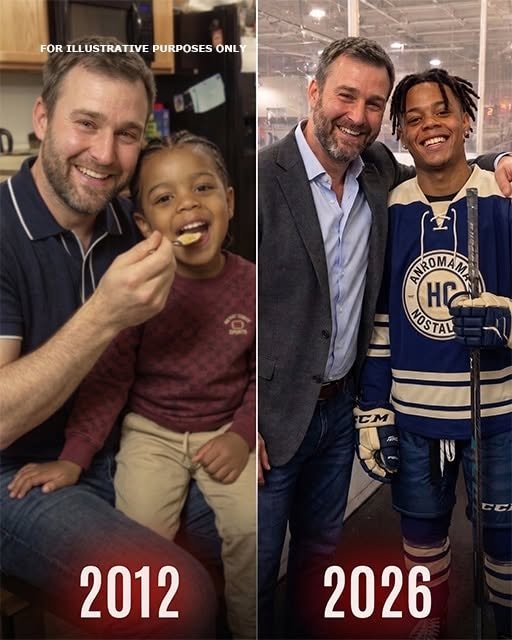
The last person I expected to see sitting in the stands that night was a man I had spent fourteen years trying not to hate.
For a moment, I forgot about the championship game. I forgot about the scouts and the cameras.
I forgot about the packed arena.
All I could see was Caleb Morgan.
My former best friend. The man who had vanished after his wife died.
The man who had left behind a four-year-old son. The man I hadn’t spoken to in fourteen years.
I thought that chapter of my life had ended a long time ago.
I was wrong.
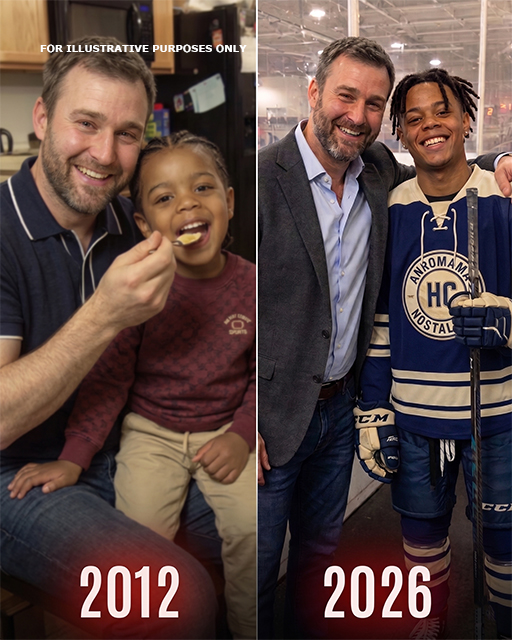
Fourteen years earlier, my phone rang at 2:11 in the morning.
Caleb’s name appeared on the screen.
I answered immediately.
“Caleb?”
For several seconds, I heard only breathing.
Then his voice.
“Ethan…”
Something was terribly wrong.
“What happened?”
A long silence.
Then:
“Lena’s gone.”
I sat upright.
“What do you mean, gone?”
“The doctors said it was an aneurysm.”
His voice sounded empty. Broken.
As if the words themselves had no meaning.
Lena was 31.
She was the kind of woman who made everyone feel welcome. The kind who remembered birthdays, organized neighborhood barbecues, and somehow knew exactly when someone needed help.
The idea of her simply disappearing from the world didn’t seem possible.
Then Caleb whispered:
“I can’t do this.”
“Where are you?”
“I can’t.”
“Stay where you are. I’m coming over.”
But he kept repeating the same words.
“I can’t.”
Then the call ended.
I drove to his house before sunrise.
The front door was unlocked.
Inside, cartoons played on television. Noah sat cross-legged on the living room floor, eating cereal.
Four years old. Still wearing pajamas.
Still believing the world was safe.
He looked up and smiled.
“Uncle Ethan.”
I smiled back.
Then he asked:
“Where’s Mommy?”
The question nearly broke me.
Before I could answer, he asked another.
“Where’s Daddy?”
I searched the entire house.
Nothing.
On the kitchen counter sat a note.
Six words.
I’m sorry. I can’t do this.
The next year was chaos.
Police found Caleb two states away. He had checked himself into a psychiatric facility less than twenty-four hours after leaving.
The diagnosis was severe traumatic grief, major depression, and suicidal ideation.
For months, he barely functioned.
But none of that changed what had happened.
A four-year-old child had still been abandoned.
Authorities investigated. Social workers became involved.
Noah was placed with me temporarily because I was the adult he trusted most.
Everyone assumed it would last a few weeks.
Including me.
Instead, it became permanent.
Over the following year, Caleb repeatedly refused visitation. He refused counseling sessions involving Noah.
He refused every attempt to rebuild contact.
Eventually, he signed away his parental rights voluntarily.
I later learned he did it because he believed Noah deserved stability instead of years of uncertainty.
Maybe he was right.
Maybe he was just running away again.
Either way, the result was the same.
After a lengthy court process, I adopted Noah.
I was twenty-eight years old. Single.
Working as a mechanic. Completely unprepared to become a parent.
And yet somehow, that’s exactly what happened.
The first years weren’t easy.
I made mistakes constantly.
I burned lunches. Forgot school projects. Missed dress-up days.
Once, I attended a parent-teacher conference wearing oil-stained work clothes because I’d forgotten to bring a change of clothes.
But Noah never cared.
To him, I was Dad.
When he got sick, I stayed up all night.
When he had nightmares, I sat beside his bed.
When he broke his arm during hockey practice, I slept in a hospital chair beside him.
Being a father wasn’t one big heroic moment.
It was thousands of ordinary choices.
Every day.
And every day, I chose him.
My coworker Ray helped more than anyone.
Whenever Noah needed me, Ray covered shifts.
Whenever life got difficult, Ray somehow made things easier.
If I thanked him, he always gave the same answer.
“Go be with your kid.”
Years passed.
Noah grew.
By senior year, he had become one of the best hockey players in the state.
College recruiters followed him everywhere.
Then, during the year leading up to graduation, something changed.
He became more private. More thoughtful.
Sometimes I would catch him staring at his phone for long periods.
Sometimes he seemed distracted, like he was carrying something heavy.
I assumed it was college. Pressure. Life.
I never pushed.
Two nights before the championship, Noah knocked on my bedroom door.
“Dad?”
“Come in.”
He sat down.
The same spot he’d sat as a child whenever something scared him.
“I need to tell you something.”
My stomach tightened.
“What is it?”
He took a deep breath.
“I’ve been talking to Caleb.”
The room went silent.
“How long?”
“Eleven months.”
I stared at him.
“Eleven months?”
He nodded.
“He contacted me after my eighteenth birthday.”
I looked away.
“And you answered.”
“Not at first.”
His voice softened.
“I ignored him for three months.”
That surprised me.
“I thought you wanted to know him.”
“I did.”
A pause.
“But I was angry.”
For the first time, I realized how much pain he had carried all those years.
“What changed?”
“He sent me something.”
“What?”
Noah looked down.
“Letters.”
“Letters?”
“He wrote one every year.”
I frowned.
“What do you mean?”
“He started writing them after signing away his rights.”
Noah swallowed.
“He never sent them.”
“Why not?”
“Because Ray wouldn’t let him.”
I looked up sharply.
“What?”
Noah nodded.
“Ray told him that if he truly wanted to help me, he needed to stop thinking about what he wanted and start thinking about what was best for me.”
I stared.
“Ray knew?”
“For years.”
The next evening, I confronted Ray.
He didn’t deny it.
“You should’ve told me.”
“No.”
The answer came immediately.
“No?”
Ray sighed.
“At first, I hated him.”
He looked toward the garage floor.
“I wanted nothing to do with him.”
Then he continued.
“But every year he’d send another letter.”
Another pause.
“Every year he’d ask about Noah.”
I folded my arms.
“So you kept a secret for fourteen years?”
“No.”
Ray looked at me.
“I kept Noah’s future separate from Caleb’s guilt.”
I didn’t understand.
Then Ray handed me a folder.
Inside were receipts.
Hundreds of them.
Hockey camps. Equipment. League fees. Travel expenses.
My stomach dropped.
“He paid for these?”
Ray nodded.
“He wanted to do it publicly.”
“I told him no.”
“Why?”
“Because children aren’t debts you repay with money.”
Ray leaned forward.
“So I gave him one choice.”
“What choice?”
“You help quietly. No credit. No recognition. No relationship in return.”
I stared at the papers.
“He agreed?”
“For fourteen years.”
The championship arena was packed.
Thousands of people filled the stands.
The game was incredible.
Noah scored twice. Set up another goal.
Dominated the ice.
When the final buzzer sounded, his team won the state title.
The crowd exploded.
Then the announcer called his name.
“MVP: Noah Carter.”
The arena erupted again.
Noah accepted the trophy.
Then he surprised everyone.
Including me.
He took the microphone.
“I want to thank two men.”
I saw Caleb straighten.
The crowd grew quiet.
“My dad, Ethan Carter.”
People applauded.
Noah smiled at me.
Then he continued.
“And Ray Thompson.”
The arena became confused.
So did I.
Noah pointed toward the stands.
Most people didn’t even know who Ray was.
But Noah did.
And suddenly I realized where this was going.
“When I was little, I thought heroes were people who saved lives.”
The arena fell silent.
“Then I grew up.”
He glanced toward Ray.
“And I learned heroes are sometimes people who spend fourteen years carrying a secret because they think protecting a child matters more than being thanked.”
Ray froze.
For the first time in my life, I saw him look completely speechless.
Noah continued.
“My biological father made choices that hurt me.”
The arena remained silent.
“He spent years trying to make up for them.”
Caleb lowered his head.
“But the people who taught me who I wanted to become were the men who showed up.”
He looked at me.
Then Ray.
“One raised me.”
“One protected me.”
The crowd rose to its feet.
Neither of us moved.
Then Noah climbed over the boards and walked toward us.
He handed the trophy to Ray first.
The entire arena gasped.
Then Noah handed it to me.
“Neither of you would’ve accepted it if I asked.”
His voice cracked.
“So I’m not asking.”
For the first time all night, Ray’s eyes filled with tears.
After the game, Caleb approached.
He looked nervous.
Older than I remembered.
Smaller somehow.
Noah met him halfway.
Neither spoke for several seconds.
Then Caleb handed him a worn cardboard box.
“What is it?” Noah asked.
“The originals.”
“The letters?”
Caleb nodded.
“All fourteen.”
Noah took the box.
“What do you want from me?”
Caleb’s eyes filled.
The answer came immediately.
“Nothing.”
For a moment, Noah simply stared at him.
Trying to decide whether he believed that.
Then Caleb smiled sadly.
“I spent fourteen years wanting forgiveness.”
He glanced toward me.
“Eventually I realized forgiveness isn’t something you earn by waiting.”
He looked back at Noah.
“So now I just want honesty.”
Noah said nothing.
Caleb nodded.
“That’s fair.”
Then he turned and started walking away.
Three months later, Noah left for college.
The house felt impossibly quiet.
A week after he moved in, he called me.
We talked about classes. Roommates. Hockey.
Then, just before hanging up, he said:
“I met Caleb for coffee.”
I waited.
“How was it?”
A long pause.
Finally, he answered.
“Awkward.”
I laughed.
“Yeah?”
“Yeah.”
Another pause.
Then:
“But I think that’s better than pretending he doesn’t exist.”
After we hung up, I sat alone in the kitchen.
Thinking about everything that had happened.
For years, I believed the story was simple.
One man left. One man stayed.
But life wasn’t that simple.
Caleb’s money had helped buy skates.
His letters had preserved regret.
His absence had caused real damage.
None of those things canceled the others out.
At the same time, none of them changed the truth.
Money couldn’t replace birthdays.
Letters couldn’t replace hospital visits.
Regret couldn’t replace presence.
Being a father wasn’t about loving a child.
It was about being there.
Day after day. Year after year.
And that was something no one could do for you.
Not even if they spent fourteen years wishing they had.