
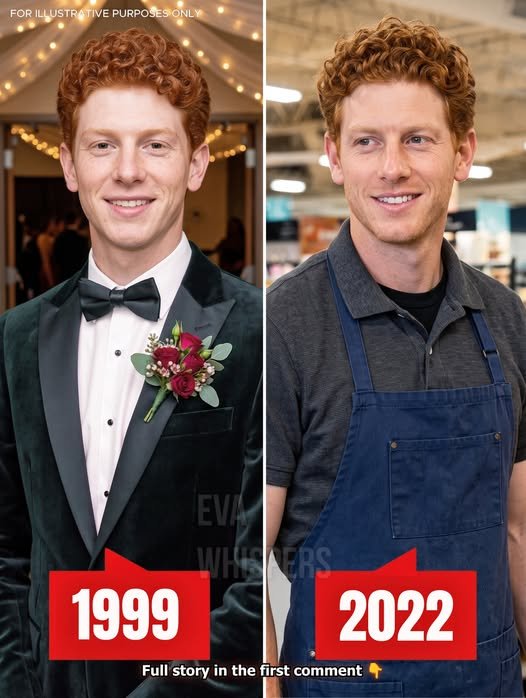
The Night That Broke Us
My brother disappeared on the night of his senior prom.
For twenty-three years, that sentence sat in the middle of my family like a candle that never burned out, only grew dimmer and sadder with time.
His name was Nathan Reed, though everyone called him Nate. He was seventeen, tall and kind, with a crooked smile that made people forgive him before he even apologized. He was the kind of brother who stole the last cookie but left half of it on my pillow later. The kind of son who teased our mother for crying too easily, then kissed her forehead when he thought no one was looking.
That night, he stood in our small living room wearing a charcoal-gray suit my mother had saved for months to buy. She kept smoothing the shoulders as if she could press her love into the fabric.
“You look so handsome,” she whispered.
Nate rolled his eyes, but his ears turned red.
“Mom, you’re acting like I’m getting married.”
“You’re growing up,” she said. “That’s close enough.”
I was twelve at the time, sitting on the stairs with my chin in my hands, pretending not to care. But I cared. My big brother looked like someone from a movie, and I remember thinking that life was about to become wonderful for him.
Before he left, he turned at the door and pointed at me.
“Don’t go in my room, Claire.”
“I wasn’t going to,” I lied.
He laughed, kissed our mother on the cheek, shook our father’s hand like a grown man, and promised he would be home before midnight.
Then he walked out smiling.
He never came back.

The Empty Room
At first, everyone thought he was late.
Then late became rude.
Then rude became worrying.
By two in the morning, my father was driving around town, stopping at gas stations, calling his friends, knocking on doors. By sunrise, my mother was standing in the kitchen in her robe, holding the phone with both hands as if she could force it to ring.
The police came. Questions were asked. Friends were interviewed. The school was searched. The roads were checked. Flyers were printed with Nate’s prom picture on them, his smile frozen forever under the words: MISSING.
No note.
No phone call.
No body.
No goodbye.
For months, our house was full of people. Neighbors brought casseroles. Reporters called. Volunteers walked through woods and along ditches. My parents gave interviews until their voices seemed to belong to someone else.
Then, slowly, the world moved on.
But we didn’t.\
My mother kept Nate’s room exactly as it was. His baseball glove stayed on the chair. His old sneakers stayed beside the bed. A stack of comic books gathered dust on his desk. Every year on his birthday, she baked his favorite chocolate cake, then cried because nobody knew whether to sing.
My father became quieter. He still went to work, still fixed the leaky sink, still paid the bills. But something in him had folded inward.
As for me, I grew up with a ghost for a brother.
Every family photo had an empty space. Every holiday had one chair nobody wanted to move. Every happy moment came with guilt, because how could we laugh when Nate might be somewhere suffering, lost, or alone?
People eventually stopped asking about him.
I never stopped wondering.
Twenty-Three Years Later
By the time I was thirty-five, I had built a life that looked normal from the outside.
I had a career in marketing. I had an apartment full of plants I sometimes forgot to water. I had friends who knew there was a sadness in me but didn’t always know its name.
I still kept Nate’s picture in my wallet.
Not because I expected to find him.
Maybe because I was afraid that if I stopped carrying him, it would mean I had accepted he was gone.
One October morning, my company sent me from our home in North Carolina to Oregon for a conference. Nearly 3,000 miles away from everything I knew.
The trip was ordinary in every way until the second morning.
I woke early, nervous about a presentation, and decided to stop at a small supermarket near my hotel for coffee and something quick to eat. It was one of those neighborhood stores with narrow aisles, faded signs, and a bell that chimed above the door.
I grabbed a coffee, a banana, and a granola bar, then joined the checkout line.
There were two people ahead of me. I was half-reading emails on my phone when I heard the cashier laugh.
My whole body froze.
It wasn’t exactly Nate’s laugh.
But it carried the same warmth.
Slowly, I looked up.
The cashier was a young man with dark hair falling across his forehead, bright hazel eyes, and that same crooked smile I had seen in every photo from the year my brother vanished.
My fingers went numb around my coffee cup.
He looked seventeen, maybe eighteen.
He looked like Nate on prom night.
Not similar.
Not familiar.
Exactly.
The Boy Behind the Counter
When it was my turn, I stepped forward like I was walking through a dream.
The cashier smiled politely. “Morning. Find everything okay?”
I couldn’t answer.
His name tag read: Noah.
He scanned my items, but I kept staring. I knew I was making him uncomfortable. I knew I should stop. But my heart was pounding so hard I could barely breathe.
“Ma’am?” he asked gently.
I reached into my wallet with trembling hands and pulled out Nate’s old prom photo.
The cashier glanced at it.
His face changed.
The smile vanished. His eyes widened, not in confusion, but recognition.
That scared me more than anything.
My voice came out broken. “You look exactly like my brother who disappeared twenty-three years ago.”
For one second, neither of us moved.
Then Noah dropped the granola bar.
He took one step backward.
“No,” he whispered.
Before I could ask what he meant, he vaulted over the low counter with surprising speed and ran toward the exit.
A woman behind me gasped.
The manager shouted, “Noah!”
And I ran after him.

The Chase
I wasn’t thinking clearly. All I knew was that a stranger with my brother’s face had just looked at Nate’s photo as if he had seen a ghost.
Noah pushed through the glass doors and sprinted around the side of the building. I followed, my work shoes slipping on the damp pavement.
“Wait!” I shouted. “Please! I’m not trying to hurt you!”
He disappeared behind the store near a row of delivery crates. By the time I turned the corner, he had stopped at the far end of the alley, breathing hard, his back against the brick wall.
His eyes were full of fear.
“Who are you?” he demanded.
“My name is Claire Reed,” I said, raising both hands. “My brother was Nathan Reed. He disappeared from North Carolina when he was seventeen.”
The color drained from his face.
“What did you say his name was?”
“Nathan Reed.”
Noah pressed a hand over his mouth. His eyes filled with tears so quickly that it startled me.
Then he pulled a phone from his pocket and called someone.
His voice shook.
“Dad,” he said. “You need to come to the store. Right now.”
A pause.
Then Noah looked at me.
“She knows your old name.”
My knees almost gave out.
“Your Old Name?”
I heard myself whisper, “Your old name?”
Noah lowered the phone. He looked terrified, guilty, and somehow relieved all at once.
“My dad’s name is Ben Bennett,” he said. “But I found a box once. There were pictures inside. Letters too. One of them said Nathan Reed.”
The alley seemed to tilt around me.
For twenty-three years, I had imagined many possibilities. I had imagined Nate lost, hurt, taken, dead, living under a bridge, living with no memory, living somewhere and choosing not to return.
But I had never imagined standing in an alley in Oregon, hearing a boy with his face call him Dad.
“Is he alive?” I asked.
Noah nodded.
I covered my mouth and cried.
Not pretty tears. Not quiet tears. The kind that come from a place too deep for dignity.
Noah didn’t move closer, but his expression softened.
“I’m sorry I ran,” he said. “My dad always told me if anyone came asking about Nathan Reed, I should call him first.”
“Why?” I asked.
Noah looked down.
“Because he was afraid this day would come.”
The Man Who Arrived
Fifteen minutes later, an old blue pickup pulled into the back lot.
The driver’s door opened.
A man stepped out slowly.
He was older, broader, with silver in his dark hair and deep lines around his eyes. But I knew him before he fully turned toward me.
Some bonds do not need proof.
Some faces are written into your heart before memory even begins.
“Nate,” I breathed.
He stopped walking.
His eyes searched my face, and then his mouth trembled.
“Claire?”
That was all it took.
I crossed the distance between us and hit his chest with both fists.
Not hard enough to hurt him.
Hard enough to speak for twenty-three years.
“You were alive,” I sobbed. “You were alive this whole time.”
He closed his arms around me, and suddenly I was twelve years old again, holding my big brother, smelling sawdust and soap on his jacket, hearing him cry into my hair.
“I’m sorry,” he kept saying. “Claire, I’m so sorry. I’m so sorry.”
Noah stood a few feet away, crying silently.
The manager came out, saw us, and wisely went back inside.
For several minutes, none of us said anything that made sense.
Then Nate stepped back and looked at me like a man facing the one truth he had spent half his life running from.
“I owe you everything,” he said. “You and Mom and Dad. I owe you the truth.”

The Truth About Prom Night
We sat in Nate’s truck because none of us could stand.
He gripped the steering wheel even though the truck wasn’t moving.
“I didn’t plan to disappear,” he began.
His voice was rough.
“That night, at prom, I got a message from Lily.”
I remembered Lily. Not well, but enough. She had been Nate’s quiet girlfriend, the girl with long brown hair who always looked nervous in our kitchen and smiled only when Nate made a joke.
“She was pregnant,” Nate said.
I stared at him.
“No one knew,” he continued. “Not Mom. Not Dad. Not even her parents at first. We were scared, Claire. We were just kids. I loved her, but I had no idea how to be a father.”
Noah lowered his eyes.
Nate reached across the seat and squeezed his son’s shoulder.
“Lily’s parents found out on prom night. They were sending her to live with an aunt in Oregon before anyone in town knew. She called me from the bus station, crying. She begged me to come.”
“So you went,” I whispered.
“I went to bring her back,” he said quickly. “That was the plan. I swear it. I was going to talk to her. I was going to call home. But when I got there, she was terrified. Her father was furious. He told me I had ruined her life. He told me if I really loved her, I would leave town with her and stop making things worse.”
Nate closed his eyes.
“I was seventeen. Stupid. Proud. Scared. I thought I was being noble. I thought I was choosing my child. I got on that bus with her.”
My heart hurt so badly I could barely speak.
“You could have called.”
“I know.”
“You let us think you were dead.”
His face crumpled.
“I know.”
There was no excuse big enough for what he had done. He knew it. I knew it. Even Noah knew it.
Nate wiped his eyes.
“The first week, I told myself I’d call once we were settled. Then Lily got sick from stress. Then Noah was born early. Then I was working two jobs and sleeping in a chair at the clinic. Every day I didn’t call made the next day harder. I wrote letters. Dozens. I never sent them.”
“Why?”
“Because I was ashamed,” he said. “And because I was afraid that if I heard Mom’s voice, I’d break. I told myself you were better off hating me than watching me fail.”
I shook my head, tears burning my eyes.
“We never hated you.”
He looked at me then.
That truth seemed to hurt him more than anger would have.
The Life He Built
Nate told me the rest in pieces.
He and Lily had lived with her aunt for a while. When they turned eighteen, they married quietly. Nate took the name Bennett because Lily’s aunt had helped them start over, and because he was too afraid to keep being Nathan Reed.
Noah was born with Nate’s eyes and smile.
For a few years, life was hard but good. Nate worked anywhere that would take him: warehouses, farms, delivery routes. Lily became a nursing assistant. They built a small, humble life.
Then Lily became ill when Noah was six.
Nothing sudden. Nothing dramatic. Just years of appointments, hope, fear, and finally goodbye.
Nate raised Noah alone after that.
“He’s a good father,” Noah said softly, speaking for the first time in several minutes. “He messed up before I was born. But he never messed up with me.”
Nate looked at his son with such gratitude that I believed him.
Still, the pain inside me was not simple.
I had found my brother alive.
I had also found out that he had chosen silence, year after year, while my parents grieved themselves old.
Both truths stood in the truck with us.
The Call Home
I told Nate that Mom and Dad were alive.
He broke down completely.
“My God,” he whispered. “I thought… after all this time…”
“They’re alive,” I said. “But they’re not the same.”
He nodded, accepting every word like punishment.
“Can I call them?”
I hesitated.
Part of me wanted to protect my parents from another shock. Another part of me wanted to drag him onto the next plane and make him kneel at their feet.
But life had already stolen twenty-three years.
I wasn’t going to give it one more day.
So I called home.
My mother answered on the third ring.
“Claire? Honey, is everything okay?”
I looked at Nate. His face was pale.
“Mom,” I said gently, “I need you to sit down.”
There was a pause.
“Claire, you’re scaring me.”
“I found someone,” I whispered. “Someone we thought we lost.”
Silence.
Then my mother made a small sound, almost like a breath leaving her body.
“Is it my boy?”
Nate covered his face.
I put the phone on speaker.
He leaned forward, shaking.
“Mom,” he said.
For a second, there was nothing.
Then my mother cried out his name in a way I will never forget.
Not with anger.
Not with questions.
With twenty-three years of love breaking open all at once.
“Nathan,” she sobbed. “My baby. My baby.”
Nate bowed his head over the phone.
“I’m sorry, Mom. I’m so sorry.”
My father came on the line a minute later. His voice sounded older than I remembered.
“Nathan?”
“Yes, Dad.”
A long silence followed.
Then my father said, “You’re late.”
Nate let out a broken laugh through tears.
“Yes, sir.”
“Then come home,” Dad said. “We’ll talk when you get here.”

Coming Back
Three days later, Nate and Noah flew back with me to North Carolina.
Nate barely spoke on the plane. Noah sat by the window, nervous and quiet, holding a backpack full of clothes and one framed photo of his mother.
When we pulled into my parents’ driveway, the porch light was on even though it was afternoon.
My mother stood at the door, one hand pressed against her chest.
For a moment, Nate couldn’t get out of the car.
Noah reached over and squeezed his hand.
“Go,” he said.
Nate opened the door.
My mother came down the steps faster than I had seen her move in years. She stopped just in front of him, lifted trembling hands to his face, and stared as if she needed to memorize him all over again.
Then she slapped his shoulder.
Once.
Not hard.
Just enough to be a mother.
“You broke my heart,” she said.
“I know,” he whispered.
Then she pulled him into her arms.
My father stood behind her, jaw tight, eyes wet. When Nate stepped toward him, Dad held out his hand like he had on prom night.
Nate took it.
But instead of shaking it, my father pulled him close.
“I kept your room,” he said gruffly.
Nate cried harder than anyone.
The Room That Waited
That evening, we all walked down the hallway together.
Nate stopped outside his old bedroom door.
His hand hovered over the knob.
“I don’t deserve this,” he said.
“No,” my father replied quietly. “But you’re still our son.”
Inside, the room was exactly as time had left it.
The baseball glove.
The sneakers.
The comic books.
The boy who had vanished was everywhere.
The man who returned stood in the doorway, carrying years of regret on his shoulders.
Noah stepped in slowly and looked around.
“So this was Dad’s room,” he said.
My mother smiled through tears.
“Yes,” she said. “And now it’s part of your story too.”
That night, we ate chocolate cake at the kitchen table, even though it wasn’t anyone’s birthday. Mom said we had twenty-three missed birthdays to begin making up for.
There were questions. Hard ones. Painful ones. Nate answered every single one. He did not defend himself. He did not ask to be forgiven quickly. He only stayed.
And sometimes, staying is the first honest apology.
What We Found
Healing did not happen in one night.
Real families do not fix twenty-three years of pain with one hug at the doorway.
There were tears. There were angry conversations. My father took long walks before he could speak calmly. My mother kept touching Nate’s sleeve as if afraid he might disappear again. I had moments when I wanted to forgive him and moments when I wanted to scream.
But Noah changed everything.
He was innocent in all of it.
He listened to my father’s stories. He helped my mother in the garden. He asked me about the uncle he had never known, then laughed when I said, “Technically, you’re my nephew, but you look like you could be my brother.”
One afternoon, I found him in Nate’s old room, holding the prom photo.
“I’m glad you said something at the store,” he told me.
“I’m glad you ran badly,” I said.
He laughed.
That crooked Reed smile.
The one we thought we had lost forever.
A New Family Photo
A month later, we took a new family photo in the backyard.
My parents sat in the middle. Nate stood behind them with one hand on each of their shoulders. Noah stood beside me, smiling awkwardly like all young men do when forced into family pictures.
For the first time in twenty-three years, there was no empty space.
Only people.
Wounded, imperfect, grateful people.
When the camera clicked, I thought about that night long ago when my brother walked out in his gray suit and promised to come home before midnight.
He did not keep that promise.
Not the way we needed him to.
But twenty-three years later, nearly 3,000 miles from home, I saw his face behind a supermarket counter.
I chased a stranger through a parking lot.
And somehow, through fear, mistakes, time, and forgiveness, my brother finally came home.
Not before midnight.
But before it was too late