
The Weekend They Came Empty-Handed
My husband, Mark, and I had been married for seven years, and for most of those years, our little country house had been the unofficial “free vacation spot” for his side of the family.
We lived on three quiet acres outside a small town in North Carolina. It was the kind of place people imagined when they wanted to escape the noise of the city—wide green lawn, an old oak tree near the driveway, a wooden porch with rocking chairs, and a backyard big enough for kids to run until their legs gave out.
Mark and I loved it. Our two children, Lily and Noah, loved it even more.
But my mother-in-law, Juliette, loved it most of all.
Not because she appreciated the peace.
Not because she wanted to spend meaningful time with us.
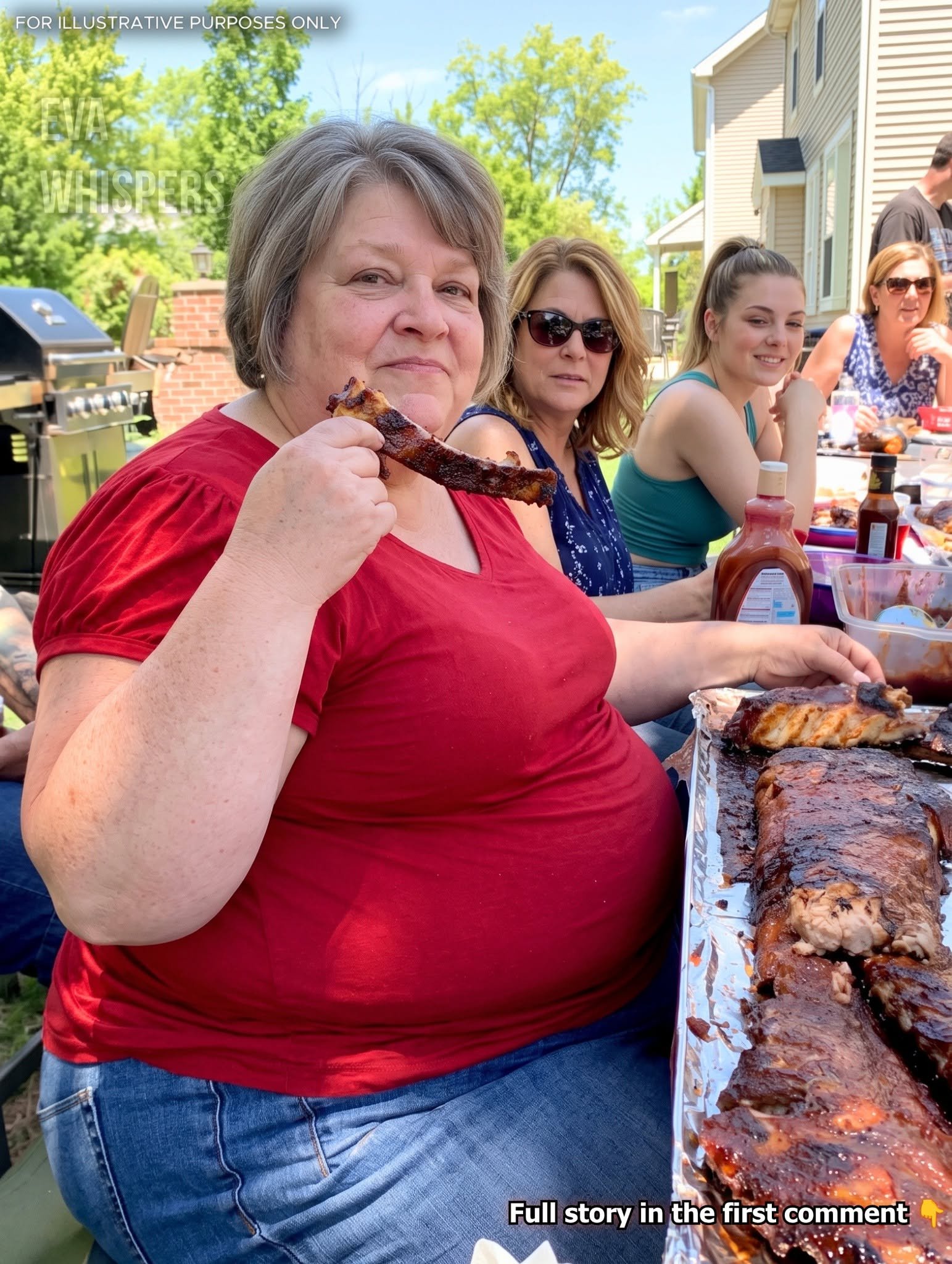
But because, in her mind, our home had become a free barbecue resort where she could show up whenever she pleased, bring her entire clan, eat until she was full, criticize my house, boss me around, and leave me with mountains of trash.
At first, I tried to be gracious.
“Family is family,” Mark would say.
And I believed that, too.
So when Juliette came over with her daughters and grandkids the first few times, I cooked. I smiled. I served grilled chicken, ribs, corn, potato salad, lemonade, watermelon, and homemade pie. I made sure the kids had snacks. I made sure everyone had drinks. I even sent leftovers home with them.
But over time, their visits changed from occasional gatherings into full-blown invasions.
They never called to ask if we were available. They announced.
They never offered to bring a dish. They arrived empty-handed.
They never helped clean. They left plates on the lawn, soda cans under the porch chairs, napkins blowing across the grass, and sticky handprints on my kitchen cabinets.
And Juliette?
Juliette acted like she owned the place.
She moved my patio furniture because she “liked it better facing west.” She rearranged my kitchen counter. She opened my cabinets without asking. She criticized the way I folded towels, the way I seasoned meat, the way I parented my children, and even the flowers I planted near the fence.
“Annie, sweetheart,” she would say in that sugary voice that made my teeth hurt, “you really should learn how to host properly. A woman’s home says everything about her.”
I wanted to tell her that a guest’s manners said plenty, too.
But I held my tongue.
Until the 4th of July weekend.
The Call That Pushed Me Too Far
It was Thursday evening when Juliette called.
I was in the kitchen packing snacks for the kids’ day camp when my phone buzzed on the counter. The second I saw her name, my shoulders tightened.
Mark glanced up from the table.
“You want me to answer?” he asked.
“No,” I said, already knowing exactly how the conversation would go.
I put the phone on speaker.
“Annie!” Juliette’s voice rang out like she was calling from a stage. “Good news. We’re all coming over tomorrow for the 4th.”
I looked at Mark.
His eyes widened slightly.
“All?” I asked carefully.
“Yes, of course. Me, Stephanie, Claire, their husbands, the kids. We’ll probably stay the entire weekend. The children are so excited.”
The entire weekend.
I took a slow breath.
“Juliette, that’s a lot of people on short notice.”
“Oh, don’t be dramatic,” she said. “You have that big house and all that space. Besides, you always do such a lovely barbecue. Just make sure there’s enough ribs this time. Last time, little Mason wanted seconds and there weren’t any.”
There weren’t any because Mason had eaten four.
I pressed my palm flat against the counter.
“Are you bringing anything?” I asked.
There was a pause.
Then Juliette laughed.
“Oh, Annie. You know we’re traveling with children. It’s hard enough getting everyone into the car. You and Mark live out there. You have the grill. It just makes sense for you to handle food.”
Mark’s jaw tightened.
I saw it.
For the first time, I saw it clearly.
He was embarrassed.
Not defensive. Not dismissive. Embarrassed.
Juliette continued, “We’ll be there Friday afternoon. Try not to start too late. We don’t want the kids starving.”
She hung up before I could answer.
The kitchen was silent except for the hum of the refrigerator.
I looked at my husband.
“Mark,” I said quietly, “I am done.”
He rubbed both hands over his face.
“I know.”
“No,” I said, my voice shaking now. “I mean really done. I am not spending hundreds of dollars, cooking for fifteen people, cleaning up after them, and being insulted in my own home for three days.”
He stood and came around the table.
“You’re right,” he said.
I blinked.
For years, Mark had asked me to be patient. To ignore his mother. To not let her “get to me.”
But this time, he didn’t defend her.
“I should have stopped this sooner,” he said. “I thought keeping the peace was easier, but I can see what it’s done to you.”
Those words softened something in me.
Still, I wasn’t going to cancel.
No.
Juliette wanted a barbecue?
She was going to get one.
Just not the kind she expected.

A Different Kind of Preparation
On Friday morning, I woke up early.
But I didn’t season ribs.
I didn’t make potato salad.
I didn’t bake pies.
Instead, I printed fifteen sheets of paper and placed them neatly on a clipboard.
At the top, in bold letters, I wrote:
Fourth of July Family Potluck & Cleanup Plan
Underneath, I listed every family group.
Juliette: drinks and ice.
Stephanie and family: hot dogs, buns, and condiments.
Claire and family: side dishes and fruit.
Mark and Annie: grill, yard, tables, plates, and one main dish.
Below that was a cleanup rotation.
Trash.
Dishes.
Wiping tables.
Putting chairs back.
Checking the yard for toys and wrappers.
At the bottom, I added one simple sentence:
Everyone who eats helps. Everyone who visits contributes.
Mark read it over my shoulder and gave a low whistle.
“My mother is going to faint.”
“She’ll survive,” I said.
He smiled.
Then he did something that surprised me.
He took the clipboard from my hand and signed his name at the bottom.
I stared at him.
“What?” he said. “This is our house. Our rule.”
I almost cried.
Not because of the clipboard.
Because for the first time, I felt like I wasn’t standing alone between my family and his.
Together, we prepared the yard—but differently than usual.
We set out folding tables, but left them bare.
We pulled the grill out, but didn’t fill it with meat.
We put a cooler outside, but it was empty except for a few bottles of water for our own children.
We cleaned the porch and cut the grass, but we didn’t turn ourselves inside out trying to impress people who never appreciated it anyway.
Lily, our six-year-old, watched us with curious eyes.
“Mommy, are Grandma and everyone coming?”
“Yes, sweetheart.”
“Are we having barbecue?”
I smiled.
“We’re having a lesson in sharing.”
She thought about that for a moment.
Then she nodded seriously, as if that made perfect sense.
The Arrival
Friday afternoon arrived with the subtlety of a marching band.
Three cars pulled into our driveway, one after another, sending dust rolling over the gravel.
Out came the familiar cast.
Juliette stepped out first, wearing an oversized sun hat, white sunglasses, and the expression of a woman arriving at a resort she had already paid for.
Behind her came her daughters, Stephanie and Claire, carrying designer purses and iced coffees.
Their husbands unloaded folding chairs—but only for themselves.
Six children spilled onto the lawn like a small tornado, shouting, running, and immediately turning our peaceful backyard into a battlefield.
“Annie!” Juliette swept toward me with open arms. Her hug smelled like expensive perfume and entitlement. “I hope you’ve got everything ready. We’re absolutely starving.”
“Almost ready,” I said, smiling so sweetly it could have caused diabetes.
She pulled back and glanced toward the grill.
Her smile faltered.
The grill was closed.
No smoke.
No sizzling meat.
No trays of ribs.
No bowls of salad.
No pitchers of lemonade.
Just clean tables, empty coolers, and Mark standing beside me with his arms crossed.
Juliette removed her sunglasses slowly.
“Where’s the food?”
I lifted the clipboard.
“That’s what we’re about to discuss.”
Stephanie laughed, thinking I was joking.
Claire frowned.
Juliette stared at the clipboard like it had personally insulted her.
“What is that?”
“Our new family gathering plan,” I said. “Since everyone is staying the whole weekend, we thought it was only fair to organize things.”
Mark stepped forward.
“Everyone contributes from now on.”
Juliette looked at him as if he had started speaking another language.
“Contributes?” she repeated.
“Yes,” Mark said calmly. “Food, drinks, cleanup. All of it.”
The yard grew quiet.
Even the children seemed to sense that something unusual was happening.
Juliette gave a sharp little laugh.
“Oh, don’t be ridiculous. Annie, is this your idea?”
“It’s our idea,” Mark said before I could answer.
That stopped her.
For once, Juliette didn’t have a quick response.
I handed her the clipboard.
“You’re assigned drinks and ice.”
Her mouth opened.
Then closed.
Stephanie leaned over her shoulder.
“What are we supposed to bring?”
“Hot dogs, buns, and condiments,” I said.
Claire snatched the paper next.
“Side dishes and fruit? Annie, we just drove two hours.”
“There’s a grocery store twelve minutes away,” I said. “I can text you the address.”
Juliette’s face flushed.
“You invited us here and didn’t prepare food?”
I kept my voice even.
“No, Juliette. You told us you were coming. And since you planned to stay all weekend, we assumed you would be happy to help feed your own families.”
The silence after that was delicious.
The Explosion
Juliette lowered the clipboard.
“I have never been treated so rudely in my life.”
I almost laughed.
Instead, I took a breath.
“Juliette, you have shown up here for years with groups of people. You’ve eaten food we paid for, left trash everywhere, moved things in my home without asking, and criticized me while I served you. I have never asked for anything extravagant. Just basic respect.”
Her daughters exchanged uncomfortable glances.
Claire looked away first.
Stephanie shifted her purse from one shoulder to the other.
Juliette, however, was not finished.
“So now you’re humiliating me in front of everyone?”
“No,” I said. “I’m setting a boundary in front of everyone because the behavior happened in front of everyone.”
Mark reached for my hand and held it.
That one small gesture gave me more courage than any speech could have.
Juliette turned to him.
“Mark, are you really going to let your wife talk to your mother like this?”
His face changed.
Not with anger.
With sadness.
“Mom, Annie is my wife. This is our home. She has cooked, cleaned, and hosted you for years. You never thanked her. You never asked what anything cost. You never helped. And I let it happen because I didn’t want conflict.”
He swallowed.
“That was wrong.”
Juliette’s expression flickered.
For the first time, she looked less angry and more stunned.
The children started whispering near the oak tree.
Stephanie’s husband cleared his throat.
“I mean,” he said awkwardly, “we probably should’ve brought something.”
Stephanie shot him a look.
But he shrugged.
“He’s right,” Claire’s husband added. “We eat a lot when we come here.”
Claire frowned, but not at me.
At the grass.
At the tables.
At the truth sitting between us.
Juliette’s pride fought hard. I could see it in the tight line of her mouth.
Then she thrust the clipboard back at me.
“Fine. If that’s how you feel, we’ll leave.”
I nodded.
“That’s your choice.”
Her eyes widened again.
I think she expected me to panic.
To apologize.
To beg them to stay.
But I didn’t.
Neither did Mark.
The driveway stood waiting.
For several long seconds, no one moved.
Then little Mason tugged on Stephanie’s shirt.
“Mom, I’m hungry.”
Stephanie sighed.
A real sigh. Tired. Human.
Then she looked at me.
“Text me the grocery store.”
Juliette spun toward her.
“Stephanie!”
“What?” Stephanie said. “The kids need food. And honestly, Mom, it’s not crazy for us to bring something.”
Claire crossed her arms.
“I’ll get fruit and chips,” she muttered.
Her husband added, “And maybe some pasta salad.”
Mark squeezed my hand under the clipboard.
Juliette stood alone in the middle of my lawn, surrounded by people who were no longer following her lead.
It was the first crack in the kingdom.

The Grocery Store Trip
Twenty minutes later, two cars left for the grocery store.
Juliette stayed behind, sitting stiffly on a porch chair as if it were a throne that had betrayed her.
I went inside to get water for Lily and Noah.
When I came back out, Juliette was in my kitchen.
Again.
She had opened my cabinet and was moving my mugs to another shelf.
I stopped in the doorway.
“Please put those back.”
She froze.
“I was just helping.”
“No,” I said gently but firmly. “You were rearranging my kitchen. Please put them back.”
Her hand trembled slightly as she returned the mugs.
“You’ve changed,” she said.
I walked to the sink and filled two cups with water.
“No, Juliette. I’ve stopped pretending I’m fine when I’m not.”
She looked smaller without her audience.
For a moment, I saw not just the bossy mother-in-law who had exhausted me, but an older woman who was used to controlling things because she didn’t know how to ask for love any other way.
That didn’t excuse her behavior.
But it helped me soften my tone.
“You’re welcome here,” I said. “But not as someone who owns the house. As family. And family respects each other.”
Her lips pressed together.
“I raised three children,” she said. “I know how a home should run.”
“I’m sure you do,” I replied. “But this is my home. Mine and Mark’s.”
She looked toward the window, where Mark was pushing Noah on the swing.
“He used to need me for everything.”
“He still loves you,” I said. “But he’s not a little boy anymore.”
That seemed to hit her harder than anything else.
She didn’t apologize.
Not then.
But she didn’t argue either.
The Barbecue Everyone Built
When Stephanie and Claire returned, the back of their car was full.
Hot dogs.
Burgers.
Buns.
Ice.
Soda.
Fruit.
Chips.
Pasta salad.
A store-bought cake with red, white, and blue frosting.
The kids cheered as if treasure had arrived.
For the first time in years, I didn’t run the whole gathering.
Mark grilled.
Stephanie set the table.
Claire sliced watermelon.
The husbands filled the coolers and set up extra chairs.
The children were given a trash bag and told to collect wrappers before dessert.
At first, everyone moved awkwardly, as though helping at a family event was a strange new sport they had never practiced.
But slowly, the mood changed.
People started laughing.
Stephanie asked me where I kept serving spoons instead of digging through drawers.
Claire actually said, “Do you need help with anything else?”
I almost dropped the bowl I was holding.
Juliette stayed quiet for most of the evening.
She sat near the porch steps, watching everyone work around her.
A few times, she opened her mouth like she wanted to comment.
But then she closed it again.
When the food was finally ready, we all sat at the long tables under the warm July sky.
The meal wasn’t fancy.
Some burgers were too charred. The pasta salad was store-bought. The cake leaned slightly to one side because one of the kids had bumped it.
But somehow, it was the best barbecue we had ever hosted.
Because I wasn’t exhausted.
Because Mark wasn’t pretending not to notice.
Because everyone who ate had helped make the meal happen.
As we passed plates around, Lily looked up and said, “Mommy, sharing tastes good.”
Everyone laughed.
Even Juliette smiled a little.
The Real Conversation
Later that night, after the fireworks had faded in the distance and the children were asleep in sleeping bags across the living room floor, I stepped onto the porch.
Juliette was there.
Alone.
Her sun hat sat beside her on the small table. Without it, she looked less like a queen and more like a tired grandmother.
I considered going back inside.
But then she spoke.
“I didn’t realize how much work it was.”
I leaned against the railing.
“Hosting?”
She nodded.
“All of it. Food. Children. Cleaning. Thinking ahead.” She looked down at her hands. “I suppose I got used to being taken care of when I came here.”
I didn’t answer right away.
The night hummed with crickets.
Finally, I said, “It wasn’t the food, Juliette. We don’t mind feeding family. It was the expectation. The way it felt like we owed it to you.”
She swallowed.
“When Mark’s father was alive, our house was always full. I cooked for everyone. Holidays, birthdays, Sundays. People came, and I served.”
Her voice softened.
“After he passed, no one came the same way anymore. When I came here and saw everyone together, I suppose I wanted to feel like the center of the family again.”
For the first time, I understood.
Not completely.
But enough.
“You can be part of the family without controlling it,” I said.
She nodded slowly.
“I know.”
Then, quietly, almost painfully, she added, “I’m sorry, Annie.”
Those three words were not perfect.
They did not erase seven years.
But they were a beginning.
I sat down beside her.
“Thank you.”
She looked at me with watery eyes.
“I was hard on you.”
“Yes,” I said.
She let out a small laugh through her tears.
“You could have softened that.”
“I could have,” I said. “But then you might not believe me.”
This time, her laugh was real.

A New Rule
The next morning, Juliette surprised everyone.
She woke up early, drove to town, and came back with breakfast.
Eggs.
Biscuits.
Jam.
Coffee.
Orange juice.
She walked into the kitchen and placed the bags on the counter.
Then she looked at me.
“Where would you like these?”
Not “I’ll put these here.”
Not “This should go over there.”
She asked.
I smiled.
“Right there is perfect.”
Stephanie nearly choked on her coffee when she heard it.
Claire raised her eyebrows so high they almost disappeared into her hairline.
Mark looked at me from across the room, his eyes warm and proud.
That weekend did not become magically perfect.
The kids still made noise.
Someone still spilled lemonade on the porch.
Juliette still made one comment about my curtains before catching herself and saying, “Never mind, they’re lovely.”
But something had shifted.
On Sunday afternoon, before everyone left, Mark gathered the adults by the porch.
“We’re happy to host sometimes,” he said. “But from now on, visits are planned together. Everyone brings something. Everyone cleans up. And nobody rearranges our house.”
His sisters nodded.
Their husbands nodded faster.
Juliette looked at me.
Then she said, “That’s fair.”
I almost checked the sky for flying pigs.
Before she got into her car, she hugged me.
Not the dramatic perfume-cloud hug she usually gave.
A real one.
“Thank you for the weekend,” she said.
I pulled back and smiled.
“You’re welcome.”
Then, after a pause, she added, “And thank you for telling the truth.”
The Lesson That Stayed
After the cars disappeared down the gravel road, our house was quiet again.
The lawn had a few flattened patches from the children’s games. The trash bags were tied and ready by the bins. The tables were wiped. The chairs were stacked.
For the first time after one of Juliette’s visits, I did not feel used.
I felt tired, yes.
But peaceful.
Mark wrapped his arms around me from behind as we stood on the porch.
“I’m sorry it took me so long,” he said.
I leaned back against him.
“You stood with me when it mattered.”
He kissed the top of my head.
From the yard, Lily and Noah chased fireflies in the fading summer light, laughing like the world was simple and kind.
Maybe that was what family was supposed to be.
Not perfect.
Not always easy.
But respectful.
Honest.
Willing to change.
Juliette still came over after that.
But she called first.
She brought food.
She asked where things went.
Sometimes she even stayed after dinner to help wash dishes, though she complained that my dish soap dried out her hands.
And every 4th of July after that, our family barbecue became a potluck.
Everyone brought something.
Everyone helped.
Everyone said thank you.
As for the clipboard?
I kept it.
Not because I wanted to hold a grudge.
But because it reminded me of the day I learned that peace at any cost is not really peace.
Sometimes love needs a boundary.
Sometimes family needs a mirror.
And sometimes, when people show up empty-handed one too many times, the best thing you can serve them…
is a lesson.