
The Ambulance Doors Closed on My Daughter—Then My Father Opened a Box That Was Never Meant to Be Found.
Part 2
My mother gasped.
“Lucía.”
I didn’t look at her.
For the first time in my life, I chose truth over obedience.
The officer nodded once and began writing.
My father’s face darkened.
“You’re going to lie to the police?” he barked.
The words echoed through the kitchen.
Lie.
The same accusation he had used every time reality threatened him.
When I was twelve and told my teacher about the bruises on my brother.
When I was sixteen and reported a neighbor who hit his wife.
When I left home at nineteen.
Lie. Disrespect. Betrayal.
Different words.
Same meaning.
How dare you tell the truth about me?
The officer looked directly at him.
“Sir, you have the right to remain silent.”
The silence that followed felt impossible.
Ernesto Ramírez had spent sixty years controlling every room he entered.
Now strangers were taking notes.
Photographing evidence.
Collecting witness statements.
And for the first time, he looked afraid.
Not guilty.
Afraid.
The officers escorted him outside.
My mother followed.
“Ernesto!”
Her voice cracked.
Not for Camila.
For him.
Always for him.
As they reached the patio, several guests lowered their eyes.
Others turned away.
A few quietly left through the side gate.
No one wanted to be associated with what had happened.
The illusion had shattered.
And everyone knew it.
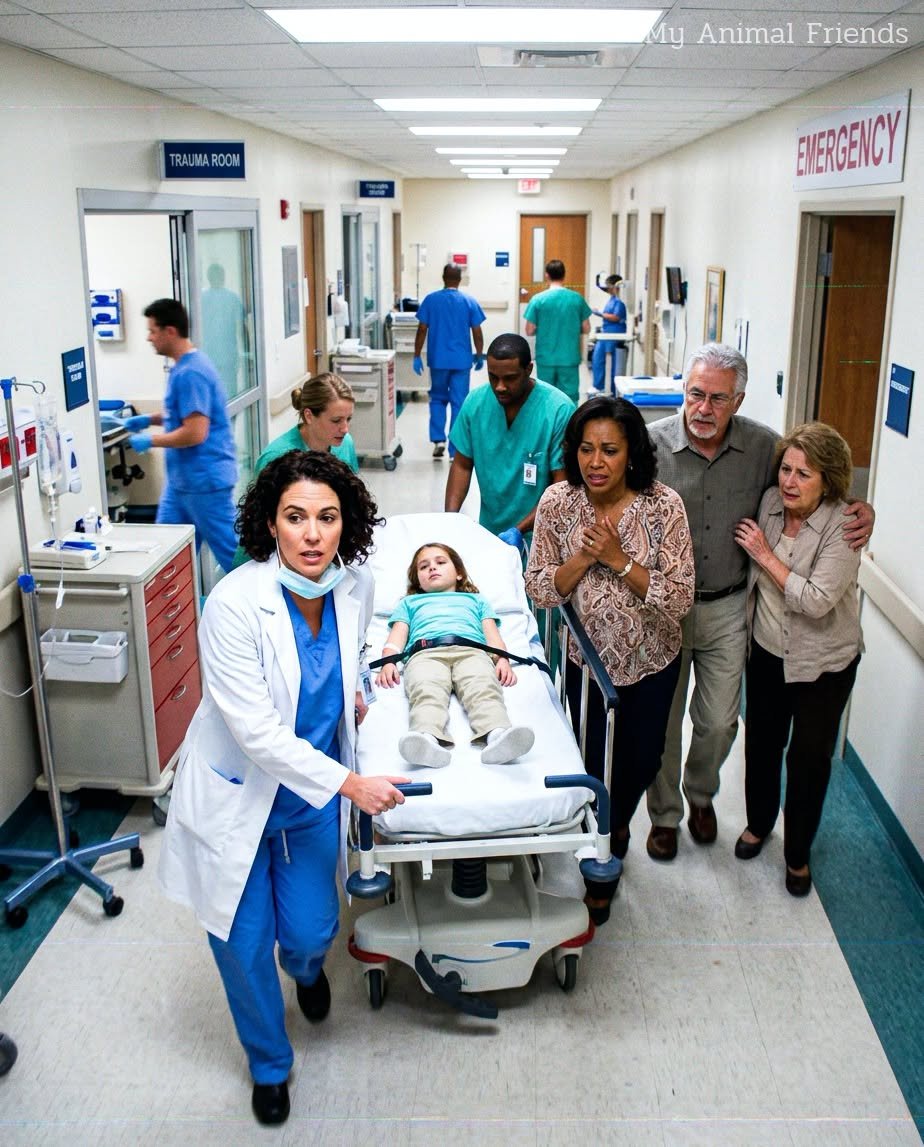
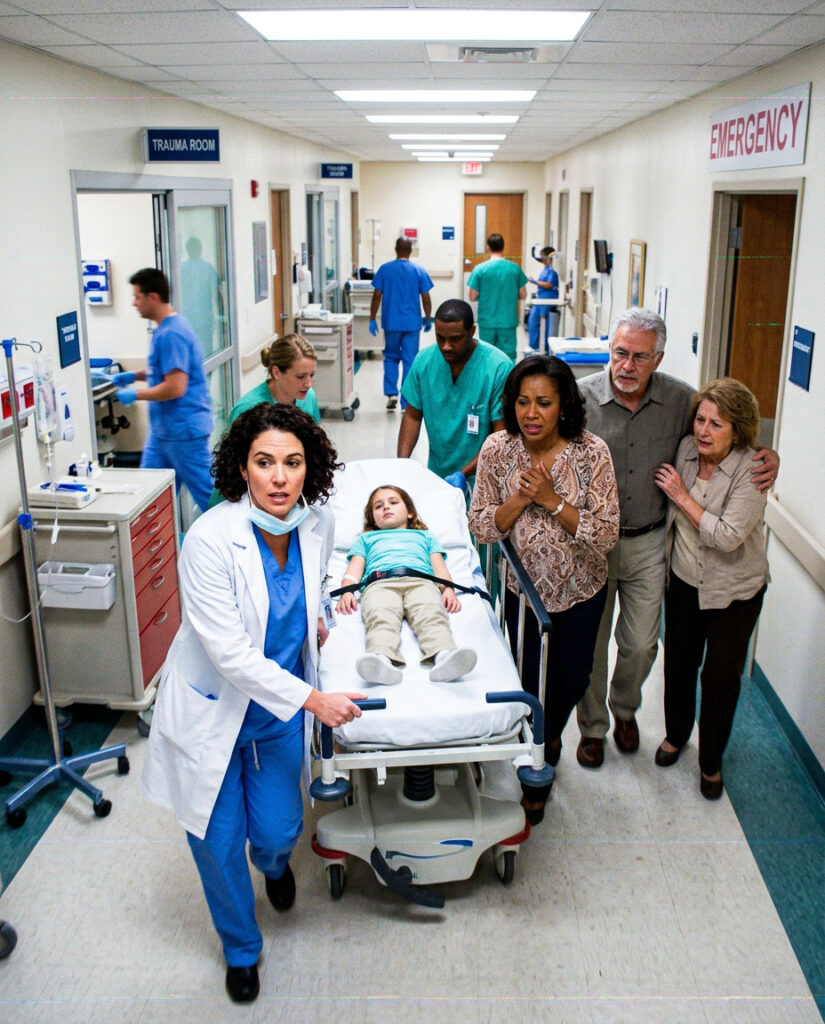
The emergency room smelled like disinfectant and fear.
I sat beside Diego under fluorescent lights that seemed determined to expose every crack in a person’s soul.
Hours passed.
Then more.
Doctors came and went.
Machines beeped behind closed doors.
I stared at the blood on my hands long after it had dried.
At three in the morning, a neurosurgeon approached.
My entire body locked.
“Mrs. Herrera?”
I stood so quickly the chair tipped over.
“How is she?”
The doctor removed his glasses.
“She survived surgery.”
The world stopped.
Then restarted.
I collapsed against Diego.
The sound that escaped me was half sob, half prayer.
“But…” the doctor continued.
The word froze us.
“There was significant swelling. The next forty-eight hours are critical.”
Critical.
Not safe.
Not stable.
Critical.
Still, she was alive.
That was enough.
For now.
By sunrise, news had spread through the family.
Calls poured in.
Texts.
Messages.
Excuses.
Explanations.
Suddenly everyone had an opinion.
Nobody had acted when it mattered.
My aunt Teresa called first.
“Lucía, your father never meant—”
I hung up.
My cousin Miguel called.