
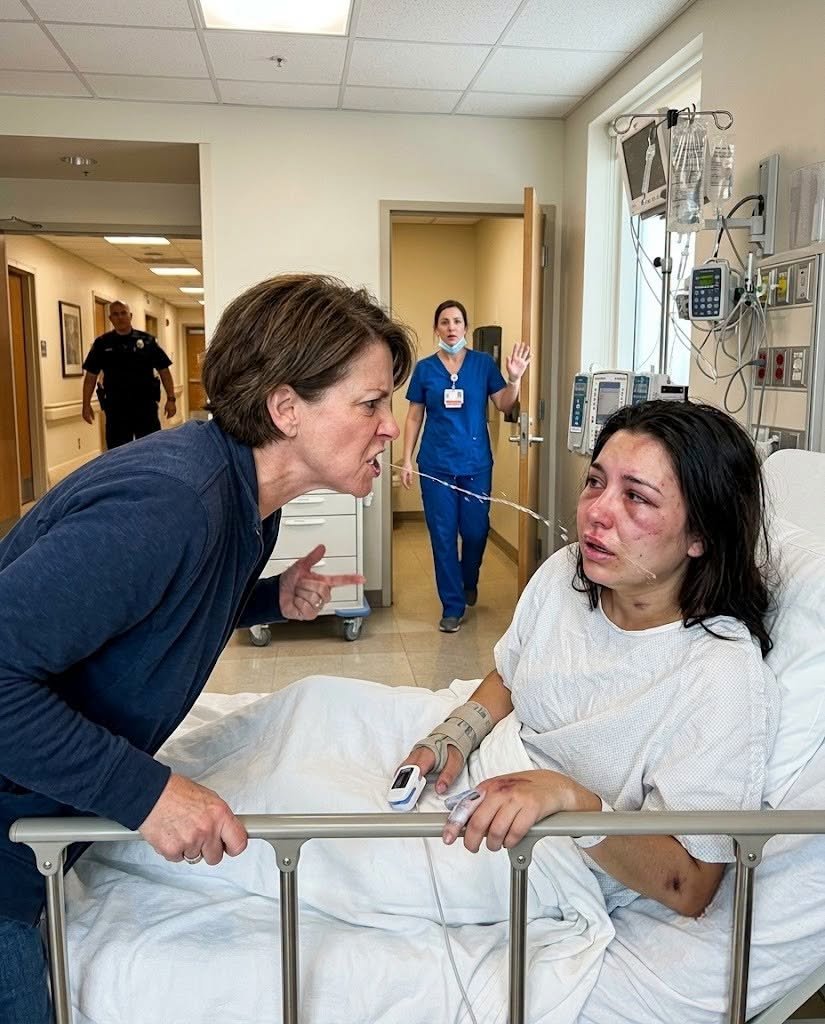
My father beat me into a fourteen-day coma over a phone video proving his motel affair.
When I finally opened my eyes, my mother walked into the hospital, looked at my broken face, and spit on me.
“I’d bury you before I’d ever believe a liar like you.”
Two days later, police plugged in a flash drive from the woman my father had been seeing.
His voice filled the room.
“I hit her because she wouldn’t stop telling the truth.”
My mother went pale.
The last thing I remembered before the hospital was buying strawberries.
I had been standing beneath fluorescent grocery-store lights, holding two plastic boxes and comparing prices.
The organic strawberries were six dollars and forty-nine cents.
The regular ones were three ninety-nine.
I remember thinking the expensive ones looked exactly the same.
That ordinary thought stayed with me.
Maybe because everything after it disappeared.
When I opened my eyes again, the lights above me were harsher.
White.
Clinical.
A machine chirped beside my bed.
Something tightened around my arm.
A woman leaned over me and whispered, “She’s opening her eyes.”
I tried to ask where I was.
My mouth barely moved.
Pain arrived one piece at a time.
My jaw.
My ribs.
My left wrist.
Then the back of my head, where even the pillow seemed too hard.
A doctor appeared.
He told me his name was Dr. Marcus Lin.
He asked my name.
“Catherine Ellis.”
My voice sounded rough.
“My friends call me Cate.”
“Good. Cate, do you know your birthday?”
I answered.
“The year?”
I answered again.
“Do you know where you are?”
I looked around.
“Hospital.”
“Do you remember coming here?”
“No.”
He exchanged a glance with the nurse.
“Do you remember Sunday?”
“What Sunday?”
“The last day you remember.”
I closed my eyes.
Fragments.
Coffee.
My father’s truck.
A motel sign.
Strawberries.
“Sunday dinner,” I said.
The nurse looked away.
Dr. Lin continued carefully.
“When did you last see your father?”
“Sunday.”
“What happened?”
“I don’t know.”
His expression changed.
“Cate, you’ve been unconscious for fourteen days.”
I stared at him.
“What?”
“You sustained a significant head injury. You were medically unstable for several days and then remained unconscious while your brain recovered.”
Fourteen days.
My mind tried to fit the number somewhere.
It would not.
“I was in an accident?”
He hesitated.
That hesitation frightened me before he answered.
“The police report indicates you were assaulted.”
I looked at the nurse.
“By who?”
Neither answered immediately.
Dr. Lin picked up a tablet.
“I want to explain your injuries first.”
He showed me imaging.
A fractured left cheekbone.
Three broken ribs.
A cracked wrist.
A severe concussion.
Bruising that had faded enough for me to see yellow and purple shadows across my arms.
My throat tightened.
“Car accident?”
“No.”
“Did somebody attack me outside?”
“The responding officers found you inside your parents’ garage.”
I stopped breathing.
“My parents?”
“Yes.”
“Where are they?”
The nurse looked toward the door.
Before anyone answered, it opened.
My mother walked in.
For one hopeful second, I almost cried from relief.
Mom.
Even at thirty-one, some part of me still believed your mother entered a hospital room to protect you.
Elaine Ellis stopped beside the bed.
Her hair was perfectly brushed.
She wore the blue cardigan I gave her for Christmas.
She stared at my swollen face.
Not with grief.
Not with shock.
With disgust.
Then she leaned over and spit directly onto my cheek.
“I’d bury you before I’d ever believe a liar like you.”
Everything in the room froze.
The nurse moved first.
“Ma’am!”
My mother pointed at me.
“You tried to destroy this family.”
Hospital security appeared almost immediately.
Mom resisted as they pulled her toward the door.
“She did this! Ask her what she did! Ask what she said about her father!”
I could not move.
A nurse pressed a tissue into my good hand.
“There’s no dignified way to wipe your mother’s spit from your face.”
I remember thinking that.
I wiped it anyway.
Dr. Lin ordered security to remove my mother from the visitor list.
The nurse cleaned my cheek properly.
I stared at the closed door.
“What does she think I lied about?”
Nobody in that room knew how to answer.
An hour later, Detective Ethan Cole arrived.
He was in his forties, tired-looking, with a notebook tucked beneath one arm.
He pulled a chair beside my bed.
“I’m glad you’re awake.”
“Apparently not everyone is.”
He almost smiled.
Then he opened an evidence bag.
Inside was my phone.
The screen looked like someone had stepped on it.
Cracks spread from one corner through the center.
Near the charging port was a dark dried smear.
“Is that mine?”
“Likely.”
He placed the bag where I could see it.
“This was found underneath you in the garage.”
“Under me?”
“Between your torso and the floor.”
I looked at the shattered phone.
“As if I was protecting it.”
“That is one interpretation.”
“Does it work?”
“Barely.”
“The forensic lab recovered some data.”
He showed me a photograph of the damaged screen.
One notification remained visible.
UNSENT VIDEO DRAFT
IF ANYTHING HAPPENS TO ME, WATCH THIS.
My stomach tightened.
“I recorded something?”
“Yes.”
“What?”
“We recovered almost three minutes.”
“Show me.”
“Not yet.”
Anger flared.
“It’s my phone.”
“You have a severe brain injury and incomplete memory. I want to give you context first.”
I hated that he was right.
“What happened in the garage?”
“We know you were injured there. Your father says you fell.”
I laughed once.
Pain stabbed through my ribs.
“Three ribs and a fractured cheekbone?”
“He says you became hysterical and stumbled.”
“And Mom?”
“She supports his account.”
“Of course she does.”
“Do you remember an argument?”
“No.”
“Do you remember a motel?”
The word hit something.
A flash.
My father’s gray truck.
A motel sign shaped like a pine tree.
A woman wearing a navy scarf.
Then it disappeared.
I pressed my fingers against my forehead.
“Yes.”
“What do you remember?”
“His truck.”
“Where?”
“Behind an old motel.”
Cole nodded.
“That matches something else.”
He lifted a cardboard box from the floor.
“No return address. Delivered to the station yesterday.”
Inside were four objects.
A navy scarf.
A paperback novel.
An old photograph.
And a lighthouse keychain.
I recognized the keychain immediately.
“I gave that to Dad.”
“When?”
“Father’s Day. Maybe five years ago.”
“Why a lighthouse?”
“He likes the coast.”
I picked it up.
The metal was scratched near one edge.
Another memory hit.
Rain.
My father’s truck parked behind the Maple Ridge Motor Lodge.
Me sitting across the road inside a diner.
Coffee going cold.
I whispered, “I followed him.”
Detective Cole leaned forward.
“Do you remember why?”
“No.”
He pulled a paper receipt from his notebook.
“This came from a woman who owns Miller’s Diner outside Maple Ridge.”
My handwriting appeared on the back.
DON’T LOSE SIGHT OF TRUCK 214.
I stared at it.
“She remembers you?”
“You sat in the same booth several Thursdays.”
“How many?”
“Four.”
A slow pressure built behind my eyes.
“What was I doing?”
“Watching the motel parking lot.”
He placed another photograph on the tray.
It had been taken from the motel’s exterior security system.
There I was.
Twenty feet behind my father and an unfamiliar woman.
My phone raised.
Recording.
The woman wore the navy scarf.
I closed my eyes.
Then the memories began returning.
Not all at once.
A sequence of broken glass.
Dad telling Mom he had Thursday client meetings.
Mom asking me to bring groceries because she had a headache.
Me seeing Dad’s truck when I took the wrong turn home.
The motel.
Rebecca.
That was the woman’s name.
I did not know her then.
The first time, I convinced myself Dad was meeting someone for business.
The second Thursday, I watched him kiss her beside his truck.
I drove away before he saw me.
I spent two days deciding whether to tell Mom.
Then I told myself I needed proof.
Not because I distrusted my own eyes.
Because I knew my family.
My father had spent thirty years teaching everyone that his version of events was the final version.
If I accused him without evidence, he would turn the conversation around before I finished the first sentence.
So I went back.
I recorded him entering the motel with Rebecca.
I recorded them leaving together.
I followed once to a restaurant.
Then I stopped.
I had enough.
I took the video to Mom first.
That memory returned so sharply I could smell her lavender hand cream.
She sat at the kitchen table.
I placed my phone in front of her.
“Mom, you need to see something.”
She watched forty seconds.
Dad walking beside Rebecca.
His hand on the small of her back.
The kiss.
Mom’s face did not change.
Not even once.
When the video ended, she pressed the lock button.
Then she asked:
“Did anyone else see this?”
I had expected tears.
Anger.
A question.
Anything.
Instead:
“Did anyone else see this?”
That was the moment I understood she already knew.
“You knew.”
“Lower your voice.”
“How long?”
“Cate.”
“How long?”
She looked toward the hallway.
“This is between your father and me.”
“He’s cheating on you.”
“I said lower your voice.”
“You knew.”
She handed the phone back.
“You have no idea what marriage looks like after thirty-four years.”
“So you’re okay with it?”
“I didn’t say that.”
“Then what are you saying?”
“I’m saying adults make arrangements.”
“Does Dad know you know?”
Her eyes hardened.
“That is none of your business.”
My entire body went cold.
“Then why did you ask whether anyone else saw it?”
She looked away.
“Delete the video.”
“No.”
“Catherine.”
“No.”
“Do not humiliate your father.”
“He humiliated you.”
“You don’t understand.”
“Then explain it.”
She stood.
“Delete it.”
I picked up the phone.
“No.”
That evening, Dad called.
Not Mom.
Dad.
“Come over Sunday.”
“What for?”
“Your mother says we need to talk.”
The memory ended there.
Detective Cole watched my face.
“You remember?”
“Some.”
“Tell me.”
I gave him everything I could.
Mom knowing.
The video.
Dad calling me over.
“What happened Sunday?”
“I don’t know yet.”
He nodded.
“The lab recovered part of the recording from your phone. You filmed yourself in your car before entering the house.”
“Why?”
“Would you like to hear it?”
“Yes.”
Cole opened an audio file.
My own voice filled the hospital room.
Breathing hard.
Car engine running.
“If Dad tells Mom the truth tonight, I’ll delete everything.”
A pause.
“I don’t want this online. I don’t want revenge. I just want him to stop lying to her.”
My voice cracked in the recording.
“He used to tell me honesty was the only thing you couldn’t buy back once you lost it.”
Another breath.
“So he gets one chance.”
The recording ended.
I turned my face toward the window.
“I was protecting him.”
“You were giving him an opportunity.”
“I was protecting him.”
The difference mattered to me.
After everything, I had still gone there hoping my father could become the man I believed he was.
The garage came back the next morning.
A nurse was adjusting my wrist brace when I smelled motor oil from a maintenance cart in the hallway.
Suddenly I was there.
Sunday evening.
Dad in the garage.
Mom near the interior door.
Me holding the phone.
Dad saying, “Give it to me.”
“No.”
“Delete it.”
“Tell Mom the truth.”
“She knows enough.”
“Then tell me the truth.”
His face changed.
Not embarrassed.
Not frightened.
Annoyed.
Like I was an employee who had misunderstood my place.
“You should have minded your own business.”
“You lied to everyone.”
“I don’t owe my daughter explanations about my marriage.”
“You owe Mom.”
My mother spoke from the doorway.
“Cate, stop.”
I turned toward her.
“He’s making you protect him.”
“Give him the phone.”
“No.”
Dad stepped forward.
I backed away.
“Don’t.”
“Give me the phone.”
“You’re not touching it.”
Then he struck me.
The memory snapped away.
I screamed.
The nurse grabbed the call button.
Dr. Lin arrived.
I cried so hard my ribs hurt.
“He hit me.”
Detective Cole came within twenty minutes.
I told him.
“Once?”
“I don’t know.”
“Did your mother intervene?”
“I remember her saying stop.”
“To him?”
“I don’t know.”
More returned during the next hour.
Dad grabbing my wrist.
Me pulling away.
My phone falling.
Picking it up.
Dad hitting me again.
My shoulder striking the workbench.
Mom screaming, “Just give it to him!”
Not, stop hurting her.
Give it to him.
I remembered crouching near the garage floor.
Protecting the phone beneath my chest.
Dad kicking something.
Maybe me.
Maybe the phone.
Then darkness.
“The truth settled slowly.”
He had not attacked me because I discovered his affair.
He attacked me because I refused to help him bury it.
Before Detective Cole could ask another question, a young nurse appeared at the door holding a visitor log.
Her face looked uncertain.
“Detective?”
“Yes?”
“There’s someone downstairs asking to see Ms. Ellis.”
“No visitors.”
“She says she’s involved in the case.”
“Name?”
The nurse swallowed.
“Rebecca Shaw.”
My entire body went still.
“The woman from the motel?”
Cole stood.
“What does she want?”
“She says she can prove what happened in the garage.”
Rebecca did not come directly to my room.
Cole interviewed her first.
Then, with my permission, she entered.
She looked younger than I expected.
Maybe thirty-eight.
My father was sixty-two.
She wore jeans and a plain black sweater.
No navy scarf.
For several seconds, neither of us spoke.
Then she said, “I’m sorry.”
I almost laughed.
“Which part?”
Her eyes filled.
“All of it.”
“Did you know he was married?”
“Yes.”
At least she did not insult me with another lie.
“How long?”
“Eleven months.”
“Did Mom know about you?”
Rebecca hesitated.
“Yes.”
I stared at her.
“How?”
“She called me.”
The room seemed to narrow.
“When?”
“About six months ago.”
“What did she say?”
“She told me not to contact your father at home.”
I looked at Cole.
He was taking notes.
Rebecca continued.
“She said she knew about the relationship but did not want anyone else knowing. She told me if I wanted to keep seeing him, I needed to stay away from family events and stop leaving messages.”
My mother had not simply known.
She had managed it.
“Why are you here?”
Rebecca looked at her hands.
“Because after you were hurt, your father came to my apartment.”
“When?”
“The same night.”
My skin prickled.
“He told me there had been a family emergency.”
“What did he say happened?”
“That you attacked him.”
I almost sat up.
“What?”
“He said you became violent after finding out about us. He said you fell during the struggle.”
“And you believed him?”
“No.”
“Why not?”
“Because he had blood on his shirt.”
My stomach turned.
Rebecca’s voice shook.
“Not much. But enough.”
“What did you do?”
“I asked if you were okay.”
“He said you were dramatic.”
I closed my eyes.
Even while I lay unconscious on a garage floor, I had been dramatic.
Rebecca reached into her bag.
Detective Cole stopped her.
“It’s already been collected.”
He placed an evidence envelope on the table.
Inside was a black flash drive.
Rebecca nodded toward it.
“My apartment has security cameras.”
“Inside?”
“Entryway, living room, kitchen. My former boyfriend broke in two years ago. I installed them after.”
“What did they capture?”
She looked at me.
“Your father talking.”
Cole took over.
“Rebecca provided this voluntarily. The original system has also been preserved.”
“Play it.”
“Cate—”
“Play it.”
The video began.
Timestamp:
SUNDAY 10:48 P.M.
My father entered Rebecca’s apartment.
His shirt sleeve carried a dark stain.
He looked agitated.
Rebecca asked:
“What happened?”
Dad paced.
“Cate went crazy.”
“What did she do?”
“She wouldn’t give me the phone.”
“Did you hurt her?”
Silence.
Rebecca repeated:
“Robert, did you hurt your daughter?”
Dad sat down.
Then he said the sentence that later changed everything.
“I hit her because she wouldn’t stop telling the truth.”
My mother went pale when police played that recording for her.
But I was not there to see it.
Detective Cole told me about the interview afterward.
Mom had arrived at the station with an attorney, still insisting Dad was innocent.
She said I had always been dramatic.
She said my memory was unreliable because of the concussion.
She said Rebecca was jealous.
Cole asked whether she wanted to hear Rebecca’s recording.
Mom agreed.
Dad’s voice filled the interview room.
“I hit her because she wouldn’t stop telling the truth.”
Then:
“She kept saying I was a liar. Kept waving that phone. She wanted Elaine to finally say she knew.”
Rebecca asked, “Did Elaine see what happened?”
Dad answered:
“She saw enough.”
My mother apparently stopped moving.
Cole played more.
Rebecca:
“How bad is Cate hurt?”
Dad:
“She was breathing.”
Rebecca:
“Robert!”
Dad:
“What? Elaine said we needed to get the phone before police came.”
That was the second sentence.
The one that turned my mother from a loyal witness into part of the investigation.
“She said we needed to get the phone.”
Police asked Mom whether she touched my phone.
She denied it.
Then forensic technicians recovered her fingerprint on the cracked case.
Not surprising by itself.
She was my mother.
But security footage from a neighbor’s driveway showed Mom exiting the garage after the assault carrying something rectangular.
She returned less than two minutes later empty-handed.
The phone was later found under me.
Investigators theorized she took it, attempted to access it, then put it back when she realized police might compare its location with the scene.
Why?
Because deleting it might look worse.
Leaving it broken beneath me could support Dad’s story that I fell holding it.
Mom eventually changed her account.
She admitted taking the phone.
“I wanted to call an ambulance.”
There was another phone six feet away inside the kitchen.
“Then why put it back?”
She cried.
“I panicked.”
“Why did you tell medical staff your daughter had fallen?”
“I didn’t know what happened.”
“You were standing in the garage.”
“I looked away.”
“Why did your husband say you told him to get the phone before police arrived?”
“He was confused.”
“Why did you spit on your daughter when she woke?”
Silence.
That question had no strategic answer.
Mom asked to stop the interview.
My father was arrested before sunset.
The charges were serious.
The medical evidence showed repeated impacts.
The garage contained traces investigators had initially been unable to interpret because Mom and Dad insisted I fell.
Now they reexamined everything.
A broken tool shelf.
A smear on the workbench.
Damage to a cabinet edge.
My blood in more than one location.
The physical scene matched a prolonged assault far better than a single fall.
Rebecca’s recording gave investigators motive.
My phone gave them the argument.
The neighbor’s camera gave them timing.
My injuries gave them force.
And my mother’s changing statements gave prosecutors something else.
Consciousness of guilt.
I remained in the hospital another nine days.
Rehabilitation began before I left.
My wrist needed a cast.
My ribs made sleeping miserable.
The cheekbone healed without surgery, though doctors monitored it closely.
The head injury frightened me most.
Some mornings, I forgot words.
I lost track of conversations.
One afternoon, I could not remember the name of the diner despite having discussed it the day before.
Dr. Lin warned me not to treat memory recovery like a test.
“The brain heals unpredictably.”
“I need to testify.”
“Not tomorrow.”
“I need to remember.”
“You need to recover.”
That distinction frustrated me.
For years, I had solved problems by working harder.
You cannot force an injured brain into obedience.
Rebecca visited twice.
The second time, she brought strawberries.
I stared at the box.
She immediately looked horrified.
“I can take them away.”
“No.”
I touched the plastic lid.
“That’s the last thing I remember from before.”
“I didn’t know.”
“It’s okay.”
We ate them slowly.
The strange thing was that I did not hate her.
I wanted to.
It would have been simpler.
But Rebecca had not raised me.
She had not taught me honesty.
She had not stood in a garage and watched my father attack me.
She had made choices I disagreed with.
Then, when consequences arrived, she preserved evidence instead of protecting him.
My own mother did the opposite.
“Why did you give police the video?” I asked.
Rebecca looked toward the window.
“Because I spent eleven months accepting lies as the price of loving him.”
I waited.
“When he told me what happened to you, I heard myself almost make another excuse.”
“What excuse?”
“That he was scared.”
She looked at me.
“Then I realized fear doesn’t make you beat your daughter unconscious.”
“No.”
“And I didn’t want to become your mother.”
The sentence hurt.
But it was honest.
My father called the hospital from jail through his attorney.
I refused every request.
Mom wrote.
Her first letter said:
You don’t understand your father.
I threw it away.
The second:
Rebecca manipulated everything.
I gave it to Detective Cole.
The third:
I never wanted you hurt.
That one stayed on my table for a day.
Then I tore it in half.
Wanting someone unharmed means very little when you stand beside the harm and protect the person causing it.
The case took eleven months to reach trial.
By then, I could walk without pain.
My wrist had healed.
The headaches came less often.
I had returned to work part-time.
The scar near my eyebrow remained visible.
People told me it was small.
They meant comforting.
I liked the scar.
It was one part of the story nobody could edit.
Dad pleaded not guilty.
His attorney claimed the security recording had been taken out of context.
Context became the defense for everything.
“I hit her because she wouldn’t stop telling the truth,” they argued, could have referred to a single defensive strike.
The forensic evidence destroyed that theory.
A medical specialist explained the number and location of my injuries.
Three broken ribs did not come from one defensive movement.
Neither did the wrist fracture.
Neither did the repeated bruising.
Then prosecutors played my car recording.
My voice:
“If Dad tells Mom the truth tonight, I’ll delete everything.”
No threat.
No extortion.
No plan to publish it.
Just one chance.
Then they played the recovered garage audio.
My phone had continued recording after I entered.
The image was mostly darkness because I put it down.
But the sound survived.
Me:
“Tell her.”
Dad:
“Give me the phone.”
Me:
“No.”
Mom:
“Cate, stop pushing him.”
Me:
“I’m not pushing anybody.”
Dad:
“Give it to me.”
A crash.
My voice crying out.
Mom:
“Robert!”
Then Dad:
“She never shuts up.”
Another impact.
I closed my eyes in court.
I did not need the memory anymore.
The recording remembered for me.
Then Rebecca testified.
Dad would not look at her.
She explained the affair.
Mom’s call six months earlier.
Dad arriving at her apartment after the assault.
The security system.
The prosecutor played his confession.
“I hit her because she wouldn’t stop telling the truth.”
Dad stared straight ahead.
For the first time in my life, he could not interrupt the person speaking about him.
My mother testified under an agreement with prosecutors.
She had been charged separately with evidence tampering and making false statements.
Her lawyer negotiated a deal requiring truthful testimony.
When she entered the courtroom, I felt almost nothing.
She looked smaller.
She admitted knowing about the affair.
Admitted asking Rebecca to keep it hidden.
Admitted taking my phone after the assault.
Admitted replacing it before police arrived.
Then the prosecutor asked:
“Did you see your husband strike your daughter?”
Mom closed her eyes.
“Yes.”
“How many times?”
“I don’t know.”
“More than once?”
“Yes.”
“Did Catherine strike him first?”
“No.”
“Did she threaten him?”
“No.”
“What was she asking him to do?”
Mom looked toward me.
“Tell the truth.”
The prosecutor paused.
“What did you do when he continued attacking her?”
Mom began crying.
“I told Cate to give him the phone.”
“Why?”
“So it would stop.”
“You told the victim to surrender the evidence rather than telling your husband to stop?”
“Yes.”
The courtroom became silent.
I finally understood why she had spit on me.
It was not because she believed Dad.
It was because my waking up threatened the version of herself she needed to preserve.
If I remembered, then she was not the loyal wife standing beside a falsely accused husband.
She was the mother who watched.
Dad was convicted of aggravated assault and other related offenses.
The sentence was lengthy.
At sentencing, he spoke about losing control.
Stress.
Shame.
Fear of humiliation.
I listened.
Then I gave my statement.
“My father says he lost control.”
I looked at the judge.
“But he controlled what he cared about.”
Dad’s eyes moved toward me.
“He tried to control the phone. The story. My mother. Rebecca. The police report.”
I took a breath.
“He did not attack me because he was confused about the truth. He attacked me because the truth was becoming impossible to control.”
Dad lowered his eyes.
“I went to that house because I still loved him.”
My voice shook.
“I was willing to delete the evidence if he simply stopped lying.”
I looked directly at him.
“I gave him one last chance to protect his family with honesty.”
Then I said the sentence that finally felt true.
“He chose to protect himself with violence.”
Mom received probation, community service, and mandatory counseling under her plea agreement.
People had strong opinions about that.
Some thought she deserved prison.
Some thought she had suffered enough.
I stopped measuring my recovery against her punishment.
I needed distance more than revenge.
She tried to contact me after sentencing.
I declined.
Six months later, a letter arrived.
No excuses this time.
I knew.
I helped him hide the affair.
I watched him hurt you.
When you woke up, I hated you because believing you meant admitting what I had become.
You were telling the truth.
I was the liar.
I kept the letter.
Not because I forgave her.
Not because it restored anything.
Because it was the first truthful thing she had given me without police forcing it out of her.
Rebecca disappeared from my life gradually.
There was no dramatic goodbye.
She moved out of state.
Before leaving, she mailed me the lighthouse keychain.
Police had released it.
A note came with it.
It belongs with you, not with him.
I did not want it.
For months, it remained inside a drawer.
Then one summer, I drove to the coast alone.
I stood near an actual lighthouse while the wind pushed my hair across my face.
I took the keychain from my pocket.
For five years, it had represented my father.
Something I gave him because I loved him.
Then it became evidence of betrayal.
I considered throwing it into the ocean.
I didn’t.
That would have made the ocean responsible for disposing of something I was capable of carrying.
I brought it home.
It now hangs beside my own keys.
Not because I reclaimed my father.
Because objects do not belong to the worst thing associated with them forever.
Neither do people.
Two years after the assault, Detective Cole invited me to speak at a training seminar for investigators dealing with family violence and delayed victim memory after brain injury.
I almost declined.
Then I agreed.
I told them something I had learned.
“Do not assume a family member who sounds calm is telling the truth.”
People looked up.
“My father was calm.”
I continued.
“My mother was confident. Rebecca was the mistress. I was the woman with the brain injury who couldn’t remember two weeks.”
On paper, credibility looked easy to assign.
“It wasn’t.”
I told them to preserve phones.
Security systems.
Visitor logs.
Receipts.
Tiny ordinary things.
Because trauma can erase a person’s memory for a while.
Evidence waits.
My broken phone waited under me.
The diner receipt waited in a drawer.
Rebecca’s cameras waited on a hard drive.
My father’s own voice waited inside a file.
And when I finally woke, everyone around me had already chosen a version of what happened.
My father said I fell.
My mother said I lied.
Rebecca said nothing until she had proof.
The police kept looking.
The truth survived all of them.
People sometimes ask what hurt most.
The coma?
No.
I do not remember it.
My father hitting me?
The memory still comes in fragments.
My mother spitting in my face?
For a long time, I thought that was the answer.
It wasn’t.
The worst part was realizing she already knew I was telling the truth.
Her hatred was not disbelief.
It was defense.
She had built thirty-four years of marriage around accepting things she could not admit publicly.
My video threatened that arrangement.
I threatened it.
So when I woke, she needed me to remain the liar.
Then my father’s voice came through Rebecca’s camera.
“I hit her because she wouldn’t stop telling the truth.”
There was nowhere left for her to hide.
That recording did not tell Mom something new.
It simply forced her to hear out loud what she had spent years helping him silence.
My father thought fourteen days unconscious would erase what happened.
He was wrong.
I woke with missing memories.
The evidence woke up with me.
