
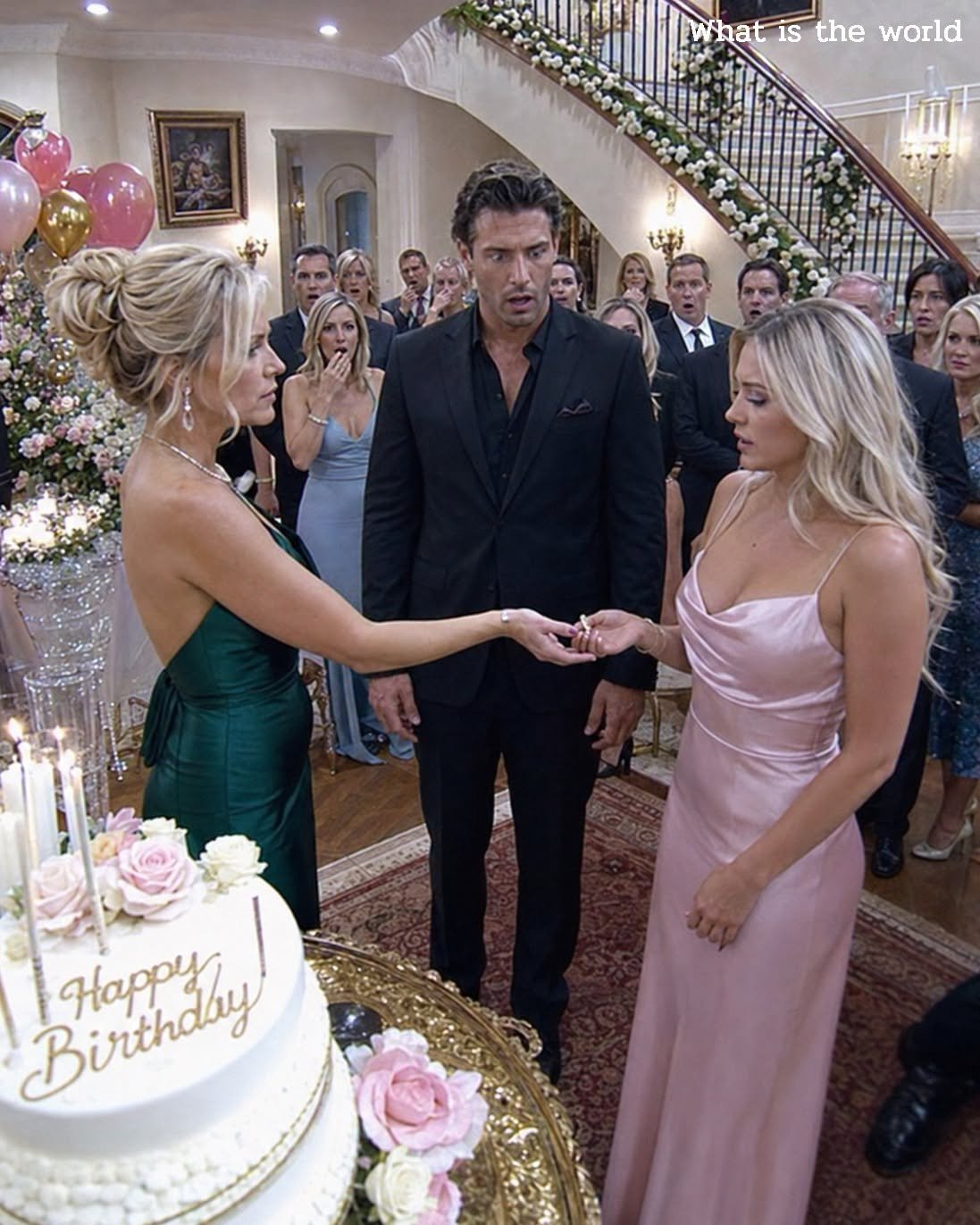
“I’m here,” Leah said, “because a woman who gives away her wedding ring in a room full of Romano men is either about to become a legend or a patient.”
Maso pulled out a chair and sat backward on it. “And I’m here because Alessandro sent me.”
The air tightened.
I looked at him, then at the shears in my hand.
Maso raised both palms. “Not to drag you back. I value my arms. He sent me to make sure you were safe.”
“How noble.”
“He also told me not to tell you that.”
“Then why did you?”
“Because I have a medical condition.” He tapped his chest. “Honesty under pressure. Very rare. Usually fatal in our profession.”
Leah gave him a look. “He means guilt.”
“I mean charm.”
I set the shears down before I did something memorable with them.
“Did Alessandro explain,” I asked, “why he brought a woman to my birthday dinner?”
Maso’s face changed in the smallest way. A glance downward. A pause too clean to be natural.
Leah saw it too.
“No,” Maso said.
“Maso.”
“I don’t know enough to say.”
“That is not the same as no.”
He exhaled through his nose and looked toward the window, where gray morning pressed against the glass. “Ruggero knew she was coming.”
A cold, sharp thing moved through me.
Of course he had.
Ruggero Romano did not merely enjoy humiliation. He cultivated it. He planted it like a seed, watered it with silence, and waited for people to destroy themselves trying to make sense of it.
“Camila Marino,” I said.
Maso blinked. “You know her name?”
“I heard one of the men whisper it when I passed.”
Leah crossed her arms. “Who is she?”
“No one,” Maso said too quickly.
I laughed once. It sounded awful. “No one gets escorted into a Romano dining room by Alessandro himself.”
Maso rubbed a hand over his jaw.
Leah stepped closer to him. “Talk.”
He glanced at me. “Her brother, Nico, worked the docks. Small crew. Stupid boy. Got caught moving something that didn’t belong to him.”
“Ruggero’s?” I asked.
Maso said nothing.
That was answer enough.
“And Camila?”
“She went to Ruggero to beg for Nico’s life.”
My stomach turned.
Leah’s mouth hardened. “So Ruggero gave her to Alessandro?”
Maso’s eyes flashed. “Alessandro didn’t take her.”
“He walked in with his hand on her back,” I said.
“He walked in because Ruggero made sure every exit had eyes on it.”
The room went still.
Outside, a truck groaned past the shop. Somewhere below, pipes knocked in the old walls, ordinary noises from an ordinary city, cruelly unaware that my life had split down the center.
I looked at Maso. “Are you telling me my husband publicly betrayed me to protect a frightened girl?”
“I’m telling you that last night was a trap.”
A trap.
The word landed softly, but everything around it collapsed.
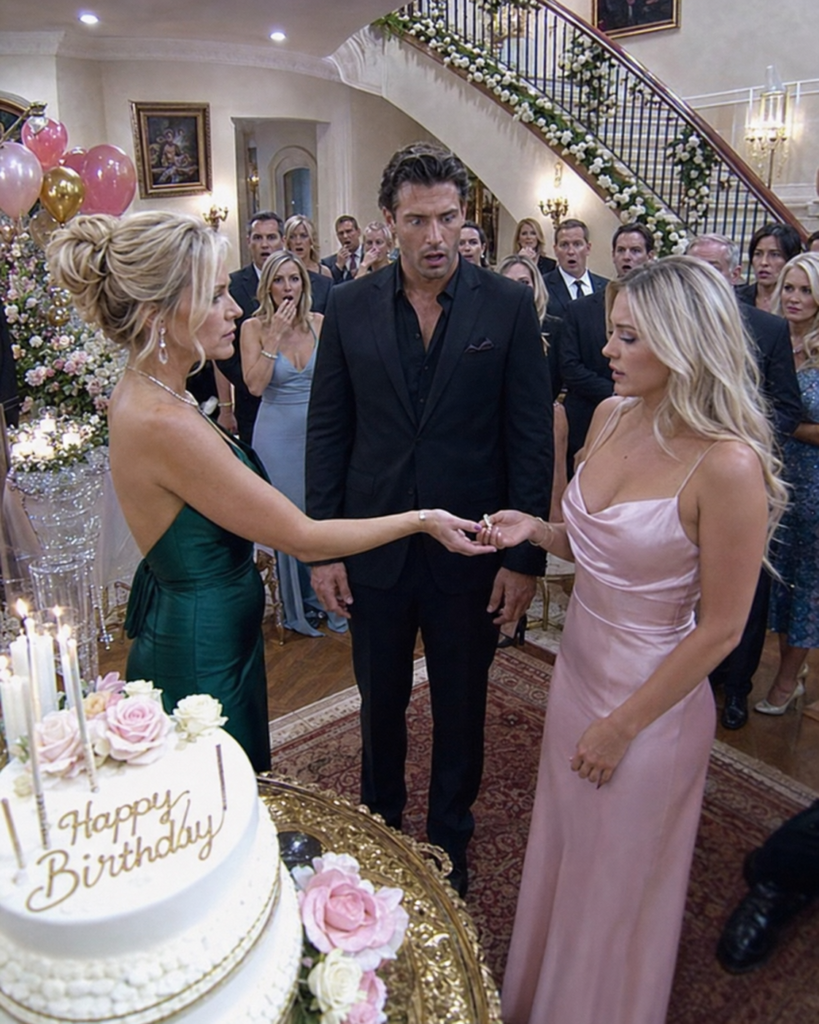
My birthday cake. The candles. Ruggero’s smile. Camila’s shaking fingers closing around my ring.
Alessandro’s stillness.
I wanted to hate him. I had built a small shelter out of hatred during the walk from the mansion to the shop. It had kept me warm. It had kept me upright. Now Maso was standing in my kitchen kicking holes through the walls.
“Why wouldn’t he tell me?” I asked.
Maso looked almost sad. “Because the fewer people who knew, the safer you were supposed to be.”
“Supposed to be,” Leah repeated.
Maso’s gaze shifted to the workbench.
There, beside my father’s loupe, sat a small square of folded paper I did not remember placing there.
I stared at it.
No one moved.
Then I crossed the room and picked it up.
The paper was thick, cream-colored, and faintly scented with smoke. One sentence had been written across it in black ink.
You gave away more than a ring.
Underneath, in a different hand, was a drawing: a little crown, split down the middle.
Maso stood so fast the chair nearly fell.
Leah reached for her phone. “What does that mean?”
I knew before either of them did.
My ring was not only a ring.
It had belonged to Alessandro’s mother, Bianca Romano, a woman everyone spoke of with lowered voices though she had been dead for twenty years. White gold. Oval diamond. Two hidden emeralds beneath the setting, almost invisible unless you knew where to look.
A Romano wife wore it not because it was pretty, but because it was proof.
Proof of position.
Proof of alliance.
Proof that the old families had accepted her.
I had handed that proof to Camila in front of every captain at the table.
Ruggero had not laughed because I embarrassed Alessandro.
He laughed because I had accidentally moved a queen off the board.
Maso came beside me and read the note. His face drained of color.
“Where did that come from?” he asked.
“It wasn’t here last night.”
Leah moved to the door and locked it.
Too late, I thought.
Someone had already been inside.
By noon, the shop looked less like my father’s peaceful repair room and more like a place expecting war. Maso checked the stairwell, the alley, the roof access, and every window latch. Leah called the hospital and lied with such icy confidence that I understood why surgeons frightened death into negotiation.
I did the only thing I knew how to do when my life became unrecognizable.
I worked.
A cracked Edwardian bracelet lay beneath my lamp, its platinum links warped from years of careless wear. My father had always said broken jewelry told the truth about people. Rings thinned at the bottom from being worn every day. Clasps bent from impatient hands. Lockets carried scratches near the hinge where someone had opened them again and again, desperate to see a face.
I picked up my tools and repaired what could still be repaired.
At three, the bell downstairs chimed.
Maso was on his feet before the sound faded.
“No one comes up,” he said.
But the voice below was female.
“Adriana?”
Camila.
My blood went cold.
Maso drew his gun.
Leah looked at me. “Absolutely not.”
But I was already moving.
I went down the narrow stairs slowly. The front shop was dim, display cases covered in dust sheets. Camila stood near the counter in the same silver dress from the night before, now hidden beneath a man’s oversized coat. Her hair was wet from rain. Her makeup had smudged under her eyes.
She looked even younger in daylight.
In her hand, she held my wedding ring.
“I didn’t know where else to go,” she whispered.
Maso came down behind me, gun low but ready.
Camila saw it and flinched. “Please. I’m not here to hurt anyone.”
“That’s rarely how hurt arrives,” Leah said from the stairs.
I looked at the ring. “Why are you here?”
Camila swallowed. “Because Ruggero wants this. And if he wants it, I think you should have it instead.”
She held it out.
For one wild second, I wanted to snatch it back and slide it onto my finger as if gold could reverse time.
I did not move.
“Why did Ruggero send you to Alessandro?” I asked.
Tears filled her eyes. She blinked hard, refusing to let them fall. “My brother stole a ledger.”
Maso muttered something under his breath.
“What ledger?” I asked.
Camila looked between us. “I don’t know everything. Nico said it had names. Police. judges. accounts. Payments. He thought he could sell it and disappear.”
“Idiot,” Maso said, without heat.
“Yes,” Camila said. “But he’s my idiot.”
Something in me softened against my will.
“Where is Nico now?”
“I don’t know. Ruggero took him. He told me if I did what he said, Nico would live.”
“And what did he tell you to do?”
Camila’s fingers tightened around the ring. “Walk in with Alessandro. Stand beside him. Say nothing unless spoken to. Let everyone think…” Her voice broke. “Let everyone think I was his.”
The words hung there, ugly and small.
I remembered Alessandro’s hand at her back. Not possessive, I realized now. Guiding. Shielding. His palm had rested between her and the room like a warning.
I hated that memory for changing.
Camila stepped closer. “He told me not to be afraid of you.”
“Who did?”
“Alessandro.”
My chest tightened.
“He said you would see more than the others.” She looked down at the ring. “He was right.”
Before I could answer, a black car stopped outside the shop.
Maso swore. “Back room. Now.”
The bell chimed again.
Alessandro Romano entered Bellini Jewel Restoration as if the whole city had been built around the possibility of his arrival.
Rain darkened the shoulders of his black coat. His hair was damp. His face looked carved from sleeplessness and restraint.
His eyes found me first.
Then Camila.
Then the ring.
For a moment, none of us spoke.
He looked at Maso. “You were told to keep her safe.”
“She is safe,” Maso said. “Mostly because she is terrifying.”
Alessandro’s gaze returned to me.
“Adriana.”
I should have been immune to the sound of my name by now. I was not.
“You have five minutes,” I said.
His jaw tightened. “Ruggero has moved.”
“Obviously. He broke into my apartment.”
A dangerous silence filled his face.
Maso handed him the note.
Alessandro read it once. His expression did not change, but the room seemed to lose temperature.
“Where was this?”
“On my workbench,” I said.
His eyes lifted to the ceiling, measuring distance, exits, shadows. “You can’t stay here.”
I smiled. “There it is.”
“Not an order. A fact.”
“The difference has always been very clear to you.”
That struck him. I saw it land behind his eyes.
Camila stepped forward and held out the ring. “I’m sorry.”
Alessandro did not take it.
He looked at me instead.
“It belongs to you.”
I gave a soft, humorless laugh. “Last night suggested otherwise.”
“Last night was meant to keep you untouched by what comes next.”
“You brought it to my birthday.”
“Ruggero chose the room. The witnesses. The hour.” His voice stayed low, but something raw moved beneath it. “He wanted the captains to see me dishonor you. He wanted you isolated. Angry. He wanted you to leave.”
“Why?”
“Because you are the one thing he cannot buy from me.”
No one breathed.
Leah looked away first, as if even she felt she had overheard something private.
I folded my arms. “Pretty words after public cruelty.”
Alessandro stepped closer, then stopped, careful not to crowd me. “I know.”
That surprised me more than an excuse would have.
“I made a choice,” he said. “Not a good one. The only one I saw before the blade fell.”
“And Camila’s brother?”
“Alive. For now.”
Camila made a small sound.
Alessandro looked at her. “Nico stole from Ruggero, but he also copied what he took. Ruggero thinks the original ledger is enough. It isn’t.”
Maso’s eyebrows lifted. “Nico has a copy?”
“No.” Alessandro’s gaze came back to me. “Bianca did.”
My mouth went dry.
His mother.
The dead woman with the ring.
“The ledger is older than Nico,” Alessandro said. “My mother kept records Ruggero never knew existed. Insurance. Proof. Names and accounts tied not only to our family, but to men who pretend they dine above blood.”
I stared at the ring in Camila’s palm.
The hidden emeralds.
My father had once shown me how old houses hid safes behind paintings, how mourning brooches hid hair beneath glass, how aristocrats hid poison compartments in pretty things.
“Bianca hid something in the ring,” I said.
Alessandro’s eyes sharpened.
“I never found anything,” he said.
“You never looked like a jeweler.”
I took the ring from Camila.
The gold was warm from her hand. Familiar and unfamiliar at once.
Upstairs, beneath the lamp, I placed it in a clamp and bent over it with my father’s loupe. Alessandro stood behind me, close enough that I felt his presence like weather, but he did not touch me.
Good.
I needed my hands steady.
The setting was exquisite, old-world craftsmanship, the kind that looked simple because a master had made it. I turned the band slowly. There, beneath one emerald, was a mark I had always thought decorative: a tiny crescent cut into the gold.
Not decoration.
A seam.
I selected the thinnest blade from my father’s tool roll. My breath slowed. The whole room seemed to narrow to metal, light, and the faint tremor in my fingers.
Click.
The emerald setting loosened.
Camila gasped.
Inside the ring, hidden in a chamber no bigger than a grain of rice, was a roll of microfilm.
Maso crossed himself.
Leah whispered, “You have got to be kidding me.”
Alessandro said nothing.
I lifted the film carefully with tweezers and placed it on black velvet.
For the first time since he entered, Alessandro looked shaken.
Not afraid.
Worse.
Hopeful.
That was when the shop windows exploded inward.
Not from bullets.
From sound.
A brick crashed through the front display, wrapped in paper and tied with red string.
Maso shoved Camila down. Leah grabbed my arm. Alessandro moved in front of me so fast I barely saw him cross the room.
Glass rained across the floor.
Then came silence.
Maso approached the brick, gun raised, and cut the string.
He read the message.
His face went blank.
Alessandro took it from him.
I saw only four words before he folded the paper.
We have the girl.
Camila crawled to her knees. “What girl?”
No one answered quickly enough.
My heart began to pound.
Leah’s phone rang.
She looked at the screen and went pale. “It’s the hospital.”
She answered. Listened. Her face changed completely.
“When?” she asked. “Who signed her out?”
A pause.
Then Leah looked at me.
“Teresa is gone.”
The room tilted.
Teresa, who had raised half the Romano household. Teresa, who had fixed my veil with shaking hands on my wedding day. Teresa, who had made my birthday cake with twenty-five candles and one foolish, tender superstition.
Gone.
Alessandro’s voice was quiet. “Ruggero.”
Leah lowered the phone. “A man arrived with transfer papers. Official seal. Police escort. They took her from recovery twenty minutes ago.”
“Recovery?” I repeated.
Leah’s eyes flicked to Alessandro.
Something inside me went very still.
“What recovery?”
Alessandro’s silence answered before his mouth did.
I stepped toward him. “What happened to Teresa?”
“She was attacked after you left the mansion.”
The words were careful.
Too careful.
“She tried to follow you,” he said. “Ruggero’s men stopped her.”
For a moment, I could not feel my hands.
Teresa had tried to follow me.
I saw her by the sideboard, making that broken prayer sound. I had left without looking back. I had thought no one stopped me because no one cared enough to try.
I had been wrong.
Camila covered her mouth.
Maso looked furious enough to fracture.
Alessandro reached for me, then stopped before touching my sleeve. “Adriana.”
“Don’t,” I said.
He obeyed.
That made it worse.
I looked at the microfilm on the velvet. Then at the ring. Then at the shattered glass below, glittering like ice under the gray light.
Ruggero had not wanted only the ring.
He had wanted me to run from the house so Teresa would follow. He had wanted Alessandro divided. He had wanted Camila exposed. He had wanted every loyal heart pulled into the open.
And now he had Teresa.
The one person in that mansion who knew every secret room, every old name, every hidden debt.
I closed the ring’s tiny chamber and slid it onto my finger.
Alessandro watched the movement as though it hurt him.
“Get me into the house,” I said.
Maso shook his head immediately. “No.”
Leah said, “Absolutely not.”
Alessandro’s face turned unreadable. “Why?”
“Because Ruggero thinks I left as a wounded wife,” I said. “Let him keep thinking that.”
“And when you walk back in?”
I looked at him. “I won’t walk back in as your wife.”
His eyes darkened.
I turned to Camila. “I’ll walk in as hers.”
The plan was reckless, insulting, and just theatrical enough for Ruggero to believe it.
By nightfall, the Romano mansion glowed at the edge of the lake like a jewel held in a wolf’s mouth. Wind tore across the drive. Men stood beneath the portico pretending not to be armed. Inside, music played again, because powerful families loved nothing more than proving they could dine beside disaster.
Camila sat beside me in the back of the car, wearing my black coat and a face full of fear.
“You don’t have to do this,” she whispered.
“Yes,” I said. “I do.”
Maso drove. Alessandro followed in a second car, against his own instincts and because, for once, he understood I would not forgive another choice made over my head.
At the gates, Ruggero’s men stopped us.
I lowered the window.
One of them stared. “Signora Romano.”
I smiled.
“No,” I said. “Not tonight.”
He saw Camila beside me. Saw the ring on my finger. Saw the story he wanted to tell himself.
Then he let us through.
Ruggero received us in the winter salon.
He stood by the fire in a charcoal suit, silver hair neat, eyes bright with old cruelty. Several captains lined the walls. Men who had laughed last night. Men who had looked at me like entertainment.
Teresa was not there.
“Adriana,” Ruggero said warmly. “How dramatic. You left before cake.”
“I lost my appetite.”
His eyes moved to Camila. “And found company.”
Camila’s hand trembled, but she lifted her chin.
Ruggero smiled wider. “I admire adaptability in a woman.”
I walked toward the fire. Every step sounded too loud.
“You wanted the ring,” I said.
His expression did not change.
I held up my hand. The diamond caught the flame and flashed white.
“Come take it.”
A murmur passed through the room.
Ruggero chuckled. “My dear, grief has made you theatrical.”
“No. Marriage did.”
That earned a few lowered eyes.
Ruggero stepped closer. “You don’t understand what you’re holding.”
“I understand exactly what I’m holding.”
His gaze sharpened.
I leaned in slightly. “Bianca was better at hiding things than you were at finding them.”
For the first time, Ruggero’s smile faded.
There it was.
Fear.
Small, quick, and deliciously human.
“You opened it,” he said.
I said nothing.
His hand twitched.
Behind me, Camila whispered, “Adriana.”
The doors opened.
Alessandro entered with Maso and four men loyal enough to look frightened but not hesitant. The room shifted around him. Whatever Ruggero had tried to build in Alessandro’s absence cracked the second he appeared.
“My nephew,” Ruggero said. “How touching. The family reunites.”
“Where is Teresa?” Alessandro asked.
Ruggero sighed. “Always so direct. Your father had the same flaw.”
“My father trusted you.”
“And look how peacefully he died.”
The room froze.
Alessandro did not move.
I did.
I stepped between them.
Ruggero laughed softly. “Still protecting him? Even now?”
“No,” I said. “Distracting you.”
Maso’s phone buzzed.
Once.
He looked at the screen and nodded.
Relief struck so hard my knees nearly weakened.
Leah had found Teresa.
The hospital transfer papers had taken her not to a warehouse or safe house, but to the old Romano chapel on the estate grounds, a forgotten stone building near the lake. Ruggero had hidden her close because arrogance made men lazy. Leah, furious and efficient, had gone with two of Alessandro’s men and a surgeon’s bag full of reasons not to underestimate her.
Teresa was alive.
Ruggero read the truth in Maso’s face.
His mask fell.
Only for a second, but enough.
“You think a servant matters?” he said.
“She matters to me,” I answered.
His eyes turned flat. “Then you have learned nothing from this family.”
“No,” I said. “I learned everything.”
I touched the ring, twisted the emerald setting, and removed the microfilm from the hidden chamber.
The captains stared.
“Bianca Romano kept records,” I said. “Names. accounts. betrayals. Including the night Ruggero sold Alessandro’s father to his enemies and called it an accident.”
The room erupted.
Ruggero lunged.
Alessandro caught him by the wrist.
The sound that followed was not loud, but every man there understood it. Power changing hands rarely needed volume.
Ruggero looked at him with pure hatred.
“You would burn the family for a wife who walked out on you?”
Alessandro’s grip tightened. “No.”
His eyes found mine.
“I would burn it for the truth.”
For one suspended moment, I believed we had won.
Then Camila screamed.
Not from fear.
From recognition.
A young man had appeared in the doorway behind the captains, thin, bruised, and smiling with bloodless lips.
“Nico,” she breathed.
Her brother lifted a gun.
But he did not point it at Ruggero.
He pointed it at Alessandro.
“I’m sorry,” Nico said.
And from the shadows behind him, a woman stepped into the firelight wearing Teresa’s shawl and my mother-in-law’s pearls.
Bianca Romano.
Dead for twenty years.
Smiling.
PART 3 — END PART: The Dead Woman Who Walked Into the Firelight
For twenty years, Bianca Romano had been a portrait, a whispered warning, a grave with fresh flowers no one admitted to leaving.
Now she stood in the winter salon wearing Teresa’s shawl and pearls I had only seen locked behind glass.
Alive.
Smiling.
The room forgot how to breathe.
Alessandro’s hand loosened on Ruggero’s wrist. Not from mercy. From shock so deep it looked like pain.
“Mother,” he said.
The word was barely sound.
Bianca’s gaze moved over him slowly, hungrily, as if she were collecting every year she had missed from his face.
“My son,” she said. “You grew into your father’s eyes.”
Ruggero began to laugh.
It was not the polished laugh from my birthday dinner. It was cracked, ugly, relieved.
“You see?” he said to the captains. “You see what he brings into this house? Ghosts. Lies. A wife with tricks. A mother back from hell.”
Nico’s gun trembled in his hand.
Camila stepped toward him. “Nico, please.”
“Stay back,” he whispered, but his eyes were not cruel. They were ruined. “They said if I didn’t do it, they’d kill you.”
Bianca’s smile faded.
“No one is killing my son in front of me,” she said.
Nico flinched as if her voice had touched a wound.
Alessandro did not look away from Bianca. “You were dead.”
“No,” she said softly. “I was hidden.”
“By whom?”
Her eyes shifted to Ruggero.
And there, in that one glance, the entire room understood.
Ruggero had not merely betrayed Alessandro’s father.
He had buried a living woman in a false death and built an empire on her silence.
I looked at the microfilm in my hand.
“You kept records,” I said.
Bianca’s eyes came to me then. They were the same green as the hidden emeralds beneath my ring.
“And you found them,” she said. “Good girl.”
The words should have sounded patronizing.
They did not.
They sounded like a key turning in a door.
Ruggero moved suddenly, but Alessandro shoved him back against the mantel. The captains stirred, hands reaching beneath jackets, loyalty splitting down invisible lines.
Maso’s gun came up.
“Everybody calm down,” he said. “I wore my expensive shoes. I refuse to die in them.”
No one laughed.
Bianca looked at Nico. “Put the gun down, child.”
“I can’t,” Nico said. Tears shone in his eyes. “They have my mother too.”
Camila gasped.
“What?”
Nico’s face broke. “She’s alive, Cami. Ruggero lied. He said she died in Palermo, but she’s here. He has her.”
Ruggero smiled with bloodless lips. “Families are such useful things.”
Camila made a sound that cut through me.
I thought of all the women in Ruggero’s world: wives used as crowns, daughters used as debts, mothers used as chains. And I understood then that his empire had never been made of money.
It was made of hostage hearts.
I lifted my chin.
“Where is Teresa?” I asked Bianca.
“Safe,” Bianca said. “Leah reached her. She also found Mrs. Marino.”
Nico’s gun dipped.
Ruggero’s head snapped toward Bianca.
“You—”
“I have been dead for twenty years, Ruggero,” she said. “Did you truly think I spent them doing nothing?”
The doors behind us opened again.
Leah entered first, coat wet from rain, jaw set like judgment. Behind her came Teresa, pale but standing, supported by one of Alessandro’s men. Beside her was a small older woman with Camila’s eyes.
Camila cried out and ran.
Nico dropped the gun.
The sound of it hitting the floor was small.
The meaning was enormous.
Ruggero looked around the room, calculating.
But something had changed.
The captains were no longer staring at Alessandro.
They were staring at Bianca.
At Teresa.
At the Marino family reunited in tears.
At me, with the Romano ring on my hand and his secrets in my palm.
Ruggero had always ruled by making people feel alone.
Now, all at once, nobody was.
Part 4 — Bianca’s Confession Beneath the Burning Chandelier
Bianca stepped closer to the fire, and every man in the room watched her as if the flames had taken human form.
“I will speak once,” she said. “Then you may decide what kind of men you are.”
Ruggero sneered. “Careful, Bianca. Resurrection does not make you queen.”
“No,” she said. “Evidence does.”
I held up the microfilm.
Ruggero’s face tightened.
Bianca turned to Alessandro.
“The night your father died, he was going to remove Ruggero from every account, every port, every political contact. He had learned your uncle was selling routes and names to enemies.”
Alessandro’s expression did not move, but I saw his hand close into a fist.
“He confronted him,” Bianca continued. “And by morning, your father was dead. I had proof. Ruggero knew it. So he gave me a choice.”
Her voice did not tremble.
That made it worse.
“He told me Alessandro would die next unless I disappeared. So I died publicly. A closed coffin. A quick funeral. A grieving son. A beautiful lie.”
Alessandro’s face hollowed.
“You left me.”
Bianca closed her eyes.
“Yes.”
The word was a wound.
“I have hated myself every day for it,” she said. “But I watched you from shadows. I protected what I could. I moved pieces where I could. And when Ruggero grew too bold, I sent the ledger back into the world.”
“Nico,” I whispered.
Bianca nodded. “He was supposed to deliver it to someone safe. He panicked. Tried to sell it. Ruggero found out.”
Nico bowed his head.
“I’m sorry,” he said.
Bianca looked at him gently. “Fear makes fools of all of us at least once.”
Ruggero laughed again. “Touching. Truly. But stories do not govern families.”
“No,” I said. “Trust does.”
Every eye turned to me.
My voice should have shaken.
It did not.
“You used my birthday to shame me. You used Camila to bait Alessandro. You used Teresa because you thought love was weakness.” I stepped closer. “But you misunderstood something.”
Ruggero’s mouth curled. “And what is that?”
“Love is not weakness when it makes everyone you hurt stand in the same room.”
For the first time, he had no answer.
Alessandro looked at me then.
Not as a boss.
Not as a husband who thought silence could protect me.
As a man seeing exactly what his silence had cost.
“I should have told you,” he said quietly.
“Yes,” I answered.
“I thought I was keeping danger away from you.”
“You brought it to my table.”
Pain crossed his face.
“I know.”
That apology, bare and unadorned, reached me more than any speech could have.
But the night was not finished with us.
Ruggero smiled suddenly.
“You all speak as if I came without insurance.”
The lights went out.
The chandelier died.
The room plunged into black.
Someone screamed.
A shot cracked into the ceiling.
Maso shouted, “Down!”
Alessandro grabbed my arm and pulled me behind a marble column as the room erupted into chaos. Furniture crashed. Men cursed. Glass shattered.
In the dark, Ruggero’s voice came like silk dragged over a blade.
“Kill the lights. Kill the witnesses. Leave the ring.”
Then the emergency lamps flickered on, red and dim.
And Ruggero was gone.
Part 5 — The Chapel Under the Lake Wind
The mansion became a maze of shadows and running footsteps.
Alessandro kept one hand near me, not touching unless necessary, as if he had finally learned the difference between protection and possession.
Maso appeared from the smoke-filled hall, dragging one of Ruggero’s men by the collar.
“He’s heading for the chapel tunnel,” Maso said. “Old passage beneath the east wing.”
Teresa, pale but fierce, lifted her head.
“I know it.”
Leah stared at her. “You are injured.”
Teresa gave her a look that could curdle milk.
“I have dusted this house for thirty years, doctor. Pain can wait.”
Bianca stepped forward. “The tunnel leads to the boathouse. If Ruggero reaches the lake, he disappears.”
“Not tonight,” Alessandro said.
His voice was cold enough to frost the room.
I touched the ring.
Inside its tiny chamber, the microfilm was gone—safe now in Leah’s medical bag, tucked between surgical gauze and a fury no man in that room wanted aimed at him.
We moved through the east wing with Teresa leading us, one hand pressed to the wall. She stopped before a painting of Alessandro’s father.
“Forgive me, signore,” she murmured, and pressed the frame sideways.
A door opened behind the shelves.
The tunnel breathed damp air into the hall.
Camila held her mother. Nico stood near them, shaken but upright.
“I’m coming,” Nico said.
“No,” Camila snapped.
“I caused this.”
“And I just got you back.”
Nico looked at Alessandro. “Please. Let me help.”
Alessandro studied him, then handed him a flashlight.
“Stay behind Maso. Do exactly what he says.”
Maso groaned. “Wonderful. Babysitting in a murder tunnel. My dream.”
The passage was narrow, lined with old stone and rusted sconces. Water whispered somewhere beneath us. Every step felt like walking under the weight of the house’s secrets.
Halfway through, Bianca stopped.
On the wall beside her was a carved mark: a crown split down the middle.
The same symbol from the note.
“He used my mark,” she whispered.
“You made it?” I asked.
She nodded. “It meant the family was divided but not dead.”
“And Ruggero turned it into a threat.”
“Ruggero turns everything into a weapon.”
A sound echoed ahead.
Metal scraping.
Then Ruggero’s voice.
“You should have stayed buried, Bianca.”
He stood at the tunnel’s end, framed by moonlight from the boathouse. In one hand, he held a pistol. In the other, a lighter.
Behind him, fuel glistened across the floorboards.
Alessandro stepped forward.
Ruggero smiled. “One more step, and the chapel burns. The tunnel burns. The evidence burns. Perhaps the women too, since everyone is so sentimental tonight.”
Bianca moved before anyone could stop her.
“Ruggero,” she said. “You wanted me alive once because my silence was useful.”
He looked at her with hatred old enough to have roots.
“I wanted you afraid.”
“I was,” she said. “For years.”
Then she smiled.
“But I am so tired of being useful to cowards.”
Ruggero’s thumb struck the lighter.
At the same instant, Teresa threw her cane.
It hit his wrist.
The lighter spun away, skittering across stone.
Maso lunged.
Alessandro moved.
Ruggero fired once into the wall, and dust exploded from the stone.
No one fell.
Then Alessandro had him pinned against the boathouse door, the pistol kicked into the dark water below.
Ruggero struggled, red-faced and wild.
“You cannot hand me to the police,” he spat. “Half of them dine from my palm.”
“No,” Alessandro said. “But you will answer to everyone you betrayed.”
Behind us, captains appeared in the tunnel, drawn by the noise. Men who had feared Ruggero for decades. Men whose brothers, sons, and fortunes had been traded by him.
Bianca stepped beside Alessandro.
“Look at them,” she said to Ruggero. “Your kingdom.”
Ruggero looked.
And saw no loyalty.
Only witnesses.
Part 6 — The Ring, the Ledger, and the Choice
Dawn found the Romano mansion stripped of its old silence.
Police cars waited beyond the gates—not Ruggero’s bought men, but federal agents Leah had called through a judge Bianca had protected for years. Captains stood in separate rooms giving statements. Men who had once obeyed Ruggero now spoke quickly, eagerly, hoping truth might save what fear had not.
Ruggero was taken out through the front door.
Not secretly.
Not with dignity.
Teresa stood on the steps wrapped in a blanket, watching him pass.
He looked at her with contempt.
She smiled.
It was small. Polished. Almost grandmotherly.
I loved it.
When he was gone, the house exhaled.
But victory did not feel simple.
It felt like standing in a room after a storm and realizing the roof had survived, but nothing inside was where it had been.
Camila sat with her mother and Nico in the kitchen while Leah checked Teresa’s injuries. Maso made coffee so strong it seemed legally questionable.
Bianca and Alessandro stood in the library, speaking in low voices.
I did not intrude.
Some griefs needed privacy before forgiveness could even find the door.
I went to the winter salon alone.
The cake was still there from my birthday, collapsed slightly beneath its frosting. The candles had burned down to crooked stubs.
Twenty-five.
Not twenty-six.
I almost laughed.
Then Alessandro entered.
He stopped several feet away.
“Adriana.”
I turned.
He looked exhausted. Without the armor of command, he seemed younger and older at once.
“I owe you more apologies than I know how to say,” he said.
“That is a beginning.”
He nodded.
“I thought love meant standing between you and every danger.”
“No,” I said. “That is control in a better suit.”
His mouth tightened, but he accepted the blow.
“What does love mean, then?”
I looked at the ruined candles.
“Standing beside me. Even when you are afraid.”
He looked at my hand.
At the ring.
“You should keep it,” he said. “Not because of me. Because you earned what it represents.”
I slowly removed it.
His face changed, but he did not speak.
I placed it on the table between us.
“No,” I said. “Not like this.”
The silence hurt.
Then I added, “One day, maybe I’ll wear it again. But not as proof the families accept me. Not as proof I belong to you.”
His eyes lifted.
“If I wear it again,” I said, “it will be because we built something honest enough to deserve it.”
For a moment, all his power meant nothing.
He was simply a man facing the woman he had wounded.
“I will wait,” he said.
I almost smiled. “I didn’t ask you to.”
“I know.”
That was when Bianca appeared in the doorway.
“I did not come back from the dead to watch my son be foolish twice,” she said.
Alessandro closed his eyes briefly. “Mother.”
She ignored him and looked at me.
“You are leaving?”
“Yes.”
“Good.”
That surprised me.
Bianca stepped into the room.
“A woman should know she can leave before she decides whether to stay.”
I liked her then.
Against all reason, I liked her very much.
Part 7 — A Birthday Without Candles
Three months later, Bellini Jewel Restoration no longer smelled like grief.
It smelled like metal dust, lavender soap, old velvet, coffee, and cannoli Maso kept bringing despite Leah threatening to test his cholesterol in public.
The shop had changed.
Not much.
Enough.
A new lock on the door. New glass in the front window. A small brass plaque beside my father’s old sign:
Adriana Bellini Romano — Restoration, Appraisal, Historical Design
I had argued about the Romano part.
Teresa had argued back harder.
“You survived them,” she said. “Use the name. Charge more.”
So I did.
Camila came twice a week to help with clients and learn the books. Nico worked downstairs moving inventory, quieter now, trying to become the kind of man his sister could stop worrying about.
Their mother made soup in my apartment kitchen every Sunday and called everyone too thin.
Leah complained and ate two bowls.
Maso proposed to her once a week.
She rejected him in increasingly creative ways.
On the first Tuesday in spring, he arrived wearing a tie.
Leah stared. “Who died?”
“My bachelorhood, hopefully.”
“No.”
“Cruel woman.”
“Alive man.”
“Fair.”
I laughed so hard I nearly dropped a sapphire brooch.
It felt strange, happiness.
Not easy.
Not innocent.
But real.
Alessandro came to the shop every Friday at closing.
At first, he brought business papers: property transfers, legal protections, documents removing Ruggero’s remaining men from power. Then he brought coffee. Then flowers, never roses, because he had once heard me say roses looked like apologies trying too hard.
He never asked to come upstairs.
He never demanded.
He learned how to knock.
One evening, I found him standing by the counter, studying an antique locket.
“It’s broken,” I said.
“I noticed.”
“Most people only notice the gold.”
“I am trying to become less stupid.”
I looked up.
His mouth curved slightly.
It was not the smile that made captains obey.
It was smaller.
Mine.
I took the locket from him.
“The hinge can be repaired,” I said. “But it will always show where it broke.”
“Is that bad?”
“No.”
I opened it. Inside was space for two tiny portraits.
“Sometimes that is how you know it survived.”
He looked at me then, and the room grew very still.
“I miss you,” he said.
My heart answered before my pride could stop it.
But I only said, “I know.”
He nodded once.
“I will be here Friday.”
“You always are.”
“Yes.”
He left without touching me.
And somehow, that restraint felt more intimate than any kiss he had once taken for granted.
Part 8 — The Queen Who Chose Her Crown
My twenty-sixth birthday arrived with rain on the windows and absolutely no candles.
Teresa tried.
I refused.
“Arithmetic can hunt me if it wants,” I said.
She sniffed. “Your father would have laughed.”
“He taught me to count.”
“He taught you to be impossible.”
“That too.”
We held dinner at the shop instead of the mansion. Long tables filled the restoration room. Leah brought wine. Maso brought pastries and a speech nobody permitted him to finish. Camila wore blue and smiled without fear. Nico gave me a repaired music box he had found in storage and restored badly but earnestly.
Bianca arrived last.
She wore a cream suit, no pearls, and carried a velvet box.
The room quieted.
Not with fear.
With curiosity.
She set the box in front of me.
Inside was the Romano ring.
But changed.
The diamond remained. The hidden emeralds remained. The secret chamber remained, now empty.
Around the band, engraved so finely only a jeweler would notice, were three words:
Not owned. Chosen.
My throat tightened.
Bianca touched my shoulder.
“I wore it as a cage,” she said. “You turned it into a weapon. Perhaps now it can become something better.”
I could not speak.
The bell downstairs chimed.
Maso grinned. “I’ll get it, unless it’s another resurrected relative, in which case I resign.”
But I already knew.
Alessandro came up the stairs carrying no flowers, no gifts, no grand apology.
Only himself.
He stopped when he saw the ring.
Then he looked at me.
“Happy birthday, Adriana.”
This time, my name in his mouth did not sound like a command.
It sounded like an offering.
The room watched us with shameless attention.
I should have been embarrassed.
I was not.
I picked up the ring.
For two years, it had meant wife.
For one terrible night, it had meant humiliation.
For months, it had meant evidence.
Now, in my palm, it meant choice.
I walked to Alessandro.
His eyes lowered to the ring, then back to my face.
“I have no right to ask,” he said.
“No,” I agreed.
Pain flickered across his expression, but he stayed still.
I took his hand and placed the ring in his palm.
The room went silent.
His face went pale.
Then I closed his fingers around it, just as I had once closed Camila’s.
His breath caught.
“He’s yours?” Maso whispered hopefully.
Leah elbowed him.
I smiled.
“No,” I said. “Not this time.”
I held out my bare hand to Alessandro.
“If you want me to wear it,” I said, “ask me. Not as a boss. Not as a Romano. Not because the family needs a crown.”
His eyes shone with something he would once have hidden.
Then Alessandro Romano, feared by men who had built careers on fear, lowered himself to one knee in my father’s old jewelry shop.
Not dramatically.
Not for power.
For me.
“Adriana Bellini,” he said, voice rough, “will you choose me again, if I spend the rest of my life proving I know what that means?”
The room disappeared.
No captains.
No ghosts.
No old men pulling strings from the dark.
Only Alessandro.
Only me.
Only the ring between us, no longer a chain.
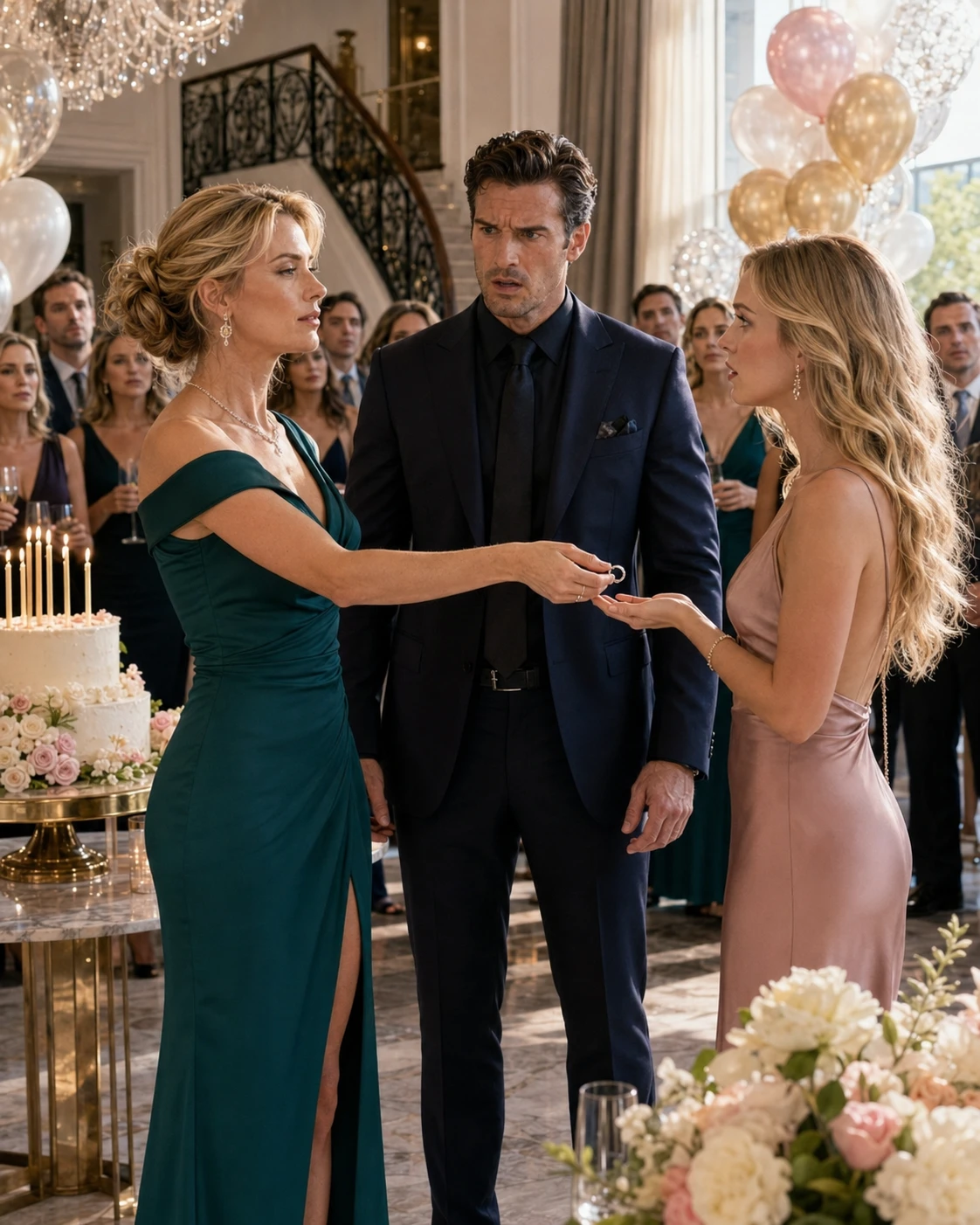
I thought of my birthday dinner. The candles burning. Camila’s shaking hand. Ruggero’s smile. Bianca stepping out of death. Teresa standing on the mansion steps. The shop glass glittering like broken ice.
I thought of every ending I had imagined.
None of them looked like this.
That was how I knew it was real.
“Yes,” I said. “But I’m keeping the shop.”
A laugh broke through the room.
Alessandro’s smile came slowly, like dawn crossing a locked room.
“I would not dare argue.”
“Good.”
He slid the ring onto my finger.
It fit.
Not because nothing had changed.
Because everything had.
Maso wiped his eyes and loudly blamed pastry dust. Leah kissed his cheek, which made him nearly fall into the cake. Camila hugged Nico. Teresa muttered that finally, someone had learned sense. Bianca stood near the window, watching her son with a peace that looked unfamiliar but welcome on her face.
Outside, rain softened the city.
Inside, the shop glowed gold.
And for the first time in my life, I understood that a happy ending was not the absence of betrayal, fear, or broken things.
A happy ending was choosing what to repair, knowing exactly where it had cracked.
I lifted my hand and watched the ring catch the light.
This time, it did not prove I belonged to a man.
It proved I had survived the fire, opened the secret, faced the ghost, and chosen my own crown.
The End.