
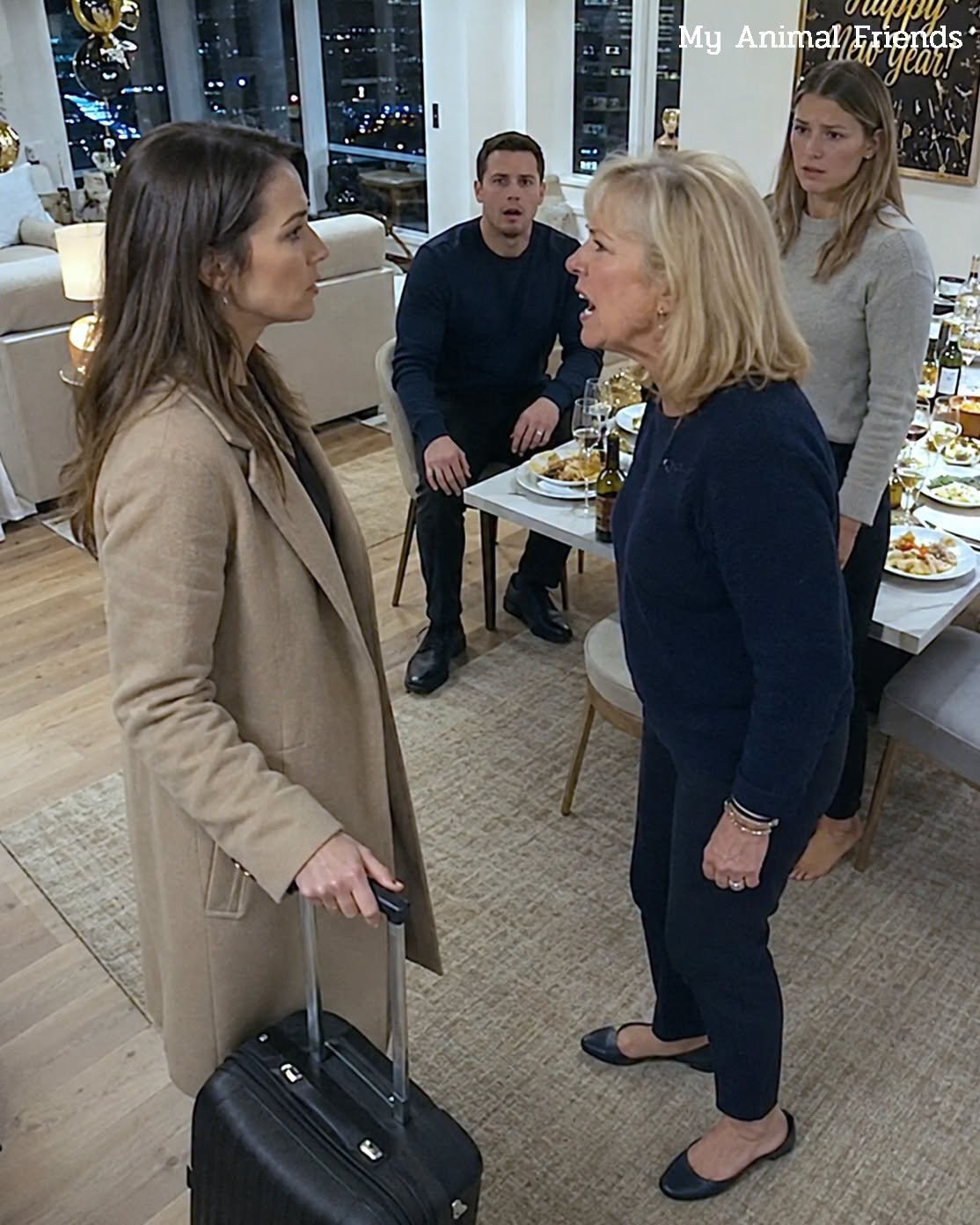
Chloe was twenty-six and had not held a full-time job since graduating from college. She had been staying with us “for a few weeks” for almost two years. Her belongings had slowly taken over the guest room, half the hallway closet, and an entire cabinet in my bathroom.
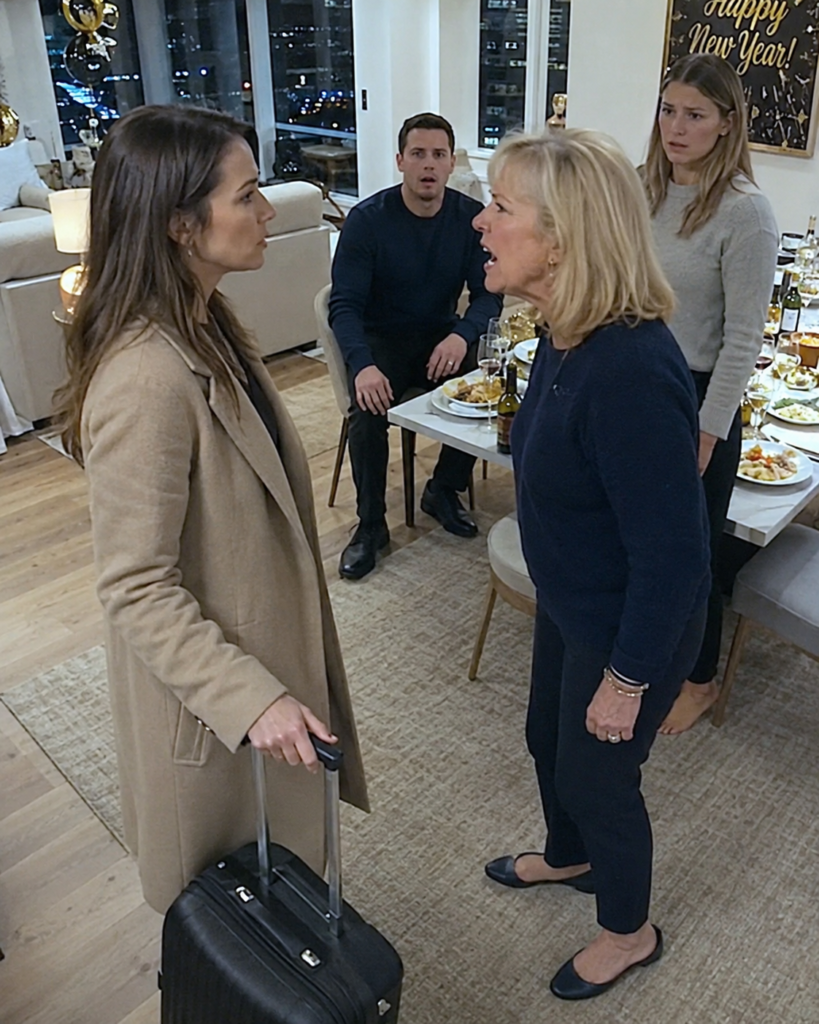
But somehow, she had become the authority on homemaking.
I carried another serving dish from the kitchen and placed it on the table.
Deborah tasted the roasted pork and frowned.
“Too salty.”
Arthur kept eating.
“Arthur,” Deborah said, “you really ought to say something.”
He glanced up.
“About what?”
“About your wife.”
That phrase bothered me more than it should have.
Your wife.
Not Eleanor.
Not our daughter-in-law.
Not family.
A problem attached to him.
Deborah leaned back in her chair.
“Three years of marriage, and she still acts like she’s living by herself.”
I stared at her.
The irony was so enormous that for a second I wondered if she was making a joke.
I was the one who woke before six to prepare coffee.
I was the one who ordered groceries.
I was the one who remembered Deborah’s prescriptions, Chloe’s favorite yogurt, Arthur’s dry cleaning, the HOA notices, the maintenance appointments, the utility renewals, the insurance paperwork, and every birthday that mattered to his family.
I had spent three years making sure everyone else could move through their days without noticing the machinery beneath their comfort.
And apparently that was the problem.
I had made it look too easy.
Deborah continued.
“A wife should bring people together. She should make a family feel cared for.”
I placed my fork down.
Arthur finally looked at me.
His expression wasn’t angry.
That would almost have been easier.
He simply looked tired of the conversation.
As though my humiliation were an inconvenience happening near him.
“Mom,” he murmured, “it’s New Year’s Eve.”
“I’m trying to help you.”
“You’ve made your point.”
“No, I don’t think I have.”
She turned toward me.
“You barely speak to us unless we speak to you first. You come home from work and act exhausted. You disappear into the bedroom with your laptop. Half the time, I don’t even know what you do at that company.”
I almost answered.
Then I stopped.
That was another thing nobody in Arthur’s family had ever really asked.
They knew I worked in finance.
They assumed that meant something vague involving spreadsheets.
Deborah once introduced me to a neighbor by saying, “Eleanor does office work downtown.”
I had never corrected her.
I was the director of finance for the North American division of an international manufacturing company.
The previous year, my total compensation had crossed four hundred thousand dollars.
I didn’t talk about it because money had never been something I used to measure people.
Maybe that had been my mistake.
Arthur knew approximately what I earned.
But even he had never seemed interested in the actual number. We kept separate personal accounts, and because I already owned the condo, I had simply continued paying the household expenses.
At first, it felt practical.
Then his mother moved in temporarily after selling her house.
Then Chloe needed somewhere to stay while she “figured things out.”
Then temporary became normal.
My groceries doubled.
My utilities climbed.
My peaceful two-bedroom condo became a four-person household.
Arthur kept transferring money to his mother every month.
I kept paying for everything else.
And because I never complained loudly enough, everyone concluded there was nothing to complain about.
Deborah was still talking.
“Look at the Hendersons downstairs. Susan works, keeps a beautiful house, always looks cheerful, and they already have a little boy.”
The room went still.
There it was.
The subject that always arrived eventually.
I looked at Arthur.
He moved a piece of rice around his plate.
“Mom.”
“What? I’m saying what everyone is thinking.”
“No,” I said.
It was the first thing I had said in several minutes.
Deborah blinked.
“No?”
“You’re saying what you’re thinking.”
She stared at me as though the distinction offended her.
“Eleanor, I don’t like your tone.”
“My tone is fine.”
Chloe stopped scrolling.
Arthur looked at me now.
Really looked.
Maybe he finally heard something different in my voice.
Deborah certainly did.
She straightened.
“Excuse me?”
I pushed my chair back and stood.
“I’m done with dinner.”
“You’ve barely eaten.”
“I’m not hungry anymore.”
“You don’t get to walk away every time someone tells you something you don’t want to hear.”
I turned toward the bedroom.
“Eleanor.”
I kept walking.
“Eleanor, I’m speaking to you.”
I stopped at the hallway entrance.
When I turned around, Deborah was standing.
Arthur had not moved.
Chloe watched us with open curiosity.
Deborah pointed toward the front door.
“If you’re going to behave this way, maybe you should spend the holiday with your own family.”
Nobody spoke.
I looked at Arthur.
He looked back at me.
This was his moment.
Not mine.
His.
One sentence would have changed the evening.
Mom, this is Eleanor’s home.
Mom, enough.
Mom, apologize.
Anything.
Instead, he said, “Can everybody just calm down?”
Deborah folded her arms.
“I am perfectly calm.”
Then she looked directly at me.
“Go on. Go back to your mother. Maybe a few days away will help you remember how people are supposed to behave in a family.”
Something changed in me.
Three years of arguments suddenly became irrelevant.
I didn’t need Deborah to understand me.
I didn’t need Chloe to respect me.
And, most painfully, I no longer needed Arthur to choose me.
I nodded.
“Okay.”
Deborah’s expression shifted.
“What?”
“I said okay.”
I walked into the bedroom.
Arthur followed thirty seconds later.
I opened the closet and pulled out a suitcase.
He stood in the doorway.
“Ellie.”
I didn’t answer.
“Come on.”
I placed folded clothes inside.
“You know how Mom gets.”
I zipped one side compartment.
“She doesn’t mean everything she says.”
I put my laptop charger into the front pocket.
“Ellie.”
“What?”
“Don’t do this.”
I finally looked at him.
“Do what?”
“Turn this into something bigger.”
For a moment, I simply stared at him.
It was almost impressive.
His mother had told me to leave my own home, and somehow I was the one turning it into something bigger.
“She told me to go.”
“She was upset.”
“And you?”
“What about me?”
“You were sitting three feet away.”
Arthur rubbed the back of his neck.
“What exactly did you want me to do? Start another argument?”
“No.”
I closed the suitcase.
“I wanted you to be my husband.”
His face changed.
That landed.
But not enough.
He lowered his voice.
“Can we talk about this tomorrow?”
“No.”
“Eleanor.”
“I’m going to my parents.”
“On New Year’s Eve?”
“Yes.”
“What are people going to think?”
That sentence ended whatever small hesitation remained in me.
Not how do we fix this.
Not are you okay.
Not please stay.
What will people think?
I picked up my suitcase.
Arthur remained in the doorway.
When I approached, he stepped aside.
I walked past him.
Deborah and Chloe were still near the dining table.
Deborah lifted her eyebrows when she saw the suitcase.
“You’re actually leaving?”
“You told me to.”
“Oh, please. A grown woman should know the difference between someone speaking emotionally and an actual invitation to leave.”
“Then maybe a grown woman should know not to say things she doesn’t mean.”
Her mouth tightened.
Chloe gave a little laugh.
I put on my coat.
Then I took out my phone.
There were four automatic payment schedules connected to the household accounts.
Gas.
Electricity.
Water.
Building services.
I had been meaning to reorganize them for months.
That night, I finally did.
I didn’t request immediate shutoffs. I didn’t interfere with anything already paid.
I simply canceled my automatic renewals.
If the people living there wanted services, they could put the accounts under their own names and pay for them like adults.
It took less than a minute.
Chloe noticed me tapping the screen.
“What are you doing?”
“Taking care of something.”
I slipped the phone into my coat pocket.
Then I opened the door.
“Happy New Year.”
Arthur had followed me into the foyer.
“Ellie—”
I looked at him once.
He stopped.
I walked out.
The hallway was cooler than the condo, and the quiet felt almost luxurious.
Inside the elevator, I saw my reflection in the mirrored wall.
No tears.
No trembling hands.
No dramatic breakdown.
I looked tired.
That was all.
Tired beyond anger.
Tired beyond hope.
The elevator reached the lobby.
My phone buzzed before I even reached the street.
Arthur.
I ignored it.
My father arrived twenty minutes later.
He had offered to pick me up the moment I texted.
He didn’t ask for an explanation when I got into the car.
He simply turned up the heat and said, “Your mother made soup.”
That nearly undid me.
Not because soup mattered.
Because care did.
At my parents’ apartment, my mother opened the door before we reached it.
She wrapped her arms around me.
I stood there in the hallway, still holding my suitcase.
“You don’t have to tell me anything tonight,” she whispered.
And for the first time in three years, I felt no obligation to immediately solve somebody else’s problem.
My old bedroom had become part storage room and part sewing room, but my mother had already changed the sheets.
I showered.
I put on an old college sweatshirt.
I climbed into bed.
Around midnight, fireworks began glowing beyond the windows.
My phone lit up several times.
Arthur.
Arthur again.
Chloe.
Arthur.
Then Deborah.
I turned the phone face down.
At 12:14 a.m., Arthur called again.
This time I answered.
“Hello?”
His voice came fast.
“Ellie, something’s wrong with the heat.”
I stared at the ceiling.
“Okay.”
“The furnace isn’t running.”
“Then call the service company.”
“I tried checking the account. It says the automatic payment isn’t active.”
“That’s correct.”
Silence.
“What do you mean, that’s correct?”
“I canceled automatic payments connected to my account.”
“Why would you do that?”
“Because I no longer live there.”
“Eleanor, you left two hours ago.”
“Your mother told me there was no place for me in that home.”
“She was angry.”
“And now I’m elsewhere.”
“Ellie, please don’t play games.”
My voice remained level.
“I’m not playing anything. The condo is mine. The household accounts are mine. I paid them because I lived there. I no longer live there.”
“Can’t you just reactivate the payment? We’ll sort everything out tomorrow.”
“No.”
He seemed genuinely stunned.
“Mom’s here. Chloe’s here.”
“I know.”
“It’s cold.”
“Then open accounts in your names.”
“It’s a holiday.”
“That sounds inconvenient.”
“Eleanor.”
I closed my eyes.
For three years, inconvenience had been mine.
I had rearranged meetings because Deborah needed rides.
I had left work early for building appointments because Arthur was busy.
I had spent Saturday mornings grocery shopping because Chloe forgot the list.
I had prepared family dinners after twelve-hour days because everyone expected dinner to appear.
Now, for once, inconvenience belonged to somebody else.
“Arthur, listen carefully. I bought that condo before our marriage. My name is the only name on the deed. Every regular household bill has come from my account for three years. Your mother told me to leave, and you allowed it. I left.”
His breathing changed.
“I know the condo is yours.”
“Do you?”
“Of course I do.”
“Then start acting like it.”
I ended the call.
He called back.
I turned off my phone.
Outside, fireworks continued across the winter sky.
Inside, my mother’s apartment was warm.
I slept until ten the next morning.
Arthur did not.
By dawn, he had rediscovered several facts he had spent years ignoring.
The first was written on the condo deed.
Eleanor Hayes.
The second appeared in three years of household statements.
Eleanor Hayes.
The third was more difficult to admit because it wasn’t written anywhere.
He had not been providing the life he thought he had been providing.
Eleanor had.
Arthur had always considered himself responsible.
He had a respectable position in procurement operations. He earned a good salary. He helped his mother financially. He had savings.
Those facts had allowed him to think of himself as the dependable center of his family.
But he had savings largely because his housing cost had been zero.
His utility cost had been zero.
Most of his grocery cost had been zero.
Furniture?
Eleanor.
Appliances?
Eleanor.
HOA fees?
Eleanor.
Insurance connected to the property?
Eleanor.
Repairs?
Usually Eleanor.
Cleaning supplies, household basics, replacement linens, holiday dinners, subscriptions his mother enjoyed?
Again and again, Eleanor.
Arthur sat in the cold living room on New Year’s morning and opened his banking app.
For the first time, he tried to calculate what independent life would actually cost.
His stomach tightened.
Deborah emerged from the guest room wearing two sweaters.
“Has Eleanor fixed the heat?”
“No.”
“What do you mean, no?”
“She canceled her automatic payments.”
Deborah stared at him.
“She did what?”
Chloe appeared behind her wrapped in a blanket.
“That’s unbelievably petty.”
Arthur looked at his sister.
Something about the sentence irritated him.
Maybe because twelve hours earlier he would have agreed.
Now he couldn’t.
“She doesn’t live here anymore.”
Deborah waved a hand.
“She’ll come back.”
“No.”
The certainty in his voice made both women pause.
Arthur looked toward the kitchen.
Eleanor’s coffee machine sat beneath the cabinet.
Her labels were on the pantry containers.
Her handwriting was on the calendar.
Her life was everywhere.
And for the first time, it looked less like decoration and more like evidence.
Deborah crossed her arms.
“Call her.”
“I did.”
“And?”
“She said the accounts are our responsibility now.”
“Our responsibility?”
“Yes.”
“What kind of wife does that?”
Arthur looked at his mother.
Then he said something he had never said before.
“Mom, this condo belongs to Eleanor.”
Deborah blinked.
“I know you two are married.”
“No. I mean it legally belongs to Eleanor. She bought it before we married. Her name is the only one on the deed.”
The room went silent.
Chloe lowered her blanket.
“This is Ellie’s condo?”
“Yes.”
Deborah gave an incredulous laugh.
“That doesn’t make sense.”
“It makes perfect sense.”
“How could she afford a place like this?”
Arthur hesitated.
Because that question revealed another thing he had allowed his family to misunderstand.
“She earns more than I do.”
“How much more?”
“A lot.”
Deborah’s expression sharpened.
“How much is a lot?”
Arthur rubbed his forehead.
“Her compensation last year was a little over four hundred thousand.”
Chloe stared at him.
“Four hundred thousand dollars?”
“Yes.”
“Per year?”
“Yes, Chloe.”
Deborah sat down slowly.
For several seconds, nobody spoke.
Then she looked around.
The condo seemed to change before her eyes.
The Italian dining table she had criticized.
Eleanor’s expensive but understated sofa.
The renovated kitchen.
The quiet building in one of the better neighborhoods in Chicago.
For three years, Deborah had proudly told friends that her son had done well for himself.
She had believed this was Arthur’s home.
She had believed Eleanor was fortunate to be living there.
Reality had been exactly the opposite.
“And the HOA?” Deborah asked quietly.
“Ellie pays it.”
“The electricity?”
“Yes.”
“The water?”
“Yes.”
“The groceries?”
“Mostly.”
Deborah looked toward the dining table where the remains of Eleanor’s New Year’s dinner still sat.
“What do you pay?”
Arthur didn’t answer.
“Arthur.”
“My own expenses.”
“And?”
“I give you money every month.”
“That’s not what I asked.”
He looked away.
Deborah understood.
The color left her face.
Chloe sat down beside her.
“So we’ve been living here because Eleanor allowed us?”
Arthur nodded.
Deborah whispered, “For three years?”
“Yes.”
Her eyes moved toward the hallway.
Less than twenty-four hours earlier, she had stood there and told Eleanor to leave.
The woman whose name was on the deed.
The woman paying the household bills.
The woman who had cooked the dinner Deborah criticized.
A strange expression crossed her face.
Not remorse.
Not yet.
Fear came first.
“What do we do now?”
Arthur stood.
“I’m going to Eleanor’s parents.”
“I’m coming with you.”
He stared at her.
“Mom—”
“I said I’m coming.”
Chloe sat upright.
“Me too.”
The three of them arrived at my parents’ building shortly after noon.
I knew because my father looked through the window and said, “Well. The committee has arrived.”
My mother stopped arranging dishes.
“Arthur?”
“And company.”
I was sitting at the kitchen table with coffee.
My body tensed automatically.
Then I reminded myself that I was home.
Really home.
“You don’t have to see them,” Dad said.
“I know.”
“Do you want to?”
“No.”
That was the answer.
Simple.
Powerful.
No.
My father went to the door.
I stayed in the kitchen.
Even from there, I could hear Arthur.
“Dad, I just want to speak with Ellie.”
“You can call me Robert.”
A pause.
“Robert, please.”
“She doesn’t want to speak with you.”
Then Deborah’s voice.
“We came to apologize.”
Dad almost laughed.
“What fortunate timing.”
“I’m serious.”
“So am I.”
“This is a family matter.”
“My daughter is my family.”
“So is she to us.”
That time Dad actually laughed.
“Interesting. Yesterday she apparently wasn’t.”
Deborah’s voice lowered.
“I spoke emotionally.”
“You told her to leave her own home.”
“I didn’t understand—”
My father interrupted.
“That it was hers?”
Silence.
That silence told him everything.
He continued more quietly.
“So that’s why you’re here.”
“No,” Deborah said quickly.
“We genuinely want to repair things.”
“Would you be standing outside this door if the condo belonged to Arthur?”
Nobody answered.
I looked down at my coffee.
My mother reached across the table and squeezed my hand.
In the hallway, Chloe began explaining that everyone had misunderstood one another.
My father was unimpressed.
Then Arthur said the sentence I had been waiting for without knowing I was waiting for it.
“Robert, I failed her.”
Everything became quiet.
Even my father didn’t answer immediately.
Arthur continued.
“I should have spoken last night.”
“Yes.”
“I should have spoken a lot earlier than last night.”
“Yes.”
“I know.”
My father’s voice softened by a fraction.
“Knowing after the consequences arrive isn’t the same as knowing when somebody needed you.”
“I understand.”
“No. You’re beginning to understand.”
Another silence.
Then Arthur asked, “Can you at least tell her I’m sorry?”
Dad looked back toward the kitchen.
I nodded once.
Not because I wanted Arthur back.
Because I wanted the apology delivered.
“I’ll tell her,” Dad said.
Arthur hesitated.
“And the household account…”
My father’s expression hardened again.
Of course.
Arthur heard it himself.
He immediately added, “Never mind.”
But Deborah didn’t.
“Robert, we’re having trouble transferring the utilities during the holiday. If Eleanor could simply reactivate things temporarily—”
“No.”
“It would only be for a few days.”
“No.”
“We’re not asking for something unreasonable.”
Dad leaned against the doorframe.
“You spent three years living in my daughter’s condo while she paid the bills. Last night you told her she had no place there. This morning you discovered the practical value of everything she quietly handled for you. And your first solution is for her to keep handling it.”
Deborah said nothing.
“That is the problem,” Dad continued. “You still think Eleanor’s effort is a resource your family can access whenever you need it.”
Those words traveled through the apartment.
I felt them more deeply than I expected.
Because that was exactly what I had never managed to articulate.
Not cruelty.
Not one dinner.
Not one insult.
Entitlement.
My time had become theirs.
My money had become theirs.
My home had become theirs.
My labor had become something that simply happened.
Until I stopped.
My father’s final words were calm.
“Find another arrangement. Eleanor will contact Arthur when she is ready.”
He closed the door.
I expected to feel triumphant.
I didn’t.
I felt sad.
That surprised me.
For years, I had imagined what it might feel like if Arthur finally understood.
I thought it would feel like vindication.
Instead, it felt like arriving at an airport after the plane had already left.
The understanding mattered.
It simply arrived too late.
Three days later, through the building management office, I formally requested that Arthur, Deborah, and Chloe arrange another place to live.
Arthur didn’t fight it.
That was the first respectful thing he had done in a long time.
He found a modest two-bedroom rental a few miles away.
When he told Deborah, she objected immediately.
“A two-bedroom? What about Chloe?”
Arthur looked at his sister.
“She needs to start supporting herself.”
Chloe stared at him.
“What?”
“You’re twenty-six.”
“So?”
“So I can’t fund three adults indefinitely.”
“You never complained before.”
“No,” Arthur said quietly. “Because Eleanor was paying for the life that made it possible.”
Chloe’s face flushed.
“That’s not fair.”
“It’s exactly fair.”
Deborah stepped between them.
“Arthur, she needs time.”
“She’s had three years.”
“Don’t speak about your sister like that.”
Arthur looked at his mother.
For perhaps the first time in his adult life, he didn’t retreat.
“Mom, we all need to change.”
That conversation continued for an hour.
Nobody enjoyed it.
But by the end, the comfortable fiction they had been living inside had collapsed.
Arthur would pay rent.
Deborah would return to managing more of her own expenses.
Chloe would find work.
And I would no longer finance any of it.
The first month was difficult.
The second was educational.
By the third, reality had accomplished what years of arguments never could.
Chloe took an entry-level position with a local design and printing company.
She hated the early mornings.
She hated commuting.
She hated having a manager who expected her to arrive on time.
Then something unexpected happened.
She got good at the work.
A client complimented one of her layouts.
Her manager assigned her a larger project.
Her first direct-deposit paycheck arrived.
She stared at the number for a long time.
Later, she called Arthur.
“I bought Mom dinner.”
Arthur smiled.
“With your own money?”
“Don’t sound so shocked.”
“I’m not.”
“You are.”
He laughed.
It was the first easy conversation they had had in weeks.
Deborah changed more slowly.
At first, every inconvenience became proof that life had treated her unfairly.
The apartment was too small.
The neighborhood was too noisy.
The kitchen cabinets were outdated.
The laundry room was downstairs.
But complaints sound different when there is nobody quietly fixing the problem.
Gradually, she began doing things herself.
She planned groceries around a budget.
She compared utility plans.
She learned what rent actually cost in Chicago.
One afternoon, while looking at her monthly expenses, she became very quiet.
“What?” Arthur asked.
Deborah tapped the calculator.
“This is just for three of us.”
“Yes.”
“And Eleanor paid all this?”
“More. The condo’s expenses were higher.”
Deborah looked at the numbers.
Every criticism she had made suddenly came with a price tag.
Not because care should be measured only in dollars.
But sometimes a number makes invisible labor impossible to ignore.
“She never said anything,” Deborah whispered.
“She tried.”
Deborah looked at him.
Arthur corrected himself.
“No. That’s not true. She did say things. We just didn’t listen because she never yelled.”
That realization stayed with him.
Eleanor had never been silent.
She had said she was tired.
She had said she needed more help.
She had asked him to tell Chloe to contribute.
She had asked him to stop allowing his mother to comment on their private decisions.
She had asked for weekends alone.
She had asked him to attend dinner with her parents.
She had asked him to defend her.
Arthur had heard every sentence.
He simply had not treated them as urgent.
Because Eleanor remained.
Then one day, she didn’t.
In late January, we met at a mediator’s office.
Arthur arrived early.
I arrived exactly ten minutes before the appointment.
When he saw me in the lobby, he stood.
“Hi.”
“Hi.”
For a second we were just two people who had once known where the other kept their socks.
Then the receptionist called our names.
The process was surprisingly ordinary.
Paperwork.
Accounts.
Property confirmation.
Personal belongings.
The condo had been mine before the marriage and remained mine.
Our finances had been largely separate, which simplified almost everything.
There was no dramatic confrontation.
No final attempt to win.
Arthur signed where he needed to sign.
So did I.
When we stepped outside, the January sun reflected off the glass buildings along the street.
“Ellie.”
I stopped.
Arthur held the folder against his chest.
“I owe you an apology that doesn’t ask you for anything.”
I waited.
He swallowed.
“I’m sorry I made you carry our home alone.”
My throat tightened.
He continued.
“I thought because I worked and helped Mom financially, I was doing my part. I never looked at everything you were doing because… I guess looking would have required me to admit I was comfortable.”
I said nothing.
“I should have defended you.”
“Yes.”
“I should have told Mom and Chloe that your home was yours.”
“Yes.”
“I should have asked before they moved in.”
“Yes.”
A sad smile touched his face.
“You’re not making this easier.”
“I’m not supposed to.”
“No.”
He looked down.
“That’s fair.”
There were so many things I could have said.
I could have listed every dinner.
Every lonely birthday.
Every time his mother corrected me in my own kitchen.
Every Saturday I spent cleaning while three capable adults relaxed.
Every night Arthur said he was too tired to talk.
But I didn’t need to.
The ending had already happened.
“I don’t hate you, Arthur.”
He looked up.
“I’m glad.”
“I just don’t want this marriage anymore.”
“I know.”
“I hope you build something better from what happened.”
“So do I.”
I began walking away.
“Ellie.”
I turned one last time.
“Thank you.”
That almost made me laugh.
“For what?”
“For more things than I understood while I had them.”
I nodded.
Then I left.
Two months later, I sold the condo.
People were surprised.
My parents most of all.
“You fought to get your home back,” Mom said. “And now you’re selling it?”
“I didn’t fight for the condo.”
“What did you fight for?”
“My right to choose.”
She smiled.
“That sounds like my daughter.”
The sale went through quickly.
I used part of the money to enroll in an executive program I had wanted to take for years.
For a decade, I had told myself I would do it when life became less busy.
Life never becomes less busy.
You either make room for yourself or eventually discover there is no room left.
I also accepted a temporary assignment in Europe through my company.
Six months.
Maybe a year.
The old Eleanor would have created a spreadsheet containing fifteen reasons not to go.
The new Eleanor bought a suitcase.
Before leaving, however, I had one final thing to do.
During the marriage, Arthur and I had kept separate accounts, but I had always maintained records.
It was the finance professional in me.
Every transfer.
Every shared purchase.
Every contribution.
Every recurring cost.
One Sunday afternoon, I opened three years of spreadsheets.
Arthur’s contribution to our household had been much smaller than mine.
But it hadn’t been zero.
He occasionally bought groceries.
He paid for several repairs.
He had purchased our first television.
He had covered a handful of vacations.
And although the money he gave Deborah had not supported our household directly, it was still part of the financial structure of our marriage.
I sat at my parents’ dining table and looked at the numbers.
My mother walked past.
“What are you doing?”
“Closing a file.”
She glanced at the screen.
“Arthur?”
“Yes.”
She gave me a long look.
“You don’t owe him anything.”
“I know.”
“Then why?”
“Because I’m not doing it for him.”
That was the truth.
I wanted to leave the marriage with nothing unresolved inside me.
No revenge.
No hidden scorecard.
No need for him to suffer indefinitely so that my pain would feel justified.
I wanted clean books.
In every sense.
I calculated the amount of his documented household contributions.
Then I arranged for the money to be transferred.
Not half the condo.
Not some emotional settlement.
Simply the measurable amount he had put directly into our shared life.
I asked my assistant, Sarah, to deliver the statement after I left the country.
She stared at me when I explained.
“You’re sending him money?”
“I’m returning what I consider his documented contribution.”
“Eleanor, most people would keep the spreadsheet and frame it.”
I laughed.
“I considered that.”
“Seriously. Put it on the wall.”
“No.”
Sarah softened.
“You’re really done, aren’t you?”
“Yes.”
That was the beautiful part.
I really was.
Several months after our divorce, Arthur left his office late on a Thursday evening.
He had developed the habit of staying after most of his colleagues had gone.
The official reason was productivity.
The real reason was simpler.
There was nobody waiting at home.
His career had survived a difficult period shortly after the separation when an outside supplier submitted a fabricated financial document suggesting Arthur had accepted an improper payment.
The accusation had triggered an internal compliance review.
For forty-eight hours, Arthur thought he might lose the job he had built for almost a decade.
Ironically, the first person he wanted to call was Eleanor.
He resisted for hours.
Then called anyway.
She answered on the third attempt.
“What happened?”
Arthur explained.
When he finished, Eleanor was quiet.
Then the finance director in her took over.
“Get official transaction records directly from your bank. Preserve every project email. Don’t argue emotionally with anyone. Ask compliance to identify exactly which document they’re relying on and request an independent authenticity review.”
Arthur grabbed a notebook.
“Okay.”
“And get professional counsel.”
“I don’t know anyone.”
“I do.”
She gave him the name of Ryan Mitchell, an attorney whose firm regularly advised companies on compliance matters.
Then she added, “Arthur?”
“Yes?”
“This is information. It isn’t us starting over.”
“I know.”
“Good.”
The fabricated document was quickly exposed.
The supplier representative who had created the problem had apparently been resentful over losing a major contract the previous year. Once independent verification began, the accusation fell apart.
Arthur returned to work with his position intact.
But the experience changed him.
For two days, his entire professional identity had rested on records, receipts, timestamps, and the credibility of people willing to examine facts carefully.
That was when he truly understood something about Eleanor.
For years, she had been the person who made sure the details were right.
He had called her serious.
His mother had called her cold.
Chloe had called her boring.
But when Arthur needed someone to think clearly while his world felt unstable, Eleanor’s calmness became the most valuable thing in the room.
Ryan Mitchell once said to him after a meeting, “Miss Hayes thinks three moves ahead.”
Arthur smiled without humor.
“I know.”
“You were lucky to have her in your corner.”
“I know that too.”
Ryan glanced at him.
“Were?”
Arthur nodded.
“We’re divorced.”
Ryan stopped gathering his papers.
“Oh.”
“It’s a long story.”
Ryan considered him for a moment.
“Then make sure you learn something from it.”
Arthur did.
Not immediately.
Real change rarely arrives with cinematic music.
It shows up in small humiliations.
Writing the rent check.
Cooking dinner after work.
Remembering to buy laundry detergent.
Comparing grocery prices.
Waiting for maintenance.
Cleaning the bathroom.
Calling his mother when he was exhausted.
Arthur began discovering all the things Eleanor had done quietly.
One evening, after carrying two grocery bags up four flights of stairs, he set them on the kitchen counter and laughed to himself.
Eleanor had done this every week.
Usually after working longer hours than he did.
He had almost never helped bring the bags inside.
The memory embarrassed him.
Another night, his mother called.
“Have you eaten?”
“I’m making pasta.”
“You?”
“Yes, Mom.”
“Do you know how?”
“I’m learning.”
A pause.
Then Deborah said quietly, “Eleanor used to make that mushroom pasta you liked.”
Arthur stared at the pot.
“Yes.”
“She gave me the recipe once.”
“Did she?”
“I never made it.”
Neither spoke for several seconds.
Then Deborah said, “I was very unfair to her.”
Arthur leaned against the counter.
“Yes.”
“I keep thinking about that dinner.”
“So do I.”
“I thought she needed us.”
Arthur closed his eyes.
“That was the problem.”
Deborah sighed.
“I never considered that maybe we needed her more.”
By then Deborah had moved back to her hometown.
Living independently again had changed her more than Arthur expected.
She joined a church volunteer group.
She reconnected with old friends.
She began helping with community lunches twice a month.
The first time she spent four hours preparing food for thirty people, she called Arthur afterward.
“My feet hurt.”
He laughed.
“Sit down.”
“I don’t know how Eleanor did dinner every day after work.”
Arthur became quiet.
“Neither do I.”
Chloe changed too.
Her temporary design job became permanent.
Then she received a small raise.
She moved into a studio apartment.
The first week, she complained that the space was tiny.
By the third month, she loved it.
She chose the furniture.
She paid the electric bill.
She bought a ridiculous yellow chair because nobody could tell her not to.
One Saturday afternoon, she sent Arthur a picture.
Look what I bought.
Arthur stared at the yellow chair.
It’s awful.
I love it.
Then keep it.
I WILL.
He smiled.
That, he realized, was ownership.
Not just the deed.
The right to choose.
Months earlier, Chloe had mocked Eleanor for caring about boundaries.
Now she understood the satisfaction of a front door that opened into a space governed by your own decisions.
The evening Sarah found Arthur outside the subway station, he was staring at his phone.
Eleanor had posted a photograph from Europe.
She stood on a sunlit plaza with an old cathedral behind her, wearing a blue coat and smiling in a way Arthur had rarely seen during the final year of their marriage.
Not because she had never been capable of happiness.
Because the version of her living with him had been exhausted.
“Mr. Parker?”
He turned.
Sarah stood behind him holding a slim folder.
“I’m Eleanor’s assistant.”
“I remember you.”
“She asked me to give you this.”
Arthur accepted the folder.
“What is it?”
“Open it.”
Inside was a financial statement.
Of course it was.
Arthur almost smiled.
Every line was organized.
Dates.
Categories.
Amounts.
His documented household contributions during the marriage.
Groceries.
Repairs.
A television.
Travel expenses.
A few furniture purchases.
At the bottom was a total.
$42,500.
Arthur looked up.
“I don’t understand.”
Sarah nodded toward the final page.
A short note was attached.
Arthur,
I spent years believing that being fair meant giving more until everyone around me was satisfied.
I know better now.
Fairness also means recognizing what was real, even when the whole was imperfect.
These are the household contributions I could clearly document as yours. The transfer has been arranged.
This is not an invitation to reopen anything between us.
It is simply me closing the books accurately.
I hope you build a good life.
Eleanor.
Arthur read the note twice.
Then a third time.
“She transferred this?”
Sarah nodded.
“She didn’t need to.”
“I told her that.”
“What did she say?”
Sarah smiled.
“She said you would say exactly that.”
Arthur lowered his eyes.
His phone vibrated.
Bank notification.
Deposit received.
$42,500.
For a moment, he simply stared.
Then he laughed quietly.
Sarah raised an eyebrow.
“What?”
“Nothing.”
He looked at the spreadsheet again.
“She calculated everything.”
“Of course she did.”
“That’s Eleanor.”
“Yes.”
Arthur closed the folder.
“Is she happy?”
Sarah considered the question.
“I think she’s peaceful.”
That answer affected him more than happy would have.
Peace.
It was the thing he had never given her.
“Good,” he said.
Sarah started to leave, then turned.
“She also told me something else.”
Arthur waited.
“She said you should stop staying at the office until nine every night.”
He stared.
“How does she know that?”
Sarah smiled.
“She still knows people in your building.”
Arthur shook his head.
“Of course.”
“Take care of yourself, Mr. Parker.”
“You too.”
Sarah disappeared into the crowd.
Arthur stood at the subway entrance while commuters moved around him.
For months, regret had felt like punishment.
That evening, for the first time, it felt more like instruction.
He could not return to the condo.
He could not return to New Year’s Eve and speak when he should have spoken.
He could not give Eleanor back the three years she spent making herself smaller inside her own home.
But he could decide what kind of person walked forward from the wreckage of those choices.
On the way home, Arthur stopped at a grocery store.
He bought tomatoes.
Garlic.
Mushrooms.
Pasta.
A loaf of bread.
At his apartment, he called Deborah.
“Mom.”
“Everything okay?”
“Do you still have Eleanor’s mushroom pasta recipe?”
There was a pause.
“Yes.”
“Send it to me.”
Ten minutes later, the recipe arrived as a blurry photo of Eleanor’s handwriting.
Arthur stood at the counter reading it.
One pound mushrooms.
Fresh parsley.
Cream.
Garlic.
Black pepper.
Parmesan.
At the bottom, Eleanor had written:
Arthur likes extra mushrooms.
He stared at those four words for a long time.
Then he began cooking.
The pasta wasn’t perfect.
He added too much cream.
He cooked the mushrooms longer than he should have.
But he ate it.
He washed the dishes afterward.
He wiped the counter.
He took the trash downstairs.
Ordinary things.
Invisible things.
The things a life is actually made of.
Across the Atlantic, I knew none of this.
And that was fine.
I was sitting in a small café near my temporary apartment, working through notes for an executive strategy seminar.
My phone buzzed.
It was Chloe.
For several seconds, I considered ignoring it.
Then I opened the message.
Hi, Eleanor. I know I’m probably the last person you want to hear from. You don’t need to answer. I just wanted to say I’m sorry.
Another message arrived.
I have my own apartment now. I pay my own bills. I finally understand how awful it was that I treated your home like it belonged to me.
Then:
Also, I work full time now. You would probably laugh at how proud I am of having health insurance.
Despite myself, I smiled.
I typed back.
I wouldn’t laugh.
Three dots appeared.
Really?
Really. Congratulations on the job.
Her answer came almost instantly.
Thank you.
Then, after a pause:
I was terrible to you.
I stared at the screen.
Old Eleanor would have rushed to comfort her.
No, you weren’t.
Don’t feel bad.
Everything’s fine.
I had spent half my life cushioning other people from the emotional consequences of their own choices.
I didn’t do that anymore.
Instead I wrote:
You were unkind to me. But you can choose to be different now.
Chloe took almost a minute to answer.
I’m trying.
Good.
That was enough.
A month later, Deborah wrote to me.
Not texted.
Wrote.
An actual handwritten letter arrived through my parents, who forwarded it.
I almost left it unopened.
Then one rainy Sunday, I made tea and sat beside the window.
Eleanor,
I have rewritten this letter several times because every version sounded like I was explaining myself instead of apologizing.
So I will not explain.
I treated your patience as weakness.
I treated your home as if it belonged to my family because you were generous enough not to remind us otherwise.
I criticized things I should have appreciated.
I spoke about your marriage and your private choices as though I had authority over them.
Most of all, I expected you to continue giving because you had always given before.
I understand now that gratitude should have come before entitlement.
I am sorry.
You do not need to answer.
I hope wherever you are, you have a peaceful home.
Deborah.
I read the letter twice.
Then folded it carefully.
I never answered.
Forgiveness did not require reopening the door.
That was another lesson I had learned.
You could accept that someone had changed.
You could wish them well.
You could even release your anger.
And still choose distance.
A year after New Year’s Eve, I returned to Chicago for the holidays.
Not permanently.
Just for two weeks.
My parents picked me up at the airport.
My mother cried.
My father pretended there was something in his eye.
Their apartment looked exactly the same.
The sewing machine still occupied half my old room.
The coffee tasted too strong.
The radiator made that clicking sound it had made since I was sixteen.
I loved every inch of it.
On New Year’s Eve, Mom began planning dinner.
“What do you want?”
“Anything except salmon.”
She laughed so hard she had to hold the counter.
Dad looked confused.
“Why?”
“Long story.”
That evening we cooked together.
Nobody inspected the food.
Nobody graded my effort.
Nobody discussed whether I was fulfilling the correct role in somebody else’s life.
We ate.
We talked.
We laughed.
Close to midnight, I walked to the window.
Fireworks began in the distance.
One year earlier, I had stood in another apartment listening to someone tell me I didn’t belong in my own home.
That night, I finally understood something.
The condo had never been the most important thing I reclaimed.
I reclaimed the right to leave a table where respect was not being served.
I reclaimed the right to stop funding relationships that required my silence.
I reclaimed mornings that belonged to me.
Weekends that belonged to me.
Decisions that belonged to me.
And, perhaps most importantly, I reclaimed the part of myself that had once believed love had to be earned through endless usefulness.
My mother came to stand beside me.
“What are you thinking about?”
“Last year.”
“Do you regret anything?”
I considered the question.
“I regret staying as long as I did.”
She nodded.
“But leaving?”
“No.”
Outside, another burst of fireworks colored the sky.
Mom linked her arm through mine.
“Good.”
My phone buzzed.
A New Year’s message.
From Arthur.
I had not heard from him in months.
Happy New Year, Ellie. No need to reply. I hope life is treating you well.
I read it once.
Then locked the screen.
Mom watched me.
“Arthur?”
“Yes.”
“You going to answer?”
I looked at the fireworks.
Then at my parents’ warm living room.
At the dinner dishes waiting in the kitchen.
At my suitcase near the guest-room door, ready for another flight and another chapter.
“No,” I said.
And this time, no felt completely peaceful.
Across the city, Arthur sat in the small apartment he had once hated.
It no longer looked temporary.
There were photographs on the wall.
A decent dining table.
Books on the shelf.
A plant Chloe had given him that somehow remained alive.
On the stove was mushroom pasta.
At 11:58 p.m., his mother called from her hometown.
Chloe joined from her own apartment.
The three of them stayed on video as midnight arrived.
Deborah held up a glass of sparkling cider.
“To better choices.”
Chloe laughed.
“That is the most Mom toast ever.”
Arthur smiled.
“To better choices.”
They drank.
After the call ended, Arthur looked around the apartment.
A year earlier, he had thought losing Eleanor’s condo was the disaster.
Now he knew better.
The true loss had happened gradually, long before that New Year’s dinner.
Every time he chose comfort over courage.
Every time he allowed silence to answer for him.
Every time Eleanor carried something he could have helped carry.
The condo had merely made the truth visible.
He walked to the window.
Fireworks glowed over Chicago.
For the first time in months, thinking about Eleanor did not make him want the past back.
He wanted something else.
He wanted to become a person who would never again require someone else to disappear in order for him to remain comfortable.
The distinction mattered.
Arthur raised his glass toward the city.
“Happy New Year, Ellie.”
Then he turned away from the window, carried his plate to the kitchen, and washed it himself.
And somewhere else in that same enormous city, surrounded by the people who had never asked her to shrink in order to belong, Eleanor Hayes stepped into another year knowing that the most powerful door she had ever closed was the one that finally taught her she had always been allowed to open another.