

My father, Gerald Marlo, had built a respectable commercial insurance agency from almost nothing. It never became the empire he liked to imply it was, but it gave us a comfortable life and, more importantly to him, access to rooms where wealthier people gathered.
My mother, Diane, treated those rooms like stages.
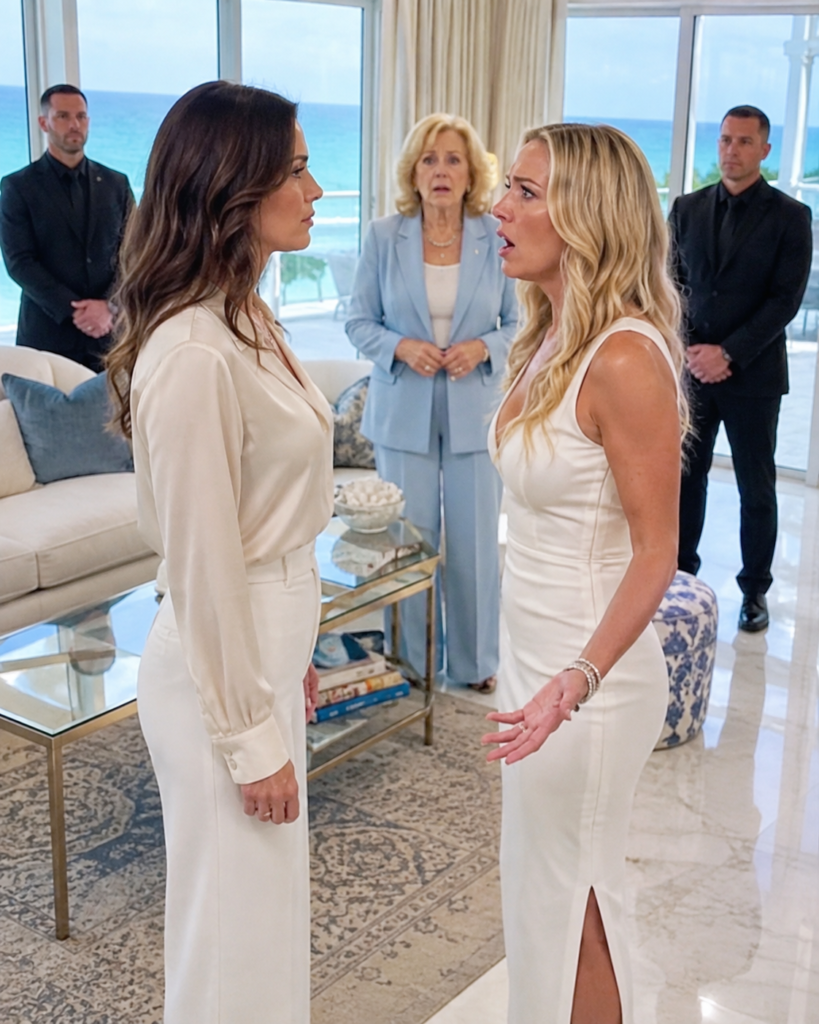
She remembered what everyone wore, which couples vacationed in Europe, whose children attended which schools and which families had been invited to the right charity dinner.
Then there was Presley.
My younger sister was only two years behind me, but growing up, it often felt as though we had been born into entirely different families.
Presley was beautiful in an effortless way. Blond hair, bright smile, the kind of confidence that made adults forgive her before she had even done anything wrong.
If she received an average grade, my parents praised how hard she must have worked.
When I brought home straight A’s, my father glanced at the report card and said, “Good. Keep it up.”
When Presley quit piano lessons after six months, Mother told everyone she was “too creative to be confined to one instrument.”
When I practiced the violin for seven years, nobody attended my final recital because Presley had a cheerleading banquet that same evening.
I learned something important very young.
In my family, achievement and attention were not connected.
Presley received attention because she was Presley.
I learned to achieve because achievement was something no one could take away after the room went quiet.
By sixteen, I had stopped expecting applause.
By eighteen, I had earned a full academic scholarship.
My parents were pleased, but not for the reason I had hoped.
“That will save us a fortune,” my father said.
That sentence became almost funny to me years later.
At the time, it hurt.
College was the first place where being quiet didn’t automatically make me invisible.
Professors noticed that I remembered details. Employers noticed that I could look at financial statements and see patterns other people overlooked. Clients discovered that I didn’t need to dominate a conversation to understand what mattered.
I majored in finance and accounting, worked constantly and graduated without debt.
My first job was unremarkable.
My second was better.
By twenty-five, I had left corporate accounting and started doing independent financial work from a one-bedroom apartment.
That was the part my family remembered.
They never updated their picture of me after that.
To them, I remained Vivian with the old laptop at the kitchen table, sending invoices to small businesses and worrying about rent.
What actually happened was less dramatic and far more important.
One client became four.
Four became twelve.
A regional property investor asked me to help restructure the finances of several struggling commercial properties. I discovered I was unusually good at understanding distressed assets—the businesses and buildings people abandoned when they became too complicated.
I didn’t see ruins.
I saw numbers.
Numbers told stories without caring about appearances.
Over the next decade, I built Marlowe Strategic Capital.
I deliberately used a slightly different spelling of my surname in the company name because I wanted separation between my professional life and my family’s social world.
We began small.
Then we became profitable.
Then quietly powerful.
By thirty-three, our firm advised private clients across the Southeast, held interests in commercial real estate and hospitality companies, and managed investments worth far more than anything my parents would have believed if I had told them.
So I never told them.
Not because I was ashamed.
Because eventually I understood that my family wasn’t curious about me.
They wanted categories.
Presley was glamorous.
Father was successful.
Mother was connected.
Vivian was practical and struggling.
Everyone knew their lines.
There was no advantage in interrupting the performance.
The arrangement survived until Presley became engaged to Bennett Colgrove.
According to my mother, the Colgroves were “one of those families.”
She said it with reverence.
Old money.
Family trusts.
Historic properties.
Board memberships.
European vacations.
Names on buildings.
I had worked around genuinely wealthy families for years by then, and something about the way Bennett’s background was described always sounded slightly theatrical to me.
People with established wealth rarely needed to mention it every six minutes.
But Presley was enchanted.
More accurately, Presley was enchanted by what marrying him appeared to say about her.
The engagement dinner happened the following spring at an expensive steakhouse in downtown Atlanta.
My parents had driven over from Charleston. Presley and Bennett had flown in from New York after what she described as a “venue consultation weekend.”
I arrived directly from my office wearing a simple navy dress and small gold earrings.
Presley looked me up and down when I entered.
“That’s what you’re wearing?”
“Good to see you too.”
She smiled thinly.
“I just thought you might dress up.”
“I did.”
Bennett laughed.
I remember that laugh.
Not because it was funny, but because it was the laugh of a man who had already decided which person at the table mattered least.
Dinner lasted almost two hours.
For most of it, Presley talked about the wedding.
The flowers were being flown in.
The dress required multiple fittings.
A celebrity-adjacent photographer had been booked.
The cake designer had a waiting list.
The guest count was three hundred because anything smaller, she said, would feel “weirdly intimate.”
My father laughed at everything.
Mother kept rearranging the silverware and talking about Bennett’s parents.
I tried several times to join the conversation.
Each time, Presley spoke over me.
Eventually dessert plates disappeared and a peculiar silence settled over the table.
I recognized it immediately.
My family had rehearsed something.
Presley reached into her handbag and removed a thick cream envelope embossed with gold lettering.
She slid it toward me.
For one foolish second, I thought it was my invitation.
I opened it.
Inside was an itemized copy of my dinner charges.
One hundred forty-two dollars.
Behind it was a letter.
I read the first paragraph twice.
Then I looked at my sister.
She sat straighter.
“I think we can all agree this is better,” she said.
“Better for whom?”
The question came out more calmly than I felt.
Presley exhaled.
“Vivian, please don’t make this difficult.”
Mother stared into her water glass.
Father examined the label on the wine bottle.
Presley continued.
“Bennett’s family is very traditional. There will be people there who expect a certain… standard.”
Bennett said nothing.
That was worse.
Presley touched one perfectly manicured finger to the envelope.
“I can’t spend the entire wedding worrying about what you’re wearing, whether you look uncomfortable, or whether you’re going to sit there judging everybody.”
“I didn’t know I had been doing that.”
“You always do it.”
“I mostly listen.”
“Exactly. It’s awkward.”
She leaned closer.
“And what would you even talk to Bennett’s parents about? Vacation homes? Foundations? Investments? You do bookkeeping from your apartment.”
There it was.
The old family photograph.
Preserved perfectly.
I could have corrected her.
I could have told her that earlier that afternoon I had participated in a meeting concerning the acquisition of a hotel portfolio worth more than my father’s insurance agency had generated in several years.
I could have told Bennett that I had sat across tables from families far wealthier than his claimed to be, and none had ever made me feel ashamed of wearing a navy dress.
Instead, I looked at my parents.
Mother finally reached under the table and squeezed my wrist.
“Please,” she whispered. “Let your sister have her moment. Be the bigger person.”
I looked at her hand.
Then at my father.
He cleared his throat.
“Your mother’s right. A wedding is stressful enough.”
I realized then that they had all discussed this before dinner.
The envelope hadn’t been Presley’s impulse.
It was a family decision.
My exclusion had been planned.
Something inside me became very still.
I placed the letter back inside the envelope.
“Understood.”
Presley blinked.
Apparently she had expected tears.
Perhaps an argument.
Probably a plea.
Instead, I took my wallet from my purse.
My father suddenly leaned forward.
“You can just cover your share.”
“I know.”
I placed my card on top of the bill.
Presley laughed when she saw it.
It was a matte metal card issued through my firm’s private banking account.
“Oh my God,” she said. “Did you order that online?”
I looked at the waiter.
“Please put the entire dinner on this. And add thirty percent for the staff.”
My father frowned.
“Vivian.”
“It’s fine.”
“You don’t need to prove anything.”
“I’m not.”
The waiter returned several minutes later.
The transaction had gone through immediately.
I signed the receipt.
Presley stared at it.
For just a second, uncertainty appeared on her face.
Then she covered it with another smile.
“You’re unbelievable.”
I stood.
“Enjoy your wedding, Presley.”
She folded her arms.
“You’re really going to act like a victim now?”
“No.”
That answer seemed to bother her more than anything else.
I picked up my purse.
“I genuinely hope the wedding is everything you’ve planned.”
My father made an irritated sound.
“We’re spending enough on it.”
“How much?”
He puffed up slightly.
“The flowers alone are approaching one hundred fifty thousand.”
Even I paused.
“One hundred fifty thousand dollars?”
“This is not some backyard event.”
“Apparently not.”
“We’re refinancing the lake house,” he added. “Your mother and I understand sacrifice.”
The room suddenly seemed quieter.
“The Blue Ridge house?”
“Of course.”
“You’re borrowing against it?”
“That’s what equity is for.”
I stared at him.
There was only one problem.
My father had no equity in that house.
He didn’t own it.
I did.
Two years earlier, my parents’ finances had quietly started collapsing.
My father’s agency had lost several major commercial accounts. My mother had continued spending as though nothing had changed. Presley’s lifestyle had become another enormous expense—apartments, travel, business ideas that lasted six months and disappeared.
Eventually the mortgage on the lake house fell behind.
The property had been in my extended family for decades, which made the situation especially humiliating for my father.
He told no one.
Through my work, I learned the property was in distress when its loan package crossed the desk of one of our real estate partners.
I recognized the address immediately.
I could have walked away.
Instead, one of our holding companies acquired the note as part of a larger transaction.
My attorney structured an agreement that protected my parents from a public financial disaster.
Their remaining obligation was resolved.
Ownership transferred to our company.
They were allowed to remain there under a favorable lease and were given an option to repurchase the property if their finances recovered.
My father signed every document.
Apparently he read none of them closely enough to ask who ultimately controlled the company acquiring the property.
He later told Mother that some investment group had “restructured the loan.”
They continued calling the monthly payment a mortgage.
It was rent.
Now he intended to borrow against a house he had already transferred away.
Any ordinary title review would stop the application immediately.
I could have corrected him at the restaurant.
I didn’t.
That would have turned the evening into another argument about whether I was being difficult.
Instead, I smiled.
“You should probably review the property documents before doing that.”
My father waved one hand.
“I know how financing works, Vivian.”
For the first time all evening, I almost laughed.
“I’m sure you do.”
Then I left.
Outside, Atlanta’s evening air felt cool against my face.
My driver, Marcus, was waiting near the curb.
He opened the rear door.
“Good evening, Ms. Marlo. How was dinner?”
I slid into the back seat.
“Educational.”
As soon as we pulled away, I called Julian Hart, my attorney and head of asset management.
Julian had worked with me for nearly eight years and had the unusual ability to sound calm even when explaining disasters.
“I need you to put an internal flag on the Blue Ridge property.”
There was a pause.
“Your parents’ residence?”
“They’re apparently planning to borrow against it to pay for wedding flowers.”
Another pause.
Longer this time.
“They can’t.”
“I know.”
“The title would stop any legitimate application.”
“I know that too. I want our team watching for anything unusual. If someone contacts us regarding the property, I want to know before my father creates a larger mess.”
“Done.”
I watched Atlanta’s lights slide across the dark window.
“And Julian?”
“Yes?”
“Take a look at Bennett Colgrove.”
“Your future brother-in-law?”
“Not mine, apparently. I’ve been removed from the guest list.”
Julian was silent.
Then he said, “That sounds like a story.”
“It is becoming one.”
“What am I looking for?”
“Nothing intrusive. Public filings, business interests, property records, anything our normal due diligence team could review. His family’s story doesn’t make sense.”
“Why?”
“My parents are nearly draining themselves to fund this wedding. If the Colgroves are as established as everyone claims, I don’t understand why that would be necessary.”
Julian knew me well enough not to argue.
“I’ll have something by morning.”
I arrived at my building twenty minutes later.
From the outside, my life was nothing like the one my family imagined.
I lived in a penthouse above a quiet residential tower in Buckhead, though even there I kept things understated.
No gold furniture.
No giant chandeliers.
No closets designed for social media.
I liked books, clean lines, open windows and rooms that didn’t demand attention.
My favorite feature was the terrace.
That night, I sat outside with sparkling water and watched the city.
I should have been devastated.
Instead, I felt strangely free.
Being excluded from Presley’s wedding hurt.
But the deepest hurt had happened at the restaurant before she ever slid the envelope toward me.
My parents had watched.
That was the part I couldn’t forget.
They had chosen silence long before I did.
The next morning, Julian’s preliminary report arrived before my coffee cooled.
The first page made me sit back.
The Colgroves were not old money.
Not anymore.
They had been wealthy once.
Bennett’s grandfather had built a legitimate real estate business. His father expanded too aggressively, borrowed too heavily and spent years unwinding the consequences.
Most of the major properties associated with the family name had been sold.
Several companies had closed.
The glamorous office Bennett used in photographs was a shared executive suite.
The yacht featured repeatedly on Presley’s social media belonged to a charter service.
Their supposed family estate had been transferred years earlier.
None of that made Bennett a bad person.
Plenty of families lost money.
What bothered me was the performance.
His life appeared carefully designed to imply ownership where there was only access.
Then Julian found a wedding funding document that raised a different question.
Several vendor payments were supposedly coming from the “Colgrove Family Trust.”
We could find no evidence that such a trust, in the form represented, was funding those payments.
Instead, the money appeared to be moving through a small corporate account currently tied up in a compliance dispute.
“Could be an accounting problem,” Julian cautioned when we spoke.
“Could be.”
“But?”
“But everything around him is borrowed.”
Julian sighed.
“You want to know whether the wedding is another borrowed thing.”
“Yes.”
I didn’t need to wait long for my family to complicate matters further.
Around ten the next morning, my home security system sent an alert.
Someone had entered my apartment using the emergency family access code.
I rarely thought about that code.
Years earlier, I had given it to my parents in case something happened while I traveled.
I opened the security feed.
Mother and Presley were standing in my hallway.
For several seconds, I simply watched.
They weren’t visiting.
Presley was opening cabinets.
Mother was walking directly toward my private office.
The office required a separate passcode.
Mother tried the handle.
Locked.
Presley said something I couldn’t hear.
Then Mother began entering numbers.
My phone alerted me after the third incorrect attempt.
I activated the intercom.
“Can I help you?”
Presley jumped.
Mother froze.
“Vivian?”
“I’m at work.”
Silence.
“I can see you.”
Mother looked toward the ceiling.
“We were just looking for something.”
“In my locked office?”
Presley stepped closer to the speaker.
“We need Grandmother’s sapphire brooch.”
I closed my eyes briefly.
My grandmother had left the brooch to me because we had been close.
Presley had complained about that decision for years.
“She needs it for her bridal portraits,” Mother said. “It belongs at a wedding.”
“It belongs to me.”
“Oh, don’t start.”
“I’m not starting anything. You entered my home without asking and tried to access a private room.”
“We have the code.”
“For emergencies.”
“This is important.”
I almost admired the confidence.
Mother continued.
“You barely wear jewelry, Vivian. Presley will actually appreciate it.”
From somewhere behind her, Presley called out, “Nobody is going to see it sitting in a box.”
That single sentence contained almost our entire childhood.
If Vivian wasn’t using something in a way Presley understood, it was apparently available.
My time.
My achievements.
My silence.
My inheritance.
Now even my grandmother’s jewelry.
“The brooch isn’t there,” I said.
Mother stopped.
“What?”
“It’s stored securely off-site.”
Presley stared at the speaker.
“You knew I wanted it.”
“Yes.”
“And you moved it?”
“I placed it in secure storage more than a year ago because I travel often.”
“You ruin everything.”
Her voice rose sharply through my phone.
I didn’t match it.
“No, Presley. I simply stopped leaving everything I own within your reach.”
That silenced her.
I changed the apartment access code from my phone.
“The family code has now been disabled. Please leave the office area, put everything back where you found it and ask me before entering my home again.”
Mother’s expression hardened.
“You’re making your sister’s wedding week miserable.”
“I’m at work, Mom.”
“You know what I mean.”
“No. Actually, I think that has been part of the problem.”
They left several minutes later.
There was no apology.
By evening, Presley had posted a vague social media video about “jealous relatives” who tried to make brides feel guilty for being happy.
She never used my name.
She didn’t need to.
Mother texted me shortly afterward.
You could have just given her the brooch.
I stared at the message for a long time.
Then I typed:
She could have just asked.
Mother never answered.
Three days later, Julian called.
His voice had changed.
“We found the pattern.”
“What pattern?”
“The Colgroves aren’t financing this wedding in the way Presley thinks they are.”
He explained carefully.
Bennett had apparently been moving small amounts between several strained family businesses to keep up the appearance that larger funds were available.
Vendors were receiving deposits just in time.
Some scheduled payments were being delayed.
Several assets Bennett publicly presented as family holdings belonged to unrelated companies.
Nothing about it suggested the vast wealth Presley believed she was marrying into.
“How much does he actually have?”
“Personally?”
“Yes.”
“Far less than your sister probably spends in a year.”
I leaned back in my chair.
“And my parents?”
“Your father is in worse shape than we thought.”
That wasn’t surprising.
“What does Bennett think my father has?”
“The lake house.”
My hand stopped over my coffee cup.
Julian continued.
“I found correspondence associated with the wedding negotiations. Your father appears to have told Bennett the Blue Ridge property will eventually go to Presley.”
I laughed once.
Not because it was funny.
Because sometimes reality became too absurd for any other response.
“So Bennett thinks he’s marrying into property.”
“It appears possible.”
“And my father thinks Bennett is marrying Presley into money.”
“That also appears possible.”
I looked through the office windows toward the Atlanta skyline.
Two families.
Each pretending to have what the other wanted.
At the center stood my sister, constructing the most elaborate wedding of her life on assumptions nobody had bothered to verify.
“Don’t do anything,” I told Julian.
“You sure?”
“Yes.”
“If your father tries to borrow against the house, it will fail.”
“Then let it.”
“And Bennett?”
“Keep documenting.”
“You’re expecting something.”
“I’m expecting people who build their lives around appearances to keep making decisions based on appearances.”
Julian was quiet.
“That usually ends badly.”
“Usually.”
The wedding was scheduled for the following weekend at a coastal estate in Big Sur, California.
Presley had talked about the venue for months.
She called it exclusive.
She talked about the waiting list.
She had posted dozens of photographs of the cliffs, gardens and glass-walled reception pavilion.
What she didn’t know was that my firm had invested in the hospitality group that owned the property three years earlier.
The group had been struggling after an overexpansion.
We provided capital, restructured the debt and eventually acquired a controlling interest.
The Big Sur estate became one of the best-performing properties in the portfolio.
I visited several times a year.
There was a private residence on the top level of the main building reserved for the ownership group.
Presley had unknowingly booked her wedding at one of my properties.
I considered canceling my trip.
Then I asked myself why.
I had been going to Big Sur that week long before the family dinner.
I needed several quiet days after a difficult quarter.
Presley had excluded me from her ceremony.
She had not acquired ownership of the California coastline.
So on Thursday afternoon, my flight landed in Monterey.
A car took me south along Highway 1.
The Pacific appeared between stretches of rugged coastline, blue and silver beneath the afternoon sun.
For the first time in weeks, I felt my shoulders loosen.
Lawrence Bennett—not related to Presley’s fiancé—managed the estate.
He met me at the private entrance.
“Welcome back, Ms. Marlo.”
“Good to see you, Lawrence.”
He hesitated.
“I should mention we have a large wedding this weekend.”
“I’m aware.”
His eyebrows lifted.
“My sister’s.”
Lawrence stared at me.
Then, to his credit, his expression returned to professional neutrality.
“I see.”
“She doesn’t know I’m here.”
“Would you like us to keep it that way?”
“Absolutely.”
“The private floor is secured. Wedding guests have no access.”
“Perfect.”
I spent Thursday evening reading on the terrace while staff moved below like tiny figures across the lawn.
White chairs appeared in neat rows.
Long tables were dressed beneath the glass pavilion.
Delivery vans came and went.
Florists carried arrangements through the garden.
From several floors above, the wedding looked beautiful.
That was the strange thing about appearances.
They could be genuine and false at the same time.
The flowers really were gorgeous.
The ocean really was extraordinary.
The tables really did glow beneath strings of warm lights.
But none of that made the story behind them true.
My phone buzzed shortly after sunset.
Unknown number.
Vivian. It’s Bennett.
I almost ignored it.
Then another message appeared.
I owe you an apology for the dinner.
That caught my attention.
I waited.
A third message came.
Presley shouldn’t have spoken to you that way.
Then:
I’ve always thought you were the grounded one in your family.
I looked out at the ocean.
There are compliments that reveal more about the speaker than the recipient.
Bennett wasn’t apologizing.
He was opening a door.
I answered with three words.
That’s kind of you.
His response arrived almost immediately.
Within twenty minutes, he was telling me how difficult wedding planning had become.
Within forty, he was complaining about Presley.
Within an hour, he was describing himself as trapped between two demanding families.
I kept my responses neutral.
That encouraged him.
Finally, just after ten, the real reason appeared.
I hate asking this. I’m short on one vendor payment. I just need $50,000 until Monday.
I stared at the number.
Then another message:
Your parents are tapped out and my family money is temporarily tied up.
I typed:
Why ask me?
His answer arrived quickly.
Because I think you’re smarter than they give you credit for.
There it was again.
He believed praise was currency.
I let him continue.
He told me the family trust was delayed.
Then that the trust had “temporary issues.”
Then that his father had made bad investments.
Eventually, nearly all the performance disappeared.
Our family isn’t what Presley thinks anymore.
I waited.
He kept writing.
Most of the money is gone.
Another message.
Your father promised the lake house would eventually be hers.
My pulse slowed.
I typed:
What does the lake house have to do with your wedding?
For several minutes, nothing appeared.
Then Bennett made the mistake Julian had predicted.
He became honest.
He said he believed the property could eventually solve several of his financial problems.
He said Gerald had repeatedly described it as a major family asset.
He said everyone involved understood that marriage joined financial futures.
Then he wrote the sentence that changed everything.
If I had known the house wasn’t really available, I would have made different decisions.
I read it twice.
Not:
I love your sister.
Not:
I would marry her anyway.
Different decisions.
I forwarded the entire conversation to Julian.
He called immediately.
“Please tell me you didn’t promise him money.”
“I told him I would look into it.”
“Vivian.”
“I’m not sending anything.”
Julian exhaled.
“Good.”
“What I want is documentation.”
“You have plenty now.”
“Preserve the conversation.”
“Already doing it.”
I put my phone down.
Below me, the wedding pavilion glowed against the dark coastline.
For the first time, I felt sorry for Presley.
Only briefly.
She had humiliated me.
She had helped my mother enter my home without permission.
She had spent years treating me like the dull supporting character in her life.
But nobody deserved to discover at the altar that the person beside them had calculated their value based on a property.
Then I remembered something else.
My sister had calculated my value too.
Different currency.
Same habit.
The next morning, Presley arrived.
I knew because the lobby camera captured the exact moment she walked to the front desk wearing enormous sunglasses and announced that her suite was unacceptable.
Lawrence handled it with the patience of a diplomat.
“We would like the top-floor residence,” Presley said.
“I’m afraid that floor is private.”
“I was told I booked the best accommodations on the property.”
“You booked our largest guest suite.”
“So what’s above us?”
“A private residence.”
“Then move whoever is there.”
“It isn’t available for guest bookings.”
Presley removed her sunglasses.
“Do you know how much my family is spending here?”
Lawrence smiled politely.
“Yes, ma’am.”
“Then you know we should have priority.”
“I’m afraid ownership has priority.”
Mother appeared beside her.
“Can you call the owner?”
Lawrence glanced toward the camera.
“I don’t believe that will be necessary.”
It should have ended there.
With Presley, very little ended where it should have.
Less than an hour later, one of my security staff called.
“Ms. Marlo, two wedding guests are trying to access the private elevator.”
I knew before he finished.
“My mother and sister?”
“Yes.”
“Don’t create a scene. Let them come up.”
“Understood.”
I was standing near the terrace doors when the elevator opened.
Presley walked into the residence first.
“I don’t care who—”
She stopped.
Mother nearly collided with her.
For several seconds, nobody spoke.
Presley stared at me.
Then at the room.
Then at the ocean beyond the glass.
“What are you doing here?”
“I’m staying here.”
Her expression changed.
“You followed me.”
“No.”
“You came across the country to ruin my wedding.”
“I’ve been visiting this property for years.”
Mother found her voice.
“You rented this place?”
“No.”
Presley laughed sharply.
“Right. You expect us to believe you somehow have the owner’s private residence?”
I walked toward the console table and picked up a folder.
“I don’t need you to believe anything.”
Mother’s face tightened.
“Vivian, enough with the drama.”
That almost made me smile.
I opened the folder and removed a single page.
It identified my firm as the controlling investor in the hospitality company that owned the estate.
I placed it on the table.
Mother read it first.
Her expression slowly changed.
Presley snatched it from her.
“This doesn’t mean you own the property.”
“Technically, the hospitality group owns the property. My company controls the hospitality group.”
Presley stared at me.
“So?”
“So this is the ownership residence.”
Silence.
Outside, waves broke against the cliffs.
Mother lowered herself into a chair.
“You own part of this place?”
“A controlling interest.”
“How?”
“The same way people usually acquire companies. Investment, restructuring and several years of work.”
Presley looked genuinely offended.
“You never told us.”
“You never asked.”
“That is ridiculous.”
“Is it?”
Mother looked around the suite again.
“You let us think you were struggling.”
“No. You decided I was struggling.”
“You said you did bookkeeping.”
“I started with bookkeeping.”
Presley dropped the document.
“This is supposed to be my weekend.”
“It still is.”
“You’re trying to upstage me.”
“I’m sitting upstairs reading a novel.”
“You shouldn’t even be here.”
That sentence crystallized everything.
I folded my arms.
“Presley, you removed me from your guest list. You did not remove me from my own life.”
Her cheeks flushed.
Mother immediately stepped between us emotionally, as she always did.
“Vivian, please. She’s under tremendous pressure.”
“No one is stopping the wedding.”
“Then leave.”
“No.”
Presley stared at me.
I stared back.
For once, Mother couldn’t make me twelve years old again with a disappointed look.
I continued.
“You may have your wedding. Your guests may enjoy every part of the property included in your contract. I will stay in the private residence. We don’t need to interact.”
“That’s humiliating.”
“Only if you keep telling people about it.”
That ended the conversation.
Almost.
Before they returned downstairs, I gave Lawrence instructions that all contractual rules were to be enforced equally.
No extra charges without authorization.
No complimentary upgrades promised because someone became upset.
No vendor allowed to remain unpaid while being pressured to continue service.
I wasn’t going to sabotage Presley’s wedding.
I was simply finished subsidizing illusions.
By late afternoon, the first consequences appeared.
A florist requested confirmation of an overdue balance.
The catering team asked accounting to verify a payment scheduled earlier that week.
A rental company paused delivery of an additional lounge setup until a deposit cleared.
None of those problems had been caused by me.
They had simply been hidden beneath confidence.
That evening, Bennett asked to speak privately.
I agreed.
He entered the residence looking very different from the polished man at the steakhouse.
His tie was loose.
His face looked exhausted.
He sat across from me without asking.
“I need the fifty thousand.”
“I told you I would look into it.”
“The payment is due tonight.”
“Why can’t your family cover it?”
He laughed bitterly.
“You already know.”
“I want to hear you say it.”
He looked at the floor.
“My family doesn’t have the money Presley thinks we have.”
“And my father?”
“Doesn’t either.”
“Yet you’re marrying her tomorrow.”
His jaw tightened.
“I thought things would stabilize.”
“With the lake house.”
He looked at me.
That was answer enough.
I waited.
Eventually he spoke.
“Gerald told me it would go to Presley.”
“And if it doesn’t?”
He was silent.
“Bennett.”
“I don’t know.”
“That isn’t an answer.”
He stood, walked toward the window and stared down at the wedding lawn.
“I’ve spent two years trying to hold everything together.”
“For whom?”
“My family. Myself. Everybody.”
“And Presley?”
He rubbed his forehead.
“She doesn’t understand money.”
“Neither do you, apparently.”
He looked back at me.
“That’s fair.”
It was the first honest thing I had heard him say in person.
Then he ruined it.
“If I can just get through tomorrow, I can fix this.”
“How?”
“The house gives us options.”
“No. The house gives you a fantasy.”
He turned.
“What does that mean?”
I could have told him then.
I could have explained that Gerald no longer owned the property he had promised.
But there was something I needed to know first.
“If the lake house vanished tomorrow, would you still marry my sister?”
Bennett stared at me.
Five seconds passed.
Then ten.
He never answered.
That silence told me more than anything Julian had found.
I stood.
“I’m not transferring the money.”
His face tightened.
“Vivian.”
“No.”
“You don’t understand what’s at stake.”
“I understand perfectly.”
“You could solve this with one phone call.”
“Yes.”
“Then why won’t you?”
Because that sentence was the problem.
My entire family had reached the point where my resources were expected to solve decisions I had never been invited to make.
Presley could exclude me from her wedding but still want my grandmother’s jewelry.
My parents could dismiss my career but expect me to absorb their emergencies.
Bennett could watch my sister humiliate me and then privately ask me for fifty thousand dollars.
Everyone wanted access.
Nobody wanted relationship.
“I am not responsible for financing a wedding I was told I was too embarrassing to attend.”
His shoulders dropped.
For once, Bennett had no clever response.
He left quietly.
Saturday morning arrived bright and almost impossibly beautiful.
The Pacific was blue.
A light breeze moved across the lawn.
Rows of white chairs faced an arch covered in flowers that had cost more than my first apartment.
From my terrace, everything looked perfect.
Then reality began arriving one invoice at a time.
The caterer’s final payment had not cleared.
My father tried another account.
It failed.
The additional bar service Presley had ordered was placed on hold.
A decorative installation remained unfinished because the vendor required confirmation of funds.
Presley moved from irritation to panic.
I could see her below, walking quickly across the lawn with her phone pressed to her ear.
My mother followed.
My father disappeared into the lobby.
Bennett spent twenty minutes behind the building speaking to someone by phone.
Still, the ceremony began.
That surprised me.
Maybe it shouldn’t have.
People who had invested that much in appearances were not going to stop just because reality had arrived early.
Guests filled the chairs.
Music started.
The livestream crew activated three cameras because Presley had arranged for remote viewers.
I remained upstairs.
I wasn’t a guest.
I had promised myself I would respect that.
Then my phone buzzed.
Julian.
Your father’s loan application officially failed this morning.
I typed back:
Lake house?
Yes. Title review confirmed ownership transfer.
Thirty seconds later, another message arrived.
He may not have told anyone yet.
I looked down.
My father was walking toward Bennett near the edge of the reception pavilion.
Their conversation began quietly.
Then Bennett’s posture changed.
Even from several floors up, I could see the tension.
My father shook his head.
Bennett stepped closer.
Presley appeared.
Mother joined them.
A wedding coordinator tried to move everyone toward their positions.
Somehow, they did.
Music changed.
Guests stood.
Presley walked down the aisle.
She looked beautiful.
I will always give her that.
For several minutes, it seemed possible they would simply continue pretending.
Then the officiant reached the vows.
Bennett hesitated.
Presley whispered something.
He answered.
She whispered again, more sharply.
The microphone caught part of it.
“What do you mean the house is gone?”
Several guests turned.
My father’s face went pale.
Bennett looked toward him.
“You told me it was hers.”
The microphone caught that too.
Presley stared between them.
“What is he talking about?”
My mother rose from the front row.
“Not now.”
That was the worst possible thing she could have said.
Because Presley had spent her entire life being protected from uncomfortable truths.
For once, “not now” wasn’t enough.
“What house?”
Bennett answered first.
“The lake house.”
Presley’s expression emptied.
“What about it?”
“Your father said you would inherit it.”
“I will.”
“No,” my father said.
The word came through the microphone.
A murmur moved through the guests.
Presley turned toward him.
“What do you mean, no?”
My father looked as though he wanted the earth to open beneath him.
“The financing changed.”
“What financing?”
Mother walked toward Presley.
“Sweetheart, we can discuss this privately.”
Presley stepped away from her.
“No. I’m done discussing everything privately.”
I had never heard my sister say anything like that before.
Bennett gave a bitter laugh.
“Well, that makes two of us.”
Presley turned on him.
“What is going on?”
Maybe Bennett knew the performance was over.
Maybe panic loosened his judgment.
Maybe he was simply exhausted.
Whatever the reason, he finally told the truth.
“My family doesn’t have the money you think we have.”
The pavilion became completely silent.
Presley stared at him.
“What?”
“The properties are mostly gone.”
Her voice dropped.
“The trust?”
“Not what you think.”
“The yacht?”
“Chartered.”
“The New York office?”
“Shared.”
Each answer landed harder because it was so simple.
No dramatic revelation could compete with the steady dismantling of a life one noun at a time.
Presley looked at my parents.
“You knew?”
“No,” Mother said immediately.
Bennett looked toward Gerald.
“And your father told me the lake house would eventually be yours.”
Presley turned toward him.
“You were counting on my house?”
Bennett’s face hardened.
“I thought we were both bringing something into this marriage.”
“My house?”
“You told me your family was secure.”
“And you told me yours was wealthy.”
The microphone carried every word.
Someone from the production crew finally realized what was happening and moved toward the sound controls.
Too late.
Presley looked around at the three hundred guests.
Then at the cameras she had insisted on hiring.
Then back at Bennett.
“So you proposed because you thought I was getting the lake house?”
He hesitated.
Exactly the way he had hesitated with me the night before.
Presley saw it.
Her face changed.
For once, she didn’t need anyone to explain what silence meant.
She removed the ring slowly.
Placed it on the small table beside the officiant.
And stepped away.
“No.”
Bennett blinked.
“Presley.”
“No.”
It was one of the quietest things she had said all weekend.
And because of that, it carried farther than the shouting.
“I’m not doing this.”
Mother rushed forward.
“Sweetheart, think carefully.”
Presley looked at her.
“About what? The guests?”
Mother stopped.
“The photographs?”
No answer.
“The money?”
My sister laughed once, but there was no humor in it.
“I don’t even know whose money any of this is anymore.”
She walked out of the ceremony.
No scene.
No physical confrontation.
No dramatic collapse.
Just a bride leaving beneath an arch of imported flowers while three hundred guests sat in stunned silence.
Bennett stood alone.
The livestream ended seconds later.
But recordings had already begun circulating.
Not because anything dangerous had happened.
Because a fantasy had unraveled in real time.
Within an hour, social media accounts were reposting the exchange.
The perfect old-money wedding had become a public story about borrowed status, hidden debt and a house nobody at the altar actually owned.
I remained upstairs.
I didn’t celebrate.
I didn’t send a message.
I didn’t go downstairs until Lawrence called me.
“Ms. Marlo, your father is demanding to speak with ownership.”
I almost smiled.
“I’ll come down.”
When the elevator doors opened into the lobby, my father was standing near the manager’s office.
Mother sat on a sofa.
Presley was farther away near a window, still wearing her wedding dress but without the veil.
Bennett was nowhere in sight.
Father saw me.
His face tightened.
“Not now, Vivian.”
I continued walking.
“I’m dealing with the owner.”
“I know.”
“I said not now.”
Lawrence stepped from his office.
“Mr. Marlo.”
My father turned.
Lawrence gestured toward me.
“Ms. Marlo is the controlling representative of the ownership group.”
Silence.
Mother looked up.
My father didn’t move.
Presley turned slowly from the window.
“What?”
Father looked at Lawrence.
Then at me.
Then back at Lawrence.
“That’s impossible.”
I entered the office and sat down.
“It isn’t.”
Mother stood.
“The paper yesterday…”
“Was accurate.”
My father’s face darkened.
“You let us hold this wedding here without telling us?”
“You signed a contract with the venue. I had nothing to do with your booking.”
“You knew.”
“I found out after Presley told me I wasn’t invited.”
He flinched.
Good.
Not because I wanted to hurt him.
Because I wanted him to remember the sequence.
I opened the folder Julian had prepared.
“There are several things we should clarify.”
My father stared at the documents.
“What is that?”
“The first is the lake house.”
Mother stopped moving.
I slid a copy of the recorded deed across the desk.
Father looked at it.
I watched the moment recognition arrived.
“You.”
“Yes.”
“You bought the loan?”
“One of my companies acquired it as part of a distressed-property portfolio.”
His face became pale.
“You knew it was ours.”
“I did.”
“And you took it?”
“No.”
I kept my voice level.
“You were months behind. The property was already in serious financial trouble. My company offered an alternative that allowed you to remain there and eliminated the remaining obligation under the agreement you signed.”
Mother looked at Father.
“You said it was refinanced.”
He said nothing.
I continued.
“You transferred ownership two years ago. Your monthly payments since then have been lease payments.”
Presley walked closer.
“So Dad doesn’t own the lake house?”
“No.”
“Who does?”
“My company.”
Her eyes closed.
For the first time all weekend, my sister looked tired rather than furious.
My father pointed toward me.
“You should have told me.”
“I did.”
“What?”
“The documents told you.”
“You knew I didn’t understand who was behind the company.”
“That isn’t the same thing.”
Mother’s voice trembled.
“You let us think—”
I interrupted gently.
“That sentence needs to stop.”
She stared at me.
“All of you keep saying I let you think things. I let you think I was poor. I let you think the house was still yours. I let you think I didn’t matter.”
I shook my head.
“No. You stopped asking questions because the answers you invented were more convenient.”
No one spoke.
I turned toward Presley.
“You thought I was embarrassing because my clothes weren’t expensive enough.”
Her eyes dropped.
“Dad thought Bennett was wealthy because of a surname and photographs.”
My father looked away.
“Bennett thought Dad was wealthy because of a lake house.”
I looked at Mother.
“And you spent years judging everyone by how convincing their lives looked from across a room.”
Mother sank slowly into a chair.
That was the moment the anger left me.
I had imagined something like this before.
Not the wedding.
Not California.

Just a moment when my family finally understood that they had been wrong about me.
In my imagination, it always felt satisfying.
Reality felt sadder.
They looked smaller once the performance disappeared.
Not poor.
Not ruined.
Human.
Very human.
Presley sat across from me.
“Did you know about Bennett?”
“Not when you got engaged.”
“When did you know?”
“I became suspicious after the dinner.”
She nodded slowly.
“Because I excluded you.”
“Because nothing about the financial story made sense.”
“Why didn’t you tell me?”
That was the hardest question she could have asked.
I thought carefully before answering.
“Would you have believed me?”
Her lips parted.
Then closed.
We both knew.
A week earlier, if unsuccessful, jealous Vivian had warned her that Bennett’s wealth was exaggerated, Presley would have called Mother within thirty seconds.
She might have posted about it online.
She might have accused me of trying to ruin her happiness.
“You could have tried,” she said quietly.
“Yes.”
That was true too.
I didn’t hide behind righteousness.
“I could have.”
She looked at me.
“Why didn’t you?”
“Because I was tired.”
The answer surprised everyone, including me.
“Tired of what?” Mother asked.
I turned toward her.
“Of having to present evidence every time I wanted to be treated like a person.”
No one interrupted.
“I was tired of explaining why my work mattered. Tired of being told to understand Presley. Tired of being told to be the bigger person whenever someone else treated me badly. Tired of everyone wanting access to me only when I had something useful.”
Mother looked down.
“The brooch,” Presley said.
“Yes.”
Her face tightened.
“That was wrong.”
It was the first unqualified acknowledgment I could remember receiving from her.
No “but.”
No explanation.
No accusation afterward.
Just:
“That was wrong.”
I nodded.
“Yes.”
Her eyes filled, but she didn’t turn the moment into a performance.
“I’m sorry.”
My mother looked at her as though she had spoken a foreign language.
Presley continued.
“I thought because Grandma wore it at her wedding and I was getting married…”
She stopped herself.
“It doesn’t matter what I thought. It was yours.”
“Yes.”
“And the dinner…”
I waited.
She swallowed.
“I wanted Bennett’s family to think we were impressive.”
“You were willing to make me feel small to accomplish that.”
She nodded.
“I know.”
My father stood near the window with his hands in his pockets.
“What happens to us now?”
There it was.
The practical question.
For most of my life, I would have answered immediately.
Solved it.
Made a plan.
Taken responsibility.
This time I didn’t.
“With what?”
“The house.”
“You still have a valid lease.”
“For how long?”
“Until its current term ends.”
“And after that?”
“We can discuss normal options through the property team.”
Mother stared at me.
“You’re treating us like tenants?”
“You are tenants.”
“We’re your parents.”
“And I’m your daughter.”
That ended the argument.
I didn’t remove them from the house.
I didn’t publicly expose their finances.
I didn’t punish them for the wedding.
Consequences didn’t need to become cruelty to be real.
I simply stopped protecting them from every fact they disliked.
Bennett left the estate that afternoon.
The wedding was formally canceled.
Some vendors retained deposits.
Others refunded portions based on their contracts.
Guests departed early.
The flowers remained beautiful until sunset.
I remember that detail.
Hundreds of white flowers surrounding an empty ceremony space.
So much money spent trying to create evidence that a family was doing well.
By evening, the lawn was quiet again.
I returned to the terrace.
About an hour later, someone knocked.
Presley stood outside.
She had changed into gray sweatpants and a white sweater.
Without the dress, makeup and cameras, she looked younger.
Almost like the girl who used to stand outside my bedroom when thunderstorms frightened her.
“Can I come in?”
I stepped aside.
She walked onto the terrace.
For several minutes, neither of us spoke.
Finally she said, “I really thought he loved me.”
“I think people can have feelings and still make terrible calculations.”
“That sounds like something an accountant would say.”
I laughed.
To my surprise, she did too.
Then her expression became serious.
“Were Mom and Dad always like this with us?”
“Like what?”
“Different.”
I looked at her.
“You really didn’t notice?”
“I noticed you were quiet.”
“That wasn’t the question.”
She pulled her knees toward her chest.
“No. I guess I didn’t.”
I believed her.
That didn’t erase anything.
But it mattered.
“When we were kids, I thought you didn’t need anything,” she said. “You always figured everything out.”
“I learned not to ask.”
She looked toward the ocean.
“I thought that meant you didn’t care.”
“I cared too much.”
We sat with that.
After a while, she asked, “Why did Grandma leave you the brooch?”
“Because I used to spend Saturdays with her.”
“I went sometimes.”
“Twice.”
Presley smiled faintly.
“Okay. Twice.”
“She taught me how to make biscuits. I helped with her garden. We watched old movies. She told me stories about Granddad.”
“I didn’t know that.”
“You never asked.”
Presley winced.
“You say that a lot.”
“There’s probably a reason.”
The following months were not magical.
That matters.
Families do not repair thirty years of habits because one wedding falls apart.
My mother apologized, then tried to explain her apology until it barely resembled one.
My father spent several weeks angry about the lake house before finally meeting with a financial adviser Julian recommended.
For the first time, he created a budget based on what he actually earned instead of what he wanted people to believe he earned.
He sold two expensive cars.
Mother canceled memberships she had maintained mostly for appearances.
They moved out of the lake house voluntarily before the lease ended and into a smaller home outside Charleston.
Mother cried on moving day.
So did I.
Not because I regretted anything.
Because that house contained decades of memories, good and bad, and growing beyond something doesn’t mean you stop feeling its weight.
I kept the lake property within the company for another year.
Then we sold it to a family who actually wanted to live there rather than use it as proof of status.
My parents received nothing from the sale because they no longer owned it.
That was difficult for them.
It was also fair.
Presley changed more slowly.
For the first few weeks after the wedding, she disappeared from social media.
When she returned, the polished bridal content was gone.
She closed one of the lifestyle businesses my parents had been funding and took a marketing position with a hotel company in Charlotte.
She hated the first month.
She called me one Tuesday evening.
“My boss doesn’t care who I know.”
“That sounds healthy.”
“That was not sympathy.”
“No.”
“She gave me three spreadsheets.”
“Terrifying.”
“I hate you.”
“You called me.”
Another pause.
“Can you help me understand them?”
I smiled.
“Yes.”
We spent an hour on video chat.
It was the first time my sister had ever asked me to teach her something.
The first time she had treated my knowledge as something real rather than evidence that I was boring.
Our relationship did not suddenly become close.
But it became possible.
That was more valuable.
Mother struggled the most.
Her entire adult identity had been constructed around how our family appeared from the outside.
Without the large house, the lake property and Presley’s spectacular marriage, she had to discover who she was when nobody was impressed.
One afternoon, nearly eight months after the wedding, she came to Atlanta alone.
We had coffee at a small café near Piedmont Park.
No expensive restaurant.
No staged family dinner.
She wore jeans.
I almost didn’t recognize the version of her sitting across from me.
“I owe you an apology,” she said.
I waited.
She looked at her hands.
“When you were little, I thought Presley needed more attention because she was more emotional.”
I said nothing.
“And you were so capable.”
Still nothing.
“So I told myself you didn’t need as much.”
Her voice cracked slightly.
“I think after enough years, I stopped asking whether that was true.”
“It wasn’t.”
“I know.”
The words felt simple.
They were not.
She looked up.
“I taught her to expect everyone to move around her.”
“Yes.”
“And I taught you to move.”
That sentence nearly undid me.
Because it was exactly right.
Not that Presley was loved and I wasn’t.
Reality was more complicated.
Presley had been trained to believe discomfort meant the world should rearrange itself.
I had been trained to believe discomfort meant I should become easier to live around.
Two daughters.
Two damaging lessons.
“I’m sorry,” Mother said.
I believed she meant it.
Forgiveness still took time.
That surprised her.
Perhaps it surprised me too.
For years, I had confused forgiveness with immediate restoration.
I no longer did.
A sincere apology could open a door.
It did not automatically rebuild the house behind it.
Bennett faded from our lives.
There was no dramatic final confrontation.
No grand punishment.
His carefully constructed social image simply stopped working once people began checking the story behind it.
He moved away from New York and eventually took a legitimate position with a property management company.
I heard through Presley that he sent her an apology almost a year later.
She never answered.
That was her decision.
Not mine.
As for me, I returned to work.
Marlowe Strategic Capital continued growing.
We opened a second office in Charlotte.
Then a small one in Nashville.
I promoted two people who had been with me since our early years and created an employee ownership program because I had learned something from my family that I wanted to apply in the opposite direction.
People should know when they matter.
Not after they leave.
Not when they become useful.
While they are still sitting at the table.
The Big Sur estate remained part of our portfolio, but I visited less often after the wedding.
For a while, every terrace and every row of white chairs reminded me of that weekend.
Then, gradually, it became just a beautiful place again.
Nearly two years later, Presley visited with me.
No wedding planner.
No cameras.
No three hundred guests.
We spent a quiet weekend hiking, reading and eating breakfast on the terrace.
On Sunday morning, she placed something on the table between us.
Grandmother’s sapphire brooch.
I stared at it.
“How did you get that?”
“You gave it to me yesterday.”
I frowned.
Then remembered.
She had asked if she could wear it to dinner.
Asked.
Not assumed.
I had said yes.
Now she pushed the box toward me.
“Thank you.”
I smiled.
“You’re welcome.”
She looked at the ocean.
“Do you ever think about that wedding?”
“Sometimes.”
“I do.”
“I assumed you would.”
She gave me a look.
“I was terrible to you.”
“You were.”
“I appreciate how quickly you softened that.”
“You’re welcome.”
She laughed.
Then she became serious.
“I used to think the worst thing that happened that weekend was losing Bennett in front of everyone.”
“And now?”
“The worst thing was realizing how much of my life I had built around being seen.”
I understood exactly what she meant.
She turned toward me.
“Do you know what’s strange?”
“What?”
“I spent years thinking you were invisible.”
I raised an eyebrow.
“And it turns out you were the only one actually building anything.”
I looked away toward the cliffs.
Years earlier, that sentence would have meant everything to me.
Now it felt warm, but it didn’t define me.
That was perhaps the clearest evidence of how much had changed.
I no longer needed my sister to understand my worth in order to possess it.
I no longer needed my parents to introduce me correctly at dinner parties.
I didn’t need anyone to be shocked by my bank account, my company or the properties we controlled.
Those things were never the point.
The real turning point happened long before Presley’s wedding.
It happened every morning I went to work while my family assumed I was failing.
Every time I kept learning instead of trying to impress them.
Every year I quietly built a life that belonged to me rather than auditioning for a better role in theirs.
For a long time, I thought being underestimated was the wound.
Eventually, I realized the deeper wound was believing I needed the people who underestimated me to change their minds.
I didn’t.
That realization changed everything.
When Presley removed me from her wedding, she believed she was taking away my place at an important table.
What she didn’t understand was that I had already built my own.
And once I stopped asking for permission to sit down, there was nothing anyone could exclude me from again.