
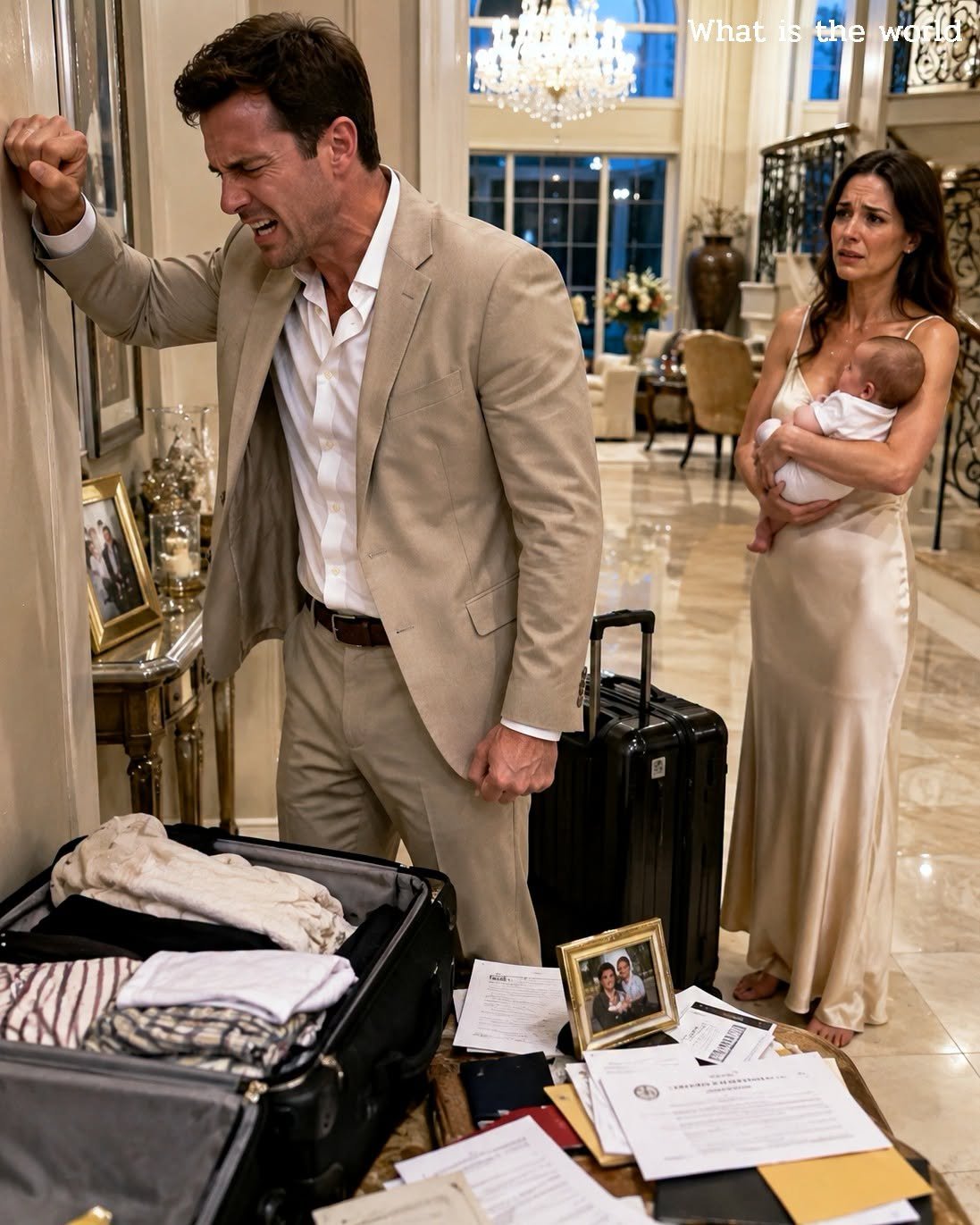
PART 2
Come to my office immediately. Claire knows about Vanessa… but that isn’t the worst thing she found.
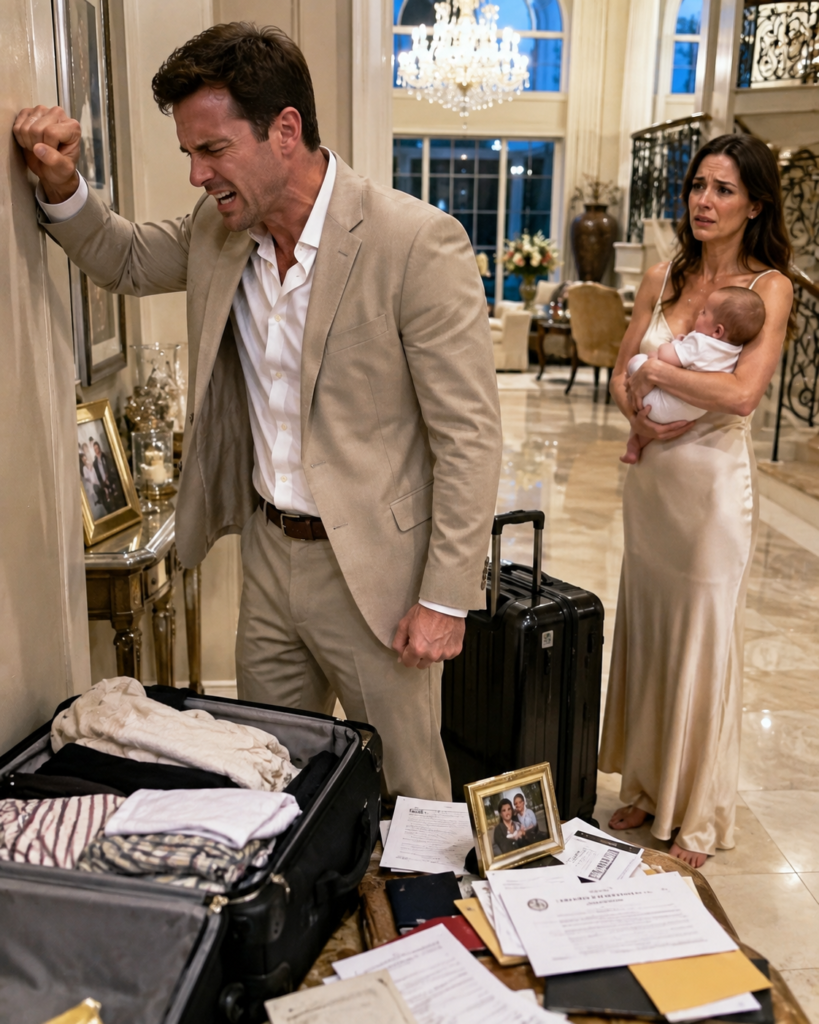
I read the message three times.
For a moment, I remained frozen in the kitchen, my phone in one hand and Claire’s wedding ring in the other.
The house felt different without her.
Not merely empty.
Exposed.
Every room seemed to contain evidence of a life I had taken for granted.
Her coffee mug still sat on the drying rack.
A knitted blanket her mother had given us was folded over the back of the sofa.
On the refrigerator, Claire had pinned a photograph from the week Noah came home from the hospital.
I was holding him awkwardly, terrified I might support his head incorrectly. Claire stood beside me, exhausted and smiling.
I remembered that morning.
I had promised her things.
I would be present.
I would help.
I would never become one of those husbands who disappeared into work and left his wife to carry the family alone.
Three months later, I had learned how easily a promise could become background noise.
My phone vibrated again.
My attorney.
I grabbed my jacket.
Daniel Mercer had represented my family for almost fifteen years.
He had handled property purchases, contracts, business disputes, and the complicated restructuring of my father’s estate.
He was not easily rattled.
Which was why the expression on his face when I entered his office unsettled me.
Daniel was standing beside the window overlooking lower Manhattan.
He didn’t offer me coffee.
He didn’t ask how I was doing.
He simply pointed toward the chair across from his desk.
“Sit down, Ethan.”
I remained standing.
“Where is Claire?”
“I don’t know.”
“You’re my attorney.”
“That doesn’t make me a private investigator.”
“I need to know where my son is.”
Daniel studied me for several seconds.
“Your son is safe.”
I stared at him.
“You’ve spoken to her?”
“No.”
“Then how can you say that?”
“Because Claire’s attorney contacted me this morning.”
Something cold moved through my chest.
“Her attorney?”
“Yes.”
Daniel sat behind his desk.
“She retained counsel nearly three weeks ago.”
Three weeks.
The number landed harder than I expected.
Three weeks ago, Claire had been sitting across from me at dinner, asking whether I wanted roasted vegetables or potatoes.
Three weeks ago, I had kissed her forehead on my way out the door and told her I had an investor dinner.
I had spent that evening with Vanessa.
Meanwhile, Claire had apparently been planning an entirely different future.
“What does she want?” I asked.
Daniel opened a folder.
“Temporary living arrangements are already in place. Her attorney says she is not trying to prevent you from seeing Noah.”
“Then why hasn’t she answered me?”
“Because you called her twelve times before eight in the morning, then called her mother, then called me demanding an emergency custody filing.”
His voice remained calm.
“From Claire’s perspective, communication through counsel may feel safer and clearer right now.”
I looked away.
That sounded like Claire.
She hated arguments.
Not because she was weak.
Because she disliked speaking when emotions were louder than facts.
Whenever we disagreed, she would say, “Give me ten minutes. I don’t want to say something just because I’m angry.”
I used to tease her about it.
Now I realized she had probably spent six months giving herself ten minutes.
Again and again.
Until there was nothing left to say.
Daniel pushed the folder toward me.
“Read the first page.”
I didn’t touch it.
“Tell me what she found.”
He leaned back.
“You told me this morning that your biggest concern was the affair becoming relevant in a custody dispute.”
“It is relevant.”
“Potentially. But your marriage is not a courtroom drama, Ethan. Claire isn’t building a case to punish you for adultery.”
I finally sat down.
“Then what is this?”
Daniel tapped the folder.
“Money.”
I almost laughed.
“Money?”
“Yes.”
“We have money.”
“That’s precisely the problem.”
I opened the folder.
Inside were copies of financial statements.
Some were familiar.
Others weren’t.
At first, I couldn’t understand what I was seeing.
Then I noticed the company names.
Carter Urban Holdings.
Carter Development Partners.
Grayline Ventures.
My companies.
Daniel watched my face carefully.
“Your wife asked her accountant to review the household finances after noticing several unusual transfers.”
“What unusual transfers?”
“From marital investment accounts into business entities.”
My irritation flared.
“Those were investments.”
“Were they?”
“Yes.”
“Authorized by whom?”
“Me.”
“That isn’t what I asked.”
I stared at him.
Daniel continued.
“Some of those accounts were jointly held.”
“I manage the finances.”
“Managing an account isn’t the same as owning every decision involving it.”
I flipped through the papers.
The transactions looked ordinary to me.
Large, perhaps.
But ordinary.
I had moved money before.
Real estate development required liquidity.
Sometimes opportunities emerged suddenly.
Sometimes money needed to move quickly.
Claire knew that.
Or at least I assumed she did.
Then I reached a highlighted page.
Four hundred thousand dollars transferred from our joint investment account.
Six months earlier.
Into Grayline Ventures.
I remembered the deal.
A waterfront redevelopment opportunity in Stamford.
It had seemed nearly guaranteed.
The zoning approvals were expected within months.
Then the approvals stalled.
Investors became nervous.
The project had begun quietly bleeding money.
Daniel folded his hands.
“Did Claire know you transferred that money?”
“She knew I was investing.”
“Did she know the amount?”
I said nothing.
He already knew the answer.
“No,” he said. “She didn’t.”
“That doesn’t mean I stole it.”
“I didn’t say you did.”
“You’re talking like I committed a crime.”
“I’m talking like your wife discovered that several hundred thousand dollars she believed was part of your family’s long-term security was moved into a risky business investment without her knowledge.”
I closed the folder.
“It was temporary.”
“Was it?”
“Yes.”
“When were you planning to replace it?”
“As soon as the project closed.”
“And when will that happen?”
I looked toward the window.
Daniel sighed.
“That’s what she found, Ethan.”
I shook my head.
“That cannot be worse than Vanessa.”
“In Claire’s mind, it may be.”
The sentence silenced me.
Daniel continued more gently.
“An affair damages trust emotionally. Secret financial decisions damage another kind of trust. Claire apparently believed your household investments were stable. She thought the college savings, retirement accounts, and emergency funds were separate from your business risks.”
“They are.”
“Mostly.”
I hated that word.
Mostly.
Daniel pulled another document from the folder.
“This is an email Claire sent to her attorney.”
“You have her emails?”
“Her attorney included it as part of the proposed interim agreement because it explains her concerns.”
He slid the page toward me.
I began reading.
I got halfway through before stopping.
Claire had written:
I am not trying to take Noah away from his father. I want Ethan to be part of his life. But I no longer know what information Ethan considers optional when it affects our family. I need financial transparency before I can trust any agreement we make privately.
I read it again.
There was no anger in the words.
That was worse.
No accusations.
No insults.
No attempt to portray me as some monster.
Just uncertainty.
She didn’t trust me.
Not only as her husband.
As a person who made decisions affecting our son.
“When can I see her?” I asked.
Daniel looked surprised by the change in my voice.
“Her attorney is proposing a meeting tomorrow.”
“Here?”
“No. Neutral location.”
“Why neutral?”
“Because lawyers like neutral locations.”
He gave me a pointed look.
“And because Claire is trying to make decisions without turning every conversation into a fight.”
I nodded slowly.
“Will Noah be there?”
“No.”
My disappointment must have shown.
Daniel’s expression softened.
“Her mother will be watching him nearby. Claire is willing to arrange time with him after the meeting if things remain calm.”
“I’ve never hurt Claire.”
“I know.”
“I would never hurt Noah.”
“I know that too.”
“Then why does everyone suddenly speak to me like I’m dangerous?”
Daniel shook his head.
“They don’t.”
“It feels like it.”
“They’re speaking to you like you’re unpredictable.”
I stared at him.
That distinction hurt more than I wanted to admit.
On the drive home, I turned my phone face down on the passenger seat.
Vanessa had called four times.
She had also sent messages.
Are you okay?
Call me.
Ethan, please don’t disappear.
I ignored them.
For six months, messages from Vanessa had created a kind of private excitement.
A world separate from diapers, nighttime feedings, pediatrician appointments, mortgage statements, business meetings, and conversations about whether the dishwasher needed repair.
With Vanessa, I was never exhausted.
Never responsible for anyone except myself.
She knew me as the man who ordered expensive wine without checking the price.
The man who booked hotel rooms on Wednesday afternoons.
The man who could vanish from ordinary life whenever he wanted.
Claire knew the rest.
She knew I ground my teeth when stressed.
She knew I hated tomatoes but liked tomato soup.
She knew I always forgot to buy dishwasher detergent.
She knew that when my father died, I sat in our bedroom closet because I didn’t want anyone at the funeral to see me cry.
And apparently, somewhere along the way, I had begun mistaking being truly known for being trapped.
When I returned home, the silence felt even heavier.
I wandered upstairs.
Our bedroom closet looked enormous without Claire’s clothes.
Most of mine remained.
Her side was nearly bare.
One hanger swayed slightly when I opened the door, though there was no breeze.
I sat on the edge of the bed.
For the first time since discovering the empty crib, I wasn’t angry.
I was embarrassed.
Not publicly.
Privately.
Embarrassed by the version of myself reflected in every decision I had spent months defending.
I had told myself Claire was too tired for me.
Too focused on the baby.
Too serious.
Too distant.
I had told myself Vanessa understood me.
But sitting there in the half-empty room, another explanation became harder to ignore.
Maybe Claire had been tired because she was waking up every two hours.
Maybe she had been focused on Noah because he was three months old.
Maybe she had become serious because one of us had to remember doctor appointments, bills, groceries, laundry, family visits, insurance forms, and whether we had enough formula for the weekend.
Maybe Vanessa hadn’t understood me at all.
Maybe she had simply met the version of me that had no responsibilities.
My phone rang.
Vanessa.
This time, I answered.
“Ethan?”
Her relief was immediate.
“Finally. I’ve been worried.”
“I’ve been busy.”
“Did something happen?”
I closed my eyes.
She didn’t know.
Of course she didn’t.
I had told Vanessa that Claire and I were essentially separated emotionally.
I had described my marriage as a polite arrangement.
Two adults living parallel lives.
It wasn’t entirely invented.
But it wasn’t true either.
“Claire left,” I said.
Silence.
Then: “Oh.”
“She knows.”
Another silence.
“About us?”
“Yes.”
Vanessa exhaled slowly.
“I’m sorry.”
Something in her tone bothered me.
Not because it was uncaring.
Because it was careful.
“What exactly did you think would happen?” I asked.
She hesitated.
“Eventually?”
“Yes.”
“I thought you said you were going to leave.”
I opened my eyes.
Had I?
Not directly.
I had said things.
Someday things will be different.
I can’t keep living like this.
I need to figure out what I actually want.
Words with enough suggestion to create hope and enough ambiguity to escape responsibility.
“I never promised that.”
Vanessa became quiet.
“No,” she said after a moment. “You didn’t.”
The absence of accusation surprised me.
Then she added, “But you let me believe it.”
I rubbed my forehead.
“This isn’t a good time.”
“For either of us, apparently.”
“Vanessa—”
“Don’t worry. I’m not going to create some scene.”
“I didn’t think you would.”
“Maybe you did.”
Her voice remained steady.
“You always talked about Claire like the marriage was already finished. I believed you. Maybe because it was easier than asking harder questions.”
I had no answer.
Neither did she, apparently.
After a few seconds she said, “Take care of your family, Ethan.”
Then she ended the call.
I sat there holding the phone.
For months, I had imagined that if everything ever came apart, Vanessa would somehow be waiting on the other side.
Instead, the affair ended with less drama than a canceled dinner reservation.
That evening, I found something I had forgotten existed.
A notebook.
Claire’s handwriting filled the first half.
It was tucked inside a kitchen cabinet beneath warranty manuals and old recipe cards.
At first, I assumed it was household planning.
And mostly, it was.
Noah — feeding times.
Questions for pediatrician.
Order larger sleep sacks.
Ask Mom about Sunday.
Call insurance.
But several pages later, the notes changed.
March 18 — Ethan said Boston. Credit card shows Manhattan.
March 25 — Asked about investment transfer. He said “business housekeeping.”
April 2 — Grayline statements missing.
April 11 — Ethan home at 2:10 a.m. Said investor dinner.
I stopped reading.
My stomach turned.
There were no insults beside the entries.
No angry comments.
Just dates.
Facts.
Observations.
Claire had apparently reached a point where she no longer trusted her own interpretation of events.
So she had documented them.
One entry was longer.
April 15.
Asked Ethan if anything is wrong between us. He said I’m exhausted and imagining distance because of the baby. I asked if he was happy. He kissed me and said we’re fine.
I remembered that night.
Claire had been sitting at the kitchen table wearing one of my old college sweatshirts.
Noah was asleep upstairs.
She had looked tired.
Not ordinary tired.
Sad tired.
She asked me whether we were okay.
And I had smiled.
Touched her shoulder.
Told her she was overthinking things because becoming parents was an adjustment.
Then, twenty minutes later, I had gone upstairs and texted Vanessa from the bathroom.
I closed the notebook.
There are moments when a person realizes regret and guilt are not the same thing.
Regret asks whether things could have turned out differently.
Guilt knows exactly which choices made them turn out this way.
The meeting was scheduled for ten the next morning at the office of a family mediator in Stamford.
I arrived twenty minutes early.
Claire arrived exactly on time.
When she walked through the door, I stood too quickly.
For three weeks, maybe longer, I had been imagining what I would say if confronted.
Apologies.
Explanations.
Defenses.
Instead, when I finally saw her, all of them disappeared.
She looked like Claire.
That sounds obvious.
But some part of me had expected anger to transform her.
It hadn’t.
Her hair was tied back loosely.
She wore dark trousers, flat shoes, and a pale blue blouse.
She looked tired.
But composed.
Behind her was a woman in her fifties carrying a leather folder.
Her attorney, presumably.
Claire saw me.
Her expression changed slightly.
Not fear.
Not anger.
Sadness, perhaps.
Then it was gone.
“Hi,” she said.
One ordinary word.
It nearly broke me.
“Hi.”
Daniel arrived beside me.
Introductions followed.
Claire’s attorney was Rebecca Sloan.
The mediator was a soft-spoken man named Henry Cho.
We entered a conference room with windows overlooking a row of maple trees.
No dramatic courtroom.
No judge.
No raised voices.
Just four adults sitting around a table discussing the future of a family.
Henry began.
“Today isn’t about resolving your marriage.”
Claire lowered her eyes briefly.
Henry continued.
“It’s about creating stability while both of you decide what happens next.”
My throat tightened at the phrase what happens next.
We discussed Noah first.
Claire wanted a predictable schedule.
She was staying with her mother temporarily in Westport.
Noah was safe.
Healthy.
Sleeping reasonably well, according to Claire.
I almost laughed at the word reasonably because newborn sleep had become a subject we could once discuss for hours.
Rebecca proposed that I spend several afternoons each week with Noah initially, expanding once we established a routine.
I looked at Claire.
“Why not overnight?”
Her hands tightened slightly around a pen.
“Because you’ve never done an overnight alone.”
The words weren’t cruel.
They were simply true.
“I can.”
“I know you can learn.”
That hurt too.
Learn.
I was his father.
But Claire was right.
When Noah cried at night, Claire woke first.
When bottles needed sterilizing, Claire handled them.
When medication dosages needed remembering after his vaccinations, Claire knew them.
I loved my son.
But love, I was discovering, was not the same as competence.
And competence came from showing up.
“I’ll learn,” I said.
Claire met my eyes.
For the first time that morning, something in her expression softened.
“Okay.”
One word.
But it felt important.
Then we reached finances.
Rebecca opened a spreadsheet.
The numbers were difficult to see not because they were complicated, but because they were familiar.
They represented choices I had made without believing I needed anyone’s permission.
Four hundred thousand to Grayline.
Seventy-five thousand to cover a cash shortage in another project.
Thirty-two thousand transferred into an account used primarily for business travel.
Some of that travel had included Vanessa.
Rebecca didn’t dwell on that.
Neither did Claire.
Instead, she asked a question I wasn’t expecting.
“Is Grayline failing?”
I looked at Daniel.
He remained silent.
This was mine to answer.
“Not failing.”
Claire waited.
I corrected myself.
“It’s struggling.”
“How badly?”
I hesitated.
Then I told the truth.
“The project is delayed. If approvals don’t come through this quarter, we’ll probably need additional capital.”
“How much?”
“Possibly another two hundred thousand.”
Claire inhaled slowly.
Rebecca made a note.
Claire asked, “Were you planning to use our accounts again?”
“No.”
She looked at me.
I couldn’t blame her for doubting the answer.
So I added, “I was considering it.”
Her face changed.
Barely.
But I saw it.
I had disappointed her again, even in the middle of admitting the truth.
“Why didn’t you tell me?” she asked.
I wanted to say because you wouldn’t have understood.
That answer formed automatically.
Then I recognized how insulting it was.
Claire had worked in corporate finance for nine years before cutting back during pregnancy.
She understood investments perfectly well.
Probably better than I did.
So I searched for another answer.
The real one.
“Because I thought you’d say no.”
Claire looked down.
Henry said nothing.
Neither attorney interrupted.
The silence demanded that I continue.
“And if you said no,” I said, “then I would have had to decide whether the project mattered more than your opinion.”
Claire’s gaze lifted.
“And you didn’t want to know the answer.”
“No.”
For the first time, her composure cracked slightly.
Not into anger.
Into hurt.
She blinked and looked toward the window.
“I kept trying to figure out when you stopped seeing me as your partner.”
“I don’t know.”
“I do.”
Her voice remained quiet.
“It happened gradually.”
She looked back at me.
“You started making every difficult decision somewhere else. Business problems went to Daniel. Frustrations went to your colleagues. Loneliness went to Vanessa.”
I flinched.
Claire continued.
“And you brought me the edited version of your life.”
I had never heard anyone describe it that way.
The edited version.
The manageable version.
The version in which I always had an explanation ready before she asked a question.
“I thought I was protecting you from stress,” I said.
Claire gave a sad little smile.
“You weren’t protecting me, Ethan. You were protecting yourself from uncomfortable conversations.”
No one spoke for several moments.
Then Henry gently redirected the discussion toward practical matters.
We agreed to freeze major transfers from joint accounts without written consent from both of us.
Daniel would arrange a full independent financial review.
I agreed to provide access to every business account connected to marital assets.
No objections.
No delays.
No excuses.
By twelve thirty, the meeting ended.
Claire stood.
I thought she would leave immediately.
Instead, she turned toward Rebecca.
“Could you give us a few minutes?”
Rebecca glanced at me.
Then at Daniel.
“Of course.”
Soon Claire and I were alone.
The conference room seemed larger without the others.
I didn’t know where to begin.
So I asked the question I had wanted to ask since the previous morning.
“Can I see Noah?”
“Yes.”
Relief moved through me so quickly I had to look away.
“My mom has him at the park nearby.”
“Thank you.”
Claire nodded.
I noticed she was still wearing no wedding ring.
Of course she wasn’t.
But seeing the empty place on her finger felt different from seeing the ring on the kitchen counter.
“Claire.”
She looked at me.
“I’m sorry.”
Her face remained still.
“I know that doesn’t fix anything.”
“No.”
“I know I don’t get to ask you to forgive me.”
She said nothing.
“I lied to you.”
“Yes.”
“I lied about Vanessa. About money. About work trips.”
“Yes.”
Each answer was quiet.
Not punishing.
Just accurate.
“I don’t know why I thought I could keep everything separate forever.”
Claire leaned against the edge of the table.
“Because it was working.”
I frowned.
She continued.
“You went to work. You came home. I believed you. Vanessa believed you. Your business partners believed you had everything under control.”
Her eyes met mine.
“You didn’t have to choose between the different versions of yourself because none of us had the whole picture.”
The truth of that unsettled me.
Then she surprised me.
“I don’t think you’re a terrible person.”
I almost laughed bitterly.
“You might be the only one.”
“I’m not defending you.”
“I know.”
“I think you became very good at avoiding disappointment.”
I looked at her.
She folded her arms.
“You hate disappointing people.”
“That sounds ridiculous considering everything I’ve done.”
“It isn’t.”
She gave a tired smile.
“You didn’t tell me Grayline was struggling because you didn’t want me to think you’d made a bad investment. You didn’t tell Vanessa our marriage was real because you didn’t want her to walk away. You didn’t tell me about Vanessa because you didn’t want to lose your family.”
Her voice softened.
“So you kept everyone close by giving everyone a different truth.”
I had no defense against that.
Claire picked up her purse.
“At some point, Ethan, you’re going to have to decide what truth you’re willing to live with when people don’t like it.”
Then she walked toward the door.
“Claire?”
She stopped.
“Why did you write that note?”
Her expression changed.
Don’t search for what you never bothered to protect.
For twenty-four hours, I had interpreted it as anger.
A final accusation.
Claire looked almost embarrassed.
“I shouldn’t have.”
“I deserved worse.”
“That isn’t the point.”
“Then what was the point?”
She considered the question.
“I was angry when I wrote it.”
For the first time, she looked almost like the Claire I remembered during ordinary arguments.
“I packed the whole house calmly. Made lists. Scheduled movers. Called attorneys. Arranged things with Mom.”
A faint, humorless smile appeared.
“Then I saw your wedding ring dish beside the sink and realized you hadn’t worn your ring on three of your last four trips.”
My stomach tightened.
“I wrote the note after that.”
She shook her head.
“It was dramatic.”
“Effective.”
That almost made her smile.
Almost.
The park was five minutes away.
Linda sat beneath a maple tree beside Noah’s stroller.
When she saw me approaching with Claire, her posture stiffened.
I couldn’t blame her.
Claire walked ahead.
“Mom.”
Linda looked at her daughter.
Something passed silently between them.
Then Linda stood.
“I’ll get coffee.”
She walked away without speaking to me.
I knelt beside the stroller.
Noah was asleep.
His tiny mouth opened slightly with each breath.
One hand rested beside his cheek.
I hadn’t seen him for barely thirty-six hours.
It felt like weeks.
I touched one finger lightly against his hand.
His fingers curled around it automatically.
My throat closed.
Claire sat on the bench.
“He started doing that yesterday.”
“What?”
“The gripping.”
I looked at her.
“I missed it.”
“You’ll see other things.”
The kindness in her answer nearly hurt more than anger would have.
Noah stirred.
His eyes opened.
For one ridiculous second, I wondered if a three-month-old could forget someone.
Then he blinked at me.
His mouth moved.
And suddenly he gave a small, crooked smile.
I laughed.
Claire smiled too.
Not at me.
At him.
But for a brief moment, we were simply two parents looking at our son.
Nothing repaired.
Nothing solved.
Just something still shared.
I spent two hours with Noah that afternoon.
Claire showed me the new bottle system she was using.
I changed a diaper under her supervision, which would have offended me two days earlier.
Now I listened carefully.
She wrote down his current routine.
Feeding times.
Nap patterns.
What helped when he became fussy.
I folded the page and put it in my wallet.
Before leaving, I said, “Can I come tomorrow?”
Claire hesitated.
Then nodded.
“Three o’clock.”
“I’ll be there.”
And I was.
For the next ten days, I was there every time.
Not dramatically.
Not with flowers.
Not with speeches.
I simply arrived.
Three o’clock meant three o’clock.
If Noah needed changing, I changed him.
If Claire’s mother corrected me, I listened.
If he cried, I learned what each cry might mean instead of immediately handing him back.
Some afternoons Claire stayed.
Others she left to run errands or meet Rebecca.
The first time she left Noah alone with me for forty-five minutes, I felt absurdly proud.
When she returned, he was asleep against my chest.
Claire paused in the doorway.
I expected approval.
Instead, she said quietly, “You always were good at getting him to sleep.”
That surprised me.
“I was?”
“When you were around.”
She said it without cruelty.
Still, the words remained with me for days.
Meanwhile, the financial review continued.
And it produced another surprise.
One afternoon Daniel called.
“You need to come in.”
My pulse quickened.
“What now?”
“Something Claire found before she left.”
“What?”
“I’d rather show you.”
An hour later, I was sitting in his office again.
This time, Daniel looked less concerned than confused.
He handed me a document.
It was a loan guarantee.
My father’s signature appeared at the bottom.
The date was eight years old.
“What is this?”
“A private guarantee connected to Grayline’s predecessor company.”
I scanned the page.
My father had established the original development partnership years before I took control.
After his death, we restructured almost everything.
At least I thought we had.
“What does this have to do with Claire?”
“She found it while reviewing archived financial documents.”
Daniel tapped the second page.
“This guarantee was never formally released.”
I stared at him.
“So?”
“So your father’s estate may still have contingent liability tied to a line of credit.”
“How much?”
“Potentially substantial.”
My irritation rose.
“Define substantial.”
Daniel paused.
“Up to nine hundred thousand.”
I leaned back.
“That can’t be right.”
“I said potentially. Not necessarily.”
“My father died five years ago.”
“Yes.”
“You handled the estate.”
“Yes.”
“So how did nobody notice this?”
“Because the loan was believed to have been refinanced and closed.”
“Believed?”
Daniel’s jaw tightened.
“I don’t like that word any more than you do.”
I stood and walked toward the window.
Nine hundred thousand.
Suddenly the Grayline problem looked very different.
“Does Claire know?”
“She found it.”
Of course she knew.
My first instinct was anger.
Why hadn’t she told me?
Then I heard the hypocrisy before the thought fully formed.
Daniel seemed to see it too.
“She asked her attorney not to use it as leverage.”
I turned.
“What?”
“She instructed Rebecca to notify us privately so we could investigate.”
“Why?”
Daniel looked almost impatient.
“Because contrary to what you may believe, your wife does not want your business to collapse.”
I sat down slowly.
There it was again.
The difference between Claire and me.
I had spent months assuming transparency was dangerous.
Claire had discovered information that could materially affect her legal position and chosen not to weaponize it.
“There’s more,” Daniel said.
I almost laughed.
“Of course there is.”
He handed me a second sheet.
This one was newer.
A letter.
From my father’s former accountant.
The letter had been written shortly before my father died.
Ethan,
If you’re reading this, your father may not have had the chance to explain the Grayline structure himself. He intended to unwind several personal guarantees before transferring full operational control to you. Please make certain this is completed before taking on further debt.
I read the paragraph twice.
Then I noticed something handwritten at the bottom.
My father’s writing.
Speak to Claire before Ethan expands Grayline. She asks better questions when he gets excited.
I stared at the sentence.
Daniel said nothing.
I remembered my father and Claire sitting together at Thanksgiving one year.
They had spent almost an hour discussing interest rates while I watched football with my cousins.
At the time, I had joked that he liked Claire more than me.
Maybe, in certain matters, he trusted her more.
“Where was this?”
“In a storage box at your house.”
“How did Claire find it?”
“She was looking for insurance documents.”
I kept staring at my father’s handwriting.
Speak to Claire.
The instruction had been waiting in a box for years.
And somehow, without knowing it existed, I had spent years doing the opposite.
That evening, I called Claire.
It was the first time since she left that she answered immediately.
“Hi.”
“Hi.”
“I saw the letter.”
Silence.
Then: “Okay.”
“Why didn’t you tell me about the guarantee?”
“I was going to.”
“When?”
“When I knew what it meant.”
I almost challenged her.
Then stopped.
She heard it.
“What?”
“Nothing.”
“Ethan.”
I leaned against the kitchen counter.
“I was about to ask why you kept something financial from me.”
For two seconds there was silence.
Then Claire laughed.
Not loudly.
But genuinely.
The first real laugh I had heard from her in weeks.
I laughed too.
The absurdity deserved it.
When the laughter faded, something between us felt slightly less rigid.
Not repaired.
Just human again.
“I didn’t want to panic you before I understood it,” she said.
“I’ve used that sentence.”
“I know.”
“Apparently it’s annoying.”
“It is.”
I smiled.
Then I looked down at my father’s letter.
“Claire?”
“Yes?”
“Did my father ever talk to you about Grayline?”
The line went quiet.
“A little.”
“How much is a little?”
“He asked me questions.”
“What kind?”
“Whether I thought you were too aggressive with debt.”
I closed my eyes.
“What did you say?”
“I said you were ambitious.”
“That sounds diplomatic.”
“It was.”
“What did you actually think?”
Claire hesitated.
“That you sometimes confused confidence with certainty.”
The sentence landed softly.
Because it was true.
“He wanted you involved,” I said.
“I think he wanted us both involved.”
“Why didn’t you ever tell me?”
“I tried.”
I frowned.
“When?”
“After the funeral.”
I searched my memory.
Those weeks were fog.
Paperwork.
Condolence calls.
Whiskey.
Business meetings.
Trying to prove I could take control quickly enough that no investor would become nervous.
Claire continued.
“You told me Grayline was your responsibility and you didn’t need your wife second-guessing business decisions.”
I remembered saying something similar.
Not the exact words.
But close enough.
“I’m sorry.”
“I know.”
Another pause.
Then I asked something I had been afraid to ask since the mediation.
“Are you planning to divorce me?”
Claire did not answer immediately.
When she finally spoke, her voice was calm.
“I don’t know.”
The answer should have frightened me.
Instead, strangely, it felt more hopeful than a lie.
“Okay.”
“You’re not going to ask me to decide?”
“No.”
“You’re not going to tell me you’ll change?”
I looked around the silent house.
“I think I’ve said enough things.”
Claire became very quiet.
Then she said, “That’s probably true.”
We spoke for another fifteen minutes.
Mostly about Noah.
His pediatrician appointment.
A funny sound he had begun making after feeding.
Whether I could take him Wednesday afternoon because Claire needed to meet with her accountant.
Ordinary things.
Important things.
Before hanging up, Claire said, “Ethan?”
“Yes?”
“There was another document in the box.”
My body stiffened.
“What document?”
“I don’t know exactly.”
“What do you mean?”
“It was an envelope.”
“From my father?”
“I think so.”
“What did it say?”
“I didn’t open it.”
“Why not?”
“Because it wasn’t addressed to me.”
Something about her tone made me stand straighter.
“Who was it addressed to?”
A pause.
Then Claire answered.
“To Noah.”
I didn’t speak.
For a moment, the only sound was the refrigerator humming behind me.
“That doesn’t make sense,” I said.
“I know.”
“My father died years before Noah was born.”
“I know.”
“Then how could he address something to him?”
Claire’s voice softened.
“He didn’t use Noah’s name.”
“What did he write?”
She took a breath.
“To Ethan’s first child.”
I gripped the edge of the counter.
“Where is the envelope?”
“I gave it to Daniel with the other documents.”
My mind was already racing.
My father had died five years before Noah’s birth.
Long before Claire became pregnant.
Long before we had seriously discussed children.
Yet sometime before his death, he had written something intended for the first child I might someday have.
“Did you hold it up to the light?”
Claire almost laughed.
“No.”
“Did you ask Daniel what’s inside?”
“No.”
“Why does everyone in my life suddenly have better self-control than I do?”
This time she did laugh.
Quietly.
Briefly.
Then she said, “Maybe whatever he wrote belongs to you and Noah.”
After we hung up, I stood in the kitchen for a long time.
For days, I had believed the mystery of my marriage was about betrayal.
Vanessa.
Money.
Lies.
But my father’s handwriting had opened another door.
One I hadn’t known existed.
The next morning, I drove to Daniel’s office.
He was waiting.
The envelope lay on his desk.
Yellowed slightly at the edges.
My father’s handwriting stretched across the front.
To Ethan’s first child.
For when Ethan is ready to tell you who he really is.
I looked up sharply.
Daniel’s expression had changed.
“What?” I asked.
He pointed toward the envelope.
“I think you should read it.”
I reached for it.
Then stopped.
Because beneath my father’s message, in much smaller handwriting, was a second line.
One I had not noticed at first.
And this line wasn’t addressed to my future child.
It was addressed to Claire.
If Ethan never tells you about the summer of 2009, you may need to.
My hand froze above the envelope.
Claire had been standing behind me when we found the box.
She had seen the same line.
Which meant the question was no longer simply what my father had wanted Noah to know someday.
The question was why my father had believed Claire might one day need to tell my son about a summer I had spent years refusing to remember.
PART 3
The envelope looked ordinary.
Cream paper.
Slightly yellowed at the corners.
My father’s handwriting across the front.
To Ethan’s first child.
For when Ethan is ready to tell you who he really is.
And beneath it, in smaller handwriting:
If Ethan never tells you about the summer of 2009, you may need to.
I stood in Daniel’s office with my hand suspended above the desk.
For several seconds, I couldn’t touch it.
The summer of 2009.
I had spent years telling myself there was nothing remarkable about it.
A difficult summer.
A complicated family period.
A few bad decisions.
Nothing more.
But memory has a strange way of reacting when someone else names what you’ve tried not to.
One sentence from my father, and suddenly I could smell hot asphalt outside our old house.
Hear the rattling window-unit air conditioner in my childhood bedroom.
Feel the weight of a baseball glove I hadn’t used in years sitting on the shelf above my desk.
Daniel watched me.
“You know what he’s referring to.”
It wasn’t a question.
I lowered myself into the chair.
“I think so.”
He sat across from me.
“Do you want me to stay?”
I looked at the envelope.
Part of me wanted privacy.
Another part wanted witnesses.
Someone to confirm afterward that whatever waited inside had actually been written.
“Stay.”
Daniel nodded.
I slid one finger beneath the flap.
The adhesive had dried with age, and the paper opened with a soft tearing sound.
Inside were three folded pages.
The first page began in my father’s handwriting.
To my grandchild,
If you’re reading this, then I didn’t get the chance to meet you.
That is one of the few things about dying that I find truly unfair.
I stopped.
My father’s death had been five years ago, but grief does not always behave like time.
Sometimes it ages.
Sometimes it waits.
I swallowed and kept reading.
I hope your father has told you that he was loved fiercely, even when he made it difficult.
Especially then.
I glanced away.
Daniel said nothing.
The next paragraph was written with the same precise handwriting my father used on birthday cards, legal documents, and grocery lists.
Your father likes to believe he became who he is through determination alone. This is not entirely true. All of us are shaped by what happens before we are old enough to understand it.
The sentence unsettled me.
My father had never spoken that way.
At least not to me.
I continued.
In the summer of 2009, Ethan learned something about our family that changed him. I tried to explain it, but I do not believe I did a very good job. Parents sometimes mistake silence for protection. I made that mistake.
My chest tightened.
Daniel shifted slightly.
I unfolded the second page.
That was where the letter changed.
Not in tone.
In direction.
If Ethan has not told you about that summer, perhaps he still believes the story reflects badly on him.
It does not.
It reflects only that he was nineteen years old, afraid, and trying to hold together a family that was already changing.
I stopped again.
“Nineteen,” Daniel said quietly.
“Yes.”
“What happened?”
I looked at him.
“My mother left.”
Daniel frowned.
“I thought your parents stayed married until she died.”
“They did.”
“Then what do you mean?”
I stared toward the window.
Outside, Manhattan moved normally.
Cars.
Pedestrians.
Someone crossing the street while balancing coffee and a laptop bag.
Ordinary lives continuing while mine seemed to be opening an old room I had nailed shut.
“She left for three months.”
Daniel waited.
I hadn’t told Claire.
I hadn’t told Vanessa.
I hadn’t told anyone.
Even when people asked why there were almost no photographs of my mother from that year, I said she hated being photographed.
The truth was simpler.
She wasn’t there.
I looked back at the letter.
Your grandmother, Anne, did not leave because she stopped loving us.
She left because she had reached a point where she no longer knew who she was inside the life we had built.
I stared at those words.
The memory came back differently this time.
Not through what my father had told me then.
Through what I had seen.
My mother standing in the kitchen with a suitcase near the door.
My father sitting at the table, both hands clasped around a mug he wasn’t drinking from.
I had come downstairs expecting breakfast.
Instead, I found silence.
“Where are you going?” I asked.
My mother looked at me.
“To stay with Aunt Caroline for a while.”
“For how long?”
“I don’t know.”
I laughed because the answer sounded ridiculous.
Then I realized no one else was laughing.
“You’re leaving Dad?”
“No.”
“That sounds exactly like what you’re doing.”
My father’s voice came sharply.
“Ethan.”
But my mother stepped forward.
“It’s more complicated than that.”
I hated adults who said things were complicated.
Usually it meant they knew something you didn’t and preferred keeping it that way.
“So explain it.”
She reached for my hand.
I pulled away.
That moment stayed with me for years.
Not because she left.
Because I refused her hand.
She did leave that morning.
Three months later, she came back.
My parents never divorced.
They remained married until cancer took her almost four years later.
Afterward, my father rarely mentioned those months.
Neither did I.
Daniel’s office returned around me.
I continued reading.
I told Ethan at the time that his mother needed space. That was true, but incomplete.
The next sentence made me sit straighter.
She also needed honesty from me.
I looked up.
Daniel leaned forward.
“What?”
I handed him nothing.
I just kept reading.
For years, I made financial and professional decisions without Anne because I believed responsibility meant carrying burdens alone. When she questioned me, I heard doubt. When she asked for transparency, I heard criticism. When she asked me to come home, I told myself I was working for the family.
I stopped breathing for a moment.
The resemblance was so obvious it felt almost embarrassing.
My father.
Claire.
Me.
Different marriage.
Same vocabulary.
Daniel seemed to understand from my expression alone.
“What did he say?”
I handed him the page.
He read silently.
Then looked at me.
“That’s…”
“I know.”
I reached for the third page.
When Anne left, Ethan blamed her.
That was easier than blaming me.
I allowed him to.
This is the part I regret most.
My eyes blurred slightly.
I blinked.
The words remained.
I let our son believe his mother had abandoned us because I was ashamed to explain how lonely she had been inside our marriage.
I pressed my thumb against the paper.
Suddenly I was nineteen again.
Angry.
Certain.
My father had stayed.
My mother had left.
Therefore, I had known who the reliable parent was.
Life had seemed easier when reduced to that equation.
Later, my mother returned.
I forgave her in the casual, wordless way families sometimes forgive things they never discuss.
But I never asked what happened.
Not once.
Then came the line that changed the room.
If Ethan becomes a husband or father one day, I hope he understands this before I did:
Providing for a family is not the same as being present in one.
I closed my eyes.
Daniel remained quiet.
There was one final paragraph.
Tell your father I loved him.
Tell him his mother loved him too.
And if he ever starts believing that hiding difficult truths is a form of protection, remind him that children eventually grow old enough to discover what the adults were afraid to say.
I folded the letter slowly.
For a while, neither of us spoke.
Then Daniel asked, “Did Claire read this?”
“No.”
“Are you sure?”
“She said she didn’t open it.”
Daniel nodded.
“And you believe her?”
The question should have felt accusatory.
Instead, I answered immediately.
“Yes.”
That surprised me.
Not because Claire was untrustworthy.
Because only two weeks earlier, I had treated trust like something she owed me despite having done everything possible to weaken it.
I looked down at the letter.
“My father wanted her to tell Noah.”
“If you couldn’t.”
“Yes.”
Daniel leaned back.
“Why Claire?”
I knew.
Because my father had noticed something before I had.
Claire asked better questions.
Claire looked at financial statements instead of simply accepting summaries.
Claire noticed when someone said “fine” but behaved like they weren’t.
My father must have seen in her the thing that had been missing in his own marriage.
A person willing to ask what everyone else preferred to leave undisturbed.
I put the letter carefully back in its envelope.
“I need to talk to her.”
Daniel didn’t stop me.
But as I reached the door, he said, “Ethan.”
I turned.
“Don’t make the mistake of using your father’s regret to erase your own responsibility.”
I felt defensive for half a second.
Then I nodded.
“I won’t.”
“Understanding where behavior comes from can be useful.”
He folded his hands.
“But understanding is not the same thing as permission.”
“I know.”
This time, I meant it.
Claire was at her mother’s house when I called.
Noah had just gone down for a nap.
“Can I come by?”
There was a brief pause.
“Is something wrong?”
“No.”
Then I corrected myself.
“Nothing new is wrong.”
That earned the faintest laugh.
“All right.”
Linda answered the door.
She looked at me with the same reserved expression she’d worn since Claire left.
Not hostility.
Evaluation.
I was beginning to understand that distinction.
“She’s in the sunroom.”
“Thank you.”
I took two steps inside, then stopped.
“Linda?”
She turned.
“I owe you an apology.”
Her expression didn’t change.
“I know this probably isn’t the time.”
“No,” she said. “Go ahead.”
So I did.
Not a speech.
Not an explanation.
Just the simplest version.
“I made your daughter carry too much alone, and then I lied when she tried to understand why.”
Linda looked at me for several seconds.
“I appreciate you saying it.”
“I don’t expect that to fix your opinion of me.”
“My opinion isn’t the important one.”
She glanced toward the sunroom.
“Claire’s is.”
Then she added, “And Noah’s will be someday.”
That sentence followed me down the hallway.
Claire sat near the window with a cup of tea.
Late-afternoon sunlight spread across the floor.
The house was quieter than mine had become.
Not empty.
Restful.
There was a difference.
I held up the envelope.
“I read it.”
Claire set down her cup.
“Okay.”
I sat opposite her.
For a moment, I considered handing her the letter.
Instead, I said, “My mother left my father when I was nineteen.”
Claire frowned slightly.
“You told me she stayed with your aunt once.”
“For three months.”
Her eyes changed.
“You never told me that.”
“No.”
“Why?”
“I thought it made her look bad.”
Claire said nothing.
So I continued.
“I thought she walked out because she was selfish.”
“What actually happened?”
“My father says she left because of him.”
“Because of what?”
“Because he shut her out.”
Claire’s attention sharpened.
I described the letter.
The financial decisions.
The long work hours.
My mother’s loneliness.
My father’s admission that he’d let me blame her because admitting his own role felt harder.
When I finished, Claire looked toward the yard.
For several seconds, the only sound came from a clock ticking on the wall.
Then she said, “That’s why the line was addressed to me.”
“Yes.”
“What exactly did it say?”
I handed her the envelope.
She unfolded the pages.
I watched her read.
At the paragraph about my mother, she exhaled.
At the sentence about providing versus presence, her eyes closed briefly.
When she finished, she refolded the pages carefully.
“He sounds like he regretted a lot.”
“He did.”
“You never knew?”
“Not like this.”
Claire traced one finger along the envelope.
“Did you talk to your mother after she came back?”
“Not really.”
“About why she left?”
“No.”
“Did your father?”
“Not in front of me.”
Claire looked sad.
“That’s a lot of silence for one family.”
I gave a humorless smile.
“We were good at it.”
She looked at me.
“Still are.”
I deserved that.
But her tone wasn’t cruel.
I leaned forward.
“Claire, I need to say something, and I don’t want it to sound like I’m making excuses.”
She waited.
“I think I learned very early that a family stays together if uncomfortable things stay hidden.”
Her face softened slightly.
“And I think I spent years believing that if nobody knew the whole truth, nobody had to leave.”
Claire’s eyes dropped.
I continued.
“That doesn’t excuse Vanessa.”
“No.”
“Or the money.”
“No.”
“I know.”
A faint tension left her shoulders.
Then I said, “But I think I’m finally understanding why I reacted the way I did every time you asked a question I didn’t want to answer.”
Claire looked at me again.
“You thought the question was the danger.”
“Yes.”
“When really the thing you were hiding was.”
I nodded.
“Yes.”
For a while, we sat without speaking.
Then Claire asked, “Do you remember what you told me when I said I wanted to stop working before Noah was born?”
I searched my memory.
“You wanted to leave early.”
“I wanted to leave three weeks earlier than planned.”
“I said it was fine.”
“You said, ‘If that’s what you need.’”
I winced.
“That sounds worse when you repeat it.”
“It felt worse.”
She smiled slightly.
“I spent an entire afternoon thinking I was being weak because you sounded disappointed.”
“I wasn’t.”
“I know that now.”
“Why didn’t you tell me?”
She raised an eyebrow.
I caught myself.
There it was again.
The instinct to ask why the other person hadn’t been more transparent inside an environment where I had made transparency difficult.
Claire seemed to see the realization.
“We both stopped saying things,” she said.
That surprised me.
“You don’t owe me part of the blame.”
“I’m not giving you part of yours.”
She leaned back.
“But marriage isn’t a courtroom, Ethan. I can recognize my own habits without excusing yours.”
I listened.
“I became afraid of conflict.”
She looked toward the yard.
“When you were stressed, everything felt like bad timing. So I started waiting.”
“For what?”
“For a better moment.”
She smiled sadly.
“There was always another meeting. Another deadline. Another trip. Then Noah came, and every conversation felt too big to have while we were exhausted.”
She folded her hands.
“So yes, you hid things.”
Her eyes met mine.
“But I also became too willing to accept edited answers because I was afraid the full ones might change everything.”
The honesty of that sat between us.
Not blame.
Not absolution.
Just two people looking at the shape of a marriage they had built one small decision at a time.
A soft sound came through the baby monitor.
Claire glanced toward it.
Noah made one short fussing noise, then went quiet again.
“He’ll probably sleep another twenty minutes.”
I smiled.
“You can tell from one noise?”
“You will too.”
There was something hopeful in the word will.
Not about us.
About me and Noah.
I held onto that carefully.
Over the next week, my time with him expanded.
Two afternoons became three.
Then one Saturday morning, Claire let me take him home for four hours.
The house changed the moment I carried him through the door.
For days, I’d hated the silence.
Now I became terrified of breaking it.
I checked his diaper twice within twenty minutes.
Reheated a bottle, decided it was too warm, cooled it, then worried it was too cold.
Eventually Noah stared up at me with an expression that somehow looked deeply unimpressed.
“You’ve inherited your mother’s standards,” I told him.
He blinked.
I sat in the chair beside his crib.
The nursery still looked incomplete without Claire’s things.
But not abandoned anymore.
I had restocked diapers.
Bought bottles after Claire texted me the exact brand.
Replaced the blue teddy bear with another one, then felt foolish because the original was still at Linda’s house.
Noah finished his bottle.
I held him against my shoulder.
His head rested beneath my chin.
For once, I did not check my phone.
No email.
No market updates.
No messages.
Nothing mattered for those few minutes except the warm weight of my son breathing against my chest.
Then I understood something my father had probably discovered too late.
Presence was not complicated.
It was expensive in only one currency.
Attention.
And I had spent mine everywhere else.
That Monday, I made a decision Daniel strongly disliked.
“You don’t have to sell your interest,” he said.
We were sitting in his office with Grayline’s financial statements between us.
“I know.”
“You could restructure.”
“I know.”
“The project may recover.”
“I know.”
“Then why sell now?”
I looked at the numbers.
“Because I keep treating ‘may recover’ like a guarantee.”
Daniel studied me.
I continued.
“I moved family money into this because I was afraid admitting uncertainty would make me look weak.”
“So now you’re overcorrecting?”
“Maybe.”
He waited.
“But I also know I don’t want to put another dollar from our family into it.”
Daniel nodded slowly.
“That part makes sense.”
“I’ll keep enough equity to benefit if the project survives.”
“And give up control?”
“Yes.”
That word felt strange.
Control had been the thing I valued most.
Now it mostly reminded me how often control had been an illusion.
Daniel flipped through the documents.
“This may cost you.”
“I know.”
“Significantly.”
“I know.”
He looked at me.
I almost smiled.
“You’re waiting for me to change my mind.”
“I’ve known you fifteen years.”
“Fair.”
He leaned back.
“Does Claire know?”
“No.”
“Why not?”
“Because I’m not doing it to impress her.”
Daniel’s expression softened.
That afternoon, I went to see Noah.
Claire was packing his diaper bag.
She handed me two bottles.
“There’s an extra onesie in the side pocket.”
“Got it.”
“And he didn’t sleep much this morning.”
“So he might crash early.”
“Or scream at you for an hour.”
I laughed.
“Good to know.”
She zipped the bag.
Then she paused.
“Rebecca said you’re changing the Grayline structure.”
I sighed.
“Daniel talks too much.”
“She asked him.”
“Ah.”
Claire adjusted the strap.
“Why?”
“I don’t want our family money exposed to it anymore.”
“You don’t have to sell your management interest to do that.”
I stared at her.
“You read the restructuring proposal?”
“I used to work in finance, remember?”
“I remember.”
She gave me a look.
“I’m serious.”
“So am I.”
“You could ring-fence the household assets and keep operational control.”
“I could.”
“Then why not?”
I considered giving the noble answer.
Because my family matters more.
Because I’m choosing you.
Because I finally learned.
But those were dramatic answers.
The truth was less impressive.
“I’m tired.”
Claire frowned.
“Of Grayline?”
“Of acting like every business decision has to prove something.”
That answer surprised both of us.
I continued.
“My father built most of it. I inherited it and spent years trying to show everyone I could expand it faster than he did.”
“Your father never asked you to do that.”
“I know.”
“I don’t think he would’ve wanted you competing with him.”
“I know that too.”
I smiled slightly.
“I’m apparently learning a lot of obvious things late.”
Claire’s expression softened.
“You’re learning them.”
We looked at each other.
For a moment, I thought about our early years.
Claire sitting cross-legged on the floor of my first apartment surrounded by takeout boxes and spreadsheets because she was helping me evaluate a property.
Me complaining she asked too many questions.
Her telling me I’d thank her someday.
I never did.
Maybe I should have.
Before I could say anything, Noah made a squeaking sound from his car seat.
Claire smiled.
“That’s your warning.”
“For what?”
“About ninety seconds before he decides the universe has personally offended him.”
She was wrong.
It took forty-five.
By the end of the month, something had changed between Claire and me.
Not reconciliation.
We were still living separately.
She still wasn’t wearing her ring.
We still communicated mostly about Noah, finances, and schedules.
But the conversations stopped feeling like negotiations.
Sometimes we talked about ordinary things.
Linda’s neighbor had adopted an enormous dog.
Daniel had started drinking some terrible herbal tea his doctor recommended.
Noah had discovered ceiling fans and treated them like the greatest technological achievement in human history.
Small things.
They mattered.
One Friday evening, after I returned Noah to Linda’s house, Claire walked me to the door.
“Are you busy Sunday?”
“No.”
“My mom is having dinner.”
I waited.
“She asked if you wanted to come.”
I was certain Linda had not asked that.
Claire saw my face.
“She agreed when I suggested it.”
“That’s different.”
“Yes.”
We both smiled.
“Is this a family dinner?”
“Yes.”
“Am I family?”
The question came out before I could stop it.
Claire’s smile disappeared.
Not because she was angry.
Because the answer mattered.
“You’re Noah’s father.”
I nodded.
“Right.”
I turned toward the door.
“Ethan.”
I looked back.
She seemed to search for the right words.
“You’re still family.”
Something in my chest shifted.
Then she added gently, “I just don’t know yet what kind.”
I swallowed.
“Okay.”
It wasn’t the answer I wanted.
But for the first time in years, I was trying to stop treating uncomfortable truth as rejection.
So I nodded.
“Sunday.”
“Six.”
“I’ll be here.”
Dinner felt awkward for the first five minutes.
Then Noah threw up on my shirt.
That solved everything.
Linda laughed.
Claire laughed.
I stared down at my sweater.
“This was cashmere.”
Linda handed me a towel.
“He has excellent judgment.”
I looked at Noah.
“You planned this.”
He smiled.
Even Rebecca would have struggled to argue otherwise.
Dinner became easier after that.
Linda asked about Grayline.
I answered honestly.
No polished version.
No reassuring phrases.
When I didn’t know something, I said so.
At one point, Linda looked at Claire.
Claire noticed.
“What?”
“Nothing.”
“That was definitely something.”
Linda cut her chicken.
“I haven’t heard Ethan say ‘I don’t know’ this many times in one evening since I’ve known him.”
I laughed.
“She means that as a compliment,” Claire said.
“I’m choosing to believe that.”
Later, after Noah fell asleep upstairs, Linda brought out an old photograph album.
Claire groaned.
“Mom.”
“What?”
“You don’t need to show him my middle-school haircut.”
“I’ve seen it.”
Claire looked horrified.
“How?”
“Your father.”
Linda smiled.
“He carried that picture in his wallet for years.”
We turned pages.
Birthdays.
Graduations.
Vacations.
Claire at twelve holding a fish.
Claire at sixteen wearing braces.
Claire in college.
Then Linda stopped.
A photograph had slipped loose between two pages.
She picked it up.
“Oh.”
Claire looked over.
“What?”
Linda hesitated.
Then handed it to her.
It showed Claire with my parents.
My mother and father.
All three of them standing together at a charity event.
I recognized the ballroom.
“The Hartwell Foundation dinner,” I said.
Claire nodded slowly.
“2009.”
My chest tightened.
The summer.
The photograph had been taken in May.
A few weeks before my mother left.
I stared at Claire.
“You knew my mother then?”
Claire looked confused.
“I met her once.”
“You never told me.”
“You never asked.”
“I thought we met in 2011.”
“We did.”
“Then why are you in this picture?”
Linda looked between us.
“I brought Claire.”
“To my parents’ event?”
“The firm I worked for sponsored a table,” Claire said.
She examined the photograph.
“I barely remember this.”
But I remembered something.
A conversation.
My mother returning from the dinner.
She had been in an unusually good mood.
She mentioned meeting a young woman studying finance.
Bright.
Funny.
Not impressed by expensive people.
At nineteen, I had ignored most of what she said.
Now the memory returned with surprising clarity.
My mother had said one other thing.
If you ever meet someone who asks you questions like that, don’t scare her away.
I looked at Claire.
“You spoke to my mother.”
“For maybe ten minutes.”
“About what?”
Claire frowned, trying to remember.
“Work. College.”
Then her expression changed.
“What?”
“She asked me something strange.”
I leaned forward.
“What?”
Claire looked at the photograph again.
“She asked whether I thought people could love each other and still be bad at telling each other the truth.”
No one spoke.
Linda’s expression shifted.
“That doesn’t sound like casual charity-dinner conversation.”
“No.”
Claire stared at the photograph.
“I thought she was talking about someone at work.”
I took the picture carefully.
My mother looked happy in it.
Not carefree.
But hopeful.
And suddenly the timing mattered.
May 2009.
Weeks before she left.
I thought about my father’s letter.
Parents sometimes mistake silence for protection.
Then another memory surfaced.
A box.
My mother’s things.
After she died, my father packed most of them away.
Jewelry.
Letters.
Photographs.
I had never gone through the boxes carefully.
I couldn’t.
My father told me he would handle it.
After his death, they went into storage with the rest.
“Claire.”
She looked at me.
“The box where you found my father’s letter.”
“Yes?”
“Were there any of my mother’s things in it?”
She thought.
“Not that I noticed.”
Linda spoke.
“There was another box.”
Claire turned.
“What other box?”
“The one you brought in from the garage.”
Claire frowned.
“I thought that was Christmas stuff.”
“No. I moved the Christmas boxes years ago.”
Linda stood.
“It had Anne Carter written on the side.”
My heart began beating faster.
“Where is it?”
“In the basement.”
We went downstairs.
The basement smelled faintly of cedar and laundry detergent.
Linda switched on the lights.
Shelves lined one wall.
Holiday decorations.
Old books.
Boxes marked CLAIRE — COLLEGE.
She pointed toward the bottom shelf.
There it was.
ANNE CARTER.
My mother’s name.
Written in my father’s handwriting.
I crouched and pulled the box forward.
Dust marked the lid.
Claire knelt beside me.
“You don’t have to open this tonight.”
“I know.”
“I’m serious.”
“So am I.”
I lifted the lid.
Inside were photographs.
A scarf.
Several books.
A small jewelry case.
Letters tied with ribbon.
And beneath everything else, a slim blue notebook.
My mother’s handwriting appeared on the first page.
Anne Carter — 2009.
My hand stopped.
Claire noticed.
“Ethan.”
“I think this is from that summer.”
I opened it.
Most pages contained ordinary notes.
Appointment reminders.
Books she wanted to read.
Receipts tucked between pages.
Then I reached June.
One entry was longer.
June 4, 2009
Richard still thinks Ethan doesn’t notice how we talk around each other.
Of course he notices.
Children always notice.
Even when they’re nineteen and determined to pretend they don’t.
I looked at Claire.
She stayed silent.
I turned the page.
June 12.
I met that young woman again today from the Hartwell dinner.
Claire Bennett.
She came by the foundation office with her supervisor.
Sharp mind.
Kind eyes.
She reminds me that honesty can be direct without being cruel.
I stared at Claire.
She looked genuinely stunned.
“I met her twice?”
“Apparently.”
“I don’t remember the second time.”
I turned another page.
June 18.
Richard says I am putting too much faith in strangers.
Perhaps.
But sometimes strangers see you before your family remembers how.
I continued.
The next entry was dated June 26.
The day before my mother left.
My hands tightened around the notebook.
If I leave tomorrow, Ethan will think I’m leaving him.
That is what frightens me most.
Richard promises he will explain.
I hope he does.
I already know our son well enough to know he will build the simplest story available.
Someone stayed.
Someone left.
Therefore one person loved him and one did not.
I had to stop.
Claire touched my wrist.
Not holding.
Just there.
I read the final lines.
If he ever learns the truth, I hope he understands that leaving for a while was the only way I knew to return honestly.
And I hope someday he meets someone who refuses to accept the easy version of him.
Someone who asks questions.
Someone who stays curious.
Someone like that Claire girl from the foundation office, perhaps.
I laughed once.
A broken, astonished sound.
Claire stared at the page.
“That’s impossible.”
“No.”
“She didn’t know we’d ever meet.”
“No.”
Linda leaned over my shoulder.
“What else does it say?”
I turned the page.
There was one final entry.
Dated August 29, 2009.
Two days before my mother came home.
Richard finally told Ethan some of the truth.
Not all.
I argued with him about it.
He says Ethan needs time.
Perhaps he does.
But time has a way of hardening incomplete stories.
I wish I knew how to protect him without lying to him.
Below that sentence, something had been tucked into the binding.
A folded piece of stationery.
Different paper.
Different handwriting.
My father’s.
I unfolded it.
Anne,
You were right.
I didn’t tell him enough.
He asked whether there was someone else, and I let him believe that question explained everything.
It was easier than explaining the truth.
My eyes stopped.
Claire leaned closer.
“What truth?”
I kept reading.
There was no affair.
No secret second family.
Nothing dramatic.
Only something quieter.
Something I had never known.
I continued.
I never told Ethan that you asked me to attend counseling with you for two years.
I never told him I refused.
I never told him you asked to become an equal partner in the business and I dismissed you.
And I never told him the final argument wasn’t about your leaving.
It was about the money I lost without telling you.
My chest tightened.
Money.
Again.
Claire sat back.
I read the next line.
I told Ethan your leaving was something I could not understand.
That wasn’t true.
I understood it perfectly.
I just wasn’t ready to admit that if I had listened sooner, you might never have had to go.
I lowered the letter.
For a long time, none of us spoke.
Then Claire said quietly, “Your father did the same thing.”
“Yes.”
“The business money.”
“Yes.”
“The silence.”
“Yes.”
“And you never knew.”
“No.”
The similarities felt almost too neat.
But families are like that sometimes.
Not because history repeats itself magically.
Because children learn what adults model, including the things nobody explains.
I had spent half my life becoming my father without realizing which parts of him I had copied.
And now my son was three months old.
Young enough that none of this had to become his inheritance.
Not the money.
Not the silence.
Not the habit of confusing secrecy with strength.
I closed the notebook.
Linda returned upstairs to check on Noah.
Claire and I remained in the basement.
“I used to think my mother came back because my father convinced her,” I said.
“Maybe she came back because he finally started listening.”
“Maybe.”
I looked at Claire.
The question sat between us before I asked it.
“I don’t expect you to do what she did.”
Claire’s eyes narrowed slightly.
“What do you mean?”
“Come back.”
She looked away.
“I know.”
“I don’t want you thinking I’m showing you all of this because I believe our story has to copy theirs.”
“I don’t.”
“I just…”
I searched for the right words.
“I don’t want Noah growing up with whichever version of us is easiest to explain.”
Claire’s expression softened.
“Neither do I.”
“If we divorce, I want him to know he was loved.”
“He will.”
“By both of us.”
“Yes.”
“And if…”
I stopped.
Claire waited.
I tried again.
“And if there’s another possibility, I don’t want either of us pretending it exists before we’re ready.”
For several seconds, she said nothing.
Then she nodded.
“Good.”
I smiled faintly.
“That’s all I get?”
“That’s all you’re ready for.”
I laughed.
She smiled.
Then her expression turned thoughtful.
“There is one thing.”
“What?”
“I’ve been seeing someone.”
My stomach dropped before I could stop it.
Claire noticed immediately.
“Not like that.”
I exhaled.
She almost smiled.
“A therapist.”
“Oh.”
“For three weeks.”
I nodded.
“Good.”
“She asked me a question yesterday.”
“What?”
“If I wanted to save the marriage or if I only wanted enough closure to leave without regret.”
I went still.
“What did you say?”
Claire looked at the notebook in my hands.
“I told her I didn’t know.”
The answer hurt.
But it also felt honest.
Then she continued.
“Today I think I know slightly more.”
My heart beat faster.
I said nothing.
Claire stood.
She brushed dust from her trousers.
“I don’t want to go back to the marriage we had.”
“I don’t either.”
“And I won’t pretend trust is repaired because you’re showing up for a few weeks.”
“I know.”
“And if we ever tried again, it couldn’t be because we’re afraid of breaking the family.”
“I agree.”
She looked at me.
“But I’m not ready to say there’s nothing left either.”
I didn’t move.
The room seemed suddenly very quiet.
Claire picked up my mother’s notebook and placed it back in the box.
Then she looked at me.
“That’s all I can give you right now.”
I nodded.
“It’s enough.”
And strangely, it was.
Not because it promised reconciliation.
Because it was true.
For the first time in months, maybe years, the truth did not feel like something I needed to improve before accepting it.
It was enough simply because it was real.
Upstairs, Noah woke.
We heard Linda talking softly to him through the floor.
Claire smiled.
“We should go rescue my mother.”
“She loves it.”
“She does.”
We climbed the stairs.
At the doorway, I looked back once at the open box.
My mother’s notebook sat beside my father’s letter.
Two people who had loved each other.
Failed each other.
Tried again.
And left behind a record of how complicated that love had actually been.
The next morning, I called Daniel.
“I want you to do something.”
“That sentence usually costs you money.”
“Probably.”
“What is it?”
“I want a full review of every trust, account, company, and estate document connected to my parents.”
There was a pause.
“You already requested most of that.”
“Not most.”
“All.”
Daniel became serious.
“What are you looking for?”
“I don’t know.”
“That’s not very specific.”
“I found my mother’s journal.”
Silence.
Then he said, “The 2009 box?”
“Yes.”
“How did that get to Linda’s house?”
“Long story.”
I walked into my father’s old study, which I had barely used since inheriting the house.
Shelves of books lined the walls.
Most untouched.
His desk remained in the corner.
I had replaced the chair but little else.
“There’s something strange,” I said.
“What?”
“My father’s letter said he wanted Claire involved before I expanded Grayline.”
“Yes.”
“My mother’s journal says they argued because she wanted more involvement in the business.”
“I follow.”
“What if the guarantee wasn’t the only thing they never resolved?”
Daniel became quiet.
“What are you suggesting?”
“I don’t know yet.”
I opened the bottom drawer of my father’s desk.
Old pens.
Stationery.
A calculator.
Nothing.
Then the second drawer.
Files.
Mostly tax records.
One thin folder caught my attention.
CARTER FAMILY TRUST.
I pulled it out.
“Daniel.”
“Yes?”
“Did my parents have a family trust before the one we settled after my father’s death?”
“Yes.”
“What happened to it?”
“It was restated several times.”
“When?”
“Why?”
I opened the folder.
A document sat inside.
Dated September 2009.
One week after my mother returned home.
My heart began to beat faster.
“Because I’m holding an amendment.”
Daniel went silent.
I scanned the first page.
Most of the language was legal.
Then I reached a section labeled BENEFICIARY PROVISIONS.
My name appeared.
Then another line.
Contingent future descendants.
Normal.
But beneath that was a paragraph I didn’t understand.
I read it aloud.
“Upon the birth of Ethan Carter’s first child, a separate trust shall be created and funded from the Anne Carter reserve account.”
Daniel said nothing.
“What’s the Anne Carter reserve account?”
Still nothing.
“Daniel?”
“I don’t know.”
“You handled the estate.”
“Not in 2009.”
“Who did?”
“My old partner, Steven Hale.”
“Can we call him?”
“He retired years ago.”
“Can we reach him?”
“Yes.”
I turned the page.
Another clause appeared.
This one was handwritten beside the typed text.
Ask Anne’s instruction before distribution.
And beneath it were four words.
Do not tell Ethan yet.
My pulse quickened.
“There’s something else.”
Daniel’s voice sharpened.
“What?”
I read the final paragraph.
The trust was not small.
At least, it hadn’t been when created.
The original funding schedule listed an amount of $600,000.
Set aside by my mother.
For a grandchild she would never meet.
For Noah.
I sat down.
“Ethan?”
“I found money.”
“How much?”
“Six hundred thousand.”
Daniel inhaled.
“In 2009?”
“Yes.”
“That’s impossible.”
“Why?”
“Because your mother’s individual estate at death was much smaller than that.”
I stared at the page.
“Then where did it come from?”
“I don’t know.”
The phrase felt different coming from him.
Not reassuring.
Not dangerous.
Simply unfinished.
I looked at the notation again.
Anne’s instruction.
Do not tell Ethan yet.
My mother had created something after returning to my father.
Something intended for my future child.
Something my father apparently never told me about.
I glanced toward the photograph on the shelf.
My parents on their twenty-fifth anniversary.
Both smiling.
For years, I had thought their story was simple.
Marriage.
Temporary separation.
Reconciliation.
Loss.
Now I knew better.
Nothing important in a family was ever that simple.
“Daniel.”
“Yes?”
“Find Steven Hale.”
“I will.”
“And don’t mention this to Claire yet.”
The words left my mouth automatically.
I froze.
There it was.
The old instinct.
Hide first.
Explain later.
I closed my eyes.
“No.”
Daniel waited.
I corrected myself.
“Actually, send her a copy too.”
A pause.
Then Daniel said, “I’ll do that.”
I ended the call.
For once, choosing honesty felt less dramatic than choosing secrecy.
I took a photograph of the document and sent it to Claire.
Found this in Dad’s study. I don’t understand it yet. Daniel is checking.
Her reply came a few minutes later.
Thank you for telling me before you had all the answers.
I read the message twice.
Then my phone buzzed again.
Another message from Claire.
There’s something you should know.
I stared at the screen.
Three dots appeared.
Disappeared.
Then appeared again.
Finally, her message arrived.
My mother remembers the name “Anne Carter reserve.”
I sat upright.
I called immediately.
Claire answered on the second ring.
“What does Linda know?”
“Not much.”
“How does she know the name?”
There was a pause.
Then Claire said, “Because your mother apparently spoke to mine in 2009.”
I stood.
“What?”
“My mom just told me.”
“Why?”
“She doesn’t know the whole story.”
My mind raced.
“Claire, your mother met my mother?”
“More than once.”
“Before you and I were together?”
“Yes.”
I looked at the trust document in my hand.
“Why didn’t Linda tell us?”
“She says she didn’t realize it mattered until she saw the name.”
“What did they talk about?”
Claire took a breath.
“That is the part she wants to explain herself.”
“Where is she?”
“Here.”
I was already reaching for my jacket.
“I’ll come over.”
“Ethan.”
I stopped.
“What?”
Claire’s voice softened.
“My mother says Anne made her promise something.”
My hand tightened around the phone.
“What promise?”
“She won’t tell me over the phone.”
I stood completely still.
Claire continued.
“She said your mother believed there might come a day when you had a child…”
She paused.
“And when that happened, she wanted someone outside the Carter family to make sure her instructions were finally followed.”
I looked down at the trust.
For Noah.
Created years before his birth.
Known somehow by Linda.
Connected to a promise my mother had kept hidden from me for seventeen years.
And suddenly Part 3 had answered the question I thought mattered.
Why my father had written about the summer of 2009.
But it had opened another one.
A quieter question.
Perhaps a more important one.
What had my mother trusted Claire’s mother to protect after she was gone?