
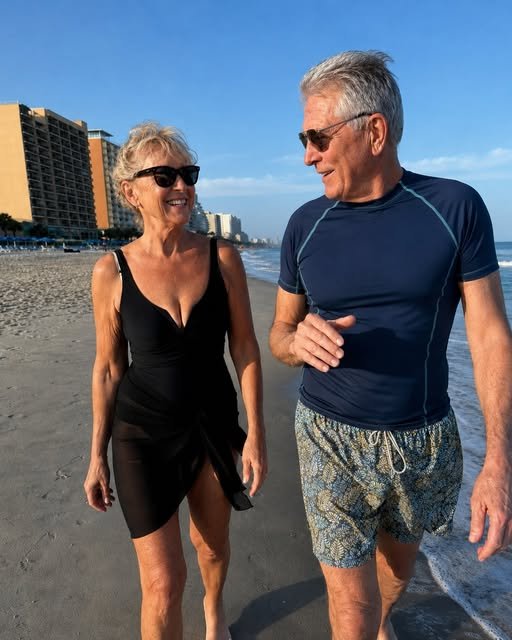
Part 1 — The Woman Valerie Used to Be
For most of the eight years I had been married to Owen, his mother, Valerie, had been a constant presence in our lives.
She called him nearly every day.
Sometimes she wanted to ask about work. Sometimes she needed to complain about a cousin, neighbor, or distant relative who had annoyed her. And sometimes she simply sent Owen photos of a dripping faucet or crooked cabinet door with a message asking when her only son planned to come fix it.
Owen pretended the calls irritated him.
They never really did.
He almost always answered.
Valerie had only one child, and after her husband passed away two years earlier, her relationship with Owen changed in ways neither of them seemed to understand.
She had been married for thirty-five years.
From everything Owen told me, his parents had been the kind of couple who built their lives around small routines—morning coffee together, grocery shopping on Saturdays, evening television, vacations planned months in advance.
When his father died, Valerie didn’t simply lose her husband.
She lost the person around whom her entire adult life had been organized.
For months, she barely went anywhere.
Friends invited her to dinner.
She declined.
Someone suggested a weekend trip.
She said maybe another time.
A woman from her neighborhood once gently encouraged her to consider dating again.
Valerie had only smiled sadly.
“I already had the person I wanted,” she said.
That was why Owen and I invited her when we planned a week at a beach resort.
We weren’t trying to fix anything.
We just wanted to get her away from the quiet house for a while.
The first two days went exactly as expected.
Valerie sat beneath an umbrella beside the pool with a novel she barely seemed to read. She joined us for meals. She smiled when appropriate.
But there was still something distant about her.
Then, on our second evening, she went to the hotel bar.
And met Russell.
I noticed him because Valerie was laughing.
Not the small, polite laugh she had perfected since becoming a widow.
This was different.
Her head tilted back.
Her eyes crinkled.
For a moment, she looked lighter.
Alive.
Russell was sixty-five, divorced, and the father of two grown children. He was staying at the hotel temporarily before moving to a rented cottage farther down the coast for the next month.
When Owen and I went upstairs that night, Valerie was still talking to him.
The next morning, she walked into breakfast wearing lipstick.
Owen nearly dropped his coffee.
“Mom.”
Valerie sat down calmly.
“What?”
“You’re wearing lipstick.”
She frowned at him.
“I have worn lipstick before, Owen.”
“At eight in the morning?”
I kicked him under the table.
Valerie noticed.
Then she smiled.
“Russell asked me to have breakfast with him.”
Owen leaned back in his chair.
“Russell.”
“Yes,” she said pointedly. “Russell.”
I had to hide my smile behind my coffee cup.
For the first time in two years, Valerie seemed excited about something.
And I couldn’t help being happy for her.
Part 2 — Three Days That Felt Like a New Life
Over the next several days, we hardly saw Valerie.
She and Russell took long walks on the beach in the mornings.
They ate lunch together.
One evening, he drove her to a seafood restaurant about twenty minutes away.
She returned after ten o’clock, smiling like someone who had forgotten what it felt like to lose track of time.
Owen noticed the change too.
Unfortunately, happiness did very little to quiet his instinct to protect his mother.
On the fourth evening, he waited for her in the hotel lobby.
When Valerie came through the doors, Owen stood.
“Mom, don’t you think this is moving pretty fast?”
Her smile faded.
“I’m sixty-three years old.”
“I know how old you are.”
“Then maybe stop speaking to me like I’m sixteen.”
“I’m not doing that.”
She gave him a look that clearly said otherwise.
The real argument came later.
Russell’s hotel stay was almost over, but the cottage he had rented was available for another month.
He invited Valerie to stay with him after our vacation ended.
When she first told me, I thought she was kidding.
She wasn’t.
The night before our flight home, the three of us sat on the balcony while Valerie announced that she had changed her ticket.
Owen stared at her.
“You’ve known this man for three days.”
“I am aware of that.”
“And you’re going to stay at his house?”
“It’s not his house. It’s a rental cottage.”
“With him.”
“Yes.”
“So you’re moving in with a stranger.”
Valerie’s expression tightened.
“No, Owen. I’m extending my vacation.”
“With someone you barely know.”
She set down her glass.
“Do you hear the way you’re talking to me?”
“I’m worried about you.”
“No. You’re deciding for me.”
“Mom, this isn’t like you.”
Valerie looked at him for several seconds.
Then she said quietly, “Maybe you don’t know who I am anymore.”
Owen immediately went silent.
The words had hurt him.
I could see that.
But they had come from somewhere real.
Valerie stood.
“I have spent two years traveling between my house, the grocery store, and occasionally your house. I meet one person who makes me laugh again, and suddenly everyone behaves as though I’ve lost all judgment.”
“That’s not what I’m saying,” Owen replied.
“You don’t need to say it.”
She walked back inside before either of us could stop her.
Later, Owen turned to me.
“This is going to end badly.”
“Maybe,” I admitted.
His eyebrows rose.
“So you agree with me?”
“I agree that she’s probably lonely.”
“Exactly.”
“But lonely isn’t the same thing as incapable.”
He rubbed both hands over his face.
“You really think we should just leave her here?”
“I think she’s allowed to make a choice we wouldn’t make.”
He didn’t like the answer.
But the following morning, Owen and I flew home without Valerie.

Part 3 — The Midnight Call
For the first few days, everything seemed fine.
Actually, better than fine.
Valerie called Owen every morning.
She sent us photos of sunsets, dinners, cocktails with ridiculous decorations, and seaside cafés.
Russell appeared in some of the pictures.
He looked ordinary enough.
More importantly, Valerie looked happy.
Then, on the fourth day after we came home, the photos stopped.
Owen noticed immediately.
“She hasn’t sent anything today.”
“She called you this morning.”
“For six minutes.”
I stared at him.
“You counted?”
“No.”
His face said he absolutely had.
“Owen, give her some room.”
He reluctantly agreed.
Then, at 12:47 the following night, my phone rang.
I saw Valerie’s name on the screen.
Owen was sleeping beside me.
I answered in a whisper.
“Valerie?”
Silence.
Then breathing.
Finally, she spoke.
“Natalie?”
Something in her voice made me sit upright.
“I’m here.”
“Are you alone?”
I glanced at Owen.
“He’s asleep. What’s happened?”
There was another pause.
Then she whispered the words that sent a chill through me.
“Natalie, I need you to help me get out of here.”
I was standing before I even realized I had left the bed.
“Where is Russell?”
“Asleep.”
“Did he hurt you?”
“No.”
“Threaten you?”
“No.”
“Are you locked in the cottage?”
“No.”
I stopped pacing.
“Then tell me what’s going on.”
Her breath trembled.
“I don’t know how to explain it without sounding ridiculous.”
“You don’t have to explain everything right now.”
“I just don’t want to still be here when he wakes up. Every time I say I want to leave, he talks until I start questioning myself.”
That changed everything.
“Has he physically stopped you?”
“No.”
“Taken your phone? Your purse? Your money?”
“No.”
“Then what’s making you feel trapped?”
She was silent for several seconds.
When she answered, her voice sounded smaller.
“I think I made a mistake.”
The tension in my shoulders shifted.
“Okay.”
“I want to go home.”
“Then we’ll get you home.”
She hesitated.
“Please don’t tell Owen.”
I closed my eyes.
“Valerie—”
“Please.”
“If you’re in danger, I can’t keep that promise.”
“I’m not exactly afraid of Russell.”
That sentence told me more than anything else she had said.
She wasn’t terrified.
She was ashamed.
Ashamed she had stayed.
Ashamed she wanted to leave.
Ashamed because she could already imagine her son’s reaction.
I softened my voice.
“Where are you now?”
“In the bathroom.”
“Can you leave safely?”
“Yes.”
“Pack only what you need. Go somewhere public. A café, hotel lobby, anywhere with people. Text me the address.”
“Natalie…”
“I’m coming.”
She began crying quietly.
“I feel so foolish.”
“You’re allowed to feel foolish later,” I told her. “Right now, just get somewhere safe.”
Part 4 — What Really Happened With Russell
By six that morning, I was at the airport.
I left Owen a short note.
Valerie needs me. I’ll explain once I understand what’s happening.
After landing, I sent him another message.
She’s safe. I’ll call when I know more.
Valerie was sitting inside a small breakfast restaurant three streets away from Russell’s cottage.
Her suitcase stood beside her chair.
She looked exhausted.
Her eyes were swollen.
But she did not look frightened.
That distinction mattered.
The moment she saw me, she stood and wrapped her arms around me.
Then, almost immediately, she said, “I don’t even know whether Russell did anything wrong.”
I pulled out the chair across from her.
“Then don’t start with what he did wrong. Start with what made you leave.”
She wrapped both hands around her coffee cup.
“The first day at the cottage was wonderful.”
They cooked dinner together.
Walked along the water.
Opened a bottle of wine.
Russell told her he hadn’t laughed so much in years.
For Valerie, it had felt like proof that life wasn’t over.
But the next day, Russell started discussing Christmas.
Would they spend it at his home?
Would she prefer hers?
Valerie assumed he was simply daydreaming.
Then he drove her through a neighborhood along the coast.
“He pointed to this blue house,” she told me, “and said something like, ‘A place like that would be perfect for us next year.’”
I leaned forward.
“For us?”
“That’s what I said.”
She had laughed when he said it.
Russell hadn’t.
Later, while they were having dinner, a server casually asked whether they were vacationing.
Russell smiled and told the server that his girlfriend simply needed some convincing to stay longer.
Valerie stared down at her coffee.
“I had known the man for less than a week.”
“What did you say?”
“Nothing.”
“Why?”
“Because everyone smiled. The waitress smiled. Russell smiled. It suddenly felt as if objecting would make me the strange one.”
The following morning, Russell began showing her rental listings.
Two bedrooms.
Three bedrooms.
Ocean view.
Closer to town.
Eventually, he mentioned that maintaining two separate homes wouldn’t make much sense and suggested that Valerie might sell hers someday.
My eyes widened.
“He talked about you selling your house?”
“Not immediately,” she said quickly. “He said eventually. He said he was just planning ahead.”
“And what were you thinking?”
“That I wanted to get on the first plane home.”
That evening, Valerie told Russell she wanted to move to a hotel for the remainder of her trip.
Russell didn’t shout.
He didn’t threaten her.
He didn’t block the door.
Instead, he challenged every reason she gave him.
Why was she destroying something good?
Why was she letting fear control her?
Hadn’t she admitted how lonely she was?
Didn’t she deserve happiness?
“He kept telling me I was running away because I was scared,” Valerie said.
She wiped beneath one eye.
“What if he’s right?”
I looked directly at her.
“Do you want to stay with him?”
“No.”
“Then you don’t need another reason.”
She stared at me.
I repeated it.
“You are allowed to change your mind.”
Her mouth trembled.
“I couldn’t call Owen.”
“Because you thought he’d say, ‘I told you so.’”
She nodded.
And suddenly I understood.
Valerie hadn’t called me because she needed to be rescued from a dangerous man.
She had called because she needed one person who would help her leave without turning her decision into evidence that she had been foolish for staying.
Part 5 — “You Didn’t Listen. You Argued.”
After breakfast, we returned to the cottage to collect the rest of Valerie’s belongings.
Before going inside, I texted Owen the address.
I didn’t tell him to come.
I simply wanted him to know where we were.
Russell answered the door.
His expression changed when he saw me.
“Natalie.”
“Hello, Russell.”
He looked immediately at Valerie.
“What’s going on?”
“I’m taking the rest of my things.”
His jaw tightened.
“Did Owen send you?”
“No.”
“Does he know you’re here?”
“He does now,” I said.
Russell looked irritated.
“Why is everyone treating Valerie like she can’t make decisions for herself?”
Valerie stopped packing.
“They aren’t.”
Russell turned toward her.
“You called your daughter-in-law in the middle of the night.”
“I called someone who would listen to what I was saying.”
“I listened.”
“No,” Valerie replied. “You tried to change my answer.”
Russell’s expression shifted.
“I was trying to understand.”
“I told you I wanted a hotel.”
“Because you were panicking.”
Valerie went completely still.
Then something in her seemed to settle.
“You decided I was panicking because you didn’t like what I wanted.”
Russell sat down.
For the first time since I’d arrived, he didn’t look defensive.
He simply looked tired.
“My house is empty,” he said quietly.
Valerie’s anger softened slightly.
Russell continued.
“After my divorce, my children moved away. When I go home, nobody is there. Then I met you.”
Valerie sat across from him.
“Russell…”
“I thought we’d found something.”
“We did.”
“Then why are you leaving?”
“Because having a few wonderful days together doesn’t mean we’re supposed to build an entire life after one week.”
He stared down at the floor.
After a long silence, he nodded.
“I moved too quickly.”
Valerie sighed.
“So did I.”
And there it was.
The truth they had both been avoiding.
Russell had mistaken connection for certainty.
Valerie had mistaken one exhilarating week for proof that she had suddenly become someone fearless and completely new.
Neither of those things made either of them terrible people.
They were simply two lonely adults trying to outrun empty houses.
Russell stood.
Without another argument, he carried one of Valerie’s bags to the door.
This time, when she said she was leaving, he accepted it.

Part 6 — Owen Arrives
We were loading Valerie’s suitcase when a rental car pulled up.
Owen stepped out.
Valerie groaned.
“Oh, you’ve got to be kidding.”
Apparently, after receiving my message, Owen had taken the first available flight.
He hurried toward us.
“Mom, are you all right?”
“I’m fine.”
He looked at me.
“What happened?”
Then he noticed Russell standing in the doorway.
Owen’s face hardened.
“I knew this was a bad idea.”
I shut my eyes.
Of all the things he could have said, he had chosen the worst one.
“I knew it,” Owen continued. “I told you this would happen.”
Valerie slowly turned toward him.
“And that,” she said, “is exactly why I didn’t call you.”
Owen froze.
“What are you talking about?”
“You think I’m embarrassed because Russell disappointed me.”
“Aren’t you?”
“No. Right now, I’m angry with you.”
“With me?”
“Yes.”
Owen looked genuinely stunned.
Valerie stepped closer.
“Ever since your father died, you’ve questioned every decision I make.”
“Because I worry about you.”
“You ask whether I’ve eaten. You want to know where I’m going. If I don’t answer my phone quickly enough, you contact my friends.”
“Because you’re my mother.”
“I know.”
Her voice softened.
“I know it comes from love. But sometimes your concern doesn’t feel like love, Owen.”
He said nothing.
“It feels like supervision.”
The words hit him hard.
I could see it in his face.
Valerie continued.
“Part of the reason I stayed here longer than I wanted was because I knew exactly what you’d say if I came home early.”
“Mom…”
“I wanted to prove I could make one bold decision without asking whether you approved.”
Owen’s expression changed.
“I never wanted you to think you were incapable.”
“I know that.”
She took a breath.
“But that’s how I started feeling.”
He looked down.
Valerie glanced toward the cottage behind us.
“Maybe coming here wasn’t the right choice for me. Maybe staying with Russell was too much, too soon. But changing my mind doesn’t prove you should have made the decision for me from the beginning.”
Owen didn’t argue.
“Leaving doesn’t mean you won,” she continued. “It doesn’t mean I lost. It means I learned something and made a different choice.”
For perhaps the first time since arriving, Owen stopped trying to protect his mother.
He simply looked at her.
Then he asked quietly, “What do you want to do now?”
Valerie blinked.
The question seemed almost to surprise her.
Maybe because it was the first question anyone had asked her that morning without already deciding what her answer should be.
“I want my own hotel room.”
Owen nodded.
His hand instinctively moved toward his phone.
Then he stopped himself.
“Okay. If you want help finding one, tell me.”
Valerie’s face softened.
“I will.”
She booked it herself.
Part 7 — What Moving Forward Really Looked Like
Owen flew home that evening.
I stayed with Valerie for two more nights because she asked me to.
We didn’t spend those two days analyzing Russell.
We didn’t turn the trip into a disaster story.
Instead, we had dinner overlooking the ocean.
We walked barefoot along the beach.
Valerie ordered a dessert large enough for three people and ate nearly all of it herself.
On my final morning, we sat across from each other over breakfast.
She stirred her coffee thoughtfully.
“I thought Russell was proof that I was finally moving forward.”
I looked at her.
“And now?”
She smiled.
“Now I think ordering dessert alone can count as moving forward too.”
I laughed.
But I understood exactly what she meant.
Valerie hadn’t failed at beginning again.
Beginning again simply looked different than she had expected.
It didn’t have to mean finding another husband.
It didn’t have to mean becoming fearless.
It didn’t have to mean saying yes just because she had once been too afraid to say anything at all.
Sometimes moving forward meant meeting someone.
Sometimes it meant leaving them.
Sometimes it meant admitting, “I thought I wanted this, but I don’t anymore.”
And sometimes it meant knowing that changing your mind didn’t erase your courage.
A few months later, Valerie booked another trip.
This time, she went alone.
Owen drove her to the airport.
I went with them.
When we reached the terminal, Valerie lifted her suitcase out of the trunk herself.
There was no emergency.
No midnight phone call.
No man she needed to escape.
No son trying to decide whether her choice was wise.
She had picked the destination.
She had booked the hotel.
She had planned every day herself.
Owen watched her for a moment.
Then he cleared his throat.
“Do you want me to check the hotel reviews one last time?”
Valerie slowly turned toward him.
He immediately lifted both hands.
“Never mind. You’re sixty-three.”
A smile spread across her face.
“And perfectly capable of surviving dinner with strangers.”
Owen laughed.
She kissed his cheek.
Then Valerie picked up her suitcase and walked through the airport doors alone.
I stood beside Owen as we watched her disappear into the crowd.
Neither of us moved to follow.
Because that was the lesson we had all finally learned.
Loving someone doesn’t always mean keeping them from making mistakes.
Sometimes it means trusting them enough to make their own choices.
And being there—without judgment—when they decide to choose differently.