
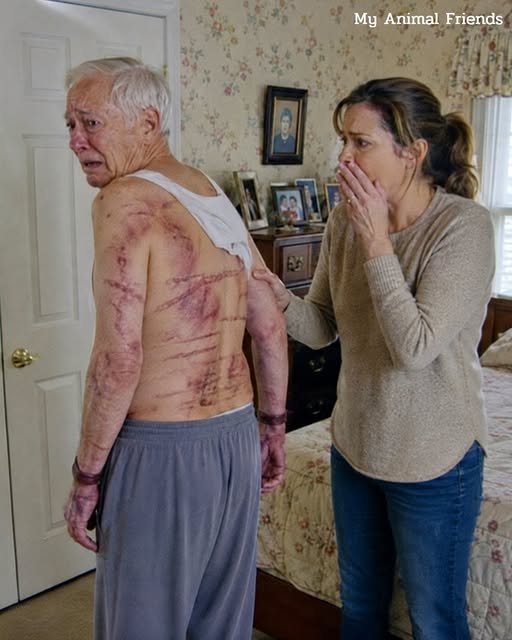
The house had never felt so unfamiliar.
Elena stood in the small bathroom with one hand resting gently on her father’s shoulder and the other holding the phone she had used to document everything.
The person in front of her was the same man who had taught her how to ride a bicycle, who had waited outside every school performance, who had once driven through a snowstorm just to bring her a forgotten suitcase.
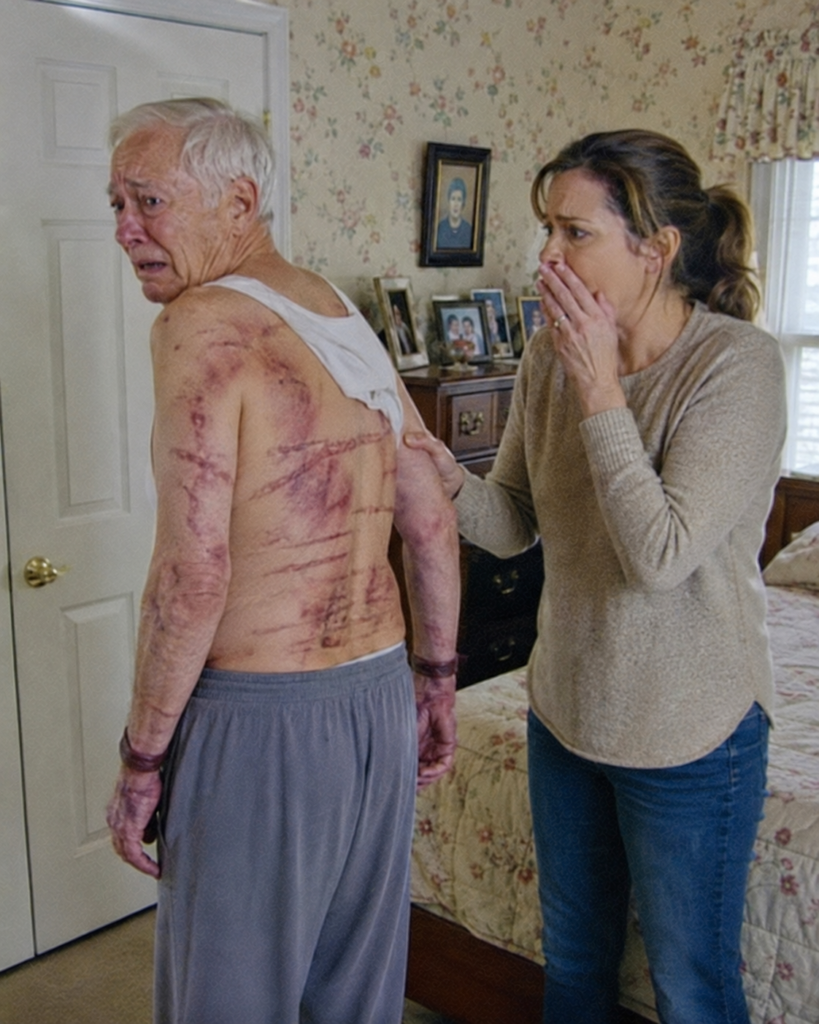
But now he looked smaller.
Not weaker. Never that.
Just tired.
“Dad,” Elena whispered, “you should have told me.”
Her father, Thomas Vance, looked down at his hands.
“I tried.”
The words carried more pain than anger.
“I called you three times.”
Elena closed her eyes.
“My number changed last year.”
“I know.”
She looked at him.
“What do you mean?”
Thomas hesitated.
“They told me you were too busy. They said you were building your career and didn’t need an old man worrying you with his problems.”
A cold feeling settled in Elena’s chest.
Not because she believed every detail yet. She had spent years in courtrooms learning that emotions could blur facts. Evidence mattered. Truth needed patience.
But her father’s sadness was something she couldn’t ignore.
“Dad, why didn’t you tell a doctor? A neighbor? Anyone?”
Thomas gave a small, tired smile.
“When you are eighty years old, people start making decisions for you before they ask what you think.”
A knock came from the other side of the door.
“Everything okay in there?” Chloe called.
Elena quickly placed her phone in her pocket.
“Yes,” she answered calmly. “Dad just needs a few minutes.”
The silence outside told her Chloe was listening.
Elena helped her father finish getting ready. She chose her words carefully.
“We’re going downstairs,” she said. “And we’re going to act normal.”
Thomas looked worried.
“Why?”
“Because I need time.”
“You believe me?”
Elena looked directly into his eyes.
“I believe that something is wrong. And I’m going to find out exactly what.”
For the first time that evening, her father looked relieved.
Not because everything was fixed.
Because someone finally believed he deserved to be heard.
When they returned to the living room, Julian was sitting comfortably in his chair, scrolling through his phone.
“There you are,” he said. “I was starting to worry.”
Elena studied her brother.
Julian had always been confident. As children, he was the one who spoke first, volunteered for everything, and convinced their parents that every idea he had was brilliant.
Elena had always been the quiet one.
The observer.
The person who remembered details.
“Everything is fine,” she said.
Chloe smiled.
“I told you. He gets emotional sometimes.”
Elena sat down.
“Maybe.”
One word.
Nothing more.
Julian glanced at her.
“What’s that supposed to mean?”
“It means Dad has had a difficult year. Maybe we should talk about how things have been handled.”
The room became quiet.
Julian leaned back.
“We already talked about this. We have legal authority. Everything has been done properly.”
“Good,” Elena said. “Then you won’t mind showing me all the records.”
His expression changed slightly.
Only for a moment.
But Elena noticed.
“What records?” Chloe asked.
“Medical appointments. Financial statements. Care schedules. Anything related to Dad’s well-being.”
Julian laughed softly.
“Elena, this isn’t a business investigation.”
“No,” she replied. “It’s our father.”
The words hung in the room.
Thomas looked at the floor.
Julian stood.
“I don’t appreciate being treated like a criminal after everything I’ve done.”
Elena watched him carefully.
“I’m not accusing you of anything.”
“Sure sounds like it.”
“I’m asking questions.”
“Because you came back after years and suddenly think you know everything.”
That sentence hurt more than Elena expected.
Because there was some truth hidden inside it.
She had left.
Not because she didn’t love her father.
But because after their mother died, being home became painful. Every room carried memories. Every conversation reminded her of what they had lost.
She buried herself in work because work was easier than grief.
“I should have visited more,” Elena admitted.
Her brother looked surprised.
“I should have called more. I should have noticed things were changing.”
Thomas reached for her hand.
“You were living your life.”
Elena looked at him.
“And you were my father.”
The room became quiet again.
For a moment, nobody spoke.
Then Julian’s phone rang.
He looked at the screen and walked into the kitchen.
Elena waited.
When he returned, his face was different.
“Who did you call?”
Elena didn’t answer.
“You contacted someone.”
“I spoke to a professional.”
“What professional?”
“Someone who can help us understand the situation.”
Julian looked at Chloe.
Something passed between them.
Fear.
Not anger.
Fear.
And Elena realized something important.
They weren’t only hiding something from her.
They were afraid of what might already be discovered.
That night, Elena stayed in her father’s guest room.
She barely slept.
She reviewed every document she had collected. She made notes. She separated facts from assumptions.
At three in the morning, she found something strange.
A bank transfer.
Not one large payment.
Many smaller ones.
The kind of transactions someone might overlook.
She opened another document.
Then another.
Her heart began beating faster.
Because the money wasn’t only going somewhere unexpected.
It was going to someone Thomas had never mentioned.
Someone connected to their family.
Someone Elena remembered.
Someone she thought had disappeared years ago.
She stared at the name on the page.
“That can’t be possible.”
But the evidence was there.
And by morning, Elena knew she had another conversation to have.
Not with Julian.
With someone who had been hiding in the shadows of their family story for years.
PART 3
The next morning, Elena drove to a quiet coffee shop on the edge of town.
She had chosen the place because it was neutral.
No family memories.
No arguments.
No walls that carried old emotions.
At exactly nine o’clock, a woman entered carrying a small leather bag.
Margaret Hale.
Her father’s former financial advisor.
And someone Elena had not seen in fifteen years.
Margaret stopped when she saw her.
“Elena?”
“Hello, Margaret.”
The older woman sat down slowly.
“I wondered if this day would come.”
Elena studied her.
“You knew something was wrong.”
Margaret looked away.
“I suspected.”
“Why didn’t you tell me?”
The woman sighed.
“Because your father asked me not to.”
Elena froze.
“My father?”
Margaret nodded.
“He was embarrassed. He didn’t want his children fighting over him.”
Elena looked confused.
“Then why did you allow changes to his accounts?”
“I didn’t.”
The answer came immediately.
“I retired two years ago. I transferred everything to the new management arrangement your brother requested.”
“Did you approve it?”
“No.”
“Then who did?”
Margaret opened her bag and removed a folder.
“I kept copies because something didn’t feel right.”
Inside were letters.
Emails.
Notes.
Elena read carefully.
The documents showed that Thomas had questioned several financial decisions. He had asked for explanations. He had requested meetings.
But every request had somehow been delayed.
Someone had been controlling the information reaching him.
“Why didn’t you report it?”
Margaret looked ashamed.
“I made a mistake.”
Elena waited.
“I assumed your father was choosing to let Julian manage things. I thought it was a family arrangement.”
“And later?”
“Later, I realized your father wasn’t being included in decisions about his own life.”
Elena closed the folder.
“Thank you for coming.”
Margaret looked at her.
“Your father always spoke highly of you.”
Elena smiled sadly.
“He shouldn’t have had to.”
When Elena returned home, Thomas was sitting outside in the garden.
The morning sun warmed the wooden chair beside him.
He looked peaceful.
For the first time since she arrived, he looked like himself.
“Margaret told me some things.”
Thomas nodded.
“I know.”
“You knew?”
“I asked her to keep records.”
Elena sat beside him.
“Why didn’t you tell me?”
Thomas was quiet for a long time.
“Because I was afraid.”
Elena turned toward him.
“Of Julian?”
“No.”
The answer surprised her.
“I was afraid of losing both my children.”
Those words stayed with her.
Thomas continued.
“Your brother has always needed to feel important. After your mother died, he convinced himself he had to become the person who held the family together.”
“He hurt you.”
Thomas looked down.
“He made choices that were wrong.”
The way he said it was gentle.
Not forgiving.
Not excusing.
Just understanding.
And Elena realized something about her father.
He wasn’t trying to destroy Julian.
He was trying to save what was left of his family.
That afternoon, Elena met with legal professionals and arranged support for her father. The process was quiet and careful.
No dramatic accusations.
No public arguments.
Just facts.
When Julian arrived home, he found Elena waiting.
“We need to talk.”
He sighed.
“I knew this was coming.”
“Julian, I want to understand something.”
“What?”
“Why?”
He looked away.
For several seconds, he said nothing.
Then his shoulders dropped.
“Because I thought I deserved something.”
Elena listened.
“I took care of Dad. I was there when he forgot appointments. I was there when he needed help. I thought…”
He stopped.
“You thought that gave you ownership?”
Julian didn’t answer.
That was answer enough.
“I was angry at you,” he admitted. “You left. You became successful. Everyone talked about you.”
Elena felt sadness more than anger.
“Julian, I never stopped being your sister.”
“I know that now.”
The words sounded different.
Less defensive.
More tired.
“Did Chloe know?”
Julian closed his eyes.
“Some things.”
“And the documents?”
He looked away.
“Some were my idea.”
Elena took a slow breath.
There it was.
The truth.
Not simple.
Not easy.
But real.
Later that evening, Thomas called Elena into his room.
“I found something.”
He handed her an old envelope.
“I kept this because your mother wrote it before she passed away.”
Elena opened it carefully.
Inside was a letter.
A letter about their family.
About forgiveness.
About how children sometimes carried pain differently.
But at the bottom was something unexpected.
A sentence that made Elena stop.
“Your mother knew Julian would struggle after she was gone.”
Elena looked up.
“What does that mean?”
Thomas looked toward the window.
“It means there is something your brother never told you.”
“What?”
Thomas hesitated.
“Something that happened the year your mother died.”
And for the first time in years, Elena realized the family secret she was uncovering might not have started with Julian.
It might have started long before.
PART 4 (The end)
The letter was short.
Only three pages.
But Elena read it slowly, as if every word carried a piece of a life she thought she understood.
Her mother’s handwriting was familiar.
Strong.
Careful.
Beautiful.
“My children,” the letter began.
“After I am gone, remember that grief can make people act like strangers. It does not mean they have stopped loving each other.”
Elena looked at Thomas.
“What happened?”
Her father took a deep breath.
“After your mother died, Julian blamed himself.”
“Why?”
Thomas looked down.
“Because he was the one driving when we received the call from the hospital. He thought if he had done something differently, somehow the outcome would have changed.”
Elena closed her eyes.
She had never known.
Julian had never told her.
“He became obsessed with fixing everything,” Thomas continued. “He thought taking control meant protecting us.”
“And nobody stopped him.”
“I tried.”
His voice was quiet.
“But I also depended on him too much. I let him carry responsibilities he wasn’t ready for.”
Elena folded the letter.
The truth was becoming clearer.
What happened to their family was not caused by one single moment.
It was years of grief, poor choices, silence, and people refusing to ask for help.
That did not erase the damage.
But it explained the path that led them there.
Over the next few weeks, everything changed.
Thomas moved into a safer living arrangement where he could have independence and support.
Elena stayed nearby.
Not forever.
Not because she felt guilty.
Because she wanted to.
Julian faced the consequences of his choices. He worked with professionals to untangle the financial issues and accepted that rebuilding trust would take time.
The hardest conversation came one evening when the siblings sat together in their father’s garden.
“I don’t expect you to forgive me quickly,” Julian said.
Elena looked at him.
“I don’t know if forgiveness works that way.”
He nodded.
“I understand.”
“But I do want us to be honest.”
“I want that too.”
Thomas watched them quietly from the porch.
For years, he had worried his family would only come together because of a crisis.
Now he saw something different.
They were choosing to.
Months later, Elena helped her father restore the small traditions they had lost.
Sunday breakfasts.
Walks in the garden.
Old music playing in the kitchen.
One afternoon, Thomas handed Elena a photograph.
It was from years ago.
Their family standing together beside the lake cabin.
The same cabin that had once represented so many memories.
“I thought we lost everything,” he said.
Elena smiled.
“We lost some things.”
She looked at the photograph.
“But not everything.”
The journey had not been simple.
There were apologies that needed to be made.
Trust that needed to be rebuilt.
Conversations that should have happened years earlier.
But families were not made perfect by avoiding pain.
They became stronger by facing the truth and choosing what came next.
On her father’s next birthday, Elena arrived early.
This time, she didn’t surprise him.
She called first.
When Thomas opened the door, he smiled.
“You actually gave me warning?”
“I learned my lesson.”
He laughed.
A real laugh.
The kind she remembered from childhood.
Inside the house, sunlight filled the rooms.
The curtains were open.
Fresh flowers sat on the table.
And for the first time in a long time, the house felt like home again.
Elena looked at her father.
“You know something?”
“What?”
“I thought I came here to save you.”
Thomas smiled.
“And?”
She looked around the room.
“I think we saved each other.”
Her father squeezed her hand.
And in that moment, they both understood something important.
Sometimes the greatest journeys home are not about finding what was lost.
They are about discovering what was still there all along.