
That answer made even less sense.
Before I could ask another question, Arthur turned toward the kitchen.
“Have either of you eaten today?”
“We had toast,” Annie said.
I looked at her.
Half a piece of toast each did not seem worth mentioning, but Annie had always taken Grace literally when she told us never to exaggerate.
Arthur noticed my expression.
“Toast,” he repeated. “Anything else?”
“No, sir.”
He closed his eyes for a moment.
When he opened them, the sternness had returned, but it seemed aimed at himself rather than us.
“Sit down.”
“We should go home,” I said. “Grace doesn’t know where we are.”
“And someone is already on the way to see her.”
That frightened me more than it reassured me.
“Who?”
“Dr. Helen Mercer.”
“Is she a real doctor?”
Arthur actually looked offended.
“She ran the emergency department at St. Matthew’s for twelve years.”
Annie tugged my sleeve.
“That sounds real.”
Arthur almost smiled.
“She retired from hospital work last spring. These days she spends most of her time complaining that retirement is boring.”
He opened the refrigerator.
It was larger than the one in our whole kitchen.
I expected it to be full of expensive food, but most of the shelves were nearly empty. There were eggs, milk, cheese, apples, a covered bowl, and several containers marked with dates.
Arthur stared into it as though he had forgotten why he had opened it.
Finally, he said, “Mrs. Alvarez leaves soup on Thursdays.”
“It’s Tuesday,” I said.
“I’m aware of that.”
He checked a container.
“Fortunately, soup survives Tuesdays.”
He heated three bowls.
When he placed mine in front of me, I hesitated.
“We didn’t finish the garden.”
Arthur sat across from us.
“You found something I spent seventeen years believing was gone forever. I think we can call the account settled.”
“We didn’t find it for you,” I said. “It was just there.”
“Most important things are.”
I didn’t know what he meant by that either.
The soup smelled like chicken and herbs. Annie waited until Arthur picked up his spoon before touching hers.
That was something Grace had taught us.
Arthur noticed.
“Your sister taught you manners.”
“She teaches us everything,” Annie said.
A shadow passed over his face.
“Yes,” he murmured. “I suppose she would.”
There it was again.
Something in the way he spoke about Grace.
Not like a stranger.
I put down my spoon.
“How do you know her?”
Arthur looked at me.
For the first time since we entered the house, he seemed uncertain.
Then the telephone rang.
He answered immediately.
“Helen?”
His posture changed as he listened.
“What did you find?”
I stood.
Annie stood too.
Arthur held up one hand.
“No, they’re here with me.”
A pause.
“Yes.”
Another pause.
“Then bring her in.”
My stomach tightened.
“Bring her where?”
Arthur ignored me for a moment.
“Yes. I understand.”
He hung up.
“What happened?” I demanded.
“Your sister is dehydrated and has a fever.”
“Is she going to the hospital?”
“Dr. Mercer believes she should be examined properly. She’s arranging transportation.”
“We have to go.”
Arthur nodded.
“I’m taking you.”
Twenty minutes later, we were in the back seat of a black sedan that looked too polished for children with dirt on their shoes.
Arthur sat beside us instead of in front.
Nobody talked much.
When we reached St. Matthew’s Medical Center, Grace was already inside.
A nurse led Annie and me into a waiting room while Arthur spoke quietly with someone near the desk.
I hated waiting rooms.
They made every minute seem important.
Annie sat beside me, swinging her feet without touching the floor.
“Do you think Grace is mad?”
“At us?”
“For leaving.”
“She’ll be mad after she feels better.”
Annie considered this.
“That’s good.”
I understood what she meant.
If Grace had enough energy to be angry, then she was getting better.
Arthur returned holding two paper cups of water.
“Dr. Mercer says your sister has a respiratory infection and significant dehydration. They’re giving her fluids and medicine.”
“Is she going to be okay?”
“Yes.”
He answered quickly enough that I believed him.
My shoulders loosened for the first time all day.
“Can we see her?”
“Soon.”
He sat in the chair across from us.
Without the mansion around him, Arthur looked smaller.
Older too.
He turned his wife’s ring slowly between his fingers.
“You really searched for that for seventeen years?” Annie asked.
Arthur nodded.
“My wife, Eleanor, lost it during a charity reception at the house. We had nearly forty people in the garden that evening. Landscapers dug around the roses the following week, but no one found it.”
“Maybe it fell deeper,” Annie said.
“Apparently.”
“Was she sad?”
Arthur looked at the ring.
“She pretended she wasn’t.”
“Grace does that.”
Arthur lifted his eyes.
“What?”
“She pretends things don’t bother her when they do.”
I nudged Annie gently.
But Arthur didn’t seem upset.
Instead, he said, “Eleanor did too.”
A doctor came through the door before anything else could be said.
She was a woman with silver-streaked dark hair and quick eyes.
“Caleb? Annie?”
We both stood.
“I’m Helen Mercer.”
She shook our hands as though we were adults.
“Your sister is going to be all right. She needs rest, fluids, antibiotics, and at least a week of not pretending she can work.”
“That last part might be difficult,” I said.
Helen smiled.
“I gathered that.”
Then she glanced at Arthur.
“And I have already informed Mr. Whitmore that paying someone’s medical bill does not give him the right to organize the rest of her life.”
Arthur frowned.
“I offered assistance.”
“You issued instructions.”
“They were practical instructions.”
Helen turned to us.
“He has never understood the difference.”
Something about the way she spoke to him made the room feel less frightening.
“Can we see Grace now?” Annie asked.
“Yes.”
Grace looked tiny beneath the hospital blanket.
Her brown hair was tied badly behind her head, and there were shadows beneath her eyes, but when we walked in, she immediately pushed herself upright.
“Where have you two been?”
There it was.
Annie smiled.
“You’re mad.”
“Of course I’m mad!”
Grace looked at Arthur.
Then at me.
Then back at Arthur.
“What happened?”
I told her.
Not everything at first.
Just the garden, the food, the ring.
Grace listened with one hand covering her mouth.
When I finished, she looked as if she didn’t know whether to hug us or lecture us.
Probably both.
“You walked all the way to Bellweather Avenue?”
“We were careful.”
“Caleb.”
“We needed food.”
Her eyes closed.
That was worse than being yelled at.
“I’m sorry,” she whispered.
“For what?”
“For letting things get that bad.”
“You were sick.”
“I’m still supposed to take care of you.”
“You do.”
Her eyes filled.
I hated seeing that.
So I said the first thing that came into my mind.
“Arthur made us soup.”
Grace opened her eyes.
“Arthur?”
Mr. Whitmore shifted beside the doorway.
Grace finally looked directly at him.
Their eyes met.
Something changed in the room.
It was so small that Annie probably didn’t notice.
But I did.
Grace knew him.
Or knew of him.
The color faded slightly from her face.
Arthur noticed too.
“Grace Foster,” he said.
She swallowed.
“Mr. Whitmore.”
I looked from one to the other.
“You know him.”
“No,” Grace said too quickly.
Arthur’s jaw tightened.
Helen quietly stepped toward the door.
“I think,” she said, “I’ll give everyone a few minutes.”
But Grace stopped her.
“Please stay.”
Helen did.
That told me more than Grace probably intended.
Arthur approached the bed slowly.
“I should have spoken to you years ago.”
Grace’s voice was tired but firm.
“There wasn’t anything to say.”
“I disagree.”
“That doesn’t surprise me.”
I had never heard Grace speak that way to an adult.
Not rude.
Just guarded.
Arthur looked at Annie and me.
“You haven’t told them.”
“No.”
“Told us what?” I asked.
Grace reached for my hand.
“Caleb, this isn’t something you need to worry about today.”
That answer never worked on me.
“It’s about us.”
“It’s about the past.”
“Then why did he know our address?”
Grace went still.
She looked at Arthur.
“You told them?”
“I told them nothing.”
“He knew it before we did,” I said. “He sent Dr. Mercer to our apartment.”
Grace leaned back against the pillow.
For a moment she looked exhausted in a different way.
Not sick.
Cornered by something she had hoped never to explain.
Finally, she said, “Years ago, Dad worked for one of Mr. Whitmore’s companies.”
Arthur lowered his head slightly.
“He managed a regional freight division.”
That surprised me.
I remembered almost nothing about Dad’s work.
In my memories, he smelled like coffee and aftershave and came home after dark.
“Was Dad friends with you?” Annie asked.
Arthur’s expression became complicated.
“No.”
Grace answered instead.
“Dad admired him.”
Arthur flinched at that.
“More than he should have,” Grace added.
I waited.
No one continued.
“What happened?”
Grace looked at me.
“There was an accident with one of the company trucks.”
My stomach tightened.
Our parents had died in a highway accident six years earlier.
I knew that much.
A rainy night.
A wrong turn.
A collision.
Adults had always changed the subject when I asked for details.
“Dad was driving?” I asked.
“No,” Grace said quickly. “It wasn’t the accident that killed Mom and Dad.”
I let out a breath.
“This was before that. Dad was managing the depot when a serious mechanical problem was discovered in several vehicles.”
Arthur spoke quietly.
“He reported it.”
Grace looked at him.
“Eventually.”
Arthur accepted the correction.
“Yes.”
“Dad thought the company would blame him,” Grace continued. “There were arguments. Lawyers. Investigations. He lost his position.”
I stared at Arthur.
“You fired him?”
Arthur didn’t look away.
“Yes.”
“Why?”
“Because at the time, I believed he had hidden maintenance reports.”
“Did he?”
Grace answered.
“Not exactly.”
That phrase again.
Not exactly.
Arthur folded his hands over his cane.
“Your father delayed forwarding several reports because he was trying to solve the problem inside the division before headquarters found out. It was a terrible judgment call. But years later, I learned he had also repeatedly requested money for repairs and had been refused by executives above him.”
“By you?”
“No.”
“Your company.”
“Yes.”
The way Arthur said it made clear that the difference did not comfort him.
Grace looked toward the window.
“Dad never really recovered from losing that job.”
I remembered something then.
Dad sitting at our kitchen table late at night with envelopes spread around him.
Mom rubbing his shoulder.
Grace whispering for me to go back to bed.
Arthur continued.
“After your parents died, I learned that Grace had become guardian to both of you.”
“You kept track of us?”
“From a distance.”
“Why?”
He looked at Grace.
“Because I owed your father an apology.”
Grace’s fingers tightened around mine.
“No.”
Arthur’s expression softened.
“I did.”
“You already sent the letter.”
“What letter?” I asked.
Grace closed her eyes.
I turned toward Arthur.
“What letter?”
Arthur seemed surprised.
“Three years after your parents died, I wrote to Grace. I offered to cover household expenses and establish education funds for you and Annie.”
I looked at Grace.
She wouldn’t meet my eyes.
“You never told us.”
“You were eight,” she said. “Annie was five.”
“What did you say?”
Grace took a breath.
“I said no.”
Annie blinked.
“To money?”
“Yes.”
“Why?”
Grace looked at Arthur.
“Because we didn’t know him.”
“That wasn’t the only reason,” Arthur said.
Grace’s eyes sharpened.
“Don’t.”
But he stopped.
For the first time since meeting him, Arthur obeyed without argument.
Helen broke the silence.
“Grace needs rest.”
“I want to know,” I said.
Grace squeezed my hand.
“And you will. But not tonight.”
Arthur reached into his coat and placed a card on the bedside table.
“My number.”
Grace gave a tired laugh.
“You think I lost the previous four?”
“You still have them?”
She looked annoyed at herself for revealing that.
Arthur’s face softened.
“Yes,” she admitted. “I still have them.”
That confused me almost as much as everything else.
If Grace wanted nothing to do with Arthur, why had she kept his cards?
Arthur left soon afterward.
But before he did, he bent toward Annie and me.
“The garden remains unfinished.”
I thought he was joking.
“Do you still want us to work?”
“When your sister is well and only if she agrees.”
“For food?”
His mouth twitched.
“We’ll negotiate.”
Grace kept us home from school the next day.
Not because she wanted to.
Helen insisted.
Grace returned to our apartment that afternoon and spent most of the day asleep.
Someone delivered groceries.
Grace knew immediately who had sent them.
She called Arthur and made him take half back.
He argued.
She won.
That impressed me.
For the next week, Grace recovered while Annie and I watched her like suspicious nurses.
Every morning, Helen called.
Every afternoon, food appeared from somewhere.
Sometimes it came from Mrs. Alvarez, Arthur’s housekeeper, who claimed she had “accidentally cooked too much.”
Grace never believed her.
Neither did I.
But she stopped sending it back.
On Saturday, Grace finally let us return to Arthur’s garden.
She came with us.
“I’m supervising.”
“You’re supposed to rest,” I said.
“I can supervise sitting down.”
Arthur had placed a chair beneath the maple tree before we arrived.
Grace stared at it.
“He knew you were coming,” Annie said.
Grace muttered something about difficult old men.
Arthur appeared on the porch.
“You’re late.”
“It’s nine o’clock.”
“You said nine.”
“It is exactly nine.”
His eyes moved toward the chair.
Grace noticed.
“So you admit you expected me?”
“I understand probability.”
Grace almost smiled.
Almost.
We worked for three hours.
Arthur paid us in food, as originally agreed, though somehow the “leftovers” included fresh bread, vegetables, milk, eggs, and enough chicken for several dinners.
Grace objected.
Arthur claimed his refrigerator was too small.
His refrigerator could have held ours twice.
But Grace let it go.
Something had shifted between them.
Not trust.
Not yet.
More like a temporary ceasefire.
Over the next several weeks, we returned every Saturday.
The garden slowly emerged from beneath the neglect.
Stone paths reappeared.
Flower beds found their edges.
Annie discovered little metal labels identifying plants Eleanor had chosen years before.
Arthur remembered almost all of them.
“Peonies there,” he said one morning.
“How do you know?” I asked.
“Eleanor planted them.”
“You remember every flower?”
“No.”
He paused.
“Only hers.”
Grace heard him.
Her expression softened.
Arthur never mentioned the old company dispute while Annie was around.
But once, while she was helping Mrs. Alvarez make lemonade, I heard Grace and Arthur arguing quietly near the greenhouse.
“You should have told me,” Grace said.
“I tried.”
“You sent checks.”
“I sent letters.”
“Letters with checks.”
“I thought practical help would be more useful than explanations.”
“That was the problem.”
Arthur’s voice dropped.
“What was I supposed to do? Appear at your door after the funeral and tell a seventeen-year-old girl that her father had been right about things I had spent years believing he was wrong about?”
Grace was silent.
“I was ashamed,” Arthur said.
“You weren’t the only one.”
I stepped away before they noticed me listening.
That night, I asked Grace why she had turned down Arthur’s money.
She was folding laundry on the couch.
“Because money can make complicated things feel simple,” she said.
“I don’t understand.”
She folded one of Annie’s shirts.
“Mr. Whitmore thought helping us financially would fix what happened with Dad.”
“Wouldn’t it have helped?”
“Yes.”
Her answer surprised me.
“It would have helped a lot.”
“Then why say no?”
Grace stopped folding.
“Because I was angry.”
“At Arthur?”
“At everyone.”
She looked toward the bedroom where Annie slept.
“Mom and Dad were gone. I was seventeen. People kept telling me what I should do with you two. Some relatives said we should be split up because keeping us together would be too hard. A social worker said I needed a plan. A lawyer said I needed documents. Then a millionaire I had never met wrote saying he wanted to pay our expenses.”
“And you thought he wanted something.”
“I thought accepting meant admitting we couldn’t manage.”
“But we couldn’t.”
Grace smiled sadly.
“No. We couldn’t. Not really.”
That was the first time I had ever heard her admit it.
“I made choices because I was scared, Caleb. Sometimes scared people call it independence because independence sounds stronger.”
I sat beside her.
“Do you regret saying no?”
She considered the question for a long time.
“Sometimes.”
The next Saturday, Arthur showed me an old photograph.
We were cleaning shelves in the greenhouse when he found a box behind several gardening books.
The photograph showed Arthur standing beside a group of employees in front of a fleet of blue trucks.
He was younger, with dark hair and no cane.
Near the end of the row stood my father.
I recognized him immediately.
Dad looked thinner than I remembered, but his smile was the same.
Arthur sat down.
“He was thirty-one there.”
“How old were you?”
“Forty-eight.”
“You look grumpy.”
“I probably was.”
I turned the picture over.
Someone had written a date.
And beneath it, in different handwriting:
Frank Foster—keep an eye on this one. He asks the right questions.
“Did you write that?”
Arthur nodded.
“You liked him.”
“I respected him.”
“But you fired him.”
“Yes.”
There was no defensiveness in the answer.
That somehow made it easier to listen.
“What really happened?”
Arthur leaned back.
“Your father discovered that maintenance spending at his depot had been cut too sharply. He asked for more funding. The requests were delayed by corporate management. Eventually he began moving money from other operating budgets to pay for repairs.”
“Was that allowed?”
“No.”
“But the trucks needed fixing.”
“Yes.”
“So he did the right thing.”
Arthur looked toward the garden.
“He did the right thing in the wrong way.”
That sounded like something Grace would say.
“When auditors discovered the transfers, they suspected he was hiding larger problems. Then several maintenance reports surfaced that had not been submitted on time.”
“Because Dad hid them?”
“Because he was embarrassed that the repairs weren’t finished.”
I frowned.
“That seems stupid.”
“It was.”
Arthur smiled faintly.
“Your father eventually said the same thing.”
“What did you do?”
“I believed my executives when they told me Frank had acted irresponsibly. I dismissed him.”
“And later?”
“Years later, during another audit, I discovered internal correspondence showing those same executives had denied his funding requests while assuring me the maintenance program was fully funded.”
I stared at Dad’s photograph.
“Did you tell him?”
Arthur’s voice became quiet.
“I tried.”
“When?”
“Two weeks before your parents died.”
I looked at him.
Arthur opened a drawer in the greenhouse desk.
He removed a yellowed envelope.
The front had my father’s name on it.
Frank Foster.
The address was ours.
The handwriting was Arthur’s.
“He never answered,” Arthur said.
“Did he get it?”
“I don’t know.”
Grace entered the greenhouse carrying a tray of lemonade.
She saw the envelope.
Her face changed.
“Where did you find that?”
Arthur looked at her.
“You know about it?”
Grace set down the tray.
“I found one after the funeral.”
“One?”
Arthur stood.
“I sent three letters.”
Grace shook her head.
“There was one in Dad’s desk.”
“Did you read it?”
“No.”
Arthur seemed genuinely surprised.
“Why not?”
“It was addressed to Dad.”
“He was gone.”
“It still wasn’t mine.”
Arthur stared at her.
Then something close to admiration crossed his face.
“Your brother and sister come by it honestly.”
Grace looked confused.
“The ring,” I explained.
Her eyes softened.
Arthur handed her the envelope he had kept.
“This is a copy.”
Grace didn’t take it.
“What does it say?”
“That I was wrong.”
The greenhouse became very quiet.
“And?”
“That the company owed your father compensation for lost income. That his employment record should be corrected. That I wanted to meet with him personally.”
Grace finally took the envelope.
Her fingers trembled slightly.
“Why didn’t anyone contact us after they died?”
“I did.”
“Three years later.”
“Yes.”
“Why wait?”
Arthur looked ashamed.
“Because after the accident, I assumed the matter no longer mattered.”
Grace stared at him.
“That might be the worst thing you’ve said since I met you.”
“I know.”
“No, I don’t think you do.”
She wasn’t loud.
That made the words heavier.
“My father died believing he had failed us. My mother spent years trying to convince him he hadn’t. After they were gone, I found past-due notices in drawers, collection letters in boxes, and applications Dad had filled out for jobs that paid half what he used to earn.”
Arthur lowered his eyes.
“And you decided it no longer mattered?”
“I was a coward.”
Grace stopped.
Arthur continued before she could answer.
“I convinced myself that reopening the matter would only burden three grieving children. The truth is that I did not want to face what my decisions had contributed to.”
Grace looked down at the envelope.
For a long time she said nothing.
Then she sat in the chair beside the desk.
“I hated you,” she said.
“I know.”
“No. You assumed I hated you.”
She looked up.
“I hated someone I had invented from newspaper photographs. A rich man in a mansion who ruined Dad’s life and forgot about him.”
Arthur absorbed the words.
“Was I wrong?”
“Not entirely.”
He nodded.
That was the beginning.
Not forgiveness.
But the beginning of honesty.
In October, the garden started changing color.
Annie loved raking leaves into piles and then complaining when Arthur wouldn’t let her jump into them because they were supposed to become compost.
Grace returned to work part-time.
Arthur hated that.
Grace ignored him.
Helen persuaded her to reduce her hours.
Grace listened to Helen.
Arthur complained that this proved Grace was capable of reason when properly advised.
Grace threatened to rake leaves onto his porch.
Somehow, they were becoming friends.
Neither would have admitted it.
Then one Saturday, Mrs. Alvarez found a locked wooden box in the back of the greenhouse.
“Mr. Whitmore,” she called, “this has Eleanor’s name on it.”
Arthur froze.
The box was small, cedar-colored, with a brass latch.
He took it carefully.
“I haven’t seen this in years.”
“Do you have the key?” I asked.
Arthur thought for a moment.
Then he looked at the recovered ring on his hand.
Not wearing it.
He had threaded it onto a leather cord.
Attached beside it was a tiny brass key.
Annie gasped.
“You’ve had it the whole time!”
Arthur stared at the key as though he had never noticed it before.
“Eleanor put that key with the ring years before she lost it.”
He opened the box.
Inside were letters, photographs, receipts, and several small notebooks.
Arthur touched the top notebook.
“My wife handled most of our charitable work.”
Grace glanced at the papers.
“You should probably look through those privately.”
Arthur nodded.
But as he lifted the first bundle, an envelope slipped onto the floor.
I picked it up.
There was a name on the front.
Grace Foster.
Grace went still.
Arthur stared.
“That isn’t my handwriting.”
Grace took the envelope.
The writing was soft and slanted.
Eleanor Whitmore.
The date in the corner was six years earlier.
Three months after our parents died.
Arthur looked genuinely shaken.
“Eleanor was alive then,” he whispered.
Grace turned the envelope over.
The seal had never been broken.
“Why would your wife write to me?”
“I don’t know.”
Arthur sat down slowly.
“I never knew she had.”
Grace looked at me, then Annie, then the unopened letter.
Nobody spoke.
Finally, she slid one finger beneath the edge of the envelope.
Inside were four handwritten pages and a second, smaller envelope.
Grace read the first few lines silently.
Then she stopped.
Her eyes moved toward Arthur.
“What?” he asked.
Grace looked at the first page again.
“It says she met my mother.”
Arthur’s face emptied of expression.
“When?”
Grace continued reading.
“Several times.”
Arthur stared at the cedar box.
“That’s impossible.”
“No,” Grace said quietly. “Apparently it isn’t.”
She read further.
Then her hand tightened around the page.
I could barely stand the silence.
“What else does it say?”
Grace lifted her eyes.
“Mrs. Whitmore says Mom came to see her after Dad lost his job.”
Arthur stood very still.
“She says they stayed in contact.”
“For how long?” I asked.
Grace turned to the final page.
Her expression changed again.
“Until the week before Mom and Dad died.”
Arthur sat back down.
The afternoon light fell across Eleanor’s old handwriting.
For years, Grace had believed Arthur Whitmore had forgotten our family.
Arthur had believed his wife knew almost nothing about my father beyond the company dispute.
Both of them had been wrong.
And folded inside Eleanor’s letter was a second sealed envelope.
On that one, in my mother’s handwriting, were four words:
For Grace, when ready.
“So maybe you’re ready.”
Grace ran her thumb over the envelope.
“I’m not sure that’s how it works.”
Arthur stood.
“You don’t need to open it here.”
Grace looked at him.
For once, he wasn’t asking questions.
He wasn’t insisting.
He simply stepped away.
That mattered.
Grace folded Eleanor’s letter and Mom’s envelope together.
“I want to read Mrs. Whitmore’s letter first.”
We went into Arthur’s kitchen.
Mrs. Alvarez made tea for the adults and hot chocolate for Annie and me.
Nobody touched any of it.
Grace read Eleanor’s four pages aloud.
Eleanor had first met Mom outside Arthur’s company offices.
Mom had gone there hoping to speak with someone about Dad’s dismissal.
Arthur was traveling.
Executives refused to meet her.
Eleanor happened to be leaving a luncheon in the building and noticed Mom sitting alone in the lobby.
At first, Eleanor assumed she was waiting for someone.
Then she noticed Mom crying.
“She wrote that?” Arthur asked quietly.
Grace nodded.
Arthur looked toward the window.
Mom had rarely cried in front of us.
That was what I remembered most strongly.
Even when Dad was worried, even when bills arrived, even when the refrigerator seemed empty, Mom had a way of making everything sound temporary.
We’ll figure it out.
That was her sentence.
She said it about everything.
According to Eleanor’s letter, she took Mom to a café across the street.
They talked for nearly two hours.
Mom told her about Dad.
About the maintenance requests.
About the job loss.
About how ashamed Dad was.
Eleanor did not promise to fix anything.
Instead, she listened.
Then she began asking questions.
“She investigated it herself,” Grace said.
Arthur gave a small, amazed laugh.
“That sounds like Eleanor.”
The following week, Eleanor requested internal reports from the company’s charitable foundation because several of its grants involved transportation safety.
That gave her access to records that normally would never have reached her desk.
She began connecting pieces Arthur did not discover until years later.
“She knew?” Arthur asked.
Grace read the next paragraph again.
“Some of it.”
Arthur stood and walked slowly toward the window.
“All those years…”
Helen Mercer had arrived halfway through the reading.
Mrs. Alvarez had called her without telling anyone.
When she entered, Arthur barely noticed.
Helen listened quietly from the kitchen doorway.
Eleanor’s letter explained that she had encouraged Mom to persuade Dad to contact Arthur directly.
But Dad refused.
Not because he hated Arthur.
Because he was embarrassed.
That surprised all of us.
Especially Arthur.
“He thought I believed he was dishonest,” Arthur said.
Grace nodded.
“Apparently that mattered to him.”
Arthur looked down.
“I respected him.”
“He didn’t know that anymore.”
The sentence was gentle.
It still hurt.
Eleanor wrote that she had remained in occasional contact with Mom for years.
They met for coffee.
Sometimes they talked about the company.
Mostly they talked about ordinary life.
Children.
School.
Money.
Marriage.
Eleanor knew about Grace wanting to become a nurse.
“She knew?” Grace murmured.
I looked at her.
Grace had stopped reading.
Arthur turned around.
“What?”
Grace pointed at a paragraph.
“Your wife knew I wanted nursing school.”
Arthur’s expression softened.
“Eleanor remembered everything people told her.”
Grace kept reading.
After our parents died, Eleanor had wanted to contact us.
Arthur had been devastated by his wife’s declining health at the time, and Eleanor feared that introducing herself might create more confusion for three children already dealing with too much change.
Instead, she wrote a letter.
She placed it in the cedar box.
And apparently never sent it.
Her final paragraph explained why.
Grace read slowly.
“‘If I send this now, I may be asking you to carry my regret when you already have enough of your own. So I will leave this with the hope that one day, if circumstances permit, you may read it when the past has become something you can examine without letting it decide what comes next.’”
Nobody spoke.
Arthur wiped his eyes with one finger and pretended he hadn’t.
Helen noticed.
She pretended not to notice too.
Grace folded the pages.
Then she placed Mom’s envelope on the table.
Annie leaned toward me.
“Is she going to open it?”
“I think so.”
Grace looked at us.
“This was written to me.”
I nodded.
“You don’t have to read it out loud.”
Her eyes softened.
“Thank you.”
She picked up the envelope and walked into Arthur’s library.
Alone.
Nobody followed.
We waited.
Ten minutes passed.
Then twenty.
Arthur paced once across the kitchen.
Helen told him to stop.
He sat.
Mrs. Alvarez finally reheated the hot chocolate.
Annie drank hers.
I couldn’t.
After nearly half an hour, Grace returned.
She had been crying.
Not the frightening kind.
Quiet tears.
The kind that seemed to leave more room inside a person afterward.
She sat beside us.
Annie immediately hugged her.
Grace held her for a long moment.
“What did Mom say?” I asked.
Grace looked at the envelope.
“A lot.”
“You don’t have to tell us.”
“I want to tell you some of it.”
Arthur stood.
“I can leave.”
Grace surprised everyone.
“Stay.”
He sat again.
Grace smoothed the pages.
“Mom wrote the letter because Mrs. Whitmore suggested it. Mom knew things were difficult. She knew Dad was struggling with what happened at work, and she knew I was old enough to notice.”
Grace looked at Arthur.
“She didn’t blame you for everything.”
Arthur’s face tightened.
“She probably should have.”
“No.”
Grace shook her head.
“That’s exactly what she said not to do.”
Arthur looked confused.
“Mom said Dad made mistakes. Your company made mistakes. You made mistakes. She said turning one person into the villain of the whole story would be easier than accepting that several people made decisions they later wished they could change.”
Arthur leaned back.
“That sounds wiser than anything I managed.”
Grace continued.
“Mom was worried that if something ever happened to her and Dad, I would try to become both parent and sister to Caleb and Annie.”
I looked at Grace.
She laughed softly through her tears.
“She knew me too well.”
“What did she tell you?” Annie asked.
Grace glanced at the letter.
“She told me I could protect you without pretending I could do everything alone.”
That sentence stayed in the room.
I understood immediately why Grace had cried.
For six years, she had done exactly what Mom had feared.
Worked too much.
Slept too little.
Refused help.
Counted every dollar.
Said she was fine when she wasn’t.
Grace touched Annie’s hair.
“She said keeping a family together doesn’t mean one person has to carry the entire family.”
Helen looked at Arthur.
Arthur looked at Grace.
Nobody made a joke.
“What else?” I asked.
Grace hesitated.
“Mom knew Mrs. Whitmore wanted to help with my education.”
Arthur’s eyebrows lifted.
“What?”
Grace handed him one page.
He read it.
Then read it again.
“Eleanor established an education account?”
“Apparently.”
Arthur stood so fast the chair moved behind him.
“I never knew.”
“Maybe it’s gone,” Grace said.
“No.”
Arthur was already thinking.
“I would have known if money left the foundation.”
“Unless it wasn’t through the foundation,” Helen said.
Arthur looked at her.
Helen continued.
“Eleanor had personal assets.”
Arthur stared at the cedar box.
Then he left the kitchen.
We followed him to the study.
He opened a locked filing cabinet and began removing folders.
“This could take hours,” Grace said.
“No.”
Arthur kept searching.
“Eleanor was meticulous. If she established something privately, there will be a record.”
Mrs. Alvarez sighed.
“Or you could call Mr. Bell.”
Arthur stopped.
Everyone looked at her.
“Who’s Mr. Bell?” I asked.
“Mr. Whitmore’s attorney.”
Arthur looked annoyed.
“Why did I not think of that?”
“Because,” Mrs. Alvarez said, “you enjoy opening drawers.”
Helen laughed.
Arthur made the call.
His attorney, Samuel Bell, was eighty-two and apparently believed Saturday afternoons were for naps.
He was not pleased.
Until Arthur mentioned Eleanor.
Then his voice changed.
Arthur listened.
“What trust?”
Grace went still.
Arthur looked at us.
“Yes. Grace Foster.”
Another pause.
“You’re certain?”
He sat.
“When?”
He listened for nearly a minute.
Then he closed his eyes.
“I see.”
When he ended the call, nobody asked immediately.
Arthur needed a moment.
Finally, he said, “Eleanor created a small educational trust six years ago.”
“For Grace?” I asked.
“Yes.”
Grace shook her head.
“That makes no sense.”
“It was funded personally. Bell prepared the paperwork. Eleanor instructed him not to contact you unless she gave further authorization.”
“But she died,” Grace said.
“Seven months later.”
“And the trust?”
“Remained invested.”
Arthur looked at her.
“It still exists.”
Grace seemed almost uncomfortable.
“How much?”
Arthur hesitated.
“That isn’t important at this moment.”
“It’s important to me.”
He told her.
Grace sat down.
It was enough to pay tuition at a local nursing program.
Not enough to transform our lives.
Not millions.
Not a hidden fortune.
Just enough to reopen a door Grace thought had closed years ago.
That made it feel more real.
Arthur quickly added, “The money legally belongs to the trust for your education. This is not a gift from me.”
Grace stared at the floor.
“I know.”
“You can accept it without accepting anything from me.”
“I know.”
“You don’t owe me gratitude.”
Grace looked up.
“Arthur.”
He stopped.
“I know.”
It was the first time she had called him Arthur.
He noticed.
So did everyone else.
Nothing changed overnight.
That was important.
Grace did not enroll in nursing school Monday morning.
She did not quit her cleaning jobs.
Arthur did not become our grandfather.
We did not move into his mansion.
Real life kept asking ordinary questions.
Who would watch Annie while Grace attended evening classes?
Could Grace work enough hours to cover rent?
Was the trust valid after all those years?
Would her old high-school credits allow her to complete the requirements she needed?
The mystery of the past had been easier than the paperwork of the future.
In November, Grace met with a counselor at Cuyahoga Community College.
Arthur offered to drive her.
She said no.
Helen drove her instead.
When Grace returned, she placed three folders on the kitchen table.
“What happened?” I asked.
She tried not to smile.
“I have to finish two prerequisite courses.”
“That sounds bad.”
“It’s good.”
“How?”
“Because after that, I can apply to the nursing program.”
Annie jumped up.
“So you’re going?”
Grace’s smile disappeared slightly.
“I don’t know yet.”
“Why?”
“Because wanting something and being able to do it are different.”
That evening, she made a budget.
I watched her from across the table.
Rent.
Electricity.
Food.
Transportation.
Books.
Childcare.
Even with Eleanor’s trust covering tuition, the numbers didn’t quite work.
“We can help,” I said.
Grace immediately shook her head.
“No.”
“I already work for Arthur.”
“You garden for three hours on Saturdays.”
“I can do more.”
“You’re eleven.”
“That’s old enough to rake.”
“It is not old enough to support a household.”
I sat back.
She caught herself.
Then she smiled.
“Mom’s letter specifically covered this.”
“It did?”
“Maybe not raking.”
“What did it say?”
“That I should let you be your age.”
I couldn’t argue with Mom.
It seemed unfair.
Two days later, Arthur appeared at our apartment.
Grace nearly shut the door when she saw a folder in his hand.
“No.”
“I haven’t said anything.”
“You brought a folder.”
“It contains paper.”
“Arthur.”
He sighed.
“I would like you to consider a proposal.”
“No gifts.”
“It isn’t a gift.”
“No checks.”
“It isn’t a check.”
“No apartment.”
He looked offended.
“I have never offered you an apartment.”
“You were thinking about it.”
“I own several buildings.”
“Arthur.”
He lifted both hands.
“May I come inside?”
Grace let him in.
The proposal was simple.
Arthur’s late wife had supported a small community health foundation. Its current director needed part-time administrative help organizing outreach records and appointment schedules.
The hours were flexible.
The pay was slightly better than Grace earned cleaning houses.
More importantly, the office was four blocks from our school.
Grace stared at him.
“You arranged this.”
“No.”
“You called someone.”
“Yes.”
“That is arranging.”
“I asked whether they needed help. They did.”
“Would they hire me if I weren’t Grace Foster?”
Arthur looked at her.
“I told them that if they interviewed you, they would discover the answer themselves.”
Grace did not accept immediately.
She interviewed.
The director, a woman named Marisol Chen, told her plainly that Arthur Whitmore’s call got her through the door.
“After that,” Marisol said, “you got yourself the job.”
Grace accepted.
That changed more than money.
For the first time in years, her work connected to the future she wanted.
She came home talking about patient forms, community clinics, vaccination schedules, and health fairs.
She started studying at night.
Sometimes I woke at midnight and found her at the kitchen table with textbooks spread around her.
But this time, she didn’t look trapped.
She looked tired and happy.
Arthur changed too.
The garden was nearly restored by December, yet he kept finding reasons for us to visit.
A loose cabinet needed organizing.
The greenhouse needed labels.
Mrs. Alvarez apparently required two children to determine whether her cookies were edible.
Annie took that responsibility seriously.
Arthur also began inviting Helen to dinner.
Helen claimed this was because otherwise he would eat soup from Tuesday until Saturday.
Arthur claimed Helen exaggerated.
Mrs. Alvarez confirmed everything.
One evening near Christmas, Arthur gave Grace a folder.
She stared at it suspiciously.
“What now?”
“Not money.”
“Why does everyone keep giving me folders?”
“Because responsible adults use folders.”
Helen coughed into her napkin.
Arthur ignored her.
Inside was a copy of Dad’s corrected employment record.
Arthur had formally amended the company archives.
The entry no longer said terminated for misconduct.
It said separated following disputed administrative findings, later reviewed and corrected.
Attached was a letter acknowledging that Dad had raised legitimate safety concerns.
Grace read it twice.
“I didn’t ask you to do this.”
“No.”
“Why now?”
“Because I should have done it when he was alive.”
She touched the page.
“This doesn’t change what happened.”
“No.”
“It doesn’t give him those years back.”
“No.”
Grace looked at Arthur.
“Then why does it matter?”
Arthur thought carefully.
“Because records outlive people. And when the record is wrong, leaving it wrong becomes another choice.”
Grace looked at the page again.
Then she nodded.
“Thank you.”
Arthur looked almost startled.
I think it was the first time she had thanked him for something connected to Dad.
In January, Grace started her prerequisite classes.
Tuesday and Thursday evenings.
Helen helped with transportation.
Mrs. Alvarez sometimes stayed with us.
Arthur attempted homework once.
Grace banned him after he confidently gave her the wrong answer to a biology question.
“I build transportation systems,” he protested.
“You confused a mitochondrion with a chromosome.”
“They both seem unnecessarily small.”
Annie laughed so hard she spilled milk.
By spring, our life had settled into a new shape.
Not easy.
Better.
There is a difference.
Grace still worried about money.
Arthur still tried to solve problems too quickly.
I still hated asking for help.
Annie still talked to everyone as though she had known them forever.
But we had stopped acting like needing people was the same as failing.
One Saturday in April, I found Arthur beside Eleanor’s roses.
The bush where we discovered the ring had begun producing new leaves.
He held the ring in his palm.
“Do you miss her every day?” I asked.
He didn’t pretend not to understand.
“Yes.”
“Does it get easier?”
“Different.”
“How?”
He thought for a while.
“At first, missing someone feels like discovering the same empty room every morning.”
I listened.
“Later, you begin noticing what they left in the room.”
“The box?”
He smiled.
“Not only the box.”
He pointed toward the roses.
“The garden. Mrs. Alvarez. Helen. Her charitable work. Apparently your mother.”
I looked at him.
“And us?”
Arthur became quiet.
“Yes, Caleb.”
He closed his hand around the ring.
“You too.”
That summer, Grace applied to nursing school.
She didn’t tell Arthur.
She didn’t tell Helen.
She barely told us.
For six weeks, every time the mail came, she acted as if she wasn’t waiting.
Then one Wednesday afternoon, there was a large envelope.
Grace stood in the kitchen holding it.
“Open it,” I said.
“I will.”
She didn’t.
“Grace.”
“I’m enjoying not knowing.”
“That makes no sense.”
“It makes perfect sense. Right now, I have both possibilities.”
Annie entered carrying crayons.
“Did you get in?”
“We don’t know.”
“Open it.”
Grace laughed.
“Everyone is very demanding.”
She finally tore the envelope.
Her eyes moved across the first line.
Then stopped.
“Well?” I asked.
She covered her mouth.
Annie started bouncing.
“You got in!”
Grace nodded.
We both crashed into her.
For the next minute, we were just the three of us in our small kitchen, laughing and crying and trying to hold one another at the same time.
Then Grace reached for the phone.
She called Helen first.
Arthur found out ten minutes later because Helen called him before Grace could.
He arrived at our apartment carrying flowers.
Grace opened the door.
“You weren’t supposed to know yet.”
Arthur frowned.
“Apparently your friends are unreliable.”
“Helen told you?”
“Immediately.”
He handed her the flowers.
They were not roses.
They were daisies.
Grace smiled.
“My mother liked daisies.”
Arthur blinked.
“I didn’t know.”
“I know.”
She accepted them anyway.
A month before classes began, Grace made one final decision about Eleanor’s trust.
There was money left after tuition and books.
Arthur assumed she would save it for future semesters.
Grace did something else.
She asked Samuel Bell whether the trust could be amended.
“It can,” he told her, “depending on the purpose.”
Grace changed its name.
The Eleanor Whitmore Education Fund became the Eleanor Whitmore and Laura Foster Education Fund.
My mother’s name.
Arthur read the document in silence.
“I thought,” Grace explained, “if there’s money left when I graduate, maybe it could help someone else.”
Arthur looked at her.
“Someone else?”
“A student raising younger siblings. Or caring for family. Someone who thinks school has become impossible.”
Arthur sat down.
“Eleanor would have liked that.”
“So would Mom.”
He nodded.
“I believe she would.”
Years later, people sometimes asked me when our lives changed.
I used to think there was a single answer.
The day Grace got sick.
The day Annie and I knocked on Arthur Whitmore’s gate.
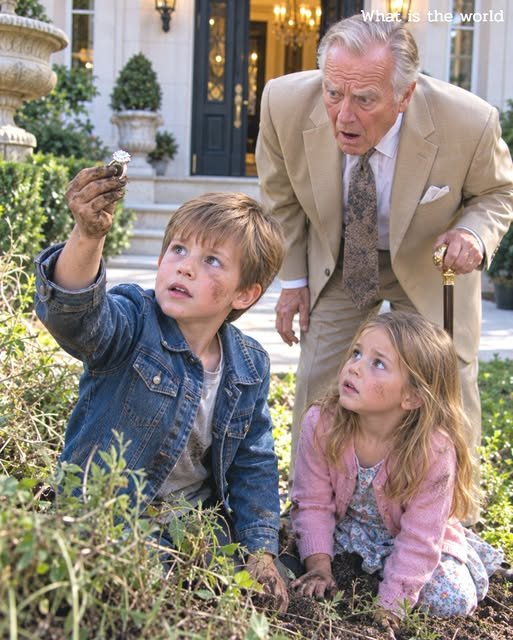
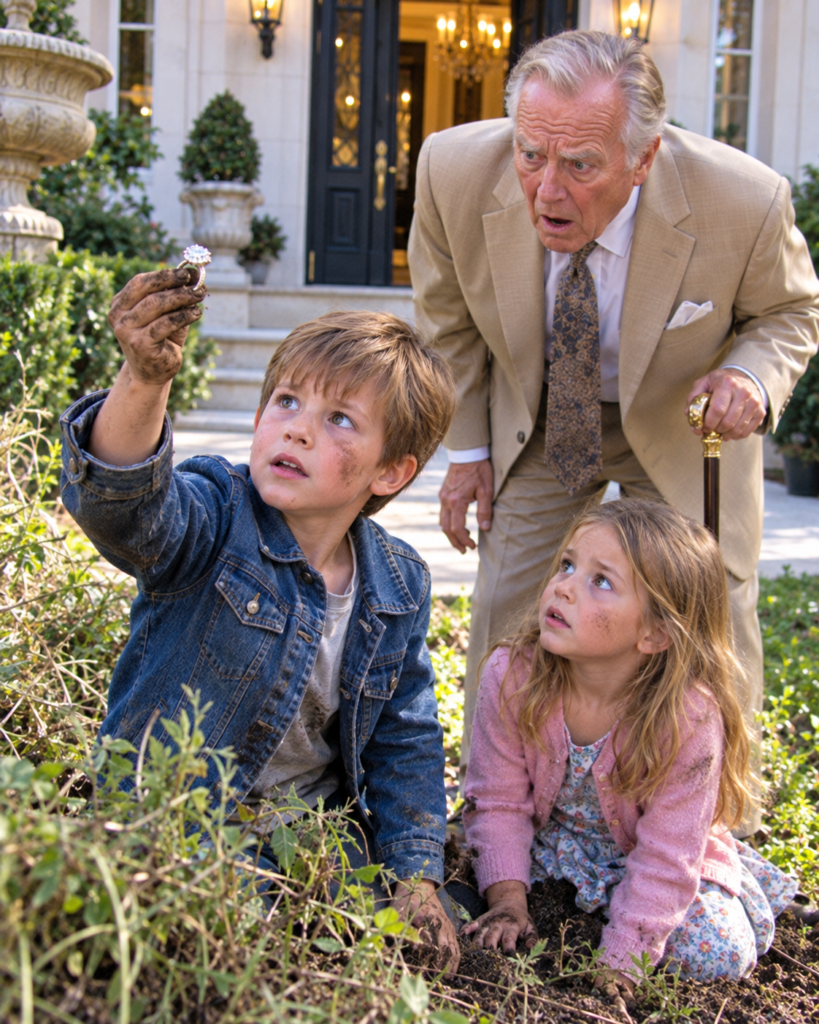
The moment we found Eleanor’s ring beneath the roses.
The afternoon Grace opened Mom’s letter.
But growing older taught me that lives rarely change in one moment.
They change through a series of choices.
Annie choosing to show me the ring instead of hiding it.
Me choosing to return it.
Arthur choosing to call Helen.
Grace choosing, eventually, to hear an explanation she had every reason to avoid.
Arthur choosing to admit that being sorry and making things right were not the same thing.
Grace choosing to accept help without surrendering her independence.
And all of us choosing, little by little, to stop treating the past as instructions for the future.
Grace became a nurse.
Not immediately.
It took years.
There were exams, early mornings, late-night study sessions, and more than one evening when she sat at the kitchen table convinced she had taken on too much.
But she finished.
At her graduation, Annie was twelve and I was fifteen.
Arthur sat beside Helen in the second row.
He complained about the folding chairs.
Helen told him surviving uncomfortable furniture for ninety minutes would build character.
When Grace walked across the stage, Arthur stood before anyone else in our row.
He clapped so hard his hands turned red.
Grace saw him.
Even from across the auditorium, I could tell.
Afterward, outside beneath a bright May sky, Arthur handed her a small box.
Grace eyed it.
“Please tell me this isn’t expensive.”
“It is not.”
She opened it.
Inside was Eleanor’s recovered ring.
Grace immediately shook her head.
“No.”
Arthur smiled.
“I am not giving it to you.”
“Good.”
“I had a replica made.”
He showed her the second ring.
Simple silver.
No diamond.
Engraved inside were two initials.
E.W.
L.F.
Eleanor Whitmore.
Laura Foster.
Grace stared at it.
“The original stays with me,” Arthur said. “The copy belongs to the education fund.”
Grace looked confused.
“Why?”
“So when someone receives help from it, they know two women they never met once believed that another person’s future was worth protecting.”
Grace’s eyes filled.
“That sounds surprisingly sentimental.”
“I’m getting old.”
“You were old when I met you.”
Arthur laughed.
A real laugh.
The kind Annie and I almost never heard during those first months.
By then, the garden at Bellweather Avenue had fully returned.
Not to exactly what it had been.
Some of Eleanor’s plants were gone forever.
New ones took their place.
Arthur allowed Annie to choose sunflowers for the southern wall.
I planted herbs near the greenhouse.
Grace added daisies beside the old roses.
Arthur complained that the colors didn’t match Eleanor’s original design.
Then he helped dig the holes.
The garden became ours without ever stopping being hers.
That seemed right.
Arthur lived many more years.
Long enough to see Annie enter high school.
Long enough to see me graduate.
Long enough to attend the ceremony when Grace became a registered nurse.
He never stopped pretending our arrival at his gate had been a nuisance.
“You ruined a perfectly quiet retirement,” he told us once.
“You hired us,” I reminded him.
“For garden work.”
“You invited us inside.”
“That was a temporary lapse in judgment.”
Helen, who was sitting beside him, said, “His life improved considerably after that lapse.”
Arthur looked at her.
“No one asked you.”
She smiled.
That was family too.
Not the kind created by blood.
The kind built slowly enough that nobody notices exactly when it becomes permanent.
The education fund eventually helped its first student three years after Grace graduated.
A twenty-year-old woman studying medical assisting while caring for her younger brother.
Grace met her once.
She came home quiet afterward.
“What happened?” I asked.
“Nothing bad.”
“Then why are you crying?”
Grace wiped her cheek.
“She reminded me of me.”
I understood.
Arthur did too.
When Grace told him, he sat silently for a long time.
Then he said, “Eleanor’s money finally reached where she meant it to go.”
Grace shook her head.
“Not just Eleanor’s.”
Arthur nodded.
“Not just Eleanor’s.”
I still have the photograph of Dad standing beside those blue trucks.
Arthur gave it to me when I turned eighteen.
On the back, beneath the old sentence about Dad asking the right questions, Arthur added another line.
So did his children.
For a long time, I believed returning the ring was the important thing we did that day.
Maybe it was.
But not because the ring was valuable.
The diamond had nothing to do with it.
Arthur had spent years surrounded by people who wanted things from him.
Influence.
Jobs.
Donations.
Favors.
Introductions.
Then two hungry children walked into his neglected garden, found something worth more money than they had ever seen, and handed it back because it belonged to someone else.
That forced Arthur to look at us differently.
And when he looked at us differently, he finally looked at the unfinished part of his own past.
But we were changed too.
Grace had spent years believing accepting help meant surrendering control.
I believed being useful was how I protected my family.
Arthur believed regret could be managed privately.
We were all wrong in different ways.
Years after that first autumn, I asked Grace why she had kept Arthur’s letters even after refusing his help.
We were sitting in the restored garden.
Arthur was asleep on the porch.
Annie was studying nearby.
Grace smiled.
“I wondered that myself.”
“And?”
She looked toward Eleanor’s roses.
“I think some part of me wanted there to be more to the story.”
“Did you think he was telling the truth?”
“I didn’t know.”
“Then why keep the letters?”
Grace thought about it.
“Because throwing them away would have meant I had already decided.”
That sounded like Grace.
Careful even in anger.
Leaving one door unlocked.
“Do you forgive him?” I asked.
She looked at Arthur.
“Yes.”
“Completely?”
Grace smiled.
“Forgiveness isn’t pretending the past happened differently, Caleb.”
“What is it?”
“For me?”
She thought again.
“It was deciding I didn’t need him to become the man he should have been twenty years ago. I only needed to decide what kind of relationship I wanted with the man he was trying to be now.”
I remembered that answer.
I still do.
Because Arthur never became perfect.
Neither did Grace.
Neither did any of us.
He remained impatient.
She remained stubborn.
I grew into someone who still had trouble asking for help.
Annie became the one who reminded all of us that food tasted better when people sat together.
But the past stopped being a wall.
It became a road behind us.
Visible.
Important.
Impossible to change.
And no longer the only direction we could travel.
Sometimes, when I think about that first morning, I remember my eleven-year-old self standing outside Arthur Whitmore’s iron gate.
I remember rehearsing the words before knocking.
We can clean your garden.
We only want food.
I remember being embarrassed.
I remember hoping nobody from school would see us.
I remember Annie’s hand in mine.
I remember believing we were asking a rich stranger for leftovers.
We had no idea that beneath the weeds was Eleanor’s ring.
No idea that inside the house were letters connecting two families.
No idea that an unopened envelope had been waiting six years for Grace.
And certainly no idea that the suspicious old man staring through the gate already knew our name.
What I understand now is that Arthur hadn’t memorized our address because he was watching us.
He knew it because for years it had sat inside a file he could never bring himself to close.
Frank Foster.
Laura Foster.
Grace.
Caleb.
Annie.
A family attached to a mistake he could not undo.
When Annie and I appeared at his gate, Arthur didn’t recognize us at first.
Not until I said our sister’s name.
Then everything returned.
The letters.
Dad.
The apology never properly delivered.
The offer Grace refused.
Eleanor asking him, years earlier, whether there were some wrongs money could not repair.
That was why he went silent when I asked how he knew where we lived.
He had spent years wondering whether he should knock on our door.
Instead, we knocked on his.
And maybe that was the only way any of us would have been ready to open it.