
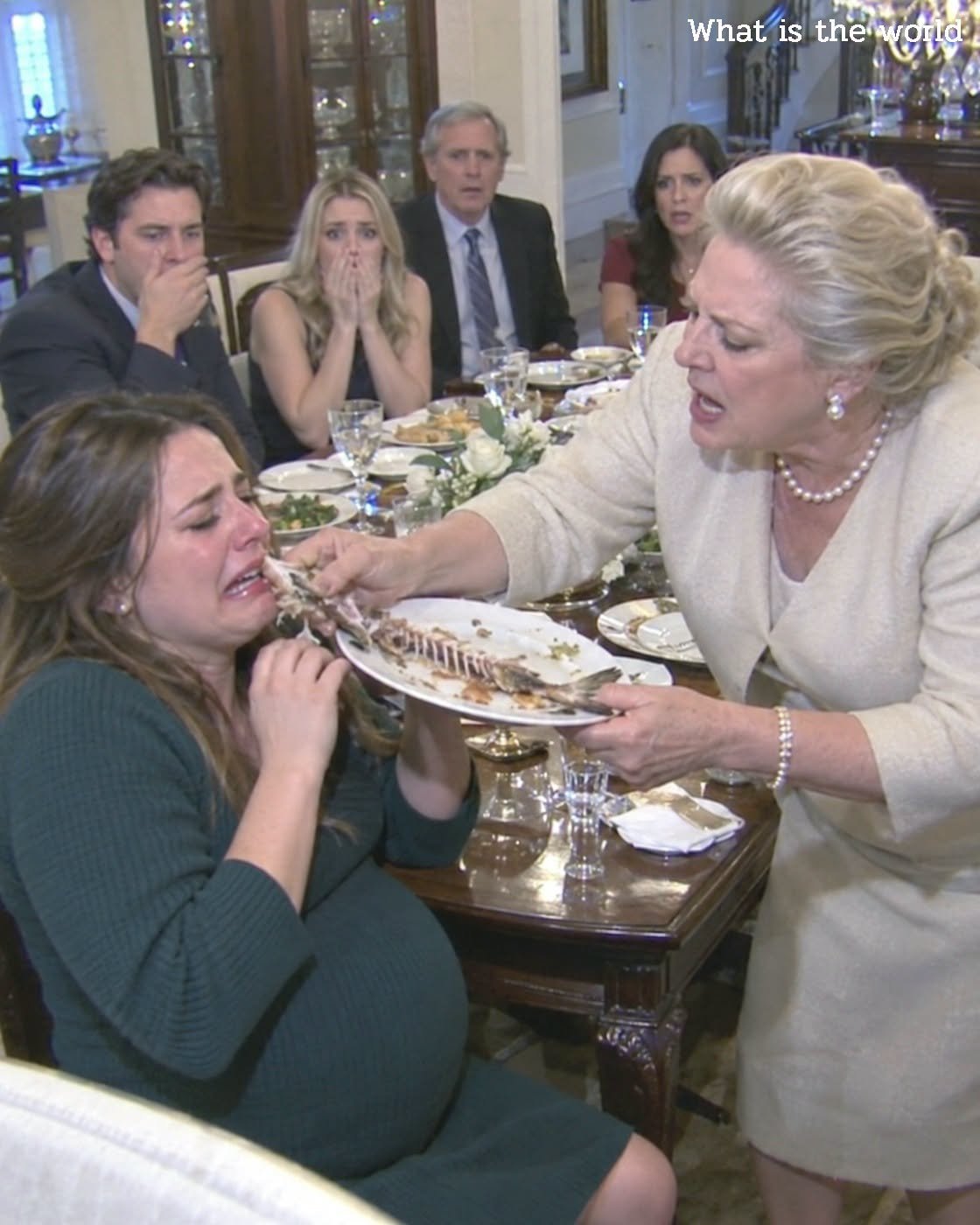
Emma told me Caleb had taken her keys before, and this time she remembered exactly where he put them.
Not in his pocket.
He slid them across the dining table to my mother.
That changed what I was looking at.
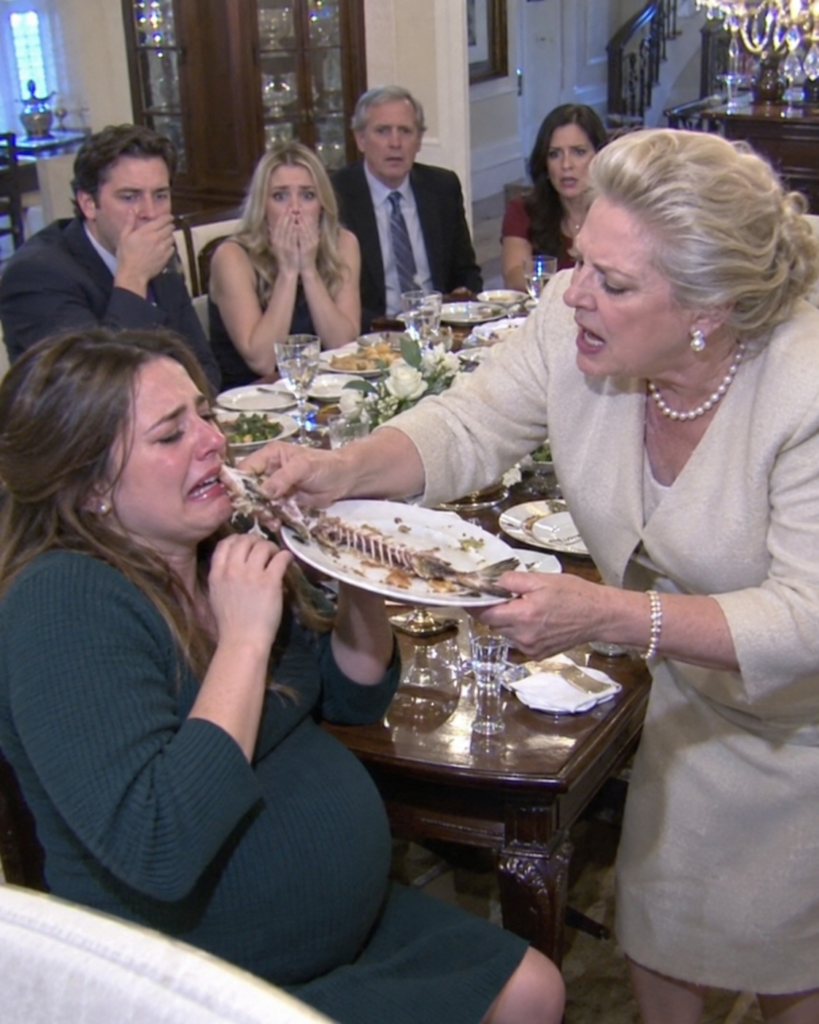
This wasn’t one person losing control while everyone else froze. Emma had tried to leave, and someone had taken away the thing she needed to do it.
I called a locksmith from the hospital hallway and asked him to replace every exterior lock before we came home.
Then Emma gave me permission to save copies of the photographs and the messages she still had.
My mother called twice while I was doing it.
I didn’t answer.
Caleb called next.
I didn’t answer him either.
Then a message appeared from my aunt Denise, one of the six people at dinner:
“Your mother says Emma fell. Please don’t make this worse.”
Emma read it once.
“Keep that,” she said.
A few minutes later, Denise sent another message and deleted it almost immediately.
I had already seen the first four words.
I handed Emma the phone.
She read them, unlocked her own phone, and pulled up a conversation I had never seen before.
Caleb slid the keys across the dining table, and Emma realized they were never meant to help her leave. They were being handed to the one person she was trying to escape.
That small movement changed everything for her husband. Until that moment, he had been trying to understand how a family dinner could turn into something so cruel. But the keys proved there was a plan behind the humiliation.
Three hours earlier, he had walked back into his home expecting to grab a folder. Instead, he found his eight-month-pregnant wife crouched beneath the dining table while his mother forced fish bones toward her mouth.
Six relatives were sitting there watching.
His mother did not look frightened when she was discovered. She acted like she had the right to punish Emma.
“She needs to learn what happens when she embarrasses this family,” she said.
Then Emma coughed, and a thin line of blood appeared on her dress.
He did not wait for explanations. He carried his wife out of the house and took her for medical care. Before anyone could rearrange the scene or remove what had happened, he photographed everything—the plates, the chairs, the table, and the strange details that did not fit a normal dinner.
At the hospital, the pictures became more important than anyone’s excuses.
Every other plate had neatly cut fish pieces. Emma’s plate was different. The food had been moved away, while sharp bones were placed directly in front of her chair. Her water glass was overturned. Her chair had been positioned so she could not easily move backward.
The photographs did not prove who touched each item.
But they proved something else.
They proved the story his family would eventually tell was impossible.
They could not simply say Emma panicked during a normal meal.
The doctor then showed him something he was not prepared to see.
There was an older injury.
An injury Emma had hidden.
The doctor asked a question that immediately changed the conversation.
“Does your mother still have access to your house?”
He answered honestly.
“Yes. She has an emergency key.”
The doctor looked at Emma.
“Is she using that key with your permission?”
Emma’s fingers tightened around the hospital blanket.
She barely shook her head.
That scared him more than anything his mother had said at the dinner table.
He finally understood that the dinner was not the beginning of the problem. It was the moment when everything became impossible to hide.
When he sat beside Emma, he did not call his mother. He did not call the relatives who had watched.
He put his phone face down.
“I’m not calling anyone yet,” he said. “Tell me what you need.”
Emma’s answer was quiet.
“Change the locks. Save every picture. And don’t let your mother know where they’re discharging me.”
For the first time, he stopped looking for an explanation from the people who caused the damage.
He started listening to the person who had been trying to survive it.
Then he asked about the older injury.
Six weeks earlier, while he was working late, his mother had entered their home and criticized Emma for how she was preparing the nursery. The argument moved into the hallway.
His mother shoved Emma against the corner of a dresser.
Then she told Emma the pain was proof she was too emotional to become a good mother.
Emma had almost called him.
But his mother convinced her that nobody would believe her.
She told Emma everyone already thought pregnancy had made her unstable.
“She said they would all believe her,” Emma explained. “She said you’d have to choose between your wife and everyone who raised you.”
He reached for her hand.
Emma pulled it under the blanket.
Not because she hated him.
Because she did not want him to see how badly she was shaking.
“I wasn’t protecting you,” she whispered. “I was trying to make it to the delivery without losing our home, our family, or you.”
He promised the locks would be changed before they returned home. He promised nobody would enter her hospital room without permission.
But one question remained.
Why did six people watch?
Why did nobody stop his mother?
Emma closed her eyes.
“Because they weren’t all just watching,” she said.
“Your brother Caleb took my phone and stood between me and the back door.”
That was the moment he realized the dinner was not just about one person losing control.
Someone had taken away Emma’s ability to call for help.
Someone had made sure she stayed in that room.
When he called a locksmith from the hospital hallway, he also asked Emma for permission to save copies of every photograph and message she still had.
His mother called twice.
He ignored both calls.
Caleb called next.
He ignored that too.
Then a message arrived from Denise, one of the relatives who had been at the table.
“Your mother says Emma fell. Please don’t make this worse.”
Emma read it once.
“Keep that,” she said.
Minutes later, Denise sent another message and deleted it almost immediately.
But it was already seen.
The first four words were enough to show that the family story was already changing.
Emma unlocked her own phone.
She opened a conversation he had never known existed.
And what he saw there explained why she had been afraid to speak.
PART 2
The conversation on Emma’s phone was not between her and a stranger.
It was between my mother and Caleb.
I read the messages twice because my mind refused to accept what I was seeing.
Mom: She won’t leave unless she gets scared enough.
Caleb: What if he comes home?
Mom: He won’t. I checked his schedule.
My stomach turned.
I kept scrolling.
There were messages from six weeks earlier.
My mother had been telling Caleb exactly when I would be working late.
Exactly when Emma would be alone.
Exactly when she planned to come to the house.
And then I found the message that made my hands go cold.
Mom: If she tells him about the dresser, deny everything. Denise will back us up.
I looked at Emma.
“You had these the whole time?”
She nodded.
“I was afraid to show you.”
“Why?”
Her eyes filled with tears.
“Because I didn’t know if you would believe me.”
I didn’t answer immediately.
Not because I doubted her.
Because I was ashamed that she had ever needed to wonder.
I forwarded every message to my own phone, then uploaded copies to a secure drive.
The locksmith called.
“Every exterior lock has been replaced,” he said. “Nobody can use the old keys.”
I thanked him.
Then I turned back to Emma.
“We’re not going home tonight.”
She looked relieved.
The next morning, my mother arrived at the hospital.
She came with Caleb, Denise, and two other relatives.
Security stopped them at the entrance.
My mother demanded to see her daughter-in-law.
“She is carrying my grandchild.”
The security officer calmly asked whether Emma had authorized visitors.
My mother went silent.
Then her phone rang.
It was me.
“I know about the messages,” I said.
There was a long pause.
“What messages?”
“The ones you sent Caleb.”
My mother immediately changed her tone.
“You don’t understand what happened.”
“I understand enough.”
“She disrespected me.”
“She was eight months pregnant.”
“She embarrassed this family.”
“You put fish bones in front of her.”
“That isn’t what happened.”
“You took her phone.”
“I never touched her.”
“Caleb did.”
Silence.
Then I heard Caleb in the background.
“Don’t say anything.”
My mother must not have realized her phone was still connected.
I heard everything.
She whispered, “We need to stick to the same story.”
I ended the call.
That sentence became the last thing I needed.
I met with an attorney that afternoon.
I gave him the photographs.
The messages.
The hospital records.
The locksmith invoice.
And the names of every person who had been inside the house.

He looked through everything carefully.
“You don’t need to convince your family,” he said. “You need to preserve the evidence.”
So that’s what I did.
I stopped arguing.
I stopped explaining.
I stopped answering every call.
Instead, I documented everything.
Two days later, Denise came to my house.
She stood outside the new locked door crying.
“I didn’t know it would go this far.”
I stared at her.
“You watched.”
“I was scared of your mother.”
“So was Emma.”
Denise lowered her head.
Then she handed me a small envelope.
“Your mother told us to delete our messages.”
Inside was a printed copy of the family group chat.
My mother had written:
Everyone says Emma fell.
Caleb replied:
What if she tells him about the keys?
My aunt replied:
Then we all say she was confused.
I felt something inside me finally go quiet.
There was no misunderstanding left.
No family disagreement.
No unfortunate dinner.
There had been a coordinated attempt to control the story before I even walked through the door.
I gave the envelope to my attorney.
Then I went back to the hospital.
Emma was asleep when I entered.
For the first time in days, her face looked peaceful.
I sat beside her until she woke.
“I changed everything,” I whispered.
She looked at me.
“The locks?”
“The locks. The passwords. The emergency contacts. Everything.”
She gave me a tired smile.
“And your mother?”
I took her hand.
“She doesn’t have access to us anymore.”
Three weeks later, our daughter was born.
A healthy baby girl.
We named her Lily.
My mother found out from a relative.
She sent one message.
I am still her grandmother.
I stared at the screen for a long time.
Then I deleted it.
Not because I wanted revenge.
Because I finally understood the difference between forgiveness and access.
Forgiveness, if it ever came, would be mine to decide.
Access to my wife and daughter was not.
Months later, there was a family gathering without us.
My mother reportedly told everyone that I had destroyed the family over a misunderstanding.
Caleb said Emma had manipulated me.
Denise refused to repeat the story.
Because she knew what was in the envelope.
And because she had finally understood that staying silent had consequences too.
I never asked anyone to apologize publicly.
I never posted the photographs.
I never told strangers what happened.
I simply built a life where none of them could reach us without permission.
One evening, Emma and I sat on the porch while Lily slept inside.
Emma rested her head against my shoulder.
“You know what hurts the most?” she asked.
“What?”
“I kept thinking I had to prove I wasn’t crazy.”
I looked at her.
“You never had to prove that.”
She smiled faintly.
“I know that now.”
I looked through the window at our daughter sleeping peacefully.
Then I looked at the new locks on the front door.
Those locks had cost less than a hundred dollars.
But they represented something worth far more.
For years, I had believed family meant keeping the door open.
Now I understood.
Sometimes loving your family meant knowing when to close it.
And when I finally turned the key that night, I wasn’t locking my mother out.
I was locking my wife and daughter safely in.