
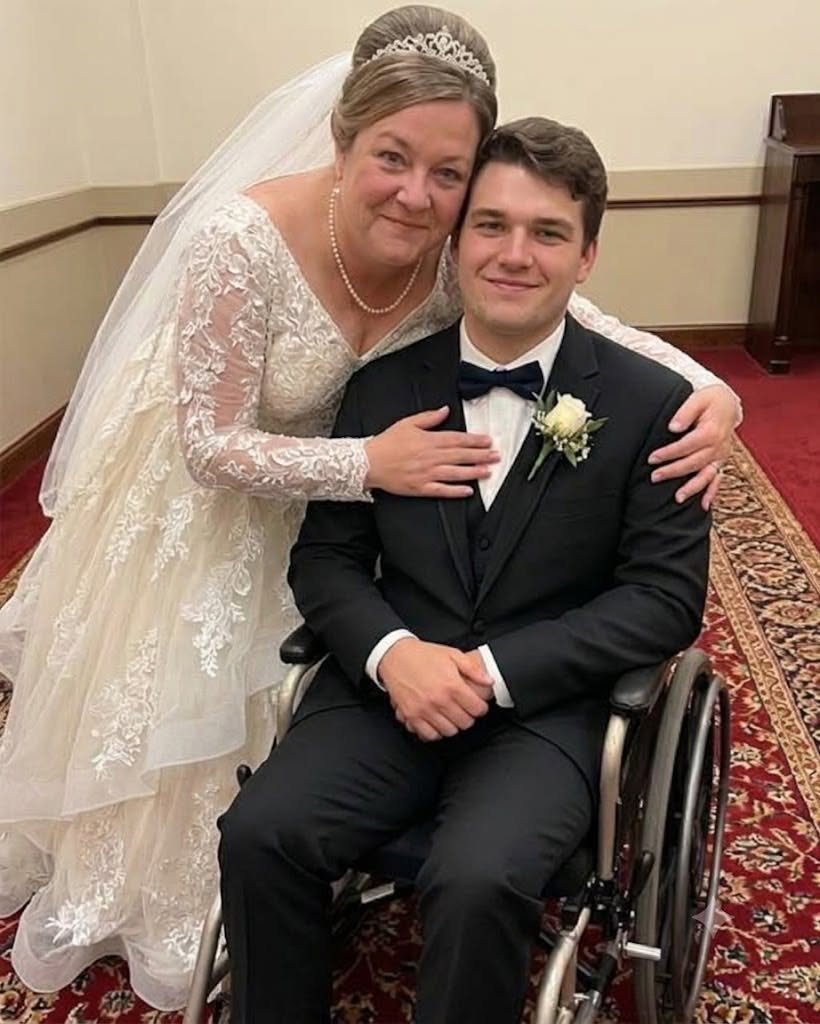
At 43, I never imagined I would marry a 20-year-old millionaire, especially one who had been my patient for 6 months.
But when your only daughter is lying in a hospital bed, unable to wake up, you’ll consider almost anything to save her.
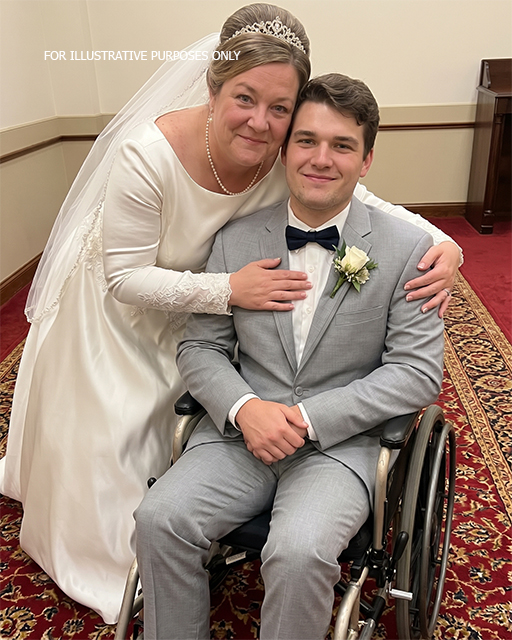
My name is Vivian Hale, and my daughter, Iris, was everything to me.
I raised her alone after her father left us when she was 3. At 19, she was studying nursing, dreaming of becoming someone who could help people when they needed it most.
Then, 8 months ago, a terrible accident destroyed the life we’d built.
Iris was driving home when she stopped to help the victims of a highway crash. While trying to warn approaching motorists, she was struck by another vehicle.
She suffered a severe traumatic brain injury and never regained consciousness.
The doctors did everything they could, but months passed without meaningful improvement.
Eventually, her neurologist suggested a specialized rehabilitation program that included experimental neurostimulation.
“There’s no guarantee she’ll wake up, Mrs. Hale,” he explained. “But we believe she deserves an evaluation. If she’s eligible, it may offer another opportunity for recovery.”
The cost was devastating.
I had already sold my car, emptied my savings, and borrowed money from everyone I knew.
When a private care agency offered me a well-paying position assisting Bennett Vale, a young millionaire, I accepted immediately.
Bennett was only 20.
He had lost both parents in a car crash several months earlier, and a spinal cord injury had left him paralyzed from the waist down.
He lived in a magnificent mansion, surrounded by luxury but almost entirely alone.
His uncle, Roland Vale, managed the family corporation and represented Bennett’s interests in the family trust until Bennett became eligible to take control.
Despite his wealth, Bennett was remarkably kind.
“Please don’t call me sir,” he told me during my first week. “I’m 20, not somebody’s grandfather.”
I laughed for the first time in months.
Over the following 6 months, I helped Bennett with his daily routine, accompanied him to appointments, and read to him when severe migraines kept him in bed.
He learned about Iris and often asked how she was doing.
Sometimes, he sent flowers to her hospital room. Other times, he insisted I leave early so I could spend more time with her.
We became close, although I never thought of our relationship as anything romantic.
Then, one rainy afternoon, Bennett rolled into the kitchen while I was preparing dinner.
“Vivian, I want you to marry me.”
I nearly dropped the knife.
“What?”
“I’m serious.”
“Bennett, you’re 20! I’m old enough to be your mother!”
“But you’re not my mother,” he replied. “You’re the only person in this house I completely trust.”
I stared at him.
“Why would you want to marry me?”
He hesitated.
“There’s something I need to do, and marriage would help me accomplish it. I can’t explain everything yet.”
“That’s not much of an answer.”
“I know. But I care about you, Vivian. And I know what Iris’s treatment will cost.”
My heart tightened.
“What are you saying?”
“If you marry me, I can arrange the money she needs. Not just for the evaluation, but for her continuing treatment.”
I shook my head.
“I won’t sell myself for money.”
“I’m not asking you to. I would never expect anything from you that you don’t freely choose to give.”
I refused.
But that evening, the hospital called.
A place had opened at the rehabilitation center, and Iris needed financial approval within 2 weeks.
Without it, she would lose her opportunity.
For 2 nights, I sat beside my daughter’s bed, wondering how much longer I could keep fighting a battle I couldn’t afford.
On the third morning, I returned to Bennett.
“If I agree, I want everything legally documented.”
He nodded immediately.
Before the wedding, I consulted an independent attorney. She reviewed our agreement, confirmed that Bennett could not control my personal finances, and ensured I would be free to leave the marriage.
Bennett also hired professional nurses to take over his personal care.
His lawyer arranged short-term financing to secure Iris’s rehabilitation evaluation.

I still didn’t fully understand why he needed a wife, but he promised to explain once certain legal documents had been filed.
Against my better judgment, I agreed.
We married 9 days later.
There were only 2 witnesses, a simple cream dress, and a small bouquet of white roses.
When the officiant pronounced us husband and wife, Bennett squeezed my hand.
His fingers were trembling.
That evening, we returned to the mansion.
Bennett asked everyone to give us privacy.
Then he invited me into his study, opened a drawer, and removed a crimson envelope.
Across the front was a name written in neat black letters.
IRIS HALE.
My daughter’s name.
I froze.
“Why is her name on that envelope?”
Bennett looked at me, his eyes filling with tears.
“There’s no going back on what I’ve set in motion now. The marriage is registered, and my attorney has filed the trust documents.”
He placed the envelope in my hands.
“It’s time I told you why I really married you.”
Inside was a photograph.
It showed a young woman wearing a yellow jacket kneeling beside an injured man on the roadside.
The image was grainy, taken from the dashcam of a motorist who had stopped to help.
But I recognized that yellow jacket immediately.
I had bought it for Iris on her 19th birthday.
My hands began shaking.
“Where did you get this?”
Bennett swallowed.
“Your daughter saved my life.”
I stared at him.
“What?”
“The night my parents died, we were driving home from a charity event. Our brakes failed, and the car went off the highway.”
His voice cracked.
“My parents died in the crash. I was trapped inside, unable to move my legs. Smoke was filling the car, and I thought I was going to die.”
He looked at the photograph.
“Then Iris appeared. She called emergency services, climbed down the embankment, and managed to open the damaged door. Another driver helped her pull me away from the wreckage before the fire spread.”
Tears rolled down his cheeks.
“She stayed with me until she heard sirens approaching. Then she went back toward the highway to warn other drivers about the crash.”
I covered my mouth.
“That’s when she was hit?”
He nodded.
“I never saw it happen. I had already lost consciousness.”
My knees weakened, and I sank into a chair.
The police had told me Iris was injured while helping at a highway accident, but nobody had identified the person she rescued. Her collision had been documented separately from the original crash.
I knew Bennett’s parents had died in a car accident, but he rarely discussed it, and I had never connected the 2 tragedies.
I had spent those first terrible weeks in the hospital, barely aware of anything beyond my daughter’s condition.
“Why didn’t you tell me?” I whispered.
Bennett looked down.
“Because there’s more.”
He handed me another document.
It was a private investigator’s report.
“My parents’ crash wasn’t an accident.”
I looked up sharply.
“What?”
“The brakes were deliberately sabotaged.”
The report contained photographs of the damaged brake system, suspicious financial transfers, and statements from employees of a vehicle maintenance contractor.
“My father discovered that Uncle Roland had been stealing money from the company,” Bennett explained. “He was preparing to report him and remove him from his position.”
My stomach tightened.
“You’re saying Roland killed your parents?”
“I believe he arranged the sabotage to stop my father. He didn’t care that my mother and I were in the car too.”
Bennett clenched his hands.
“When I survived, Roland used my injuries and the trust restrictions to keep control of the company.”
“Have you told the police?”
“Yes. I reported my suspicions months ago. But the evidence wasn’t enough to charge him, and the financial records that could prove his involvement were controlled by the company.”
He took a slow breath.
“That’s where our marriage comes in.”
I stared at him.
“My parents created a trust that would give me full control of my inheritance at 25. But they included an unusual provision allowing control to transfer earlier if I married after turning 18.”
“Why?”
“They believed marriage demonstrated a willingness to take responsibility for a family. My attorney confirmed the provision was valid.”
He continued.
“Roland was acting as the company’s manager and one of the trust’s representatives. I couldn’t freely access most of my inheritance or the corporate records while he controlled everything. An independent trustee, however, is legally required to transfer control once the marriage conditions are satisfied.”
He looked at me.
“My lawyer prepared the documents secretly. Once the marriage was registered, he formally requested the transfer. Roland can challenge it, but he can’t simply ignore the trust.”
Suddenly, I understood.
“You married me to get your money.”
Bennett didn’t deny it.
“Partly, yes.”
I felt as though the floor had disappeared beneath me.
Then another thought struck.
“Wait. How did you know Iris was my daughter?”
His silence was unbearable.
“Bennett?”
“I found out who she was while I was recovering. My investigator identified her from the emergency reports.”
“And you knew she was in a coma?”
He nodded.
“Then how did I get this job?”
He closed his eyes.
“I asked the agency to offer it to you.”
I stood up so quickly that my chair scraped against the floor.
“You arranged everything?”
“I wanted to help you. I couldn’t access enough money for Iris’s long-term treatment, but I could pay you a good salary from my personal account.”
“And you never told me?”
“I was afraid you’d refuse the job. Later, when I began investigating Roland, I was afraid he’d discover what I knew.”
I stared at him through tears.
“For 6 months, you watched me cry over my daughter. You knew she had saved your life, and you said nothing!”
“I know. I’m sorry.”
“You used me!”
He lowered his head.
“I did. I convinced myself I was protecting you, but I was also protecting my plan.”
I turned away, trembling.
Then he spoke again.
“Vivian, please look at the last page.”
Inside the envelope was a statement from the paramedic who had treated Iris.
According to his report, she had briefly remained conscious after being struck.
Despite her injuries, she repeatedly asked whether the young man she rescued had survived.
“Is he okay?” she kept whispering.
The paramedic assured her Bennett was alive and receiving help.
Only then had she stopped trying to speak.
I broke down.
Even while fighting for her own life, my daughter had been worried about someone else.
Bennett waited until I could look at him again.
“I can’t undo what I hid from you,” he said quietly. “But I can make sure Iris receives the care she deserves.”
He explained that the short-term loan had secured her initial evaluation. Once the trust assets became available, his attorney would establish an independently administered medical fund for her rehabilitation.
“And if I divorce you?” I asked.
“The fund will still be hers. I won’t make her treatment dependent on our marriage.”
I studied his face.
“Why?”
“Because she saved my life, Vivian.”
His voice trembled.
“And because somewhere during those 6 months, I fell in love with you.”
I looked away.
“You’re 20, Bennett. And you’ve been lying to me since the day we met.”
“I know. I’m not asking you to forgive me tonight.”
I didn’t.
I packed a bag and went to stay with my sister.
For weeks, I considered ending the marriage.
Bennett never tried to stop me.
Meanwhile, Roland discovered what had happened and immediately challenged the trust transfer, claiming Bennett was being manipulated by an older woman who wanted his fortune.
But Bennett’s independent legal assessments, our marriage agreement, and the trust’s explicit terms defeated his attempt to block the transfer.
Once Bennett gained control, his lawyers secured the corporate records and handed the relevant evidence to police.
Investigators traced payments from Roland’s associates to the contractor responsible for maintaining the family’s car.
One employee eventually cooperated, providing messages and financial records that linked Roland to the sabotage.
Roland and 2 accomplices were arrested.
The criminal proceedings lasted more than a year, but Roland was ultimately convicted for his role in the conspiracy that killed Bennett’s parents.
Bennett finally had justice.
And he kept his promise to my daughter.
As soon as the trust assets were transferred, his attorney established the medical fund. My own lawyer verified that it was legally protected and would remain available regardless of what happened to our marriage.
Iris began her specialized rehabilitation.
There were no overnight miracles.
For months, her progress was painfully slow.
Then she began turning toward familiar voices.
Later, she responded to simple instructions.
The first time she deliberately squeezed my hand, I cried until I couldn’t breathe.
Bennett occasionally visited, always asking permission first.
He never mentioned our marriage or asked me to return.
He simply sat beside Iris and spoke to her.
Sometimes, he told her about his physical therapy or the books he was reading.
Other times, he quietly thanked her for saving him.
I began to see something I hadn’t noticed before.
Bennett wasn’t helping Iris to keep me beside him.
He was helping because he believed it was the right thing to do.
Even after I moved into my own apartment and resumed working, he continued supporting her rehabilitation without asking anything in return.
Gradually, we started talking again.
At first, only about Iris.
Then about his work, my life, and the loneliness we’d both experienced.
He apologized without making excuses.
I told him that loving someone didn’t give him the right to make decisions for them.
He listened.
Over time, we attended counseling and began rebuilding the trust he’d broken.
Almost 2 years after the accident, Iris had regained enough awareness to communicate in short sentences.
She still struggled with fatigue, memory problems, and physical coordination, but she was making progress.
One afternoon, Bennett visited her rehabilitation center.
Iris studied him for a moment.
“You’re Bennett?” she asked softly.
He nodded.
“Yes.”
She looked at his wheelchair.
“Mom told me about the accident.”
He smiled sadly.
“I’ve wanted to thank you for a very long time.”
Iris was quiet.
Then she whispered, “I remember smoke.”
Bennett’s eyes filled with tears.
“You helped get me out.”
She looked at him.
“You’re okay?”
He nodded.
“Because of you.”
Iris reached for his hand.
For several moments, neither spoke.
Watching them together, I realized that although the accident had taken so much from all of us, it had also connected our lives in a way none of us could have imagined.
By then, Bennett and I had spent many months rebuilding our relationship.
I had my own income, my own choices, and no financial reason to stay married.
But somewhere along the way, I had fallen in love with him.
Not because he was wealthy.
Not because he had helped Iris.
But because he had taken responsibility for his mistakes and worked patiently to become someone I could trust.
On our second wedding anniversary, Bennett invited me to the mansion’s garden.
Iris was visiting that afternoon, resting on the terrace after her therapy session.
Bennett waited beneath the old oak tree.
When I approached, he smiled and handed me a crimson envelope.
I stopped.
“Another one?”
He laughed nervously.
“I promise this one won’t turn your world upside down.”
Inside was a photograph of the 3 of us smiling together.
Behind it was a handwritten letter.
Vivian,
The first time I asked you to marry me, I was hiding the truth. I thought I could solve everything by controlling the people and circumstances around me.
I was wrong.
You taught me that love isn’t about saving someone or making their choices for them. It’s about honesty, respect, and being there even when you have nothing to gain.
Today, I’m not asking you to stay because your daughter needs treatment or because I need control of my inheritance.
I’m asking because I love you.
If you’re willing, I’d like us to start again, with no secrets and no promises we cannot keep.
Will you choose this life with me?
I looked up through my tears.
“Are you proposing again?”
He smiled.
“Not exactly. We’re already married.”
“Then what are you asking?”
“For another chance to be the husband you deserve.”
I knelt beside his wheelchair and wrapped my arms around him.
“You already have that chance,” I whispered. “Just don’t waste it.”
He held me close.
Behind us, Iris called from the terrace.
“Mom! Are you two crying again?”
We both laughed.
My daughter still had a long road ahead of her. Bennett would always face challenges from his injuries. And our marriage would never be an ordinary one.
But for the first time in years, I wasn’t afraid of the future.
I had married Bennett because I was desperate to save my daughter.
He had married me because he needed control of his inheritance, wanted justice for his parents, and hoped to repay the girl who had saved his life.
Neither of us had understood what our marriage would become.
But 2 years later, standing beneath that oak tree, I finally realized something.
The first time, we married because we believed we had no other choice.
The second time, we chose each other because we finally did.