
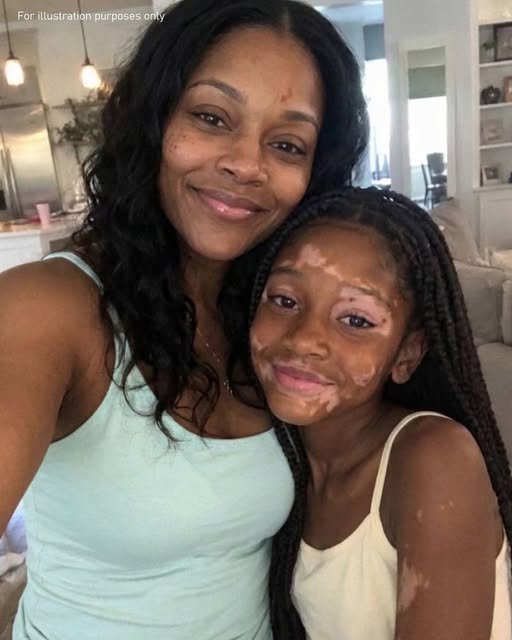
My eight-year-old daughter, Maisie, has vitiligo, a condition that causes white patches to appear on her skin.
The patches first appeared when she was four. At first, there were only a few small spots on her hands, but over time, they spread to her neck, cheeks, and around one eye.
My husband, Russell, and I have always told her she’s beautiful exactly as she is.
Unfortunately, not everyone has been as kind.
Some children at school have made comments about her appearance, and I’ve had to comfort her more times than any mother should.
Once, she came home crying because a classmate had asked whether her skin was dirty.
I sat beside her on the couch and explained again that there was nothing wrong with her skin.
“But why doesn’t anybody else look like me, Mommy?” she asked.
I held her close.
“Everybody looks different in some way, sweetheart. Your skin just makes those differences easier to see.”
It took time, but Maisie gradually became more comfortable with her appearance.
She loved drawing, playing with her friends, and wearing colorful dresses. Most days, she was the same cheerful little girl she’d always been.
My younger sister, Faye, had always been especially close to her.
When Maisie was little, Faye often babysat her, took her to the park, and brought her small presents whenever she visited.
She had even defended Maisie when another child made fun of her skin at a family picnic.
“There’s nothing wrong with how she looks,” Faye had told the boy firmly.
I remember feeling grateful that my daughter had an aunt who loved her so fiercely.
That’s why I was completely unprepared for what happened before Faye’s wedding.
She was marrying her fiancé, Jonas, after four years together.
Maisie was thrilled about the ceremony.
She’d spent weeks asking questions about the flowers, cake, and wedding music.
When Faye told her she could wear a pretty pink dress, Maisie practically danced around our living room.
“Mommy, do you think Aunt Faye will like it?”
“Of course she will.”
Maisie carefully hung the dress in her closet, checking it almost every evening.
She even made a handmade wedding card for her aunt, decorating it with flowers and little hearts.
Then, one week before the wedding, Faye called me.
“Cecily, I need to talk to you about Saturday.”
“Sure. Is something wrong?”
She hesitated.
“I think it would be better if you came without Maisie.”
I frowned.
“What do you mean?”
“Just you and Russell. It’s going to be a very formal ceremony, and I don’t think Maisie should attend.”
I was confused.
“Faye, she’s been excited about this for months. You told her yourself that she could come.”
My sister sighed impatiently.
“Look, we’re spending a fortune on the photographer. I don’t want people staring at Maisie’s skin or asking questions during the ceremony.”
For a moment, I thought I’d misunderstood her.
“Excuse me?”
“You know what I mean. Her condition draws attention, and I want the pictures to look a certain way.”
I felt sick.
“Are you seriously telling me my daughter’s skin would ruin your wedding photographs?”
“Please don’t make this into something bigger than it is.”
“She’s your niece!”
“And it’s my wedding, Cecily. I should be allowed to decide how everything looks.”
I couldn’t believe I was speaking to the same woman who’d once told Maisie she never needed to hide her skin.
“Does Jonas know you’re asking this?”
“He’s busy with the wedding arrangements. Don’t drag him into it.”
Then she added something that hurt even more.
“Maisie probably won’t even remember the wedding in a few years.”
I hung up before I said something I couldn’t take back.
Russell found me crying in the kitchen that evening.
When I told him what Faye had said, he was furious.
“Then we’re not going,” he replied. “I’m not taking our daughter somewhere she’s treated like that.”
I agreed.
But later that night, while putting away laundry, I noticed Maisie’s pink dress hanging neatly in her closet.
She’d placed her little wedding card on the shelf beneath it.
I picked up the card and opened it.
Inside, she’d drawn herself holding hands with Faye beneath a large wedding arch.
Across the top, she’d written, “I love you, Aunt Faye. You’re going to be the prettiest bride!”
I sat on the edge of her bed, trying not to cry.
For three days, I barely spoke to my sister.
Then I started looking through our old family photographs.
I found pictures of Faye holding Maisie as a newborn, helping her blow out birthday candles, and teaching her how to ride a bicycle.
There were photographs of them baking cookies, playing in the backyard, and laughing together at Christmas.
I printed them all.
Then I found an old photograph of Faye and me when we were children.
That picture gave me an idea.
I spent the next two evenings putting together a large photo album.
Russell knew I was upset, but I didn’t tell him exactly what I was planning.
On the wedding morning, I left Maisie at home with him.
I’d told her that there had been a change in the arrangements and that we would celebrate with Aunt Faye another time.
She was disappointed, but she didn’t argue.
Before I left, she handed me the card.
“Can you give this to Aunt Faye?”
I kissed her forehead.
“Of course, sweetheart.”
The ceremony was already underway when I arrived at the church.
I stood near the entrance for a moment, watching my sister.
Faye looked beautiful in her white wedding gown. Her hair was carefully arranged, and she was smiling at Jonas as the priest spoke.
I almost turned around.
Part of me wanted to leave the album at the reception desk and go home.
But then I remembered Maisie standing in front of her mirror, proudly showing me the pink dress she wouldn’t be allowed to wear.
I took a breath and stepped forward.
“Excuse me, Father. I’m sorry to interrupt, but I have something important to give my sister.”
The priest stopped speaking.
Every head turned toward me.
Faye’s smile disappeared.
“Cecily? What are you doing?”
I walked slowly down the aisle, carrying the album.
“It’s a wedding gift. I thought you might want to see it before the ceremony continues.”
Her eyes narrowed.
“Can this wait?”
I looked at her.
“You told me how important your wedding pictures were, so I put together some photographs I thought you’d appreciate.”
Jonas looked confused.
“What photographs?”
I opened the album.
The first picture showed Faye holding Maisie just hours after she was born.
“You remember this?” I asked.
Faye glanced at the photograph.
“Of course I do.”
“You told me that becoming an aunt was one of the happiest moments of your life.”
“Cecily, please.”
I turned the page.
There was Faye helping Maisie take her first steps, then another photograph of them sitting together on our porch.
I showed Jonas a picture of Faye kissing Maisie’s cheek.
“These are wonderful,” he said. “But why are you showing them now?”
“Because Maisie isn’t here today.”
He frowned.
“I thought she was sick.”
I looked at Faye.
“Is that what you told him?”
My sister’s face turned red.
“Jonas, we can discuss this later.”
He looked between us.
“Faye, what’s going on?”
I explained the phone call.
I told him that Faye had asked me to leave Maisie at home because she was worried her skin would attract attention in the photographs.
Jonas stared at his bride.
“Tell me you didn’t say that.”
Faye gripped her bouquet.
“I didn’t mean it the way she’s making it sound.”
I shook my head.
“You said Maisie’s skin would spoil the look of your pictures.”
A whisper spread through the guests.
Faye looked around helplessly.
“I just wanted one day where everything looked perfect! Is that really so terrible?”
Jonas stepped back.
“She’s eight years old, Faye.”
“I know how old she is!”
“Then why would you exclude her?”
My sister didn’t answer.
I had intended to embarrass her when I arrived.
But looking at her standing there, frightened and angry, I suddenly felt more sadness than satisfaction.
I remembered how much she’d once loved Maisie.
And I couldn’t understand when that love had become less important than a photograph.
“There’s something else I want you to see,” I said.
I turned to a picture taken three years earlier.
Maisie’s vitiligo had become more noticeable that summer, and she’d started asking why her skin was changing.
At a family barbecue, one of our relatives suggested using makeup to cover the patches before taking pictures.
Faye had immediately objected.
“She’s a beautiful little girl. Why would we cover anything?”
She’d taken Maisie onto her lap and asked me to photograph them together.
On the back of the original picture, she’d written a message.
I had copied it into the album.
I turned the page toward her.
“Read what you wrote.”
Faye looked down.
Her lips trembled.
I read it aloud.
“To my beautiful Maisie. Never let anyone make you feel ashamed of yourself. Love, Aunt Faye.”
Jonas looked at her.
“You wrote that?”
She nodded.
I turned another page.
This time, the photograph showed two young girls standing beside a birthday cake.
One was me, aged eleven.
The other was Faye, who was seven.
She had a small scar near her eyebrow from an accident when she was younger.
For years, she’d hated that scar.
Our mother often suggested that Faye turn her face slightly when we took family photographs.
She hadn’t meant to hurt her, but Faye always became upset.
I remembered one afternoon when Mom had tried to move Faye behind me so the scar wouldn’t show.
I’d refused.
“If Faye can’t stand beside me, I don’t want to be in the picture either.”
Eventually, Mom let us stand together.
In the photograph, Faye was holding my hand tightly.
I showed it to her.
“Do you remember this?”
She stared at the picture.
Then her eyes filled with tears.
“You wouldn’t let Mom move me.”
I nodded.
“Because there was nothing wrong with your face.”
Faye covered her mouth.
“I remember.”
I looked at her carefully.
“I spent so much of our childhood telling you that your scar wasn’t something to hide. I never imagined I’d have to protect my daughter from you.”
She began crying.
Jonas stood beside her, looking deeply troubled.
“Faye,” he said quietly, “you know how it feels when someone makes you ashamed of your appearance.”
“I know.”
“Then why would you do that to Maisie?”
She wiped her cheeks.
“I don’t know. I’ve been so worried about the wedding.”
I closed the album.
“There’s one last thing.”
On the final page was a photograph of Maisie’s pink dress hanging in her bedroom.
Beside it was the wedding card she’d made.
I carefully removed the card and handed it to Faye.
“She made this for you two weeks ago. She was planning to give it to you after the ceremony.”
Faye opened it.
Her face crumpled when she saw the drawing.
“She was so excited,” I said. “Yesterday, she asked whether she could wear the dress to school since she couldn’t wear it here.”
Faye began sobbing.
“Does she know why I didn’t want her here?”
“Not yet. I couldn’t bring myself to tell her.”
Jonas gently took the card from Faye and looked at it.
For a moment, nobody spoke.
Then he turned toward the priest.
“Father, could we have a few minutes alone?”
The priest nodded.
Jonas took Faye’s hand and led her toward a small room beside the altar.
I stood there feeling suddenly exhausted.
I hadn’t expected to feel proud of what I’d done.
And I didn’t.
I apologized to the priest and the guests for interrupting the ceremony.
Then I placed the album on a nearby pew and left.
Russell was waiting for me when I got home.
He knew immediately that something had happened.
I told him everything.
He listened quietly while I explained the photographs, the argument, and Jonas’s reaction.
When I finished, he sighed.
“I understand why you did it, Cecily.”
“But?”
“I wish you’d told me. I would’ve gone with you.”
I sat beside him.
“I didn’t know whether you’d try to stop me.”
He took my hand.
“I might have asked you to think about it first. But I wouldn’t have asked you to pretend what Faye said was acceptable.”
I leaned against his shoulder.
“Do you think I made things worse?”
“I don’t know. Maybe you gave her something she needed to hear.”
I looked toward the staircase.
Maisie was upstairs playing with her dolls.
“She still doesn’t know why she wasn’t invited.”
Russell nodded.
“We’ll need to tell her.”
That evening, when Maisie asked whether Faye had liked her card, I told her I’d given it to her aunt.
“Did she smile?”
I hesitated.
“She cried a little, sweetheart.”
Maisie looked surprised.
“Why?”
“Because she loves you. And because she knows she hurt your feelings.”
My daughter looked down at her hands.
“Did I do something wrong?”
I pulled her onto my lap.
“No, honey. You didn’t do anything wrong.”
Faye called three days later.
I nearly ignored her number.
When I finally answered, she sounded exhausted.
“Cecily, can we talk?”
I sat down.
“I’m listening.”
She told me that Jonas had been deeply upset after learning why Maisie hadn’t attended.
They’d spent nearly an hour talking privately before deciding to continue the wedding.
“He said he couldn’t understand how I could treat Maisie that way,” Faye admitted.
I stayed quiet.
“At first, I was angry with you. I thought you’d ruined the day.”
“And now?”
She sighed.
“I looked through the album that night.”
Her voice became shaky.
“I’d forgotten so many of those pictures. Especially the one of us when we were little.”
I waited.
“I still hate that scar sometimes,” she admitted. “I know it’s barely noticeable now, but I always see it first in photographs.”
“I remember.”
“I spent months worrying about how I’d look in my wedding pictures. Every little detail started bothering me.”
She began crying.
“And somehow, I started treating Maisie’s skin as another thing that would look wrong.”
I felt tears filling my eyes.
“Faye, she’s a child. She loves you.”
“I know. That’s what makes it so awful.”
For several moments, neither of us spoke.
Then she whispered.
“Can I apologize to her?”
“Yes, but you need to understand something. She might not forgive you immediately.”
“I understand.”
“And don’t expect her to comfort you because you’re crying.”
Faye agreed.
Before ending the call, I told her I wished I’d handled the confrontation differently.
She was quiet for a moment.
“I wish you hadn’t interrupted the ceremony,” she admitted.
“So do I. But I still needed you to understand what you’d done.”
“I know.”
That weekend, Russell and I sat down with Maisie.
We explained that Faye had made an unfair decision about the wedding and wanted to apologize.
Maisie listened carefully.
Then she looked at me.
“Was it because of my white spots?”
My heart sank.
“Yes, sweetheart.”
Her eyes filled with tears.
“But Aunt Faye said my skin was pretty.”
“I know.”
“Does she think it’s ugly now?”
I hugged her.
“No, honey. She was wrong to make you feel that way. Your skin hasn’t changed anything about who you are.”
Maisie cried against my shoulder for a while.
Then she asked whether Faye still loved her.
“I’m sure she does,” I said. “But she needs to show you that by treating you better.”
When Faye arrived the following afternoon, Maisie was sitting beside Russell on the couch.
My sister came without flowers or presents.
She looked nervous.
“Hi, Maisie.”
“Hi.”
Faye sat in the chair opposite her.
“I wanted to tell you I’m sorry.”
Maisie didn’t answer.
“I was worried too much about how my wedding photographs would look. I told your mommy not to bring you, and that was a very hurtful thing to do.”
My daughter looked at her.
“Because of my skin?”
Faye nodded.
“Yes. And I was completely wrong.”
Maisie studied her aunt’s face.
“Why didn’t you want people to see me?”
Faye started crying.
“I don’t have a good answer, sweetheart. I was being selfish.”
She wiped her eyes.
“I love you, Maisie. And there’s nothing wrong with your skin. I should’ve remembered that.”
Maisie looked down at her lap.
“I wanted to wear my pink dress.”
“I know.”
“I wanted to give you my card.”
Faye nodded.
“I still have it. I put it on my dresser.”
For a while, neither of them spoke.
Then Maisie asked whether she could go upstairs.
“Of course,” I said.
She left without hugging her aunt.
Faye watched her go.
“I really hurt her.”
I nodded.
“Yes, you did.”
She wiped her face.
“What can I do?”
“Give her time.”
Over the following months, Faye made a genuine effort to rebuild her relationship with Maisie.
She didn’t demand hugs or insist on spending time alone with her.
Sometimes she came over for dinner. Other times, she simply called to ask how Maisie was doing.
There were days when my daughter happily talked to her aunt, and others when she barely spoke.
Faye accepted both.
Jonas was patient too. He’d always been fond of Maisie, and he continued treating her with the same warmth as before.
One Saturday, nearly four months after the wedding, Faye came over for a family dinner.
Maisie surprised us by coming downstairs wearing her pink dress.
I’d kept it carefully stored in her closet, hoping she’d eventually have another reason to wear it.
“Mommy, can we take pictures tonight?” she asked.
I smiled.
“Of course.”
After dinner, we gathered near the living room window.
Faye stood beside Jonas while Russell adjusted the camera.
Maisie hesitated near the couch.
Then she looked at her aunt.
“Can I stand next to you?”
Faye’s face softened.
“I’d love that, sweetheart.”
Maisie walked over and took her hand.
I watched as my sister carefully placed an arm around her niece.
Neither of them said anything.
When Russell raised the camera, Faye smiled naturally, with the little scar beside her eyebrow clearly visible.
Maisie stood proudly in her pink dress, her white patches showing on her hands and face.
“Everybody ready?” Russell asked.
They nodded.
He took the picture.
Later that evening, Faye asked me to send her a copy.
A week afterward, she invited us over for dinner.
When we arrived, I noticed the photograph standing in a frame on her mantel.
Maisie spotted it immediately.
“Aunt Faye! That’s me!”
Faye smiled.
“It is.”
“Do you like that picture?”
My sister knelt beside her.
“Very much. It’s one of my favorites.”
Maisie smiled and took her aunt’s hand.
Watching them together, I remembered the little girl Faye had once been, holding my hand because she was afraid people would notice the scar on her face.
I was glad my sister had finally understood what I’d tried to remind her of that day in church.
And I was even more grateful that Maisie was slowly beginning to feel comfortable around the aunt she’d loved so much.