
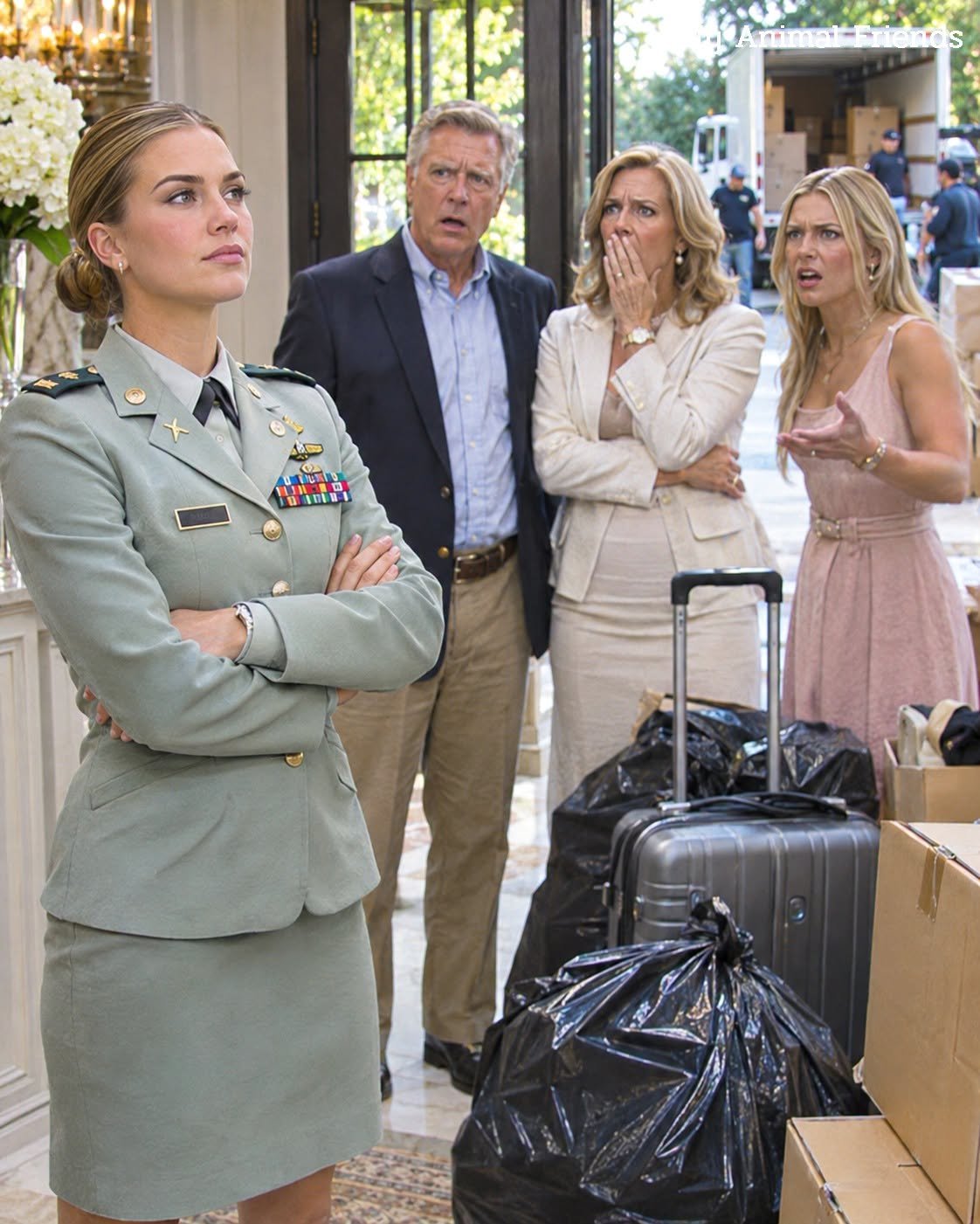
“You were Grandpa’s responsibility,” she said. “He’s gone, so the house belongs to us now.”
For several seconds, no one moved.
The voice from inside the study had been calm, almost gentle.
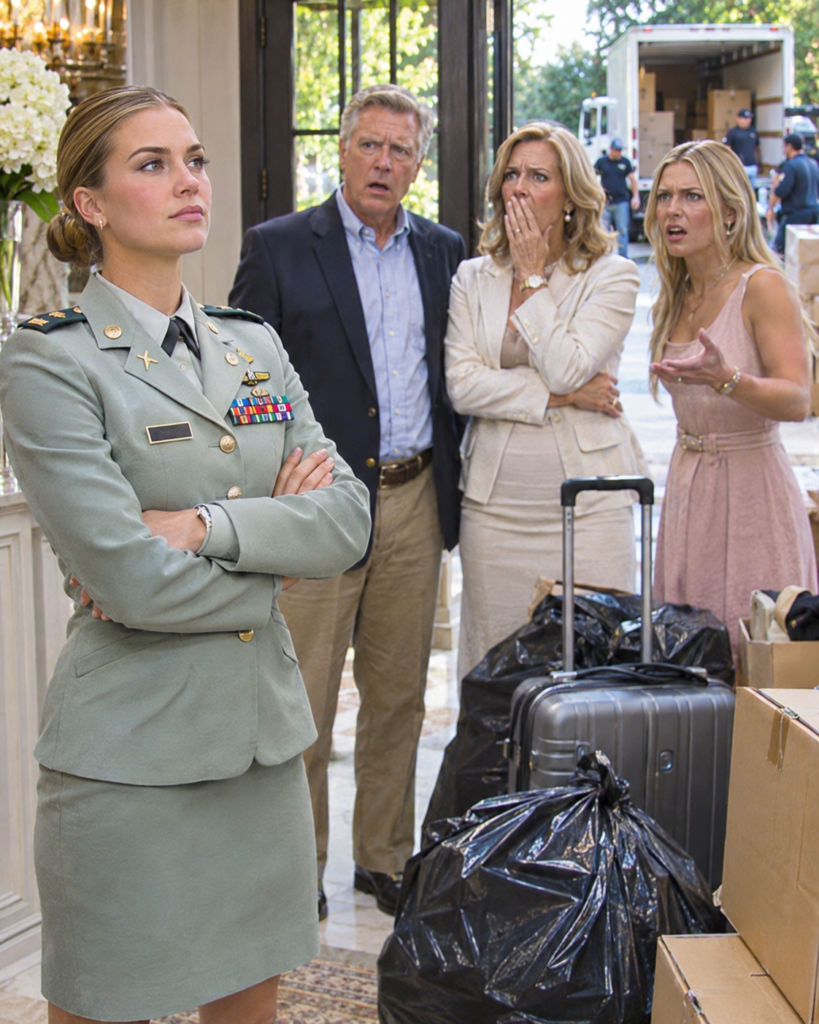
“Evelyn,” it said again. “You took your time.”
My mother’s face lost what little color it had.
Dad stepped forward. “Who are you?”
The study door opened wider.
A woman stood behind it, perhaps in her late sixties, wearing a dark green cardigan and holding a slim leather folder against her chest. Her silver hair was pinned neatly at the back of her head. I recognized her, though I had never met her.
She had been at the funeral.
She had sat alone beneath the oak tree, close enough to see everything but far enough to avoid conversation.
“Marian Bell,” she said. “Your father’s attorney.”
Dad gave a short, disbelieving laugh.
“Our attorney?”
“No,” Marian replied. “Harold’s.”
She looked at me then, and her expression softened.
“Clara, please come in. Your grandfather asked me to wait until you opened this door yourself.”
Mom recovered enough to speak.
“You had no right to enter this house.”
“Actually, I did,” Marian said. “Harold gave me written permission to be here after his death. The document is in this folder, along with several others that concern this property.”
Dad’s eyes narrowed.
“What documents?”
Marian did not answer him immediately. She stepped aside and allowed me into the study.
I had avoided this room since Grandpa died.
It smelled exactly as it always had—cedar, old paper, and the faint coffee scent that seemed to cling to everything he owned. His desk stood beneath the window, papers stacked in careful piles. His reading glasses rested beside an unopened envelope. A green-shaded lamp cast a warm circle of light across the polished wood.
Nothing had been disturbed.
Not even the brass clock on the mantel, which had stopped at 3:12.
I crossed the threshold slowly.
Behind me, I heard Chloe whisper, “This is ridiculous.”
Marian closed the door partway, though not before Mom pushed her way inside. Dad and Chloe followed.
The room suddenly felt smaller.
Marian placed the folder on the desk.
“Harold wanted you to hear this before anyone else,” she told me. “He also wanted your parents present.”
Mom folded her arms.
“I’m not sitting through some emotional performance.”
“This isn’t a performance,” Marian said. “It’s estate business.”
Dad glanced toward the windows. “Then get on with it.”
Marian opened the folder and removed a single sheet of paper.
“Before we discuss the house, there is a letter addressed to Clara.”
My throat tightened.
“A letter?”
“Your grandfather wrote it two weeks ago. He asked me to deliver it only after his funeral, and only when your parents arrived to claim the property.”
Mom’s jaw tightened.
“That’s absurd. He was ill. He probably wasn’t thinking clearly.”
Marian’s gaze sharpened.
“Harold was assessed by two physicians during the month before his death. Both confirmed that he was mentally competent and fully aware of the decisions he made.”
No one replied.
Marian handed me the letter.
The envelope was cream-colored, my name written across the front in Grandpa’s familiar, sloping handwriting.
I held it for a moment without opening it.
The last letter he had written to me was sitting in my hand, while my parents stood nearby arguing over the house he had left behind.
My fingers trembled as I broke the seal.
Dear Clara,
If you are reading this, then you have already done the hardest thing: you have stood in this house without me.
I wish I could have given you more time before the rest of them came back into your life. I know this morning has hurt you. I know it may feel as if they have returned only to take what they believe they are owed.
You are allowed to feel angry.
But do not let anger choose your future for you.
I raised you because you were my granddaughter, not because I was trying to punish your parents. I wanted you to grow up knowing that love could be steady. I hope I gave you that.
There are things I should have told you sooner. Some were mine to carry. Some were not.
Please listen to Marian before you make any decision about this house.
And remember this: ownership is not the same as belonging.
Love,
Grandpa
By the time I reached the end, my vision had blurred.
I lowered the page.
Mom made an impatient sound.
“Well?”
I folded the letter carefully. “He wants me to listen.”
“He always filled your head with stories,” she said. “That doesn’t change the law.”
Marian opened another section of the folder.
“Your father was correct about one thing. The law matters. That is why Harold arranged everything formally.”
She removed a certified copy of a will.
“The original was signed and witnessed eleven months ago. It names Clara as the primary beneficiary of the residence at 18 Willow Lane, along with the contents of the property.”
The silence that followed was so complete that I could hear the clock ticking in the hallway.
Chloe stared at Marian.
“But that house belongs to our family.”
“It belonged to Harold,” Marian said. “He was free to leave it to whomever he chose.”
Dad took a step toward the desk.
“This will must be challenged.”
“You may consult another attorney,” Marian replied. “But the will is straightforward, and Harold’s medical records support its validity.”
Mom shook her head.
“He promised us this house.”
“Did he?” Marian asked quietly.
Mom’s expression changed—not fear this time, but something closer to shame.
Dad noticed it too.
“Evelyn?”
She looked away.
Marian continued.
“The will also establishes a trust for Clara. The house cannot be sold for three years unless Clara chooses to sell it. During that period, she has the right to live here, renovate it, or lease it. The trust covers property taxes, necessary repairs, and educational expenses.”
I stared at her.
“Educational expenses?”
“Your grandfather wanted you to complete your nursing program.”
I swallowed.
I had been taking classes part-time at the community college, working evenings at a pharmacy, and postponing the clinical portion because I could not afford to reduce my work hours.
He had known I was struggling.
Of course he had known.
He noticed everything.
Dad’s face hardened. “He had no right to control money like that.”
“He did not control your money,” Marian said. “He arranged his own.”
Chloe sank into the chair near the bookcase.
“This is unbelievable.”
“No,” Marian said. “It is simply inconvenient.”
Mom turned toward me.
“Clara, you can’t honestly believe he meant for you to keep this house. You’re twenty-two. You don’t know what it costs to maintain a property like this.”
“I know what it costs,” I said quietly. “I’ve been maintaining it with him.”
She blinked.
“You mowed the lawn,” she said, as if that settled the matter.
“I helped him bathe after his surgery. I took him to appointments. I managed his medications. I cooked, cleaned, and sat with him when he was afraid.”
Mom’s lips parted, but no words came.
I had never listed those things aloud.
Not because they were secrets. Because I had never thought I needed to prove that I belonged beside him.
Dad looked toward the shelves.
“He paid for everything.”
“Yes,” I said. “Because he was my grandfather.”
“And because you were a child he was legally responsible for.”
Something inside me went quiet.
Marian watched me carefully, but I kept my eyes on Dad.
“I stopped being a child a long time ago.”
He had no answer.
For the first time since arriving, Chloe looked uncomfortable. She studied the floor, twisting one of the rings on her finger.
Marian removed another document.
“There is one more matter before we discuss possession of the house.”
Mom’s voice sharpened. “What now?”
“Harold created a second trust, connected to the period after Clara came to live here.”
I frowned.
“What does that mean?”
Marian sat down in Grandpa’s chair and motioned for me to take the one across from her. I did.
“Your grandfather documented the circumstances of your arrival,” she said. “He kept copies of the court records, school records, medical records, and correspondence connected to your parents.”
My mother’s face changed again.
“Why would he do that?”
“Because he was worried you might return one day and rewrite what happened.”
Dad gave a bitter laugh. “Rewrite? We left our daughter with her own grandfather.”
“You left a five-year-old child with him,” Marian said. “The difference is important.”
“We were struggling,” Mom said.
Marian looked at her. “You were twenty-seven. Your husband had a full-time job. You had family support. Harold’s records show that you signed temporary guardianship papers and promised to return within six months.”
Mom said nothing.
I looked at her.
“Six months?”
She stared at the carpet.
I had always believed they had left because they did not want me.
Now I wondered if there had been some reason I had never been told.
It did not erase seventeen years of silence. But it changed the shape of the silence.
Marian opened a thin blue envelope.
“This is a letter Harold sent to you, Evelyn, six months after Clara came to live here.”
She placed it on the desk.
Mom looked at the envelope as if it contained something alive.
“I don’t want to read it.”
“You should,” Marian said.
“I said I don’t want to.”
Dad reached for it, but Marian placed her hand over the envelope.
“It is addressed to Evelyn. She decides whether to read it.”
Mom’s breathing became uneven.
Chloe looked from her mother to the envelope.
“What is in it?”
“Nothing,” Mom said too quickly.
Marian did not challenge her.
Instead, she turned to me.
“Harold also asked me to tell you something in person. He did not want this hidden behind legal language.”
I waited.
“He did not blame you for their absence.”
My chest tightened.
“I never thought he blamed me.”
“He worried that you might blame yourself.”
A bitter laugh escaped me.
“I was five.”
“Children still create explanations,” Marian said. “Harold believed you might have spent years asking what you had done wrong.”
The room seemed to tilt.
I looked toward the window, where sunlight lay across the garden. Grandpa had planted roses along the fence when I was little. The bushes were bare now, their branches reaching into the cold air.
I remembered asking him once why my parents had left.
He had told me, “Some adults are frightened by the responsibilities they choose.”
At the time, I thought he was talking about work.
Maybe he had been trying to answer without poisoning me against them.
Mom pressed her fingers to her forehead.
“You don’t understand,” she whispered.
“No,” I said. “I don’t.”
She looked at me then, and for a moment she did not look like the woman who had handed me garbage bags.
She looked tired.
Older than I had ever seen her.
“We thought we were coming back,” she said.
“When?”
“I don’t know.”
“Six months later?”
She closed her eyes.
Dad shifted impatiently. “Evelyn, this isn’t helping.”
But something in her seemed to have loosened.
“We had debt,” she said. “Your father lost his job. We moved in with his brother. Then Chloe was born, and everything became more complicated.”
Chloe lifted her head.
“You told me Clara was living with Grandpa because she liked it there.”
Mom’s expression crumpled slightly.
“I didn’t know what else to say.”
“You told me she was difficult,” Chloe continued. “You said Grandpa spoiled her.”
“I was angry.”
“At her?”
Mom looked at me.
“No,” she said. “At myself.”
The admission hung between us.
I had expected excuses. I had expected denial. I had expected her to insist that I had misunderstood.
I had not expected regret.
But regret, I was learning, was not the same as responsibility.
“You could have called,” I said.
“I know.”
“You could have written.”
“I know.”
“You could have come for one birthday.”
Her eyes filled.
“I know.”
The words did not heal anything. They could not. But hearing them spoken aloud was different from carrying the questions alone.
Dad turned toward the door.
“This conversation is over. We’ll have our lawyer review the will.”
Marian nodded. “You may do that. Until then, the property remains Clara’s residence. You and your family have no authority to remove anything from the house.”
Chloe stood abruptly.
“You mean I can’t take Grandpa’s bedroom furniture?”
“No.”
“What about the piano?”
“No.”
“The paintings?”
“No.”
Chloe’s face reddened.
“I’m his granddaughter too.”
“Yes,” Marian said. “And you may request personal items through the executor. But you cannot arrive with a moving truck and take property that does not belong to you.”
Chloe glanced at me.
I expected anger.
Instead, I saw embarrassment.
She looked away first.
Dad muttered something under his breath and left the study.
Chloe followed him, but Mom remained.
Her eyes were fixed on the blue envelope.
“Can I have that?” she asked.
Marian pushed it toward her.
Mom took it with both hands.
She did not open it immediately.
“I thought he hated me,” she said.
I did not know how to answer.
“Grandpa didn’t hate people easily,” I said.
“He should have.”
“He was hurt.”
She nodded, looking down at the envelope.
“May I speak with Clara alone?”
Marian glanced at me.
I hesitated, then nodded.
Marian gathered the legal documents and stepped into the hallway. She left the door open behind her.
Mom sat in the chair Chloe had abandoned.
For a while, neither of us spoke.
The house was full of other people’s voices—Dad speaking sharply on the phone, Chloe opening and closing drawers upstairs, movers shifting awkwardly in the hallway.
Our conversation existed in a small, fragile space apart from all of it.
“Why did you come today?” I asked.
Mom’s fingers tightened around the blue envelope.
“Your father heard from someone that Harold was ill.”
“Someone?”
“An old neighbor. She said he probably didn’t have much time.”
“You knew he was dying.”
“Yes.”
“And you still waited until after the funeral.”
Mom looked ashamed.
“Your father wanted to come before.”
“But you didn’t.”
“I was afraid.”
“Of Grandpa?”
“Of seeing you.”
I stared at her.
She gave a small, humorless smile.
“I knew you would look at me and remember everything I had failed to do.”
“I don’t remember much from when I was five.”
“That made it worse.”
I thought of the little girl I had once been—thin knees, tangled hair, a red sweater Grandpa had bought me for winter.
I remembered waiting by the window for a car that never came.
I remembered asking if my parents were coming for Christmas.
I did not remember their faces clearly.
Only the absence of them.
“I’m not the one who needs to forgive you today,” I said.
Her eyes lifted.
“No?”
“No. I don’t know what I need yet.”
That seemed to hurt her, but she nodded.
“What about the house?” she asked.
“It’s mine now.”
“Yes.”
“Did you expect Grandpa to leave it to you?”
“Your father did.”
“And you?”
She looked around the study.
“I thought he might leave it to all of us. Or sell it and divide the money.”
“Why?”
“Because I told myself that after all these years, we were still his children.”
I glanced at the blue envelope.
“Were you?”
She flinched.
“That’s fair.”
“No,” I said. “It’s honest.”
Mom took a breath.
“I don’t want to take the house from you.”
I almost laughed, but stopped when I saw her expression.
“Dad does.”
“Your father thinks the house is a solution. He has debts too.”
“So this was never about family.”
“It was partly about family,” she said. “And partly about fear.”
“Whose fear?”
“Everyone’s, apparently.”
She looked toward the hallway.
“Your father has been out of work for nearly a year. Chloe’s tuition is due. We sold our house last spring and have been renting. He thought Harold would help us.”
“Did Grandpa know?”
“Yes.”
“Then why didn’t he?”
“He offered to help with Chloe’s first semester. Your father refused. He said he didn’t want charity.”
I remembered Grandpa mentioning a check he had tried to send.
At the time, I assumed it was for a medical bill.
Mom turned the envelope over.
“He was stubborn,” she murmured.
“He was generous.”
“He was both.”
She finally opened the letter.
I looked away, giving her privacy, but I heard the paper unfold. A minute passed. Then another.
When she began to cry, it was quietly.
Not dramatically.
She simply bowed her head, one hand covering her mouth.
I remained where I was.
Part of me wanted to comfort her. Another part remembered every birthday she had missed and held me still.
After a while, she said, “He knew.”
“Knew what?”
“That I was ashamed.”
I waited.
“He wrote that he never wanted money to be the reason I stayed away. He said I could come home without bringing anything except the truth.”
My throat tightened.
“Why didn’t you?”
“Because I kept telling myself I would come when I had fixed my life.”
She folded the letter against her chest.
“Then every year I waited made it harder.”
I understood that more than I wanted to.
Sometimes guilt became so heavy that people mistook hiding from it for protecting others.
But their silence still left damage behind.
Mom wiped her face.
“I’m sorry, Clara.”
The words were simple.
They were also seventeen years late.
I did not tell her that everything was fine. It wasn’t.
I did not tell her I forgave her. I didn’t know if I did.
Instead, I said, “You can’t move into this house.”
“I know.”
“You can’t take Grandpa’s things.”
“I know.”
“But you can stay at the motel tonight, if you need somewhere to go. I’ll pay for one night.”
She looked startled.
“I don’t want your money.”
“It’s not charity. It’s a boundary. You’re leaving today, and I don’t want you sleeping in the truck.”
Her eyes filled again.
“All right.”
When we stepped into the hallway, Dad was waiting.
His phone was still in his hand.
“Pack your things,” he told Mom. “We’re leaving.”
Mom held up the blue envelope.
“I’m not discussing the house today.”
“What?”
“I said I’m not discussing it today.”
His face darkened.
“You’re taking their side now?”
“No,” she said. “I’m finally listening.”
Dad looked at me with open resentment.
“This isn’t over.”
Marian appeared behind us.
“No,” she said. “It is not. The formal probate hearing is scheduled for next month.”
Dad stared at her.
“What hearing?”
Marian’s expression remained composed.
“The hearing regarding the second trust.”
Mom went still.
I looked at Marian.
“What second trust?”
She opened the leather folder again and removed a sealed document.
“This concerns the circumstances of your parents’ absence and a payment Harold made seventeen years ago.”
My pulse began to race.
“A payment?”
Marian looked at my mother.
“Harold did not want Clara to learn this from a legal filing. He asked me to explain it only after Evelyn had read her letter.”
Mom’s face had gone white.
Dad turned toward her.
“What payment?”
She shook her head.
“I don’t know.”
But the way she said it told me she did.
Marian placed the sealed document on the desk.
“Seventeen years ago, Harold transferred a substantial sum into an account intended to support Clara’s care until she reached adulthood. The account was funded by the sale of an investment property.”
I frowned.
“Grandpa paid for my care?”
“He did more than that,” Marian said. “He also arranged for a monthly payment to be made to your parents for the first five years.”
The room seemed to lose its warmth.
I looked at Mom.
Her eyes dropped.
Dad’s voice became low.
“What are you talking about?”
Marian continued.
“The payments were conditional. They were intended to help your parents maintain contact with Clara and contribute to her upbringing. The final condition required annual visits and regular correspondence.”
I could barely breathe.
“Did they receive the money?”
Marian did not answer immediately.
She looked at Mom.
Mom sat down again.
“I didn’t know it was from him,” she whispered.
Dad turned sharply. “You said your father had cut us off.”
“I thought he had.”
“You handled the account.”
“I didn’t know.”
Marian’s voice remained careful.
“The payments were deposited into a joint account held by Evelyn and Daniel.”
Dad took a step backward.
I stared at my mother.
“You received money from Grandpa?”
She pressed her hands together.
“I received money. I didn’t know the source.”
“Then what did you think it was?”
“An inheritance from my aunt. That’s what your father told me.”
Dad’s expression shifted.
For the first time, he looked genuinely frightened.
Marian opened the sealed document.
“Harold suspected the funds were not being used as intended. He hired an investigator to trace the account. The records show that the payments continued for four years.”
My mother looked at her husband.
“Daniel?”
He said nothing.
“Where did the money go?” I asked.
Dad’s silence was answer enough.
Marian reached into the folder and withdrew a photocopy of a bank statement.
“There is one more detail,” she said.
She turned the page toward me.
At the bottom was a handwritten note in Grandpa’s script.
I recognized the words immediately.
The money was never meant to buy love.
Marian’s gaze met mine.
“Harold discovered that your parents had been receiving payments while telling him they were unable to visit. He stopped the account after the fourth year. But he did not confront them.”
“Why not?”
“Because by then, he had learned something else.”
She turned to the final page.
“Your parents did not simply leave you with him.”
Mom closed her eyes.
Marian’s voice softened.
“They signed a permanent guardianship agreement.”
I looked at my mother.
She began to shake her head.
“No.”
“What does that mean?” I asked.
Marian placed the document on the desk between us.
“It means your parents did not intend to return after six months.”
The paper waited beneath the lamplight.
And at the bottom, beneath two signatures, was a date that changed everything.
The date on the document was seventeen years old.
I stared at it until the numbers blurred.
Permanent guardianship.
The phrase seemed too formal to belong to my life. It sounded like something filed in a courthouse, sealed in a cabinet, and forgotten by everyone except the people who needed to use it.
But beneath it were two signatures.
Evelyn Harper.
Daniel Harper.
My parents.
“No,” Mom whispered again. “That isn’t what we signed.”
Marian kept her voice calm. “The document is a certified copy of the original filing. Your signatures were witnessed and notarized.”
Dad reached for the paper.
Marian moved it slightly out of his reach—not dramatically, simply enough to prevent him from taking it.
“You should read it before touching anything,” she said.
His jaw tightened. “I know what we signed.”
“Then you know it transferred legal guardianship to Harold Bennett without a scheduled end date.”
Dad’s face had lost its color.
I looked at him. “You knew?”
“We were young,” he said.
“You were twenty-seven.”
“We were overwhelmed.”
“You said you were coming back.”
“We thought we would.”
Marian’s gaze shifted between them. “The agreement was signed three months after Clara came to live with Harold. By then, the temporary guardianship had already expired.”
Mom pressed a hand to her mouth.
“I don’t remember it that way.”
“You were present,” Marian said gently. “Your attorney explained the document before you signed.”
“I didn’t have an attorney.”
“You had legal counsel through the family services office.”
Mom shook her head. “No. Harold said it was just paperwork so he could enroll her in school and take her to the doctor.”
The words struck me harder than I expected.
I turned to Marian. “Is that what happened?”
“Some of it,” she said. “Harold needed legal authority to make decisions for you. But the document went further than that.”
“And he knew?”
“Yes.”
A strange pain opened beneath my ribs.
I had always believed Grandpa had rescued me from parents who had chosen to leave. Now I wondered whether he had also accepted something they had willingly given away.
“Why didn’t he tell me?”
“Because he did not want your childhood shaped by a legal document,” Marian said. “He wanted you to know that he had chosen you every day, not merely that a court had assigned you to him.”
Mom lowered herself into the chair.
“I thought we were signing temporary custody,” she said. “I swear that’s what Daniel told me.”
Dad turned toward her.
“Don’t do this.”
“Do what?”
“Act as if you had no idea.”
“I didn’t.”
“You signed it.”
“Because you said we had no choice.”
His mouth closed.
The silence that followed felt different from the ones before. This was not a silence of avoidance. It was the sound of an old marriage reaching a place where neither person could keep carrying the other’s version of the past.
I looked at Dad.
“What did you tell her?”
He rubbed a hand over his face.
“We were struggling. Your grandfather had money and a stable home. He said you needed consistency.”
“That isn’t what I asked.”
He looked away.
“What did you tell her?”
“That it was temporary,” he said.
Mom stared at him.
“You told me the paperwork was temporary.”
“It was supposed to be.”
“No,” Marian said. “It was not.”
Dad’s shoulders sagged.
I thought of the little girl I had been. The first night at Grandpa’s house, I had slept in the room at the end of the hall. He had left a small lamp on because I was afraid of the dark.
Had he known then that I might never leave?
Had my parents known?
“Did you come back after signing it?” I asked.
Mom’s eyes filled.
“Once.”
“When?”
“About six months later.”
I searched her face. “I don’t remember.”
“You were asleep.”
“You came to the house?”
“Yes.”
“Why didn’t you wake me?”
She swallowed.
“Your father said it would confuse you.”
Dad’s voice was rough. “You were settled.”
“I was five.”
“You were happy.”
“That didn’t make you yours to give away.”
The words came out before I could stop them.
No one corrected me.
Mom looked down at her hands.
“We stood in the driveway,” she said. “Your grandfather came outside. We argued.”
“About what?”
“He wanted us to stay. He said you should see us, even if only for an hour. Your father said we couldn’t do that.”
“Why?”
Dad sat down heavily on the edge of the desk.
“Because we had already failed.”
It was the first honest thing he had said.
Mom looked at him.
“You were ashamed,” she said.
“So were you.”
“I wanted to go inside.”
“You didn’t.”
“Because you told me Clara wouldn’t understand.”
“I said she might not.”
“She was five,” Mom said. “She would have understood that her mother came to see her.”
Dad closed his eyes.
I stood beside the desk, unable to sit.
“What happened after that?”
“Your grandfather asked us to sign a contact agreement,” Marian said. “He wanted regular visits and correspondence. He believed the guardianship could remain in place while you maintained a relationship with your parents.”
Mom gave a broken laugh.
“We signed that too.”
“And then you stopped coming.”
“I didn’t,” she said quickly. “I wrote letters.”
Marian opened the blue folder again.
“There are copies of three letters.”
Mom stared at her.
“Three?”
“Three that Harold received. He kept them.”
“Why didn’t I see them?”
“He gave them to you,” Mom whispered.
I shook my head.
“No, he didn’t.”
“He may have believed you were too young to understand,” Marian said. “Or he may have been waiting until you were older.”
“Where are they?”
Marian looked toward the bookcase.
“Harold kept correspondence in a locked drawer. I have not opened it.”
My heart began to beat faster.
Mom stood. “I want to see them.”
Marian did not move.
“They are part of Clara’s personal effects.”
Mom nodded, tears slipping down her cheeks.
“Yes. They are.”
For a moment, I thought about refusing. The room had already given me more truth than I knew how to hold. I did not want another hidden piece of my childhood placed in front of me.
But avoiding the letters would not make the years simpler.
“Show me,” I said.
Marian crossed to the bookcase. Grandpa had kept his history books on the upper shelves and his gardening manuals below. She ran her fingers along the wooden edge of the third shelf, then pressed beneath it.
A narrow panel released with a soft click.
Inside was a shallow compartment.
There were envelopes stacked in neat rows, each labeled with a date.
I recognized my name on several.
My hands went cold.
“How long have you known about this?” I asked.
“Since Harold showed it to me two years ago.”
“And he told you to give them to me?”
“He told me to give you everything when you were ready.”
“How would you know when that was?”
“He said you would know.”
I almost smiled despite myself.
That sounded like Grandpa—trusting me with an answer before I understood the question.
I reached for the first envelope.
The paper had yellowed along the edges. My name was written in Mom’s handwriting, not the hurried script she used now. The letters were round and careful.
Clara.
Not my full name. Just Clara.
I opened it.
My darling girl,
You may not remember me yet. You were very small when you came to stay with Grandpa. I want you to know that I think about you every day.
I am sorry I could not bring you home.
I read the sentence twice.
There were no excuses in the letter. No explanation that made the absence acceptable. Only words from a mother who seemed to believe that feeling love from a distance was enough.
I moved to the next page.
Your grandfather says you like drawing houses. I hope one day you will draw one with a blue door. I will keep looking for it.
The letter ended with a promise to write again.
The next envelope contained a letter from three months later.
I’ve started working evenings at the bakery. It isn’t permanent. I’m trying to save enough to make things better.
There was a small pressed flower inside.
The third letter was dated nearly a year after that.
I don’t know whether Grandpa gives you these. I hope he does. If he doesn’t, perhaps someday you will understand that I never forgot you.
I folded the pages slowly.
Mom was watching me.
“Why didn’t you keep writing?” I asked.
“I did.”
Marian’s expression changed.
She crossed to the compartment and pulled out another stack.
“These are the letters Harold received.”
I stared at them.
There were dozens.
Some had been returned unopened. Others were addressed to Mom’s former apartment, a place I had never heard of. Several had notes written on the envelopes in Grandpa’s hand.
Moved.
No forwarding address.
Could not locate.
One envelope was marked returned to sender.
The address was our house.
My house.
The letter had been sent when I was fourteen.
I looked at Grandpa’s handwriting beneath the stamp.
She should read this when she is ready.
My fingers tightened around the envelope.
“Did he hide them from me?”
Marian answered carefully. “I don’t know if hidden is the right word. He preserved them. He may have believed that giving them to you at the wrong time would make you responsible for emotions you were not prepared to carry.”
Mom shook her head.
“He should have told her.”
“Yes,” Marian said. “He may have made the wrong choice.”
The admission surprised me.
Grandpa had always seemed certain to me. Steady. Wise. Like a person who could see the right road even in fog.
But perhaps love did not make him infallible.
Perhaps he had protected me so fiercely that he had also kept me from knowing the truth.
I opened the letter from when I was fourteen.
Clara,
Your mother contacted me today. She says she has been sober for six months and wants to see you.
I do not know whether she is ready to be part of your life. I do know that you deserve to be protected from promises that may not be kept.
I will not make the decision for you forever.
When you are old enough to ask, I will tell you everything.
I read the sentence again.
My mother had been sober.
I looked up.
“What does this mean?”
Mom’s face crumpled.
“I had a drinking problem.”
I knew she had said she was struggling, but I had never known with what.
“How long?”
“After Chloe was born.”
Dad spoke quietly. “It was only for a while.”
“It was not only for a while,” Mom said.
He looked at her, then lowered his eyes.
She turned to me.
“I stopped for almost a year. I thought I could come back into your life. Your grandfather said he wanted to make sure I was stable first.”
“Were you?”
“I thought I was.”
“But you weren’t?”
She took a breath.
“I started again.”
There was no drama in the confession. No attempt to make herself tragic. She looked simply tired of being divided between the person she had been and the person she wanted me to believe she was.
“I’m sorry,” she said. “I should have told you.”
I held the letter against my chest.
“Did Grandpa keep you away?”
“No.”
The answer came from Marian.
“Harold required that any visits be supervised until Evelyn had maintained sobriety for a full year. He arranged counseling and offered to pay for transportation.”
Mom nodded.
“I agreed. Then I missed appointments.”
“Why?”
“Because I was embarrassed. Because every time I saw Clara, I wanted her to think I was better than I was.”
“And when you failed,” I said, “you disappeared.”
She nodded.
Dad remained by the desk, staring at the floor.
“What about him?” I asked. “Why didn’t you come?”
He gave a hollow laugh.
“Because I told myself I was protecting you from your mother.”
Mom looked sharply at him.
“You blamed me for everything.”
“I blamed myself too.”
“But you let Clara believe I didn’t care.”
“I thought it was better than telling her you were sick.”
My voice rose despite my effort to keep it steady.
“You both kept choosing what I could handle instead of letting me know what was true.”
Neither of them spoke.
Marian placed a hand on the edge of the desk.
“Harold understood that secrecy could become harmful. That is why he prepared these records. He wanted Clara to have the truth, but he wanted her to receive it as an adult, with the freedom to decide what it meant.”
I looked at the letters.
“Did he leave anything else?”
“There is a recorded statement.”
“A statement?”
“He made one a month before his death. It concerns the house and the guardianship.”
Dad straightened.
“You recorded him?”
“At his request, with his physician present.”
“Play it,” I said.
Marian nodded.
She took a small device from the leather folder and placed it on Grandpa’s desk. After pressing a button, she stepped back.
Static filled the room.
Then his voice emerged.
Older than I remembered. Weaker, but unmistakably his.
“If Clara is hearing this, then she has reached the age at which I can no longer make decisions simply because I believe I know what is best for her.”
My eyes burned.
“I have made mistakes,” he continued. “Some were made from fear. Some from love. The two are not always easy to separate.”
Mom began to cry silently.
“I kept records because I wanted Clara to know that her parents did not abandon her in one single moment. They made a series of choices. Some were selfish. Some were frightened. Some were attempts to protect her that caused additional hurt.”
The recording paused with a faint breath.
“None of those choices were Clara’s fault.”
I closed my eyes.
“You have the right to love them if you choose. You have the right to forgive them slowly, or not at all. But do not let their failures become the shape of your life.”
The room felt unbearably still.
“The house is yours because it is the place where you became yourself. But a house is not a prison, and it is not a debt. Keep it if it gives you peace. Leave it if it does not. Your future must belong to you, not to my memory.”
His voice softened.
“One final thing. I did not leave money for your parents because I wanted to punish them. I left it to you because I wanted you to have choices they did not know how to make.”
The recording clicked off.
No one moved.
I thought of the garbage bags on the floor. The moving truck outside. The way I had believed the house was the last thing standing between me and being discarded again.
Grandpa had understood that fear.
He had tried to leave me something larger than property.
A choice.
Marian switched off the device.
“The second trust includes financial records,” she said. “Harold intended to recover a portion of the payments your parents received if the court determined they had violated the contact agreement. But he never pursued it while he was alive.”
“Why not?”
“He said he did not want the dispute to become the center of your life.”
Dad looked up.
“So he kept this over us.”
“No,” Marian said. “He kept it from becoming your burden.”
Dad shook his head. “You think that makes him noble?”
“I think it makes him human.”
The words settled over the room.
Mom wiped her cheeks. “What happens now?”
Marian closed the folder.
“The probate process continues. The house remains Clara’s. The trust will cover her tuition and living expenses according to its terms. As for the second trust, the court will determine whether any repayment is appropriate.”
Dad stood. “We can’t afford that.”
“I suggest you obtain legal advice.”
“From whom? Everyone here seems to have decided we’re villains.”
Marian’s expression softened slightly.
“No one is asking you to be villains. But being frightened does not erase the consequences of your choices.”
He looked at me.
“We’re still your parents.”
I felt the old reflex rise—the desire to make the moment easier for everyone else.
But I did not owe anyone an immediate answer.
“I know,” I said.
He seemed disappointed.
Mom stepped toward the door, then paused.
“May I take copies of the letters?”
I looked at Marian.
“They’re addressed to me,” I said. “I’ll decide later.”
Mom nodded.
“That’s fair.”
“Come back tomorrow,” I added.
Her eyebrows lifted.
“Tomorrow?”
“Not to move anything. Not to talk about the house. Just…come back.”
She looked toward Dad.
He was watching us with an expression I could not read.
“I will,” she said.
Dad hesitated, then gave a small nod.
They left the study together.
A few minutes later, I heard the movers carry the last empty box outside. The truck doors closed. The engine started, then faded down Willow Lane.
Marian remained beside me.
“You don’t have to decide how you feel tonight,” she said.
“I know.”
“Do you want me to stay?”
I looked around the study.
The room no longer felt like a place where Grandpa had hidden answers from me. It felt like a place where he had waited for me to become ready to ask.
“Yes,” I said. “For a little while.”
She nodded and sat across from me.
We spent the next hour sorting through the papers.
There were school reports, medical receipts, photographs, and handwritten calendars showing every appointment I had ever had. Grandpa had recorded the date I learned to ride a bicycle, the first book I finished alone, and the day I told him I wanted to become a nurse.
One photograph showed me at six, missing both front teeth and holding a watering can nearly as large as I was.
On the back he had written:
She thinks the roses listen.
I laughed through tears.
Near the bottom of the drawer, beneath a bundle of old birthday cards, I found a small envelope addressed in Grandpa’s hand.
This one is for Clara when she thinks she knows everything.
I opened it with shaking fingers.
Inside was a single key.
Not brass this time.
Steel, narrow and flat.
Alongside it was a note.
There is one place left that I never showed you. Not because it was dangerous. Because I wanted you to find it only when you were ready to understand why I stayed silent.
Ask Marian for the deed to the orchard.
I looked up.
“Marian?”
She had gone very still.
“What orchard?”
For the first time since entering the study, she seemed genuinely uncertain.
“I don’t know,” she said.
I turned the key over in my palm.
On its metal tag, Grandpa had engraved two words.
BELL HOUSE.
Marian’s face changed.
“Clara,” she whispered, “that was your parents’ first address after they left.”
She reached for the folder, searching rapidly through the documents.
A moment later, she pulled out a property record I had never seen.
The owner’s name was not Harold Bennett.
It was Evelyn Harper.
And beneath the ownership history, dated seventeen years earlier, was a handwritten notation:
Transferred by Harold Bennett under private agreement. Access restricted until Clara’s twenty-third birthday.