
I always imagined that coming home from college would feel like slipping into a warm bath, a familiar comfort after the relentless churn of lectures, deadlines, and dorm-room chaos.
My tiny apartment on campus had thin walls, a mattress that felt like stacked cardboard, and a roommate who set her alarm for five every morning. So a quiet weekend at home sounded like heaven.
I pictured the creak of our old staircase, the faint scent of my mother’s rosemary bread drifting from the kitchen, and the soft hum of the ceiling fan that had been wobbling since I was ten.
Home, to me, meant steadiness, something I desperately needed after midterms nearly melted my brain.
But the moment I pushed open the front door that Friday evening, dragging my overstuffed suitcase behind me, I knew the weekend wouldn’t be anything like the peaceful retreat I’d fantasized about.
My father, Harold, was sprawled across the couch like an emperor surveying his kingdom.
One leg draped over the armrest, remote in hand, a half-empty can of ginger ale sitting precariously on his stomach.
He was watching an old basketball game rerun, laughing loudly at plays he had definitely seen before.
Meanwhile, my mother, Marissa, was a blur of movement in the kitchen. The oven timer beeped, the washing machine thudded, and a pan hissed on the stove.
A towel hung over her shoulder, her sleeves were rolled up, and her hair stuck in damp wisps to the sides of her face.
Even from the doorway, I could see the fatigue buried in her posture.
None of this surprised me. My dad had always embraced the role of “household lounger,” while my mom handled most of the cooking, cleaning, and miscellaneous chores.
I grew up with that dynamic, and though it wasn’t ideal, they seemed to function within it.
But I hadn’t even taken two steps inside before something happened that made my blood boil.
“Marissa!” my dad called out, his voice booming across the living room. “You missed a streak on the tile this morning. The light’s hitting it, and it’s pretty obvious. Don’t you ever get tired of being so lazy?”
I froze mid-step.
Lazy?
My mom paused, her stirring spoon hovering over the pan. Her shoulders stiffened. She didn’t turn around, didn’t defend herself.
She just lowered her gaze and kept cooking, like she had learned, maybe over years, to absorb his criticism without flinching.
But I flinched.
Hard.
My mother, who worked three days a week at the community library, who made homemade meals, who cleaned every corner of the house until it sparkled, who planted an herb garden she cared for like a child lazy?
My father, who clearly hadn’t moved from the couch in over an hour, dared to call her that?
I felt something sharp twist in my chest. Anger, pure and hot.
I swallowed hard, plastered on a smile, and walked into the living room.
“Hey, Dad.”
He glanced at me for half a second. “Jamie! Didn’t hear you come in.” Then he gestured toward the kitchen. “Your mom’s making your favorite chicken stew. You got lucky this weekend.”
Lucky wasn’t the word I’d have chosen.
Dinner that night was stiff and uncomfortable.
My father dominated every conversation, as usual, complaining about traffic on his commute, bragging about his new department manager, and predicting which basketball teams would make the playoffs.
My mom barely sat still long enough to eat, constantly jumping up to refill drinks or fetch napkins.
“Marissa, pass the salt,” my dad demanded at one point, even though the shaker was closer to his elbow than hers.
She passed it to him without a word.
I clenched my fork so tightly my fingers ached.
When the plates were finally cleared, Dad leaned back in his chair, rubbing his stomach as though he’d climbed a mountain instead of eating a meal someone else cooked.
“That’s what life’s about,” he sighed. “A hard-working man deserves good food and a clean home.”
I met his eyes. “Mom works hard too.”
He snorted. “Please. She has it easy. A little cleaning, a little cooking.” He waved a dismissive hand. “She doesn’t know what real pressure is like.”
My mom’s hand faltered on a stack of dishes. She didn’t look at either of us.
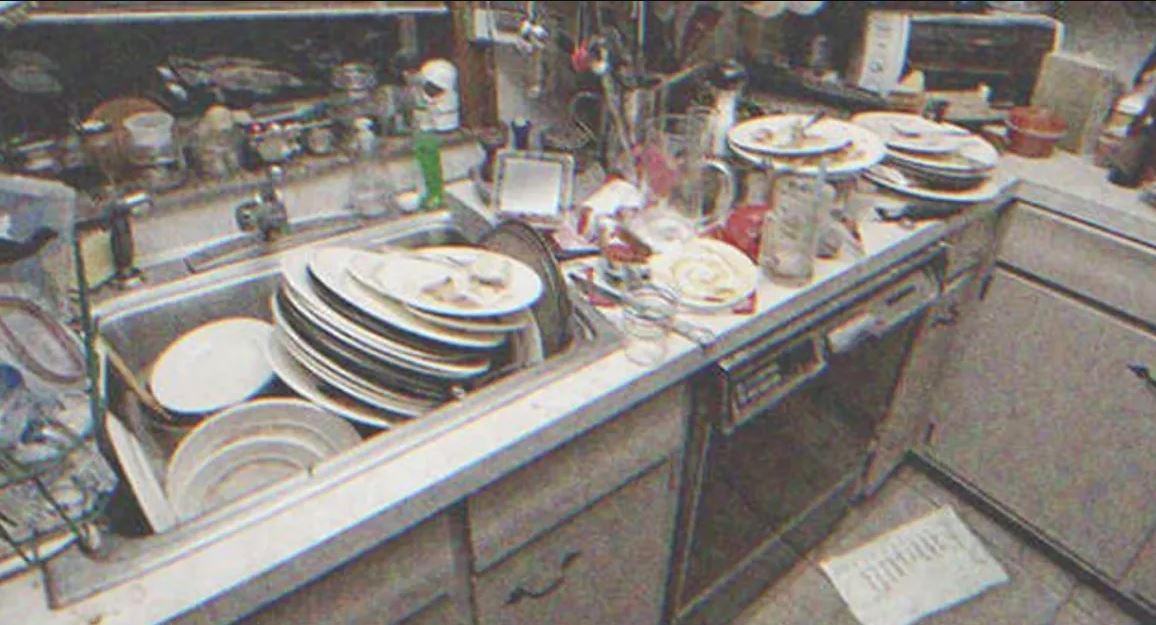
But I looked straight at my father, something icy settling inside me.
That was the moment I decided I wasn’t letting this slide.
The next morning, I woke up with a plan sharp in my mind.
My mom was already in the kitchen, shaping dough on the counter. The familiar earthy smell of yeast filled the room.
She smiled sleepily at me, unaware that I was gearing up to wage a one-woman war.
When Dad finally stomped into the kitchen around nine, wearing rumpled pajamas and scratching his stomach, I gave him the brightest smile I could muster.
“Morning, Dad.”
“Morning,” he grunted, reaching for the coffee pot my mom had brewed.
I leaned casually against the counter. “Hey, I was thinking… You always say Mom’s job is easy, right? That housework is nothing compared to your job.”
He shrugged. “It’s true. Anyone can do chores. I’ve said it a hundred times.”
“Well then,” I said smoothly, “today’s your chance to show us. You’re going to do everything Mom usually does.”
The silence that followed was delightful.
My mom froze mid-knead. “Jamie—” she whispered, but I shook my head gently.
My dad barked out a laugh. “You’re kidding. Why would I waste my Saturday on chores?”
“Because,” I said, folding my arms, “if you don’t, that means you’re admitting housework is harder than you claim. And I thought you liked being right.”
There it was, his weakness.
He puffed out his chest. “Fine. I’ll do it. I’ll handle it all. And I’ll do it better.”
My internal grin expanded.
“Great,” I chirped. “Let’s start with breakfast.”
“Scramble some eggs,” I suggested, leaning against the doorframe like an amused audience member. “Mom does it every morning.”
He cracked the eggs with far too much force, splattering yolk across the counter. Mom winced but stayed silent. He dumped the eggs into the pan without whisking, then cranked the heat to high.
Predictably, the eggs burned into a rubbery yellow mass.
He tasted them, grimaced, and forced a shrug. “Not terrible.”
He didn’t offer any to us.
After breakfast came laundry.
“Colors and whites separate,” I reminded him gently.
He ignored me and dumped everything into the machine at once. I watched as he accidentally stained one of his favorite beige shirts with navy dye.
He muttered a string of complaints loud enough for both of us to hear.
Vacuuming came next.
Within five minutes, he knocked over a lamp, smashed a coaster, and sucked one of his socks into the vacuum hose.
Mom tried to help, but I gently touched her arm. “Let him handle it.”
She stepped back.
By lunchtime, Dad was drenched in sweat and moving slower than usual. His face flushed from exertion, he slapped together three sandwiches but left the counter looking like a crime scene of breadcrumbs, spilled mustard, and discarded lettuce.
The best part? He didn’t even realize he’d spread mayonnaise on the outside of the bread.
But dinner was where everything truly crumbled.
He chose spaghetti.
A safe bet, under normal circumstances.
But Dad put the pasta in the water before it boiled, forgot to stir it, then wandered off to check the game score while the sauce cooked unattended.
The smell of burning tomatoes hit the entire house. Mom rushed in instinctively, but I held out a hand.
“Don’t save him,” I whispered.
Dad stormed in moments later, slamming the pot onto the counter. “This is absurd! Nobody can keep up with all this stuff.”
Mom set down her dish towel and finally looked at him, really looked at him.
“I do it,” she said softly. “Every day.”
For a moment, the world went still. My father’s mouth opened, then closed. For the first time since I arrived home, he looked genuinely shaken, as if he’d only just realized he’d been blind to something obvious for years.
He didn’t apologize. Not yet. Dad wasn’t the kind of man who apologized easily.
But something in him shifted.
The next morning, my mom handed him a to-do list, half expecting him to refuse.
He didn’t.
He took it grumbling under his breath, sure, but he took it.
He mopped the floors. His strokes were clumsy and uneven, but he didn’t quit halfway. He folded laundry badly, with shirts creased every which way, but he didn’t dump them in a pile on the couch. When Mom cooked, he hovered awkwardly, handing her utensils and ingredients.
He wasn’t transformed into a domestic superhero overnight, but the arrogance he’d worn so confidently was gone.
By Sunday evening, when I loaded my suitcase back into my car, the house felt… different. Softer. Quieter. More balanced.
Mom hugged me tightly at the door. “Jamie,” she whispered, her voice trembling, “thank you.”
I squeezed her back. “You deserve someone who sees how hard you work.”
As I stepped off the porch, I glanced through the kitchen window. There was Dad, drying a plate carefully, slowly trying not to drop it. Mom stood beside him, and for once, her shoulders didn’t look so heavy.
That was enough for me.
Some lessons aren’t learned through lectures or arguments. Some can only be understood through experience, through walking the exact path someone else walks every day.
Dad had finally taken a few steps down my mom’s path.
Maybe he’d walk the rest willingly.
Or maybe he’d stumble.
But at least now, he saw the road.
And that, in its own humble way, felt like a victory.