
For 14 years, I believed my life was built on something unbreakable.
I believed in my marriage, in the quiet rituals of family life, and in the idea that loyalty and shared history meant safety. I believed that love, once tested and proven, did not simply disappear.
I was wrong.
But I did not know that yet. Not on the evening everything collapsed, and not in the months that followed. At that time, I was still clinging to the illusion that my life made sense.
Before everything fell apart, I was simply a mother trying to keep all the pieces moving.
My days revolved around school schedules, grocery lists taped to the fridge, and the constant hum of responsibility that comes with raising children. My daughter, Iris, was twelve. She was sharp-tongued and perceptive, already testing the boundaries between childhood and independence. My son, Leo, was nine, endlessly curious, and the kind of child who dismantled broken electronics just to understand how they worked.
They were my center.
And my husband, Graham, or so I thought, was part of that center too.
We had met years ago at work, two ambitious people starting from nothing. Friendship came easily. Love followed naturally. When he proposed, it felt inevitable, like the next step in a story already written.
We built everything together: our home, our careers, our family. We struggled, argued, forgave, and adapted. I believed that surviving those early hardships had fused us into something stronger.
Looking back now, I understand how naive that belief was.
In the months before the end, Graham had been distant. He worked late, missed dinners, and forgot small things that once mattered to him. I told myself it was stress. Promotions came with pressure, after all. Responsible adults made sacrifices.
That is what I told myself.
The truth arrived on a quiet Tuesday evening.
I was in the kitchen, stirring a pot of soup. Alphabet noodles floated on the surface because Iris still loved them, even if she pretended not to. The house felt peaceful and familiar.
Then I heard the front door open.
And footsteps.
Two sets.
One of them was unmistakably female. Sharp heels clicked against the floor with a confidence that did not belong in my home.
My stomach tightened.
I wiped my hands on a towel and stepped into the living room.
That was when I saw them.
Graham stood near the couch, his posture stiff but unapologetic. Beside him was a woman I had never seen before. She was tall and impeccably dressed, with sleek hair and a smile that did not reach her eyes. Her manicured hand rested on his arm as though it had always belonged there.
She looked around my living room, then at me, and smirked.
“So this is her,” she said lightly. “You didn’t exaggerate. She really has let herself go. Pity. She could have been attractive.”
The words hit me like a physical blow.
“Excuse me?” I whispered.
Graham sighed, as if I were the inconvenience.
“Marianne, this is Celeste,” he said. “And I want a divorce.”
The sentence landed with brutal simplicity.
A divorce.
I stared at him, waiting for the punchline that never came.
“Our children,” I said finally. “What about Iris and Leo?”
“You’ll manage,” he replied flatly. “I’ll send support. But Celeste and I are serious. I brought her here so there wouldn’t be any confusion.”
Then came the final cruelty, delivered with casual indifference.
“Celeste is staying tonight. You can take the couch, or go to your mother’s.”
Something inside me fractured.
But I refused to break in front of them.
I turned away without another word, walked upstairs, and pulled a suitcase from the closet. My hands shook as I packed clothes for the kids, forcing myself to move slowly and deliberately.
When I entered Iris’s room, she looked up immediately.
“Mom?” she asked. “What’s wrong?”
I knelt beside her and smoothed her hair.
“We’re going to Grandma’s for a bit,” I said softly. “Pack some things.”
Leo appeared in the doorway, confused.
“Where’s Dad?”
I swallowed.
“Sometimes adults make terrible choices,” I said carefully. “But we’re going to be okay.”
That night, I loaded my sleeping children into the car and drove away from the house I thought was forever.
I did not look back.
At my mother’s doorstep, I finally collapsed. She did not ask for explanations. She just held me while I cried, grief pouring out in gasping sobs.
The weeks that followed were a blur.
Lawyers. Paperwork. Awkward conversations with teachers. Long nights staring at the ceiling, wondering how someone could erase fourteen years so easily.
The divorce moved quickly. Too quickly.
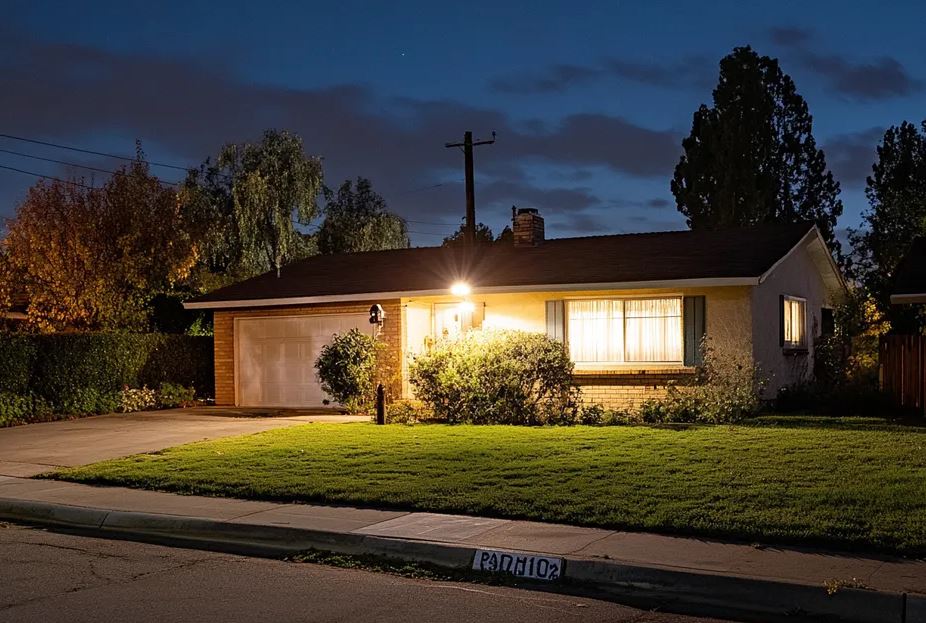
We sold the house. I received a settlement that felt like a cruel joke compared to what we had built together. I bought a small two-bedroom place. It was safe, modest, and ours.
At first, Graham sent child support regularly. He called occasionally. The children waited by the phone, hope flickering in their eyes.
Then the calls slowed.
The payments stopped.
Weeks turned into months. Months turned into silence.
Through mutual acquaintances, I learned that Celeste had encouraged him to “cut ties” with his old life. She said that focusing on his past distracted him from their future. When financial trouble crept in through bad investments and reckless spending, he disappeared entirely rather than face responsibility.
The hardest part was not losing my marriage.
It was watching my children grieve a father who chose absence.
So I stepped up.
I worked harder. I found stability where I could. I built routines that felt safe. Slowly and painfully, we healed.
Three years passed.
Iris entered high school, stronger and wiser than her years. Leo dove into robotics, his enthusiasm filling our home with energy. Our little house became a place of laughter and resilience.
Graham became a ghost of the past.
Until one rainy afternoon changed that.
I was leaving the grocery store, juggling bags and an umbrella, when I noticed a small café across the street.
And there they were.
Graham and Celeste.
Time had not been kind to them.
Graham looked exhausted. His clothes were wrinkled, his posture slumped. The confidence he once carried was gone, replaced by something hollow. Celeste still wore designer pieces, but they were worn and faded. The illusion had cracked.
When Graham saw me, his face lit up with something dangerously close to hope.
“Marianne!” he called, scrambling to his feet. “Wait!”
Against my better judgment, I stopped.
“I’m sorry,” he said breathlessly. “I need to see the kids. I need to fix this.”
I met his gaze calmly.
“You vanished for two years,” I said. “You abandoned them.”
Celeste scoffed. “Don’t put this all on me.”
The argument between them erupted. Resentment spilled out, accusations flying. Then Celeste stood abruptly.
“I stayed because of our child,” she said coldly. “But I’m done. You’re on your own.”
She walked away without looking back.
Graham turned to me, broken.
“I miss them,” he whispered. “I miss us.”
I searched his face and felt nothing.
“Give me your number,” I said. “If the kids want to talk, they will. But you are not coming back into our lives.”
He nodded, defeated.
As I walked away, something unexpected happened.
I felt free.
Not because he had fallen, but because I had risen.
My life no longer revolved around his choices. My children were thriving. I was whole.
And for the first time since that night in the kitchen, I smiled. Not out of bitterness, but out of peace.