
There are moments in life when everything familiar disappears at once, leaving behind a hollow quiet that feels louder than any noise. That kind of silence settled over my life last year, heavy and unmoving, after everything I thought I could rely on vanished within the span of a few weeks.
My name is Hannah, and not long ago, my life collapsed in a way I never imagined possible.
After twelve years of marriage, my husband sat across from me at our kitchen table and told me he wanted a “fresh start.” He said it carefully, as if softening the words might dull the damage. The woman he had chosen to start over with was younger, brighter, and apparently unburdened by the shared history that now weighed him down. Within a month, the papers were signed, the house was sold, and the future I had planned dissolved into a handful of cardboard boxes.
A week after the divorce became official, my company announced it had been acquired. By the end of that same week, I was called into a conference room, handed a generic email printed on white paper, and thanked for my service. There was no severance worth mentioning and no warning. Just an empty desk and a polite handshake.
I went home that day feeling as though someone had scooped me out from the inside and left only the shell behind.
Friends tried to help at first. They invited me out, checked in, and sent messages full of encouragement. But grief makes people uncomfortable, especially when it does not resolve itself quickly. Eventually, the calls slowed. The invitations stopped. Bills piled up, savings dwindled, and every morning I woke up wondering why I was even getting out of bed.
So I ran.
I found a tiny cedar cabin tucked into a quiet Vermont town, where the streets curved lazily and time seemed to move at half speed. It was the kind of place where everyone knew each other’s dogs and waved at passing cars. Strangers stood out, and I did not mind being one. I planned to disappear there for a few months, grieve in peace, read books I had been too busy to open, and figure out who I was without the life I had lost.
I had been there less than a day when the first knock came.
Standing on my porch was an elderly woman with snow-white hair twisted into a tidy bun. Her eyes were warm and bright despite the deep lines around them. Behind her stood a tall man with a gentle posture and a quiet smile. The woman held a casserole dish wrapped in a thick cloth, steam escaping from the edges.
“Welcome to the neighborhood, dear,” she said brightly. “You look like someone who could use a good meal.”
Her name was Mabel, and her husband was Arthur. They lived in the house across the small clearing from my cabin and had been married for more than fifty years.
I thanked her and accepted the dish because refusing felt unthinkably rude. Only later, when I lifted the lid, did I realize what I had gotten myself into.
The lasagna had collapsed inward, forming a sunken crater filled with bubbling sauce. The smell was aggressively herbal, oregano mixed with something sharp and unfamiliar. I took one cautious bite and immediately knew I was in trouble.
It was both mushy and crunchy, over-salted yet strangely bland. The cheese had the texture of rubber. But Mabel had looked so proud when she handed it to me.
So when she knocked the next morning and asked how I liked it, I smiled and lied.
“It was wonderful,” I said. “Thank you so much.”
Her face lit up in a way that made my chest ache. That was the moment I unknowingly sealed my fate.
Because the lasagna was only the beginning.
Soup followed the next week. It was thick, beige, and dotted with mysterious lumps. Then came pot roast so dry it nearly crumbled to dust. Chicken that somehow tasted faintly of cinnamon and pepper. Cookies burned black on the outside and raw in the middle.
Mabel visited three times a week, always with a dish in hand and a hopeful smile on her face.
“You remind me so much of our daughter,” she would say, settling into one of my kitchen chairs while I forced myself to chew and swallow. “Our Lillian. She loved cooking too.”
For three months, I ate everything Mabel brought. I smiled, complimented flavors that should not have existed, and asked questions about recipes I had no intention of recreating. I hated the food, but I did not hate her.
Somewhere between the burnt casseroles and awkward compliments, I began to look forward to her visits. Not for the meals, but for the company. She talked while I listened, and Arthur would stand quietly nearby, smiling softly. He never corrected her and never stepped in.
Then one afternoon, I reached my breaking point.
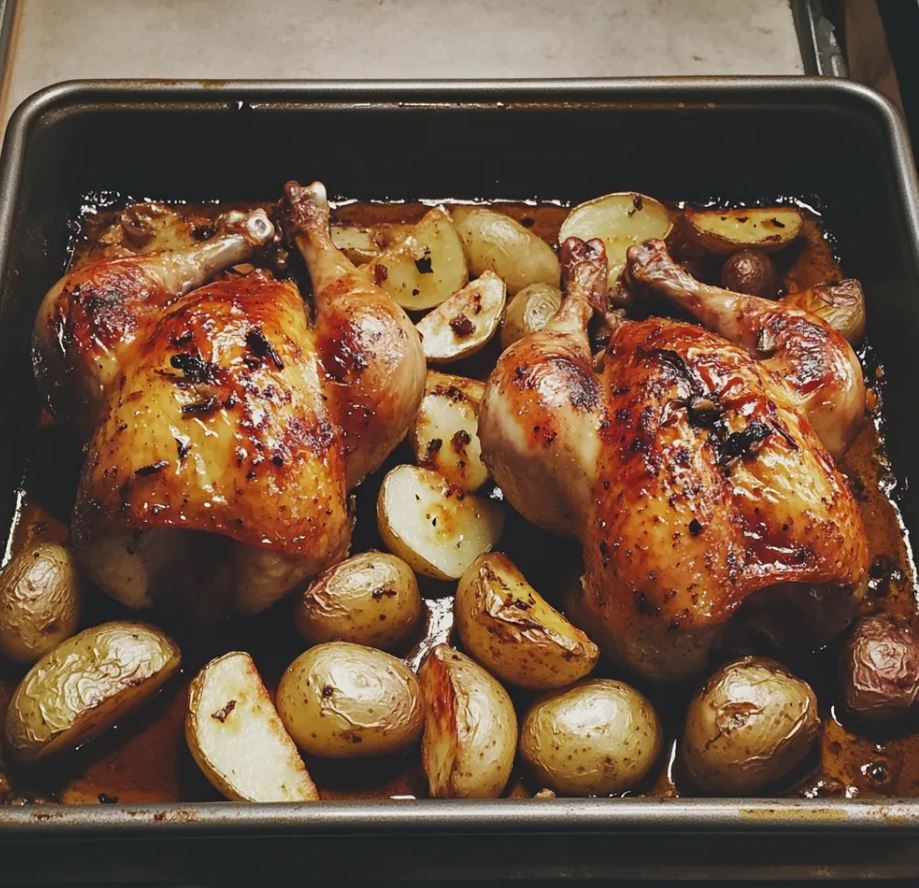
Mabel had brought over chicken that was both rubbery and hard, seasoned in a way that made my stomach turn. I managed a few bites before excusing myself. When I heard their door close across the clearing, I grabbed the plate and headed for the trash.
I was tilting it toward the bin when a voice stopped me cold.
“Hannah.”
Arthur stood behind me, his expression serious, almost pleading.
“Please,” he said softly. “Don’t throw it away.”
I froze, humiliation flooding my face. “I’m so sorry,” I whispered. “I didn’t mean—”
“You don’t understand,” he said, his voice breaking. “Please don’t tell her.”
I set the plate down, confused. Arthur sank onto the porch steps and rubbed his face with both hands.
“After Lillian died,” he said quietly, “Mabel couldn’t cook. She couldn’t even walk into the kitchen. For nearly twenty years, I did everything. The sight of a mixing bowl would send her into tears.”
He looked up at me, his eyes shining with unshed grief.
“Then one day, she walked into the kitchen and made Lillian’s favorite casserole. It was awful. But she smiled for the first time in years.”
My throat closed.
“She started living again,” he continued. “Every time you tell her you love her food, you’re giving her back a piece of herself.”
I understood then.
From that day on, I ate every dish with genuine gratitude. I asked for recipes. I let her fuss over me. Slowly, without meaning to, we became a family.
When Arthur suffered a mild stroke months later, everything stopped. Mabel was too frightened to cook, terrified she might hurt him. The house fell silent again.
So I cooked.
I brought meals over, sat at their table, and listened to their stories. Mabel smiled again. Arthur grew stronger.
Now we spend Sundays together. Sometimes Mabel cooks. Sometimes I do. Her food is still terrible, but now we laugh about it.
I came to that cabin to disappear.
Instead, I was found.
By two neighbors, a lifetime of love, and the quiet truth that healing does not happen alone.