
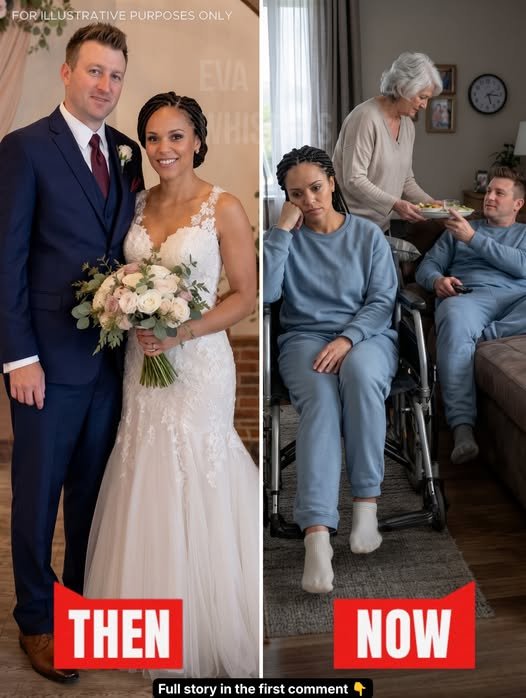
I never imagined that the loneliest time in my life would come while I was married. Recovering from surgery forced me to confront the painful truth about those I trusted the most.
I Thought Marriage Meant I’d Never Be Alone Again
When I married Alan, I believed I had finally found the family I’d always wanted. My parents were gone. I had no siblings. By the time I met him at thirty-one, loneliness had become part of my daily routine—quiet dinners, quiet holidays, and birthdays spent alone.
Then Alan entered my life and filled those empty spaces so naturally that I stopped noticing how lonely I had been.
“You’re safe with me,” he told me during our first winter together.
I believed him.
His mother, Denise, was a different story.
She never openly insulted me, but her comments always carried a sting.
“You can always tell when someone didn’t grow up around family,” she would say while smiling directly at me.
Or, “Alan’s always needed someone stronger beside him.”
For years, I tried to win her approval. I invited her to dinner, bought thoughtful gifts, and included her in every holiday celebration.
Nothing worked.
Eventually, I gave up trying.
What I never expected was that she would eventually play a role in the collapse of my marriage.
The Sacrifice I Thought Would Save Us
Three years after our wedding, Alan became seriously ill.
At first, we assumed it was stress and exhaustion. Then came specialist visits, tests, and finally a diagnosis that changed everything.
Kidney disease.
The waiting list for a donor was years long.
“Too long,” Alan said after one appointment, gripping the steering wheel so tightly his knuckles turned white. “You need to get tested.”
When I hesitated, he looked at me and asked the question that left me feeling trapped.
“Do you want me to die?”
So I got tested.
A few weeks later, the hospital called.
I was a match.
Alan cried when he heard the news.
“You have to do this,” he said.
I suggested that Denise get tested as well.
“She’s too old,” Alan replied immediately. “She could die during surgery. You’re my only hope, Clara.”
Eventually, I agreed.
At the time, I believed I was saving my husband’s life.
Looking back, I can see the cracks in our marriage had already begun to form.
I just wasn’t ready to see them.

When Everything Changed
The transplant was successful for Alan.
Mine was not.
After surgery, complications left me unable to stand. The doctors explained that temporary nerve inflammation and muscle weakness were responsible, but the reality was still devastating.
I would spend weeks in a wheelchair and require extensive physical therapy.
For the first few days, Alan seemed concerned.
Then something changed.
He stopped asking about my recovery.
He stopped attending appointments.
He stopped sitting beside me.
Eventually, he stopped speaking to me unless someone else was present.
The distance between us grew larger every day.
Then Denise moved into our apartment without discussing it with me.
She arrived with two enormous suitcases and acted as though she belonged there.
At first, I thought her presence might help.
Instead, it made everything worse.
Invisible in My Own Home
Every morning, Denise carefully sorted laundry.
Alan’s shirts.
Alan’s socks.
Alan’s work clothes.
Everything belonging to him was washed, folded, and put away.
My clothes remained untouched in the basket.
Then she started preparing meals exclusively for him.
She packed leftovers into containers labeled:
“Don’t touch. Personally for Alan.”
The first time I saw one of those labels, I thought it had to be a joke.
It wasn’t.
Most days, I survived on crackers, bananas, or dry cereal because they were the only foods I could reach by myself.
One afternoon, I finally gathered enough courage to ask for help.
Alan was putting on his jacket when I wheeled myself toward the kitchen.
“Could you help me make something before you leave?” I asked quietly.
His response came immediately.
“There’s cereal.”
“You know I can’t reach the milk.”
He sighed heavily.
“What do you want me to do, Clara? I can’t stop living my life because your recovery is taking longer than expected.”
The room fell silent.
Even Denise looked up from her crossword puzzle.
A few moments later, Alan rubbed his forehead.
“I didn’t mean it like that.”
But he did.
I could hear the truth in his voice.
After that day, I stopped asking.
It hurt less than hearing disappointment every time I needed help.
The Discovery That Broke My Heart
The weeks blurred together.
Alan returned to work, went out with friends, and posted smiling photographs online while I remained stuck in the same corner of the living room.
Sometimes I overheard Denise speaking on the phone.
“She’s still in that chair.”
“I don’t know how much longer this is going to drag on.”
As though I couldn’t hear every word.
Then one morning, I called my physical therapist after realizing I had missed two appointments.
The receptionist sounded confused.
“Your husband called and said you wanted to pause treatment.”
My stomach dropped.
“I never said that.”
Before I could continue, Alan entered the room.
“The therapy clinic,” I told him.
His expression instantly darkened.
“You needed rest,” he said.
“You canceled my therapy without asking me?”
“We’ll talk later.”
But later never came.
It never did anymore.
Mrs. Greene Comes Knocking
A week later, someone knocked on the door.
The apartment was unusually quiet.
Alan and Denise were both gone.
I slowly wheeled myself across the room and opened the door.
Standing there was Mrs. Greene.
My eighty-year-old neighbor.
Before surgery, I visited her almost every evening. We drank tea, solved crossword puzzles, and watched old movies together.
After surgery, I stopped answering her calls because I didn’t want her to see me this way.
The moment she saw me, concern filled her face.
“Clara,” she whispered. “I’ve been worried.”
Something inside me broke.
I burst into tears.
Mrs. Greene stepped inside and listened as I told her everything.
The food.
The canceled therapy.
The neglect.
The silence.
When I finally finished, she sat quietly for a moment.
Then she said something that surprised me.
“This isn’t complicated.”
She stood, gripping her cane.
“I’m going to fix this.”

The Folder That Exposed Everything
Thirty minutes later, Mrs. Greene returned.
By then, Alan was home, stretched out on the couch watching television.
Without saying a word, she walked into the living room carrying a thick folder.
The second Alan saw it, all the color drained from his face.
The remote slipped from his hand.
For the first time in months, he looked afraid.
Mrs. Greene handed the folder to me.
Apparently, it had been delivered to her apartment by mistake.
Inside were apartment listings and moving company estimates.
Every document was addressed to Alan.
My heart sank as I looked at the dates.
Most of them had been prepared before my surgery.
“You were planning to leave me?” I whispered.
“It’s not what you think,” Alan stammered.
Before I could respond, Denise walked through the front door carrying takeout bags.
The moment she saw the folder, her expression changed.
“Perfect timing,” Mrs. Greene said coldly.
The Truth Finally Comes Out
“I want the truth,” I said.
Denise crossed her arms.
“Clara, you’re emotional.”
That familiar tone.
The one she always used whenever she wanted to make me feel weak.
This time, I refused to back down.
“I’m emotional because I gave your son my kidney and now I’m treated like a burden in my own home.”
“You’ve been difficult since the surgery,” Denise replied.
The words stunned me.
Difficult?
Because I needed food?
Because I wanted therapy?
Because I couldn’t walk?
Mrs. Greene looked horrified.
“She’s recovering from major surgery.”
“And so is my son,” Denise snapped.
“No,” I said firmly.
Everyone fell silent.
I looked directly at Alan.
“You recovered and went back to your life. I’m still struggling to stand. And all this time, you were planning to leave me.”
Finally, he exploded.
“We were already struggling before I got sick!”
Maybe that was true.
But there was one question I couldn’t ignore.
“If you felt that way,” I asked quietly, “why did you still let me give you my kidney?”
Alan looked away.
The silence that followed hurt more than any answer.
“I stayed, didn’t I?” he muttered.
I shook my head.
“You stayed physically. Emotionally, you left long before the surgery.”
He flinched.
And for the first time, I realized something important.
I wasn’t powerless anymore.
Because I finally knew the truth.
Learning to Heal Again
The next morning, I called the therapy clinic myself.
The receptionist sounded relieved.
“Your progress was actually improving before the cancellations,” she told me.
Improving.
I closed my eyes.
For months, I had convinced myself I was getting worse.
In reality, I wasn’t receiving proper care.
I wasn’t eating properly.
I wasn’t moving enough.
And worst of all, I had slowly started believing the people who treated me as though I were helpless.
That realization hurt deeply.
But it also gave me strength.
“I want to restart therapy immediately,” I said.
For the first time in a long while, the decision felt entirely mine.
The Family I Never Expected
Three months later, I carried a pot of homemade soup down the hallway.
No wheelchair.
No cane.
Just my own two legs.
Mrs. Greene opened the door and smiled the moment she saw me standing there.
“Now that,” she said proudly, “looks like recovery.”
I laughed.
A real laugh.
The first one I’d had in months.
Alan and I separated a few weeks after our confrontation.
There were no dramatic scenes.
No screaming.
Just honesty finally catching up with us.
Soon afterward, he and Denise moved out.
And strangely enough, once I stopped spending all my energy trying to hold on to someone who had already emotionally left, healing became easier.
Not just physically.
Emotionally, too.
Mrs. Greene took the soup from my hands and led me inside.
“You know,” she said, “family doesn’t always arrive the way you expect it to.”
I looked around her cozy apartment.
The kettle was steaming.
A crossword puzzle waited on the table.
And for the first time in a very long while, I felt at peace.
I had spent so much time fearing that I would end up alone again.
The truth was, I was never alone.
I had simply been asking the wrong people to stay.