
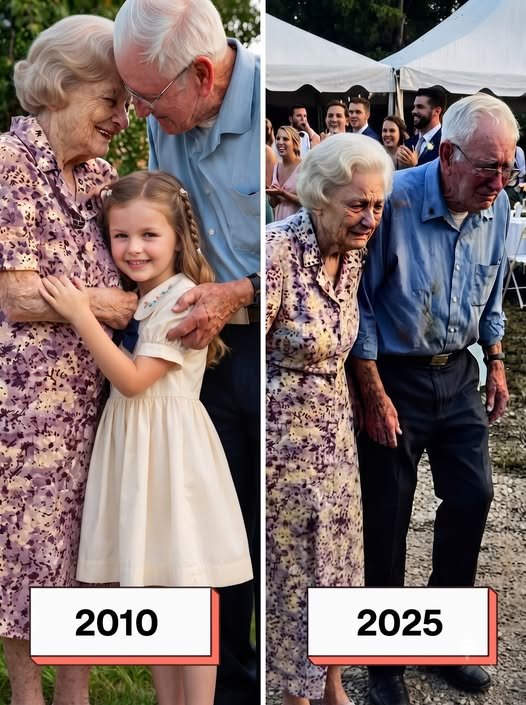
Part One: The People Who Chose Me
Some children grow up believing that home is permanent.
They expect the same people to be waiting at the breakfast table each morning. They assume there will always be food in the refrigerator, clean clothes in the closet, and someone beside their bed when nightmares wake them.
I never had that kind of childhood.
My earliest memories were filled with uncertainty. My mother disappeared for months at a time, usually because she had been arrested or had fallen back into the addiction that controlled most of her life. My father was no better. He occasionally returned with apologies, promises, and trembling hands, but he never stayed long enough for me to believe him.
Nothing in my childhood felt secure.
People left.
Money vanished.
Food ran out.
Promises were made and forgotten.
Then Nana and Papa stepped in.
They were my mother’s parents, already growing older when they brought me into their home. They lived in a quiet town most people passed without noticing. Their little house had faded yellow siding, uneven floors, and windows that rattled whenever the winter wind blew.
The place always smelled like homemade soup, cleaning solution, and laundry drying near the heater.
It was not beautiful.
But it was safe.
And for a frightened little girl, safety felt more valuable than anything money could buy.
We were poor, although Nana rarely used that word. Most of my clothes came from neighbors whose children had outgrown them. My shoes were often repaired with glue or tape. Our artificial Christmas tree was so old that half the branches leaned in the wrong direction.
Birthday celebrations were simple. Nana baked the cake herself, even though the frosting usually slid down one side. Papa would place a card beside my plate containing five dollars—or ten when they had managed to save a little extra.
Looking back, I understand that those small bills probably cost them more than I ever realized.
Still, I never thought of myself as unfortunate.
I had Nana and Papa.
Papa worked as a janitor at the local school. Even after his knees began to ache and his back hurt so badly that he sometimes had to sit down halfway through tying his shoes, he kept working.
Nana cleaned other people’s homes. Her hands were rough and often irritated from years of scrubbing floors and using harsh cleaning products. Yet those same hands were always gentle when she brushed my hair, touched my forehead, or held my face between her palms.
They attended every school performance.
It did not matter whether I had the leading role or stood silently in the background dressed as a tree. I could always find them in the audience.
Papa would sit straight with pride, and Nana would wave as though I were the only child on the stage.
“Having enough is a blessing,” Nana often told me. “We have a roof, we have food, and we have each other. That makes us richer than you think.”
At the time, I believed her.
They helped me with homework even when they did not understand the lessons. They made sure I ate before they did. They sat beside me when I cried over parents who could not love me properly.
They called me their miracle.
Only when I became older did I understand what that truly meant.
They had sacrificed the quiet years of their lives to raise me. They had postponed repairs, ignored their own needs, and worked long after their bodies begged them to stop.
They had closed countless doors for themselves so that mine might remain open.
Part Two: My Way Out
School became more than a place where I learned.
It became my escape.
I studied with a kind of desperation. Every test felt like another step away from poverty. Every good grade seemed to prove that I might someday become someone whose shoes were not held together with tape.
My teachers noticed how hard I worked. Some stayed after school to help me. Others quietly gave me notebooks, pens, or extra materials without making me feel embarrassed.
By high school, I had become one of the strongest students in my class.
I applied for every scholarship I could find.
When the acceptance letter from my dream college arrived, Papa had been watching for the mail all morning. He had even asked to leave work early because he believed the letter might come that day.
Nana opened the envelope.
Her hands shook so badly that the paper trembled in front of her face. Before she reached the final paragraph, tears had already filled her eyes.
Papa tried to hide his emotions.
“Well,” he said, lifting his chin, “looks like our girl turned out smarter than all of us.”
His voice cracked on the final word.
That evening, we celebrated with an inexpensive bottle of sparkling juice and a homemade dinner. Nana brought out the good glasses, the ones we normally used only on holidays.
But once the excitement settled, fear took its place.
Even with scholarships, college would cost more than we had.
“I can choose somewhere closer,” I told them. “I can work for a year first. You’ve already done too much.”
Nana did not even allow me to finish.
“You are going,” she said firmly.
“Nana—”
“We did not spend eighteen years helping you climb a mountain just so you could turn around when you reached the top.”
Papa nodded.
“We’ll manage.”
They always said that.
We’ll manage.
It was the sentence that had carried us through unpaid bills, broken appliances, cold winters, and uncertain months.
So I left home believing that their sacrifices would lead me toward a better future.
I did not understand that the future I wanted would eventually make me ashamed of the people who had given it to me.

Part Three: The Girl I Pretended to Be
College felt like another world.
Students complained about cars their parents had bought them. They discussed vacations in Europe, family investments, and summer internships arranged through powerful relatives.
I counted how many meals remained on my dining plan.
I checked the soles of my shoes every morning, hoping they would survive another week.
At first, I told only small lies.
When someone asked about my parents, I said they were gone.
That was not completely false. They had disappeared from my life long ago.
When people asked who had raised me, I said distant relatives had cared for me but were no longer around.
That was a lie.
Nana and Papa were still in the same little house, waiting for my calls and saving every bit of good news I shared with them.
But the lie made people look at me differently.
Instead of seeing a poor girl raised by an elderly janitor and a house cleaner, they saw someone mysterious and independent.
One student assumed I had received an inheritance.
I did not correct her.
That silence became the foundation of the person I invented.
By my second year, I had learned how to dress in inexpensive clothes that appeared costly. I changed the way I spoke. I studied the manners of people who had grown up with money.
I opened a credit card and used it to purchase things I could not afford because I was terrified someone might recognize where I came from.
I also stopped going home.
Nana called every week.
“We miss you, sweetheart,” she would say. “Could you come for the weekend?”
“I have exams.”
“Maybe next month?”
“I’m really busy.”
There would always be a brief silence before she answered.
“All right, love. We’ll be here.”
They were always there.
That was the problem.
I had begun treating their love like something permanent enough to neglect.
Then I met Andrew.
He came from the kind of family I had spent years pretending to understand. He was confident, polished, and comfortable in every room he entered. His parents spoke casually about money because they had never lived without it.
Andrew admired what he called my independence.
He believed I had overcome a difficult but vaguely respectable past. I never told him about my mother’s arrests or my father’s addiction. I never explained that my grandparents had raised me while wearing themselves down to the bone.
When he assumed I had inherited money, I let him believe it.
His family loved me.
They admired my ambition, my manners, and the carefully constructed mystery surrounding my childhood.
After graduation, Andrew proposed in an elaborate way I could never have imagined as a child.
“I want to give you the life you should have had,” he told me. “You deserve everything.”
I accepted immediately.
Part of me loved him.
Another part loved the life standing behind him.
I promised myself that I would eventually tell him the truth.
I would wait until we were married.
Until he knew me better.
Until the truth could no longer change anything.
Part Four: The Invitation I Never Sent
Andrew’s family planned an extravagant wedding.
The venue looked like a palace. The flowers cost more than Nana earned in months. My dress was elegant, delicate, and so expensive that I was afraid to breathe while wearing it.
Andrew offered to pay for almost everything.
“Keep your own money invested,” he said. “We’ll use it toward our future.”
I smiled and agreed.
The lie had become too large to correct.
When I told Nana and Papa that I was engaged, Nana’s voice filled with excitement.
“Should I start looking for a dress?” she asked.
My heart stopped.
For several seconds, I could not answer.
“We may have a very small ceremony,” I finally said. “Possibly just a courthouse wedding.”
The happiness in her voice faded, though she tried to hide it.
“Well,” she said gently, “whatever makes you happy.”
She did not question me.
She did not demand an invitation.
But I think she understood that something was wrong.
I never told them the wedding date.
I never mentioned the location.
Whenever we spoke, I changed the subject before they could ask too many questions.
Then I made a careless mistake.
I posted a photograph of my engagement ring online. In the background, part of the venue could be seen. In my excitement, I also mentioned the wedding date.
Someone from my hometown recognized the place.
That person attended the same church as Nana.
Eventually, the news reached them.
My grandparents learned about my wedding from someone else.
They must have convinced themselves that I had a good reason for excluding them. Perhaps they believed I did not want them to spend money traveling. Perhaps they thought I was trying to protect them from feeling out of place.
They chose the kindest explanation because they had always believed the best of me.
Instead of confronting me, they decided to surprise me.
Nana wore her favorite floral church dress. She carefully arranged her hair and probably stood before the mirror wondering whether she looked elegant enough.
Papa took out the suit he had worn to my eighth-grade graduation. It was old and no longer fit perfectly, but he cleaned it and polished his shoes.
Together, they carried a faded cloth bag that Nana had used for groceries for years. The seams had been repaired many times, but she had never thrown it away.
They traveled to the wedding believing their arrival would make me happy.

Part Five: The Moment I Lost Myself
The ceremony was breathtaking.
Sunlight streamed through tall windows. The air smelled of fresh flowers. Music filled the room as Andrew looked at me with complete trust.
For a few precious minutes, I believed I had succeeded.
My old life had remained hidden.
The poor girl from the creaking yellow house had disappeared beneath lace, expensive makeup, and carefully practiced smiles.
Then the reception began.
I was standing among the guests when I saw Nana and Papa near the entrance.
They looked small and uncertain beneath the enormous chandeliers.
Nana held one handle of the cloth bag. Papa held the other. They searched the room as if afraid they had entered the wrong place.
Then Nana saw me.
Her entire face brightened.
She touched Papa’s arm and whispered something. He followed her gaze, and the proudest smile appeared on his face.
He lifted his hand slightly, preparing to wave.
Before I could react, Andrew noticed them.
He did not know who they were.
To him, they appeared to be two poorly dressed strangers who had somehow entered a private wedding.
He walked toward them.
My mind screamed at me to move.
My body refused.
“Excuse me,” Andrew said. “This is a private event.”
Nana gave him the warm smile she offered everyone.
“Oh, hello. We’re here because—”
“You’ll need to leave.”
Papa stepped forward.
“We came to see our granddaughter.”
Andrew’s expression hardened.
“I don’t know you, and you are not going to enter our wedding pretending you belong here.”
People nearby began watching.
Nana tightened her grip on Papa’s arm.
“We’re the bride’s grandparents,” she said quietly.
Andrew shook his head.
“I know everyone she invited. You are not on the guest list.”
Then Papa looked across the room and found me.
Everything depended on what I did next.
One word would have stopped it.
One step would have told them that I still remembered every meal, every school play, every repaired shoe, every night they had held me while I cried.
I could have walked forward and said, “These are the people who raised me.”
Instead, I remained still.
Nana looked at me.
Our eyes met.
At first, there was hope in her expression. She waited for me to speak.
Then understanding slowly replaced it.
Her smile disappeared.
Her shoulders lowered.
Something inside her seemed to break.
She finally understood that their absence had not been an accident.
I had deliberately hidden them.
“We’re sorry,” she told Andrew, her voice trembling. “We didn’t mean to cause trouble.”
She turned toward Papa.
They left without arguing.
They did not raise their voices or embarrass me.
They simply walked away together, carrying the worn cloth bag between them.
Andrew returned to my side.
“Don’t worry,” he said. “I handled it.”
I smiled because people were watching.
I laughed during the speeches.
I danced with my new husband.
But I felt as though I had stepped outside my body and left something human behind.
Part Six: The Bag
The following morning, Andrew and I left for our honeymoon.
We ate expensive dinners beside the ocean. We watched sunsets from hotel balconies. I filled my days with beauty because I was afraid of what waited in silence.
I told myself I would apologize when we returned.
Perhaps I could arrange another celebration for Nana and Papa.
Perhaps I could explain that I had panicked.
Perhaps they would understand.
But when the honeymoon ended, I still did not call.
Every day I postponed it, the apology became more difficult.
Then, one week after we returned, the receptionist at my office contacted me.
“There’s a bag waiting for you downstairs,” she said. “It’s rather unusual.”
The moment I saw it, my stomach twisted.
It was Nana’s old cloth bag.
A note had been pinned to the fabric.
The handwriting belonged to Papa.
Our final gift.
Your Nana passed away.
—Grandpa
The room seemed to tilt.
I could not breathe.
I remember someone calling my name. I remember hands reaching toward me. After that, everything disappeared for several minutes.
The next clear memory I have is sitting on the floor of my living room with the bag in front of me.
Andrew had not returned from work.
I opened it alone.
Inside were dozens of envelopes.
Each one had been labeled in Nana’s handwriting.
For books.
For emergencies.
For her first apartment.
For when she feels alone.
For the day she needs help but is too proud to ask.
My hands shook as I opened the first envelope.
Inside was a ten-dollar bill, softened from being folded and unfolded over the years.
Another envelope contained twenty dollars.
Another held fifty.
There were hundreds of dollars in that bag, collected slowly over most of my life.
But the money was not what destroyed me.
It was what the money represented.
A ten-dollar bill might have been a lunch Nana skipped.
Twenty dollars might have come from an extra house she cleaned while her hands burned.
Fifty dollars might have been the reason Papa continued walking to work when they could not afford gasoline.
Every envelope contained a sacrifice I had never noticed.
They had saved for moments in my future they might never see.
They had prepared for the days when I might feel frightened, lonely, or abandoned.
Even after I abandoned them, their final concern had been whether I would have enough.
I bent over the bag and sobbed.
The sound that came from me did not feel human. It carried every lie, every missed phone call, and every selfish choice I had made.
Nana had died knowing that I had watched her be humiliated and had done nothing.
There would be no apology.
No second ceremony.
No chance to explain.
The last time she saw me, I had looked through her as though she were a stranger.

Part Seven: The Truth Comes Out
Andrew found me on the floor when he came home.
The envelopes were scattered around me, along with the wrinkled bills my grandparents had saved.
He stopped in the doorway.
“What happened?”
I looked at him through swollen eyes.
“This,” I whispered, touching the cloth bag, “is my grandparents’ entire life.”
Then I told him everything.
I told him about the little yellow house and the creaking floors.
I told him about Papa’s painful back and Nana’s damaged hands.
I told him about the homemade cakes, repaired shoes, and school performances.
I confessed that my grandparents had not died before college.
I had erased them because I was ashamed of being poor.
Andrew sat beside me, stunned.
“I didn’t know,” he said. “At the wedding, I thought they were strangers.”
“I know.”
“I would never have sent them away if you had told me.”
“I know.”
The truth was unbearable because Andrew had acted according to the story I had created.
I had allowed him to believe my grandparents were intruders.
I had stood silently while he defended a lie I had spent years building.
He lowered his head into his hands.
“You need to go to your grandfather.”
This time, I did not delay.
Part Eight: Going Home
The next morning, I drove back to the town I had spent years trying to escape.
The roads became narrower and more familiar. I passed the school where Papa had worked and the stores where Nana had counted coins before buying groceries.
When the yellow house appeared, it looked smaller than I remembered.
The flowerpots on the porch were dry.
The curtains were still.
I climbed the steps, hearing the same familiar creak beneath my feet.
Before I could knock, the door opened.
Papa stood there.
He looked older than he had only weeks before. His face seemed hollow from exhaustion and grief.
For a moment, neither of us spoke.
Then my knees gave way.
I sank onto the porch.
“I’m sorry,” I cried. “Papa, I’m so sorry.”
There were countless things I wanted to say, but the words collapsed into sobs.
I wanted to tell him that they had given me everything.
That I had confused success with pretending.
That I had spent years trying to escape poverty without realizing I was also running away from love.
Papa slowly lowered himself beside me.
His knees must have hurt, but he did it anyway.
Just as he had always done, he pulled me into his arms.
I buried my face against his shoulder and cried like the frightened child Nana and Papa had once rescued.
After a long silence, he spoke.
“I forgive you.”
I shook my head.
“I don’t deserve it.”
“Maybe not,” he answered gently. “But forgiveness isn’t always about what someone deserves.”
I clung to him more tightly.
“Nana must have hated me.”
“No,” Papa said. “She was hurt. More deeply than I had ever seen. But she never hated you.”
His voice broke.
“She loved you until the end.”
I closed my eyes.
That knowledge did not remove the guilt. It made the loss even heavier.
“She would have forgiven you too,” he whispered.
And somehow, despite everything I had done, I believed him.
Nana’s forgiveness could not give me another chance to hold her.
It could not erase the expression on her face when I failed to claim her.
It could not return the years I had wasted pretending that the people who loved me most did not exist.
But it showed me what real love looked like.
Real love was not the expensive wedding, the flawless dress, or the life I had invented.
It was a patched cloth bag filled with small bills.
It was a homemade birthday cake.
It was a grandfather waiting beside the window for a college letter.
It was a grandmother whose hands were damaged from work but remained gentle whenever they touched me.
I had spent my life trying to become someone worthy of admiration.
Only after Nana was gone did I realize that the best parts of me had come from the two people I had been too ashamed to acknowledge.
I could never undo what happened at my wedding.
I could only carry the truth with me.
The people I had considered poor had given me a love richer than anything I found in the world I chose over them.
And the final gift they gave me was not the money inside those envelopes.
It was the painful understanding that success means nothing when achieving it requires you to forget the people who helped you rise.