
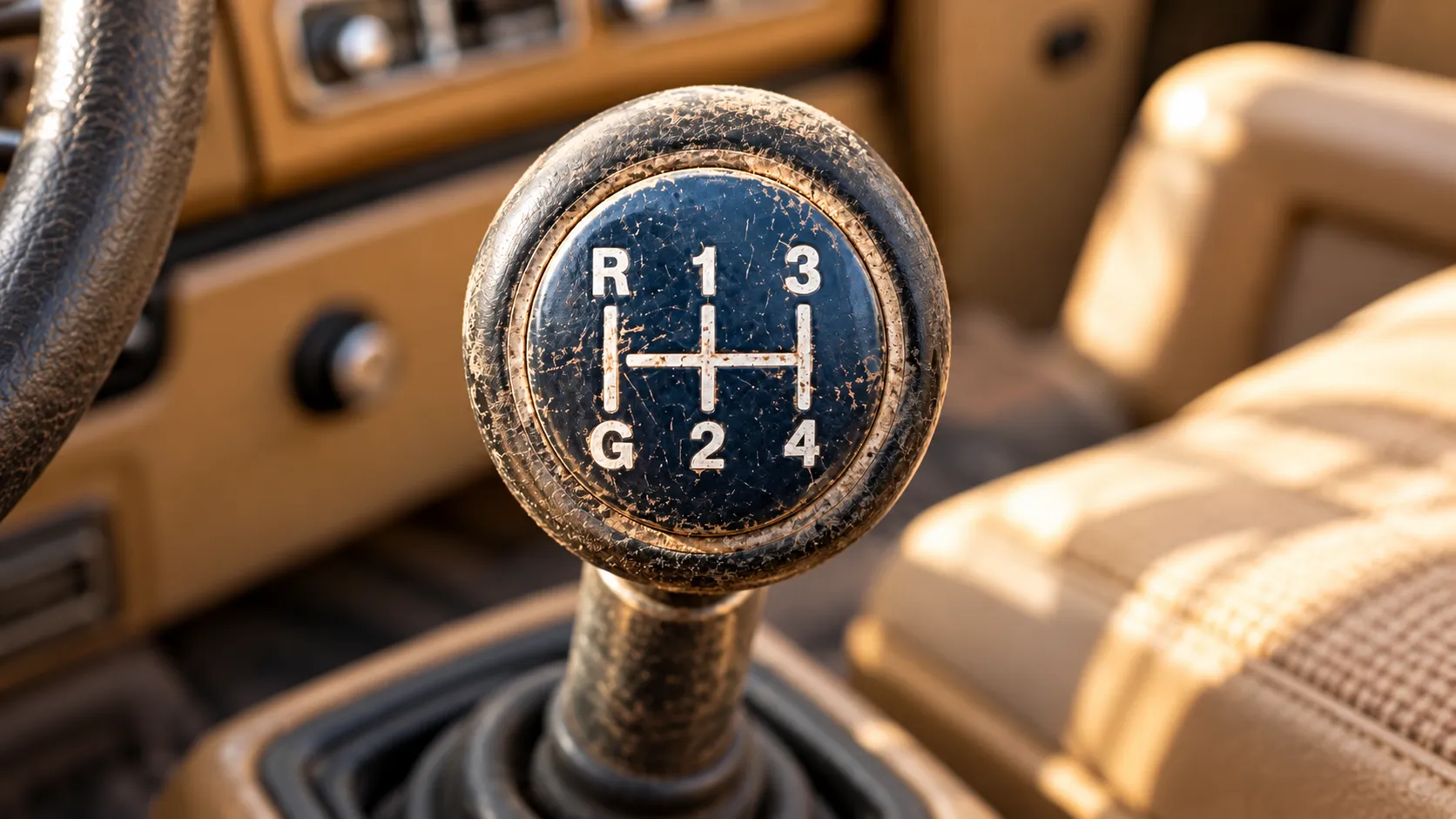
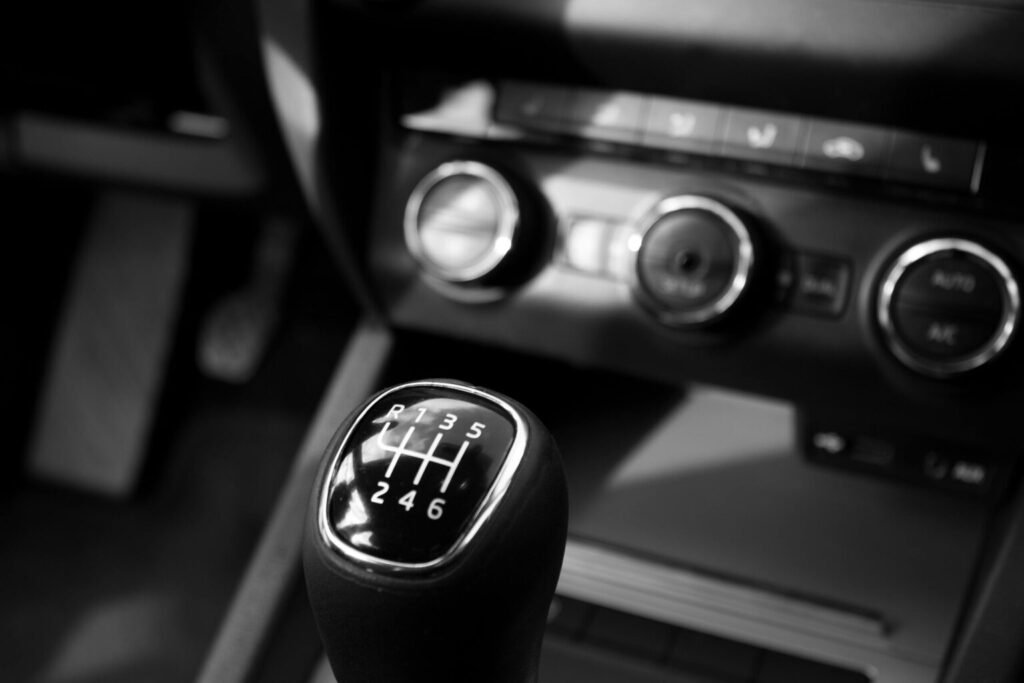
Most drivers from Generation X through older members of Generation Z recognize the familiar manual transmission pattern, with gears numbered from 1 to 6 and a separate reverse position. However, some vehicles feature a less familiar marking: the letter “G.”
While most modern passenger cars use conventional gear patterns, older trucks and specialized off-road vehicles sometimes include this unusual position. Some experienced off-road drivers know its purpose, but many motorists have never encountered it.
Understanding the G gear means exploring a century of truck manufacturing, German automotive engineering, and the development of some remarkable performance vehicles. What might look like an outdated label or a manufacturing mistake actually serves a specific mechanical purpose.
What the G Actually Stands For
The letter “G” is associated with the German word Gelände, meaning terrain. It is also linked to Geländewagen, which translates to an all-terrain vehicle. The name became closely associated with Mercedes-Benz and its G-Class, originally developed as a rugged off-road vehicle in the 1970s.
Over time, the letter G also became associated with ultra-low gearing in certain transmissions, although its precise meaning depends on the vehicle and its manufacturer.
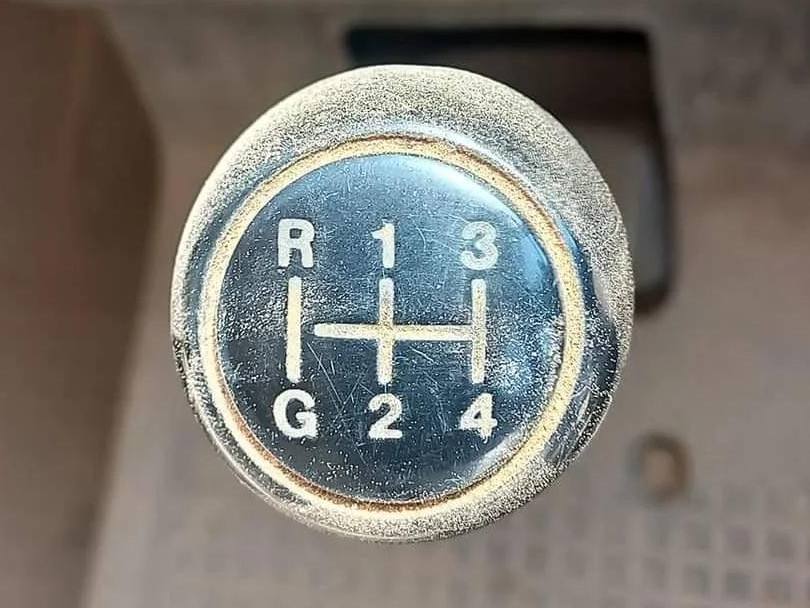
The G marking is connected to the German term Geländewagen, meaning an all-terrain vehicle. Its use on a gear selector generally indicates a specialized low-speed gear designed for particular driving conditions.
Maximum Torque, Minimum Speed
A G or crawler gear provides an exceptionally low gear ratio, often lower than an ordinary first gear. This multiplies torque delivered to the wheels, allowing a vehicle to move slowly while maintaining substantial pulling power.
Such gearing is useful when climbing steep slopes, towing heavy loads from a standstill, crossing loose sand, navigating deep mud, or crawling over rocky surfaces. The slow movement gives the driver greater control when traction is limited or maintaining momentum is difficult.
However, this type of gear offers little benefit during ordinary driving on paved roads. It is designed for situations requiring controlled movement and considerable pulling force rather than acceleration.
The Nickname That Stuck
One common nickname for an ultra-low gear is “granny gear,” a term widely used among truck owners, farmers, and automotive enthusiasts. The name describes the extremely slow pace at which the vehicle moves.
Rather than allowing normal road speeds, the gear lets a vehicle creep forward with considerable mechanical leverage. This seemingly limited speed is precisely what makes it useful when handling heavy loads or negotiating difficult terrain.
Where the Gear Ratio Sits
Early commercial vehicles often relied on very low first gears to move heavy loads across steep or uneven ground. Some specialized transmissions featured ratios ranging from approximately 6.0:1 to 7.02:1, compared with roughly 3.0:1 to 4.0:1 in many conventional manual first gears.
A higher numerical gear ratio provides greater torque multiplication, although the actual force at the wheels also depends on engine output, other drivetrain ratios, and mechanical losses.
For heavily loaded trucks, this advantage could make the difference between moving forward safely and struggling to climb a steep, unpaved road.
A Century of Granny Gear History
Early manual transmissions evolved considerably as automotive technology advanced. French engineers Louis-René Panhard and Émile Levassor helped establish important early transmission designs in the 1890s, while Louis Renault contributed further drivetrain innovations.
Later developments, including synchronized manual transmissions and automatic gearboxes, made driving easier and more convenient. Meanwhile, commercial vehicles continued to need specialized gearing for demanding working conditions.
The Commercial Truck Problem
Throughout the early and middle decades of the 20th century, commercial trucks regularly transported heavy loads over hills, muddy tracks, and poorly maintained roads.
Engines of that era generally offered less power and torque than many modern engines. A conventional first gear could therefore provide insufficient mechanical leverage when a heavily loaded truck needed to start moving uphill.
Losing momentum on a steep incline could create a dangerous situation, particularly when the driver struggled to maintain control of the vehicle and its load.
The Industry’s Solution
Manufacturers addressed this challenge by introducing extremely low first gears. These gears allowed trucks to begin moving under heavy loads before the driver shifted into higher ratios as speed increased.
This arrangement became common in work trucks equipped with manual transmissions. Manufacturers such as Ford, General Motors, and Ram continued offering trucks with low first-gear ratios well into the late 1980s and early 1990s.
As engine performance improved and low-range transfer cases became more widely available in suitable vehicles, the need for a dedicated crawler gear in ordinary trucks gradually declined.
The NP435 and Its Legacy
Ford’s NP435 transmission became a well-known example of a gearbox featuring a granny gear. Its first gear had a ratio of approximately 6.68:1, providing substantial torque multiplication for demanding work.
The transmission was valued for its rugged construction and ability to move heavy vehicles at very low speeds. Later, Ford adopted newer transmission designs, including the Mazda-produced M5OD five-speed manual in certain truck applications.
This transition reflected broader changes in truck engineering. More powerful engines and improved drivetrain systems reduced the need for an extremely low first gear in many everyday vehicles.
Why It Faded From Consumer Vehicles
The decline of granny gears in passenger vehicles resulted from two major developments: increasing engine performance and improvements in transmission and transfer-case technology.
Many modern engines produce considerably more low-speed torque than their predecessors. In off-road vehicles, a low-range transfer case can also provide substantial torque multiplication without requiring a dedicated crawler gear in the main transmission.
The popularity of manual transmissions has declined as well, particularly in the United States, where automatic gearboxes dominate the new-car market.
Together, these changes have made ultra-low gearing less common in ordinary passenger vehicles, although it remains useful in specialized applications.
The Porsche 959 and Its Unexpected G Gear
The 1986 Porsche 959 was an extraordinary German performance car with a 450-horsepower-class engine and advanced all-wheel-drive technology. Its six-speed manual transmission featured a shift pattern in which the position normally associated with first gear was marked “G.”
Porsche designed the gear arrangement partly to help the car meet noise regulations. Rather than being a decorative label or an accidental design feature, the unusual position had a practical engineering purpose.
The Noise Regulation Problem
European vehicle regulations included limits on noise measured under standardized testing conditions. Porsche needed to ensure that the powerful 959 complied with the applicable requirements.
The car’s sequential twin-turbocharged flat-six engine could produce substantial noise at higher engine speeds. Porsche addressed the issue by incorporating a very low gear into the transmission layout.
This arrangement allowed the car to operate at lower engine speeds under certain conditions. The G position therefore helped with regulatory compliance while also providing useful low-speed control.
What the 959 Actually Was
When introduced, the Porsche 959 represented a major technological achievement. Its 2.85-liter sequential twin-turbocharged flat-six produced approximately 450 PS at 6,500 rpm and 500 Nm of torque at 5,000 rpm.
The car featured Porsche’s advanced PSK all-wheel-drive system, which could vary torque distribution between the front and rear axles according to driving conditions.
With a reported top speed approaching 198 mph, the 959 was among the fastest road-legal production cars of its era. Porsche produced a limited number of examples, making it a particularly significant model in the company’s history.
The G Gear’s Unplanned Everyday Value
Although the G gear helped address noise regulations, it also proved useful in ordinary driving. Its low ratio allowed the car to crawl forward smoothly in stop-and-go traffic without requiring excessive clutch work.
The Porsche 959 also demonstrated its capabilities in demanding motorsport conditions. In 1986, a competition version won the Paris-Dakar Rally, highlighting the model’s connection to challenging terrain and advanced drivetrain engineering.
The G gear was therefore an unusual feature that served more than one purpose: it helped meet regulatory requirements and provided controlled movement at low speeds.
What This Means for the Modern Driver
For many contemporary motorists, the G marking is an unfamiliar feature from an earlier period of automotive development. Manual transmissions have become less common in the United States, while automatic systems have improved in convenience, efficiency, and performance.
Modern engines and specialized off-road drivetrains have also reduced the need for extremely low first gears in many vehicles.
Nevertheless, crawler gearing remains valuable where precise low-speed movement and substantial torque multiplication are essential. Its disappearance from many ordinary cars does not mean the engineering principle has become obsolete.
The 2021 Ford Bronco Brought It Back
The 2021 Ford Bronco helped bring the granny gear back into the spotlight. Its available seven-speed manual transmission included a dedicated crawler gear in addition to the six conventional forward gears.
Ford designed this feature for serious off-road driving, where extremely slow movement can help drivers negotiate rocks, steep obstacles, and uneven ground with greater control.
The Bronco’s configuration demonstrated that the crawler gear still has a place in modern vehicles built for demanding terrain, even as conventional manual transmissions become less common.
Why It Still Matters to Know About
Understanding the G position helps explain why different vehicles use different transmission layouts. It is not necessarily a mistake or an outdated marking. Depending on the model, it can identify a specialized gear designed to deliver substantial torque at very low speeds.
Whether encountered in a vintage work truck, a Mercedes-Benz off-road vehicle, the Porsche 959, or a modern Ford Bronco, the underlying principle is similar: provide controlled movement when ordinary gearing is not ideal.
The Letter That Said Everything Without Saying Anything
The G marking is a small detail with a long engineering history behind it. Its story connects early commercial trucks, German automotive development, high-performance engineering, and modern off-road vehicles.
For drivers unfamiliar with manual transmissions, the letter might seem mysterious. But it reflects a straightforward mechanical idea: sometimes a vehicle needs less speed and more control.
The G gear is not simply a relic of the past. It remains a reminder that transmission designs evolve to solve specific problems—and that even a single letter on a gear selector can reveal a great deal about how a vehicle was engineered.