
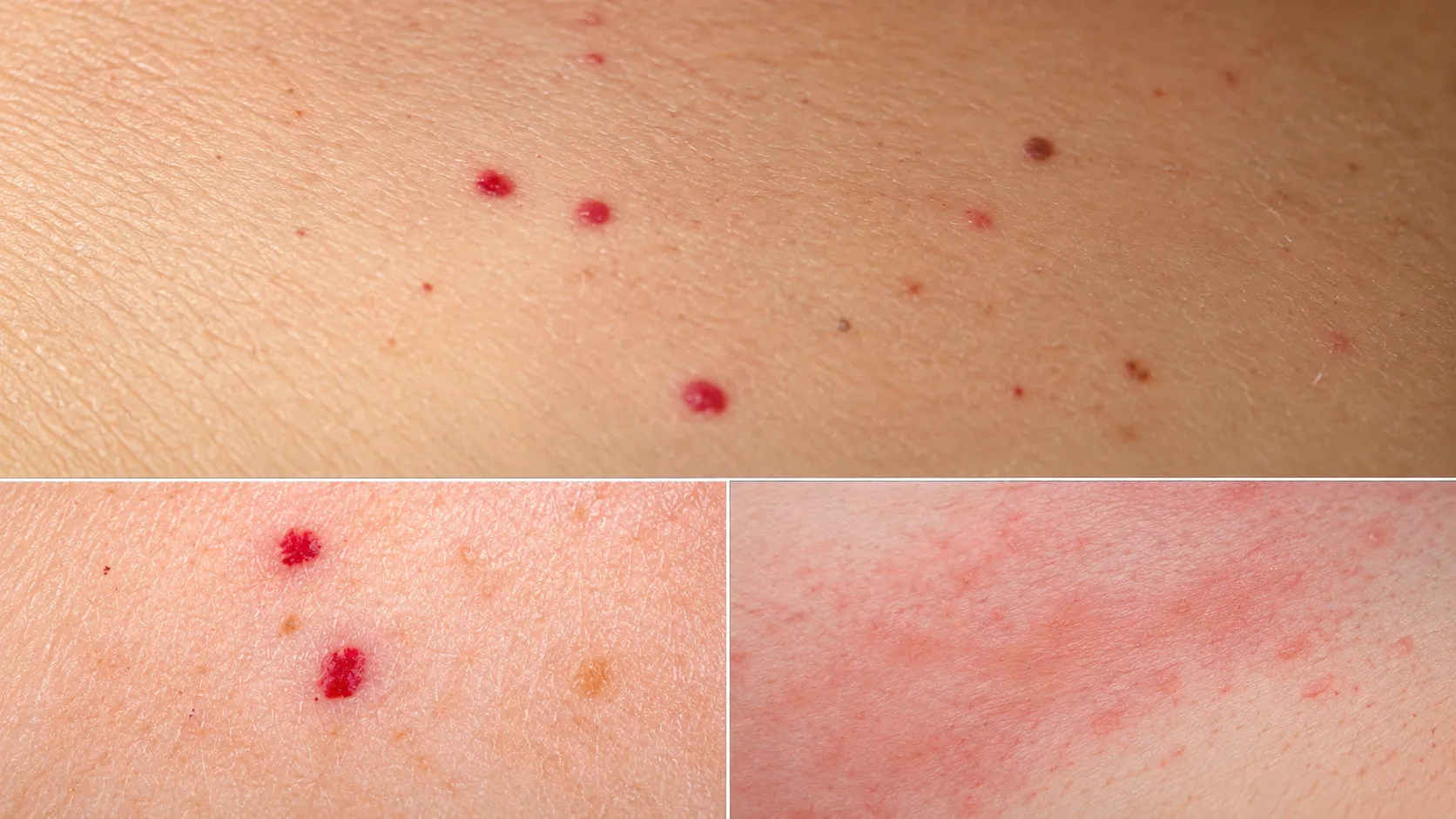
Red dots on the skin can develop for many different reasons. Some disappear without treatment, while others may require medical attention. Their appearance, size, location, and associated symptoms can help determine the possible cause.
Common causes include allergic reactions, acne marks, vascular birthmarks, cherry angiomas, heat rash, insect bites, inflammation, and certain medical conditions.
1. Petechiae and Purpura
Petechiae are tiny red or purple spots that develop when small blood vessels leak beneath the skin. Purpura refers to larger areas of bleeding under the skin. They can sometimes occur after intense coughing or straining, but they may also be associated with infections, medication effects, or platelet and blood disorders.
2. Cherry Angiomas
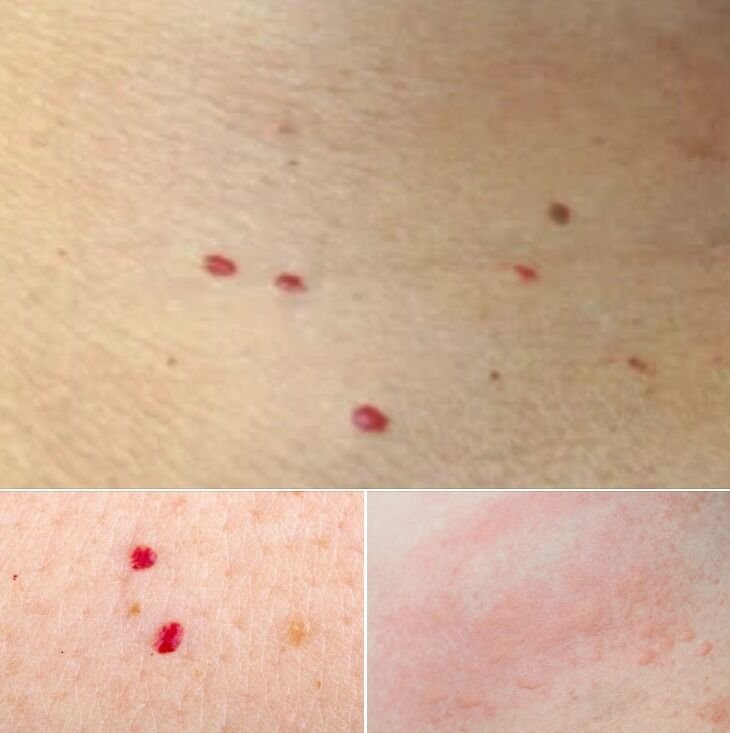
Cherry angiomas are small, bright-red bumps caused by an overgrowth of tiny blood vessels. They are generally harmless and become more common with age. However, a spot that bleeds, changes rapidly, or looks unusual should be checked by a healthcare professional.
3. Heat Rash
Heat rash develops when sweat becomes trapped in blocked sweat ducts. It can cause clusters of small red bumps, prickling sensations, and itching. Keeping the skin cool and wearing loose, breathable clothing may help relieve symptoms.
4. Allergic Reactions
Red spots or patches can appear after exposure to allergens, including certain foods, medications, skincare products, insect bites, or stings. Other symptoms may include itching, swelling, and hives. Difficulty breathing or swelling of the throat requires emergency medical attention.
5. Folliculitis
Folliculitis occurs when hair follicles become inflamed, sometimes because of bacterial or fungal infections. It may cause red bumps, tenderness, itching, or pus-filled spots. Treatment depends on the underlying cause.
6. Cellulitis
Cellulitis is a bacterial infection affecting deeper layers of the skin. It can cause redness, swelling, warmth, and pain, and the affected area may spread. Medical assessment is important because antibiotics are often required.
7. Impetigo
Impetigo is a contagious bacterial skin infection that commonly affects children but can occur at any age. It often begins as red sores or blisters that break open and develop yellowish, honey-colored crusts. Medical treatment can help clear the infection and reduce its spread.
8. Vasculitis
Vasculitis involves inflammation of blood vessels and may be associated with autoimmune conditions, infections, or certain medications. Depending on the affected vessels, it can cause red or purple spots, bruising, pain, or other symptoms. Medical evaluation is necessary to identify the cause.
9. Hemangiomas
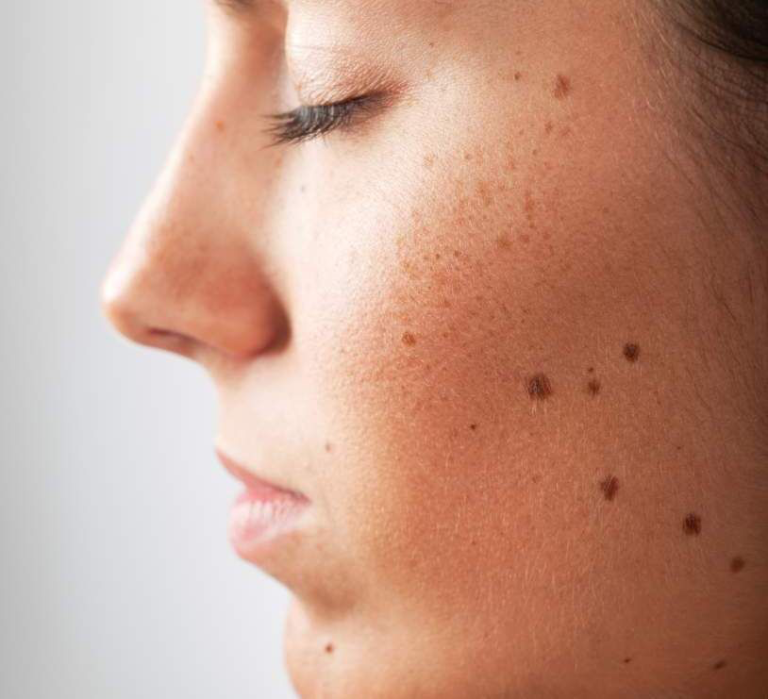
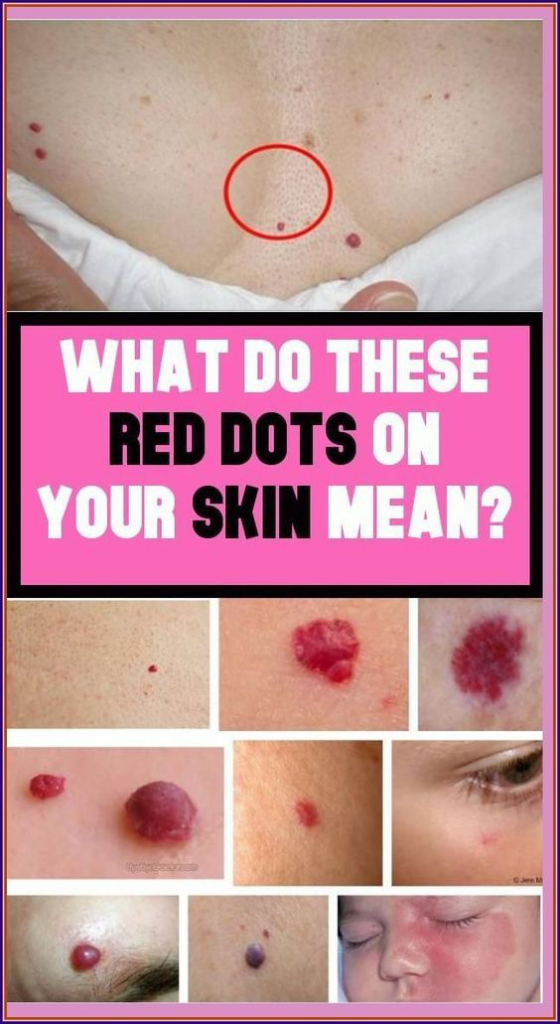
Hemangiomas are noncancerous growths made up of blood vessels. They often appear as red or reddish-purple marks and are particularly common in infants. Many improve over time, although some require monitoring or treatment depending on their size, location, and effects.
Home Care and Natural Remedies
Some mild skin irritation may improve with gentle skin care. However, home remedies cannot treat every cause of red spots, especially infections or blood vessel disorders. It is important to identify the underlying cause before trying a treatment.
1. Aloe Vera
Pure aloe vera gel may soothe some forms of mild skin irritation. Apply a small amount to a limited area first to check for irritation. Avoid using it on open wounds or unexplained skin lesions without medical advice.
2. Coconut Oil
Coconut oil can help moisturize dry skin, but it is not a proven treatment for the underlying causes of red spots. It may irritate some people’s skin or worsen certain acne-prone conditions. Stop using it if redness or itching increases.
3. Dandelion
Dandelion is traditionally used in herbal remedies, but there is insufficient reliable evidence that drinking dandelion-root tea removes red spots or treats their underlying causes. Herbal products can also interact with medications, so consult a healthcare professional before using them medicinally.
When Should You Consult a Doctor?
If red spots change in size, shape, or color, continue to spread, bleed, or persist without a clear explanation, seek medical advice. Sudden, unexplained red or purple spots that do not fade when pressed need prompt medical assessment, particularly when accompanied by fever or feeling very unwell. Seek emergency care if you experience difficulty breathing, severe symptoms, or rapidly spreading redness with significant pain.
Maintaining a balanced diet, drinking enough water, and following a gentle skincare routine can support general skin health. However, healthy habits alone cannot prevent or treat every cause of red spots. Getting the correct diagnosis is the most important step toward appropriate treatment.