
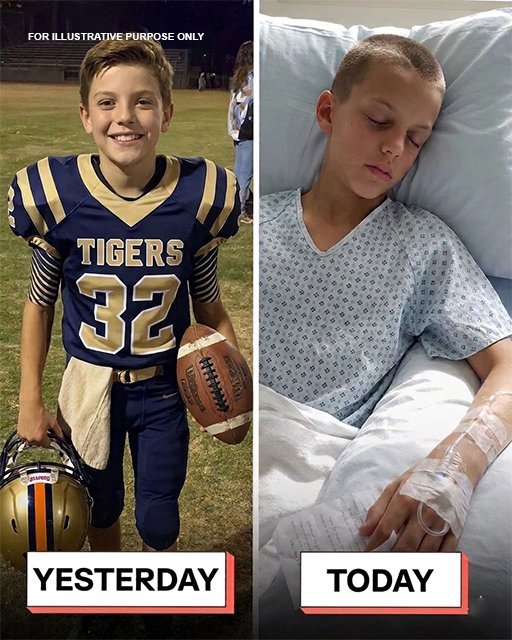
My son fell into a coma after a walk with his father. At thirteen years old, he was the center of my world, and in a single afternoon, everything I believed about safety, trust, and family cracked wide open.
But it wasn’t just the coma that shattered me.
It was the note in his hand.
And the truth it led me to.
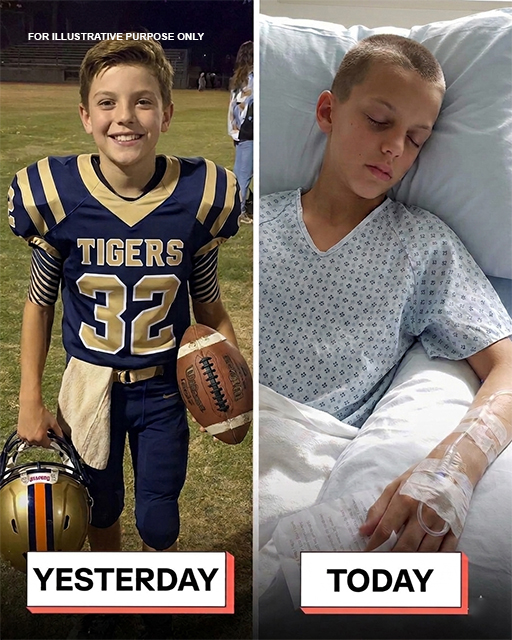
I will never forget the smell of the hospital that night. It was sterile, sharp, and suffocating, the kind of smell that clings to your skin and settles into your memory whether you want it to or not.
It was just after three in the morning when I rushed through the emergency room doors. My heart was pounding so hard I could hear it in my ears. My bag hung from my shoulder, clenched tightly in my fist, the leather creased beneath my grip.
Only hours earlier, my son, Liam, had left the house with his father for a walk.
Liam was the kind of boy who filled every room he entered. He was always moving, always talking, always leaving behind a trail of half-empty water bottles and worn-out sneakers. He had a restless energy that made you believe nothing could ever slow him down.
“Take your inhaler, just in case,” I had called after him, like I always did.
He rolled his eyes, but there was a smile tugging at his lips.
“I will, Mom.”
Those were the last words I heard from him.
After that, there was only a phone call, followed by machines, wires, and silence.
When I reached the ER, Liam was already in a coma.
I barely remember speaking to anyone. One moment I was outside, and the next I was standing beside a hospital bed, staring at my son’s still body. Tubes ran from his arms. A ventilator breathed for him. Monitors blinked and beeped in steady, indifferent rhythms.
It didn’t feel real. It couldn’t be real.
At the foot of the bed sat Eric, my ex-husband. He looked hollow, his face pale and drawn, his eyes red as if he had been crying for hours.
When he looked up at me, something felt off. Not just grief, but something else. Something I couldn’t quite name.
“I don’t know what happened,” he said immediately, his voice unsteady. “We were just walking. One second, he was fine, and the next, he collapsed. I called 911 right away. I stayed with him the whole time.”
I nodded, but something inside me twisted.
This wasn’t the first time Eric had dismissed Liam’s health. A year ago, he had brushed off a follow-up appointment, telling Liam to stop acting fragile. I had argued with him then, but like so many things after our divorce, it had turned into a stalemate.
Now, standing there and looking at my unconscious son, that memory came rushing back with unbearable weight.
A doctor approached me. She was calm and composed, though exhaustion was etched into her face.
“We’re still running tests,” she said gently. “He experienced cardiac arrest, but we were able to revive him. Right now, he’s unresponsive. We’re doing everything we can to determine the cause.”
“Did you review his medical history?” I asked quickly.
She nodded. “We have his records.”
I gripped the bed rail and focused on the rise and fall of Liam’s chest. It was mechanical and unnatural, but it was something.
Eric began to cry again, loud and raw, but I couldn’t bring myself to comfort him. Something about it felt misplaced, as though he were trying too hard to prove something.
I leaned closer to Liam and brushed a strand of hair from his forehead.
“I’m here,” I whispered. “You’re not alone.”
My mind replayed his last message to me.
Love you, Mom. See you at dinner.
Eric stepped closer.
“He was fine,” he insisted. “We were just talking about baseball. He wanted to practice pitching later. He didn’t say anything was wrong.”
I turned to him, my voice low but firm.
“Did he mention dizziness? Chest pain? Anything at all?”
He shook his head too quickly. “No. Nothing like that. He just tripped.”
Just tripped.
The words hung in the air, thin and unconvincing.
I held his gaze, searching for something—truth, guilt, anything—but all I saw was fear.
“If there’s more you’re not telling me,” I said quietly, “the doctors need to know.”
“I told you everything,” he replied, his jaw tightening.
A nurse entered then, her tone gentle but firm. Visiting hours were over. We both needed rest.
Eric grabbed his jacket.
“I’ll go home,” he said. “Call me if anything changes.”
I didn’t answer.
When the room finally fell silent, I pulled a chair close to Liam’s bed and sat beside him. The ticking of the clock seemed louder than anything else.
“I’m here, sweetheart,” I murmured, over and over again.
That was when I noticed his hand.
It was clenched tightly, resting against the sheet. At first, I thought it was just muscle tension, but something about it felt deliberate.
Carefully, I pried his fingers open.
Inside was a small, crumpled piece of paper.
My heart started to race.
I unfolded it slowly, my hands trembling.
The handwriting was unmistakably his.
Mom, open my closet for the answers. BUT DON’T TELL DAD.
For a moment, I couldn’t breathe.
A chill ran through me as I read the words again.
Don’t tell Dad.
Why?
I leaned close to his ear, my voice barely above a whisper.
“Okay. I promise. I’ll find out.”
The nurse assured me Liam was stable for the moment and encouraged me to go home and rest. I didn’t want to leave, but I knew I needed answers, and the note had already told me where to look.
The drive home felt endless. Rain slicked the roads, and streetlights reflected in long, distorted streaks across the pavement.
When I stepped inside the house, it felt wrong. Too quiet. Too still.
I paused outside Liam’s bedroom door, my hand resting on the frame. The faint scent of his shampoo lingered in the air, achingly familiar.
The closet door was slightly open.
Just an inch.
Like someone had been there recently.
I pushed it open fully and stepped inside.
At first glance, everything looked normal. Clothes hung neatly. Shoes lined the bottom. Nothing seemed out of place.
But I knew Liam. If he left me a message like that, it meant something was hidden.
I began searching carefully. I moved hangers aside, checked pockets, and scanned every shelf.
My phone buzzed in my pocket. Eric.
I ignored it.
Then, on the top shelf, tucked behind a stack of old comic books, I found a blue shoebox.
My pulse quickened as I pulled it down and sat on the edge of the bed.
“Okay, Liam,” I whispered. “Show me.”
Inside the box were papers. Medical forms, printouts, and handwritten notes.
The first thing I saw was an appointment card from a cardiology clinic.
Scheduled for next week.
Beneath it was a printed confirmation from the patient portal.
My eyes scanned the page, then stopped.
Appointment canceled by parent – Eric.
Not missed.
Canceled.
My stomach dropped.
Next to it was a sticky note in Liam’s handwriting.
Dad said I don’t need it. Mom will worry.
I felt something inside me crack.
My phone buzzed again. This time, I answered.

“Why did you leave the hospital?” Eric asked immediately.
“I needed to get some things,” I replied. “And I needed to think.”
A pause.
“You’re not in his room, are you?”
I narrowed my eyes. “Why does that matter?”
Another pause, longer this time.
“I found the appointment card,” I said, my voice tightening. “Why did you cancel it?”
He exhaled sharply. “Because he didn’t need it. He was fine. You always overreact.”
“My insurance doesn’t cover it anymore,” he added quickly. “I would’ve had to pay out of pocket.”
I stood up, anger rising fast and hot.
“I would have paid for it,” I said. “Without hesitation.”
“You turn everything into a crisis,” he snapped.
“Maybe that’s what kept him alive,” I shot back.
The line went dead.
I stood there in the silence, shaking, surrounded by pieces of something I didn’t yet fully understand.
Then I remembered my phone.
I hadn’t checked everything.
Scrolling through my notifications, I saw it.
A message I had missed.
A video from Liam.
Timestamped just fifteen minutes before Eric’s call from the ER.
My breath caught as I pressed play.
Liam’s face filled the screen. He looked pale, his expression strained.
“Hey, Mom,” he said softly. “I don’t feel good. My chest hurts, and I feel dizzy.”
My heart shattered.
“Dad says it’s nothing,” he continued, glancing off-camera. “And he’ll get mad if I tell you. But I’m scared. You said to always tell you if something’s wrong, so I am.”
In the background, Eric’s voice cut in sharply.
“Put that away, Liam! You’re fine. Stop making a scene. Don’t worry, your mom.”
Liam looked back at the camera, his lips pressed together.
The video ended.
I sank onto the bed, the phone slipping slightly in my grip.
He had reached out to me.
He had been scared.
And I hadn’t been there.
I called the hospital immediately, my voice shaking but urgent. I explained everything: the canceled appointment, the note, the video.
“This is important,” I said. “Please, the doctor needs to see this.”
They promised to pass it along.
That night, I didn’t sleep.
Eric’s messages kept coming.
Don’t make me the bad guy.
We need to stay united.
Stop digging, Olivia.
But it was too late for that.
By morning, everything had changed.
At the hospital, I met with the doctor and a social worker. I showed them the video, handed over the documents, and explained everything in detail.
They listened carefully, their expressions growing more serious with each piece of information.
“We’re updating his chart immediately,” the doctor said. “Thank you for bringing this to us.”
The social worker nodded. “From now on, all medical decisions will require your approval.”
For the first time since this nightmare began, I felt a small sense of control return.
Not relief. Not yet.
But something close.
Later, I sat beside Liam again, holding his hand.
“I found your answers,” I whispered.
The monitors continued their steady rhythm, each beep a fragile promise.
The door opened quietly. Eric stood there, hesitant.
“I’m sorry,” he said.
I looked at him, exhausted beyond words.
“This isn’t about us,” I said. “It’s about him.”
He nodded, then left without another word.
That night, I stayed by Liam’s side, my hand resting on his arm.
He was still fighting.
And so was I.
Because when he wakes, and I believe with everything in me that he will, he will know this:
His voice mattered.
His fear mattered.
And when he needed me most, I chose to listen.