
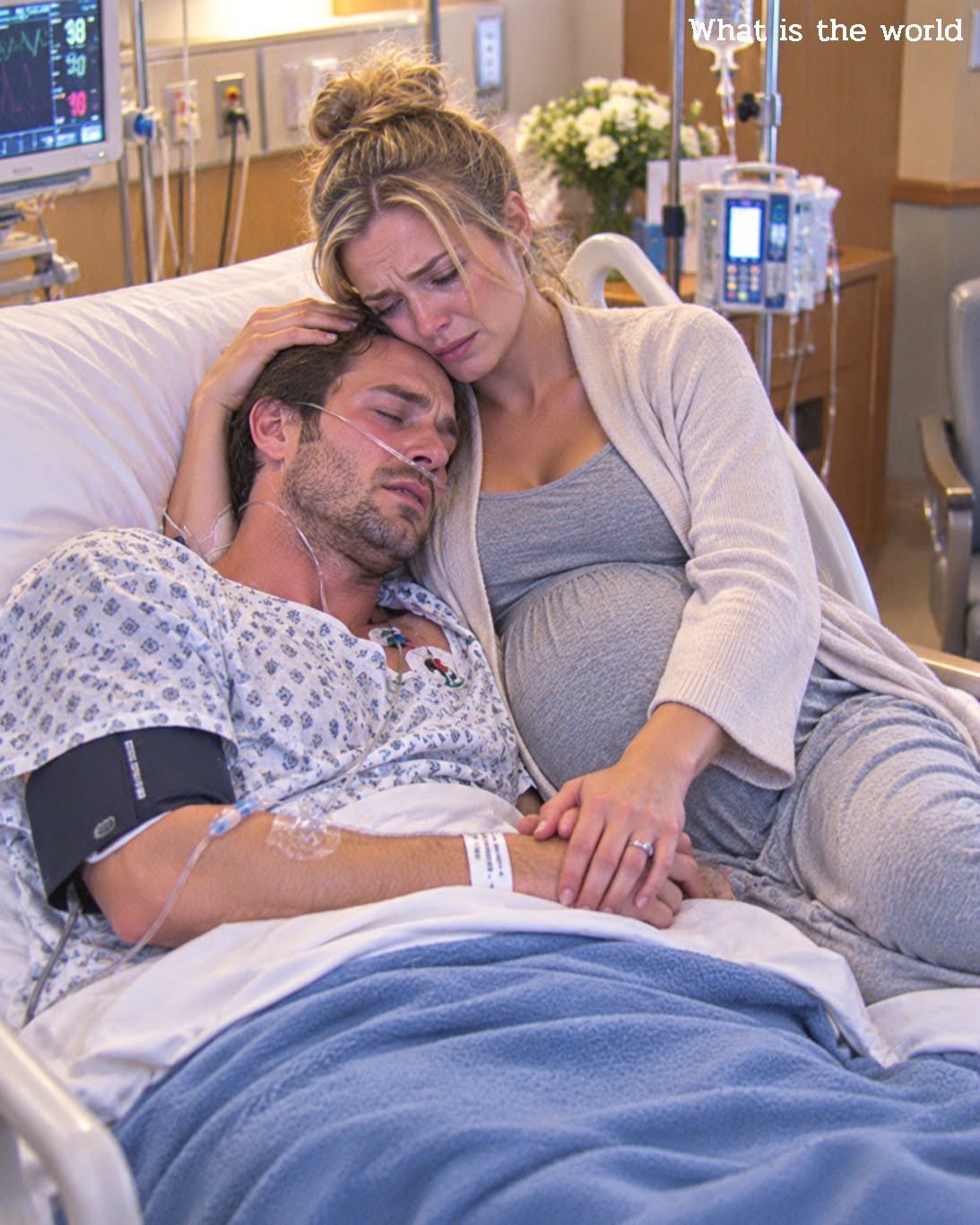
When I opened the package Mark had arranged for me to receive after his death, I understood that his final plan reached beyond organ donation: he had also found a way to leave our daughter and me something we could carry for the rest of our lives.
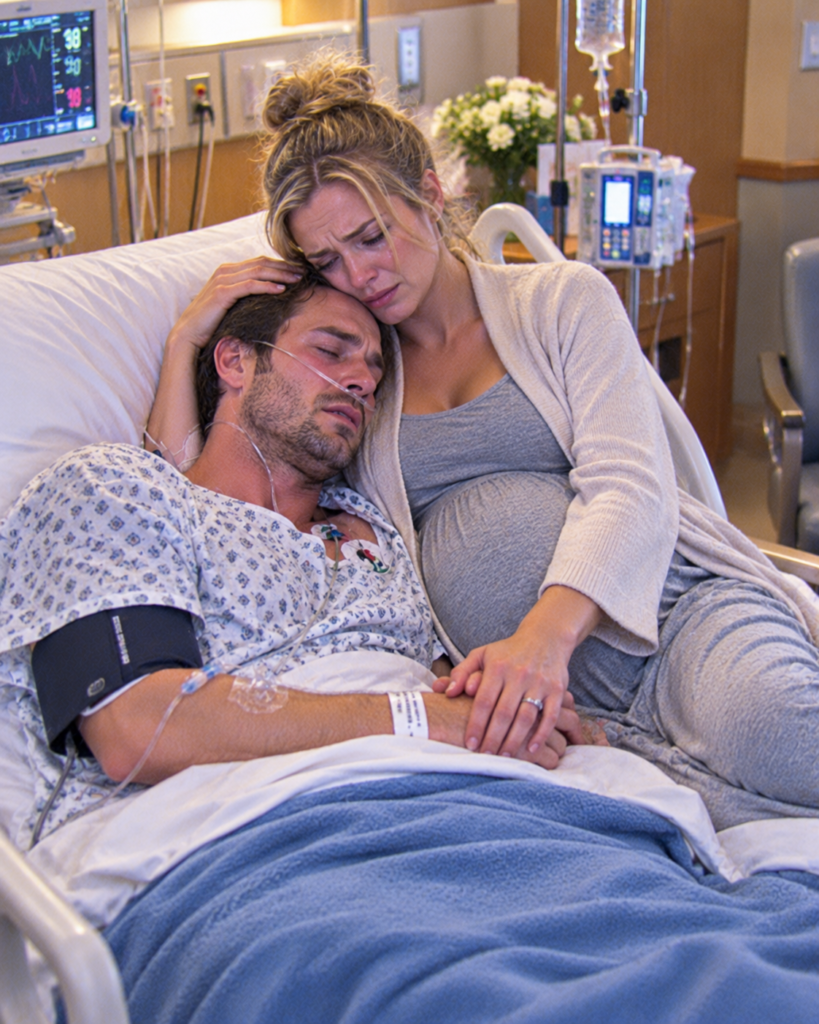
But standing in that hospital hallway, with his doctor in front of me and my husband’s absence still too new to understand, I had no idea what I was holding.
The doctor had hurried after me just as I was leaving.
I had already signed the final donation papers, cried until my face hurt, and somehow made it through the doors of the room where Mark had died without turning around and running back to his bed.
Then I heard footsteps behind me.
“Wait. Please, wait.”
I stopped.
The doctor was a few yards away, breathing harder than I had ever seen him breathe, one hand hidden behind his back.
For one terrible second, I thought something had gone wrong.
My hand went straight to my stomach.
Our daughter shifted beneath my palm.
“What happened?” I asked.
“Nothing with the donation,” he said quickly. “This is something else.”
He looked exhausted, but there was something more in his expression, something almost personal.
Then he brought his hand forward.
He was holding a thick envelope.
My name was written across the front in Mark’s handwriting.
I recognized the slight slant of the letters immediately.
My knees almost gave out.
There are things grief prepares you for badly, and things it does not prepare you for at all.
I had prepared myself to hear Mark’s name spoken in the past tense.
I had prepared myself to go home to his shoes by the door, his coffee mug in the cabinet, and the half-finished nursery we had planned together.
I had not prepared myself to see handwriting that had been made by a living hand only weeks earlier.
“When did he give you this?” I whispered.
“Three weeks ago.”
That was when Mark had still been asking to speak with him alone.
That was when I had kept asking what they were discussing.
That was when Mark had squeezed my hand and told me, “There’s something I need to arrange. Please trust me.”
The doctor glanced at the envelope and then back at me.
“He made me promise you wouldn’t receive it until after he was gone,” he said. “He was very specific about that.”
I stared at my name.
“Why?”
The doctor’s jaw tightened.
“I think he wanted to explain that himself.”
He placed the envelope in my hands.
It felt heavier than paper should feel.
I didn’t open it there.
I couldn’t.
Not yet.
I pressed it against my chest, thanked the doctor even though the words came out broken, and walked toward the exit with one hand around Mark’s last secret and the other supporting the weight of our unborn daughter.
Outside, ordinary life was still happening.
Cars moved through the parking lot.
Someone pushed a wheelchair toward the entrance.
A man walked past me carrying a paper coffee cup.
Everything looked offensively normal.
My husband had just died, and the world had apparently decided to continue.
I sat in the passenger seat of our car for nearly twenty minutes before I could even put on the seat belt.
The envelope stayed in my lap.
I kept touching Mark’s handwriting with my thumb.
Open it.
I couldn’t.
Open it.
I still couldn’t.
Eventually I drove home with the envelope beside me, untouched.
When I walked through our front door, Mark’s jacket was hanging where he had left it.
That nearly finished me.
For weeks I had known this day was coming, but knowing death is approaching and living inside the first evening after it arrives are two completely different things.
I stood in the entryway staring at that jacket while our daughter rolled beneath my ribs.
Then I remembered the porch.
Six months into the pregnancy, before Mark became too weak to sit outside for long, we had spent evenings there talking about the baby.
He would rest his hand on my belly and wait patiently for her to kick.
He loved that.
The first time he felt her move, he laughed so loudly I told him he was going to scare her.
After he learned he was dying, the porch changed.
We still sat there.
We still talked.
But every ordinary conversation had something underneath it that neither of us wanted to name.
One night, while our daughter moved against his palm, Mark told me what he wanted done after his death.
“If my organs are still healthy enough when the time comes, I want them donated.”
I had looked away because I could not stand hearing the words while she was kicking.
“Please don’t talk about dying while she’s kicking,” I whispered.
Mark had lowered his eyes toward my stomach.
“That’s exactly why I have to.”
Then he said the sentence I would remember every time I thought about signing those donation papers.
“If I can’t watch her grow up, maybe I can at least make sure somebody else gets more time with theirs.”
That was Mark.
He knew he was running out of time.
He knew our daughter might never feel his arms around her.
He knew I was terrified of becoming a mother at the same moment I became a widow.
Still, he was thinking about what he could give.
Standing in our house after the hospital, I finally understood why I had been able to sign the papers.
It wasn’t because I was strong.
It was because Mark had made his wishes impossible to misunderstand.
The envelope was different.
He had hidden this from me deliberately.
That hurt.
I carried it into the nursery and sat in the chair we had bought because Mark insisted I would need somewhere comfortable for late-night feedings.
The room was almost finished.
A few tiny clothes were folded in a drawer.
A blanket rested over the side of the crib.
There were still tools in the corner from the last thing Mark had managed to assemble before he became too weak.
I put the envelope on my stomach.
Our daughter kicked beneath it.
And suddenly I knew I had to open it.
My fingers shook as I slid them beneath the flap.
Inside was a letter.
Nothing dramatic.
Nothing expensive.
Just several pages in Mark’s handwriting.
That somehow made it harder.
The first line stopped me.
He had written that if I was reading his words, then the day we had both been afraid of had finally come.
I covered my mouth.
For a while, that was as far as I got.
Then I read again.
Mark explained why he had asked the doctor to keep the letter from me.
He knew I would have tried to read it while he was still alive.
He knew I would have treated every sentence like another goodbye.
He knew I might spend his remaining days watching him disappear instead of simply being beside him.
He didn’t want that.
He wanted our last weeks to belong to us, not to a letter written for afterward.
That was why he had met privately with the doctor.
That was why he had refused to tell me more.
That was why he had asked me to trust him when secrecy was the last thing either of us wanted between us.
I kept reading.
The letter was not really about dying.
It was about our daughter.
Mark wrote about the first time he felt her kick.
He wrote about the tiny clothes we had bought before we knew how sick he was.
He wrote about wondering whether she would inherit my stubbornness or his terrible habit of leaving cabinet doors open.
I actually laughed when I read that.
Then I cried because I had laughed.
Grief can make even happiness feel disloyal.
A few lines later, Mark seemed to answer that feeling before I had even experienced it.
He told me that when life eventually gave me reasons to laugh again, I was supposed to take them.
He did not want our daughter raised inside a house where loving him meant being afraid to feel joy.
He wanted her to know him, but he did not want his death to become the biggest thing about her childhood.
That sentence changed something in me.
Until then, I had been thinking about memory as preservation.
Keep his jacket.
Keep his mug.
Keep every photograph exactly where it was.
But Mark was asking for something harder.
He was asking me to let memory move.
He wanted our daughter to hear stories about him while eating breakfast, while riding in the car, while doing the ordinary things he had dreamed of doing beside her.
He wanted her to know that he had talked to her before she was born.
He wanted her to know that he had rested his hand on my stomach and waited for her movements like they were messages meant only for him.
He wanted her to know that he had loved her before seeing her face.
I folded the letter against my chest and cried until the nursery went blurry.
Then I noticed one final paragraph.
Mark had written about the donation.
He said he did not want me to think of those papers as something I had allowed doctors to take from him.
He wanted me to remember them as something he had chosen to give.
The distinction mattered to him.
It began to matter to me too.
For weeks after his diagnosis, so much had been taken from us.
Time was taken.
Plans were taken.
His strength was taken.
The future we had assumed we would share was taken.
But the donation was different.
That was still his decision.
That was still generosity.
That was still Mark finding one small place where illness did not get the final word.
I sat in that nursery until the light outside changed.
At some point I placed both hands on my stomach.
“Our dad loved you so much,” I whispered.
I had never called him that before.
Our dad.
Not my husband.
Not Mark.
Her dad.
The words made his absence feel sharper, but they also made something else clear.
Death had ended our marriage in the physical sense, but it had not ended his place in our daughter’s story.

The next weeks were messy.
There was no beautiful transformation where I woke up one morning ready to handle everything.
Some days I functioned.
Some days I stood in the laundry room holding one of Mark’s shirts because washing it felt unbearable.
Some nights I slept with the letter on the nightstand.
Some nights I put it in the drawer because seeing it hurt too much.
But I kept going.
I had to.
Our daughter was coming.
My body continued preparing for birth even while my mind kept expecting Mark to walk through the door.
There were moments I resented that.
Then there were moments when feeling the baby move reminded me that the future Mark had been so afraid to miss was still arriving.
When our daughter was finally born, I cried before I even held her properly.
She was here.
Mark wasn’t.
Both truths existed together.
That was the hardest part.
I looked at her tiny face and immediately wondered what Mark would have said.
Would he have claimed she looked exactly like him?
Probably.
Would he have been terrified to hold her?
Absolutely.
Would he have cried?
I knew the answer to that one too.
Later, when the room was quieter and she was sleeping against me, I thought about the letter waiting at home.
For the first time, it did not feel like an object connected only to the day Mark died.
It felt like something that belonged to her too.
A few days after we came home, I carried our daughter into the nursery and sat in the chair where I had opened Mark’s envelope.
The same blanket was still over the crib.
The same unfinished traces of Mark’s work remained in the room.
But now there was a baby in my arms.
The room had changed because she had entered it.
So had I.
I took the letter from the drawer.
Then I read parts of it aloud.
Of course she could not understand.
She slept through most of it.
That wasn’t the point.
I needed to hear the words in a room where Mark had once imagined sitting with her himself.
I read the part about the porch.
I read the part about her kicking beneath his hand.
I read the part where he joked about cabinet doors.
I read the part where he asked me to let her grow up knowing that her father’s final months were not only a story about illness.
They were also a story about love.
They were also a story about choice.
They were also a story about giving.
Then I reached the final lines.
Mark had written them directly to our daughter, even though he knew she might not hear them for years.
He wanted her to know there was never a moment when she was unwanted, never a moment when he regretted becoming her father, and never a moment after the diagnosis when he stopped imagining the person she might become.
His illness had taken away the chance to watch her grow.
It had not taken away his love for her.
I lowered the pages.
Our daughter moved slightly against my chest and settled again.
For the first time since Mark died, I did not feel as if I were standing only at the end of something.
I was also standing at the beginning.
Months earlier, I had begged Mark not to talk about death while our baby was kicking.
I understand now why he answered the way he did.
Her movement had not reminded him that he was dying.
It had reminded him that someone he loved was still beginning.
That was why he chose donation.
That was why he wrote the letter.
That was why he trusted his doctor with one last promise and made him wait until Mark himself could no longer change his mind, soften the words, or protect me from hearing them.
I once thought the envelope contained Mark’s final goodbye.
It didn’t.
It contained instructions for how to keep saying hello.
Now the letter stays in the nursery, folded carefully where I can reach it.
Someday our daughter will be old enough to read every word herself.
Someday she will ask questions I cannot answer without crying.
Someday I will tell her about the porch, about the nights her father waited for her to kick, about the way his hand covered my stomach, and about the choice he made when he realized he might never get to hold her.
And when I tell her what Mark said about giving someone else more time with the people they loved, I will also tell her what he gave us.
He gave me a way to talk about him without making his death the center of every memory.
He gave our daughter proof that she was loved before she took her first breath.
And in the middle of the worst goodbye of my life, he left behind something I did not understand until much later.
Permission to keep living.