
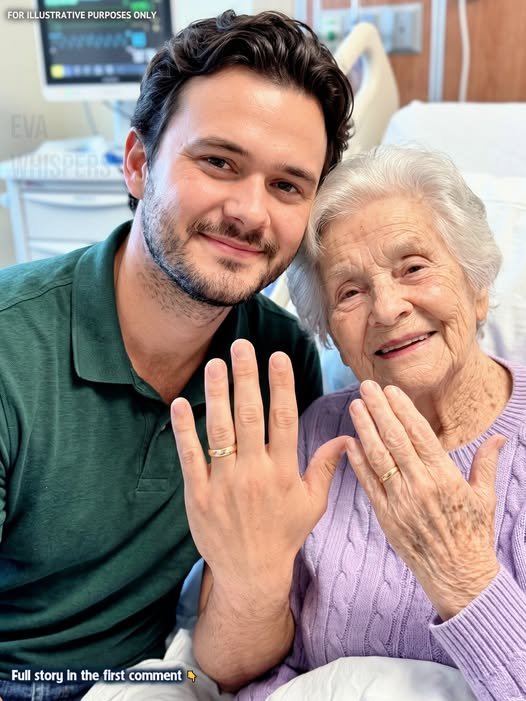
The Woman in Room 14
Two years ago, I was thirty-four years old, working as an orderly at a small nursing home on the edge of town.
It wasn’t the kind of job people dreamed about when they were young. The pay was modest, the shifts were long, and there were days when I went home so tired that I barely had the energy to eat dinner. But somehow, I loved it.
I loved the quiet dignity of the place. I loved the old stories that came from residents who had lived entire lifetimes before I was even born. I loved helping people feel seen, especially those who had been forgotten by the world.
That was how I met Gloria Whitaker.
She lived in Room 14, near the window that overlooked the courtyard. She was eighty-two years old, with silver hair she always pinned neatly behind her ears, bright blue eyes, and a tongue sharp enough to cut through anyone’s bad mood.
The first thing she ever said to me was, “You’re new.”
I smiled and said, “Yes, ma’am.”
She looked me up and down and replied, “Don’t call me ma’am. Makes me sound ancient.”
“You’re not ancient?”
“I’m seasoned,” she said proudly.
From that day on, Gloria became my favorite resident.
She was stubborn, funny, and full of opinions. She complained about weak tea, crooked picture frames, and people who spoke too loudly because they assumed age had stolen her hearing. But beneath all that fire was a kindness that showed up in quiet ways.
She remembered every nurse’s birthday. She saved half her dessert for residents who didn’t get visitors. She once scolded me for working through lunch, then forced me to sit down while she shared her sandwich with me.
Most residents had family who came by, at least once in a while. Children, grandchildren, nieces, old friends.
Gloria had no one.
No cards on holidays. No flowers on her birthday. No one standing beside her at doctor appointments. No one asking if she needed warmer socks or a fresh book to read.
At first, I tried not to think about it. In nursing homes, loneliness was everywhere. You learned to notice it without letting it break you.
But with Gloria, it was different.
Maybe because she never asked for pity. Maybe because she made loneliness look almost elegant. Or maybe because, over time, she stopped feeling like just another resident.
She started feeling like family.
The Old Hospital Bag
There was one thing about Gloria that none of us understood.
She had an old hospital bag.
It was faded gray canvas with a broken zipper, patched handles, and a little blue ribbon tied around one side. It looked like something that should have been thrown away years ago.
But Gloria kept it with her everywhere.
When she went to the dining room, the bag sat beside her chair. When she went to physical therapy, it rested near her feet. When she was taken to the hospital for checkups, she held it on her lap like it was made of gold.
Nobody was allowed to touch it.
Not nurses. Not doctors. Not even me.
One afternoon, I noticed the bag looked heavy, so I reached out and said, “Let me carry that for you.”
Gloria’s hand snapped over the handles so fast I pulled back.
“No,” she said.
Her voice wasn’t angry, but it was firm.
I raised both hands. “Sorry. I was only trying to help.”
Her expression softened. “I know, sweetheart. But some things a person has to carry alone.”
I never forgot that.
After that, I stopped asking. But I never stopped wondering.
What could an eighty-two-year-old woman possibly be guarding so carefully?
Money? Old letters? Medicine? A secret?
Whenever anyone joked about the bag, Gloria smiled and changed the subject. Whenever a nurse tried to move it while changing her sheets, Gloria politely took it right back.
That bag was part of her.
And whatever was inside it, she had spent years protecting it.

Tea After My Shift
My shift usually ended at six, but I often stayed longer.
At first, it was only because Gloria asked me to fix her tea. She liked it strong, with one sugar and a tiny splash of milk. Not too much milk, she warned me. “I’m elderly, not foolish.”
Then one cup of tea became ten minutes of conversation.
Ten minutes became half an hour.
Soon, it became our routine.
After my shift, I would stop by Room 14. Gloria would be sitting in her chair by the window, her hospital bag beside her, waiting as if she had known all day that I would come.
She told me about her life in pieces.
She had grown up poor but proud. She had worked as a seamstress, then as a hospital volunteer, then later as a bookkeeper for a small grocery store. She had once loved dancing, though she claimed her knees had “resigned without notice.”
She told me she had almost married once.
His name was Arthur.
“He had kind eyes,” she said one evening, staring out the window. “That matters more than people think.”
“What happened?” I asked gently.
She took a long breath.
“He got sick before the wedding. We thought we had time.”
Her voice faded after that.
I didn’t push.
Gloria was honest, but she revealed herself slowly. Like an old house opening one room at a time.
I told her things too. About my childhood. About losing my mother young. About how I had drifted through jobs before finding the nursing home. About how I sometimes felt like I was always taking care of people because I didn’t know what else to do with my heart.
Gloria listened like every word mattered.
One night, after I told her I had no close family left, she reached across the small table and touched my hand.
“Then we’ll be each other’s people,” she said.
And somehow, we were.
The Day Everything Changed
One winter afternoon, Gloria was taken to the hospital again.
She had been weaker for weeks, though she tried to hide it. Her jokes came slower. Her hands trembled when she lifted her teacup. Some days, she was too tired to sit by the window.
Still, she carried the bag.
Even in the ambulance, she insisted on holding it.
I visited her after my shift. She was lying in a hospital bed, smaller than she had ever looked at the nursing home. The room smelled like disinfectant and rain. Her old bag sat beside her pillow.
When she saw me, she smiled.
“There you are,” she whispered. “I was starting to think you found better company.”
“Impossible,” I said, pulling up a chair.
She laughed softly, then coughed.
Something in my chest tightened.
For the first time, Gloria looked afraid.
Not of pain. Not even of dying.
She looked afraid of leaving something unfinished.
She reached for my hand.
“I have one final wish,” she said.
I leaned closer. “Anything.”
She looked straight into my eyes.
“I know this sounds strange,” she said slowly. “But I don’t have much time left. I’ve spent so many years alone, and I don’t want to leave this world knowing I never had someone to call my husband.”
I froze.
Then she said it.
“Will you marry me?”
For a moment, I couldn’t speak.
I thought I had misunderstood her. But Gloria’s eyes were clear. Tired, yes. Sad, yes. But completely clear.
“Gloria,” I said carefully, “you know I care about you.”
“I know exactly what this is,” she said. “And I know what it isn’t. I am not asking for romance, sweetheart. I am asking for dignity. For one day of belonging. For one promise made in kindness.”
My throat burned.
She squeezed my hand.
“People spend their whole lives chasing grand love stories,” she whispered. “But sometimes, the greatest love is simply someone choosing not to let you be alone.”
I looked at her, this stubborn, lonely, beautiful soul who had become more family to me than anyone had in years.
I knew most people would never understand.
They would judge. They would whisper. They would think it was strange.
But sitting beside Gloria’s bed, none of that mattered.
If I could give a kind woman one final moment of peace, how could I refuse?
So I nodded.
“Yes,” I said. “I’ll marry you.”
Gloria closed her eyes, and tears slipped down her cheeks.
“Thank you,” she whispered. “You have no idea what you’ve given me.”

A Wedding in a Hospital Room
A week later, we were married in the hospital chapel.
It was small and quiet, with white walls, wooden chairs, and sunlight falling through stained glass in soft colors.
Gloria wore a pale blue cardigan over her hospital gown. One of the nurses pinned a tiny silk flower in her hair. I wore the only suit jacket I owned, which was a little too tight across the shoulders.
There were five people there.
Two nurses. The hospital chaplain. Gloria’s lawyer, Mr. Henson. And me.
Gloria held my arm as we stood together.
Her hands were cold, but her smile was steady.
The ceremony was simple. No grand promises we couldn’t honestly make. No false romance. Just kindness, respect, and companionship.
When the chaplain asked if I would honor and care for Gloria, I said yes.
When he asked Gloria the same, she looked at me with a little spark in her eyes and said, “I already have.”
Everyone laughed softly.
Then she slipped a plain silver ring onto my finger.
It was too small, so I wore it on a chain around my neck.
When it was over, Gloria looked brighter than she had in months.
For the rest of that day, every nurse who passed her room heard about it.
“My husband is coming back with tea,” she announced proudly.
“My husband says the pudding here tastes like wallpaper paste.”
“My husband thinks I should rest, but I told him I’ve rested enough for one lifetime.”
I played along, smiling every time.
But when evening came and the room grew quiet, Gloria reached for her old hospital bag.
She rested one hand on it.
“Promise me something,” she said.
“Anything.”
“When I’m gone, don’t let anyone open this bag except Mr. Henson. He’ll know when to give it to you.”
I frowned. “To me?”
She nodded.
“She chose you for a reason,” she whispered, though at the time I didn’t understand why she said it that way.
Three days later, Gloria passed away peacefully in her sleep.
I was not in the room when it happened. A nurse called me early in the morning. I sat on the edge of my bed with the phone in my hand and felt the world go strangely quiet.
I had known it was coming.
That did not make it hurt less.
Gloria’s funeral was held on a gray Thursday.
I expected almost no one to come.
But I was wrong.
There were nurses from the hospital. Staff from the nursing home. Residents who were well enough to attend. The cook who used to sneak Gloria extra biscuits. A retired mailman who said she had once helped him write a letter to his daughter. A woman from the library who said Gloria had donated books every Christmas for twenty years.
One by one, people stood and told small stories about her kindness.
Not dramatic stories. Not stories that would make headlines.
Just human ones.
A scarf she had knitted for someone’s baby. A bill she had quietly paid. A birthday she remembered when no one else did.
I sat in the front row, staring at her photograph, realizing something I should have known all along.
Gloria had never truly been empty.
She had been pouring herself into other people for years.
After the service, people came to shake my hand.
Some looked confused when they heard I was her husband. Some gave me strange looks. Others seemed to understand without needing an explanation.
I didn’t care.
Grief has a way of making other people’s opinions feel very small.
As I was leaving the cemetery, Mr. Henson approached me.
He was a tall man in his seventies, with silver glasses and a careful, gentle manner. He carried Gloria’s old hospital bag in both hands.
My breath caught.
I recognized it immediately.
The faded gray canvas. The broken zipper. The blue ribbon.
He placed it into my hands.
“She wanted you to have this,” he said.
The bag was heavier than I expected.
I looked down at it, then back at him.
“What’s inside?”
Mr. Henson’s face softened.
“Answers,” he said. “And a responsibility, if you choose to accept it.”
Then he said the words that changed everything.
“She chose you for a reason.”
What Gloria Had Been Carrying
We went to Mr. Henson’s office that afternoon.
I sat across from his desk with the hospital bag on my lap. For the first time, no one stopped me from touching it.
My hands trembled as I opened the broken zipper.
Inside were several bundles wrapped in cloth.
The first was a stack of letters tied with a faded ribbon.
They were from Arthur, the man Gloria had almost married. His handwriting was neat and slanted. I read only the first few lines before my eyes blurred.
He had written to her from a hospital bed decades ago, apologizing for leaving her too soon.
The second bundle held photographs.
Gloria as a young woman, laughing in a summer dress. Gloria standing beside Arthur outside a small church. Gloria holding a baby that wasn’t hers, smiling like the child belonged to the whole world.
Then I found a notebook.
It was old, but carefully kept.
On the first page, Gloria had written:
“For the ones no one comes back for.”
I turned the pages slowly.
Name after name filled the notebook.
Residents from the nursing home. Patients from hospitals. People Gloria had met over the years who had no family, no visitors, no one to sit beside them at the end.
Beside each name, she had written small details.
Loved peach pie.
Wanted someone to read Psalms.
Afraid of thunderstorms.
Missed his dog.
Wanted red lipstick for her birthday.
Wished someone would hold her hand.
Page after page.
Life after life.
Gloria had been carrying the memories of forgotten people.
I pressed my palm against my mouth.
Mr. Henson let me sit quietly for a while before he spoke.
“Gloria spent much of her life visiting people who had no one,” he said. “After Arthur died, she never married. She said grief gave her two choices. Close her heart, or make it bigger.”
I looked at the notebook again.
“She made it bigger,” I whispered.
“She did.”
Then Mr. Henson opened a folder on his desk.
“There is more.”

The Gift She Left Behind
Gloria had not been rich in the way people imagine.
She had lived simply. Wore the same coats for years. Bought secondhand furniture. Saved every dollar she could.
But over the decades, through careful work, a small inheritance from an aunt, and the sale of a house she never spoke about, she had built a quiet savings account.
Not millions.
But enough.
Enough to change something.
Mr. Henson explained that Gloria had left most of her estate to create a small charitable fund.
And she had named me as the director.
I stared at him.
“No,” I said immediately. “There has to be a mistake. I’m an orderly. I don’t know how to run a charity.”
Mr. Henson smiled gently.
“That is exactly why she chose you.”
I shook my head. “That doesn’t make sense.”
He reached into the bag and pulled out one final envelope.
My name was written on it in Gloria’s shaky handwriting.
I opened it slowly.
Inside was a letter.
My dear Daniel,
If you are reading this, then I have gone where old bones stop aching and tea is hopefully made properly.
Do not be angry with me for leaving you a task. I know you never asked for one.
But I watched you.
I watched you learn the names of people everyone else called “the resident in 12” or “the lady by the window.” I watched you sit with Mr. Peterson when he cried for his wife. I watched you fix Mrs. Allen’s music box even though it took you three evenings. I watched you bring me tea, not because it was your job, but because you knew exactly how I liked it.
The world is full of people who know how to manage money.
It has far fewer people who know how to notice loneliness.
That is why I chose you.
The bag holds the names of people I could not forget. The fund is for people like them. Use it to bring music, visitors, books, birthday cakes, warm blankets, small celebrations, and human hands to those who are alone.
Do not build something grand.
Build something kind.
And please do not spend your life believing you have no family.
Family is not always blood.
Sometimes family is the person who stays after their shift ends.
With all my love,
Gloria
By the time I finished reading, I was crying.
Not loudly. Not dramatically.
Just quietly, in the way grown men cry when something touches a place they thought had gone numb.
Gloria’s Table
I almost refused.
For two weeks, I told myself I was not qualified. I told myself someone older, wealthier, smarter, or more polished should take over.
Then one evening, I went back to the nursing home.
Room 14 was empty.
The bed had been remade. The window was open. Another resident would move in soon, and the world would continue as if Gloria Whitaker had never sat there making jokes about weak tea.
I stood in that room for a long time.
Then I looked at the empty chair by the window and knew what I had to do.
With Mr. Henson’s help, I started small.
We called it Gloria’s Table.
At first, it was just a monthly gathering at the nursing home for residents who rarely received visitors. We brought homemade desserts, music, flowers, and volunteers who simply came to sit and talk.
No speeches. No pity.
Just conversation.
The first month, twelve residents came.
The second month, twenty-three.
By the sixth month, we had volunteers from local schools, churches, libraries, and community groups. People donated blankets, books, puzzles, birthday cards, and old records. A retired barber offered free haircuts. A florist brought leftover bouquets every Friday. A high school choir came during the holidays and sang until half the room was crying.
We used Gloria’s notebook carefully.
If someone loved peach pie, they got peach pie on their birthday.
If someone missed their dog, we arranged therapy-dog visits.
If someone wanted red lipstick, we brought three shades and let her choose like she was preparing for a grand ball.
Small things.
Human things.
Gloria things.
And slowly, the nursing home changed.
Not perfectly. Not magically.
But noticeably.
There was more laughter in the halls. More visitors signing in. More residents sitting together instead of alone. More staff remembering that care was not only medicine and schedules, but presence.
One afternoon, a new resident named Mrs. Bell asked me why the program was called Gloria’s Table.
I told her about a woman who believed no one should have to eat alone.
Mrs. Bell nodded, then said, “Sounds like she knew what mattered.”
I smiled.
“She did.”
The Reason She Chose Me
It has been two years since Gloria died.
I still work at the nursing home, though now I also run Gloria’s Table with a small board of volunteers. We are not famous. We are not large. We do not have fancy offices or big donors.
But every month, someone who thought they had been forgotten hears their name spoken with warmth.
Every month, someone gets a birthday cake.
Every month, someone has a hand to hold.
I keep Gloria’s hospital bag in my office.
Not locked away. Not hidden.
It sits on a shelf beside a framed photograph from our hospital wedding. In the photo, Gloria is smiling like she has just won an argument with time itself.
Sometimes people ask me about the bag.
I tell them it belonged to the strongest woman I ever knew.
I tell them she carried grief, memories, promises, and love inside it.
I tell them she asked me to marry her as her final wish, and that for three days, she got to call someone her husband.
But the truth is, she gave me far more than I gave her.
I thought I was helping a lonely woman leave this world with dignity.
Instead, she helped me find my purpose.
Before Gloria, I thought family was something I had lost.
Now I understand that family can be built in quiet rooms, over cups of tea, in the last minutes of someone’s life, and in the promises we keep after they are gone.
The day her lawyer handed me that old hospital bag, I expected to find a secret.
And I did.
But it was not money. It was not scandal. It was not some shocking hidden fortune.
It was something much greater.
It was proof that one forgotten person can spend her life remembering others.
It was proof that kindness does not disappear when someone dies.
It simply changes hands.
And every time I walk through the nursing home now, every time I see a volunteer sitting beside a resident, every time I hear laughter coming from a room that used to be silent, I think of Gloria.
Sharp-witted Gloria.
Stubborn Gloria.
Gloria, who never let anyone touch her hospital bag because she was afraid the world would not understand the weight of what she carried.
But she trusted me with it.
Not because I was special.
Because I stayed.
And sometimes, staying is the greatest act of love there is.