
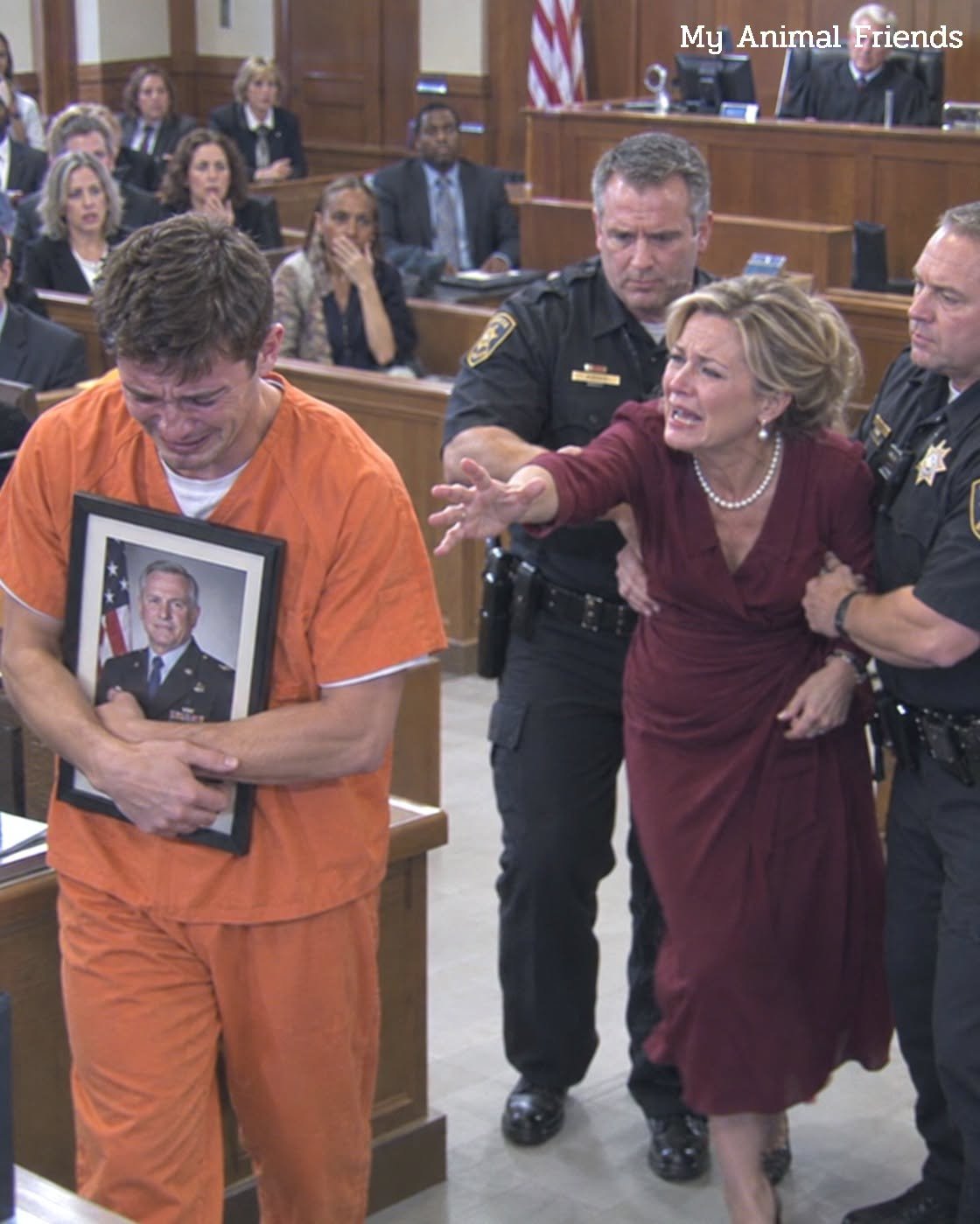
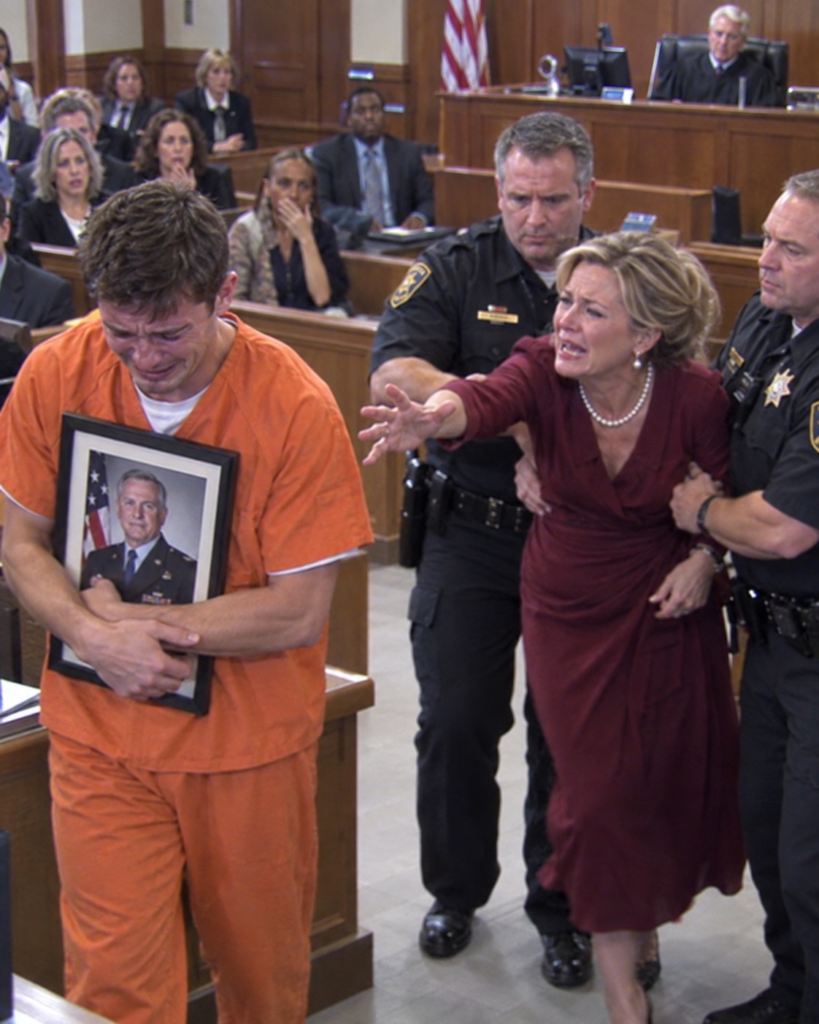
After three years in prison, Finnley Dennis came home expecting one thing: to see his father.
Instead, Reagan opened the door and told him Camden Dennis had been dead for a year.
“He died a year ago, Finnley… and this house doesn’t belong to you anymore. So don’t make a scene. Just leave.”
Image
Finnley stood on the porch with an old backpack over one shoulder, borrowed clothes on his back, and hands that still trembled from everything he had endured inside Oakwood Prison.
For 1,095 nights, he had imagined coming home differently.
He had imagined his father opening the door of the Silver Lake house. He had imagined Camden sitting in his worn leather armchair, looking at him with the same quiet confidence he had always shown before Finnley’s life collapse
“Hang in there, son. The truth always finds a way to come out.”
Those words had kept Finnley going through three years behind bars for a theft he swore he never committed.
Now the man who had spoken them was supposedly gone.
And the woman standing in the doorway seemed determined to make sure Finnley felt like a stranger in his own home
The house itself was almost unrecognizable.
The exterior had been repainted an elegant gray. His father’s rose bushes had disappeared. A luxury white SUV and an unfamiliar red sedan filled the driveway. Even the old front door had been replaced with a sleek black one and a modern lock.
Same address.
Finnley looked at Reagan.
“Where’s my father?”
She sighed.
“He was buried a year ago. Cancer. Fast. Painful. It’s over now.”
The words landed harder than Finnley expected.
For a moment, he could barely breathe.
“And nobody told me?” he asked. “Nobody even tried to let me see him one last time?”
A faint smile touched Reagan’s mouth.
“Finnley, you were in prison for stealing from your own father’s company. Do you really think he wanted you ruining his funeral?”
“I didn’t steal anything.”
“You said that during the trial. Nobody believed you.”
Finnley had heard those words before.
From prosecutors.
From people who had once called him family.
From strangers who had never bothered to hear his side.
But hearing them from Reagan now felt different.
Because she wasn’t simply reminding him of the conviction.
She was using it to decide whether he deserved to mourn his own father.
Finnley looked past her into the entrance hall.
The family photographs were gone.
His mother’s portrait was missing.
His father’s favorite hat was nowhere in sight.
Expensive furniture had replaced the pieces Finnley remembered. The familiar smell of coffee and cedar polish had disappeared beneath artificial air freshener.
“Let me in,” Finnley said. “I just want to see his room.”
“His room doesn’t exist anymore.”
Reagan’s answer came without hesitation.
“I remodeled it.”
Then Finnley heard footsteps on the stairs.
Carter came down slowly, smiling before he even reached the bottom.
Finnley’s stepbrother had spent years buried in gambling debts, yet he looked completely comfortable in the house Finnley had just been told was no longer his concern.
“Well, look who’s back,” Carter said. “The ex-con has come for his inheritance.”
Finnley stepped toward the doorway.
Reagan moved immediately, blocking him.
“If you ever set foot on this property again, I’ll call the police. With your criminal record, that won’t end well for you.”
Then she closed the door.
Softly.
Almost politely.
That hurt more than a slammed door could have.
Finnley stood there for several seconds, staring at the black door that had replaced the one he remembered from childhood.
He could have shouted.
He could have pounded on it.
He could have demanded answers.
But he had already lost three years of his life trying to convince people he wasn’t the man they had accused him of being.
He wasn’t going to give Reagan another excuse to call him dangerous.
So he walked away.
There was only one place he could think of going.
Pinecrest Cemetery.
His father had always said he wanted to rest beside Finnley’s mother when his time came.
If Reagan was telling the truth, Finnley needed to see his father’s name carved into stone with his own eyes.
The cemetery was quiet beneath the cypress trees.
Finnley walked between the rows, searching for Camden Dennis.
He expected grief.
He expected anger.
He did not expect to be stopped by an elderly groundskeeper.
“Who are you looking for, son?” the man asked.
“Camden Dennis,” Finnley replied. “His wife told me he’s buried here.”
The groundskeeper’s face changed.
Not with confusion.
With recognition.
“You’re Finnley… aren’t you?”
Finnley froze.
“How do you know my name?”
The old man glanced toward the cemetery entrance.
Then he lowered his voice.
“Because your father asked me to give you something if you ever came looking for him.”
He reached inside his jacket.
Finnley watched as the groundskeeper pulled out a yellowed envelope.
His name was written across the front.
Finnley recognized his father’s handwriting immediately.
The groundskeeper handed him the envelope.
Then he placed an old metal key in Finnley’s palm.
A small tag hung from it.
Four words were stamped across the metal.
STORAGE UNIT 108.
Finnley stared at the key.
For three years, everyone had told him the truth about his case had already been decided.
But his father had apparently prepared something for him before his supposed death.
Finnley looked back at the groundskeeper.
“But where is my father buried?”
The old man’s expression tightened.
“Not here.”
Finnley’s fingers closed around the key.
“Then where?”
The groundskeeper swallowed.
“And if you want to know why, don’t go back to that woman just yet.”
Finnley looked down at the envelope.
For the first time since leaving prison, his grief was being replaced by something else.
A question.
Not whether Camden Dennis had died.
But why Reagan had lied about where he was.
Finnley opened the envelope with shaking hands.
The first line was written in his father’s unmistakable handwriting.
“Son, if you’re reading this, Reagan has already started lying to you.”
Finnley read the sentence twice.
Then a third time.
The cemetery seemed to grow quieter around him.
He looked at the groundskeeper.
“He knew this would happen?”
The old man didn’t answer.
Instead, his eyes dropped toward the key.
STORAGE UNIT 108.
Finnley looked at it again.
Suddenly the key mattered more than the house, Reagan’s threats, and Carter’s smug expression.
Whatever Camden had wanted his son to discover, he had placed it somewhere Reagan couldn’t remodel, erase, or simply lock Finnley out of.
Finnley folded the letter and slipped it inside his jacket.
Then he looked toward the cemetery gate.
Three years ago, he had been convicted because people accepted a story about him without looking closely enough at the evidence.
Now his father had left him a key and a warning.
That could not be a coincidence.
Finnley didn’t know what was waiting inside Unit 108.
He didn’t know why his father had arranged for the groundskeeper to recognize him.
And he certainly didn’t know why Reagan had told him Camden was buried at Pinecrest Cemetery when he wasn’t.
But for the first time in years, Finnley had something he hadn’t had in prison.
A direction.
He left the cemetery with the envelope pressed against his chest and the old key locked inside his fist.
He did not return to the Silver Lake house.
He did not confront Reagan.
He did not tell Carter what he had found.
He went straight to Storage Unit 108.
The facility stood on the edge of town behind a row of industrial buildings. There were no family photographs here, no polished furniture, and no expensive renovations to hide what had once belonged to Camden.
Finnley found the correct row and walked slowly until he saw the number.
108.
For several seconds, he simply stood there.
The metal door looked ordinary.
That almost made it worse.
His father’s final message had led him here, but Finnley still had no idea what he was about to uncover.
He inserted the key.
It turned.
The lock released with a small metallic click.
Finnley pulled up the door.
Inside were several cardboard boxes, an old filing cabinet, a wooden chair, and a small desk covered with dust.
Nothing looked valuable.
Then Finnley noticed the box nearest the entrance.
His name was written on it.
Not “Finnley Dennis” as it might appear on an official document.
Just the name his father had used when Finnley was a child.
Finnley knelt down.
His hands were steadier now.
He opened the box.
The first thing he found was a stack of company records.
Then bank statements.
Then copies of documents connected to the theft that had sent him to prison.
Finnley stopped breathing.
He pulled out the first file.
The dates were familiar.
The transactions were familiar.
But the signatures weren’t.
Someone had used his identity to move money from Camden’s company.
Someone had made the theft look like Finnley had done it.
Finnley turned page after page.
His father had been investigating the case long after the trial ended.
There were handwritten notes in the margins.
Questions.
Names.
Dates.
And beside several transactions, Camden had drawn the same small mark.
Finnley recognized it.
His father used that mark whenever he wanted to flag something that did not make sense.
Finnley reached the bottom of the file.
A photograph fell onto the concrete floor.
He picked it up.
It showed Carter standing outside the company’s accounting office.
The timestamp was from the night one of the disputed transfers had occurred.
Finnley stared at the photograph.
Carter had told everyone he wasn’t anywhere near the office that night.
But the photograph placed him there.
Finnley turned it over.
A sentence was written on the back in Camden’s handwriting.
“Ask who had access to the second key.”
Finnley looked toward the storage unit door.
His father’s words from the letter returned to him.
Reagan has already started lying to you.
The deeper Finnley went through the boxes, the clearer one thing became.
Camden hadn’t simply left him a sentimental collection of memories.
He had been building a record.
A record of what happened before Finnley went to prison.
A record of who had access to the company’s money.
A record of who had reasons to make Finnley look guilty.
And apparently, a record of what happened after Finnley’s conviction.
Near the bottom of the final box, Finnley found another envelope.
This one wasn’t addressed to him.
It was addressed to a lawyer.
Finnley opened it carefully.
Inside was a copy of a legal statement Camden had prepared but apparently never delivered.
It described his concerns about the theft, the unusual transactions, and the possibility that someone inside the family had manipulated the evidence.
But one paragraph made Finnley’s stomach tighten.
Camden had written that he no longer trusted the person managing his household affairs.
He had not named Reagan directly.
Instead, he had written one sentence beneath the paragraph.
“Watch the house after I am gone.”
Finnley sat back.
Reagan had told him his father died a year ago.
She had told him Camden wanted nothing to do with him.
She had told him the house belonged to her.
She had told him his father was buried at Pinecrest.
Yet Camden’s own records suggested that, before his death, he had been preparing for exactly this confrontation.
Finnley reached for the final document.
It was newer than the others.
The paper was dated only weeks before the death Reagan had described.
Finnley read the first page.
Then the second.
His expression changed.
The document wasn’t about the old theft.
It was about ownership of the Silver Lake house.
And according to the document, Camden had made a change that Reagan had never mentioned.
Finnley looked again at the key lying beside him.
For years, he had believed the worst thing that happened to him was being sent to prison for something he didn’t do.
Now he was beginning to understand that prison might have been only the first part of what had been done to him.
Someone had needed Finnley discredited.
Someone had needed him away from the company.
Someone had needed him to believe his father had abandoned him.
And after Camden died, someone had needed him to stay away from the house.
Finnley slowly stood.
He gathered the files, the photograph, and his father’s letter.
He still didn’t have every answer.
But he finally had enough evidence to know that Reagan’s story was not merely incomplete.
It had been constructed.
And somewhere inside the documents Camden had left behind was the piece that could explain why.
Finnley closed the storage unit.
He had spent three years being told he was a thief.
Now he was carrying proof that someone else might have stolen far more than money.
They had stolen his freedom.
They had stolen his father’s final years from him.
And they had tried to steal his place in his own family.
Finnley looked at the old key one last time before putting it back into his pocket.
This time, he wasn’t going home as the ex-convict Reagan expected.
He was going back with questions.
And for the first time, he had documents that might force someone to answer them.