
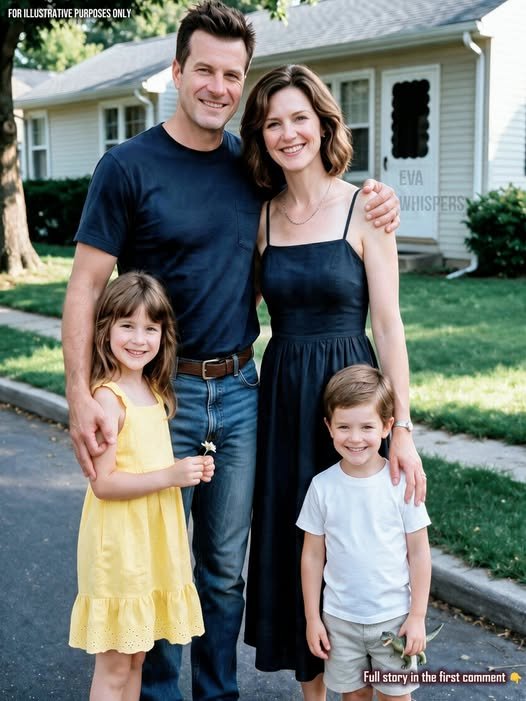
For forty years, I kept my children’s bedrooms exactly as they had left them.
My son’s little silver watch still rested beside his lamp. My daughter’s unfinished dollhouse still stood near the window, its tiny front door hanging crookedly from one hinge.
I dusted those rooms every Sunday.
I wound the watch.
I straightened the blankets.
And every year, on the anniversary of the night my wife and children disappeared, I drove to the bridge where their empty car had been found and tied a fresh ribbon to the railing.
Everyone told me I needed to let go.
But how could I let go when no bodies had ever been recovered?
How could I stop waiting when some stubborn part of my heart still believed they might walk through the front door?
Then, at seventy-three years old, I found a wooden box sewn inside my daughter’s mattress.
The first words inside made my hands shake so violently that I nearly dropped it.
Andrew, if you are reading this, something has happened to me. Please read everything carefully—and do not trust Gwen.
Gwen was my wife’s sister.
And in that moment, I understood something terrifying.
For forty years, the truth had been hidden inside my own home.
The House I Refused to Leave
My nephew Jackson arrived one gray Saturday morning carrying twelve cardboard boxes and the expression of a man who had finally run out of patience.
“You spent almost three hours lying on the kitchen floor,” he reminded me.
“Two and a half,” I corrected.
Jackson set the boxes down and stared at me.
“That correction is exactly why you should not be living alone.”
“I slipped. That’s all.”
“You slipped, couldn’t reach your phone, and had no way to call for help. Your doctor said next time you might be there all night.”
I hated admitting he was right.
My legs were unreliable, my heart had begun missing beats, and the staircase seemed steeper every week. Jackson wanted me to sell the house and move into the spare room at his place.
After resisting for months, I finally agreed.
But I gave him one condition.
“Nothing leaves this house unless I approve it.”
He sighed. “You still have grocery receipts from the eighties.”
“Paper has a better memory than people.”
Jackson picked up the first box.
“Where do we begin?”
I looked toward the hallway.
“Shaun’s room.”

The Rooms Frozen in Time
Shaun had been six years old when he vanished.
His wooden cars still lined the shelf above his bed. His blue blanket remained folded at the foot of the mattress, even though the fabric had faded with age.
On the bedside table rested the silver watch I had given him for his sixth birthday.
I picked it up and wound it.
Jackson watched me quietly.
“That thing still runs?”
“It loses four minutes every day.”
“Then why do you keep winding it?”
I slipped it into my pocket.
“Because Shaun never liked it when the ticking stopped.”
Jackson said nothing after that.
We carried several boxes downstairs before moving into Aria’s room.
My daughter had been nine. She loved sewing clothes for her dolls, although every seam came out tight and uneven because she always pulled the thread too hard.
Her dollhouse still sat beside the window.
The wallpaper inside had peeled. The miniature staircase leaned slightly to one side, and the front door hung crookedly.
Jackson reached toward it.
“Don’t,” I said.
He withdrew his hand.
“You’ve had forty years to repair it.”
“I know.”
My knees began trembling, so I sat on the edge of Aria’s bed.
A sharp crack came from beneath me.
Jackson turned.
“Did the frame break?”
“No.”
“You’re sure?”
“I spent forty-five years repairing furniture. That sound came from inside the mattress.”
We lifted the mattress and turned it over.
Near one corner was a puckered seam, stitched with thick thread. The stitches were crooked and pulled so tightly that the fabric bunched around them.
My breath caught.
“Aria sewed this.”
“How can you tell?”
“She always pulled the thread too tight.”
I found a small knife and carefully opened the seam.
My fingers touched something hard.
Hidden between layers of stuffing was a dust-covered wooden box.
The Message That Changed Everything
Inside the box were several photographs, a birthday card, a letter from Gwen, and two folded notes.
The photographs showed me with Sarah, a woman who had worked at the same company as I did.
In one picture, my hand rested on her arm.
In another, we were entering a café together.
Taken out of context, the photographs made us look like lovers.
But we had never been involved.
I reached for the first note.
The handwriting belonged to my wife, Clara.
Andrew, if you are reading this, something has happened to me. Please read everything carefully. Do not trust Gwen. There is something you never knew.
The message ended abruptly.
Beneath it was another note written in purple crayon.
The childish letters slanted across the page.
Daddy, I hid Mommy’s letter because I didn’t want you to be angry. I’m sorry. Please don’t let her leave.
I read it once.
Then again.
By the third time, I could barely see through my tears.
Jackson lowered himself onto the bed beside me.
“Aria hid the box.”
“She thought Clara was planning to leave me.”
He picked up one of the photographs.
“Who was this woman?”
“Her name was Sarah. We worked together.”
“Were you having an affair?”
“I never touched her.”
“I didn’t say you did.”
“You didn’t need to. I saw the question on your face.”
“Then tell me what happened.”
The Silence I Mistook for Loyalty
Years earlier, Sarah had been treated unfairly at work and feared losing her job.
She needed help gathering evidence, but she was terrified that speaking publicly would destroy her career. She asked me to meet her privately several times.
I agreed.
I believed I was protecting her confidence.
What I failed to understand was that, while I was guarding Sarah’s secret, I was creating a secret of my own.
“Did Clara know why you were meeting Sarah?” Jackson asked.
“No.”
“You never told her anything?”
“It wasn’t my story to share.”
Jackson shook his head.
“You could have reassured your wife without revealing Sarah’s private situation.”
His words brought back a conversation I had spent decades trying not to remember.
Clara had stood in our kitchen one evening while I removed my coat.
“You’ve been coming home late,” she said. “Is there something you need to tell me?”
I had kissed her forehead and replied, “There’s nothing you need to worry about.”
At the time, I believed that answer was harmless.
Now it sounded cold.
Clara had not been demanding details.
She had been asking me to let her into my life.
Instead, I had closed the door.
And Gwen had apparently stepped into the empty space I left behind.

The Trip That Never Ended
Gwen’s letter contained directions to her home and the name of a small roadside motel.
Clara had planned to take Aria and Shaun on a short visit to see her sister. I had been overwhelmed with work, so I stayed behind.
They were supposed to arrive by early evening.
When Clara had not called by nine, I telephoned Gwen.
“Is Clara there yet?”
There was a pause.
“Andrew, they never arrived.”
I stood so quickly that my chair struck the wall.
“Check the neighbors. Maybe Shaun got sick and she stopped somewhere.”
“She would have called.”
“Please, Gwen. Check anyway.”
By midnight, the police had Clara’s route, her license plate number, and a description of the car.
The following morning, they found it below a bridge near the river.
Investigators concluded that Clara had pulled onto the shoulder and left the vehicle. The parking brake had failed, allowing the car to roll down the slope and into the water.
Divers searched for days.
No bodies were found.
Years later, Clara, Aria, and Shaun were legally declared dead.
The motel mentioned in Gwen’s letter was the first new clue I had seen in four decades.
“We’re going there,” I said.
Jackson reached for my coat before I could.
“You are taking your medication first.”
“I have already lost forty years.”
“And collapsing on the way will not help you recover them. I’m driving.”
The Woman Who Remembered Clara
The motel no longer existed.
An apartment building had been constructed on the property, but an elderly woman in the lobby remembered the family who had once owned the place.
I showed her Clara’s photograph.
She studied it for a long moment.
“Yes,” she finally said. “I remember her.”
My heart began pounding.
“Are you certain?”
“She had two children. The little boy was sick with a fever. She kept trying to call her husband, but the phone line was unreliable.”
I handed her a picture of Gwen.
“Did this woman come to the motel?”
The elderly woman nodded.
“She arrived later. The two sisters argued in the parking lot.”
“What were they arguing about?”
“Your wife wanted to go home. She said she needed to hear the truth directly from her husband.”
“I am her husband. What did Gwen tell her?”
The woman’s expression softened.
“She told your wife that you had already left town with another woman.”
The room seemed to tilt.
“That wasn’t true.”
Jackson pulled a chair toward me.
“Sit down, Uncle Andrew.”
But I needed one more answer.
“Did Clara leave against her will?”
“No. She went willingly. But she looked unwell—dizzy, perhaps. Her sister helped her into the car.”
Not Clara’s car.
Gwen’s.
The car in the river had been empty because my family had never been inside it when it rolled from the road.
The Cost of an Unspoken Truth
Jackson drove me to Sarah’s home.
She was in her seventies now, but she recognized me immediately.
When I placed the photographs on her kitchen table, the color vanished from her face.
“Clara saw these?”
“She must have.”
Sarah sank into a chair.
“She believed we were together.”
“And she disappeared believing I had abandoned her.”
Sarah retrieved a box of old employment records. Every photograph corresponded with a documented meeting involving her workplace case.
The café had been near the office of her legal adviser.
The photograph of my hand on her arm had been taken after she received devastating news about her job.
Nothing romantic had happened.
But I finally understood that innocence did not erase the damage caused by secrecy.
“I told you to speak to Clara,” Sarah said quietly.
“I couldn’t reveal what you were going through.”
“You didn’t have to reveal everything. You only had to tell her enough to stop her from feeling shut out.”
She looked directly at me.
“You left a space between you and your wife, Andrew. Gwen filled that space with lies.”
During the drive home, I watched the road pass in silence.
For years, I had defended myself with one simple fact: I had never been unfaithful.
But being faithful was not the same as being open.
Clara had asked for reassurance.
I had given her a wall.
Gwen had used that wall to separate us.
Finding My Daughter
Back at the house, I unfolded Aria’s purple-crayon note again.
“She believed this was her fault,” I said.
“You don’t know that,” Jackson replied.
“A child who writes a message like this does not simply forget it.”
Until that moment, I had been searching for the truth.
Now I had a more urgent purpose.
I needed to find my daughter before she spent another day believing that a frightened nine-year-old had destroyed our family.
Three days later, Jackson found a school counselor whose age, location, and surname matched Aria.
She had been using Clara’s maiden name.
In her staff photograph, the woman held one elbow with her opposite hand.
Aria had always done that when she was nervous.
“That’s her,” I whispered.
“Because she resembles Clara?”
“No. Because she resembles herself.”
Jackson offered to contact her for me.
I refused.
I wrote one message, deleted it, and started again.
The first draft sounded angry.
The second sounded like an interrogation.
Finally, I wrote from the only place that mattered—my heart.
Aria, I do not know what you were told. I only know that I loved you when you left, and I have loved you every day since. I found the note you hid inside your mattress. Nothing that happened was the fault of a nine-year-old child. I will not come to you unless you ask me to.
I added my address and telephone number.
Then I pressed send.
She called that evening.
For several seconds, neither of us spoke.
Then a woman’s voice asked, “Did you know where we were?”
“No.”
“You never came.”
“I didn’t know where to look.”
“Gwen said you left with another woman.”
“She lied.”
Aria inhaled sharply.
“Meet me tomorrow.”
“Where?”
“At the school auditorium where I work.”
“I’ll be there.”
“Come alone.”

The Daughter I Had Never Stopped Loving
The following afternoon, I found Aria arranging chairs in perfectly straight rows.
They were already aligned, but she continued adjusting them.
For one breathtaking second, I saw my nine-year-old daughter again.
Then she noticed me and stepped back.
“You came.”
“You asked me to.”
Her face tightened.
“Why did you stop searching?”
Every instinct urged me to defend myself.
Instead, I sat down.
“Tell me what you remember.”
She remembered Clara crying at the motel.
She remembered Gwen insisting that I had chosen another woman.
She remembered Shaun repeatedly asking when I would come for them.
Clara’s car had overheated near the bridge, so Gwen drove them away in her own vehicle.
That same night, Clara suffered a serious stroke. Her speech and memory were badly affected.
Gwen moved them to another state.
She controlled Clara’s calls, screened her letters, and repeatedly told the children that I knew exactly where they were but wanted nothing to do with them.
They began using Clara’s maiden name.
As an adult, Aria made the change legal.
Because the world believed all three had died in the river, no one connected them to the missing family from decades earlier.
Aria had waited for me.
Every birthday.
Every holiday.
Every time a strange car stopped near the house.
But I never came.
“When I grew older, I remembered the mattress,” she said. “I realized you had probably never seen the letter.”
Her voice broke.
“It was my fault.”
“No.”
“I hid it.”
“You were nine years old.”
“That doesn’t change what I did.”
“It changes who was responsible.”
She stared at me through tears.
I told her about Sarah.
I told her about Clara’s questions and my evasive answers.
“You hid a letter because you were frightened,” I said. “I hid behind silence because I was proud. Only one of us was an adult.”
Aria covered her face.
“I ruined our family.”
“No, sweetheart. Adults made choices around you. You did not make those choices for us.”
Slowly, she lowered her hands.
“Did you really keep looking?”
I opened the bag I had carried with me.
Inside were police reports, newspaper clippings, letters, maps, and receipts from private investigators.
“I never stopped.”
Aria picked up a faded article about the anniversary memorial at the bridge.
Then, for the first time in forty years, my daughter reached for my hand.
The Watch That Kept Ticking
Shaun refused to meet me.
I did not blame him.
Unlike Aria, he barely remembered me. Most of what he knew came from Gwen’s version of our past.
I did not pressure him.
Instead, I mailed him the silver watch.
My note contained only one sentence:
It still loses four minutes every day. I kept winding it anyway.
Three days later, my phone rang.
A man’s voice asked, “Did you really wind this every week?”
“Every Sunday.”
“Aria says you searched for us.”
“I did.”
“You weren’t very good at it.”
His words hurt, but they were honest.
“No,” I replied. “I wasn’t.”
Silence stretched between us.
“I don’t know how to call you Dad.”
“You can call me Andrew until you are ready.”
Before hanging up, he asked one final question.
“Did you ever have another family?”
“No.”
“Why not?”
I closed my eyes.
“Because I already had one.”
Clara’s Final Truth
Near the end of her life, Clara discovered a newspaper clipping about the memorial I held every year at the bridge.
At last, she understood that I had never abandoned them.
Her speech was weak, but she managed to record a message for Aria and Shaun. She asked Gwen to help them find me.
Gwen never delivered it.
Aria discovered the recording years later among Clara’s belongings, packed inside a box Gwen had kept in storage.
Aria hesitated before playing it.
“What if hearing it makes everything worse?”
“Peace built on a lie is not peace,” I told her.
She pressed the button.
Clara’s fragile voice filled the room.
“Aria… Shaun… your father loved you. Gwen believed she was protecting me, but fear is not the truth. I should have asked your father. I should have listened to him.”
Aria covered her mouth.
A movement came from the doorway.
Shaun stood there, wearing the silver watch.
“Gwen told us Dad caused Mom’s stroke,” he said. “She said Mom collapsed because he chose another woman.”
Aria wiped her eyes.
“And when Mom struggled to recover, Gwen said she had lost the will to live because of you. We blamed you when she died.”
I looked at my children—grown now, yet still carrying the wounds of the frightened little girl and boy they had once been.
“You were children living inside the only story an adult allowed you to hear,” I said. “None of that was your fault.”
Then I called Gwen.
“I found Clara’s note.”
Her voice hardened.
“What do you want from me, Andrew?”
“You have spoken for my wife long enough. Tomorrow, you are going to listen.”
The Woman Who Called Control Love
The family gathered the following evening.
Gwen stood at the head of the table as though she were still in charge of the story.
“I did what Clara needed,” she declared.
“No,” I said. “You did what kept Clara dependent on you.”
“I protected her from you.”
“You photographed me with Sarah, assumed the worst, and then used an accident to erase me from my children’s lives.”
I turned toward Aria and Shaun.
“I failed your mother too. She asked what I was hiding, and I refused to let her in. I believed that not betraying her was enough.”
Gwen lifted her chin.
“Exactly. You admitted it.”
“That was my failure,” I replied. “But everything you did during the next forty years was your choice.”
Aria placed Sarah’s records on the table.
“Did Dad ever tell you he planned to leave us?”
Gwen’s mouth tightened.
“No.”
“Did you eventually learn that he was still searching?”
Gwen looked down.
“Eventually.”
Shaun rested his arm on the table. The old silver watch sat between them, ticking steadily.
“You let us hate him.”
“I thought the truth would destroy you.”
“You had already taught us who to blame,” Shaun said.
I played Clara’s recording.
When it ended, the room fell silent.
No one defended Gwen.
I picked up the recorder.
“You do not get to decide what Clara believed anymore. You do not get to speak for my children. And you do not get to call control love.”
The Bridge Where Mourning Ended
The next morning, Aria and Shaun joined me at the river bridge.
A faded ribbon fluttered from the railing.
I had replaced it every year for four decades.
I slowly untied it.
“This is where I came to mourn you,” I said.
Shaun touched the watch on his wrist.
“What happens now?”
I looked at both of my children standing beside me.
“Now I stop grieving people who are still alive.”
We returned to the house together.
In Aria’s bedroom, she ran her fingers across the uneven stitches in the mattress.
“For years, I believed that seam ruined everything.”
“No,” I told her. “The choices adults made ruined things. You were only a child trying to keep your family together.”
Shaun lifted one side of the mattress.
“Then let’s get rid of it.”
After carrying it outside, we returned to the dollhouse.
The tiny front door still hung crookedly.
I reached for my screwdriver.
Aria placed her hand over mine.
“It doesn’t need to be repaired tonight, Dad.”
Shaun picked up another tool.
“And you don’t have to repair it by yourself.”
For forty years, I had waited for the children I lost.
They had finally returned carrying anger, guilt, questions, and a lifetime of stolen memories.
Nothing could restore the years Gwen had taken from us.
Nothing could give Clara the conversation we should have had.
But as I looked at my children standing in that room, I realized rebuilding did not mean pretending the damage had never happened.
It meant choosing to stay.
It meant speaking honestly.
It meant forgiving carefully.
And it meant refusing to let another day be stolen by silence.
I set the screwdriver down.
The dollhouse could wait.
This time, we would rebuild our family together.