
My name is Arthur Bennett, and I am 55 years old. More than three decades ago, I lost everything I believed defined my life in the span of a single night.
There was a car accident—a phone call. A voice on the other end of the line that was calm, practiced, and devastatingly kind in the way professionals learn to be when they are about to shatter someone’s world.
My wife, Rebecca, and our 6-year-old daughter, Molly, were gone.
I remember standing in my kitchen, gripping the receiver so tightly my knuckles turned white. I stared at the wall above the sink, as if it might offer some explanation for how the world could tilt so violently off its axis. The silence afterward was unbearable. It was not just the quiet of the house. It was the silence inside my head, the pause between thoughts, the hollow space where plans and laughter used to live.
For years after that night, I existed rather than lived. I woke up, went to work, came home, and ate whatever was easiest, usually frozen meals eaten in front of a television I barely watched. Friends tried to help. My sister called every Sunday without fail. People invited me to dinners, holidays, and small gatherings meant to pull me back into the world. None of it reached me. The house was still empty, and grief had a way of filling every corner.
I kept Molly’s drawings taped to the refrigerator long after the edges had curled and yellowed. I told myself I would take them down someday and frame them properly, but I never did. Throwing them away felt like another loss I could not survive. Every crayon sun and crooked stick figure was proof that she had existed, that I had once been a father who tucked a little girl into bed and promised her the world.
I never imagined I would be a father again. That part of my life felt sealed shut, buried alongside the people I could not protect. I had already loved and lost. Surely that was enough for one lifetime.
But life has a way of surprising you when you stop expecting anything from it.
One rainy afternoon, nearly eight years after the accident, I found myself pulling into the parking lot of a local children’s home. I did not plan it. I had not woken up that morning with a decision made. I told myself I was just curious, just looking. I was not replacing anyone, and I was not promising anything.
The building smelled like disinfectant and crayons. Children’s laughter echoed faintly down one hallway, while somewhere behind a closed door, an adult voice murmured soothing words to a child in the middle of a tantrum. I met with a caseworker named Elaine, who spoke plainly and without illusions. She explained the process, the responsibilities, and the realities. She did not try to sell me a dream.
As we walked past a large window overlooking a modest play area, I saw her.
She was sitting alone in a wheelchair, her dark hair pulled back into a neat ponytail. A notebook rested in her lap, and she was sketching something carefully. Every so often, she glanced up at the other children as they ran and shouted. She was not sad exactly, but she was too calm and too observant, as if she had already learned that expecting too much from people was dangerous.
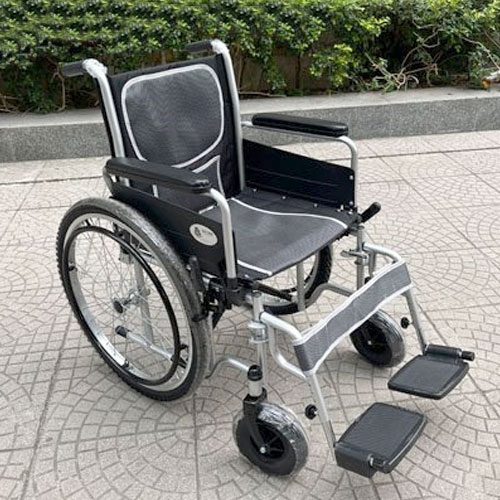
“That’s Clara,” Elaine said quietly, following my gaze. “She’s five. She’s been here a long time.”
I asked why she used a wheelchair.
“Car accident,” Elaine replied. “Her father died instantly. She sustained a spinal injury. It’s an incomplete one. With therapy, there’s potential for improvement, but it’s uncertain.”
“And her mother?”
Elaine hesitated. “She signed over her parental rights not long after the accident. She said she couldn’t manage the medical needs. Or the grief.”
I looked back at the little girl by the window, and as if she sensed it, she lifted her head and met my eyes. She did not look away. She did not smile. She simply watched me quietly, like someone waiting to see whether a door would open or close again.
Something in my chest fractured.
I did not see a diagnosis. I did not see a burden. I saw a child who had already learned what abandonment felt like and was bracing herself for more of it. In her face, I saw echoes of Molly. Not identical features, but something deeper. A familiarity that felt like fate tapping me on the shoulder.
Elaine told me the truth without softening it. Clara was unlikely to be adopted. Many families wanted healthy infants or children without complex needs. I did not hesitate. I told her I wanted to begin the adoption process immediately.
The months that followed were filled with paperwork, interviews, home inspections, and evaluations. I visited Clara as often as I was allowed. We talked about books and animals. She showed me her drawings, meticulous sketches of birds, especially owls. When I asked why, she said, “Because they see in the dark. They don’t get lost.”
When I finally brought her home, everything she owned fit into a small, worn backpack. A stuffed owl with one eye missing. Her notebook. That was it.
In the first few days, she barely spoke. She watched me constantly, as if waiting for me to change my mind. Then one evening, while I was folding laundry, she rolled into the room and asked, “Dad, can I have some juice?”
I dropped the towel.
From that moment on, we became a team. Therapy appointments shaped our weeks. I celebrated every milestone, including the first time she stood unassisted for a few seconds and the day she took her first steps with braces. Clara worked harder than anyone I had ever known. She refused to be pitied and bristled at the idea that she was fragile.
School was not always kind, but she learned how to navigate it with quiet strength. She made friends slowly and carefully, and she kept them fiercely. She grew into a thoughtful, stubborn, compassionate young woman who filled my life with meaning I thought I had lost forever.
She loved science and eventually pursued biology, spending a summer working at a wildlife rehabilitation center. She helped care for an injured barn owl and cried the day it was released back into the wild. “That’s the goal,” she said. “To heal enough to leave.”
At twenty-five, she met Marcus, an engineering student with an easy laugh and an unwavering steadiness. He adored her without trying to fix her, and she tested him relentlessly before deciding he was worthy. He passed every test.
When she told me about their engagement, she did it over breakfast, casually, as if announcing a grocery list. I nearly choked on my toast.
The wedding, twenty-three years after I adopted her, was small and warm. She wore a satin dress that flowed as if it had been designed just for her. The venue glowed with soft lights and white flowers. I watched her dance, laugh, and shine among people who had stayed, and my heart felt too full for my chest.
That was when I noticed the woman by the exit.
She did not belong. She watched Clara with a mixture of longing and dread. When she approached me, her voice trembled as she said, “You have no idea what your daughter is hiding from you.”
She claimed to be Clara’s biological mother.
The truth spilled out in fragments. Clara had found her two years earlier. She had asked questions and sought closure. Then she had walked away.
“She deserves to know who stayed,” I told the woman quietly. “And who didn’t?”
I asked her to leave.
Later that night, Clara and I stood together outside under the quiet sky. She already knew.
“I needed answers,” she said softly. “But I needed to know I could walk away. And I did.”
I took her hand. “You are my daughter because we chose each other. Every single day.”
She smiled through tears. “Thank you for choosing me.”
As I watched her return to the dance floor, I finally understood something that had taken me a lifetime to learn.
Family is not about blood.
It is about who stays when everything falls apart, and who chooses to stay the next day.