
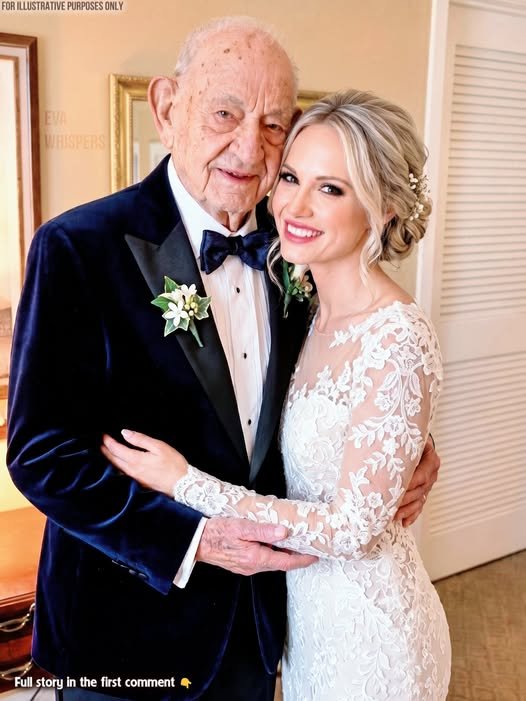
Part 1: The Life I Thought I Deserved
By the time I turned twenty-nine, I had become remarkably skilled at quitting jobs before anyone had the chance to fire me.
I left a dental clinic because the receptionist’s chair made my back ache. I survived less than two weeks in a clothing boutique before declaring that the harsh ceiling lights were ruining my complexion. My brief attempt at becoming a real estate agent ended when I discovered that open houses required hours of standing, smiling, and answering questions about roofs, drains, and water pressure.
My mother kept a thick folder filled with job listings she thought would suit me.
I kept an even thicker folder filled with photographs of luxury homes.
“One of those folders could actually improve your life,” she told me one evening.
“For once, we agree,” I replied, lifting mine.
The hopeful expression on her face disappeared.
I never considered myself lazy. In my mind, the world was divided into two kinds of people: those meant to work hard and those meant to enjoy the beautiful things that hard work created.
I was convinced I belonged to the second group.
“I’m simply not made for an ordinary office job,” I announced during dinner with my parents. “I’ll marry someone successful.”
My father slowly placed his fork on his plate.
“Sally, marriage is supposed to be a partnership. It isn’t an early retirement program.”
I ignored him.
A few weeks later, I met Walter.
I was at an elegant restaurant with a friend who believed that ordering one appetizer and taking photographs beneath a crystal chandelier counted as a glamorous night out.
Walter was sitting alone near a wide window.
He wore a perfectly fitted navy suit, polished leather shoes, and a gold watch that caught the candlelight whenever he moved his hand. His silver hair was neatly combed, and every member of the staff seemed to know him.
He carried himself with the calm assurance of someone who had never checked the price before ordering.
He was also seventy-eight years old.
I might never have spoken to him if his hand had not suddenly begun to shake.
The stem of his wineglass slipped from his fingers. Red wine spilled across the tablecloth and rushed toward his phone.
I moved before the waiter reached him.
“Careful,” I said, catching the glass and lifting his phone away from the spreading stain.
Walter looked up at me. His pale blue eyes held more humor than embarrassment.
“That was either genuine kindness,” he said, “or exceptionally quick reflexes.”
“Why can’t it be both?”
His face softened into a smile.
I helped him blot the tablecloth while the waiter replaced everything. Walter asked my name, and I told him.
“Sally.”
Within five minutes, I had also told him where I lived, what I enjoyed, and a carefully improved version of why I had left every job on my résumé.
A week later, an enormous arrangement of roses arrived at my apartment.
They were not ordinary flowers wrapped in paper. They came in a heavy glass vase that required both hands to move.
The card read:
Would you consider having dinner with me—preferably without another wine emergency?
I stared at the roses, then at the elegant handwriting.
In that moment, I did not see petals.
I saw dollar signs.
Walter took me to dinner and listened closely when I spoke. He asked about my childhood, my parents, my hopes, and my unusual employment history.
“I just haven’t discovered my true calling,” I explained.
“Have you searched for it?” he asked.
“For short periods.”
He lowered his eyes to hide a smile.
Over the next two months, Walter took me to concerts, art exhibitions, intimate restaurants, and an auction where a woman purchased an old vase for more money than my father earned in an entire year.
Walter rarely discussed his wealth directly.
He did not need to.
His driver, tailored coats, expensive watch, and stories about summers near Lake Como told me everything I thought I needed to know.
When he proposed, he opened a blue velvet box containing a diamond so large it seemed to have its own gravitational pull.
I accepted before he finished the question.
The next evening, my parents invited us to dinner.
My father studied Walter carefully.
“You’re almost eighty.”
“Seventy-eight,” Walter corrected pleasantly. “I still have two full years before I’m willing to accept ‘almost eighty.’”
My mother did not smile.
Later, while Walter and Dad discussed business, she pulled me aside.
“Do you love him?”
“He’s generous. He listens to me. He treats me better than anyone ever has.”
“That wasn’t my question.”
I glanced across the room.
Walter was calmly spreading butter over a dinner roll, appearing completely at ease.
“I know enough about him,” I said.
Walter’s hand paused briefly.
He raised one eyebrow, and I wondered whether he had heard me.
For the first time, I felt the uncomfortable suspicion that he understood me far better than I understood him.

Part 2: The Vanishing Fortune
We planned the wedding for six months later.
Walter told me that after the ceremony, we would move into his family estate—a grand stone mansion with twelve bedrooms, sweeping terraces, enormous gardens, and a library with ladders that rolled along the shelves.
He showed me photographs, explaining that the property was temporarily closed for renovations.
“The plumbing is nearly as old as I am,” he joked.
I barely listened.
I was too busy imagining myself descending the staircase in a silk gown while sunlight poured through tall windows.
I began selecting curtains for rooms I had never entered.
Then Walter’s wealth seemed to disappear piece by piece.
First, the Bentley vanished.
“It’s being repaired,” he told me.
“What happened to it?”
“It became unreliable.”
“It’s a Bentley.”
“Expensive things can be unreliable too, darling. Sometimes they simply charge more for the inconvenience.”
Instead of the Bentley, Walter began driving a twelve-year-old sedan that smelled faintly of peppermint and made a clicking noise whenever he turned left.
Soon afterward, he told me that several of his investment accounts had been frozen.
“It’s related to trust documents,” he explained.
Then, for the first time since we met, he asked whether I could pay for dinner.
A few weeks later, he asked to borrow money toward his wedding suit.
I stared at him across my kitchen table.
“You’re supposed to be a millionaire. Why can’t you afford your own trousers?”
“The explanation would spoil the surprise.”
I transferred the money.
It was not because I trusted him completely.
It was because I had already spent months imagining my new life, and I was terrified that questioning him too closely might cause the entire fantasy to collapse.
My parents were less willing to remain silent.
“He may not be who he claims to be,” Dad warned.
“He owns a company.”
“Have you visited it?”
“I’ve seen the website.”
Mom folded her arms.
“Have you been inside the mansion?”
“No, because it’s under renovation.”
“Have you seen the Bentley since it went to the repair shop?”
“No.”
“And his accounts?”
“They’re temporarily unavailable.”
Dad leaned back and looked at the ceiling as though asking for patience.
“If Walter lost every dollar tomorrow, would you still marry him?”
I opened my mouth immediately.
Then no answer came.
The silence that followed frightened me more than my father’s question.
Strangely, however, something changed between Walter and me as the luxurious parts of our relationship disappeared.
Without the Bentley, we walked through the city.
Without expensive restaurants, we cooked dinner together.
Walter made dreadful omelets but surprisingly good soup. We visited farmers’ markets, where he debated with vendors about the ripeness of tomatoes as seriously as if he were negotiating a business contract.
We watched old black-and-white films in his modest rented apartment. Walter confidently supplied incorrect facts about every actor on the screen.
“That man won three Academy Awards,” he told me.
“I just looked him up. He didn’t win any.”
“He deserved three. History made a mistake.”
At first, I complained about everything.
I missed the chauffeur. I missed the elegant dining rooms. I missed being noticed when we entered expensive places.
But one rainy Saturday afternoon, we sat together watching an old comedy while a pot of soup simmered on the stove.
Four hours passed.
I had laughed until my stomach hurt.
For the first time in years, I had not checked my phone, admired my reflection, or imagined how other people might view my life.
Walter noticed me staring at him.
“What is it?” he asked.
“Nothing.”
But it was not nothing.
For the first time, the man beside me mattered more than the mansion waiting somewhere on a hill.
I was not ready to admit it—not even to myself.
Three days before the wedding, a courier arrived carrying a cream-colored envelope.
Inside was a small brass key tied to a blue ribbon.
There was no explanation.
I called Walter immediately.
“What does this open?”
“You’ll learn soon.”
“Is it the key to the mansion?”
“No.”
“The Bentley?”
“Modern cars rarely use brass keys, Sally.”
“A private safe?”
He laughed quietly.
“Keep it with you during the wedding.”
The key was scratched, plain, and probably worth less than the ribbon attached to it.
Yet it unsettled me more than Walter’s missing car, frozen accounts, or mysterious estate.
I had spent months waiting for his fortune to reappear.
Instead, he had handed me an old key.

Part 3: The Wedding Revelation
On our wedding day, I carried the key beneath my bouquet.
The ballroom was filled with white flowers, chandeliers, polished silver, and nearly two hundred guests. My relatives whispered about Walter’s age. His business associates spoke quietly among themselves. My parents watched me with a mixture of love and worry.
Walter stood beside me looking calm and distinguished.
As we began our vows, I told myself that all my doubts would soon disappear.
Then Walter reached for the microphone.
The room fell silent.
He looked first at our guests and then at me.
“There is something important my bride does not yet know about me.”
My fingers tightened around the bouquet.
My heart began to race.
At last, I thought.
This was the moment he would explain everything—the mansion, the trust, the vanished accounts, perhaps even a hidden yacht.
My aunt Carol leaned so far forward that her enormous hat tilted sideways.
Walter continued.
“Sally believes she is marrying my fortune.”
A nervous laugh moved through the room.
“The truth is that the fortune has never truly belonged to me.”
I stared at him.
“What does that mean?”
“It means I am responsible for it. I protect it, manage it, and serve the purpose behind it—but I do not own it in the way you imagine.”
A serious-looking man rose from the front row.
I recognized him as Walter’s attorney, though until then I had assumed he was merely a humorless relative.
He approached us carrying a dark leather portfolio stamped with the Walter family crest.
He placed it in my hands.
The leather looked and smelled expensive.
My hope returned.
Surely the portfolio contained property deeds, account statements, or perhaps maps showing land across several countries.
I opened it.
The first page was titled:
THE WALTER FAMILY STEWARDSHIP CHARTER
Beneath the heading was a list of obligations:
- Visit employees experiencing hardship.
- Personally interview scholarship applicants.
- Attend employee retirement celebrations.
- Visit the original family bakery each month.
- Serve at the community kitchen.
- Mentor young apprentices.
- Read letters sent by employees and customers.
I stared at the pages.
“When do I get the mansion?”
Walter smiled.
“When you understand why the mansion was built.”
The room erupted in laughter.
Even my father laughed.
I flipped through the charter faster.
“What about the yacht?”
Walter calmly pointed toward the final appendix.
I found one bold sentence:
The family does not own a yacht.
The laughter became even louder.
I laughed too, but mine sounded sharp enough to cut glass.
“There is no yacht?”
“No yacht.”
Walter reached for my hand.
He explained that his grandfather had started the family business in a rented bakery kitchen. Over several generations, the company expanded into manufacturing, property, and investments.
But the fortune had been placed in a trust.
No family member could treat it as a personal treasure chest. Each generation was permitted to manage the wealth only while following the charter and serving the employees and communities that had helped create it.
“Money can purchase impressive buildings,” Walter said. “But loyalty, compassion, and responsibility are what turn those buildings into a legacy.”
I looked down at the charter.
“So all of this was a test?”
“No,” he said gently. “I hoped that as the luxuries disappeared, you might notice what remained.”
My throat tightened.
“The Bentley?”
“Donated to a technical school. Their students are restoring it as part of their training.”
“The investment accounts?”
“Moved permanently into the family trust.”
“The renovation at the mansion?”
“We’re converting the west wing into affordable housing for retired employees.”
I narrowed my eyes.
“And the money you borrowed for your suit?”
For the first time, Walter looked slightly guilty.
“That part may have been a small test.”
“You borrowed eight hundred dollars.”
“The suit cost six hundred.”
He reached into his pocket, pulled out two hundred dollars, and placed it in my hand.
The minister turned away, coughing suspiciously into his sleeve.
Every sensible part of me insisted that I should leave.
Walter had hidden the truth. He had allowed me to dream about a fortune I did not understand. He had watched as my expectations slowly collapsed.
But then I remembered rainy afternoons in his apartment.
I remembered his terrible omelets, his peppermint-scented car, the way he listened to my foolish plans without making me feel foolish.
When the money disappeared, Walter had remained.
And somehow, without realizing it, I had fallen in love with the part of him that could not be purchased.
I looked into his eyes.
“Am I still allowed to marry you?”
His expression softened.
“Only after you read the first line of the charter.”
I looked down.
The first instruction read:
Learn every name you can.
I took the microphone.
“All right,” I said. “But I expect my two hundred dollars back with interest.”
The guests applauded.
Walter kissed my hand, the minister recovered his composure, and the ceremony continued.
For the first time that day, I stopped thinking about what I was receiving.
I began wondering what kind of life we might build together.

Part 4: Learning What Wealth Meant
After the reception, Walter handed me a clipboard.
“What is this?”
“A breakfast for retired employees tomorrow morning.”
I stared at him.
“Aren’t newlyweds supposed to go somewhere with beaches?”
“Our honeymoon begins with cinnamon rolls and forty-seven retired machinists.”
The breakfast lasted more than four hours.
One retired employee named Arthur showed me photographs of every one of his grandchildren. One picture featured a boy standing so far from a horse that I was not sure the horse was even aware of him.
I smiled until my cheeks ached.
As Walter and I prepared to leave, Arthur gently caught my hand.
“My wife passed away last winter,” he said. “She used to ask about every photograph. No one asks anymore.”
The clipboard suddenly felt less like a burden.
At first, I approached the charter as if it were an unpleasant school assignment.
I checked boxes.
I watched the clock during visits.
I wore designer heels to factory floors and complained about dust, noise, and the complete absence of flattering lighting.
One afternoon, a mechanic named Rosa handed me a pair of steel-toed work boots.
“They’re hideous,” I said.
“They will keep your toes attached to your feet.”
“What about my dignity?”
“That disappeared the moment you walked beside a forklift in high heels.”
Rosa became one of my closest friends.
She had no patience for self-pity, excuses, or expensive shoes. She also had a quiet way of noticing when someone needed help before they asked.
During a scholarship interview, I met a young man named Luis who wanted to become a plumber.
“Why plumbing?” I asked.
“My grandmother cleaned the Walter offices for forty years,” he explained. “One winter, her furnace stopped working. Mr. Walter came to check it himself.”
Walter cleared his throat.
“I contacted a repairman.”
Luis smiled.
“You waited at her house until the heat came back.”
Another afternoon, I brought flowers to the widow of an employee after his retirement celebration.
She thanked me warmly.
“I was scheduled to visit,” I replied, embarrassed by her gratitude.
“Yes,” she said. “But you stayed after everyone else went home.”
That sentence remained with me.
People rarely remembered the most expensive gesture.
They remembered who stayed.
They remembered the extra conversation, the returned phone call, the hand held in a quiet room.
No one ever asked how much my wedding ring had cost.
As the months passed, I stopped treating the charter as a list.
I began learning names.
I remembered birthdays without consulting a calendar. I visited retired employees without telling Walter. I kept spare work boots in my car and helped serve meals at the community kitchen without checking whether anyone was taking photographs.
One afternoon, Walter found me sitting alone in his office surrounded by employee hardship letters.
A single mother needed assistance with medical expenses. A young apprentice had lost his apartment in a fire. A retired worker was struggling to care for his wife.
I wiped my eyes with the back of my hand and opened another envelope.
Walter did not interrupt me.
He walked into the room and placed the old brass key on the desk.
I had almost forgotten it was still in my purse.
“What does it actually open?” I asked.
“The break room at our oldest factory.”
“That’s all?”
“That was the first key my grandfather ever trusted me to carry.”
I turned it between my fingers.
Tiny scratches covered its surface.
“I cleaned that break room every Saturday for a year,” Walter continued. “Only afterward did my grandfather allow me to supervise anyone else.”
“Why did you give it to me?”
Walter looked at the open letters scattered across the desk.
“Because you finally stopped asking how much everything was worth.”
Then he left me alone with the key.
For years, I had believed wealth meant never having to serve anyone.
Walter taught me that true wealth was having enough time, influence, and compassion to make another person’s burden lighter.

Part 5: The Door Walter Left Open
Walter and I spent many good years together.
He grew slower, but he never lost his humor.
Even when walking became difficult, he insisted on attending retirement dinners and scholarship interviews. When he could no longer visit the oldest factory regularly, I went in his place and returned home with every story I could remember.
He always wanted to know the names.
Walter passed away peacefully in his sleep.
At his funeral, investors, attorneys, and executives occupied only two rows.
The rest of the church was filled with mechanics, secretaries, bakers, janitors, apprentices, scholarship students, retirees, and families Walter had helped through difficult seasons.
Arthur came carrying a photograph of his grandchildren.
Luis stood beside his grandmother.
Rosa wore her steel-toed boots beneath a simple black dress.
As I looked across the crowded church, I finally understood the size of Walter’s fortune.
It could not be measured in houses, cars, diamonds, or bank accounts.
His true wealth was present in every person who had come to say goodbye.
After the funeral, a glamorous young woman approached me.
She glanced toward the line of company cars waiting outside and gave me a knowing smile.
“So,” she said, lowering her voice, “what is it really like to marry into this much money?”
Once, I would have understood that question perfectly.
I laughed and invited her to follow me into Walter’s office.
The old leather portfolio was still resting on a shelf.
I placed it in her hands.
Her eyes brightened as she opened it, clearly expecting secrets about properties, trusts, and investments.
Then she saw the charter.
Her smile slowly disappeared.
I said nothing.
Some lessons cannot be explained. They have to be lived.
That evening, I drove to the oldest factory.
Through a distant window, I could see the mansion glowing on the hill.
Once, I had imagined that house as the answer to every dream I had ever carried. I had pictured myself standing on its balcony, wearing silk and admiring everything I owned.
Now I barely noticed it.
I waited until the final employees gathered their coats and said good night.
Then I entered the old break room.
The tables were clean. A forgotten coffee cup sat near the sink. On one wall hung a faded photograph of Walter as a young man, smiling beside his grandfather.
I switched off the lights and stepped into the hallway.
The brass key slid easily into the lock.
As I turned it, I thought about the woman I had been when Walter first placed it in my hand—a woman who measured everything by its price and every person by what they could offer her.
I had dreamed of owning the mansion on the hill.
Walter left me something greater.
He left me the responsibility to remember names, to stay an extra ten minutes, and to notice the people others overlooked.
Most importantly, he taught me that a meaningful life is not built by collecting keys to impressive houses.
It is built by using the keys you have to open doors for someone else.