
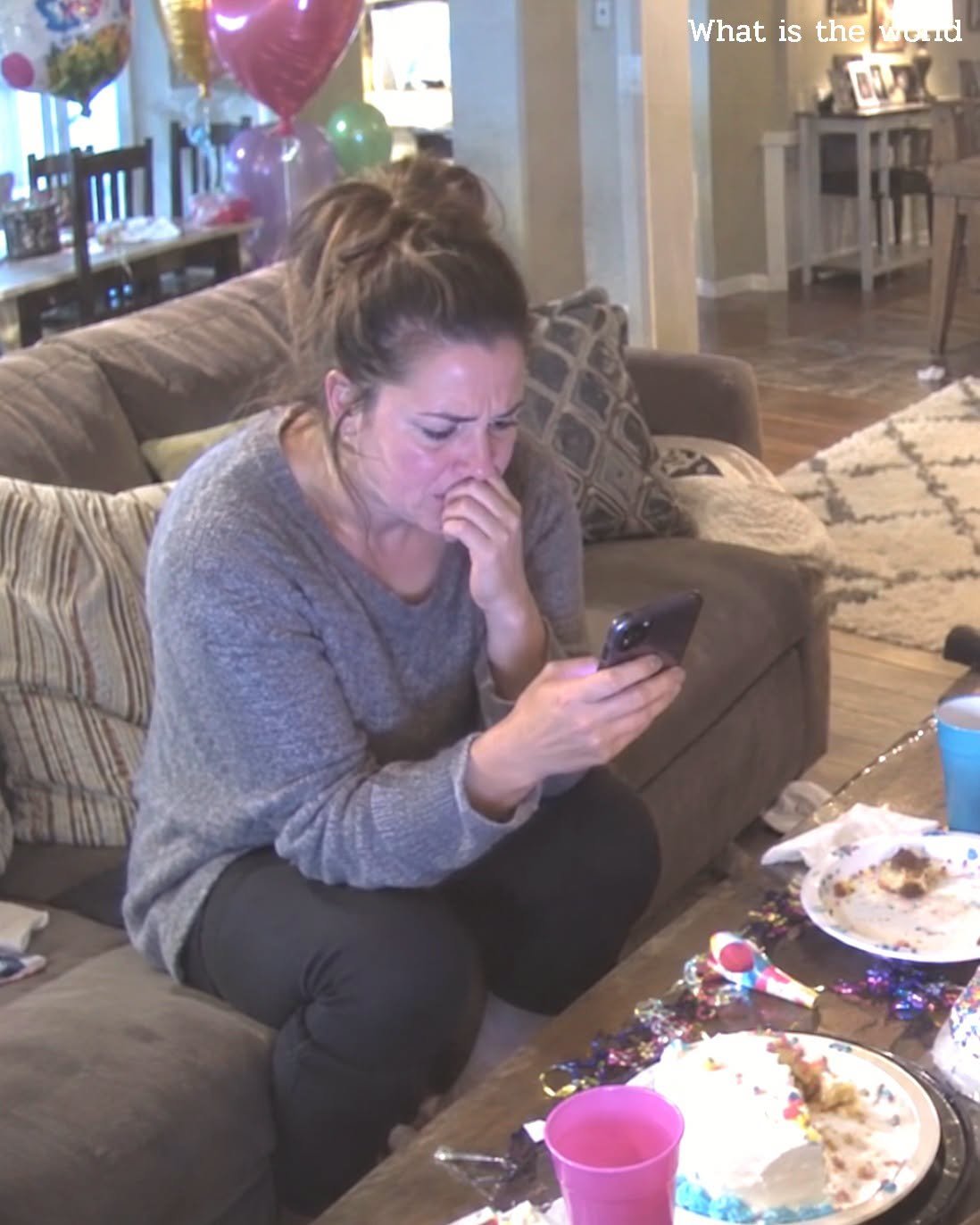
I sent my parents $550 every Friday so they could “live comfortably.”
On my daughter’s birthday, they didn’t even show up, and then my father said, “We don’t count your family the same.”
I opened my banking app, cut off their lifeline, and typed a message that would hit harder than any birthday song.
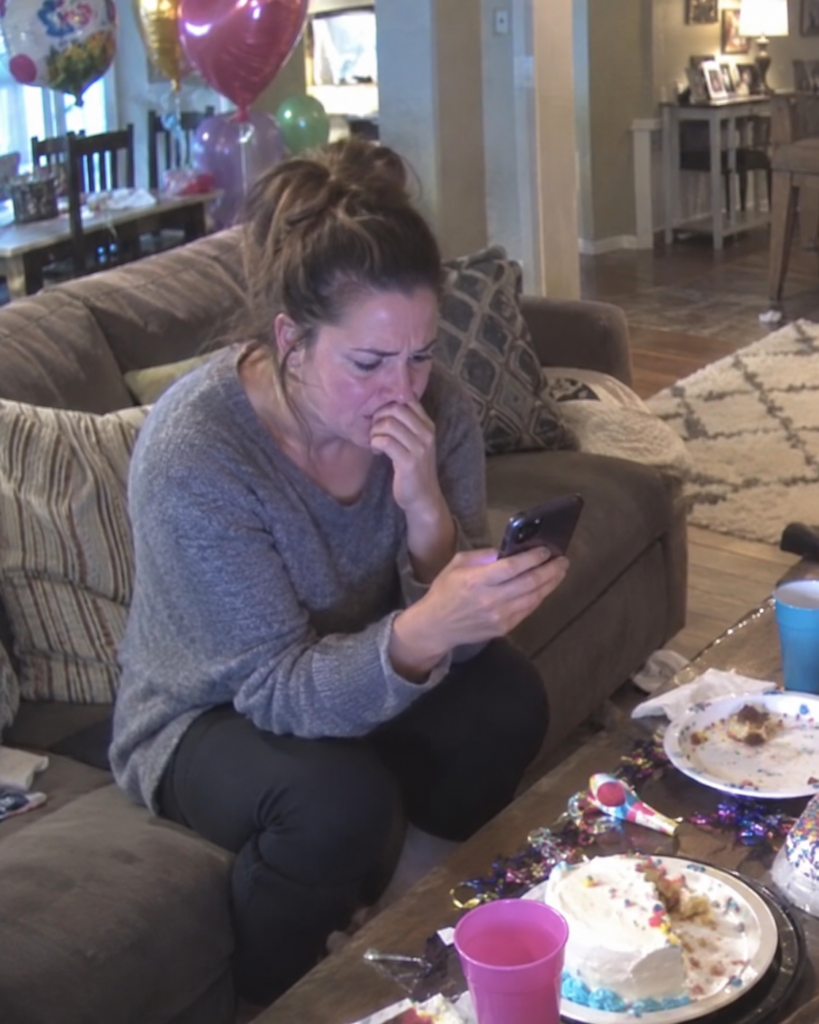
Every Friday at exactly nine in the morning, $550 left my checking account.
The first time I set up the transfer, I cried.
Not because I regretted helping.
Because I thought I was finally giving something back.
When Dad’s hours were cut and Mom’s salon slowed down, I didn’t hesitate.
Family helps family.
That was what I told myself.
Three years later, helping them meant Lily’s sneakers were held together with tape.
Rent was late.
Groceries went on credit cards.
Marcus worked extra shifts until his hands cracked from cardboard, cold air, and warehouse dust.
One night, he touched the bank statement.
“Just one month, Sarah. Ask them if they can take a little less.”
I kissed his knuckles.
“They need it.”
Mom promised they would come to Lily’s birthday.
“We wouldn’t miss it for anything.”
I believed her.
Saturday arrived with dollar-store balloons, a chocolate cake covered in pink frosting, and Lily eagerly waiting for her grandparents.
At two, the party started.
At three, their unopened gift was still sitting on the couch.
Lily kept looking toward the driveway.
By four, everyone had gone.
They still hadn’t come.
I called Dad.
Laughter and clinking glasses filled the background.
“Today?” he said. “We’re over at Danny’s.”
“You knew it was today.”
He sighed.
“We can’t drop everything for every little thing, Sarah. We have other grandkids. It’s easier over here.”
“And how did you pay for the trip?”
“We saved,” he snapped. “What we do with our money is our business. You offered to help. Nobody forced you.”
Then he said it.
“We don’t count your family the same. Danny’s family is more… secure. You understand.”
I hung up before Lily could hear me break down.
The kitchen went quiet.
The banking app glowed on the counter.
Marcus stood beside the empty plates.
From the hallway came one tiny sob.
I canceled the transfer.
Then I started cutting every financial tie.
The car loan I had co-signed.
The two extra phone lines.
The emergency credit card they used for takeout and luxuries.
Gone.
Frozen.
Removed.
Fifteen minutes erased three years of obligation.
Mom called almost immediately.
“What did you do? That money was ours!”
I looked at Lily’s crayon crown, the leftover cake, and the photo on the fridge of my daughter smiling with a sparkler.
For the first time in years, something heavy lifted from my chest.
I opened my photos.
Screenshots of every transfer.
Mom’s promise that they were coming.
Dad’s old “not our problem” message from when our car broke down.
A picture of Lily in her purple dress, smiling toward a front door that never opened.
Then I opened the family group chat.
The cousins.
The aunts.
Danny.
Everyone who always stayed conveniently uninvolved.
I typed two sentences.
Clear.
No insults.
No apology.
No bridge back.
Then I attached the screenshots, the bank PDF, and the photo of Lily’s birthday cake with two empty chairs behind it.
Marcus looked at me.
“Are you sure?”
I looked down the hallway, where my daughter had fallen asleep with glitter still stuck to her cheek.
My thumb came down on Send.
The message left my phone, and for maybe thirty seconds, nothing happened.
Then the family chat exploded.
Mom called twice.
Dad called once.
Danny typed, “Sarah, take this down. This is private.”
I stared at that word: private.
Apparently my parents accepting $550 every Friday for three years was a family matter.
Lily waiting beside a birthday cake for grandparents who had promised to come was a family matter.
But the second everyone could see both things at once, privacy suddenly mattered.
Marcus pulled out a chair beside me but didn’t touch the phone.
Then my aunt replied.
She didn’t defend me.
She didn’t attack my parents either.
She asked one question:
“Is that really every Friday?”
Before I could answer, Dad wrote,
“She offered. Nobody made her do anything.”
That was the detail I needed everyone to see.
I opened the transfer history again and sent the screenshot showing the recurring $550 payments stretching back three years.
The typing bubbles appeared, vanished, then appeared again.
And across the table, Marcus quietly slid the unopened birthday gift toward me.
PART 2
The typing bubbles kept appearing.
Then Aunt Linda finally wrote:
“Sarah, I knew you helped them, but I had no idea it was every single week.”
Mom immediately responded.
“Because it was nobody’s business.”
Aunt Linda replied:
“Then why did you tell us Sarah was selfish when she stopped coming to family dinners?”
The chat went silent.
I stared at the screen.
I had never told anyone that.
For three years, my parents had apparently been telling the family a completely different story.
Dad finally typed:
“She stopped helping because she became obsessed with money.”
I almost laughed.
Marcus didn’t.
He leaned closer and whispered, “Don’t defend yourself. Let the numbers speak.”
So I sent one more screenshot.
It showed the automatic transfer schedule.
$550.
Every Friday.
Three years.
No missed payments.
No interruptions.
Then I sent another image.
It was a screenshot of my credit card statement from the previous month.
Rent.
Groceries.
Lily’s school shoes.
A pharmacy bill.
And at the bottom, the $550 transfer to Mom and Dad.
Then I wrote:
“I wasn’t asking anyone to choose sides. I just wanted everyone to know what actually happened.”
I put my phone face down.
For the first time, I didn’t care what they said next.
But someone else did.
Danny.
My brother.
The one Dad had called “more secure.”
He finally wrote:
“Dad, Mom… is this true?”
No answer.
He asked again.
“Did Sarah really send you $550 every Friday?”
Mom responded:
“You don’t understand the circumstances.”
Danny typed:
“That wasn’t my question.”
The typing bubble appeared.
Disappeared.
Appeared again.
Then Dad wrote:
“Yes.”
One word.
That was all it took.
The family chat exploded.
My cousin asked why they had never been told.
Aunt Linda said she remembered Mom complaining that I “never did enough.”
Another aunt said she had been told I was financially irresponsible.
Someone else asked how they had afforded their weekend trip to Danny’s house.
Mom stopped responding.
Dad left the group chat.
Then Danny sent one final message.
“I’ve been paying their hotel and dinners when they visit me because Dad told me Sarah couldn’t afford to help them anymore.”
I stared at the screen.
Marcus slowly exhaled.
“So they were taking money from you and lying to him too.”
I nodded.
That was when my phone rang.
Dad.
I let it ring.
Then Mom.
I let that ring too.
Then Danny.
I answered.
“Sarah?”
His voice sounded different.
Not angry.
Confused.
“I didn’t know.”
“I know.”
“Why didn’t you tell me?”
“Because I didn’t want a war.”
He was silent.
Then he asked,
“Did Lily really wait for them all afternoon?”
I looked toward the hallway.
“Yeah.”
He sighed.
“I have a daughter too.”
“I know.”
“She wouldn’t forgive me if I did that to her.”
I closed my eyes.
“Then don’t.”
He was quiet for several seconds.
Finally, he said,
“I’ll talk to Mom and Dad.”
“You don’t have to talk to them for me.”
“I know.”
He paused.
“I just need to know who they are without the version they showed me.”
After we hung up, I walked into Lily’s bedroom.
She was still asleep.
Her purple dress was folded over the chair.
The glitter from her birthday crown was scattered across the floor.
I sat beside her bed and watched her breathe.
A few minutes later, she stirred.
“Mom?”
“I’m here.”
“Did Grandma and Grandpa come?”
My throat tightened.
“No, sweetheart.”
“Are they coming tomorrow?”
I brushed the hair away from her forehead.
“I don’t know.”
She looked at me for a moment.
Then she whispered,
“That’s okay.”
I wasn’t expecting that.
She rolled over and hugged her stuffed rabbit.
“They missed the cake.”
I smiled through the tears.
“Yeah.”
“They can miss cake.”
That sentence broke something inside me.
Not because it hurt.
Because it healed something.
The next morning, I woke up to twelve missed calls.
But none were from Mom.
They were from people I hadn’t heard from in months.
A cousin.
An aunt.
An old family friend.
People who had quietly watched my parents criticize me without knowing the truth.
One message stood out.
It was from Aunt Linda.
“I owe you an apology. I believed things about you that I never bothered to verify.”
I stared at it for a long time.
Then I replied:
“Thank you.”
Nothing more.
I wasn’t interested in collecting apologies.
I wanted my life back.
At nine that morning, my banking app showed the same thing it had shown every Friday for three years.
Except this time, there was no $550 transfer.
The money stayed in my account.
I moved part of it into Lily’s savings account.
Then I opened another account.
Emergency fund.
Our emergency fund.
For the first time, it wasn’t going somewhere else.
It was staying home.
A week passed.
Then another.
Mom stopped calling.
Dad sent one message.
“You’ve humiliated us.”
I read it twice.
Then I answered:
“No, Dad. I stopped hiding what you said.”
He never replied.
Three weeks later, a package arrived.
There was no return address.
Inside was Lily’s birthday gift.
A small pink jewelry box.
Underneath it was a handwritten note.
I recognized Mom’s handwriting immediately.
“I should have been there.”
I sat at the kitchen table for a long time.
Marcus walked in and saw the box.
“What are you going to do?”
I opened it.
Inside was a tiny silver bracelet.
Beautiful.
Expensive.
And completely meaningless compared with what Lily had actually wanted.
Her grandparents.
I closed the box.
“I don’t know.”
That evening, I asked Lily if she wanted to keep it.
She looked at the bracelet.
Then she looked at me.
“Can I keep it?”
“Of course.”
She smiled.
“I’m going to put it in my treasure box.”
I kissed her forehead.
“Why?”
“Because it’s pretty.”
Then she thought for a second.
“But I don’t want to wait for them anymore.”
I froze.
She wasn’t angry.
She wasn’t bitter.
She had simply learned the lesson I had taken three years to understand.
Love shouldn’t require you to beg someone to show up.
Months later, Lily had another birthday.
This time, we didn’t wait by the driveway.
We didn’t set extra chairs.
We didn’t leave an unopened gift on the couch.
There were balloons.
Cake.
Music.
Marcus grilled burgers in the backyard.
Lily ran through the sprinkler with her cousins.
And when the sun began to set, she grabbed my hand.
“Mom?”
“Yeah?”
“Best birthday ever.”
I smiled.
Across the yard, Marcus raised his soda toward me.
I raised mine back.
My parents were not there.
And for the first time, their absence didn’t feel like rejection.
It felt like peace.
That night, after everyone left, I opened my banking app.
The balance was higher than it had been in years.
Not because I had earned more.
Because I had finally stopped paying for people who treated my family like we mattered less.
I closed the app.
Then I looked at the refrigerator.
Lily’s birthday picture was still there.
But this time, there were no empty chairs behind her.
Only people who had actually shown up.
And underneath the picture, Lily had drawn three words in purple crayon:
**My real family.**
I touched the drawing and smiled.
Three years ago, I thought helping my parents meant proving I was a good daughter.
Now I understood something completely different.
Being a good daughter never meant sacrificing my own child to keep my parents comfortable.
And sometimes, the hardest boundary you ever draw isn’t between strangers.
It’s between the people who raised you…
and the people you’re responsible for protecting.
I had spent three years sending $550 every Friday.
That Friday, for the first time, I sent nothing.
And somehow, it was the first time I felt like I was finally giving my family everything.