
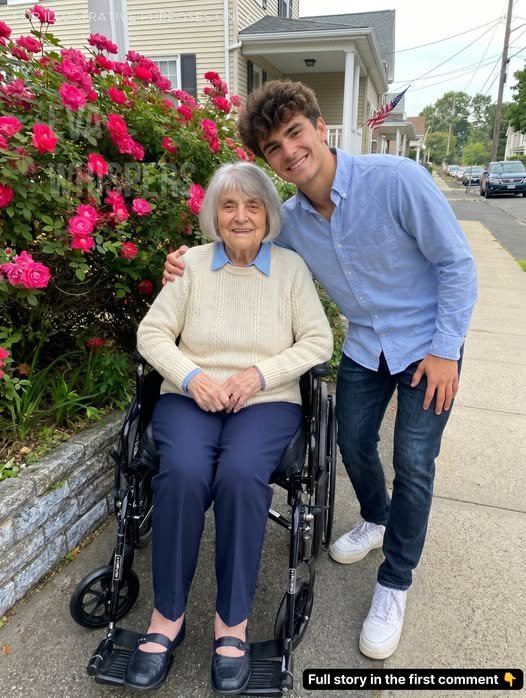
I was struggling to get by when my dying neighbor offered me a deal: take care of her, and in return, she’d leave everything to me. I agreed, but at her will reading, I got nothing! I thought she’d tricked me, but the next day, her lawyer gave me something that made my knees give out.
A Promise That Seemed Too Good to Be True
I sat in a lawyer’s office across from Mrs. Rhode’s niece. Every few seconds, she looked at me the way people look at gum stuck to a shoe.
The lawyer cleared his throat, opened a folder, and started reading in a flat voice.
“The residence on Willow Street will be donated to Saint Matthew’s Outreach Charity.”
I blinked.
“What?”
He did not look up.
“Personal savings are to be distributed between Saint Matthew’s Church and several charitable organizations. To my niece, I leave my jewelry collection.”
I sat still, waiting for my name. Mrs. Rhode had promised I’d get everything if I looked after her for the last years of her life.
The lawyer turned one page, then closed the folder.
“That concludes the reading.”
I stared at him.
“That’s it? But she promised me…”
Then a horrible thought slammed into me so hard it made my stomach drop.
Had Mrs. Rhode lied to me?
I stood up and rushed out before either of them could see me cry.
By the time I made it back to my rental, my chest hurt.
I went inside, shut the door, and collapsed onto the bed without even taking off my boots.
At first, all I felt was anger.
Then humiliation.
Then that ugly, familiar feeling of being the fool in a story everyone else understood before I did.
But underneath all of it was something even worse.
Grief.
Because somewhere along the way, I had started believing I mattered to Mrs. Rhode as much as she mattered to me.

The Kind of Childhood That Teaches You Not to Trust
I grew up in foster care, so maybe I should have known better.
My mother abandoned me right after I was born, and my father was rotting in prison.
I learned early that adults could say anything and mean absolutely nothing.
I learned how to pack fast, how to keep my important things together in one place, and how not to cry in front of strangers if I could help it.
When I aged out of the system, I left with two trash bags full of clothes and no real plan.
I ended up in that town because rent was cheap and nobody asked questions.
I worked terrible jobs for even worse bosses just to keep my head above water.
Then I got a job at Joe’s Diner, and surprisingly, I liked it right away.
Joe hired me because one of his waitresses quit during a breakfast rush, and I happened to walk in asking if he needed help.
He looked me up and down and asked,
“You ever carried three plates at once?”
I answered honestly.
“No.”
He shrugged.
“You got ten minutes to learn.”
That was Joe — blunt, intimidating, built like a refrigerator, and somehow still one of the more decent people I’d ever met.
At the end of long shifts, he’d shove a burger and fries at me and grumble,
“Eat before you pass out and make extra paperwork for me.”
Sometimes after closing, I stayed behind helping wipe counters while he complained about suppliers, food costs, broken freezers, and people who ordered eggs “medium-medium-well.”
And every Tuesday and Thursday morning at exactly eight o’clock, Mrs. Rhode walked through the diner doors.
Mrs. Rhode
The first time I waited on her, she squinted at my nametag.
“James,” she said. “You look tired enough to collapse into my waffle.”
“Long week.”
She snorted.
“Try being 85.”
That was our introduction.
After that, she always asked for me.
One morning she said,
“You ever smile, son?”
“Sometimes.”
“I doubt it.”
Another morning she glanced at me and announced,
“Your hair looks worse every time I see you.”
“Good morning to you, too.”
“Hm. Better. You sound almost alive today.”
She was difficult in a way that somehow became charming once you got used to her.
I never saw her act sweet, but she paid attention to people. That counts for more than most people realize.
One afternoon, I was carrying groceries home when she called to me from behind her fence.
“You live nearby, James?”
I stopped.
“Couple houses down.”
She studied me for a moment.
“Hmm. You want to make some decent money, son?”
I froze.
“Doing what?”
She opened her front door and motioned me over.
“Come help me. We’ll agree on a price. I’ll explain everything over some tea.”
Inside, she poured me tea that tasted like boiled weeds and got straight to the point.
“I’m dying,” she said.
I nearly choked on the tea.
“Oh, don’t be so dramatic! I’m 85, not 12. The doctor says maybe a few years, maybe less. I need help. Groceries, medication, rides, small repairs. I don’t have anybody reliable.”
I hesitated.
“And in return?”
She watched me carefully before answering.
“When I’m gone, what’s mine becomes yours. I’ll leave everything to you.”
I stared at her.
“Are you for real, Mrs. Rhode? You barely know me.”
“I know enough.”
It sounded insane.
Honestly, it probably was.
But I needed the money, and deep down, some part of me wanted to believe her.
So I held out my hand.
“Deal.”

The Life We Built Together
At first, things were exactly as she described.
I drove her to doctor’s appointments, picked up groceries, sorted her medication into little plastic containers labeled by day, fixed cabinet hinges, cleaned gutters, changed lightbulbs, and hauled out trash.
She complained through all of it.
“You’re late.”
“It’s been four minutes.”
“Still late.”
I would tell her she was impossible, and she’d reply,
“Yet you keep coming back.”
Slowly, without either of us acknowledging it out loud, things changed.
She started asking me to stay for dinner.
Her cooking was awful, but she acted personally offended if I noticed.
One time she made meatloaf so dry I had to drink three glasses of water just to swallow it.
“This is awful,” I told her.
She pointed her fork at me.
“Then die hungry.”
Sometimes we watched game shows together in the evenings. She yelled at contestants like they could actually hear her through the television.
Over time, she started telling me stories about her life.
And I started telling her things I normally never shared with anyone — foster homes, learning not to get attached, and never planning too far ahead because depending on the future always felt dangerous.
One night, she muted the television and looked directly at me.
“You only ever think about surviving the next month, James. Don’t you have dreams?”
I shrugged.
“I think I’d like to keep going at the diner. Maybe earn a promotion.”
“Well, I guess that’s something,” she replied.
That winter, she handed me a pair of ugly green knitted socks.
“I made these for you,” she said, shoving them against my chest. “So your feet don’t freeze.”
At the diner, Joe eventually noticed how fast I rushed out after work.
One afternoon he asked,
“You got yourself a girlfriend now?”
“I’m helping Mrs. Rhode.”
He almost dropped a coffee pot laughing.
“That tough old bird? Helping her with what?”
I explained the arrangement to him.
When I finished, he nodded slowly.
“Well. That’s weird as heck. But she likes you. That’s not nothing.”
I shrugged like I didn’t care.
But honestly, I thought about those words all day.
Because I had no idea what family was supposed to feel like.
Still, I imagined it probably felt a little like what I had with Mrs. Rhode.
The Day Everything Fell Apart
Then came the morning I found her.
I had been helping her for a little over a year.
When she didn’t answer the door, I let myself in using the spare key.
The television was still on.
A cup of tea sat cold beside her chair.
And she was there.
Completely still.
I knew immediately.
I felt it in my chest before I even touched her.
But I called her name anyway.
When I touched her hand, I pulled back because her skin was ice cold.
I called the local hospital.
Then I dropped to my knees beside her chair and cried harder than I had cried in years.
The funeral passed like a nightmare.
I stood in the back feeling like I had no right to grieve as deeply as I did.
Then came the will reading.
The humiliation.
And the crushing realization that Mrs. Rhode must have lied to me.
Not just about the inheritance.
But about caring about me at all.

The next morning, someone pounded on my door.
I got up feeling half dead and opened it.
Mrs. Rhode’s lawyer stood there holding a dented metal lunchbox.
“What do you want?” I asked.
“Mrs. Rhode left additional instructions. For you alone.”
He held out the box.
“Actually, she left you one thing.”
I took it because I honestly didn’t know what else to do.
Inside was an envelope with my name written in her shaky handwriting and a plain metal key.
My hands started shaking before I even opened the letter.
James,
You’re probably angry that I left you nothing, but believe me — what I prepared for you will change your life.
I know you originally agreed to our arrangement because of the money, but somewhere between grocery runs, burned dinners, and terrible television shows, you became the son I found late in life.
My knees hit the floor as emotion crashed through me all over again.
She had cared about me.
I kept reading through tears and finally understood that Mrs. Rhode had left me something far more valuable than money or a house.
You once told me you’d like to keep going at the diner, so now part of it belongs to you.
Months ago, I approached Joe privately and bought a part ownership. He agreed to mentor you and help you gain the skills you need to run a business. The key is for the diner.
Houses can lose value and fall apart, and money disappears, but I hope this will give you a reason to dream.
I honestly don’t remember standing up.
One moment I was on the floor crying into that letter.
The next, I was sprinting toward the diner with the key clenched tightly in my fist.
A Future for the First Time
The diner was quiet when I walked in.
Midmorning lull.
Joe stood behind the register refilling sugar dispensers.
He looked up at me.
I held up the key.
“Is it true?” I asked.
Joe slowly set the sugar jar down.
“Yeah.”
Then he reached beneath the counter and pulled out a folder.
Inside were legal papers with my name printed across them.
Ownership percentages.
Account documents.
Signatures.
Everything real.
Everything official.
Everything impossible.
I laughed and cried at the same time, which was deeply humiliating, but by then I was too overwhelmed to care.
Joe studied me quietly for a moment.
Then his face softened in that careful way men like him try very hard not to let happen.
“She was proud of you,” he said quietly. “You know that, right?”
I covered my eyes with one hand and stood there trying not to completely fall apart in the middle of the diner floor.
After a minute, Joe finally broke the silence.
“All right, enough of that. We open at five tomorrow. Hope you’re ready to learn how to run a diner, partner.”
And something inside me shifted at that moment.
It was small, but it moved through me like lightning.
For the first time in my entire life, I wasn’t thinking about how to survive the next week.
I was finally thinking about a future.
Note: This story is a work of fiction inspired by real events. Names, characters, and details have been altered. Any resemblance is coincidental. The author and publisher disclaim accuracy, liability, and responsibility for interpretations or reliance. All images are for illustration purposes only.