
Emily placed Michael’s second envelope into my hand and immediately stepped backward.
She did not ask me to open it.
She did not call me family.
She did not even sit down.
That restraint was the first thing about that morning that did not feel like an invasion.
Susan stood near the hotel door with both hands clasped so tightly her knuckles had turned pale.
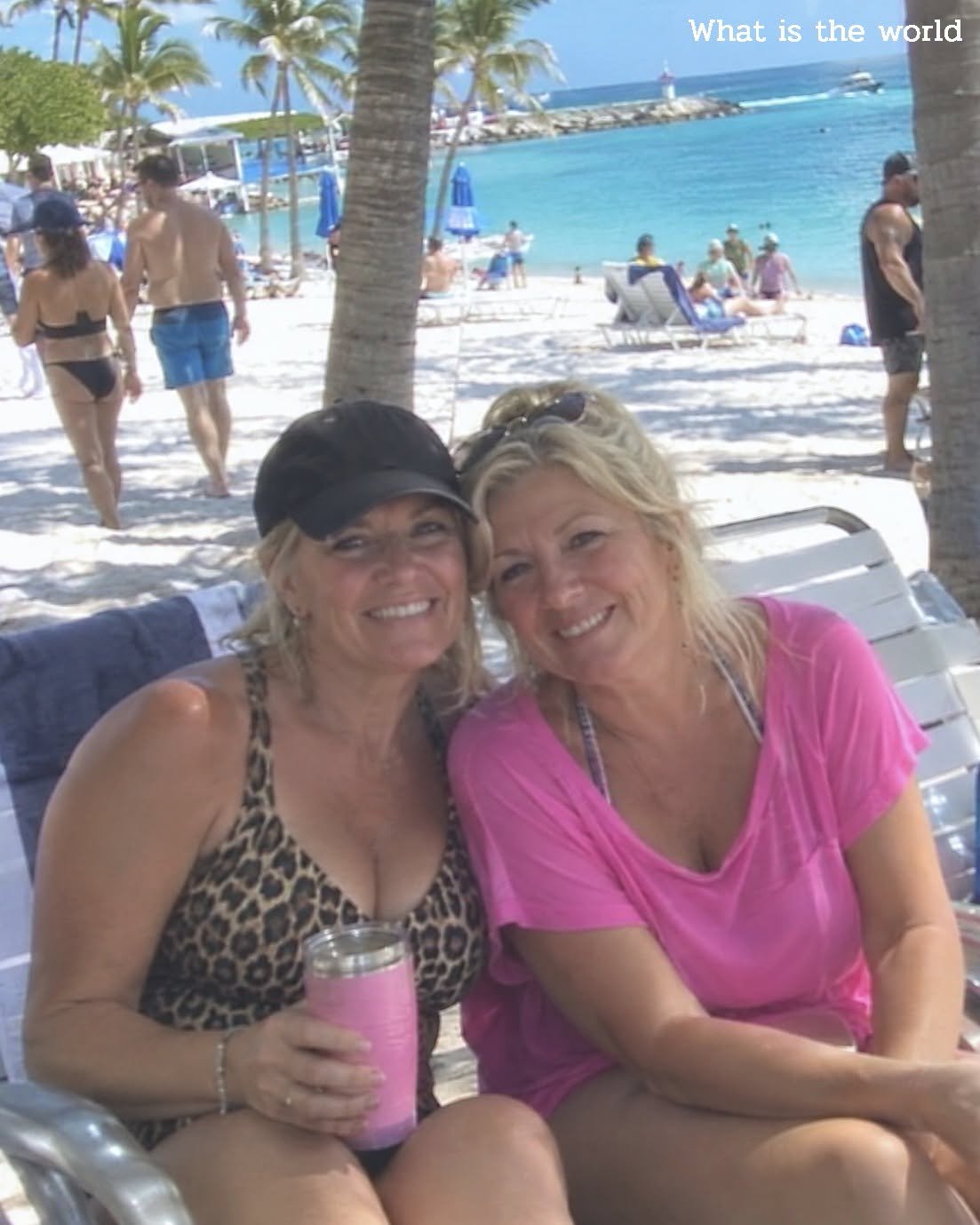
May be an image of ocean and beach
I looked from her to the young woman beside her.
Emily.
Michael’s daughter.
Susan’s daughter.
A child conceived inside a secret that had lasted almost half my marriage.
I had spent the previous eleven months believing death was the cruelest thing Michael had ever done to me.
Now I understood that death had only prevented me from asking him questions.
The cruel thing had happened while he was alive.
For seventeen years.
I sat down because my legs stopped cooperating.
The envelope rested across my knees.
My name was written on it.
Linda.
Michael had always formed the L with an unnecessarily long loop.
I used to tease him about it.
I had signed birthday cards beside that handwriting.
Read grocery lists in it.
Found anniversary notes on my pillow written in it.
Now even his penmanship felt contaminated.
Susan moved toward me.
I raised one hand.
She stopped.
Good.
At least she still understood that gesture.
“Seventeen years,” I said.
Her face tightened.
“Yes.”
“How old is Emily?”
“Twenty-three.”
I looked at her.
That arithmetic did not match.
Susan understood immediately.
“The affair didn’t begin with Emily.”
That surprised me enough to look up.
“What?”
Susan swallowed.
“Emily was conceived before Michael and I became… what we became.”
I stared at her.
“That sentence means nothing.”
“I know.”
“No, I don’t think you do.”
My voice finally rose.
“You just told me my husband had a daughter with you, but the affair somehow came later?”
Emily closed her eyes.
Susan looked at her daughter, then back at me.
“We slept together once before you and Michael married.”
The room went completely still.
There are betrayals you can picture.
That one I could not.
Susan had stood beside me at my wedding.
She had buttoned the back of my dress.
Held my bouquet while I fixed my veil.
Cried during the ceremony.
And somewhere beneath all of that existed a night she and Michael had already shared.
“When?”
“Eight months before your wedding.”
I felt physically sick.
“Did he know you were pregnant?”
“Not then.”
“When did he find out?”
“After Emily was born.”
“And you told him?”
“Yes.”
“While I was married to him?”
“Yes.”
My mouth went dry.
Emily spoke quietly.
“I didn’t know any of this until I was sixteen.”
I turned toward her.
She looked terrified of me.
That mattered.
She had Michael’s eyes.
I hated noticing.
But she had not chosen those eyes.
She had not chosen Susan.
She had not chosen my husband.
I forced myself to separate her from them.
“What were you told growing up?”
Emily looked at Susan first.
“Mom told me my biological father wasn’t part of our lives.”
Susan flinched.
Emily continued.
“Then when I was sixteen, I found an old birthday card in a box. It was from Michael.”
My heartbeat changed.
“A birthday card?”
“He signed it Dad.”
I looked at Susan.
She lowered her eyes.
I laughed once.
It sounded awful.
“So he was her father privately.”
Susan whispered, “Yes.”
“And my husband publicly.”
No answer.
I looked toward the ocean through the glass doors.
The water was bright.
Beautiful.
Completely inappropriate.
I wanted rain.
Thunder.
Some external acknowledgment that reality had broken.
Instead, people walked along the beach.
A child dragged a yellow bucket through the sand.
A couple stood barefoot near the water.
Normal life everywhere.
That almost made it worse.
I looked down at Michael’s envelope.
“Why now?”
Susan sat only after I pointed to the chair farthest from me.
She moved like someone entering a courtroom.
“Because of Michael’s will.”
There it was again.
The will.
I had already gone through probate.
Or believed I had.
Michael and I were comfortable, not spectacularly wealthy.
The house was paid off.
Retirement accounts.
Savings.
Insurance.
Nothing that should have required a secret daughter to appear eleven months later.
“I saw the will.”
“You saw the primary will.”
My head snapped toward her.
“What does that mean?”
Susan looked at Emily.
Emily answered.
“There’s a trust.”
I stared at her.
“What trust?”
“Michael created it years ago.”
“For you?”
“Yes.”
That hurt.
Of course it did.
But money was not the wound anymore.
Money was merely another room in the hidden house he had built.
“How much?”
Emily shook her head.
“That isn’t what matters.”
“Please don’t decide what matters to me today.”
She went pale.
“You’re right.”
That apology was immediate.
No defense.
I noticed.
Susan did too.
Emily took a breath.
“The trust was funded over time. But last year, before he died, he added something else.”
“What?”
“Part of the lake property.”
I stared at her.
Michael’s family cabin.
The place where we spent summers.
The place where Susan often joined us.
My stomach turned again.
“How much of it?”
“Half.”
I stood so quickly the envelope slipped from my lap.
“No.”
Susan rose too.
I pointed at her.
“Sit down.”
She did.
I paced toward the balcony door.
The lake property had been Michael’s before our marriage.
I knew that.
His grandparents had left it to him.
He always called it “our place,” but legally it had been his.
Apparently, he had meant “our” in more than one direction.
“Why didn’t probate show me this?”
Emily answered carefully.
“Because the transfer happened before he died.”
I pressed my hand against my forehead.
So this was not a surprise inheritance.
It was something Michael had arranged while he could still look me in the face.
“Did you know?” I asked Susan.
“Yes.”
Of course.
I turned on her.
“You knew he transferred half the cabin.”
“Yes.”
“You knew he had a trust for Emily.”
“Yes.”
“You knew he was dying.”
“Yes.”
“And you came to my house after the funeral and held me while I cried.”
Susan’s face broke.
“Yes.”
That was the moment I hated her most.
Not because of the sex.
Not even because of Emily.
Because I remembered my kitchen three days after Michael’s funeral.
I had been wearing his old sweatshirt.
Susan made coffee.
I told her I didn’t know how to wake up every morning without him.
She sat on the floor beside me.
Held my hand.
Cried with me.
Now I understood that she had been grieving him too.
Privately.
Beside his wife.
“What kind of person does that?”
Susan’s lips trembled.
“A coward.”
At least she did not say a friend.
I looked at Emily.
She was crying silently.
Again, not her fault.
I picked Michael’s second envelope off the floor.
“What does he say?”
“I don’t know,” Susan said.
I looked at her.
“You expect me to believe he wrote me a secret letter and you didn’t read it?”
“Yes.”
“Why?”
“Because he sealed it in front of me.”
That sounded like Michael.
Control to the end.
I hated that too.
I opened the envelope.
The first page contained only four lines.
Linda,
If Susan has finally told you everything, then she has kept the one promise I had no right to ask her to keep.
Do not forgive me because I am dead.
Read the rest because you deserve the version I was too afraid to give you alive.
I stopped.
The room blurred.
Michael knew.
He knew exactly what he had done.
That somehow hurt more than if he had been delusional enough to think it harmless.
I continued.
The letter did not ask for absolution.
It reconstructed the timeline.
The night with Susan before our wedding.
Her pregnancy.
His discovery months later.
Susan’s decision to raise Emily without naming him publicly because her marriage at the time had already begun and because admitting the truth would have detonated multiple lives.
That part made me look up.
“Your husband thought Emily was his?”
“For four years.”
Susan’s voice was almost inaudible.
“And then?”
“He found out.”
I stared.
“That’s why you divorced.”
She nodded.
All these years, Susan had told me her marriage ended because they “wanted different lives.”
I had comforted her.
Again.
The memories kept changing shape.
Michael’s letter continued.
He claimed that for years, he and Susan avoided another physical relationship.
He saw Emily quietly.
Birthday cards.
Occasional afternoons.
Money deposited through Susan.
Then, when Emily was six, Susan’s marriage collapsed.
Michael became more involved.
And somewhere inside that renewed closeness, he and Susan began an affair.
Seventeen years.
Exactly what Susan had told me.
I put down the page.
“Did you love him?”
Susan did not hesitate.
“Yes.”
“More than me?”
Her face twisted.
“That question doesn’t have a clean answer.”
“It does for me.”
She cried.
“I loved you differently.”
I laughed.
“Please never say that again.”
She covered her mouth.
I looked at Emily.
“Did you know about the affair?”
“Not until after he got sick.”
My eyes moved back to Susan.
“What did she think when she saw him?”
“That he was my father,” Emily said. “And your husband.”
That simple answer made me feel unexpectedly protective of her.
She had spent years being asked to hold a contradiction adults created.
Michael continued living with me.
Susan continued being my best friend.
Emily knew just enough to understand that speaking carelessly could destroy people.
Sixteen-year-olds should not have to manage adult secrets.
“How often did you see him?” I asked.
“Maybe once every month or two. More after I went to college.”
“Did you come to our house?”
“Never knowingly.”
Susan looked at me.
“One time when she was little, you met her.”
My stomach dropped.
“What?”
“School fundraiser.”
A memory surfaced instantly.
Susan had brought a little girl.
Brown curls.
Missing front tooth.
I had bought her a cupcake.
I grabbed the back of the chair.
“You brought his daughter to me?”
Susan started crying again.
“I didn’t think—”
“That seems to be the family motto.”
Emily looked horrified.
“I didn’t know who you were.”
“I know.”
I said it immediately.
She nodded, relieved.
That distinction became necessary over and over.
Michael and Susan had choices.
Emily had circumstances.
I returned to the letter.
The second major revelation came halfway down page three.
Michael had planned to tell me.
Not years earlier.
Not when Emily was born.
Not when the affair began.
Last year.
After his diagnosis.
He wrote that death had made secrecy feel obscene.
Susan had begged him not to tell me while he was sick.
I looked at her.
“You stopped him?”
Her shoulders collapsed.
“I asked him to wait.”
“Why?”
“Because you were already watching your husband die.”
“So you decided discovering the affair later would be kinder?”
“I was terrified.”
There it was.
Fear.
The universal excuse people use when they want compassion for choices that denied someone else information.
I did understand fear.
I did not accept what it justified.
The letter said Michael agreed to wait.
Then he died sooner than expected.
That was the first collapse in the story I had been telling myself.
For almost a year, I had believed Susan had deliberately waited until this vacation to hurt me.
The truth was uglier and sadder.
Michael intended to confess.
Susan delayed it.
Then lost the chance to control how it happened.
The letter, the trust documents, and Emily became a burden she had carried for eleven months while pretending to be nothing except my grieving friend.
It did not excuse her.
It explained why her hands shook during our photograph.
I looked at the phone sitting on the table.
Our last picture as friends.
We were both smiling.
Now I understood why Susan had insisted.
She knew that once she spoke, she could not ask me to smile beside her again.
“You planned this trip for the confession.”
“Yes.”
“The whole thing?”
“Yes.”
I felt violated by that too.
Every breakfast.
Every walk.
Every sunset.
She had known the countdown.
I had thought we were healing.
She had been saying goodbye.
Emily spoke.
“She almost told you the first night.”
Susan glanced at her.
“You weren’t there.”
“No. You called me.”
That surprised me.
Susan wiped her face.
“I called her every night.”
I looked at Emily.
“She was terrified.”
“Stop protecting her.”
“I’m not.”
Emily held my gaze.
“I’m telling you what happened. You can hate what she did.”
That was the first moment Emily stopped looking frightened.
There was steel underneath it.
Michael’s.
Maybe Susan’s.
Maybe entirely hers.
I respected it.
The letter’s final page addressed the property.
Michael did not leave half the lake house to Emily because he loved her more.
He wrote that he had denied her public acknowledgment for twenty-three years and wanted her to own something that proved she had not existed only in secret.
That sentence hurt differently.
I understood it.
I also hated it.
Two things can be true.
He had wronged Emily.
He chose to repair part of that wrong using something tied to my memories too.
He had solved one guilt by creating another wound.
Classic Michael.
Always fixing practical problems because emotional ones frightened him.
Then came the part none of us expected.
The remaining half of the lake property was still mine to inherit under the arrangements I already knew.
Michael wrote:
Do not sell your half because of anger.
Do not keep it because of me.
If you and Emily ever decide what happens to that place, let it be the first decision in this family made by people who were told the truth.
I stopped reading.
Nobody spoke.
That was the line.
The one that cracked through my anger without reducing it.
People who were told the truth.
Susan had not been given truth as a child either.
Neither had Emily.
I had been denied it as an adult.
Michael had finally understood the real damage.
Secrecy did not merely hide facts.
It stole choices.
I folded the letter.
Susan whispered, “I’m sorry.”
I looked at her.
Thirty-seven years.
There is no simple way to end a friendship that old.
You do not remove one person.
You disturb half your memories.
Birthday parties.
Graduations.
Funerals.
Children’s voices.
Holidays.
Road trips.
Bad haircuts.
Hospital waiting rooms.
Every memory containing Susan now came with a second question.
What else was happening then?
That was the real devastation.
Not only discovering who she was.
Losing confidence in who I had been.
“I don’t know what parts of us were real,” I said.
Susan’s face crumpled.
“Most of them.”
“Most?”
Poor word.
She knew it immediately.
“I mean—”
“I know what you mean.”
I stood.
Susan did too.
“No.”
She stopped.
“I need you to leave.”
Her eyes closed.
Emily looked between us.
“You too?” she asked.
I looked at her.
That question surprised me.
“No.”
Susan opened her eyes.
I continued.
“Emily stays if she wants.”
Emily looked stunned.
Susan nodded slowly.
Then she picked up her suitcase.
At the door, she turned.
I thought she would make a speech.
She did not.
“Thirty-seven years doesn’t give me the right to ask for thirty-eight.”
That was the best thing she said all morning.
I nodded.
She left.
The door closed.
Emily and I remained in the room.

Strangers connected by a dead man who had loved both of us in different ways and failed both of us through the same instinct.
Secrecy.
For several minutes, neither of us spoke.
Then Emily looked toward the coffee machine.
“Can I make some?”
The question was so ordinary I nearly laughed.
“Yes.”
She stood.
Then stopped.
“How does Michael—”
She caught herself.
“How did he take it?”
That sentence hit me.
“You know?”
“He drank it black.”
I nodded.
“So did I.”
Emily smiled faintly.
“Mom said you hated it.”
“I do.”
That was our first shared fact.
Small.
Harmless.
Nothing hidden inside it.
She made two coffees anyway.
Mine had milk.
We sat by the window.
I asked about her life.
Not the secret.
Her.
Work.
Friends.
Where she lived.
She answered cautiously at first.
Then more easily.
She had spent years imagining me as a woman who would hate her if I ever found out.
I told her that was Susan and Michael’s fear, not my decision.
She cried.
I did too.
That was the sideways turn I never expected.
Susan’s confession did destroy a friendship.
But it also introduced me to someone who had been forced to exist just outside my life.
I did not become Emily’s mother.
I did not become her aunt.
I did not force a label.
We were simply Linda and Emily.
That was enough.
When I returned home, the house felt unfamiliar.
Susan’s spare key was still on the hook by the back door.
I removed it.
Not angrily.
Practically.
The lock was changed the next morning.
I packed the things Susan had left over the years.
A sweater.
A coffee mug.
A paperback.
One photograph from a Christmas dinner where she stood between Michael and me.
I almost threw it away.
Instead, I put everything into a box.
I was not ready to decide what deserved destruction.
Susan did not call.
That surprised me.
For three weeks, nothing.
Then a letter arrived.
No demand.
No request to meet.
She wrote down every date she could remember.
When Michael learned about Emily.
When the affair began.
When it stopped for periods.
When it resumed.
Which vacations she had joined while they were involved.
Which dinners were innocent.
Which were not.
I hated reading it.
I needed it.
The list gave my memories edges again.
Not clean ones.
But edges.
One entry stopped me.
The night my mother died.
Susan had spent the entire night with me at the hospital.
Michael was home.
There had been no affair meeting.
No secret call.
No hidden agenda.
Susan had simply been my friend that night.
I cried harder over that than I had over the ugliest entries.
Because I realized the past did not need to become entirely false for betrayal to be real.
That was another kind of grief.
Good memories did not excuse bad choices.
Bad choices did not automatically erase every genuine moment.
Holding both truths was exhausting.
Months later, Emily and I drove to the lake property.
Neither of us had been there since Michael died.
She had visited as a teenager once with him.
I had apparently been away helping my mother after surgery.
Another altered memory.
But this time, I did not collapse.
We walked down to the dock.
The boards needed repair.
Michael would have complained about them.
Emily said, “He hated loose nails.”
I stared at her.
“He carried a hammer in the trunk.”
Her eyes widened.
“You knew that too?”
We laughed.
The sound startled both of us.
Then Emily became serious.
“What do you want to do with this place?”
Michael’s letter returned to me.
The first decision made by people who were told the truth.
“I don’t know.”
“Me neither.”
“Good.”
She smiled.
We kept it.
For the moment.
No dramatic sale.
No ceremonial destruction.
Just time.
Susan and I did not speak for almost a year.
Then, on the anniversary of Michael’s death, she sent one message.
Thinking of you. No reply needed.
I stared at it for an hour.
Then typed:
I know.
Nothing else.
That was all I had.
Six months later, we met for coffee.
Not because everything was repaired.
It wasn’t.
Some betrayals do not end with forgiveness.
They end with a new shape.
Susan arrived early.
Of course she did.
Her hands trembled when I sat down.
That detail took me instantly back to the beach.
Our last photo as friends.
She did not reach for me.
“Thank you for coming.”
I nodded.
We talked for forty minutes.
About Emily.
About my house.
About Susan’s mother.
About nothing.
Then, finally, she said, “I miss you.”
I believed her.
“I miss who I thought we were.”
She cried.
“So do I.”
That answer mattered.
She did not demand that I restore the old friendship.
She understood it no longer existed.
When we stood to leave, Susan glanced toward my phone on the table.
For a second, I knew exactly what she was thinking.
Another picture.
She did not ask.
I picked up the phone myself.
Then put it into my purse.
“Not yet.”
Susan nodded.
“Okay.”
I walked away.
Not triumphant.
Not healed completely.
But no longer trapped inside the version of my life Michael and Susan had curated for me.
Months later, Emily sent me the ocean photograph Susan and I had taken that final afternoon.
She had found a copy on her mother’s phone.
I stared at it for a long time.
Two women in sunlight.
Shoulders touching.
Both smiling.
One of them knew the friendship was about to end.
The other still believed she understood her own life.
For a while, I hated that photo.
Eventually, I printed it.
Not because I forgave everything.
Because it captured the exact boundary between the life I had been given and the life I was finally allowed to understand.
Susan had called it our last picture as friends.
She was right.
Whatever we became afterward would have to be built without secrets.
And for the first time in thirty-seven years, that condition mattered more to me than keeping the friendship alive.