
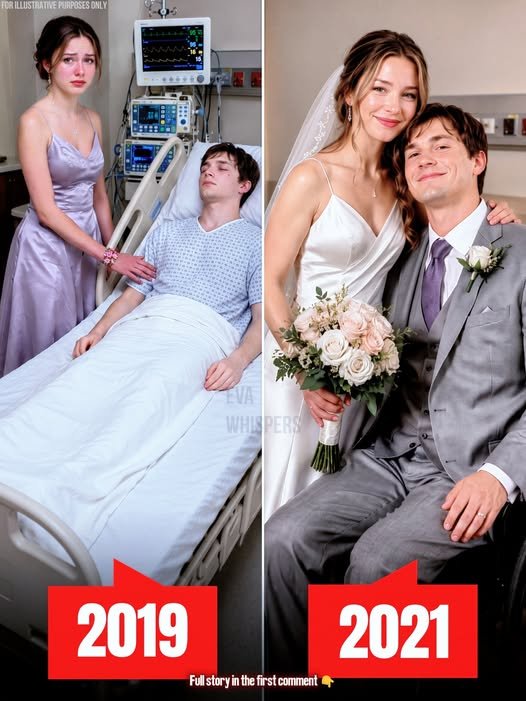
Part 1: The Last Ordinary Day
For years, I believed missing senior prom was the tragedy that had changed my life.
I was wrong.
The real tragedy had begun long before the music started, hidden behind my parents’ careful smiles and the silence of the boy I loved.
The dress hung from my closet door inside a white garment bag. Every few minutes, I unzipped it just far enough to admire the delicate beading along the neckline. Terry and I had chosen it together three months earlier after visiting nearly every formalwear shop within driving distance.
At eighteen, I thought my biggest problem was whether my new shoes would hurt before the second slow dance.
I had no idea how quickly an ordinary life could disappear.
Terry and I had been together since sophomore year. He was funny without trying to be, stubborn about the smallest things, and completely incapable of dancing. By senior spring, our classmates had already decided we would be crowned prom king and queen.
Terry liked to pretend he had been practicing.
A few days before prom, he sent me a message saying he had rehearsed in his mother’s kitchen using a dish towel as his dance partner.
“I’m getting pretty good,” he wrote. “I might only step on your feet twice.”
“Then I’m replacing you with the dish towel,” I replied.
“You wouldn’t dare.”
“I hear it has excellent rhythm.”
The afternoon before prom, Terry walked me to my car after school. The parking lot was almost empty, and the warm spring air smelled like freshly cut grass.
He pulled me close and rested his chin on the top of my head.
“I have to drive to Millbrook,” he said. “The tailor finally finished my suit.”
Millbrook was about an hour away. Terry had found a small tailor there who could alter a secondhand suit he and his mother had bought.
“Send me a picture when you try it on,” I said.
He gave me the crooked smile that always made it impossible to stay serious around him.
“No chance. You’ll see the whole thing tomorrow night.”
“What if it’s terrible?”
“Then you’ll have to love me despite my tragic fashion choices.”
“I already do.”
He kissed me, promised he would meet me at the school gym the next evening, and climbed into his car.
I remained in the parking lot, watching his taillights until they disappeared around the corner.
I didn’t know it would be the last time I would see Terry standing without help.
When I arrived home, my mother was wiping the kitchen counter even though it was already spotless. Sylvia always cleaned when she was anxious. That evening, her movements seemed unusually sharp.
“Tomorrow is the big night,” she said brightly. “Did Terry get his suit?”
“He’s picking it up now.”
“Where?”
“Millbrook. I told you about the tailor.”
Her hand stopped moving for half a second.
“And when is he coming back?”
“Tomorrow afternoon. He’s staying at a motel tonight because the tailor needs to make one final adjustment.”
My mother quickly resumed wiping the counter.
“So he’s meeting you at the school?”
“Yes. Why are you asking so many questions?”
“No reason, sweetheart. I’m simply making sure everything is organized.”
My father, Rick, usually sat at the kitchen table after work, pretending to read the newspaper while listening to every conversation. That night, his chair was empty.
“Where’s Dad?” I asked.
“Working late.”
Whenever I mentioned Terry, a strange look often passed between my parents. It was always quick enough for me to question whether I had truly seen it.
“You and Terry are very serious for your age,” my mother said.
“We love each other.”
“You’re both young. Your father and I only want you to have every opportunity.”
“Terry is part of my future, Mom.”
Her smile tightened.
“Of course he is.”
My parents had never openly mistreated Terry. They were polite whenever he visited.
But their politeness felt cold and measured, like the courtesy people offered someone they hoped would leave soon.
I went upstairs before my mother could continue.
A few minutes later, Terry sent me a picture of himself holding the garment bag containing his suit. He was grinning and giving the camera a thumbs-up.
“I wanted to see you wearing it,” I texted.
“That would ruin the surprise. I’m staying near the shop tonight and leaving tomorrow afternoon. Meet you at seven, beautiful.”
“Don’t be late.”
“Never.”
I placed my phone beside my bed and looked once more at my dress.
That was the final ordinary evening of my childhood.

Part 2: The Empty Place Beside Me
The following morning began exactly as I had imagined.
I showered, arranged my makeup across the bathroom counter, and checked my phone every few minutes. Terry told me the tailor needed a little more time, but he would still leave Millbrook early enough to reach the school before seven.
By late afternoon, my bedroom had become a storm of hairpins, makeup brushes, and discarded shoes.
My mother helped fasten my dress, though her fingers trembled slightly as she worked.
“You look beautiful,” she said.
There was something strange in her voice, but I was too excited to examine it.
My father was still supposedly dealing with unfinished work, so my mother drove me to the school alone.
Before I got out of the car, she touched my wrist.
“Make sure Terry brings you home by midnight.”
“He will.”
“And call me if anything changes.”
I laughed.
“What could possibly change now?”
She looked away.
“Nothing, I hope.”
The gym had been transformed with hanging lights, silver streamers, and paper stars. Music echoed through the building, and everyone looked older beneath formal clothes and carefully styled hair.
At first, I wasn’t worried when Terry failed to arrive at seven.
He was probably stuck in traffic.
At seven-thirty, I sent him another message.
At eight, I called.
At eight-thirty, I was standing near the entrance, searching every face that appeared through the doors.
His phone rang without an answer.
My friends tried to distract me, but I could no longer hear the music. All I could see was the empty space where Terry should have been.
Shortly after nine, my phone rang.
His mother’s name appeared on the screen.
I answered with relief.
“Linda, is Terry with you? I’ve been trying—”
Then I heard her crying.
Not quiet tears. She was sobbing so hard that she could barely form words.
“Chloe,” she said. “Terry is at the hospital.”
For a moment, I thought I had misunderstood her.
“What?”
“There was an accident.”
A long, unnatural pause followed those words.
“Is he awake?”
“No.”
The crowded gym seemed to tilt around me.
“I’m coming.”
I booked a ride and ran outside without saying goodbye to anyone. My dress caught beneath my shoes as I crossed the parking lot, but I barely noticed.
During the ride, I called my mother.
“Terry was in an accident,” I cried. “He’s at the hospital.”
“Oh, sweetheart.”
Her response came quickly, yet there was no shocked question or gasp.
“Should your father and I meet you there?” she asked.
“Linda is already there. I’ll call if I need you.”
I ended the call before she could answer.
Linda was sitting outside the intensive care unit when I arrived. Her face was pale, and her hands were clasped so tightly that her knuckles had turned white.
She stood when she saw me, and we held each other without speaking.
Doctors told us Terry had suffered severe injuries. They had managed to stabilize him, but he remained unconscious. No one could tell us when—or whether—he would wake up.
I sat beside his bed until morning, still wearing the prom dress we had chosen together.
I held his motionless hand and told him everything I could think of. I reminded him of our first date at the little diner near the highway. I repeated our ridiculous private jokes. I told him I was angry that he had missed prom and that he owed me a dance.
I promised I would wait.
Days became weeks.
Then one afternoon, while I was sitting beside him and reading aloud, his fingers moved around mine.
At first, I thought I had imagined it.
“Terry?”
His fingers squeezed again.
He opened his eyes several hours later.
The doctors called his survival extraordinary. They also told us the damage to his spine was permanent.
Terry would use a wheelchair for the rest of his life.
The news broke something inside him, but it did not change what I felt.
He was alive.
That was enough for me.
My parents visited every week during the early months of his recovery. Each time they entered his hospital room, Terry’s shoulders stiffened and his expression changed.
“You don’t need to stay,” he would tell them.
My mother always smiled as though he had made a joke.
“Don’t be silly. We’re practically family.”
One afternoon, I left to buy coffee. When I returned, my father was walking out of Terry’s room.
He wouldn’t look at me.
Inside, Terry’s face had lost all its color.
“What did Dad say?”
“Nothing important.”
“You look terrified.”
“I’m tired, Chloe.”
“Terry, please.”
He turned toward the window.
“Can we leave it alone?”
I did.
Then I left it alone the next time.
And the time after that.
Terry also insisted that he remembered nothing about the accident. He said the last clear memory he had was driving away from the tailor’s shop.
Part of me sensed he was hiding something.
But I told myself trauma affected memory in strange ways. I convinced myself that questioning him would only cause more pain.
At home, my parents began pressuring me to reconsider our relationship.
“You are allowed to choose a different life,” my mother said one evening.
“I don’t want a different life.”
“Taking care of someone is not the same as dating someone in high school.”
“I’m not abandoning him.”
“No one is asking you to abandon him. We’re asking you to think realistically.”
“I love him.”
My father lowered his newspaper.
“Love feels different once responsibility enters the picture.”
I stared at both of them.
“My future includes Terry. There is nothing more to discuss.”
I believed I was defending our love against parents who simply didn’t understand it.
I never imagined they were afraid of something far worse than my future.
Part 3: The Secret Inside Our Marriage
Terry’s recovery was long and exhausting.
He had to rebuild his strength, learn how to move through a world that suddenly seemed designed to exclude him, and accept that some of the dreams he had carried since childhood would need to change.
There were days when he became frustrated and shut everyone out.
There were also days when he made me laugh until my stomach hurt.
The first time he managed to move across the rehabilitation gym without assistance, he raised both arms as though he had won a championship.
“Still think the dish towel is a better dancer?” he asked.
“Absolutely.”
He laughed, but sadness remained behind his eyes.
We married quietly the following winter.
Linda cried through the entire ceremony. My parents attended, but their smiles looked strained in every photograph. They offered us money for a larger celebration, and we refused.
Terry and I built a small life together.
It wasn’t perfect, but it was ours.
We rented an accessible apartment near the center of town. Terry eventually began working as a graphic designer from home, and I finished college nearby instead of attending the distant university my parents had chosen for me.
They treated my decision as a personal betrayal.
Despite that, I continued seeing them for holidays and birthdays. I told myself family relationships were complicated. I made excuses for their coldness and ignored the tension that appeared whenever Terry entered the room.
For five years, he carried a truth I could not see.
On our fifth wedding anniversary, we ordered dinner from the diner where we had shared our first date.
I set the table with mismatched candles and brought home peach cobbler, the same dessert we had eaten that night as teenagers.
Terry was unusually quiet.
“Are you feeling okay?” I asked.
“I’m fine.”
“That means you’re definitely not fine.”
He looked down at his hands.
“I’ve been trying to decide whether tonight is the right time.”
“For what?”
Instead of answering, he reached into his jacket and placed a small black USB drive in my palm.
His hands were shaking.
“What is this?”
“Something I should have shown you years ago.”
The warmth of the evening disappeared.
“Terry, you’re frightening me.”
He looked directly into my eyes.
“Everything you believe about the day of my accident is incomplete.”
I closed my fingers around the drive.
“What are you saying?”
“I didn’t simply lose control of the car.”
The room became painfully quiet.
“Then what happened?”
He swallowed.
“I need you to watch the files. Afterward, I’ll answer every question.”
I opened my laptop and inserted the drive.
There were two video files and one audio recording.
The first video came from a dashboard camera in Terry’s old car. The road was familiar—the narrow two-lane highway leading from Millbrook toward our town.
Terry was humming with the radio.
Then headlights appeared behind him.
A dark sedan followed so closely that its front bumper nearly touched his car. Terry accelerated, but the sedan matched his speed.
After several minutes, it slowed and dropped back.
The recording ended.
I turned to Terry.
“What was that?”
“Play the second file.”
My hand trembled as I clicked it.
The same sedan appeared again, following Terry on the return trip the next afternoon.
This time, it moved into the opposite lane and pulled alongside him.
Then it swerved sharply in front.
Terry’s car left the road and plunged into a ditch.
The camera tilted sideways but continued recording.
The dark sedan stopped.
A man stepped out.
Even before his face appeared clearly, I recognized his walk.
My father.
I stopped breathing.
He rushed toward the ditch, pulled out his phone, and made a call.
“He isn’t moving,” my father said. Panic cracked his voice. “Sylvia, he isn’t moving.”
My mother’s name hit me like a physical blow.
My father continued speaking.
“I only meant to scare him. He swerved too far.”
A muffled voice answered through the phone.
My father paced near the roadside.
“He wouldn’t accept the money,” he said. “I warned him to stay away from her, but he was driving back to meet her.”
He listened for several seconds.
“No, I haven’t called anyone yet.”
My stomach twisted.
Then my father said something I would hear in my nightmares for years.
“Tell me what to do.”
The video ended.
I stared at the frozen screen.
I could hear my own breathing, but the sound seemed to belong to someone else.
Terry moved closer and gently reached for my hand.
“Your parents approached me three weeks before prom,” he said. “Your father came to the diner while I was working.”
I could barely speak.
“What did he want?”
“He offered me twenty thousand dollars to end our relationship and disappear before you left for college.”
I looked at him in disbelief.
“He tried to buy you?”
“He said I was holding you back. He called me small-town baggage.”
“And you refused.”
“Of course I refused.”
Terry’s voice broke.
“Your father followed me the night I picked up my suit. He drove close to frighten me, but I managed to get away. The next day, your mother learned I was returning for prom. She called him, and he followed me again.”
My eyes burned.
“Why didn’t you tell the police?”
“I didn’t have the recordings then. The dashcam was recovered with the car, but your father got to me first.”
“What did he do?”
“He came into my hospital room while you were buying coffee.”
The memory returned instantly—my father leaving, Terry pale beneath the hospital lights.
“He told me that if I ever said anything, they would destroy everyone I loved. He threatened your college funding. He said he would ruin my mother’s bakery before it even opened. He also promised to tell the entire town I had been drinking and caused the crash myself.”
“But the recordings—”
“I didn’t know they existed until much later. My old phone had been damaged, and Linda kept it in a box with my other belongings. A repair technician recovered the audio two years ago. The dashcam footage took even longer.”
“You’ve had this for two years?”
He nodded.
“Why didn’t you tell me immediately?”
His eyes filled with tears.
“Because I knew the truth would take your parents away from you.”
“They took themselves away from me.”
“I was afraid you would lose everything.”
“I nearly lost you.”
He looked down.
“I thought staying silent was an act of love.”
I held the drive so tightly that its edge pressed into my skin.
“No,” I whispered. “Love should never have required you to carry this alone.”

Part 4: The Call That Ended Everything
I picked up my phone and called my mother.
She answered cheerfully.
“Happy anniversary, sweetheart. How was dinner?”
“I know what happened to Terry.”
Silence.
Not confusion.
Not surprise.
Silence.
My entire childhood collapsed inside that pause.
“What are you talking about?” she finally asked.
“The highway. Dad’s car. The phone call from the ditch.”
Her breathing changed.
“Chloe, you need to listen carefully.”
“Terry’s dashcam recorded everything.”
Another silence followed.
Then my mother spoke in the calm, patient voice she had always used when trying to convince me that her decisions were more reasonable than my feelings.
“Everything we did was for you.”
My hand tightened around the phone.
“You forced his car off the road.”
“We wanted to frighten him. No one intended for him to be hurt.”
“You tried to pay him to leave me.”
“You had been accepted into an excellent university. You were going to throw away your future for a teenage relationship.”
“He became disabled because of you.”
“We could not have predicted that.”
“You left him in a ditch while you decided what to do.”
“Your father called for help.”
“After calling you first.”
My mother’s composure began to crack.
“That boy would have kept you in this town forever. We were trying to protect you.”
“You didn’t protect me,” I said. “You destroyed the person I loved and then watched me blame fate.”
“Come to the house. We can talk about this as a family.”
“We are not a family anymore.”
“Don’t say that.”
I could hear my father breathing somewhere near her, but he never spoke.
“For five years, you visited Terry and pretended to care,” I continued. “You sat beside him knowing exactly why he was in that chair.”
“We regretted what happened.”
“Regret without honesty is just fear of consequences.”
“Chloe, please don’t do anything impulsive.”
“I’m not the impulsive one. Dad chased someone off a road because he refused a bribe.”
I ended the call.
For several minutes, Terry and I sat without speaking.
I thought about birthdays, holidays, and family dinners. I remembered my mother helping me fasten my prom dress while knowing my father was following Terry’s car. I remembered my parents sitting in the hospital beside the young man they had nearly taken from me.
Every memory had changed.
“What do you want to do?” I asked Terry.
He looked exhausted.
“I don’t know.”
“This happened to you. The decision has to include what you need.”
“I want the threats to stop. I want my mother protected. And I never want them near us again.”
The following morning, we contacted an attorney and made secure copies of every file. We also prepared a written record of what Terry remembered from my father’s hospital visit.
Only after the evidence was protected did we drive to my parents’ house.
My mother opened the door with swollen eyes. My father stood several feet behind her. He seemed smaller than I remembered.
“We know why you’re here,” she said.
“No,” I replied. “You know why we’re leaving.”
My mother stepped aside.
“Please come inside.”
Terry and I entered, but I remained near the doorway.
My father looked at Terry.
“I never meant for that to happen.”
Terry’s expression remained calm.
“But it did.”
“I panicked.”
“You had five years to stop panicking and tell the truth.”
My father lowered his eyes.
“I’m sorry.”
I had imagined apologies as powerful things. I had believed the right words could heal nearly anything.
Standing there, I understood that some apologies arrived too late to repair what had been broken.
“You didn’t make one mistake,” I told him. “You made a choice before the crash, another choice on the road, another while Terry lay unconscious, and thousands more every day you kept silent.”
My mother began to cry.
“We were afraid of losing you.”
“You were so afraid of losing control that you nearly killed someone.”
She covered her mouth.
“We’ll give you anything,” she whispered. “Money, the house, whatever you need. Just keep this private.”
“You still think everything has a price.”
“That isn’t what I meant.”
“It is exactly what you meant.”
I looked at both of them.
“Our attorney has copies of the evidence. You will not contact Terry, Linda, or me. You will not appear at our home, our jobs, or any event we attend.”
“Chloe,” my mother pleaded. “We are your parents.”
“You stopped acting like my parents the moment you decided my life belonged to you.”
My father’s shoulders sagged.
“What happens now?”
“Terry will decide what legal action he is ready to take. That choice belongs to him—not to you and not even to me.”
Terry reached for my hand.
For the first time since we had entered, his fingers were steady.
We turned toward the door.
My mother called my name.
I stopped but did not look back.
“I loved you,” I said. “That is what makes this hurt so much.”
Then we left.
The door closed behind us.
This time, I knew it was the last time.
Part 5: What the Truth Gave Back
In the months that followed, grief arrived in unexpected ways.
I mourned the parents I thought I had known. I mourned the childhood memories that no longer felt safe. Sometimes I woke in the middle of the night remembering small details—the way my mother had questioned Terry’s travel plans, or how my father had been absent the night before prom.
The truth had always been there.
I simply had not known how to recognize it.
Terry struggled too.
Revealing the secret did not instantly free him from its weight. He had spent years believing that silence protected me. After speaking the truth, he had to learn that honesty did not make him responsible for the pain my parents had caused.
We began seeing a counselor together.
Slowly, our home changed.
Terry laughed more openly. He stopped growing tense whenever an unfamiliar car remained behind us too long. He began talking about the future without looking as though he expected someone to take it away.
Linda opened her bakery with help from friends in the community. On the first morning, Terry and I arrived before sunrise to help arrange trays in the display case.
She hugged me for a long time.
“I’m sorry you lost your parents,” she whispered.
I looked toward Terry, who was arguing with a delivery driver about where to place a box of peaches.
“I didn’t lose my whole family,” I said.
One evening, several months after our anniversary, Terry and I sat beside the apartment window while rain tapped softly against the glass.
He caught me staring at him.
“What?” he asked.
“Nothing.”
“That isn’t true.”
I smiled.
“I was thinking about prom.”
He groaned.
“You’re still angry that I missed it?”
“Completely furious.”
“I was unconscious.”
“Excuses.”
He laughed—the real laugh I had not heard often enough during the previous five years.
Then his expression softened.
“I’m sorry I waited so long to tell you.”
I placed my hand over his.
“You were scared.”
“I should have trusted you.”
“You survived something terrible. You made the best decisions you could while people were threatening everything you loved.”
He looked at our joined hands.
“Do you regret staying with me?”
The question hurt because I knew how long he must have carried it.
“Not for a single moment.”
“Even after everything it cost you?”
“You didn’t cost me my parents, Terry. Their choices did.”
He nodded slowly.
I leaned closer.
“They tried to decide what my future should look like. They believed love, loyalty, and even another person’s life could be sacrificed to protect their plans for me.”
“And what does your future look like now?” he asked.
I glanced around our small apartment—the photographs on the wall, the half-finished cobbler on the counter, the wheelchair beside our dining table, and the man who had loved me enough to survive, stay, and finally speak.
“It looks honest,” I said.
That was what the truth gave us.
Not a perfect ending.
Not the return of everything we had lost.
It gave us a life no longer built on fear.
For years, I thought loyalty meant refusing to leave Terry after the accident. Later, I understood that real loyalty was more complicated. It meant believing him when the truth was painful. It meant standing beside him without deciding what justice should look like for him. It meant refusing to protect the people who had harmed him simply because they were connected to me by blood.
My parents had once claimed they were saving my future.
But Terry had never trapped me.
Their lies had.
Walking away from them was painful, but it was also the first decision I had ever made entirely for myself.
I lost the family I thought I had.
In return, I found the courage to protect the family that had been real all along.
And no matter how many times I had to make that choice, I knew I would always choose the truth.
I would always choose Terry.
I would always choose us.