
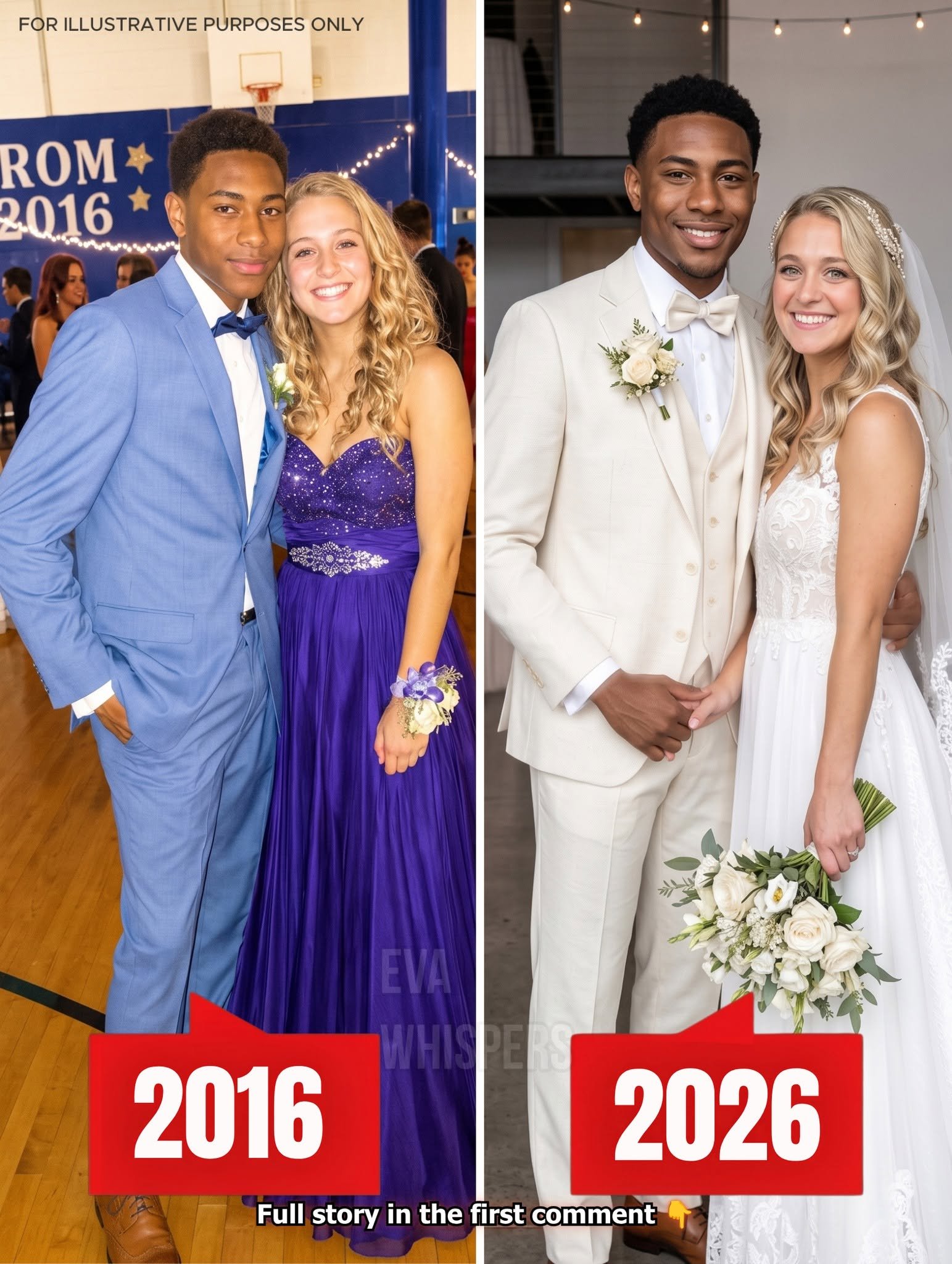
The Boy Everyone Thought I Would Marry
Jordan Keller and I were never officially a couple in school, but everyone treated us like we were.
We grew up three streets apart in a small town where everybody knew your parents, your grades, your church attendance, and whether your mailbox needed painting. Jordan and I met in primary school when he traded me half his peanut butter sandwich for my apple slices. By middle school, he was carrying my books without being asked. By high school, people stopped inviting one of us anywhere without inviting the other.
“Someday you two are going to get married,” my grandmother used to say, smiling over her tea.
I always rolled my eyes.
Jordan always blushed.
But the truth was, I liked hearing it.
He was the boy who knew I hated thunderstorms, the boy who once rode his bicycle through heavy rain just to leave soup and medicine on my porch when I had the flu. He remembered every birthday, every spelling bee, every little dream I whispered like it was too fragile to say out loud.
So when prom came, nobody asked who I was going with.
Everyone already knew.
That night, under paper lanterns and cheap string lights in the school gym, Jordan looked at me like I was the only person in the room. At 11 p.m., when the music had faded and volunteers were already stacking chairs, he walked me outside.
The air smelled like grass and rain.
Then he kissed me.
It was soft, nervous, and perfect.
When he pulled back, he laughed under his breath and said, “I’ve been waiting two years to do that.”
I went home that night with my heart floating.
By the next morning, he was gone.
The Vanishing
At first, I thought he was embarrassed.
Then one day passed. Then two. No calls. No messages. His house stayed dark. His bedroom curtains, the ones I had seen open nearly every morning for years, were shut tight.
A week later, I walked past his house and saw boxes stacked in the garage.
A month later, the Keller family had left the state.
No goodbye.
No explanation.
Nothing.
I cried for weeks, though I tried to hide it. My mother told me not to make myself sick over a boy. My father was even colder.
“You’re better off,” he said one evening while reading the paper. “You don’t need someone like Jordan holding you back.”
“Someone like Jordan?” I asked.
He didn’t look up. “Weak people run when life gets hard.”
I remember staring at him, confused by the bitterness in his voice. My father had always been strict, but I had never heard him talk about Jordan that way.
The strangest moment came a few months later.
Dad and I ran into Jordan’s aunt, Mrs. Elaine, at the grocery store. I saw her in the cereal aisle and nearly dropped the basket.
“Mrs. Elaine!” I called.
She turned, and for one second, her face softened when she saw me.
Then her eyes moved past me to my father.
All the color drained from her face.
She burst into tears.
Not quiet tears. Terrified, shaking tears.
My father stepped forward and said in a low voice, “Elaine.”
That was all.
She covered her mouth, turned around, and left her cart right there in the aisle.
I tried to follow her, but Dad grabbed my wrist.
“Leave it,” he said.
“What happened?” I demanded.
He squeezed just hard enough to make me stop. “Some people are dramatic when they’re guilty.”
I didn’t understand what he meant.
For years, I replayed that moment in my mind. Mrs. Elaine’s tears. My father’s voice. The way she looked at him as if he had the power to destroy her.
But I was seventeen. Heartbroken. Confused.
And everyone around me acted like Jordan’s disappearance was something I should simply get over.
So eventually, I pretended I had.

Seven Years of Silence
I went to college. I made friends. I dated a little, but never seriously. No one compared to the boy who had known me before I learned how to protect myself.
My father was proud when I graduated. He cried when I got my first job at a small publishing company. He told everyone I was his greatest achievement.
But there were times when his love felt heavy.
He liked to know where I was going, who I was with, what choices I was making. If I disagreed with him, he called it disrespect. If I wanted privacy, he called it secrecy.
“You’re my daughter,” he would say. “Everything I do is to protect you.”
I believed him because daughters often believe their fathers, especially when the truth would hurt too much.
Then, seven years after prom, Jordan Keller walked back into my life.
It happened at my cousin Rebecca’s wedding.
I was standing near the dessert table, holding a plate of cake I didn’t even want, when I heard someone say my name.
“Clara?”
I turned.
And there he was.
Older. Taller. His shoulders broader, his face sharper. But his eyes were the same—soft brown, familiar, and full of something that looked painfully close to regret.
The plate slipped from my hand and hit the floor.
Neither of us moved at first.
Then Jordan said, “Can I have five minutes?”
Every sensible part of me wanted to say no.
But my heart, the foolish part that had waited long after my pride gave up, whispered yes.
We stepped outside into the garden behind the reception hall. Music floated through the doors. People laughed inside while I stood across from the boy who had broken my heart without a word.
“Why?” I asked.
His jaw tightened.
“I had to leave,” he said.
“That’s not an answer.”
“I know.”
“Did I do something?”
His expression changed immediately. “No. Never. Clara, no.”
“Then why didn’t you call?”
He looked away.
For a long moment, I thought he might finally tell me the truth.
Instead, he said, “My family was going through something. I had to focus on college, on helping them rebuild. I thought staying away would be easier for you.”
I should have pushed harder.
I should have asked why his aunt cried when she saw my father. I should have asked why his family left like people running from a fire.
But I was twenty-four, and the boy I had loved was standing in front of me looking like he had carried my name in his chest for years.
So I accepted the answer.
Not because it made sense.
Because I wanted it to.
The Second Beginning
Jordan and I started slowly.
Coffee became dinner. Dinner became long drives. Long drives became Sunday mornings at the farmers’ market and quiet evenings on my apartment balcony.
He was gentle with me, almost too gentle, as if afraid I would vanish if he moved too fast.
My father did not approve.
The first time I brought Jordan home again, Dad’s smile looked carved into his face.
“Jordan,” he said. “I wondered when you’d show up.”
Jordan went still beside me.
“Mr. Whitmore,” he replied.
The air between them felt strange. Cold. Loaded.
At dinner, my father asked pointed questions about Jordan’s job, his savings, his family, his intentions.
Jordan answered politely.
But his hand shook when he reached for his glass.
Afterward, I confronted him in the driveway.
“What is it with you and my dad?”
Jordan looked at the house, then back at me.
“It’s complicated.”
I folded my arms. “Everything with you becomes complicated when it involves the past.”
Pain flashed across his face.
“I’m sorry,” he said. “I know I owe you more.”
“Then tell me.”
He opened his mouth.
The front door creaked behind us.
My father stepped onto the porch.
“Clara,” he said, “your mother needs help in the kitchen.”
She didn’t. We both knew it.
Jordan looked at my father, and something silent passed between them. A warning. A memory. A chain still locked around his throat.
I didn’t understand it then.
Three years passed like that.
Jordan loved me patiently. He proposed on a quiet autumn afternoon in the park where we used to ride bikes as children. He got down on one knee beneath an old maple tree, holding a ring with trembling fingers.
“I should have chosen courage years ago,” he said, voice breaking. “I can’t change what happened, but I can spend my life being honest with you from now on.”
I cried before I even said yes.
Looking back, I realize those words were not just a proposal.
They were a promise he was trying desperately to keep.

The Wedding Morning
Last Sunday dawned bright and clear.
The church smelled of lilies and polished wood. My bridesmaids fussed over my veil. My mother cried while buttoning the back of my dress. My father came in just before the ceremony and stood in the doorway, staring at me.
For once, he looked old.
“You look beautiful,” he said.
“Thank you, Dad.”
He stepped closer and adjusted the necklace at my throat, the small pearl pendant he had given me when I turned sixteen.
“I always wanted the best for you,” he said softly.
Something about his tone made me turn.
“I know.”
He looked like he wanted to say more, but my mother appeared behind him and said, “It’s time.”
He offered his arm.
As we walked down the aisle, everyone stood. Jordan waited at the altar in a navy suit, his eyes shining when he saw me.
For one perfect second, all the years between us disappeared.
Then I noticed his hands.
They were trembling.
Not wedding nerves trembling.
Fear.
When my father placed my hand in Jordan’s, he leaned close and whispered something I couldn’t hear.
Jordan’s face changed.
The officiant smiled and opened his book.
“Dearly beloved—”
Jordan suddenly tightened his grip on my hands.
“Wait,” he whispered.
I blinked. “Jordan?”
He leaned close enough that only I could hear.
“Before I say my vows, there’s something your father made me promise never to tell you. I’ve been holding it in for ten years. But you need to know what he really did.”
My whole body went still.
“What are you talking about?”
His eyes flicked past my shoulder toward the front row.
My father’s hand had frozen on the program in his lap. His face had gone pale.
“Don’t you dare,” my father whispered.
But Jordan had already turned back to me.
And for the first time in ten years, he stopped being afraid.
The Truth at the Altar
Jordan faced the congregation, then looked at me.
“I’m sorry,” he said, loud enough now for the first rows to hear. “Clara, I should have told you sooner. I thought keeping the promise would protect you, but all it did was keep hurting us.”
A murmur moved through the church.
My father rose. “This is not the place.”
Jordan’s voice shook, but he didn’t stop.
“The morning after prom, your father came to my house.”
My knees weakened.
“He told my parents he knew my mother had made mistakes at the clinic where she worked. She had signed off on missing inventory without realizing her supervisor was stealing supplies. Your father had found out because he was on the clinic’s board.”
My mother gasped.
Jordan swallowed hard.
“He said if I stayed in your life, he would make sure my mother took the blame for everything. He said she could lose her job, maybe worse. He said my little brother would grow up with everyone in town calling our family thieves.”
I turned slowly toward my father.
His face was rigid.
Jordan continued, “My parents begged him not to do it. My aunt was there. That’s why she cried when she saw him later. She knew what he had done.”
The church was completely silent now.
“He gave us a choice,” Jordan said. “Leave town and cut all contact with you, or he would destroy my family. I was seventeen. I believed him. My mother was already fragile from the scandal at work, and my dad had just lost his job. So we left.”
I could barely breathe.
“You told me you left for college,” I whispered.
His eyes filled. “I lied because I was still afraid of him. And because he reminded me before I proposed that if I ever told you, he would deny everything and say my family was trying to ruin yours.”
My father’s voice cut through the church.
“I protected my daughter.”
I stared at him.
“No,” I said, my voice barely above a whisper. “You controlled her.”
He flinched.
For a moment, he looked less like the powerful man who had shaped every room he entered and more like a cornered stranger.
“Clara, you were young,” he said. “You had scholarships. A future. That boy was a distraction.”
“That boy was my best friend.”
“He would have held you back.”
“You didn’t know that.”
“I knew enough.”
“No,” I said, louder now. “You knew what you wanted. And you hurt people to get it.”
My mother stood slowly, one hand over her mouth.
“Richard,” she whispered. “Tell me this isn’t true.”
My father looked at her, and in his silence, he answered everyone.
The Choice I Made
The officiant closed his book.
Guests shifted uncomfortably. Some looked at me with pity. Others looked at my father with shock.
I turned back to Jordan.
“Why today?” I asked.
Tears slipped down his face.
“Because vows are supposed to be honest,” he said. “And I couldn’t marry you with your father’s lie standing between us. I love you too much to build our life on fear.”
Those words broke something open inside me.
For ten years, I had wondered what was wrong with me. Why I hadn’t been worth a goodbye. Why the boy who knew every corner of my heart had disappeared as if I meant nothing.
Now I knew.
I had been loved.
I had also been lied to.
I looked down at my bouquet. My fingers were shaking so badly that petals fell onto the floor.
Then I did the only thing I could do.
I handed the bouquet to my maid of honor.
“I can’t get married right now,” I said.
Jordan closed his eyes, pain crossing his face, but he nodded.
“I understand.”
I took his hand.
“But I’m not walking away from you either.”
His eyes opened.
The church held its breath.
I turned to the guests. “I’m sorry. Today was supposed to be a wedding. Instead, it became the day I finally learned the truth. I need time. Jordan and I need time. But I won’t pretend nothing happened just so everyone can enjoy cake.”
A few people gave small, nervous laughs through their tears.
My father stepped into the aisle.
“Clara, don’t make a scene.”
I looked at him, and for the first time in my life, I did not feel like his little girl waiting for permission.
“You made the scene ten years ago,” I said. “I’m only ending it.”
Then I walked out of the church with Jordan beside me.
Not as husband and wife.
Not yet.
But finally, as two people standing in the truth.

What Happened After
The reception was canceled.
The cake was donated to the community shelter. The flowers were taken to the hospital. My bridesmaids cried with me in the bridal room while Jordan waited outside, giving me space even when every part of him wanted to explain more.
That evening, I sat across from my mother at my kitchen table.
She looked shattered.
“I didn’t know,” she said.
I believed her. Maybe I needed to. But I also saw the guilt in her eyes—the guilt of a woman who had spent years looking away from her husband’s need for control because it was easier than challenging him.
Two days later, my father came to my apartment.
He looked smaller than I had ever seen him.
“I thought I was saving you,” he said.
I didn’t invite him in.
“You stole my choice.”
His mouth trembled. “I was afraid you’d throw your life away.”
“So you threw away someone else’s.”
He lowered his head.
For the first time, he didn’t defend himself.
The truth did not magically fix everything. It rarely does.
Jordan and I postponed the wedding indefinitely. We started counseling—not because our love was broken, but because it had been buried under ten years of silence. He told me everything: the panic of leaving town, his mother’s depression afterward, the years he wrote letters and tore them up because he was terrified my father would follow through.
I told him everything too: the birthdays I cried through, the relationships I sabotaged, the way I had built a life while still leaving one small locked room in my heart with his name on it.
Slowly, painfully, honestly, we opened that room together.
My father eventually wrote a letter to Jordan’s mother. He admitted what he had done and apologized without excuses. Jordan’s mother did not forgive him immediately, and no one pressured her to. Healing is not something people owe on demand.
But something changed when the truth was finally spoken.
Fear lost its power.
One Year Later
A year after the wedding that wasn’t, Jordan and I stood under the same old maple tree where he had proposed.
There were no pews. No grand decorations. No crowd full of whispers.
Just twenty people who loved us enough to understand why we had needed time.
My father was not there.
That was my choice.
My mother sat in the front row, wiping her eyes. Jordan’s mother sat beside her. They were not friends yet, but they had started talking. Sometimes, beginnings are quiet.
When I walked toward Jordan, his hands were steady.
The officiant smiled.
This time, no one interrupted.
When Jordan said his vows, his voice was clear.
“I once thought love meant protecting you from the truth,” he said. “Now I know love means trusting you with it. I promise there will be no more locked doors between us.”
When it was my turn, I looked at the boy who had brought me soup in the rain, the man who had finally chosen courage, and the life we had almost lost to someone else’s fear.
“I spent ten years thinking goodbye was the worst thing you ever gave me,” I said. “But now I know the worst thing was the silence forced between us. Today, I choose a love with no silence. No fear. No borrowed decisions. Just truth, even when it shakes.”
Jordan cried first.
I cried right after.
And when we kissed, it did not feel like the ending of a dramatic story.
It felt like the beginning of a peaceful one.
Because sometimes love does not survive by staying perfect.
Sometimes it survives by being brave enough to stop the ceremony, face the lie, cancel the wedding, break the silence, and begin again—this time with nothing hidden between two hearts that had already waited long enough.