
PART 2
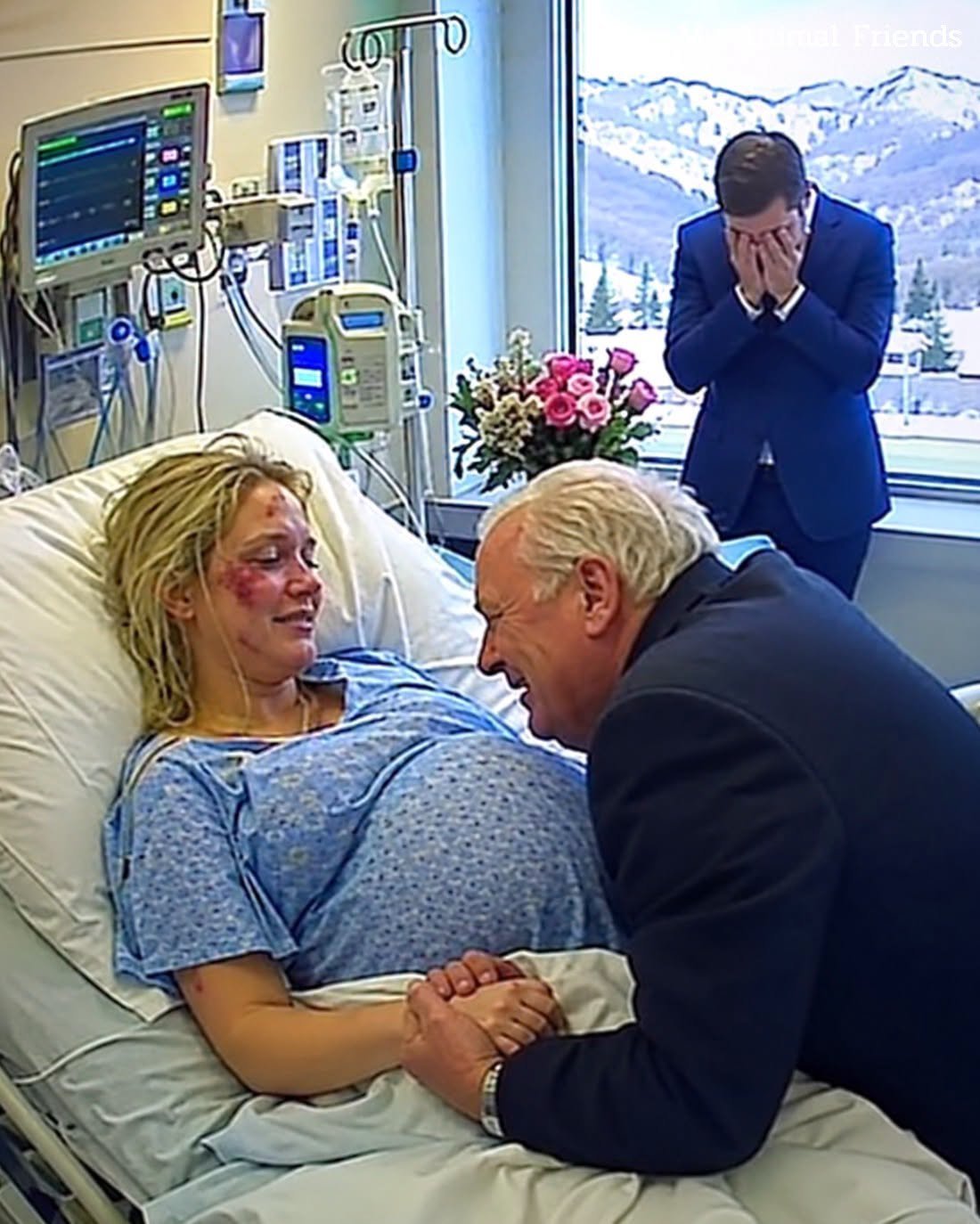
Adrian Cross noticed the change in my face. His eyes narrowed slightly, not in suspicion, but in recognition. Perhaps he understood that a woman who had been left to disappear beneath the snow did not need to be told what betrayal meant. Perhaps he understood because betrayal had been written into his own life long before I was born.
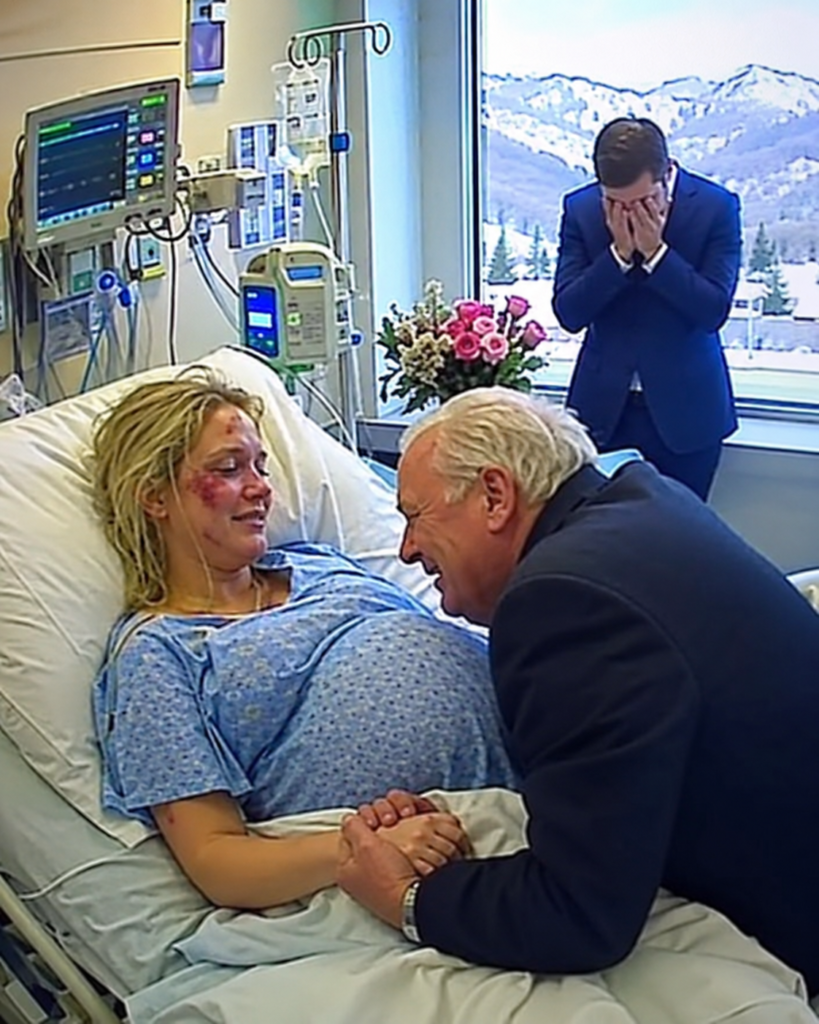
“You need to rest,” he said.
His voice was low, carefully controlled, as if too much feeling might crack something open in him.
I turned my head against the pillow. The hospital room was dim except for the soft glow of monitors and the pale blue wash of snowlight against the window. Beyond the glass, Aspen was still buried under storm clouds. Somewhere out there, Victor was likely pouring champagne. Somewhere, Serena was likely pretending to mourn.
My hand moved to my stomach again.
“Is he really okay?” I whispered.
Adrian’s expression softened. “The doctors are cautiously optimistic. His heartbeat stabilized. They’re watching both of you closely.”
“Cautiously optimistic,” I repeated.
The words felt too small for the life inside me.
A nurse entered quietly and checked the monitors. She smiled at me with the careful gentleness medical workers use when they know you have survived something terrible but are not allowed to ask how.
“Your baby is strong,” she said. “So are you.”
I wanted to believe her.
When she left, I looked back at Adrian. “Victor can’t know.”
“He won’t.”
“You don’t understand.” Panic rose so quickly it stole what little air I had. “He pushed me. He stood there and watched. If he finds out I survived—”
“He won’t,” Adrian repeated, firmer this time.
His certainty should have comforted me. Instead, it frightened me, because certainty was expensive. It belonged to men who owned skyscrapers, signatures, private aircraft, lawyers who could make doors open and records vanish.
I had married one kind of powerful man.
Now I was staring at another.
“What are you going to do?” I asked.
Adrian leaned back in the chair beside my bed. For the first time, I noticed how tired he looked. The world knew him as a financial titan, a man whose company insured shipping lines, art collections, celebrities, politicians, private fortunes. But here, beneath the fluorescent hospital light, he looked like a man who had lost too much time and had arrived almost too late.
“I’m going to make sure you’re safe,” he said. “That is all you need to worry about tonight.”
“No,” I said.
The word came out faint, but it was mine.
His eyes returned to me.
“I spent five years letting Victor decide what I needed to worry about,” I said. “What I should know. Who I should see. How I should dress. What I should sign. I am done being protected by silence.”
Something flickered in Adrian’s face.
Respect, maybe.
Or regret.
He nodded once. “Fair enough.”
He reached into the inside pocket of his coat and removed a slim phone. “Victor’s claim has been flagged. Not denied. Not approved. Flagged. Officially, the company requires additional verification because of the size of the policy and the circumstances of the reported accident.”
“Does he know that?”
“He knows there is a review.”
“He’ll get nervous.”
“He already is.”
“How do you know?”
Adrian hesitated.
That hesitation told me more than his words.
“Because you’re watching him,” I said.
“We are preserving information,” he corrected.
Despite everything, a weak laugh escaped me. It turned into pain so sharp my eyes watered.
Adrian stood quickly. “Don’t move.”
“I’m not laughing because it’s funny,” I breathed. “I’m laughing because Victor always said insurance companies were heartless. Turns out he was only afraid they were thorough.”
For the first time, Adrian almost smiled.
Almost.
Then the door opened again, and a doctor stepped in. She was in her early forties, with dark hair pulled back and a calm gaze that made the room feel less fragile.
“I’m Dr. Maren Walsh,” she said. “I’m overseeing your care tonight. Mrs. Hale, you’ve been through serious trauma. We’ve managed to avoid emergency delivery for now, but we need to be honest. You and the baby remain at risk. Our priority is keeping you stable as long as we safely can.”
“How long?” I asked.
“Every hour helps. Every day would be better.”
I closed my eyes.
Every day meant Victor remained free.
Every day meant pretending to be dead.
Every day meant lying still while my whole life burned down without me.
Dr. Walsh seemed to understand the battle on my face. “Survival first,” she said gently. “Everything else after.”
After she left, Adrian remained standing at the foot of my bed.
“There’s something else,” he said.
I opened my eyes.
“Your chart is under a protected alias. Only essential medical staff know your real identity. Hospital security has been briefed that no visitors are permitted unless cleared by me and Dr. Walsh.”
“My husband has rights,” I said bitterly.
“Not if the hospital believes disclosure places you in immediate danger.”
A strange silence settled between us.
Immediate danger.
The phrase sounded clinical, almost ordinary. It did not contain the cliff. It did not contain the cold. It did not contain Victor’s hands striking my shoulders or Serena’s trembling voice asking whether I was dead.
I swallowed hard. “What name am I under?”
Adrian’s expression shifted.
“Emma Frost.”
Even through the pain, I stared at him. “That sounds fake.”
“It is fake.”
“Couldn’t you have chosen something less obvious?”
“It was chosen quickly.”
I might have laughed again if my ribs allowed it. Instead, I pressed my lips together and looked toward the window.
Snow tapped softly against the glass.
“Why were you there?” I asked.
Adrian did not answer.
I turned my head back. “At the mountain. In the storm. Why were you there?”
He looked older in that moment.
“I was already in Aspen,” he said. “Our investigators had been reviewing Victor’s financial activity. There were inconsistencies tied to the policy. I came personally because…” He stopped.
“Because what?”
His jaw tightened. “Because your name appeared on the file.”
The monitors hummed steadily beside me.
“Elena Hale,” he continued. “Born Elena Marlow. Daughter of Sofia Marlow.”
My mother’s name struck me harder than I expected.
Sofia Marlow.
I had not heard it spoken by anyone who knew her in years.
“You knew my mother,” I said.
“Yes.”
“How?”
Adrian lowered himself back into the chair. “That is a longer conversation than you should have tonight.”
“I almost died tonight.”
His eyes closed briefly.
When he opened them, the careful corporate mask had slipped. Beneath it was a man carrying a wound so old it had become part of his posture.
“I loved her,” he said.
The room seemed to still.
“She worked as a translator for one of our European offices before Cross Atlantic became what it is now. She was brilliant. Stubborn. Funny in a way that made you feel foolish and grateful at the same time.” His gaze moved to my face, as though searching for pieces of her there. “We were together for almost a year.”
“My mother never told me.”
“She left before she knew she was pregnant. At least, that is what I believed for a long time.”
“What happened?”
A shadow crossed his features. “My family happened. Her family. Money. Fear. Pride. A dozen things that matter terribly to young people until they destroy what actually mattered.”
I stared at him, trying to fit this man into the empty spaces my mother had left behind. She had been gentle but guarded, always careful when I asked about my father. She told me he was gone. Not dead. Not cruel. Just gone.
When I was sixteen, I had found her crying over an old letter.
When she died, I found the photograph.
And the letter addressed to me.
If anything ever happens and you need help, find Adrian Cross.
I had never looked for him.
Pride, maybe.
Or fear.
Or the belief that if he had wanted me, he would have found me.
“Did you know about me?” I asked.
“No.”
The answer came quickly. Painfully.
“I swear to you, Elena, I did not know. Not until six weeks ago.”
Six weeks.
I felt my fingers curl against the blanket.
“You found out six weeks ago and didn’t contact me?”
“I tried.”
“No one called me.”
“Three calls were made to your personal phone. All went unanswered. Two letters were sent to your home in Denver. Both were signed for.”
My mouth went dry.
Victor.
Victor had always brought in the mail. Victor had replaced my phone after claiming mine was outdated. Victor had laughed whenever I misplaced things, calling me forgetful, especially during pregnancy.
“What did the letters say?” I asked.
“That I wished to speak with you privately regarding your mother’s estate.”
“My mother’s estate?”
“It seemed less alarming than claiming to be your father in a letter.”
I stared at the ceiling, nausea rolling through me.
Victor had known.
Maybe not everything, but enough. Enough to intercept. Enough to worry. Enough to hurry.
“Victor increased the policy nine weeks ago,” Adrian said quietly.
I turned back to him.
“He increased it?”
“From five million to fifty.”
“I didn’t agree to that.”
His eyes sharpened. “Your signature is on the amendment.”
“I didn’t sign anything.”
“I believe you.”
I remembered Victor at the breakfast table with papers beside my tea.
Just routine financial updates, sweetheart. Pregnancy brain is real. Let me handle the complicated parts.
My own voice came back to me, tired and distracted.
Where do I sign?
Had I signed it? Had there been another page beneath the first? Had he forged it completely?
A thin, cold thread of realization slid through me.
Victor had not snapped on that mountain.
He had planned.
The room tilted.
Adrian stood and reached for the call button, but I caught his sleeve with my good hand.
“No,” I whispered. “Don’t call anyone. I’m fine.”
“You are not fine.”
“I need to understand.”
“You need to survive.”
“I need both.”
He looked at my hand gripping his sleeve. My fingers were bruised and swollen. I could barely hold on.
Slowly, he sat again.
“Victor has debts,” he said. “Private investments gone bad. A failed property acquisition in Miami. Loans through companies that do not advertise their interest rates. On paper, he still looks wealthy. In reality, he is balancing on a wire.”
“And Serena?”
“Serena Vale has been receiving transfers from an account linked to Victor’s consulting firm. Large ones.”
My chest tightened. “So she knew.”
“We do not know what she knew.”
“I saw her at the cliff.”
Adrian’s gaze held mine.
“She was there,” I said. “She asked if I was dead.”
“That matters,” he said softly. “But what it means will depend on more than one sentence.”
I wanted to hate him for that answer. I wanted him to promise that Serena was every bit as guilty, every bit as monstrous. But his restraint steadied me in a way blind fury could not.
Victor had lived by assumptions. By shortcuts. By bending reality until other people doubted themselves.
I would not become careless just because I had been wounded.
“What happens now?” I asked.
“Now, Victor believes the storm destroyed evidence. He believes the body cannot be recovered until conditions clear. He believes he has time to shape the story.”
“And you’ll let him?”
“For now.”
I stared at him.
Adrian’s face remained calm, but his eyes did not. “If we move too quickly, he denies everything. He says you are traumatized and confused. He says the fall was an accident. He says your injuries affected your memory. He produces sympathy, lawyers, photographs of the grieving husband. People want simple stories, Elena. We need the truth to become heavier than his performance.”
His words settled inside me.
The truth had weight.
It needed gathering.
It needed patience.
It needed me alive.
I looked down at my stomach. “Then I’ll stay dead a little longer.”
Adrian did not respond immediately.
When he did, his voice was barely above a whisper.
“I am sorry.”
“For what?”
“For not finding you sooner.”
I turned my face toward the window again.
Outside, snow continued to fall, soft and relentless, covering tracks, smoothing sharp edges, making the whole world look innocent.
“My mother used to say regret is just love with nowhere to go,” I said.
Adrian inhaled slowly.
“She said that?”
I nodded.
He looked away.
For a moment, neither of us spoke.
Then my baby moved.
It was faint, no more than a flutter beneath my palm, but it was there. My breath caught. Adrian saw my expression change and stood, alarmed.
“What is it?”
“He moved.”
The powerful man at my bedside froze.
Then, slowly, he stepped closer. He did not reach out. He only looked at my hand resting over my stomach with something like wonder.
“He’s alive,” I whispered.
“Yes,” Adrian said, his voice unsteady. “He is.”
For the first time that night, the silence did not feel empty.
It felt like a beginning.
By morning, the storm had passed.
Sunlight struck the hospital windows with an almost cruel brightness. Snow glittered across the mountains beyond the glass. Machines still surrounded me. Tubes still ran from my arm. My body still felt like it had been made from shattered porcelain and put back together badly.
But I was awake.
Dr. Walsh visited with two specialists. They spoke carefully, explaining the risks, the monitoring, the need for restricted movement. The baby’s heartbeat remained steady, though they warned me we were not out of danger. Trauma could change quickly. Labor could begin without warning.
“Your son is doing better than we expected,” Dr. Walsh said.
My son.
The words filled the room.
I had not told Victor the name I wanted.
I had been saving it.
Now the name felt like something rescued from the snow.
“Julian,” I whispered.
Dr. Walsh smiled. “That’s a beautiful name.”
After they left, Adrian returned with a woman in a navy coat and simple pearl earrings. She had silver-streaked black hair, sharp eyes, and the composed bearing of someone who had spent her life in rooms full of secrets.
“Elena,” Adrian said, “this is Marianne Voss. She is an attorney.”
Marianne approached my bedside, not too close. “I’m sorry we’re meeting under these circumstances.”
“Are you my attorney or his?” I asked, glancing at Adrian.
A small smile touched her mouth. “Yours, should you choose to retain me.”
“I don’t have my purse.”
“You can pay me one dollar when you feel better.”
“I have hospital socks and trauma.”
“Then I’ll accept the socks as a retainer.”
I looked at Adrian. “I like her.”
“So do most judges, eventually,” he said.
Marianne opened a leather folder and sat in the chair near my bed. “I won’t overwhelm you. There are three immediate concerns. Your safety. Your legal identity while recovering. And preserving evidence.”
I listened as she explained in plain terms what could be done. A confidential protective order. Medical privacy protections. A sworn preliminary statement when I was strong enough. Coordination with law enforcement, but carefully, to avoid leaks.
“Leaks?” I asked.
“Victor Hale is connected,” Marianne said. “Not untouchable. No one is. But connected enough that we should assume he’ll hear things faster than we’d like.”
My thoughts drifted to Victor’s friends. The district attorney he played golf with. The retired judge at our wedding. The police charity dinners where he shook hands and donated just enough to be admired.
“I want to tell the police,” I said.
“We will,” Marianne replied. “But first, we make sure the right people hear it in the right way.”
That answer would have frustrated me before.
Now I understood the difference between silence and strategy.
Marianne slid a tablet from her folder. “There is something you should see, though only if you feel ready.”
Adrian’s posture changed. “Marianne—”
“She has the right to decide,” Marianne said.
I looked between them. “What is it?”
Marianne turned the tablet toward me.
It showed a news article from a local Denver outlet.
PROMINENT REAL ESTATE INVESTOR’S PREGNANT WIFE PRESUMED DEAD IN ASPEN ACCIDENT
Beneath the headline was a photograph of Victor and me from a charity gala. His hand rested at my waist. I remembered that night. I remembered how hard he had squeezed when I forgot the name of one of his investors. In the picture, we looked elegant. Happy. Safe.
The article described a tragic fall during a romantic winter retreat. Victor Hale, devastated husband. Elena Hale, beloved philanthropist. Their unborn child, also presumed lost.
Presumed.
My eyes moved down the screen.
Victor had released a statement.
My wife was my heart. Our son was our future. I ask for privacy as I grieve this unimaginable loss.
My throat closed.
My wife was my heart.
He had pushed his heart off a mountain.
I scrolled further before Marianne could stop me.
There was another photograph.
Victor outside our Denver home, wearing a black coat, eyes red, face drawn. Serena stood behind him, one hand on his shoulder. Her expression was solemn, almost sisterly.
Almost.
“Who told the press Serena was there?” I asked.
“No one,” Adrian said. “She presented herself as a family friend.”
A family friend.
I stared at her hand on his shoulder.
My stomach tightened, and one of the monitors shifted its rhythm.
Adrian stepped forward. “Enough.”
Marianne took the tablet away.
I tried to breathe slowly, the way the nurse had taught me.
In for four.
Out for six.
Again.
Again.
Julian’s heartbeat steadied.
“Victor is not only lying,” I said once I could speak. “He’s enjoying being believed.”
Marianne’s voice softened. “People often believe grief when it looks familiar. That does not make it true.”
“What about the funeral?” I asked.
Adrian and Marianne exchanged a glance.
My skin went cold.
“When?”
“Tomorrow,” Adrian said.
I stared at him.
“He’s holding my funeral tomorrow?”
“With no body?” I asked.
“A memorial service,” Marianne said. “The weather and terrain make recovery difficult. He has framed it as a way for family and friends to gather.”
Family.
I had no family left, or so I had thought.
Friends had faded during my marriage, some because Victor disliked them, others because I stopped answering messages after too many arguments about loyalty. My life had narrowed until it fit inside his approval.
“Can I watch?” I asked.
“No,” Adrian said at once.
“Yes,” Marianne said at the same time.
They looked at each other.
“I am her doctor now?” Adrian asked dryly.
“No,” Marianne replied. “And neither am I. But emotionally, she may need to see what story is being told about her.”
“I don’t need to see him lie over an empty casket,” Adrian said.
“No,” I said quietly. “I do.”
His eyes returned to me.
“I need to know what version of me he is burying.”
The memorial was held the next afternoon in a stone chapel with tall windows overlooking a frozen garden.
I watched from my hospital bed on a secure livestream arranged by Marianne through someone who knew someone who owed Adrian a favor. I did not ask for details. There were some doors I was not ready to understand.
The camera angle was fixed from the balcony. It showed rows of mourners in dark clothing, white flowers arranged around a framed portrait of me, and Victor standing near the front.
He looked perfect.
Not peaceful. Not destroyed.
Perfect.
His grief had been tailored.
Black suit. Pale tie. Unshaven jaw just enough to suggest sleeplessness. He accepted condolences with bowed head and gentle touches to people’s shoulders. Serena sat in the second row, wearing a black dress and a small veil.
A veil.
Marianne sat beside my bed, making notes. Adrian stood near the window with his arms crossed, watching without expression.
I had insisted on sitting up slightly, despite the pain. Dr. Walsh allowed it for only twenty minutes, warning me that emotional stress had physical consequences.
She was right.
Every face on the screen felt like a small betrayal.
There was Victor’s business partner, Daniel Price, wiping his eyes. There was our neighbor Lydia, who had once asked why I never came to book club anymore. There was Serena’s cousin, whom Victor claimed he barely knew.
Then Victor stepped to the lectern.
I gripped the blanket.
He took a folded paper from his pocket. His hands trembled convincingly.
“Elena believed in beauty,” he began.
My breath caught.
“She found it in ordinary things. Morning light. Old songs. The first snow of winter.”
I did not believe in the first snow of winter. I complained every year that it turned roads dangerous and made everyone sentimental.
Marianne’s pen moved across the page.
Victor continued, voice breaking in all the right places. “She was carrying our son. We had already chosen his name.”
I went still.
No, we had not.
“We planned to call him Gabriel,” Victor said.
For one second, I forgot how to breathe.
Gabriel?
Adrian looked at me.
I shook my head slightly. “No.”
Victor pressed his fingers to his eyes. “Gabriel means God is my strength. Elena loved that.”
I had never said that. Never once.
My hand covered my stomach. “His name is Julian.”
Marianne set her pen down. “Then Julian it is.”
But something inside me had cracked open.
Victor was not just erasing my death. He was rewriting my child before he had even taken his first breath.
On the screen, Victor looked toward my portrait. “I will spend the rest of my life honoring them.”
Serena lowered her head.
Her shoulders shook.
To anyone else, she looked like she was crying.
But I knew her.
I saw the way she peeked upward through the veil. The way her gaze followed Victor. The way her mouth tightened, not with grief, but with impatience.
The service ended with music I had never liked.
People rose, embraced, whispered. Victor stood near the portrait, accepting the sorrow of others like a man collecting coins.
Then something unexpected happened.
An older woman approached him.
She was small, with white hair pinned at the nape of her neck and a cane in one hand. She wore a dark green coat instead of black. Victor’s expression changed when he saw her. Just for a fraction of a second, the mask slipped.
Fear.
“Who is that?” I asked.
Adrian moved closer to the screen.
Marianne leaned in.
The woman did not embrace Victor. She handed him an envelope.
Victor said something. The camera did not pick it up.
The woman replied with one sentence.
The audio was faint, but clear enough.
“She would have wanted the truth told.”
Victor’s face hardened.
Then Serena appeared beside him, smiling too brightly. She took the woman’s arm as if to guide her away, but the woman pulled free.
“Don’t touch me,” she said.
Several people turned.
Victor recovered quickly, placing a hand over his heart as though wounded by her distress. The woman walked away alone, her cane striking the stone floor with quiet, steady taps.
“Who is she?” I asked again.
Adrian did not answer.
Marianne looked at him. “Adrian?”
He was staring at the screen as if seeing a ghost.
“Her name is Clara Whitcomb,” he said finally. “She was your mother’s closest friend.”
My mother’s closest friend.
I had never heard her name.
“Why don’t I know her?” I whispered.
Adrian’s face was grim. “That is exactly what I intend to find out.”
That night, pain kept me awake.
Not the physical kind, though there was enough of that. It was the pain of discovering hidden rooms inside your own life. My mother had a closest friend. Victor had known enough about Adrian to intercept letters. My son’s name had been stolen at my own memorial.
And somewhere in Denver, an old woman had handed my husband an envelope and spoken of truth.
At two in the morning, I woke to the sound of voices outside my room.
One belonged to Adrian.
The other was Dr. Walsh.
“She’s stable,” the doctor said, “but stress is not an abstract concern. I allowed the livestream because she insisted, and because I understand the psychological importance. But this cannot continue indefinitely.”
“I understand,” Adrian replied.
“Do you?” Dr. Walsh asked. “Because men like you often confuse control with care.”
There was a pause.
Then Adrian said, “That is a fair criticism.”
I almost smiled in the dark.
Dr. Walsh continued, “She has been controlled enough. Let her make decisions. But make sure she understands the cost of making them while her body is trying to heal.”
“I will.”
Footsteps moved away.
A moment later, Adrian entered quietly. He stopped when he saw my eyes open.
“I didn’t mean to wake you.”
“You didn’t.”
He came to the bedside. “How are you feeling?”
“Like everyone keeps asking me that because the real answer would be inconvenient.”
His mouth twitched. “Your mother used to answer questions like that.”
“Did she?”
“All the time.”
I studied him in the dim light. “Tell me something true about her.”
He sat down.
For a while, he said nothing. Then he looked at the window, where the reflection of the room floated over the darkness.
“She hated roses,” he said.
That surprised me. “Everyone sent roses when she died.”
“She would have thrown them out.”
A laugh rose in my throat, gentler this time. “She loved daisies.”
“She said roses tried too hard.”
That sounded like her.
“What else?”
“She sang when she cooked. Badly.”
“She did.”
“She read the last page of books first.”
“She told me that was efficient.”
“She was afraid of deep water but loved boats.”
I looked at him.
He smiled faintly. “She said fear should not be allowed to make all the decisions.”
Tears warmed my eyes.
For so long, my mother had existed in my memory as my mother only. I had forgotten she had once been young. In love. Funny. Afraid. Brave in ways that had nothing to do with raising me alone.
“Why did she leave you?” I asked.
Adrian’s smile faded.
“Because I failed her.”
It was not the answer I expected.
He leaned forward, elbows on his knees. “My father threatened to cut me out of the company if I stayed with her. I was young enough to think that mattered. Proud enough to think I could fix everything later. I asked her to wait while I handled things.”
“She didn’t?”
“No. She told me a woman should never wait quietly while a man negotiates her worth.”
My mother.
A tear slipped down my temple into my hair.
“I went after her,” he said. “But she had disappeared. I received one letter months later. She wrote that she was safe and that I should not look for her.”
“Did you?”
“For years.”
“Not hard enough,” I said.
The words came out before I could soften them.
Adrian accepted them without flinching. “No. Not hard enough.”
Silence settled again.
“I don’t know how to feel about you,” I admitted.
“You don’t owe me anything.”
“I might need you.”
“That is different.”
I turned my hand palm-up on the blanket. After a moment, he placed his hand over mine, carefully avoiding the bruises.
His hand was warm.
“I don’t need another man deciding my life,” I said.
“I know.”
“But I don’t want to do this alone.”
His fingers tightened slightly. “You won’t.”
In the morning, Marianne returned with news.
“We found Clara Whitcomb.”
My heart jumped. “Where is she?”
“At her home outside Boulder. She agreed to speak with me, but only in person, and only to you.”
“I can’t go anywhere.”
“I explained that.”
“And?”
“She said she has waited twenty-seven years. She can wait another few days, but not much longer.”
Adrian, who had been reviewing documents near the window, looked up sharply. “What does that mean?”
Marianne’s expression was troubled. “She sounded frightened.”
“Of Victor?”
“Not only Victor.”
A cold prickle moved through me.
Marianne placed a sealed plastic evidence sleeve on the side table. Inside was a folded program from the memorial service.
“What is that?” I asked.
“It was delivered to the hospital front desk this morning. Addressed to Emma Frost.”
Adrian crossed the room. “Who delivered it?”
“Courier. Paid in cash.”
I stared at the program.
My own photograph smiled up through the plastic.
Marianne turned it over.
On the back, written in neat blue ink, was a message.
He knew about the baby before you did.
For a moment, no one spoke.
The machines around me seemed suddenly too loud.
“What does that mean?” I whispered.
Marianne’s eyes lifted to mine. “That’s what we need to find out.”
I thought of Victor’s strange excitement when I told him I was pregnant. Not joy, exactly. More like satisfaction. I thought of the appointments he insisted on attending, the vitamins he arranged, the doctor he preferred.
The doctor.
My entire body chilled.
“Dr. Bell,” I said.
Adrian’s gaze sharpened. “Your obstetrician?”
I nodded. “Victor chose him. He said he was the best. He handled all my early tests.”
Marianne began writing. “We’ll look into him.”
“No,” I said slowly. “There’s more.”
Memory returned in fragments.
A nurse calling me back for repeat bloodwork. Victor saying the lab lost the first sample. Dr. Bell smiling too widely when he told us the pregnancy was healthy. Victor asking whether the baby was a boy before the official results were supposed to be ready.
And one night, months ago, waking to find Victor in the nursery doorway, speaking quietly on the phone.
Yes, confirmed. A boy. That changes everything.
At the time, I thought he meant the nursery colors. The family name. His pride.
Now I was not sure.
“What changes everything?” I whispered.
Adrian’s face had gone pale.
“What?” I asked.
He looked at Marianne, then back at me.
“Cross Atlantic doesn’t only insure lives,” he said carefully. “We insure trusts. Estates. Private inheritance structures. Some old family policies are tied to biological succession.”
“I don’t understand.”
Marianne did.
I saw it in her eyes.
“Victor’s family money,” she said. “Was any of it restricted?”
I frowned. “He always said the Hale estate was complicated. His grandfather left conditions. Victor complained about lawyers controlling money from the grave.”
Adrian’s voice was quiet. “Do you know the conditions?”
“No.”
Marianne and Adrian exchanged another look.
I hated those looks.
“What conditions?” I demanded.
Marianne answered gently. “Some old trusts release major assets only when a direct male heir is born.”
My hand tightened over Julian.
No.
No, Victor had not only wanted the insurance money.
He had wanted my son.
Or what my son represented.
My thoughts raced backward through my marriage, rearranging moments I had misunderstood. Victor’s sudden tenderness when I became pregnant. His new insistence that I rest, that I stop seeing certain friends, that all decisions go through him. His frustration when I mentioned wanting my mother’s last name as Julian’s middle name. His cold silence when I said I wanted to be in the delivery room with only medical staff, not him hovering.
“What happens if the mother dies before the baby is born?” I asked.
Marianne’s face tightened.
Adrian looked toward the window.
“What happens?” I repeated.
Marianne spoke carefully. “That depends on the trust language. But if Victor could claim the child was born alive, even briefly, or if records could be manipulated…”
She did not finish.
She did not need to.
My stomach rolled. “But he told investigators the baby died with me.”
“That may have been for the insurance claim,” Adrian said. “Different lies for different audiences.”
Victor loved different audiences.
He knew exactly what each person needed to hear.
To investors, he was bold. To charities, generous. To women, wounded and misunderstood. To me, devoted when watched and disappointed when alone.
“What if he planned to say the baby survived?” I asked.
“Then he would need a baby,” Marianne said.
The room changed.
The air thinned.
I looked down at my stomach, at the life moving faintly beneath my palm.
Somewhere between horror and clarity, a new thought formed.
Victor had not meant for Julian to die.
His words on the cliff returned.
Your baby won’t suffer for long.
At the time, I heard it as cruelty.
Now I wondered if it had been reassurance to himself. Or a performance for Serena. Or something worse: proof that he already had another plan.
Adrian’s phone rang.
He looked at the screen and stepped away to answer. “Yes?”
His expression shifted as he listened.
Marianne watched him closely.
“What is it?” I asked.
Adrian ended the call without saying goodbye.
“That was my investigator in Denver,” he said. “Victor just filed a petition in probate court.”
“For what?”
Adrian’s eyes met mine.
“To be appointed sole administrator of your estate and guardian of all interests belonging to your unborn child.”
“But he thinks Julian is dead,” I said.
Marianne stood slowly. “Apparently, in court filings, he is no longer certain.”
The room seemed to tilt around me.
Adrian’s voice was controlled, but only barely. “Victor is claiming new medical information suggests the child may have survived the fall long enough to trigger inheritance rights under the Hale family trust.”
I stared at him, unable to speak.
Marianne picked up the evidence sleeve containing the memorial program.
He knew about the baby before you did.
The words blurred.
Before any of us could say more, a soft knock came at the door.
Dr. Walsh entered, but she was not alone.
A nurse stood beside her, holding a small padded envelope.
“This arrived through internal delivery,” Dr. Walsh said. “It was marked urgent for Elena Marlow.”
Not Emma Frost.
Not Elena Hale.
Elena Marlow.
My mother’s name.
Adrian stepped forward. “Who brought it?”
“We don’t know,” the nurse said. “It was found at the nurses’ station.”
Marianne took the envelope with gloved hands. “Elena, do you want me to open it?”
My mouth was dry. “Yes.”
She unsealed it carefully.
Inside was a small silver locket, tarnished with age, and a folded piece of paper.
I knew the locket.
My mother had worn it every day until a week before she died, when it vanished from her jewelry box. I had searched the whole apartment, crying because I thought I had lost one of the last pieces of her.
Marianne unfolded the paper.
Her face changed.
“What does it say?” I asked.
She looked at Adrian first.
Then at me.
“It says, ‘Ask Adrian what happened to the first child.’”
The room went utterly silent.
I turned to Adrian.
All the color had drained from his face.
“What first child?” I whispered.
Adrian did not answer.
PART 3 — FINAL PART
“What first child?” I whispered.
Adrian Cross stood at the foot of my hospital bed as if the question had struck him harder than any accusation ever could. For a man who moved through the world with private jets, silent assistants, and signatures worth millions, he suddenly looked powerless.
Marianne Voss did not speak. Dr. Walsh glanced from him to me, reading the room with the careful attention of someone who knew when a secret might do as much damage as an injury.
The monitors beside my bed continued their soft, steady rhythm.
Julian’s heartbeat filled the silence.
At last, Adrian pulled a chair closer, but he did not sit. His hand rested on its back, knuckles pale.
“Before your mother left,” he said slowly, “there was another pregnancy.”
The room narrowed.
My fingers tightened around the blanket. “My mother had another child?”
“No.” His eyes lifted to mine. “Not exactly.”
Marianne’s expression sharpened. “Adrian.”
He nodded once, as if accepting that the truth could no longer arrive in pieces.
“Sofia miscarried,” he said. “Very early. Before either of us had time to understand what it meant. She was devastated, but she didn’t want anyone to know. My father found out anyway.”
“Your father?” I asked.
“Malcolm Cross.” The name seemed to taste bitter in his mouth. “He believed family was a company asset. Bloodlines, heirs, alliances—he saw them all as strategy. When he learned Sofia had been pregnant, he accused her of trying to tie herself to the Cross fortune.”
I felt a small, hot anger unfold inside me on my mother’s behalf.
“She wasn’t like that.”
“No,” Adrian said softly. “She wasn’t.”
His gaze dropped to my stomach.
“He offered her money to disappear. She refused. Then he threatened her immigration status, her work, her family back in Europe. I didn’t know the full extent of it then. I knew he disapproved. I knew he was cruel. But I didn’t know what he had done until years later.”
“Years later,” I repeated.
He accepted the weight of that. “Yes.”
A tear slid silently down his cheek, and he did not wipe it away.
“My father told me Sofia had taken money and left voluntarily. He showed me documents. A signed statement. A bank transfer. I believed just enough of it to be angry, and not enough of it to stop loving her. By the time I realized the documents were manufactured, she had vanished.”
My mother’s locket lay in Marianne’s gloved palm, its tarnished silver catching the hospital light.
“Then who sent this?” I asked.
Adrian’s eyes shifted to the locket.
“Clara,” he said. “It has to be Clara.”
Marianne unfolded the note again. “Why say ‘first child’ now?”
“Because Victor is using the same weakness my father used,” Adrian answered, his voice low. “Inheritance. Blood. A child treated like a key to a vault.”
My hand moved instinctively over Julian.
He shifted beneath my palm, a small living answer.
Dr. Walsh stepped closer. “Elena, your blood pressure is rising.”
“I’m fine.”
“No,” she said gently. “You are brave. That is not the same thing.”
The words should have annoyed me. Instead, they reached some exhausted part of me that had been pretending bones, fear, and heartbreak were minor inconveniences.
Adrian finally sat.
“Elena,” he said, “there may be more. If Clara sent the locket, she wants us to follow something she has protected for a long time.”
“Then bring her here.”
Marianne shook her head. “That may not be safe.”
“Nothing is safe,” I said. “Victor is filing petitions for a baby he claims died. Someone knows my protected hospital name. Someone knows my mother’s name. Someone is moving through this hospital quietly enough to leave packages at the nurses’ station.” I looked at Adrian. “I am done waiting for truth to arrive politely.”
For a moment, no one moved.
Then Adrian reached into his coat, took out his phone, and made one call.
“Bring Clara Whitcomb to the hospital,” he said. “Private entrance. No public records. And send the trusted team only.”
He ended the call and looked at me.
“For once,” he said, “your mother would have approved of the impatience.”
Despite everything, I almost smiled.
But the smile faded when Marianne’s phone vibrated.
She looked down, read the message, and went still.
“What is it?” I asked.
“Victor has requested an emergency hearing,” she said.
Adrian stood. “How soon?”
“Tomorrow morning.”
“For what?” I asked, though something inside me already knew.
Marianne looked at Julian’s monitor, then back at me.
“To preserve the rights of the unborn child of Elena Hale,” she said. “And to prevent any third party from interfering with the Hale estate.”
“Third party?” I repeated.
Adrian’s jaw tightened. “Me.”
Victor thought I was dead, yet he was already fighting ghosts.
And that meant one thing.
He was afraid the truth was closer than he had planned.
Clara Whitcomb arrived at sunset.
The sky beyond my window had turned lavender, the mountains softened beneath a glow that made the snow look almost merciful. I had slept for less than an hour, waking from dreams of falling, only to find Adrian standing near the door and Marianne speaking quietly with hospital security.
Then the door opened.
Clara entered with her cane in one hand and a wool hat tucked beneath the other. She was smaller than she had seemed on the livestream, but her eyes were clear and bright, the kind of eyes that had witnessed too much to be easily fooled.
She stopped when she saw me.
For several seconds, she simply stared.
Then her face broke.
“Oh,” she whispered. “Sofia’s girl.”
Something inside me loosened at the sound of my mother’s name spoken with love.
Clara came to my bedside, and I reached for her hand without thinking. Her fingers were thin and cool, but her grip was firm.
“I’m sorry,” she said.
It was not the empty apology of strangers. It carried years.
“For what?” I asked.
“For staying away because I thought it was safer.”
Adrian stood by the window, silent.
Clara looked at him. “And you. You look like your father when you’re trying not to feel.”
Adrian lowered his eyes. “Hello, Clara.”
She studied him for another moment, then turned back to me. “Sofia made me promise not to contact you unless danger found you through the Cross name.”
“The Cross name?” I asked.
Clara nodded. “Your mother did not hide from Adrian forever because she hated him. She hid because Malcolm Cross had made it clear that any child connected to that family would never truly belong to herself.”
Adrian flinched, but Clara did not soften the truth.
“When Sofia discovered she was pregnant with you,” Clara continued, “she came to me first. She was terrified and happy at the same time. She loved Adrian, but she did not trust the world around him. Not after what happened with the first pregnancy.”
“The miscarriage,” I said.
Clara’s eyes filled.
“Yes. But that was not the secret.”
The room went utterly still.
My heart gave one hard beat.
“What do you mean?” Adrian asked.
Clara reached into her handbag and removed a folded envelope, old enough that its edges had softened. “Sofia was told she had miscarried. She believed it for three days.”
Adrian’s voice came out hoarse. “What?”
Clara’s hand trembled as she opened the envelope. “A nurse from the clinic contacted her privately. She said the records were wrong. Sofia had been pregnant with twins. One had been lost. The other…” Clara closed her eyes. “The other was taken from her.”
The monitor beside me quickened.
Dr. Walsh stepped forward, but I shook my head before she could speak.
Adrian looked as if the room had vanished beneath him.
“A child?” he said. “Sofia had a child?”
“A daughter,” Clara answered.
Marianne’s face had gone pale.
I could barely form words. “I have a sister?”
Clara nodded.
“A half sister,” she said. “Older than you by twenty-seven years and six months.”
Adrian gripped the windowsill.
“Malcolm arranged it,” Clara said. “The clinic director owed him money. The baby was reported stillborn. Sofia was sedated and grieving. By the time the nurse found the courage to tell her, the child was gone.”
The cruelty of it was so quiet, so administrative, that it felt almost impossible to understand. No cliff. No scream. No visible hands.
Just papers.
A signature.
A baby removed from her mother’s arms before her mother even knew she had lived.
“What happened to her?” I whispered.
Clara looked at Marianne. “She was placed through a private adoption. Sealed records. I spent years following traces. Sofia tried too, until she became afraid that searching would expose Elena.”
My eyes stung.
My mother had carried that alone.
“Did she find her?” Adrian asked.
Clara nodded.
Adrian stopped breathing.
“She found her name,” Clara said. “But not her heart. Not her life. By then the girl was grown, and Sofia was sick. She wrote one letter and never sent it.”
“Why?” I asked.
“Because she learned who had adopted her.”
Clara opened the envelope and drew out a photograph.
Marianne took it first, looked at it, and her expression changed so quickly my skin went cold.
Then she handed it to Adrian.
His face folded with recognition and horror.
Finally, the photograph came to me.
It showed a young girl around thirteen, standing beside a woman in a garden. The girl had dark hair, sharp cheekbones, and a guarded expression.
I knew that face.
I had watched it beneath a black veil at my memorial.
Serena.
The room tilted.
“No,” I whispered.
Clara’s eyes shone with grief. “Her birth name was Lillian Cross Marlow. Her adoptive parents renamed her Serena Vale.”
For a long moment, no one said anything.
Serena was my sister.
My mother’s first living child.
Adrian’s first daughter.
Victor’s mistress.
The woman who had stood at the cliff and asked if I was dead.
“No,” I said again, but this time the word held something different. Not denial. Pain.
Adrian sank into the chair beside the window.
“I didn’t know,” he said.
Clara looked at him. “Sofia believed that. It’s the only reason she never hated you completely.”
Marianne walked to the foot of the bed. Her legal composure had returned, but softer now. “Does Serena know?”
Clara shook her head. “I don’t know. Sofia’s unsent letter vanished when Elena’s apartment was cleared after her death. The locket vanished too. I thought Victor had taken them. Now I think Serena may have found something.”
I closed my eyes.
Serena’s trembling voice returned.
Is she dead?
Had it been guilt? Fear? Shock? Had she known who I was? Had she known who she was?
Or had Victor collected broken daughters without understanding the pattern?
Dr. Walsh touched my shoulder. “Elena.”
This time, I did not argue. My body was shaking. Julian’s monitor wavered, then steadied.
“I need her here,” I whispered.
Adrian looked up. “Serena?”
“Yes.”
Marianne shook her head. “That is dangerous.”
“Maybe,” I said. “But this entire case turns on what she knows. Victor is moving through legal channels now. He has a plan for Julian. If Serena has any part of the missing records, the locket, the notes, we need her.”
“And if she is loyal to Victor?” Adrian asked.
I thought of Serena at the memorial, her shoulders shaking beneath the veil. I thought of the way she pulled back from Clara’s touch. I thought of Victor rewriting my son’s name as if the living could not object.
“Then we learn that too.”
Clara squeezed my hand.
“You sound like Sofia,” she said.
That hurt and healed me at once.
Marianne spent the next hour creating a plan that involved no dramatic confrontations, no reckless phone calls, and no trust in luck. She contacted a federal investigator she had worked with before, a woman named Agent Priya Nair, who specialized in financial crimes tied to insurance fraud and estate manipulation. Adrian’s company submitted its evidence through formal channels: the increased policy, the suspicious signatures, Victor’s accelerated claim, the probate petition, and the irregular medical records from Dr. Bell’s office.
By midnight, Victor Hale was no longer simply a grieving husband in the eyes of the law.
He was a person of interest in a widening investigation.
But Serena remained the missing piece.
Marianne sent one message from a secure number to Serena’s private phone.
Your birth name was Lillian. Your mother was Sofia Marlow. Victor knows more than he told you. Come alone if you want the truth.
No threat.
No accusation.
Just a door.
For forty-seven minutes, nothing happened.
Then the phone rang.
Marianne answered on speaker.
At first, there was only breathing.
Then Serena’s voice, stripped of all its polished sweetness, whispered, “Who is this?”
Marianne introduced herself.
A long silence followed.
Then Serena said, “Is Elena alive?”
My heart stopped.
Adrian straightened.
Marianne glanced at me, asking silently.
I nodded.
“Yes,” Marianne said. “She is alive.”
Serena made a sound so small I almost missed it.
Not disappointment.
Not anger.
A sob.
“Oh, thank God,” she whispered.
My eyes filled before I could stop them.
“Did you know?” Marianne asked.
Serena cried quietly for several seconds. When she spoke again, her voice was shaking. “Not at the cliff. Not until after. Victor told me she slipped. He told me I imagined the push because I was hysterical. He told me if I said anything, people would know I was there with him, that I had helped kill her. He said no one would believe a mistress over a grieving husband.”
My hand tightened around Clara’s.
Serena continued, words spilling faster. “I knew he was lying. I knew it. But then he showed me papers. He said Elena had signed everything, that she was unstable, that she had planned to leave with the baby and ruin him. I didn’t know what to believe. Then Clara came to the memorial and gave him an envelope. He lost control afterward.”
“What was in it?” Marianne asked.
“A copy of Sofia’s letter,” Serena said. “And a birth certificate.”
Clara bowed her head.
Serena’s voice broke. “My birth certificate.”
Adrian closed his eyes.
“Where are you now?” Marianne asked.
“In Denver,” Serena said. “Victor thinks I’m at his house. I locked myself in the guest bathroom. He’s downstairs with his lawyers.”
“Can you leave safely?”
A pause.
Then a whisper.
“I don’t know.”
Marianne’s tone stayed calm. “Listen carefully. Do not confront him. Do not tell him you called us. Put your phone in your pocket with this call connected. Walk out as if you are getting air. There will be federal agents outside within minutes.”
“Federal agents?” Serena breathed.
“Yes.”
Another pause.
Then Serena said, “Elena?”
I looked at Marianne. She hesitated, then brought the phone closer.
“I’m here,” I said.
Serena began crying harder.
“I’m sorry,” she said. “I’m so sorry. I didn’t know he pushed you until it was too late. I should have screamed. I should have stayed. I should have climbed down. I should have done anything.”
For a second, I saw her not as Victor’s mistress, not as the woman beside him in black, but as a frightened woman standing in a storm beside a man who had just revealed what he was capable of.
I was not ready to forgive her.
But I could hear the truth in her fear.
“Leave the house,” I said. “Then tell the truth.”
Serena inhaled shakily.
“I will,” she said.
The line rustled. A door opened. Her footsteps echoed faintly.
Then Victor’s voice came through the speaker.
“Where are you going?”
Everyone froze.
Serena’s breathing hitched.
“I need air,” she said.
“You need to sit down,” Victor replied, smooth and cold. “We have a long morning.”
Marianne held up one hand, silently telling us not to speak.
Serena’s voice trembled. “I said I need air.”
A pause.
Then Victor laughed softly.
“You’ve been talking to someone.”
Serena said nothing.
Victor’s tone changed.
“Give me the phone.”
The line went dead.
Adrian moved first. “Call Nair.”
Marianne was already dialing.
Dr. Walsh stepped toward me, but I was staring at the silent phone.
For the first time since the cliff, I was not afraid only for myself.
I was afraid for my sister.
The next hour became a blur of restrained chaos.
Agent Nair’s team was already near Victor’s Denver house because of the emergency probate filing and the insurance fraud investigation. Serena’s interrupted call gave them lawful urgency. They entered through the front gate with local officers, body cameras on, warrants moving faster than Victor’s lawyers could object.
I did not see it happen.
I heard it through Marianne’s updates, through Adrian’s pacing, through Clara’s silent prayers beside my bed.
Serena was found in the upstairs hallway, shaken but unharmed.
Victor was taken into custody without spectacle.
There was no dramatic speech. No grand confession shouted under flashing lights. Just a man in an expensive sweater asking for his attorney while agents carried boxes of documents out of the home he had filled with lies.
But what they found in his private office changed everything.
A copy of my forged insurance amendment.
Draft petitions for control of Julian’s inheritance rights.
A hidden file on Adrian Cross.
Medical correspondence from Dr. Bell.
And a sealed envelope labeled in Victor’s handwriting:
Marlow/Cross leverage.
Inside were Sofia’s unsent letter to Serena, Clara’s old notes, and a copy of the adoption trail Malcolm Cross had tried to bury.
Victor had not loved Serena.
He had chosen her.
Not because she was beautiful, though she was.
Not because she admired him, though she had.
But because her existence connected Adrian, Sofia, me, and Julian in a web of inheritance, secrets, and emotional weakness Victor believed he could exploit.
He had found my mother’s papers after her death. He had learned enough to understand that Serena was my sister before either of us did. He had introduced himself to her at a fundraiser two years later. He had made her feel seen. Chosen. Special.
Then he had used her presence at the cliff as a shield.
A witness too compromised to speak.
A daughter too lost to know what family she was helping him destroy.
When Marianne told me, I did not cry at first.
I simply turned my face toward the window and watched dawn turn the mountains gold.
Julian moved beneath my hand.
“You were never his key,” I whispered to my son. “Never.”
Behind me, Adrian’s voice was rough.
“No child should be.”
That morning, Victor’s emergency hearing proceeded without him.
Marianne appeared by secure video on my behalf, with Agent Nair present in the courtroom and Adrian’s legal team submitting verified documentation through proper channels. The judge, who had expected a tragic estate matter, instead found herself reviewing evidence of possible attempted murder, insurance fraud, forged signatures, medical misconduct, and trust manipulation.
Victor’s petition was denied.
The insurance claim was frozen.
Dr. Bell’s records were seized.
The Hale family trust was placed under court supervision.
And for the first time since Victor pushed me into the snow, the law began to move in the direction of truth.
Not vengeance.
Truth.
Three days later, Julian decided he was tired of waiting.
It began just before sunrise.
A deep tightening across my stomach. A shift in the room. Dr. Walsh’s calm voice asking the nurse to call the team. Adrian stood so quickly his chair nearly fell over.
“No,” I said, gripping the bedrail. “Do not look like that.”
He froze. “Like what?”
“Like you’re about to buy the hospital.”
Even Dr. Walsh laughed.
The pain came in waves, but this pain was different. It did not feel like falling. It felt like arriving.
Clara sat near my shoulder, one hand in mine. Adrian stood on the other side, pale and terrified and trying very hard not to be either. Marianne waited outside with Agent Nair, because apparently even attorneys knew when to leave a room.
Labor was complicated. My body was still bruised, still healing, still exhausted from the mountain. There were moments when Dr. Walsh’s voice became firmer, moments when monitors changed their rhythm, moments when Adrian stopped breathing until Clara snapped, “Adrian, breathe before you become another patient.”
But then the room filled with a sound so small it seemed impossible that it could hold an entire future.
Julian cried.
Not loudly.
Not dramatically.
Just one fierce, indignant cry, as if he had strong opinions about the brightness of the world.
Dr. Walsh lifted him for one brief, shining second before the neonatal team checked him.
“He’s here,” she said. “He’s early, but he’s strong.”
My whole body shook.
“Julian,” I whispered.
Adrian covered his mouth with one hand.
Clara wept openly.
When they placed my son against my chest, wrapped in a soft hospital blanket, he quieted almost instantly. His face was red and wrinkled and perfect in a way no photograph could have prepared me for. His tiny hand opened against my skin.
A hand that had survived snow, greed, silence, and every plan made around him without his consent.
“Hello,” I whispered. “I’m your mother.”
His eyes remained closed, but his fingers curled.
Adrian stepped closer, moving as if approaching a sacred place.
“May I?” he asked.
I looked at him.
So much remained between us. Years. Absence. My mother’s loneliness. His regret. My uncertainty.
But beside all that stood this man who had descended into a storm and refused to let the snow keep me.
I nodded.
Adrian touched Julian’s tiny hand with one finger.
Julian gripped it.
The billionaire who had faced governments, markets, and boardrooms without blinking began to cry.
Clara smiled through tears. “Sofia would have adored this.”
I looked down at Julian.
“She does,” I said.
And for the first time, I believed love could arrive late and still matter.
Serena came to see me four days later.
She did not come dressed like the woman from the memorial. No veil. No designer armor. No careful lipstick. She wore jeans, a gray sweater, and a face stripped bare by sleeplessness.
A federal protection officer waited outside the room. Agent Nair had arranged temporary protection after Serena gave her statement and surrendered every document Victor had hidden in the guesthouse safe.
When Serena stepped inside, she saw Julian in the bassinet and stopped.
Her hand rose to her mouth.
“He’s real,” she whispered.
I was sitting up, weaker than I wanted to be, stronger than I had been. “Yes.”
She looked at me then, and shame moved across her face so visibly I almost had to look away.
“I don’t expect you to forgive me,” she said.
“Good,” I replied.
She flinched, but nodded.
“I don’t know what I can offer except the truth,” she said. “All of it. In court, in statements, anywhere they ask.”
“That matters.”
“I should have known Victor was using me.”
“We all think we should have known sooner.”
Her eyes filled. “Did you love him?”
The question surprised me.
I looked toward the window. Snow had begun melting from the ledges outside, dripping steadily in the sunlight.
“I loved who he pretended to be,” I said.
Serena nodded slowly. “Me too.”
For a while, neither of us spoke.
Then she reached into her bag and took out an envelope.
“I read Sofia’s letter,” she said. “The one she never sent me.”
My throat tightened.
“What did it say?”
Serena held the envelope against her chest. “That she loved me before she knew my face. That losing me broke something in her, but having you taught her broken things can still hold light.” She tried to smile, but it trembled. “She said if I ever found you, I should not arrive asking to be family. I should arrive willing to become worthy of it.”
Tears blurred my vision.
“That sounds like her.”
Serena nodded.
“I don’t know how to be your sister,” she said.
I looked at Julian, asleep beneath his pale blue blanket.
“I don’t know either.”
Serena swallowed. “Could we learn slowly?”
The question stayed in the air.
There was a time when I would have mistaken forgiveness for pretending nothing hurt. Now I understood that healing could have boundaries. Compassion did not erase consequences. Family did not mean immediate trust.
But it could mean a beginning.
“Slowly,” I said.
Serena cried then, silently, one hand pressed to her mouth.
Before she left, I let her stand beside Julian’s bassinet.
She did not touch him.
She only looked.
“He has Sofia’s mouth,” she whispered.
I laughed softly. “You never met her.”
“No,” Serena said. “But I’ve stared at her photograph for three nights.”
Then she looked at me.
“And yours.”
Something delicate passed between us.
Not sisterhood yet.
But maybe the first thread of it.
The investigation unfolded over months.
Victor’s world, so carefully polished, did not explode. It unraveled.
That was more satisfying somehow.
A signature expert confirmed the insurance amendment had been forged. Dr. Bell, confronted with subpoenaed records and financial transfers, admitted Victor had pressured him for early genetic information and had requested copies of private medical reports. The Hale trust documents revealed that a male heir could unlock a controlling financial interest, but only if the child’s welfare was protected by a court-approved guardian. Victor had planned to present himself as the grieving father of a child who had briefly survived, using manipulated medical evidence to activate the trust while burying any challenge with my supposed death.
But Julian lived.
I lived.
Serena testified.
Clara testified.
Adrian testified about the Cross files Victor had obtained.
And when my turn came, I did not give the court a performance.
I told the truth.
I spoke of the storm. The argument. Victor’s hands. Serena’s frightened voice. The ledge. The snow. The helicopter light.
I did not exaggerate. I did not collapse. I did not look at Victor more than once.
When his attorney suggested trauma could distort memory, I placed both hands on the witness table and answered calmly.
“Trauma made some things blurry,” I said. “But not the moment he pushed me.”
The courtroom went silent.
Victor stared at me as if he still expected fear to do his work for him.
It did not.
In the end, justice arrived not as a single thunderclap, but as a series of doors closing.
Victor was convicted on multiple charges related to the attack, fraud, forgery, and conspiracy. Dr. Bell lost his license and faced charges of his own. The insurance payout was permanently denied. The Hale trust was restructured under court supervision for Julian’s benefit, untouchable by Victor or any future manipulation. Cross Atlantic established an independent review board for high-value domestic policies, a reform Adrian insisted upon publicly without mentioning me.
Serena entered a cooperation agreement and accepted legal consequences for withholding information after the cliff. She also began counseling, not because a court ordered her to, but because she said she was tired of letting other people define what love was supposed to cost.
As for me, I stopped being Elena Hale.
On a warm morning in June, with Julian asleep against my shoulder, I stood in a courthouse and legally became Elena Marlow Cross.
Not because Adrian asked.
He didn’t.
In fact, when I told him, he looked startled.
“You don’t have to take my name,” he said.
“I know.”
“You owe me nothing.”
“I know that too.”
“Then why?”
I looked down at Julian, whose tiny fist had captured a strand of my hair.
“Because Marlow is where I came from,” I said. “And Cross is part of the truth that was taken from me. I’m not choosing one over the other. I’m choosing the whole story.”
Adrian’s eyes filled.
“Your mother would have said that better,” he murmured.
“No,” Clara said from behind us. “She would have said, ‘Finally.’”
We laughed then.
All of us.
Even Serena, standing a few steps away, uncertain but present.
The final unexpected truth came the day I moved into the small house outside Boulder.
It had belonged to Clara’s cousin once, a white cottage with blue shutters, a vegetable garden, and a view of the foothills. Adrian had offered estates, penthouses, secure compounds, places with gates and staff and panic rooms. I chose the cottage because when I stood in the kitchen, I could imagine making tea without asking anyone’s permission.
Clara arrived with boxes from my mother’s storage unit, things she had kept hidden for years: books, letters, a chipped yellow bowl, a scarf that still smelled faintly of lavender.
At the bottom of the last box was a children’s book.
The cover was worn soft. Inside, written in my mother’s handwriting, were two names.
For Elena, who taught me light returns.
For Lillian, wherever you are, may light find you too.
A folded paper slipped from the final page.
I opened it carefully.
It was not a letter.
It was a map.
A hand-drawn map of Aspen, marked with a small circle near the mountain road where Victor had taken me. Beneath it, my mother had written:
This is where Adrian asked me to begin again. I said no because I was afraid. Someday, if my daughters find each other, bring them here and choose differently.
I sat down on the kitchen floor, Julian sleeping in his carrier beside me.
Serena, who had been unpacking dishes in careful silence, turned.
“What is it?” she asked.
I handed her the book.
She read the inscription first.
Her face crumpled.
Then she saw the map.
Adrian entered just as Serena lowered herself to the floor beside me, clutching the book as if it were something alive.
“What happened?” he asked.
I looked up at him.
“Mom left us instructions.”
One month later, we returned to Aspen.
Not to the cliff.
Not to the place of falling.
To a meadow below the mountain, where summer had transformed the world I remembered. The snow was gone. Wildflowers moved in the wind. The air smelled of pine and sun-warmed earth. Far above us, the ridgeline cut cleanly against a blue sky.
Adrian stood with Julian in his arms, awkward but improving. Clara sat on a folding chair beneath a white umbrella, pretending she had not packed enough food for twelve people. Marianne came too, claiming she was only there to ensure no one made legally questionable emotional decisions.
Serena stood beside me at the edge of the meadow.
For weeks, we had spoken slowly. Carefully. Sometimes awkwardly. Sometimes not at all. But she had shown up. To hearings. To Julian’s checkups. To Clara’s Sunday lunches. To the quiet moments where trust was not declared, only practiced.
I held my mother’s book in my hands.
Adrian looked toward the mountain.
“This is where I proposed,” he said softly. “Not marriage. Not exactly. I asked Sofia to leave with me. To go anywhere. To begin again.”
“What did she say?” Serena asked.
Adrian’s smile was sad. “She said beginning again means nothing if you bring the same cowardice with you.”
Clara snorted. “That was Sofia.”
I opened the book to the map.
“My mother thought this place was unfinished,” I said. “Maybe she was right.”
Serena looked at me. “What do we do?”
I had wondered the same thing all night.
There were no ashes to scatter. No monument to build. No curse to break. Only a story that had been interrupted by fear, greed, and silence.
Then Julian made a soft sound in Adrian’s arms.
All of us turned.
His tiny hand reached toward the sunlight.
And I knew.
“We plant something,” I said.
Clara produced a small sapling from beside her chair as if she had been waiting her whole life for someone to suggest it.
“Aspen tree,” she said. “They grow in families. One root system, many trunks.”
Marianne wiped beneath one eye and muttered, “That is annoyingly perfect.”
Together, we dug into the meadow soil.
Adrian broke the ground first. Serena loosened the roots. Clara placed a handful of compost with ceremonial seriousness. I knelt carefully, still healing but no longer fragile, and helped settle the sapling into place.
Then Adrian brought Julian to me.
I touched my son’s little hand to the soil.
“For Sofia,” I said.
Serena’s voice trembled. “For Lillian, who got lost.”
I looked at her.
“For Serena, who came back,” I said.
She cried then, and this time I put my arm around her.
Not because everything was healed.
Because healing had started.
Adrian placed one hand on the young tree.
“For the child I didn’t know,” he said. “For the daughter I found too late. For the daughter I almost lost. And for the grandson who will never have to earn his place in this family.”
The wind moved through the meadow.
Leaves shimmered above us, silver-green and alive.
Years later, people would ask me when my life changed.
They expected me to say the cliff.
Or the hospital.
Or the courtroom.
But I always thought of that meadow.
The day we planted a tree where fear once made the wrong choice.
The day my son laughed for the first time, a bright bubbling sound that startled birds from the grass.
The day Adrian held both his daughters in one photograph, his face lined with grief and joy, while Clara complained the sun was in her eyes and Marianne threatened to bill us for emotional overtime.
The day I realized survival was not the same as living.
Survival was breath.
Living was what we chose to build with it.
I built slowly.
A home with blue shutters.
A nursery full of soft light.
A family stitched not by perfection, but by truth.
Serena became Aunt Serena before she became my sister in any easy sense, and maybe that was exactly right. Adrian learned to knock before entering rooms, to ask before helping, to listen without fixing. Clara taught Julian to say “daisy” before “rose,” which felt like a victory my mother would have appreciated.
And every summer, we returned to the meadow.
The aspen grew taller.
So did Julian.
On his fifth birthday, he ran ahead of us through the wildflowers, laughing, with Serena chasing him and Adrian pretending not to be out of breath. I stood beneath the young tree and watched them, one hand resting against its pale trunk.
For a moment, the wind moved through the leaves with a sound almost like whispering.
I thought of my mother.
Of snow.
Of secrets.
Of the light that found us anyway.
Julian ran back to me, cheeks flushed, holding a daisy in his small hand.
“For you, Mommy,” he said.
I knelt and took it.
“Thank you, my love.”
He looked up at the tree. “Is Grandma Sofia here?”
I smiled through sudden tears.
“Yes,” I said. “In a way.”
He considered that with the seriousness only children can bring to mysteries. Then he pressed his palm to the trunk.
“Hi, Grandma,” he whispered. “We’re okay.”
The leaves trembled above us, bright as little pieces of sun.
And for the first time, I did not look back at the mountain and remember falling.
I remembered being found.
THE END