
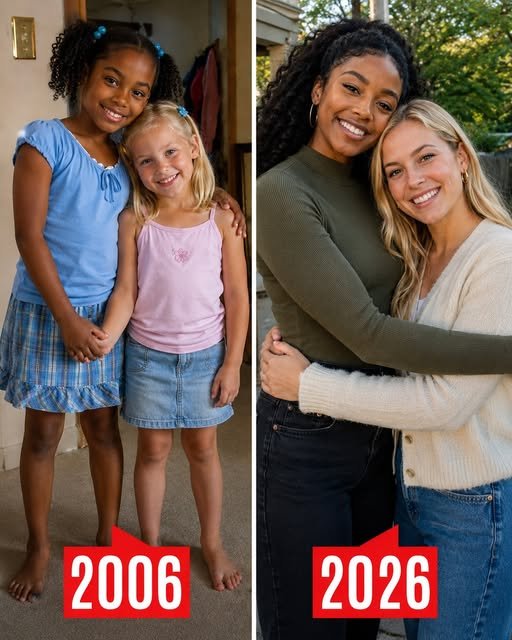
Part 1 — The Day We Buried Our Mother
The plastic lid bent beneath my fingers with a sharp crack.
It didn’t break completely, but the sound was loud enough to make several people in my mother’s kitchen turn toward me.
“Sorry,” I murmured.
No one responded.
Within seconds, everyone returned to what they had been doing—stacking casserole dishes, wrapping leftover pie, speaking in hushed voices about the funeral we had just returned from.
And about my sister.
“Tessa, you sacrificed so much for Nicole,” one of our relatives said softly.
Another woman touched Tessa’s shoulder.
“Your mother was so fortunate to have you with her during that last year.”
Tessa gave the same exhausted smile she had been wearing all afternoon.
“She was my mom,” she replied.
Something twisted painfully inside me.
I pressed another lid onto a container harder than necessary.
“Don’t,” Tessa said behind me.
I kept my back to her.
“Don’t what?”
“Count.”
A bitter laugh escaped me.
“You still think you know exactly what I’m thinking?”
“I know what you’re doing.”
I turned around.
Tessa stood a few feet away, looking just as tired as I felt.
She was two years older than me and had spent the final year of Mom’s life doing nearly everything—driving her to appointments, preparing meals, sitting beside her when she couldn’t sleep.
I had helped too.
I called constantly. I visited whenever I could. I sent money. I rearranged work whenever Mom needed me.
But I knew the truth.
Tessa had been there every day.
“I’m cleaning the kitchen,” I said.
“You’re keeping score.”
“I am not.”
“Belle.”
The way she said my name irritated me even more because it was gentle.
I shoved the container into the refrigerator.
“Maybe I’m wondering why everyone keeps speaking as if you’re the only daughter who buried her mother today.”
Tessa’s shoulders sagged.
“Please. Not today.”
“Why not today?”
My voice came out sharper than I intended.
“We never talked about it while she was alive.”
Tessa’s expression changed immediately.
And I knew she understood.
This wasn’t really about casseroles.
Or relatives.
Or who had spent more nights beside Mom’s hospital bed.
It was about something much older.
Something that had begun when I was eight years old.
And a frightened ten-year-old girl appeared in our home carrying all her belongings in a grocery bag.
Part 2 — The Girl in the Red Coat
Before Tessa came, there had only been Mom and me.
My mother, Nicole, had raised me alone after my father, Alex, disappeared from our lives.
For years, I still called him Dad.
Because once, he had been.
He had lifted me onto his shoulders. He had tucked me into bed. He had promised that we would go to the beach the following summer.
Then, suddenly, he was gone.
There was no proper goodbye.
No explanation I could understand.
Just absence.
Mom and I learned how to become a family of two.
Then one evening, she opened the apartment door and walked in with a thin girl standing beside her.
The girl looked about ten.
Her hair was pulled back carelessly, and she held a plastic grocery bag filled with clothes against her chest.
“This is Tessa,” Mom said.
I stared at the stranger.
She stared back.
Then Mom said the sentence that changed my childhood.
“She’s going to be your sister.”
That was essentially the entire explanation.
One morning, I had been my mother’s only child.
By nightfall, I wasn’t.
Tessa was given the bed closest to the window.
Mom served her slightly larger portions at dinner because she said Tessa needed to gain weight.
If Tessa woke from nightmares, Mom sat beside her bed until she fell asleep again.
And then there was the red coat.
I had wanted that coat for weeks.
It hung in the window of a secondhand shop we passed on the way home from school. It wasn’t new, but to eight-year-old me, it was perfect.
I had imagined wearing it all winter.
Then one afternoon, I came home and saw Tessa standing near our front door wearing it.
I stopped cold.
“That’s mine.”
Tessa immediately grabbed the zipper.
“I can take it off.”
But Mom stepped forward.
“No, sweetheart.”
Tessa froze.
Mom gently adjusted the collar around her neck.
“You keep it on. It fits you.”
I can still remember how I felt.
I wasn’t old enough to understand trauma.
I didn’t understand adoption.
I didn’t understand why this girl seemed terrified whenever someone raised their voice or why she sometimes hid bread in a napkin after dinner.
All I understood was that I had wanted something.
And my mother had given it to her.
At eight years old, it felt like proof.
First Dad had left me.
Now Mom had found someone who needed her more.
At night, I often heard Tessa crying.
Mom would whisper to her until she calmed down.
I would lie in my bed facing the wall, pretending not to listen.
And wondering why no one sat beside me when I cried quietly enough that nobody could hear.
Then came the whispers.
One night, I walked down the hallway and heard voices inside Mom’s room.
Tessa was there.
I stopped outside the door.
“What if she finds out someday?” Tessa whispered.
Mom answered immediately.
“Not from us. She can never know.”
My heart began pounding.
I pushed open the door.
“Know what?”
Both of them looked at me.
“Mom? Tessa? What am I not supposed to know?”
For the briefest moment, something flashed across Mom’s face.
Fear.
Then it disappeared.
She smiled.
“We were talking about Tessa’s adoption paperwork.”
I turned toward Tessa.
She stared at the floor.
I was only eight.
But I knew when people were lying.
And from that night forward, I never completely stopped wondering what they were hiding.

Part 3 — Somehow, She Became My Sister
For years, I noticed conversations ending when I entered rooms.
Mom would lower her voice.
Tessa would suddenly change the subject.
Sometimes I caught them exchanging looks I couldn’t interpret.
For a while, I resented Tessa for all of it.
Unfortunately for my resentment, Tessa was very difficult to hate.
When I was sixteen, I sneaked out of my bedroom window to attend a party.
When I climbed back inside hours later, Tessa was sitting on my bed.
I nearly screamed.
She folded her arms.
“Mom checked on you.”
My stomach dropped.
“What did you tell her?”
“That you were taking a shower.”
I stared at her.
“You covered for me?”
She held out her hand.
“Twenty dollars.”
“You’re blackmailing me?”
“Absolutely.”
Despite myself, I laughed.
A few months later, I got horribly sick after another party.
Tessa sat on the bathroom floor beside me and held my hair away from my face.
“If you ever tell anyone about this,” I groaned, “I’ll deny we’re related.”
“Technically—”
She stopped.
I looked at her.
“Technically what?”
“Nothing.”
That tiny hesitation stayed with me longer than it should have.
Years passed.
When I left for college, I unpacked my suitcase and discovered a folded twenty-dollar bill hidden between two sweaters.
Beside it was a note.
You’ll need this more than I do.
I immediately called Tessa.
“You need your money.”
“Then repay me when you’re rich.”
“So never?”
“Exactly.”
Somewhere between childhood arguments, shared secrets, late-night phone calls, and bad decisions we covered up for each other, the girl I had once regarded as an intruder became my sister.
Not my adopted sister.
Not the girl Mom brought home.
Just my sister.
But even after I grew to love her, there remained a tiny locked room inside me.
And inside that room was an eight-year-old girl watching someone else wear her red coat.
Part 4 — The Box
After Mom’s funeral, the final relative eventually left.
The front door closed.
For the first time all day, the house became silent.
Tessa remained in the kitchen.
I was wiping the counter when she spoke.
“I’ve been afraid of this moment since I was ten.”
My hand stopped moving.
“Tessa…”
“If you’re talking about how jealous I was when we were kids, I’m not angry about that anymore.”
“This isn’t about your jealousy.”
I turned around.
Her face had gone pale.
“Then what is it?”
She swallowed.
“I’ve spent most of my life afraid that when you learned the truth, you would hate me.”
A cold feeling crept through me.
“What truth?”
Tessa left the room without answering.
A minute later, she returned carrying an old metal box.
It was dented along one side and scratched around the edges.
She placed it carefully on the kitchen table.
Then she looked at me.
“You need to know what Mom hid from you your entire life.”
I stared at the box.
“What is this?”
“Open it.”
The latch resisted at first.
I pulled harder.
It snapped loose.
Inside were old photographs, several envelopes, legal documents, and a thick folder.
I lifted one photograph.
Mom was standing beside a woman I didn’t recognize.
In front of them stood a little girl.
Tessa.
“Who’s the woman?”
Tessa answered quietly.
“My biological mother. Michelle.”
I looked more closely.
“When was this picture taken?”
“Before I came to live with you.”
My eyes lifted to hers.
“You knew Mom before the adoption?”
“Yes.”
I reached for the folder.
My hands suddenly felt clumsy.
“What aren’t you telling me?”
“Belle…”
I opened it.
Most of the documents meant nothing to me at first.
Dates.
Signatures.
Official stamps.
Then one name stopped me.
Alex.
My father.
I stared at it.
Then I shoved the document toward Tessa.
“Why is Dad’s name on your adoption paperwork?”
She closed her eyes.
“Tessa.”
Silence.
“Answer me.”
Her hands began trembling.
And for the first time since opening the box, I felt genuinely afraid.
I heard myself ask the question before I was ready for the answer.
“Was Alex your father too?”
Tessa opened her eyes.
They were filled with tears.
“Yes.”
I stopped breathing.
“He was my biological father too, Belle.”
I stepped backward until my hip struck the kitchen counter.
My father.
Tessa’s father.
The sister my mother had adopted wasn’t only my adopted sister.
She was my half-sister.
All those years, the truth had been sitting across the dinner table from me.
Part 5 — The Father Who Left Us Both
“How?”
It was the only word I could manage.
Tessa sat down.
“My mother knew Dad before he met your mom.”
“Before I was born?”
“Yes.”
“And they had you.”
She nodded.
I laughed once, but there was no humor in it.
“So Dad had another child before me and never told Mom?”
“No.”
“Did you know him?”
“A little.”
My throat tightened.
“Then while I was sitting around waiting for him to call, you knew where he was.”
Tessa flinched.
“For a while. He was never consistent, Belle. He came and went.”
“Did he leave Mom and me for Michelle?”
“No. My mother didn’t want him back. She only wanted him to take responsibility for me.”
“And did he?”
“For a while.”
She gave a sad little shrug.
“But Dad wasn’t good at staying anywhere.”
The word Dad sounded strange now.
“So after he abandoned us, he started visiting you?”
“More often for a while.”
“And then?”
“He disappeared from my life too.”
That stopped me.
“He left both of us?”
Tessa nodded.
For several seconds, neither of us spoke.
Then I lowered myself into a chair.
“Did he love your mother?”
“I don’t know.”
She wiped her face.
“I think Alex loved whatever life happened to be in front of him at the time. But loving something and staying for it weren’t the same thing to him.”
That answer hurt because I recognized the truth in it.
I looked at the envelopes inside the box.
“How did Mom discover any of this?”
Tessa pointed toward them.
I opened the first letter.
It began:
Nicole,
You don’t know me, but we need to talk about Alex.
I stopped.
“Michelle wrote to Mom?”
“That was the first letter.”
I continued reading.
Michelle explained that she had a daughter named Tessa.
And that Alex was Tessa’s father.
I lowered the page.
“How old were you?”
“Almost ten.”
The letter explained something else.
Michelle had been seriously ill.
She had almost no family left, and she was terrified about what would happen to Tessa if her condition worsened.
Another letter came several weeks later.
Michelle apologized for contacting Mom.
She knew Alex had hurt her.
But one sentence nearly broke me.
She has a sister who doesn’t even know she exists.
I stared at Tessa.
“You knew about me?”
“Yes.”
“How?”
“Dad had mentioned you. Later, my mother showed me a picture.”
“What did she tell you?”
“That you were my little sister.”
My eyes burned.
“And eventually she asked Mom to take you?”
“Eventually.”
“Mom agreed?”
“Not immediately.”
Tessa looked at the letters scattered across the table.
“Michelle told her she didn’t owe either of us anything. But she also said I shouldn’t have to spend the rest of my life paying for Alex’s choices.”
I closed my eyes.
That sounded exactly like my mother.
Nicole could stay angry with an adult who betrayed her and still refuse to punish a child for it.
“Mom met me before Michelle died,” Tessa continued.
“I asked her whether you knew about me.”
“And what did Mom say?”
“No.”
Tessa stared at her hands.
“I told her I was glad.”
My chest tightened.
“Why?”
“Because I was terrified you’d hate me.”
I looked at her across the table.
“I did hate you for a while.”
She nodded.
“I know.”
“For things you never did.”
Neither of us spoke for a moment.
Then I noticed another document.
This one contained Alex’s signature.
The date made my stomach turn.
It had been signed two years after he disappeared from my life.
“What is this?”
Tessa already knew what I meant.
“His consent for the adoption.”
“He signed this?”
“Yes.”
“He was alive.”
“Yes.”
“He could be found.”
“Yes.”
Each answer felt heavier than the last.
I stood.
“If someone found him to sign adoption papers, then he knew where Mom was.”
Tessa said nothing.
“He knew where I was.”
“I think he did.”
I looked at her.
“When he saw you, did he ever ask about me?”
Tessa lowered her gaze.
“Did he ever ask to visit me?”
Silence.
“Tessa.”
“No.”
That one word destroyed something I had carried since childhood.
For years, I had created excuses for him.
Maybe he couldn’t find us.
Maybe Mom had kept us apart.
Maybe he believed we had moved.
Maybe he had lost our number.
Maybe, maybe, maybe.
But paperwork had found him.
My mother had known how to reach him.
And still he had never come looking for me.
“He knew,” I whispered.
Tessa’s eyes filled again.
“He was a coward, Belle.”
I turned away.
“And Mom knew he was alive.”
“Yes.”
“She knew he could contact us.”
“Yes.”
“And she let me spend years wondering whether he vanished because of something I did.”
Tessa’s voice broke.
“She thought the truth would hurt you worse.”
I faced her.
“Worse than believing my own father disappeared because I wasn’t worth staying for?”
Tessa shook her head slowly.
“I’m not defending her.”
That surprised me.
“You think Mom was wrong?”
“Eventually, yes.”
“Eventually?”
I looked at the box.
“How long did you know everything?”
“Before I came to live with you.”
The room seemed to tilt.
And suddenly Dad was no longer the revelation that hurt most.
Tessa had known too.

Part 6 — The Secret Between Sisters
“You knew when you were ten?”
“Yes.”
“And when we were teenagers?”
“Yes.”
“When I called you crying because Dad missed another birthday?”
Her face crumpled.
“Yes.”
“When I spent years wondering where he was?”
“I wanted to tell you.”
“But you didn’t.”
“No.”
“Thinking about telling me isn’t the same as telling me.”
“I know.”
I could hear my voice rising.
“You grew up, Tessa. You weren’t ten forever.”
“I know that too.”
“Then why?”
She pressed her hands against the edge of the table.
“Because when I was ten, I was terrified you would hate me. And when I got older, I kept waiting for Mom to decide you were ready.”
“You had chances.”
“Yes.”
“You watched me question everything.”
“I know.”
“And you let me believe I was imagining the way Mom treated us differently.”
Her expression changed.
“I never thought you imagined it.”
I stared at her.
“What?”
Tessa wiped a tear from her cheek.
“Sometimes Mom did give me more.”
The admission stunned me.
“She worried about me constantly,” Tessa continued. “She thought I was damaged. Fragile. Someone who might fall apart if she wasn’t careful.”
“And me?”
“She thought you were strong.”
I laughed bitterly.
“So I got less because I looked like I could survive it?”
“I think that’s what she told herself.”
That hurt in an entirely different way.
I walked back toward the box.
“Then I want to read everything.”
“Belle…”
“Everything she wrote.”
I began arranging the letters by date.
Tessa hesitated.
“Some of those were private.”
I looked at her.
“So was my entire childhood, apparently.”
She said nothing after that.
We read.
Letter after letter.
Notes between Mom and Michelle.
Adoption documents.
Old paperwork.
Things that had been hidden while we were growing up only feet away.
Then I found an envelope with Mom’s handwriting.
It had never been sent.
I unfolded the pages.
One sentence froze me.
Belle thinks Tessa gets more of me because sometimes she does.
I read it again.
Mom had known.
She knew I had noticed.
She knew I felt overlooked.
She wrote that she had mistaken my stubbornness for resilience.
That when I slammed doors or said I didn’t care, she told herself I was simply stronger than Tessa.
Then I reached a line that made my throat close.
I keep telling myself Belle will understand when she is older. I’m beginning to fear that “later” is simply becoming another word for “never.”
I lowered the letter.
Tessa looked almost as shocked as I felt.
“You knew about this?”
She shook her head.
“No.”
For several minutes, I couldn’t continue.
Eventually, I heard a drawer slam somewhere down the hall.
I looked up.
“Tessa?”
No answer.
I followed the sound.
She was in the guest room packing clothes into a bag.
“What are you doing?”
“Giving you space.”
“By leaving?”
She kept folding a sweater.
“Tessa.”
Her hands stopped.
Then she turned toward me.
“I’ve spent my whole life waiting for you to decide that I never really belonged here.”
And suddenly, I wasn’t looking at the woman standing in front of me.
I saw the ten-year-old girl again.
Thin.
Terrified.
Carrying all her possessions in a grocery bag.
Wearing my red coat.
Not because she had stolen something from me.
But because she had arrived with almost nothing.
I stayed in the doorway.
“You should have told me.”
“I know.”
“Mom should have told me too.”
“I know.”
“I’m angry.”
“You have every right to be.”
I stepped farther into the room.
“But I’m finished letting Alex be the reason we destroy ourselves.”
Tessa looked up.
“He lied to your mother. He hurt mine. He disappeared from both of us. I’m not spending another year asking what I did to make him leave.”
“You didn’t do anything.”
“I know.”
The words felt different when I said them this time.
Stronger.
Cleaner.
“You didn’t either.”
Tessa covered her mouth.
I crossed the room and took the sweater from her hands.
“I’m still angry with you.”
“I understand.”
“I’m not going to pretend thirty years of silence doesn’t matter.”
“I would never ask you to.”
I placed the sweater back on the bed.
“But you are still my sister.”
Tessa’s face crumpled completely.
“Belle…”
“You didn’t steal Dad from me.”
She began crying.
“And you didn’t steal Mom.”
I nodded toward the suitcase.
“So unpack your bag.”
For the first time all evening, something softened between us.
Tessa gave a shaky nod.
And closed the suitcase.
Part 7 — What Mom Left Behind
Later that night, we returned to the kitchen.
Only one envelope remained unopened.
We sat side by side at Mom’s old table.
I unfolded the final letter.
Mom didn’t try to justify herself.
She didn’t ask us to pretend that everything she had done had been right simply because she loved us.
Instead, she admitted the truth.
She had convinced herself that silence was protection.
At first, she believed she was shielding me from a painful truth about my father.
Then a year passed.
Then another.
And each year made confession harder.
Eventually, Mom wrote, she wasn’t protecting me from the truth anymore.
She was protecting herself from admitting she had waited too long to tell it.
Near the bottom of the letter, one sentence stood apart from all the others.
Belle, I was wrong to decide which pain you were old enough to carry.
I read it twice.
Then I carefully folded the paper.
Tessa watched me.
“What are you thinking?”
I stared at Mom’s handwriting.
“That she loved us.”
Tessa nodded.
“And?”
“That she made mistakes.”
Another nod.
“So did I.”
Tessa managed a faint smile.
“Me too.”
I looked at her.
“Then maybe we stop pretending love makes people perfect.”
That earned the smallest laugh from her.
My eyes drifted toward Alex’s signature on the old adoption form.
For most of my life, my father’s absence had felt like an unfinished question.
Why did he leave?
Why didn’t he call?
Why didn’t he come back?
Was I too difficult?
Was I forgettable?
Was there something wrong with me?
That night, the question finally ended.
My father had not disappeared because he had no choices.
He had choices.
Again and again.
He simply made them.
And staying for me had not been one of them.
For the first time, I understood that his decision said something about him.
Not about my worth.
I closed the metal box.
“Do you want to keep it?” Tessa asked.
“The letters, yes.”
“And his paperwork?”
I thought about it.
“Keep that too.”
She looked surprised.
“I don’t need to destroy evidence that he existed.”
I met her eyes.
“I just don’t need to carry him with me anymore.”
Tessa slowly reached across the table.
Her hand stopped beside mine, almost as though she were afraid I might pull away.
I didn’t.
I turned my palm upward and held on.
We sat there together in the kitchen where our mother had cooked thousands of meals, settled hundreds of arguments, hidden one enormous secret, and somehow raised two girls who had spent years misunderstanding what they meant to each other.
We could not rewrite our childhood.
I could not become eight again and understand why Tessa needed the red coat more than I did.
Tessa could not become ten again and find the courage to tell me she already knew we shared a father.
Mom could not return and choose honesty sooner.
And Alex could not become the father either of us deserved.
But the past didn’t get to make every decision for us.
Tessa squeezed my hand.
I squeezed back.
We had been given a complicated family.
A mother who loved deeply but sometimes chose wrongly.
A father who repeatedly walked away.
Two childhoods shaped by secrets neither of us had created.
But from that night forward, one thing belonged entirely to us.
We could choose what kind of sisters we wanted to be.
And this time, there would be no more secrets between us.