
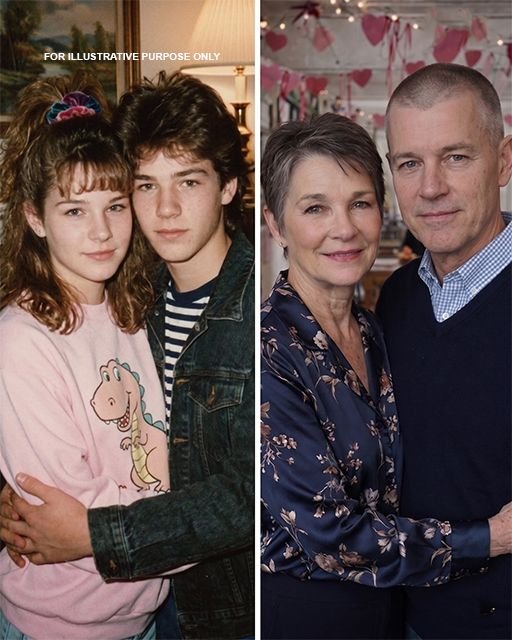
My name is Claire, and the last place I expected to find my first love was inside a nursing home decorated with paper hearts.
It started because my friend Talia begged me to volunteer.
“Come on,” she said over the phone. “It’s just for Valentine’s Day. They need people to help residents write cards. You like sentimental things.”
“I do not like sentimental things,” I replied automatically.
“That’s funny, because you cried at a dog food commercial three weeks ago.”
“That dog found his owner again.”
“Exactly. Sentimental.”
I almost said no.
February had always been difficult for me, though I rarely admitted it out loud. Valentine’s Day carried too many memories I preferred not to revisit.
But I had also been feeling restless lately, trapped in the dull rhythm of work, sleep, errands, repeat. My divorce had been finalized a year and a half earlier, yet I still hadn’t figured out what to do with the silence waiting for me every evening when I came home.
Some nights, it felt peaceful.
Other nights, it felt unbearable.
So I agreed.
The assisted living home sat on the edge of town beside a frozen pond and a row of bare maple trees. Inside, the lobby smelled faintly of coffee, lavender, and lemon floor cleaner.
Handmade decorations hung everywhere. Red hearts were taped to the windows. Pink streamers curled around the handrails. A crooked banner reading LOVE NEVER AGES stretched across the activity room.
It was cheerful in a way that hurt a little.
A volunteer coordinator named Miriam handed me a clipboard.
“You’ll be helping residents write cards to family members,” she explained warmly. “Some can write themselves, some dictate, and some just want company. We also deliver anonymous Valentine’s cards from community volunteers.”
I smiled politely and scanned the resident list.
Then my stomach dropped.
Elias Hale.
For a moment, the room disappeared around me.
I stared at the name again, convinced I had imagined it.
Elias Hale.
Age sixty-nine. Room 214.
My hands went cold.
Some names belong to your past so completely that seeing them again feels impossible, like hearing a ghost answer the telephone.
I had not seen Elias in forty-six years.
Not since the summer we destroyed each other.
“Claire?” Miriam asked gently. “Are you alright?”
I swallowed hard.
“Yes,” I lied.
But suddenly I was twenty-three again.
Standing barefoot on a dock at midnight while Elias laughed beside me.
Sitting in his rusted pickup truck with my head on his shoulder.
Listening to him promise we would leave our tiny hometown together and never look back.
Then watching him leave anyway.
I had spent decades convincing myself I was over him.
Apparently, I was not.
I should have ignored the name.
I should have handed Room 214 to another volunteer and walked away with my dignity intact.
Instead, before common sense could catch up with me, I picked up one of the unsigned Valentine’s cards from the basket and walked toward the hallway.
The corridor was bright with afternoon sunlight pouring through tall windows. Framed watercolor paintings lined the walls. Somewhere nearby, an old Frank Sinatra song drifted softly from a speaker.
Every step made my pulse louder.
By the time I reached Room 214, my throat felt painfully tight.
The door was slightly open.
I knocked anyway.
A voice answered from inside.
“Come in.”
Older.
Rougher.
But unmistakably his.
I stepped into the room.
And there he was.
Age changes people in strange ways. Some faces become entirely unfamiliar. Others somehow remain themselves beneath the wrinkles and gray hair.
Elias was thinner than I remembered. His once-dark hair had turned silver, and deep lines framed his mouth. A cane rested beside the bed, and when he shifted in his chair, I noticed a stiffness in his left leg.
But his eyes were the same.
Warm brown with flecks of gold near the center.
For one suspended second, neither of us moved.
Then his expression shifted from polite curiosity to stunned disbelief.
“Claire?”
Hearing my name in his voice after all those years nearly undid me.
I forced myself to smile.
“Happy Valentine’s Day.”
He stared at me like he thought I might disappear if he blinked.
“I…” He cleared his throat. “I thought I was imagining things.”
“Trust me,” I said quietly. “So did I.”
I handed him the card before my courage failed.
He accepted it slowly, still staring at me.
“You live here?” I asked, then immediately regretted how ridiculous it sounded.
He gave a soft laugh.
“Apparently.”
The humor in his voice eased the tension just enough for me to breathe again.
His room was small but comfortable. Books were stacked on the nightstand beside a pair of reading glasses. A chessboard sat near the window. Photographs covered nearly every surface.
One frame beside the bed was turned facedown.
“You volunteering here?” he asked.
“For the day.”
“Well,” he said carefully, “that’s one hell of a coincidence.”
But it didn’t feel like a coincidence.
It felt like the universe reopening a door I had nailed shut decades ago.
He gestured toward the chair near the window.
“You can sit down if you want.”
I should have left.
Instead, I sat.
For a few moments, neither of us spoke. We simply looked at each other, trying to reconcile memory with reality.
Finally, Elias smiled faintly.
“You still tuck your hair behind your ear when you’re nervous.”
My hand immediately froze halfway to doing exactly that.
His smile widened.
“See?”
I laughed despite myself.
“You still notice everything.”
“I noticed everything about you.”
The words landed softly between us.
Dangerously softly.
I looked away first.
Back when we were young, Elias and I had been inseparable. We met at nineteen while working summer jobs at the same marina. He was funny, reckless, and impossible not to love.
I was practical, organized, and constantly worried about the future.
We balanced each other until we didn’t.
My parents hated him almost immediately.
They thought he lacked ambition. They said he drifted through life without direction. They wanted me to marry someone stable, educated, and predictable.
Elias used to joke that my mother looked at him like he tracked mud across her clean floors simply by existing.
But the truth was more complicated than that.
He had dreams. Big ones. He wanted to write music, travel, and play in bars across the country with his guitar slung over his back.
I wanted certainty.
Eventually, love stopped being enough to bridge the gap between us.
The breaking point came when he was offered a chance to tour with a small band headed west.
He asked me to go with him.
I asked him to stay.
Neither of us could do what the other needed.
So we ended.
Messily. Painfully. Completely.
Or at least I thought completely.
“You look good,” Elias said suddenly.
I snorted softly.
“You need stronger glasses.”
“No,” he said. “You do.”
That familiar warmth spread through my chest before I could stop it.
I hated how easy it still was with him.
“So,” I asked carefully, “what happened to you after… everything?”
“A lot,” he admitted.
“Helpful answer.”
He chuckled.
“I toured for a few years. Played terrible bars. Slept in vans. Thought I was going to become famous.”
“And did you?”
“Absolutely not.”
I laughed again.
God, I remembered that laugh. The way he always sounded was quietly amused by life itself.
“I ended up teaching music,” he continued. “Mostly high school students. Turns out teenagers appreciate washed-up guitar players.”
“That actually sounds perfect for you.”
“It was.”
There was no bitterness in his voice. Only acceptance.
“And you?” he asked.
I hesitated.
“I became an accountant.”
He blinked dramatically.
“Claire. Rebel.”
I rolled my eyes.
“I got married.”
The humor faded gently from his expression.
“Was he good to you?”
The question surprised me.
“Mostly,” I admitted. “Until he wasn’t.”
Elias nodded slowly, as though he understood more than I was saying.
“Children?”
“One daughter. Emma. She lives in Seattle now.”
His eyes softened.
“You always wanted to be a mother.”
“You remembered that?”
“I remember everything.”
The room fell quiet again.
Outside the window, snow drifted lazily through pale sunlight.
Finally, I asked the question that had been sitting heavily in my chest since I walked in.
“Did you ever marry?”
A shadow crossed his face.
“Yes.”
Something tightened unexpectedly inside me.
“Her name was Julia,” he said softly. “She died nine years ago.”
I immediately felt ashamed of the small flicker of jealousy I had experienced.
“I’m sorry.”
“She was a good woman.”
The sincerity in his voice told me he meant it deeply.
I nodded.
“I’m glad you had that.”
“And you?” he asked carefully. “Did you love your husband?”
The question lingered between us longer than I expected.
I thought about my marriage. About routines, compromises, and the quiet loneliness that had crept in so slowly, I barely noticed it until everything between us had hollowed out.
And beneath all of it, buried somewhere I rarely allowed myself to look, was the uncomfortable truth that part of me had compared every man to Elias for the rest of my life.
“I cared about him,” I answered honestly.
Elias looked at me for a long moment.
Then he said quietly, “But not the way you loved me.”
My breath caught.
At twenty-three, I would have denied it.
At 69, I was too tired for dishonesty.
“No,” I whispered.
The silence afterward felt enormous.
He looked down at the Valentine’s card still resting unopened in his hands.
“You know,” he said, “I almost didn’t move here.”
“No?”
“My daughter convinced me.” He smiled faintly. “After my second fall, she decided living alone was no longer a reasonable life choice.”
That explained the cane.
“She was probably right.”
“Oh, absolutely. I just enjoy pretending otherwise.”
“You always were dramatic.”
“Says the woman who cried because I shaved my beard in 1978.”
“It took you three months to grow it.”
“And you liked it.”
“I did not.”
“You absolutely did.”
I laughed so hard my eyes watered.
And suddenly, we were no longer two elderly strangers sitting in a nursing home room.
We were ourselves again.
Hours slipped by unnoticed.
We talked about everything.
Our children.
The places life had taken us.
The people we had lost.
The strange shock of aging when internally you still felt thirty-five.
At one point, a nurse stopped by to bring Elias his medication and smiled knowingly at both of us.
“Well,” she said, “someone’s having a much better Valentine’s Day than usual.”
After she left, Elias shook his head.
“I can’t believe you’re actually here.”
“Neither can I.”
His gaze held mine.
“I looked for you once.”
The words startled me.
“When?”
“About ten years after we split up.”
My heart stumbled.
“You did?”
He nodded slowly.
“I came back to town. Your parents told me you were married and didn’t want to see me.”
My chest tightened sharply.
“They told you that?”
“They weren’t subtle.”
I stared at him in disbelief.
Because I had never known.
Not once.
Not ever.
“I didn’t know you came back,” I whispered.
“I figured you’d moved on,” he said quietly. “After what your parents told me, I didn’t think trying again would help either of us.”
46 years.
46 years lost because two stubborn young people never got the chance to have one honest conversation.
The grief of it hit me unexpectedly hard.
He seemed to see it happen across my face.
“Hey,” he said gently. “Don’t do that to yourself.”
“We wasted so much time.”
“Maybe,” he admitted. “But we also lived entire lives.”
Tears burned suddenly behind my eyes.
I looked away, embarrassed.
“I’m sorry,” I muttered.
“For what?”
“For getting emotional.”
“Claire,” he said softly, “you once cried because a duck followed us around a lake for two days.”
“That duck was attached to us.”
“It wanted bread.”
I laughed through the tears.
Then, before I could stop myself, I asked the question that had apparently lived quietly inside me for almost half a century.
“Did you ever love anyone the way you loved me?”
Elias went very still.
Then he answered with devastating honesty.
“No.”
My eyes closed briefly.
Because some part of me had always known my answer would have been the same.
The late afternoon sun slowly dimmed outside the windows. Down the hall, residents gathered for dinner while distant conversation echoed softly through the building.
Still, neither of us moved.
Finally, Elias glanced at the clock.
“I’ve kept you here all day.”
“You didn’t keep me.”
A small smile touched his mouth.
“You know what I mean.”
I stood reluctantly and slipped my coat back on.
For a moment, we simply looked at each other again, suspended between past and present.
Then Elias reached toward the nightstand and picked up the facedown photograph frame.
“This,” he said quietly, “is why I never threw it away.”
He handed it to me.
Inside was a faded photograph of us at 22, standing beside the marina, sunburned and laughing. My arms were wrapped around his waist while his head leaned against mine.
I stared at it silently.
“You kept this all these years?”
“Some things are harder to lose than others.”
My throat tightened painfully.
Then he gave a small shrug.
“I turn it over when the memories get too loud.”
That nearly broke me.
“Elias…”
“I know,” he said softly. “Me too.”
I carefully set the photograph down.
Then I leaned forward and kissed his cheek.
His eyes closed briefly at the touch.
When I pulled away, his voice sounded rough.
“Will you come back tomorrow?”
It should have been a simple question.
But it carried 46 years inside it.
I smiled through tears I no longer bothered hiding.
“Yes,” I whispered. “I think I will.”
For the next two days, I told myself not to go back.
I was too old to reopen old wounds.
Too old to romanticize the past.
Too old to risk discovering that what I felt was only nostalgia wrapped in loneliness.
But on the third morning, I caught myself buying two coffees instead of one.
By noon, I was walking back through the nursing home doors.
After that, seeing Elias became part of my life with alarming ease.
At first, it was only visits.
Coffee in the common room.
Card games by the window.
Long conversations wandering through memories, regrets, and stories we had never gotten the chance to tell each other.
Then it became routine.
I started bringing him books.
He started saving me a seat every afternoon.
The staff teased us mercilessly.
Apparently, elderly romance was excellent entertainment.
Emma flew in from Seattle in April and met Elias for the first time.

Afterward, she hugged me tightly in the parking lot.
“I haven’t seen you this happy in years,” she whispered.
And I realized she was right.
Love at twenty is fireworks.
Love at seventy is different.
Quieter.
Softer.
Less about becoming and more about finally being understood by someone who has seen every version of you.
One evening in early summer, Elias and I sat beside the pond watching the sunset turn the water gold.
“I used to think losing you ruined my life,” I admitted quietly.
He looked at me.
“And now?”
I smiled faintly.
“Now I think maybe life just took the long way around.”
He reached for my hand slowly, carefully, as though it were still something precious.
It was.
The strange thing about first love is that people think it belongs only to the young.
But sometimes it waits patiently.
Sometimes it survives marriages, grief, and decades of silence.
Sometimes it returns to you in a brightly lit hallway on Valentine’s Day when you least expect it.
And sometimes, if you are very lucky, it asks you to stay this time.
So I did.