
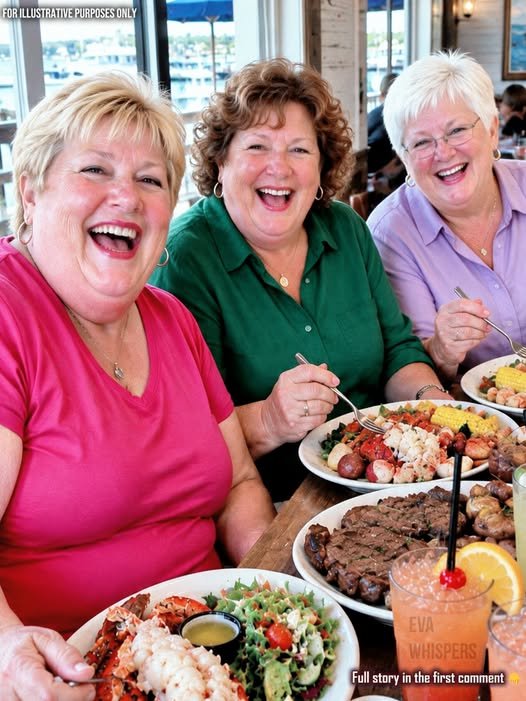
The Meeting My Mother Had Been Dreading
The evening before my mother was supposed to meet my future mother-in-law, I found her standing beside her bed, carefully smoothing her nicest dress.
She ran both hands over the fabric, checking for wrinkles that were barely visible.
“Do you think Clarissa will approve of me?” she asked.
The question made my heart ache.
My mother, Helen, was one of the kindest people I had ever known. She remembered birthdays, brought soup to sick neighbors, and apologized even when she had done nothing wrong. Yet there she was, worrying that Clarissa might decide she was not good enough.
“Mom, anyone who meets you is lucky,” I told her. “You don’t need Clarissa’s approval.”
She gave me a small smile, but the uncertainty remained in her eyes.
Clarissa had insisted that their first meeting take place at one of the most expensive restaurants downtown.
My mother had originally offered to host dinner at home.
She wanted to cook something warm and comforting, perhaps her roasted chicken with rosemary potatoes or the apple pie everyone loved.
Clarissa refused.
She said a restaurant would provide “neutral territory.”
The phrase had bothered me from the moment she used it. This was supposed to be two mothers meeting before their children’s wedding, not representatives from rival countries negotiating a treaty.
Still, my mother agreed.
She nearly always agreed when she believed disagreement might create tension.
Unfortunately, I had inherited that habit from her.
For most of my relationship with Clarissa’s son, I had ignored his mother’s rude comments, demanding behavior, and endless appetite for other people’s hospitality.
I kept telling myself that it was easier to remain polite.
I was about to learn how expensive that politeness could become.
On the morning of the dinner, I woke with a pounding headache and aching muscles. By noon, I was running a fever so high that even walking to the kitchen left me dizzy.
My mother pressed her hand against my forehead and immediately frowned.
“You’re not leaving this house tonight.”
“I have to go,” I protested. “I arranged the meeting.”
“You can barely sit upright.”
“If we cancel now, Clarissa will treat it like a personal insult.”
My mother sighed because she knew I was right.
Clarissa collected grievances the way some people collected jewelry. She polished them, displayed them, and brought them out whenever she wanted attention.
After several minutes of arguing, we reached a decision I would soon regret.
My mother would go alone.
Three Unexpected Guests
That evening, my mother stood near the front door, clutching her purse tightly.
“I wish you were coming,” she admitted. “I’m going to feel completely out of place.”
“You won’t be out of place,” I assured her. “Just be yourself.”
She kissed my forehead and promised to call after dinner.
As I watched her leave, uneasiness settled over me.
I knew exactly what Clarissa was like around food.
For more than a year, she and her two sisters, Beatrice and Evelyn, had appeared at nearly every meal my fiancé and I hosted.
They came to Thanksgiving without bringing so much as a dinner roll.
They showed up at Christmas with empty hands and enormous appetites.
At summer barbecues, they filled their plates several times, then packed leftovers before the rest of the guests had finished eating.
Whenever I mentioned it to my fiancé, he dismissed it.
“That’s just Mom,” he would say. “She can be a little much, but she doesn’t mean anything by it.”
So I continued cooking.
I continued smiling.
I continued pretending not to notice.
That night, I lay on the couch with my phone resting on my chest.
Across town, my mother was expecting to meet Clarissa.
What she did not know was that Clarissa had brought Beatrice and Evelyn with her.
My mother entered the restaurant expecting an intimate conversation between two women whose children were preparing to marry.
Instead, she found three women waiting at the table.
Clarissa greeted her as though nothing about the situation was unusual.
“You remember my sisters,” she said.
My mother knew their names, but she had never been told they were coming.
Before Helen had even settled into her chair, Clarissa raised her hand and called for the waiter.
She did not ask whether my mother wanted to look at the menu first.
She did not ask whether anyone had dietary restrictions.
She immediately began ordering.
They wanted lobster appetizers.
They wanted premium steaks.
They wanted side dishes, specialty sauces, expensive cocktails, and extra bread.
Beatrice added another seafood plate.
Evelyn asked about the restaurant’s most expensive wine.
My mother stared at the prices printed beside each item.
Her stomach tightened.
When the waiter turned to her, she quietly ordered a simple garden salad and water.
Beatrice laughed.
“A salad? This is supposed to be a celebration.”
“I’m trying to watch my spending,” my mother replied.
Clarissa waved dismissively.
“You should enjoy yourself for once.”
It was easy for Clarissa to say that when she had already decided someone else would be paying.

A Dinner Without Kindness
For nearly two hours, my mother sat at that table while the three sisters ate as though they were attending a private feast.
More plates arrived than the table could comfortably hold.
Clarissa complained that one steak was not cooked perfectly enough.
Evelyn ordered a second cocktail before finishing her first.
Beatrice asked for extra lobster butter and another side dish.
My mother slowly ate her salad while trying to start a conversation.
She asked about their family.
She asked about their interests.
She tried to speak about the wedding.
Each attempt was interrupted or ignored.
“Let’s talk later,” Clarissa said while cutting into her steak. “We’re eating.”
My mother later told me that she had never felt so invisible.
She had dressed carefully.
She had worried all day about making a good impression.
She had entered that restaurant prepared to welcome Clarissa into our family.
Yet Clarissa treated her as though she were merely an inconvenient person sitting near the food.
When the final plates were removed, Clarissa leaned back with a satisfied expression and signaled for the check.
“Please bring it to her,” she told the waiter, pointing toward my mother.
Helen stared at her.
“To me?”
Clarissa folded her napkin and placed it beside her plate.
“Of course. The bride’s mother pays when the families meet for the first time.”
My mother looked from Clarissa to her sisters, waiting for someone to laugh and admit it was a joke.
No one did.
“I’ve never heard of that tradition,” she said carefully. “And I didn’t agree to pay for everyone.”
Beatrice and Evelyn exchanged amused glances.
Clarissa’s smile became colder.
“Well, not knowing about a tradition doesn’t mean it doesn’t exist.”
“I truly can’t afford a dinner like this,” my mother explained. “I came expecting to pay for my own meal, not three lobster dinners, steaks, and cocktails.”
Clarissa’s expression hardened.
“Perhaps you should have considered that before allowing your daughter to marry into a family with certain standards.”
Those words struck my mother more painfully than the bill itself.
Clarissa was not merely asking her to pay.
She was trying to remind Helen that she considered herself richer, more sophisticated, and more important.
Then the check arrived.
My mother unfolded it with trembling fingers.
The total was more than $1,700.
“I don’t have this kind of money,” she whispered.
Clarissa stood and lifted her purse.
“That isn’t my responsibility.”
Her sisters rose beside her.
Evelyn smiled as she put on her coat.
“It was lovely meeting you.”
The three women walked out together, leaving my mother alone at a table covered with signs of their excess.
Empty glasses.
Crushed napkins.
Lobster shells.
Half-finished side dishes.
And a bill larger than my mother’s monthly mortgage payment.
The Phone Call That Changed Everything
My phone rang while I was drifting in and out of feverish sleep.
The moment I heard my mother’s voice, I knew something was wrong.
“They left,” she said.
Her voice was unsteady.
“Who left?”
“Clarissa and her sisters. They said I had to pay. There’s a bill for more than seventeen hundred dollars, and the manager is here. I don’t know what to do.”
I sat upright so quickly that the room spun.
“Mom, listen to me. Don’t sign anything. Don’t give them your card. I’m coming.”
“You’re sick. You shouldn’t drive.”
“I’ll be there soon.”
I pulled on a sweatshirt, grabbed my keys, and left.
My hands shook as I drove, but the fever was no longer the reason.
I thought about every time Clarissa had entered our home and helped herself to everything we offered.
I remembered her complaining that the turkey needed more seasoning while taking a third serving.
I remembered Beatrice packing slices of pie into containers she had brought specifically for leftovers.
I remembered Evelyn asking whether there was more wine after arriving without a gift, a dish, or even a thank-you card.
For years, I had told myself that confronting them would create unnecessary conflict.
But silence had not preserved peace.
It had only taught Clarissa that she could keep taking.
When I entered the restaurant, I saw my mother sitting alone.
Her shoulders were curved inward, and her hands were folded tightly in her lap. She looked less like a guest and more like a child who had been publicly scolded.
I crossed the room and sat beside her.
“I’m here.”
Her eyes filled with tears.
The manager approached with the receipt. His manner was professional, but I could see that he felt sorry for her.
“Are you able to settle the remaining balance?” he asked.
“Yes,” I answered.
I handed him my card.
Paying hurt, but I refused to let my mother remain trapped in that restaurant while strangers watched her humiliation.
As I signed the receipt, the waiter stepped closer.
“I’m sorry about what happened,” he said quietly.
I looked up.
He glanced toward my mother.
“She kept apologizing whenever those women ordered more food. She even apologized for choosing only a salad.”
My chest tightened.
“She said she didn’t want anyone to think she was being impolite,” he continued. “She seemed worried the entire evening.”
That was exactly who my mother was.
Even while being exploited, she was concerned about making others uncomfortable.
I thanked the waiter and helped Mom to her feet.
As we walked outside, I silently made a promise.
Clarissa would repay every dollar.
And for once, she would understand what public humiliation felt like.

The Freeloader Invoice
After taking my mother home, I sat at my dining table and looked at the framed photographs hanging nearby.
There were pictures from birthdays, holidays, barbecues, and family dinners.
Clarissa appeared in nearly all of them.
In one photo, she was laughing while holding a plate piled high with lasagna.
In another, Beatrice stood near the dessert table with two takeaway containers.
A Thanksgiving photo showed Evelyn walking through our front door with enough leftovers to feed a family.
That was when the idea came to me.
The following morning, I called my fiancé.
“Is your mother still holding her garden club luncheon today?”
“Yes. Why?”
“I’d like to send her something.”
He paused.
“I know that voice. What are you planning?”
“Nothing dangerous,” I replied. “Just a delivery.”
Clarissa had been talking about that luncheon for weeks.
She was hosting several women from her social circle and wanted everything to appear elegant and perfect.
I ordered inexpensive takeout from a small roadside diner.
The burgers were wrapped in thin paper. The fries arrived in grease-stained containers. The presentation was the opposite of luxury.
Then I placed everything inside a beautiful white catering box tied with a gold ribbon.
From the outside, it looked like a delivery from an exclusive restaurant.
Beneath the food, I added a folder.
On the cover, I printed:
Freeloader Invoice
Inside, I listed every family meal I could remember.
Thanksgiving Dinner
Three servings of turkey.
Several side dishes.
Four slices of pie.
Two containers of leftovers.
Estimated value: $186.
Christmas Dinner
Prime rib.
Seafood casserole.
Homemade desserts.
Multiple glasses of wine.
Estimated value: $243.
Fourth of July Barbecue
Three burgers.
Two hot dogs.
Potato salad.
Nearly half the strawberry trifle.
Estimated value: $141.
The list continued for several pages.
Birthday dinners.
Sunday lunches.
Holiday parties.
Anniversary gatherings.
Every occasion at which Clarissa and her sisters had arrived with nothing and left carrying food.
At the end, I added the total:
Estimated Value of Hospitality Received Over Three Years: $2,486
Behind the invoice, I placed a copy of the restaurant receipt.
I highlighted my mother’s salad.
Then I circled the full $1,700 total.
Finally, I printed several family photographs and added captions beneath them.
Third serving of lasagna.
Packing leftovers before dessert ended.
Arrived empty-handed. Left with two containers.
I closed the folder, placed it beneath the food, and arranged everything so Clarissa would have to remove the documents in front of her guests.
Then I sent the box to her house.
The Luncheon Falls Silent
About an hour later, my fiancé texted me.
Did you send food to Mom’s luncheon?
Something like that, I replied.
Several minutes passed.
Then another message appeared.
She thought it was expensive catering. She opened it in front of everyone.
I could imagine Clarissa standing proudly at the head of the table, expecting admiration.
What happened? I asked.
The typing symbol appeared, vanished, and appeared again.
Nobody knows what to say.
A moment later, another text arrived.
Mrs. Donnelly picked up the invoice. They’re passing it around.
I leaned back in my chair.
For the first time since my mother’s phone call, I felt my anger begin to settle.
Another message appeared.
They found the Christmas pictures.
Then:
Someone just asked whether your mother really paid $1,700 while Mom ate steak and lobster.
I did not respond.
The truth no longer required my help.
Clarissa’s own behavior was speaking for me.
My fiancé sent one final update.
The luncheon is basically over. No one is eating now.
I pictured Clarissa’s perfect event collapsing around her.
The expensive table settings no longer mattered.
The flowers no longer mattered.
Her guests had just learned that their generous, sophisticated hostess had deliberately abandoned another woman with a restaurant bill she could not afford.
A few seconds later, my phone rang.
Clarissa’s name appeared on the screen.
I answered calmly.
She did not bother greeting me.
“How dare you do this to me!” she shouted. “My friends saw everything. They passed those photographs around the entire table!”
“They were family photographs,” I replied.
“You made me look like a freeloader!”
“I didn’t create those pictures, Clarissa. I didn’t force you to take three servings or carry home our leftovers. I simply added the dates and prices.”
“You humiliated me!”
Her outrage almost made me laugh.
“I understand exactly how that feels.”
She went silent.
For one brief moment, I hoped she might recognize the connection.
Instead, she hissed, “You will regret this.”
“No,” I said. “You’re going to repay my mother.”
“What?”
“Seventeen hundred dollars. You will transfer it to her today.”
“You cannot be serious.”
“I am completely serious. You invited her to that restaurant. You and your sisters ordered the expensive food. Then you invented a tradition and left her alone with the bill.”
“It was a misunderstanding.”
“It was deliberate.”
She began arguing, but I did not allow her to change the subject.
“You have two choices,” I told her. “You can repay my mother now, or I can send copies of that invoice and restaurant receipt to every person who has ever attended one of our family dinners.”
Another silence followed.
When Clarissa spoke again, her voice was smaller.
“Fine.”

The Payment
Two minutes later, my phone vibrated.
My mother had sent me a screenshot.
Transfer received: $1,700.
A second message arrived.
Clarissa says the dinner was a misunderstanding.
I stared at the screen.
There had been no misunderstanding.
Clarissa knew what she was doing when she brought two uninvited guests.
She knew what she was doing when she ordered lobster, steak, cocktails, and wine.
She knew what she was doing when she instructed the waiter to hand my mother the bill.
Most importantly, she knew what she was doing when she stood up and walked away.
I returned to my call with Clarissa.
“You were welcomed into our home for years,” I said. “No one ever asked you to repay us. We fed you because we believed you were family.”
“You’ve destroyed our relationship.”
“No, Clarissa. You damaged it when you humiliated my mother.”
“She agreed to the dinner.”
“She agreed to meet you. She did not agree to finance a feast for you and your sisters.”
Clarissa inhaled sharply.
“You have no respect for me.”
“Respect is not something you can demand while treating everyone else as beneath you.”
She began to raise her voice again, but I ended the call.
For years, I had remained silent because I feared conflict.
That day, I finally understood that avoiding conflict is not always kindness.
Sometimes it is permission.
A Different Kind of Peace
My mother called a few minutes later.
“You didn’t have to do all of that,” she said.
Her voice was gentle, but I could hear the relief underneath it.
“Yes, I did.”
“I don’t want this to cause trouble before the wedding.”
“Mom, the trouble already existed. We were just pretending not to see it.”
She was quiet.
“I felt so ashamed sitting there,” she admitted. “Everyone kept looking at me. I thought the manager believed I was trying to avoid paying.”
“You did nothing wrong.”
“I should have stood up for myself.”
“You were surrounded by three people who planned the entire situation. You were shocked.”
Her breathing trembled.
“I only wanted them to like me.”
That sentence broke my heart more than anything else.
“Anyone who needs to humiliate you before they can feel important does not deserve your effort,” I said.
She began crying.
This time, they were not tears of shame.
They were tears of release.
For years, both of us had confused peace with silence.
We tolerated rude comments because answering them felt impolite.
We accepted selfish behavior because saying no felt cruel.
We allowed people to cross boundaries because we feared being accused of creating drama.
But real peace does not require one person to keep swallowing pain so everyone else can remain comfortable.
Real peace needs respect.
Clarissa had believed my mother’s gentleness made her weak.
She had mistaken my patience for permission.
She had assumed that because we had never confronted her before, we never would.
She was wrong.
I do not know whether Clarissa ever truly understood the lesson.
Perhaps she only returned the money because she feared more embarrassment.
Perhaps she continued telling herself that she was the victim.
But after that day, she never arrived at our home expecting to be served.
She never packed leftovers without asking.
And she never again treated my mother as though kindness meant inferiority.
The relationship between our families changed permanently.
In some ways, it became colder.
In other ways, it became more honest.
My mother eventually stopped worrying about whether Clarissa approved of her.
And I stopped believing that protecting someone I loved was the same as creating conflict.
The part of me that had spent years keeping everyone comfortable finally became quiet.
In its place stood someone firmer.
Someone who understood that kindness without boundaries becomes an invitation to be used.
Someone who knew that dignity was worth defending.
Clarissa had tried to teach my mother where she supposedly belonged.
Instead, she taught me something far more important:
Sometimes the only way to stop a person from taking advantage of your kindness is to present them with the full bill.