
Part 1 — The Vacation I Almost Forced Her to Take
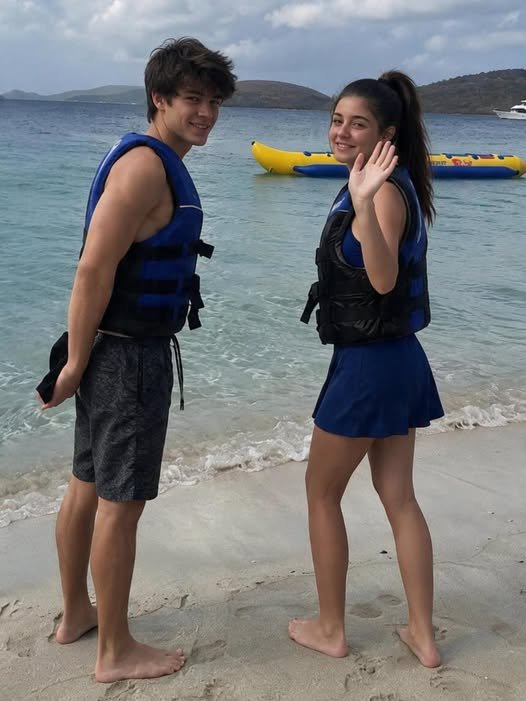
The last photograph I took of my daughter that evening showed her laughing beneath a sky painted gold.
Her orange life jacket looked almost too bright against the blue water. Beside her, a teenage boy named Liam lifted one hand in a cheerful wave while the banana boat slowly pulled away from the dock.
At the time, I thought it was simply another vacation picture.
Forty-five minutes later, I was staring at that same photo with trembling hands, wondering whether it might be the last picture I would ever take of my daughter.
Maya had turned sixteen that summer.
And sixteen, I had learned, was a strange age for a mother.
She wasn’t a child anymore, but she wasn’t quite an adult either.
When she was six, Maya would reach for my hand automatically whenever we crossed a parking lot. At ten, she still climbed into bed beside me during thunderstorms.
By sixteen, affection came in smaller pieces.
A quick kiss on the cheek.
A distracted hug.
A rushed, “Love you, Mom,” while texting someone else.
I knew this was normal.
Children grow.
Their worlds expand.
Parents stop being the center of everything.
Understanding that didn’t make it hurt less.
When my husband, Daniel, suggested that the three of us spend a week at a tropical resort before Maya began her junior year, I loved the idea immediately.
Maya did not.
“A whole week?” she groaned.
“A whole terrible week at a beach resort,” Daniel teased. “How will you survive?”
“I already made plans with Emma.”
“You see Emma almost every day,” I reminded her.
“But this week matters.”
“Why?”
She stared at me as though I’d asked the most ridiculous question imaginable.
“Because everything happens when you’re gone.”
Daniel laughed.
“Everything?”
“Yes, Dad. Everything.”
It took nearly two weeks of negotiation before she agreed to come.
Our compromise was simple: Maya didn’t have to spend every moment attached to us.
She could sleep late.
Join activities.
Meet people her own age.
Go swimming without her parents sitting three feet away.
My only rule was that we always knew where she was.
On the flight, Daniel glanced toward Maya, who sat several rows ahead wearing headphones and scrolling through her phone.
Then he quietly said something that stayed with me.
“This might be one of the last family vacations we get like this.”
I looked at him.
“Don’t say that.”
“You know what I mean.”
Unfortunately, I did.
College wasn’t far away.
Then jobs.
Relationships.
A life of her own.
I watched my daughter from across the airplane and felt an unexpected ache in my chest.
Maybe that was why I tried so hard to remember everything about that trip.
The way she complained about waking up early.
The way she stole strawberries from Daniel’s breakfast plate.
The way sunlight turned her brown hair almost copper-colored.
I was trying to memorize her without realizing it.
Part 2 — The Boy by the Pool
By the second day, Maya had established a routine.
Breakfast with us.
Volleyball with other teenagers.
A quick appearance at lunch.
Then disappearing again until dinner.
I pretended not to watch her.
Of course, I watched her constantly.
That was how I first noticed Liam.
He wasn’t like the louder boys who spent the afternoon competing to see who could make the biggest splash in the pool.
He was sitting beneath an umbrella with a paperback book.
Actually reading it.
Maya approached him first.
I couldn’t hear their conversation, but within minutes, she was laughing.
Daniel followed my gaze.
“Well,” he said. “Looks like somebody made a friend.”
“Don’t stare.”
“I’m not staring.”
“You’re absolutely staring.”
“So are you.”
“I’m her mother. I’m allowed.”
An hour later, Maya appeared beside our chairs with Liam.
“Mom, Dad, this is Liam.”
He smiled politely.
“It’s really nice to meet you.”
Then he shook Daniel’s hand.
I immediately liked him.
There was something calm about him. No showing off. No awkward attempt to impress us.
A few minutes later, his parents joined us.
Rebecca was warm and talkative. Chris had the kind of easy humor that made conversation effortless.
We soon learned their family had been visiting that resort every summer since Liam was eight.
“He practically grew up here,” Chris said.
Liam groaned.
“Dad.”
“What? It’s true. You probably know every path and building on the property.”
“I do not.”
Rebecca smiled.
“He almost does.”
That small detail meant nothing to me at the time.
Later, I would understand how important it was.
Over the next two days, Maya and Liam became nearly inseparable.
They played beach volleyball.
Joined a trivia competition.
Walked along the shore.
Shared ice cream beneath the palm trees.
I saw something in Maya I hadn’t seen much that year.
Lightness.
She wasn’t worrying about school or social drama.
She wasn’t checking her phone every thirty seconds.
She was simply sixteen.
Happy.
Daniel noticed too.
“She looks like herself again,” he said one afternoon.
I smiled.
“She does.”
And although part of me wanted to pull my daughter close and keep her there, another part understood that this was exactly what the trip was supposed to give her.
Freedom.
Just enough of it.

Part 3 — The Last Ride Before Sunset
On our third evening, the resort organized activities along the beach.
Music played from outdoor speakers. Children chased one another across the sand. Parents stood near the water taking pictures as the sun lowered toward the horizon.
The most popular attraction was a banana boat ride.
Every fifteen or twenty minutes, a speedboat pulled a long yellow inflatable across the bay while passengers bounced over the waves.
Their laughter could be heard from shore.
Before each group boarded, a resort employee gave the same safety instructions.
Most people barely listened.
I almost didn’t either.
Then the employee pointed toward a rocky section of coastline.
“See the small white building beyond those rocks?”
A few people turned.
I did.
Barely.
“That is Blue Cove Clinic. If someone becomes seriously ill or is injured while you’re on the water, don’t waste time returning to the resort. The clinic is much closer from the far side of the bay.”
A minute later, everyone was talking again.
The warning disappeared from my mind almost immediately.
Not from Liam’s.
Later that evening, Maya and Liam approached us.
The sun was already beginning to set.
Maya had that expression children wear when they want something but hope someone else will ask for them.
“Liam wants to ask you something.”
Liam cleared his throat.
“Would you mind if Maya came on the final banana boat ride with me?”
My immediate instinct was no.
“How long?”
“About twenty minutes.”
Rebecca, sitting nearby, smiled.
“He’s done it plenty of times.”
Daniel looked toward the calm water.
“They’ll have life jackets.”
Maya stared at me.
She didn’t say anything.
She didn’t have to.
Her eyes were asking the real question.
Do you trust me?
For sixteen years, my job had been to protect her.
Suddenly protection also meant knowing when to loosen my grip.
I forced myself to smile.
“Okay.”
“Really?”
“Yes.”
She threw her arms around me so quickly that I laughed.
“Wow. I should say yes more often.”
“Don’t get used to it.”
A staff member handed them life jackets.
Liam tightened the straps on Maya’s jacket before securing his own.
That tiny gesture reassured me.
They climbed aboard with several other guests.
Before the boat left, I raised my phone.
“Maya!”
She turned.
Liam looked toward me too.
“Smile!”
Maya gave me the enormous grin she used to give cameras when she was little.
Liam lifted his thumb.
I took the picture.
Then the boat began moving.
Maya waved.
I waved back.
Within seconds, they were speeding across the water beneath the setting sun.
Daniel put his arm around me.
“See?”
“See what?”
“You survived letting her go.”
“She’s been gone twelve seconds.”
He laughed.
“They’ll be back before dinner.”
Neither of us knew how wrong that sentence would feel forty-five minutes later.
Part 4 — Twenty Minutes Became Thirty
At first, I wasn’t concerned.
One ride returned.
Then another.
I casually looked toward the dock.
No Maya.
No Liam.
“They probably went farther out,” Daniel said.
I nodded.
Twenty minutes became twenty-five.
Then thirty.
The sun dropped lower.
The beach began to empty as families headed toward restaurants and evening events.
I stopped pretending I wasn’t nervous.
“They should be back.”
Daniel checked the water.
“Probably any minute.”
Another boat appeared.
I stood before it even reached shore.
Wrong passengers.
Something tightened inside my chest.
“I’m asking the attendant.”
The young employee at the rental desk checked a clipboard when I explained which ride Maya had taken.
His expression changed.
Not dramatically.
Just enough.
“They should have returned already.”
My stomach dropped.
“What does that mean?”
He picked up a radio.
“Dock One calling sunset run.”
Static.
He tried again.
Nothing.
Daniel walked over.
“What happened?”
“They haven’t checked in.”
“What do you mean they haven’t checked in?”
The employee pressed the radio again.
No answer.
Daniel’s entire demeanor changed.
“Try somebody else.”
Another staff member joined him.
They exchanged a look.
I hated that look.
It was the look people exchanged when they knew something was wrong but didn’t want to frighten you yet.
I walked toward the water.
Less than an hour earlier, the ocean had seemed beautiful.
Now it looked enormous.
Dark.
Endless.
I searched for orange life jackets.
A yellow inflatable.
Anything.
There was nothing.
Rebecca and Chris appeared behind us.
Rebecca’s face told me she already knew.
“Any news?”
I shook my head.
She moved beside me.
For several minutes, two mothers stood shoulder to shoulder staring at an empty ocean.
“They’re probably stranded,” I whispered.
“Yes,” she answered.
But her voice shook.
Emergency personnel arrived not long afterward.
A rescue boat was prepared.
Radios crackled.
Staff members hurried along the dock.
Guests began gathering at a distance.
Every terrible possibility I had ever pushed away suddenly entered my mind at once.
What if Maya had fallen?
What if her life jacket had failed?
What if she was injured somewhere in the darkening water?
I remembered the photograph on my phone.
Her smile.
That wave.
Had I really watched my daughter disappear and done nothing?
I knew the thought wasn’t rational.
Fear rarely is.
Then I saw the general manager approaching.
I’d noticed him several times during our stay. He was normally composed, smiling, greeting guests as though nothing in the world could surprise him.
Now there was no smile.
His face had lost all color.
He was gripping a phone in one hand.
And he was walking directly toward us.
Part 5 — The Video
The manager stopped in front of Daniel and me.
“I need you to come inside.”
My heart hammered.
“Did you find them?”
He hesitated.
That hesitation nearly destroyed me.
“There is something you need to see.”
Rebecca and Chris followed us into a small office near the lobby.
The manager closed the door.
Then he placed his phone on the desk.
“We reviewed the security cameras along the bay.”
“Forget the cameras,” I said. “Tell me whether my daughter is alive.”
He looked at me.
“Please watch this first.”
He started the video.
The footage showed the banana boat returning toward the resort.
For one glorious second, relief rushed through me.
“There. They’re coming back.”
Daniel moved closer.
Then something happened.
Liam suddenly turned toward the driver.
He began waving both arms and pointing away from the resort.
The driver immediately changed course.
The boat made a sharp turn.
Away from us.
I stared at the screen.
“Why?”
Nobody answered.
“Why would he take her away?”
Rebecca looked equally confused.
The manager stopped the video.
“There’s another angle.”
He opened a second recording.
My hands were shaking so badly that I pressed them together.
The boat bounced across the water.
Maya was sitting beside Liam.
Then, without warning, her body slumped sideways.
My breath vanished.
“No.”
Liam reacted immediately.
He caught her.
He shouted toward the driver.
Then he began signaling frantically.
Suddenly, everything I thought I had seen changed.
Liam wasn’t taking my daughter away.
He was trying desperately to get her somewhere.
The manager switched to another camera.
“This footage is from Blue Cove Clinic.”
The forgotten white building from the safety briefing appeared on-screen.
Seconds later, the speedboat entered the frame.
It stopped near the beach.
Before anyone else had fully climbed off, Liam jumped into the shallow water.
Then he lifted Maya.
My daughter hung motionless in his arms.
I covered my mouth.
Liam carried her toward the building as quickly as he could.
Two nurses ran outside.
A doctor followed.
A stretcher appeared.
Then the doors closed behind them.
The recording ended.
Nobody spoke.
Finally, the manager said quietly, “The clinic contacted us once they confirmed who she was.”
My knees nearly gave out.
“So she’s there?”
“Yes.”
“Is she alive?”
Before he could answer, the office door opened.
A physician entered.
“Mr. and Mrs. Carter?”
Daniel grabbed my hand.
The doctor looked directly at us.
“Your daughter is stable.”
I don’t remember sitting down.
One second I was standing.
The next, Daniel was holding me while I cried against his shoulder.
Stable.
My daughter was alive.

Part 6 — Five Minutes
The doctor introduced himself as Dr. Alvarez.
“What happened?” Daniel asked.
“She had a severe allergic reaction.”
I stared at him.
Maya had been allergic to cashews since childhood.
We had spent years reading labels, asking restaurant staff questions and carrying emergency medication everywhere.
“To cashews?”
“We believe so. She ate mango sorbet from one of the beach stands earlier. There appears to have been trace contamination involving cashew.”
My stomach twisted.
“She carries an epinephrine injector.”
“She did.”
Dr. Alvarez glanced toward the phone on the desk.
“The boy found it.”
“Liam?”
“Yes.”
I looked toward Rebecca.
Her hand flew to her mouth.
The doctor continued.
“He also remembered the safety briefing.”
And suddenly I saw that small white building in my mind.
Blue Cove Clinic.
The place almost nobody had paid attention to.
“He told the driver to come here?” I asked.
Dr. Alvarez nodded.
“Returning to the resort would have taken considerably longer. He recognized that the clinic was closer.”
My eyes filled again.
“He knew.”
“He remembered.”
The doctor paused.
“Your daughter received treatment very quickly because of that decision.”
I could barely ask the next question.
“How close was it?”
He didn’t answer immediately.
That silence said enough.
Then he quietly added, “A delay of another few minutes could have changed the outcome.”
Another few minutes.
Five, perhaps.
Five minutes.
Such a small amount of time.
The length of a commercial break.
The time needed to make coffee.
The time I sometimes spent searching for my keys.
Yet that evening, a handful of minutes separated my family from an entirely different life.
And a sixteen-year-old boy had understood that every one of those minutes mattered.
Part 7 — “You Saved My Girl”
We reached the clinic soon afterward.
I had prepared myself to see Maya unconscious beneath machines and wires.
Instead, she was sitting upright in bed.
She looked pale.
Exhausted.
Her eyes were swollen from crying.
But she was alive.
When she saw me, her face crumpled.
“Mom.”
I crossed the room so quickly I nearly knocked over a chair.
I wrapped my arms around her.
She held on like she hadn’t held me in years.
“I’m sorry,” she whispered.
I pulled back.
“For what?”
“I scared you.”
“Oh, sweetheart.”
I kissed her forehead.
“You never apologize for needing help. Ever.”
“I thought something was really wrong.”
“I know.”
Daniel came beside us and placed one hand against her hair.
“We’re here now.”
Only then did I notice Liam.
He stood near the window.
His clothes were still damp.
His hair had dried messily from the salt water.
His hands were trembling.
Until that moment, I had been so focused on Maya that I’d forgotten he was still just a boy.
A frightened sixteen-year-old who had watched his friend collapse beside him.
I walked toward him.
He looked nervous.
Maybe he thought I was angry.
Instead, I wrapped my arms around him.
For several seconds, neither of us spoke.
Then I whispered, “Thank you.”
His shoulders loosened.
I stepped back.
“I need to tell you something.”
He waited.
“When we saw the boat turn away from the resort, I thought…”
I struggled to finish.
“I thought someone was taking my daughter away.”
Liam nodded slowly.
“If I were you, I probably would’ve thought that too.”
That simple answer broke whatever composure I still had.
I laughed through my tears.
“You saved my girl.”
His eyes dropped.
“I just remembered what the guy said during the safety talk.”
“No,” I said. “You listened. You stayed calm. You acted.”
He glanced toward Maya.
“I was scared.”
“That doesn’t mean you weren’t brave.”
Rebecca came over and hugged her son.
Chris turned his face away for a moment, wiping his eyes.
Across the room, Maya watched us.
And suddenly I understood something.
All those years, I had imagined protecting Maya meant being the person beside her during every difficult moment.
But that wasn’t possible anymore.
She was growing.
Soon, there would be places I couldn’t follow.
Moments I wouldn’t witness.
Problems I couldn’t solve.
Maybe raising a child wasn’t about making sure they never stepped beyond your reach.
Maybe part of it was hoping they learned to recognize good people when they found them.
Part 8 — The Hand She Hadn’t Held in Years
The following morning, Maya was discharged.
We walked along the beach together before breakfast.
The ocean was impossibly calm.
It offended me somehow.
How could the same water that had terrified me the night before look so peaceful now?
We walked quietly for several minutes.
Then I felt something warm slip into my palm.
Maya’s hand.
I stopped.
She looked at me.
“What?”
“Nothing.”
I squeezed her fingers.
I couldn’t remember the last time she’d reached for my hand voluntarily.
Maybe twelve.
Maybe thirteen.
I didn’t ask.
I simply held on.
After a while, Maya spoke.
“Mom?”
“Hmm?”
“I know I complain that you worry too much.”
I smiled faintly.
“You do.”
“I still think you worry too much.”
“Thank you.”
She laughed.
Then her expression softened.
“But I understand it a little better now.”
I looked at her.
She squeezed my hand.
“I know why you do it.”
My throat tightened.
“I don’t think I’m ever going to stop.”
“Good.”
I blinked.
“Good?”
She leaned briefly against my shoulder.
“I don’t want you to stop caring. Maybe just… panic slightly less.”
I laughed.
“I make no promises.”
We continued walking.
After another minute, she said, “Can we come back next summer?”
I looked at her in surprise.
“The girl who said she’d miss her entire life if she came here for one week?”
“That was before.”
“Before what?”
She looked toward the ocean.
“Before I realized this week might actually be one of the things I remember forever.”
I didn’t need to ask what she meant.
We passed the rocky section of shoreline.
Beyond it stood Blue Cove Clinic.
Small.
White.
Quiet.
From the main resort, it was easy to overlook.
Hundreds of guests probably passed through that beach every week without giving the building a second thought.
We nearly had too.
Yet when my daughter needed help most, that little clinic had been exactly where it needed to be.
And so had Liam.
I had spent sixteen years believing that being a good mother meant holding on tightly enough to keep Maya safe.
That vacation taught me something different.
Our children eventually step beyond the small world we build around them.
They make their own friends.
Take their own chances.
Climb aboard boats we cannot control and travel toward places we cannot always follow.
And yes, letting them go is terrifying.
But letting go doesn’t mean loving them less.
It doesn’t mean worrying less either.
Sometimes it simply means trusting everything you’ve taught them—and trusting that along the way, they will find people who are kind enough, brave enough, and attentive enough to stand beside them when you cannot.
That evening, I looked once more at the photograph I’d taken before the banana boat left.
Maya was smiling.
Liam was giving me a thumbs-up.
The sunset behind them was turning the entire ocean gold.
The picture that had frightened me so badly the night before no longer looked like a final goodbye.
Now, when I looked at it, I saw something entirely different.
I saw the exact moment I had allowed my daughter a little more freedom.
I saw the boy who would soon help save her life.
And I saw a mother who was still learning one of the hardest lessons parenthood ever asks us to accept:
Our children will always need our love.
But as they grow, sometimes loving them also means trusting them to sail a little farther from shore.